
Last updated November 17, 2026
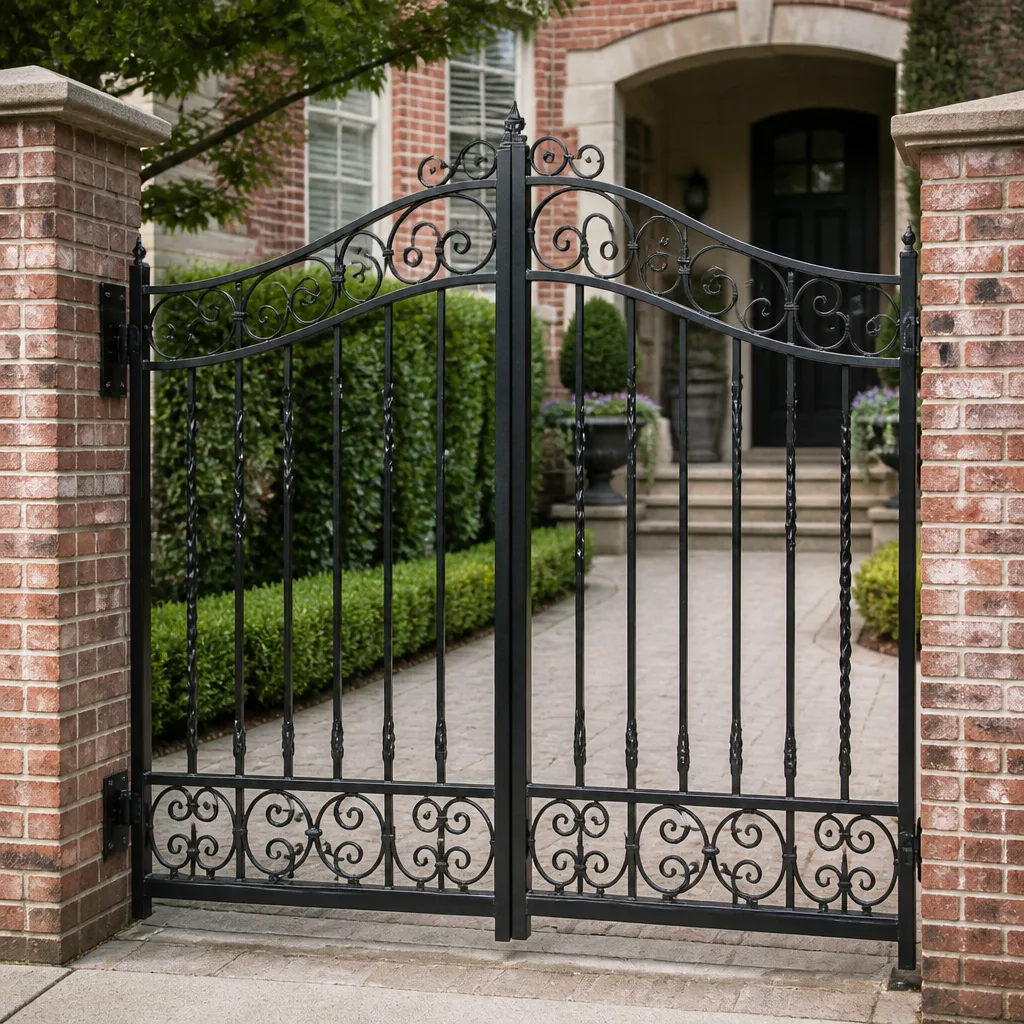 Wrought iron
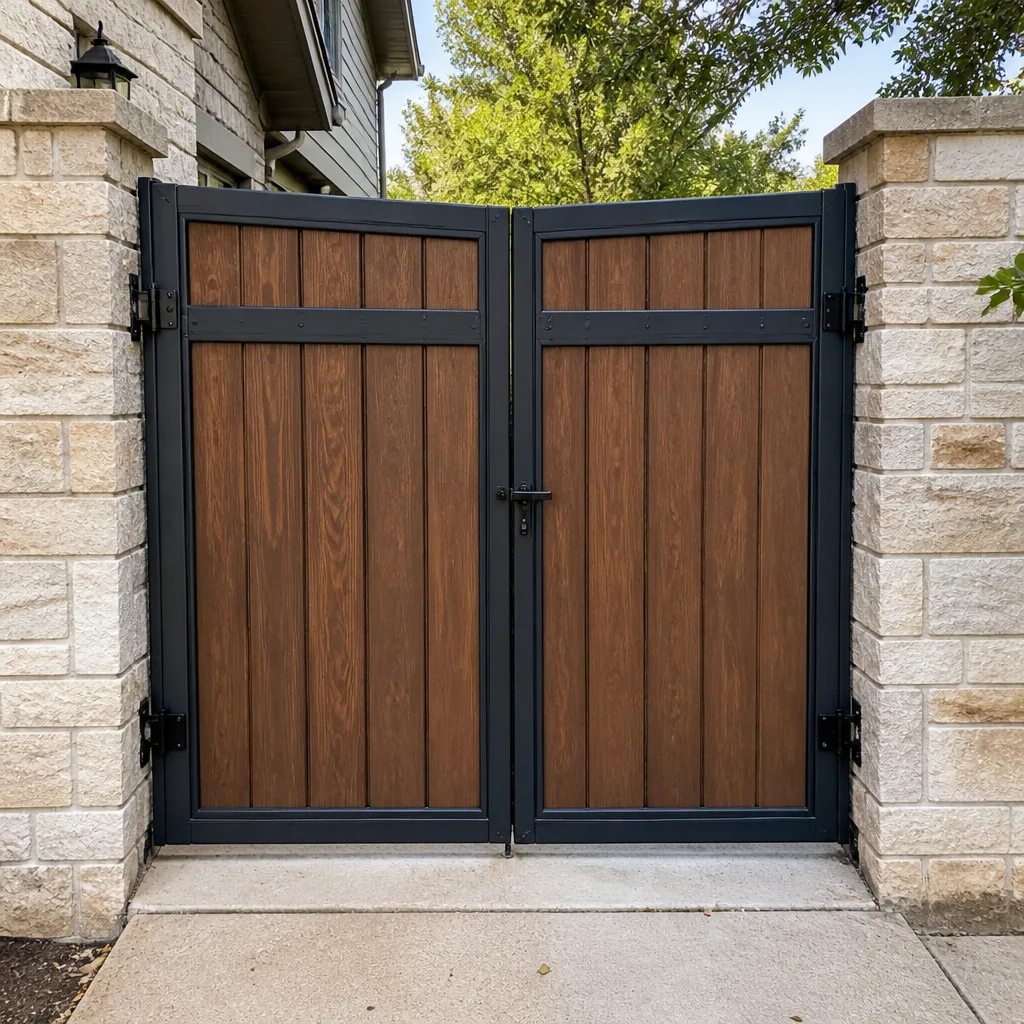 Wood & steel frame
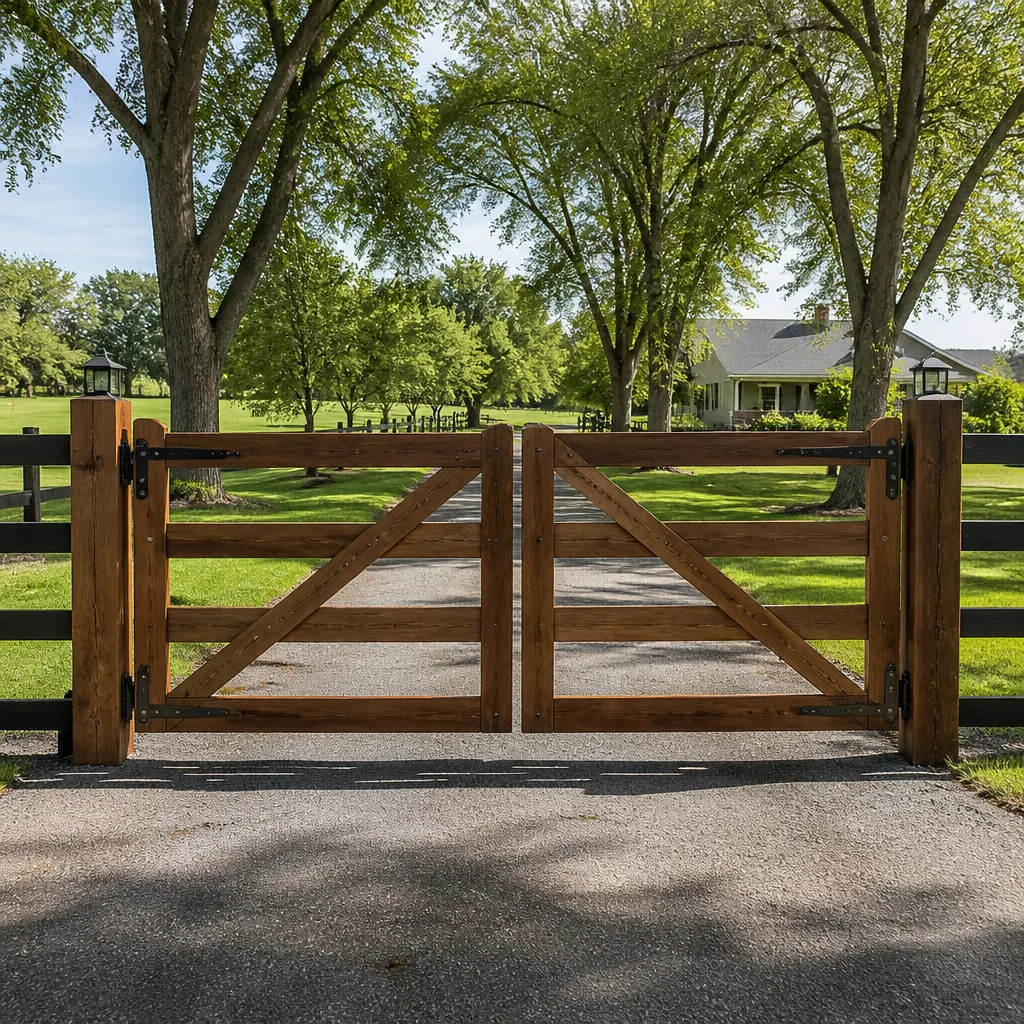 Farm & ranch
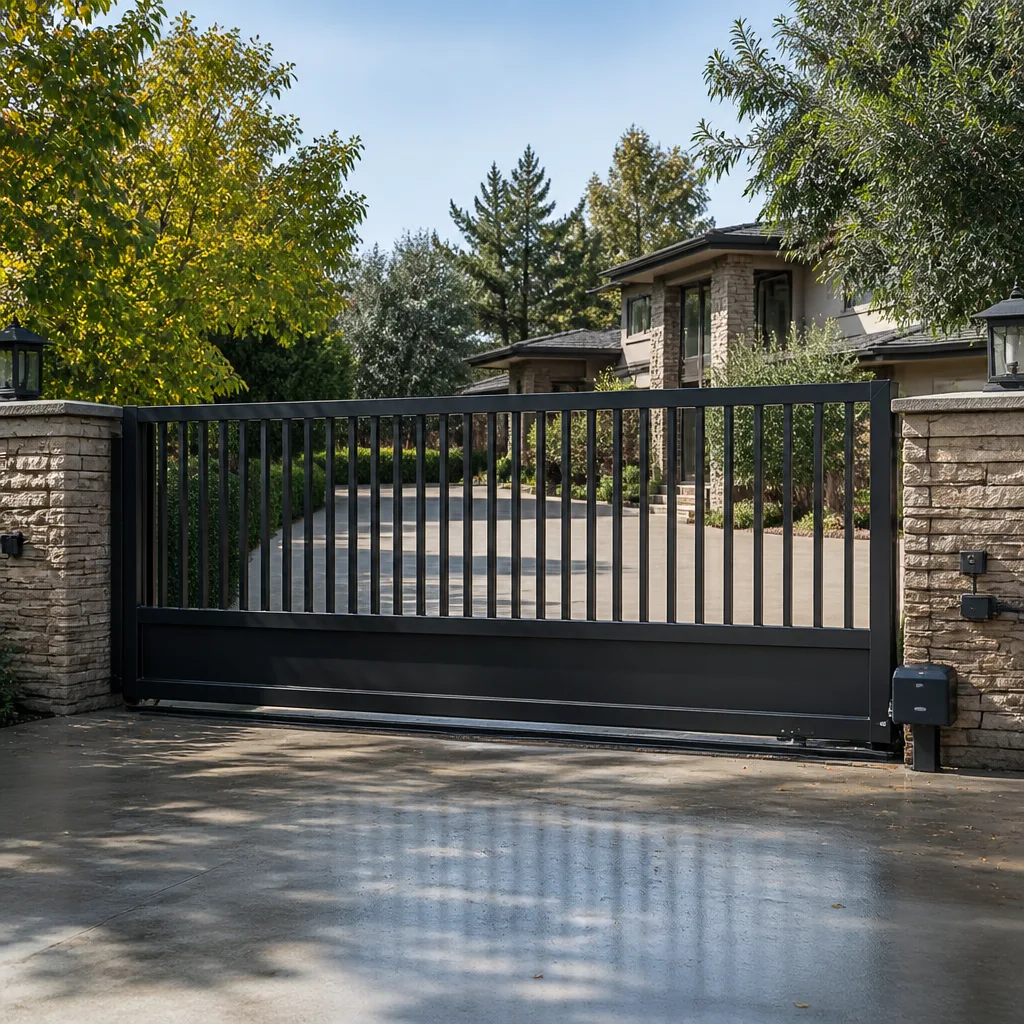 Sliding driveway gates
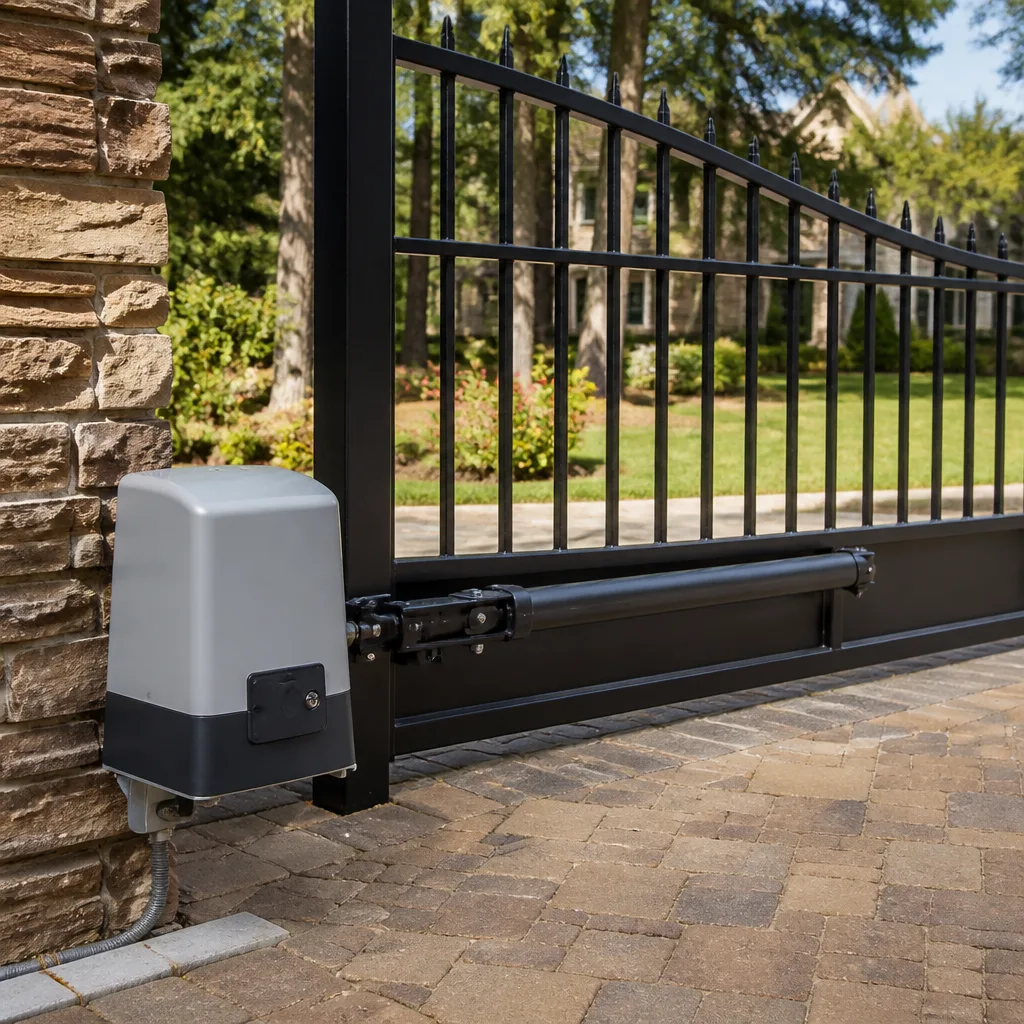 LiftMaster operators
Free on-site gate assessment - hinges, posts, and your LiftMaster or Nice gate operator checked before anything is quoted
The assessment is free and the quote is the invoice.
Get your free estimateGate Repair Emergency Preparedness Guide for Summerlin Homes
When a gate fails at 11 PM with a car halfway through, most homeowners discover for the first time that they don’t know where the manual release is, don’t have the override key on the ring, and don’t know which number to call. All three of those should have been written down the day the operator was installed. In Summerlin, where walled communities and private driveway gates are the norm, a stuck gate can trap a vehicle for hours or leave a property standing wide open overnight. This guide is the plan you build before the emergency, so the 11 PM version of you isn’t improvising in the dark.
Quick Answer
A gate emergency in Summerlin comes down to two questions: is the gate stuck closed (trapping a vehicle) or stuck open (leaving the property unsecured)? Closed is an access problem you may be able to solve with the manual release key. Open is a security problem you solve by securing the gate safely without forcing the operator, then calling for service. Either way, the workable response depends on knowing your operator model, where its release mechanism lives, and having a live phone number to call. This guide walks through all three.
Styles & brands we work with
- Wrought iron
- Wood & steel frame
- Farm & ranch
- Sliding driveway gates
- LiftMaster operators
Table of Contents
- The Three Failures That Need a Technician Now vs. the Three That Don’t
- Manual Release by Operator Brand: LiftMaster, Viking, Ghost Controls, DoorKing, FAAC
- What to Document and Where to Keep It
- HOA-Gated Communities in Summerlin: Who Owns Which Gate
- How to Hold an Open Gate Secure Overnight Without Damaging the Operator
- Summerlin Heat, Dust, and Monsoon Season: What Breaks Gates Here
- Common Mistakes to Avoid
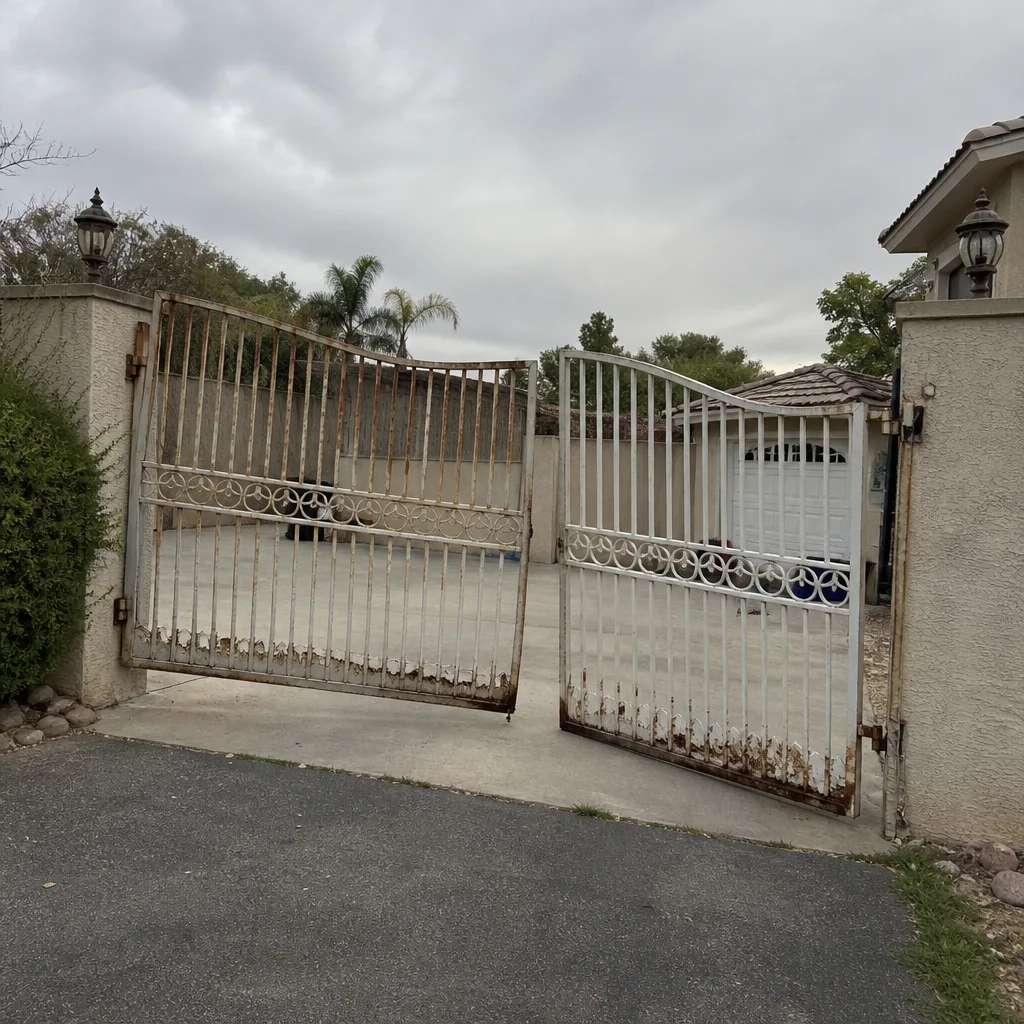 Before
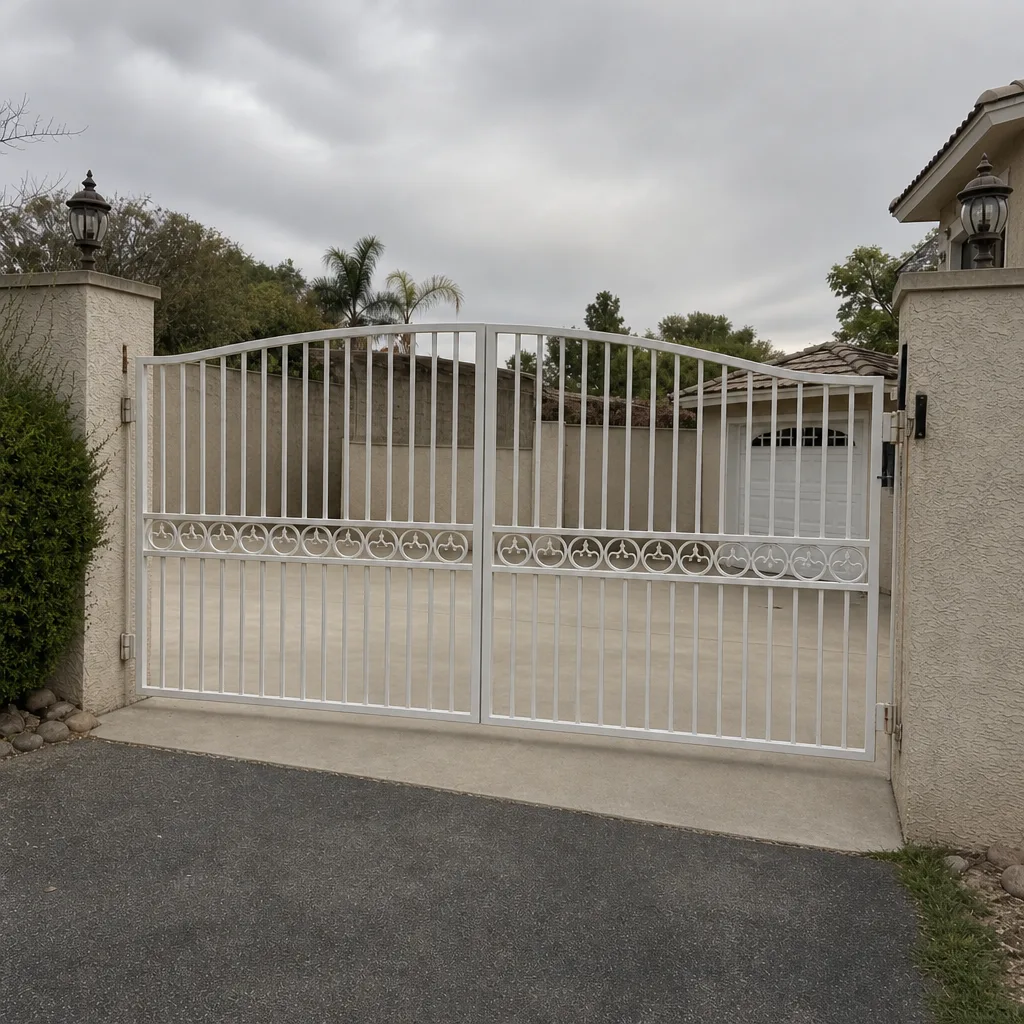 After
The Three Failures That Need a Technician Now vs. the Three That Don’t
Not every gate failure is an emergency. Sorting the failure into the right column in the first five minutes saves you a midnight call you didn’t need or, worse, a morning call you should have made at midnight.
Call for immediate professional service if:
- The gate reverses for no reason or stops mid-travel repeatedly. A safety photo-eye (the infrared beam that halts the gate if something crosses its path) that’s misaligned or a limit switch drifting past its set point means the operator is being told to stop by a sensor it no longer trusts. Left alone, the gate will keep closing on whatever enters the beam.
- You hear grinding, clicking, or a motor that runs without moving the gate. That’s usually a stripped gear, a failed drive coupler, or a chain off its sprocket. Running it further turns a cheap fix into a motor replacement.
- The gate moves under power with nobody commanding it, or the control board shows a fault code you can’t clear. A gate operating on its own is a safety hazard. Unplug the operator if you safely can and call.
A temporary workaround is reasonable if:
- The remote stopped working but the keypad still does. Re-pair the remote in daylight. This is a battery, a rolling-code mismatch, or a dead remote, not a gate failure.
- The gate is stuck open with the motor disengaged and the arm free. You can secure it manually (see the overnight section below) until regular service hours.
- The keypad is dead but the gate cycles from the interior button. A keypad is a low-voltage accessory. It can wait until morning.
We see the first group far more often than homeowners expect. In Summerlin, the specific pattern is a photo-eye knocked slightly out of alignment by a landscaper’s trimmer or a recycling bin dragged across the driveway – the gate then behaves erratically for weeks before it finally refuses to close. If that sounds familiar, the Gate Repair in Summerlin service page covers how we diagnose sensor and limit-switch drift.
Manual Release by Operator Brand: LiftMaster, Viking, Ghost Controls, DoorKing, FAAC
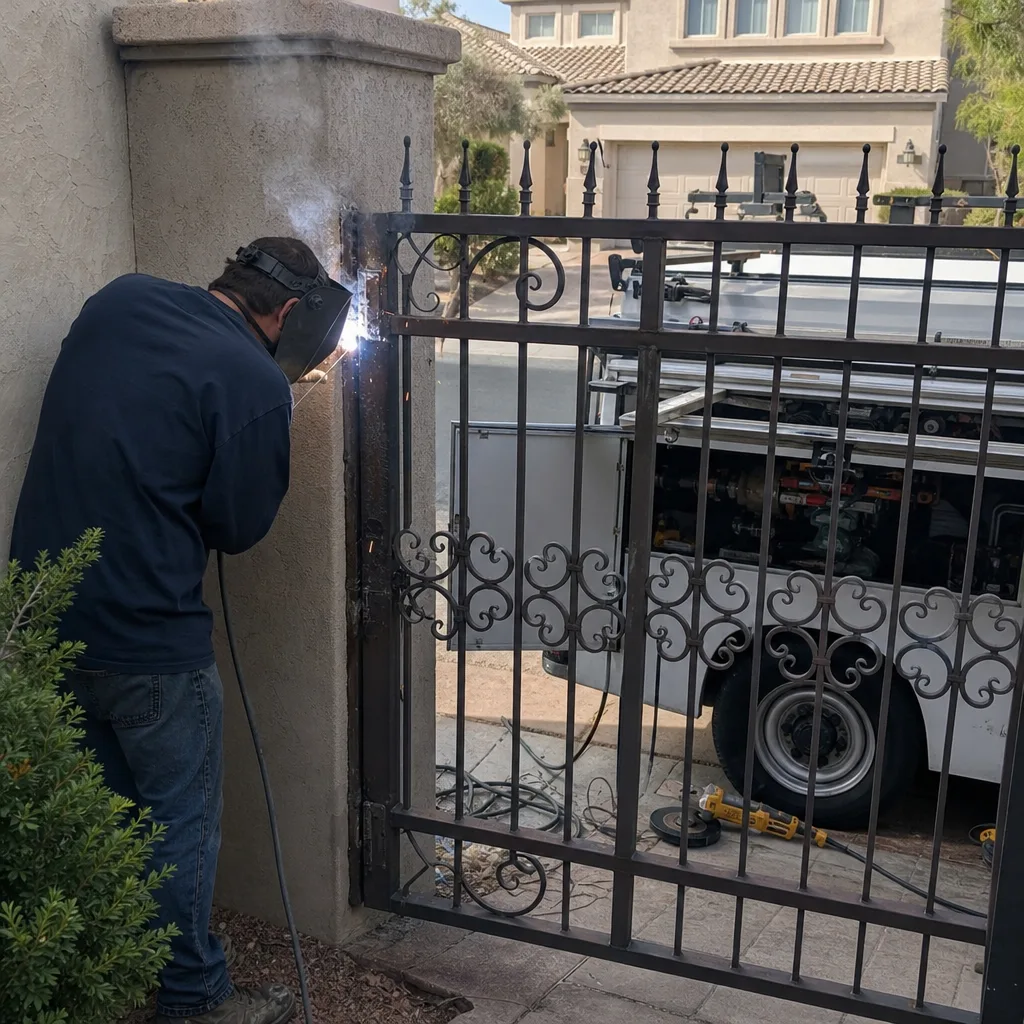
The manual release is the physical override that lets you move the gate by hand when there’s no power or the operator has faulted. Every operator brand puts it in a different place, and every one has a different key or lever. This is exactly why you write it down at installation. What follows is a general map of where the release lives on the brands we most often find on Summerlin swing and slide gates. Do not force anything. If a release won’t budge by hand, stop and call – forcing it is how homeowners shear a release pin or bend the arm.
- LiftMaster (swing and slide): On most residential swing operators, the manual release is a lever or a keyed lock on the operator housing near the arm. Turn the key or lift the lever, then push the gate slowly open or closed by hand. On slide models, look for a release handle on the drive housing that disengages the chain or belt.
- Viking: Viking swing operators typically use a keyed release on the top of the housing. Insert the key, turn, and the arm disengages so the gate swings free. Viking slide operators use a chain-release lever along the rail. Keep the Viking key with the override set, not loose in a drawer.
- Ghost Controls: Ghost Controls solar and low-voltage swing operators usually have a manual release pin or a keyed lever near the control box. Pull the pin to disengage the arm. Because these are often installed on properties without a dedicated power run, the release gets used more often, so keep the pin accessible and check it works each season.
- DoorKing: DoorKing is common on community and driveway slide gates. The release is typically a keyed disconnect on the operator housing or a hand-crank/release lever at the drive. On heavier slide gates, the gate will not move by hand until the drive is fully disengaged – confirm the disconnect clicked before you push.
- FAAC: FAAC swing operators use a keyed release, usually a small lock cylinder on the housing. Turn the key and the arm frees. FAAC slide operators use a release lever along the rack. Keep the FAAC key labeled – it’s a different blank than the LiftMaster key.
Our technicians regularly work on all of these brands and a handful more, so a homeowner doesn’t have to guess whether we can touch the operator already on the property. If you’re not sure which brand you have, the model and serial number are stamped on the operator housing – photograph that plate now, before you need it. We walk through the full range of motors on the Gate Motor & Opener in Summerlin page.
What to Document and Where to Keep It
This is the single most useful thing you can do this week, and almost nobody does it. The gap between a two-minute fix and a two-hour emergency is usually a missing sheet of paper.
At installation, or at your first service call after reading this, create a one-page gate file and keep a paper copy somewhere you’ll find it at 11 PM (taped inside the garage, not buried in a filing cabinet) plus a photo in your phone.
- Operator brand and model number.
- Serial number (photograph the data plate on the housing).
- A photo of the control board with every DIP switch and dial showing its setting – so a future technician doesn’t have to rediscover how the gate was configured.
- The manual release key, with a label saying which operator it opens, on a hook or in a labeled bag.
- Where the manual release mechanism sits on the housing, described in one line.
- The gate company’s emergency number, written in the same file.
This commercial-grade documentation habit – photographing control settings, wiring, and limit positions on every visit – is the same record-keeping we carried over from access-control work, and it’s why every visit from us leaves a photo log of what was found, adjusted, and installed. Under the Haven Standard, that documented record is part of every job at no additional charge. If your gate has no file yet, the first visit is the moment to start one.
HOA-Gated Communities in Summerlin: Who Owns Which Gate
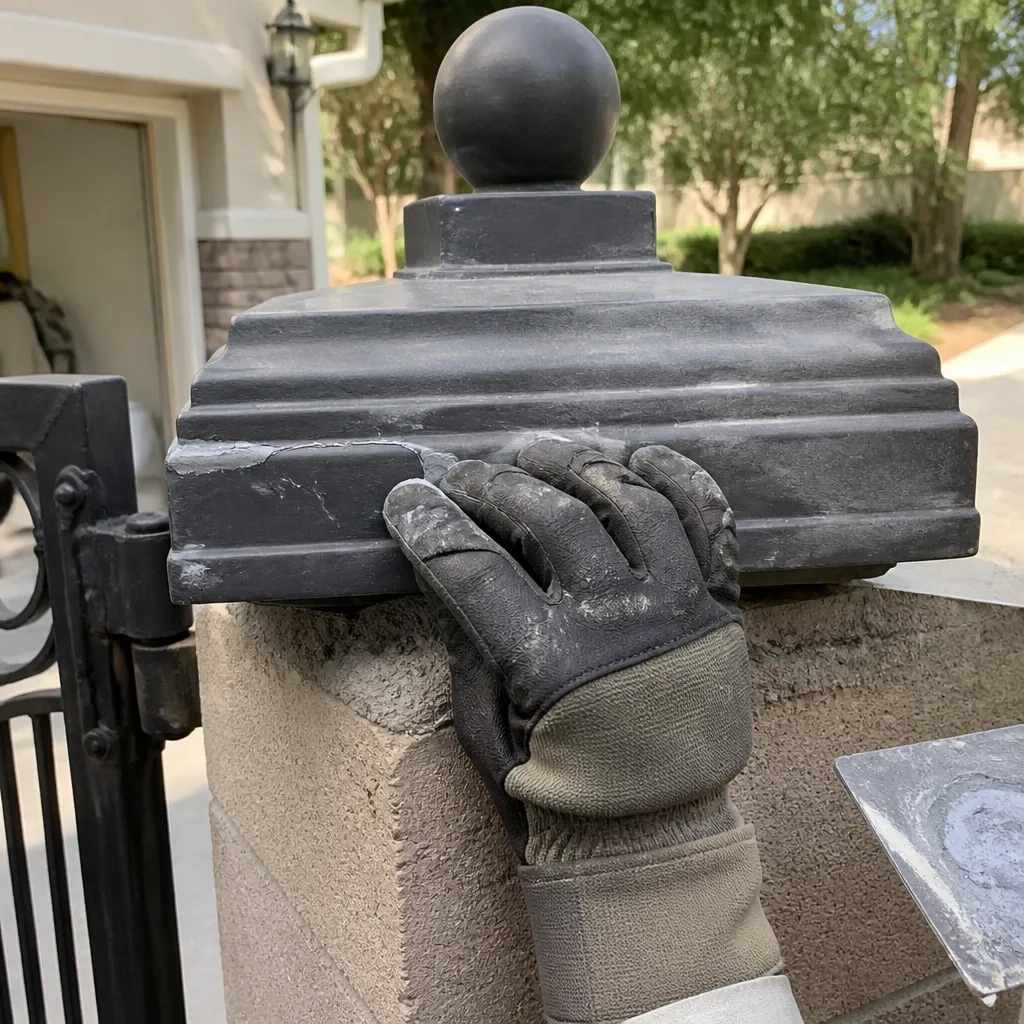
Summerlin is built around walled neighborhoods and gated enclaves, and that creates a specific confusion during an emergency: whose gate is broken? The answer determines who you call, and calling the wrong party at midnight wastes the one thing you can’t get back.
The community entry gate – the one at the neighborhood entrance that every resident drives through – is the HOA’s or the community association’s responsibility, not any individual homeowner’s. If that gate is stuck open or closed, call the HOA’s after-hours line or the posted gate-access number for the community. Do not call a repair company directly; the HOA holds the service contract, and anyone else showing up to work on it creates a liability issue.
Your private driveway gate – the operator on your own property line – is yours. You call the repair company. This is the gate this guide is mostly about.
Shared internal gates – gates within a gated community that serve a cluster of homes – usually fall to the HOA as well. Confirm with your community association which gates fall under their contract before an emergency, because the boundary isn’t always obvious. The resident who knows the answer at 11 PM is the one with the phone sheet in the garage.
For a broken private driveway gate, a live person answers our line 24 hours a day, every day of the week – no voicemail loop, no callback queue. That’s the number to put in the file. If your gate needs replacement or a new install rather than a repair, the Gate Installation in Summerlin page covers scheduling and what to expect; installation is measured, ordered, and scheduled, not an emergency response.
How to Hold an Open Gate Secure Overnight Without Damaging the Operator
A gate stuck open at night is a security problem, but forcing the operator to close by hand or blocking it with something that fights the motor is a repair bill waiting to happen. The safe approach works around the drive, not against it.
Safe ways to hold an open gate:
- Disengage the operator first using the manual release, so the gate is free and the motor isn’t fighting you. A gate held against a powered or engaged operator stresses the arm, the gearbox, and the limit switch.
- Prop the gate closed with a heavy-duty gate stop, a wheel chock, or a ratchet strap anchored to a fixed post – something rated for the gate’s weight and positioned so it can’t be pushed through.
- If the operator is solar or low-voltage and you’re comfortable doing it, switch off the operator at its control box so nobody’s remote re-engages the gate in the middle of your securing job.
What risks damaging the operator:
- Lifting, dragging, or shoving a gate that is still engaged to the drive. This strips gears and bends arms – we’ve seen a $180 sensor fix turn into a $900 gearbox replacement this way.
- Wedging something into a powered gate’s path to stop it. The operator will keep pushing against it, and the safety reverse can’t protect the hardware from a load it was never meant to hold.
- Pulling the arm or chain by hand without releasing it first.
In Summerlin, high-desert wind gusts at night can move a heavy gate that’s only partly secured. Use two anchor points on a swing gate, not one, and check the prop holds before you go inside.
Summerlin Heat, Dust, and Monsoon Season: What Breaks Gates Here
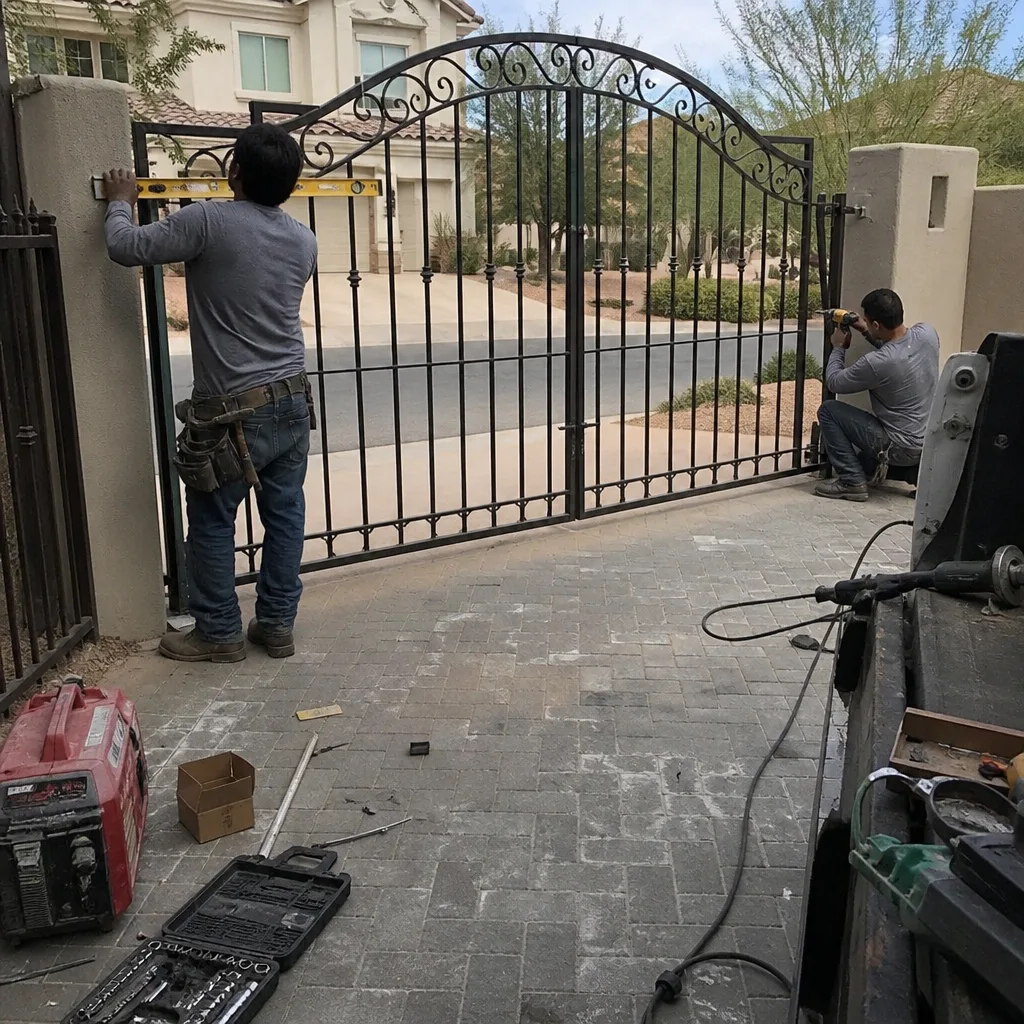
Summerlin’s climate is hard on gate hardware in specific, repeatable ways. Naming them helps you know what to check before they fail.
- Heat and photo-eyes: Repeated 100-plus-degree days bake and warp the plastic housings of outdoor photo-eyes and drive their alignment slightly off. A sensor that shifts two degrees out of line acts exactly like a sensor that’s failed. This is our most common mid-summer diagnosis.
- Dust and grit in the drive: Desert dust works into slide-gate racks and swing-arm pivots. Grit in a sprocket or on a rack accelerates wear. A dry-lubricant schedule does more for gate life here than any single repair.
- Monsoon-season moisture: The summer rains find their way into control boxes and keypads. A keypad that fills with water throws faults and can take the whole system offline. A control box mounted with a clear drip path – not tucked under a downspout – matters more than the box itself.
- Temperature swing and batteries: Cooler desert nights and hot days stress remote and backup batteries. A remote that dies every few months is usually a battery-quality issue, not a gate issue.
This is where local experience pays off. Our technicians have up to 12 years of experience and know the failure patterns specific to Summerlin’s neighborhoods – the sensor drift after a heat wave, the rack grinding that shows up after a windy spring. When we diagnose, we tell you what we found and set, in writing, with photos of the new limit position.
Common Mistakes to Avoid
- Never writing down the manual release location or the operator model. The 11 PM you can’t find the key is the same you who could have labeled it in five minutes months earlier. Do it now.
- Forcing a stuck gate by hand while it’s still engaged. This is the leading cause of gearbox and arm damage we see. Release the operator first, every time.
- Calling a repair company for the HOA’s community entry gate. That gate belongs to the association. Call the HOA’s after-hours line instead, or you’ll pay for a visit that ends in a phone call.
- Ignoring a gate that reverses “for no reason.” That’s a sensor or limit issue signaling itself. Waiting turns a sensor alignment into a safety problem.
- Storing the override key somewhere you can’t reach without a flashlight. Keep a labeled key with the gate file, not loose in the kitchen drawer with a dozen others.
- Believing a verbal quote is a quote. A number spoken over the phone before anyone has looked at the gate is a guess. Insist on a written price before work starts – that’s the first thing you should see.
- Assuming the gate’s history is known. Without a documented record, every new technician rediscovers the same settings. The photo log is what stops you paying twice for the same diagnosis.
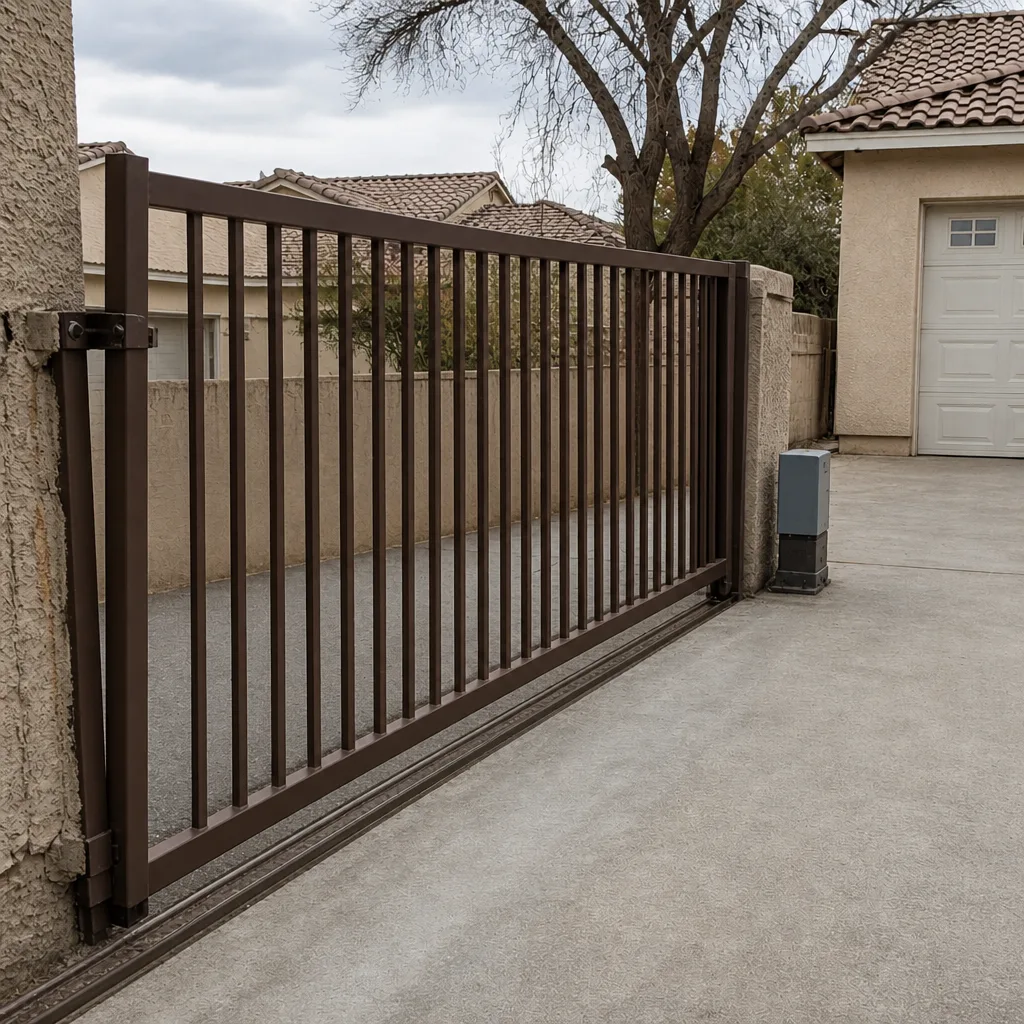
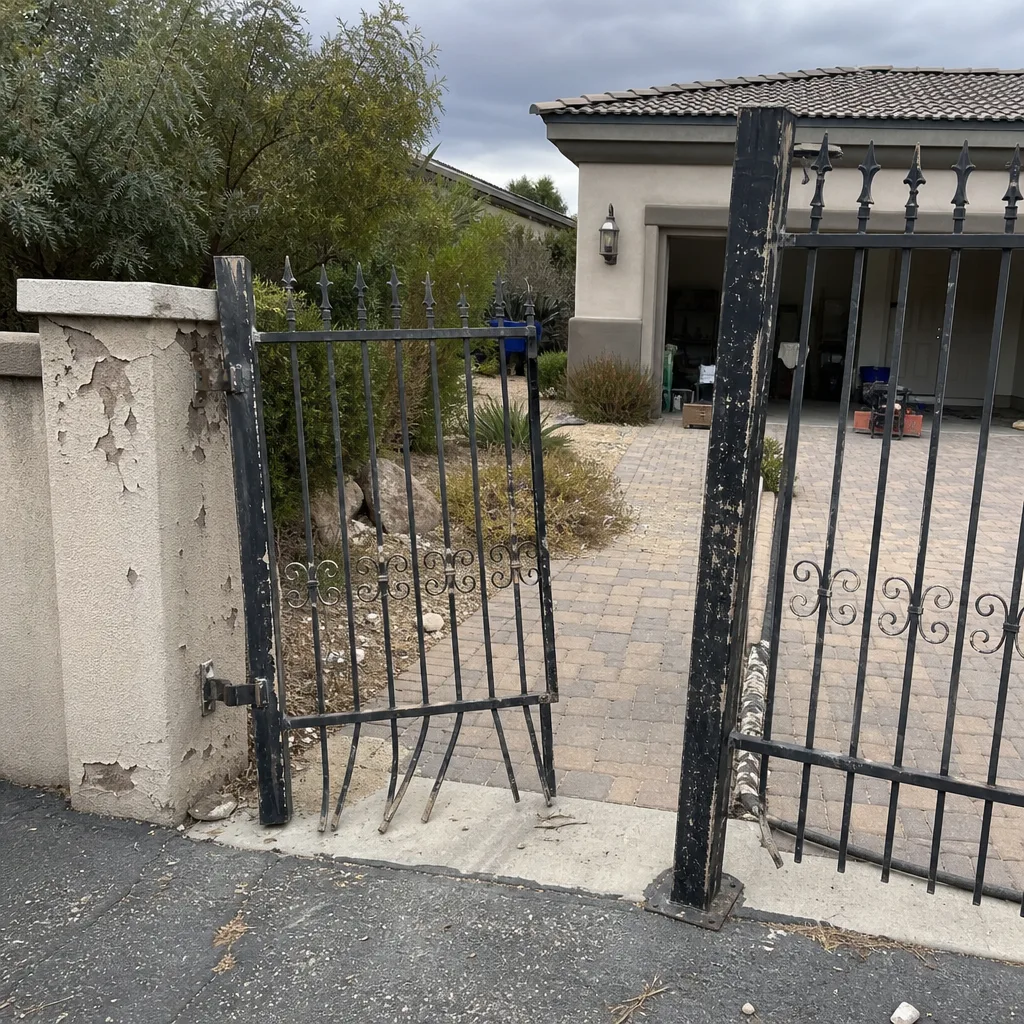
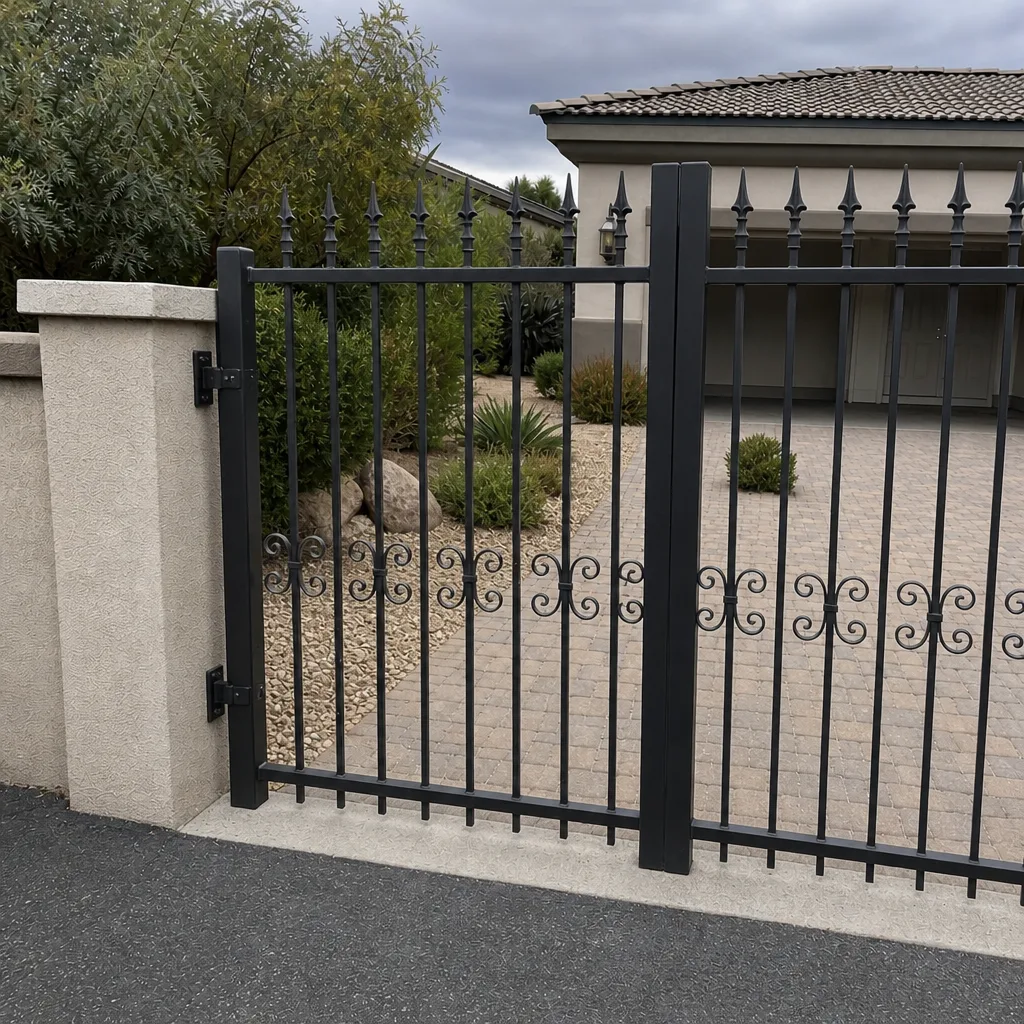
See the difference
BeforeAfter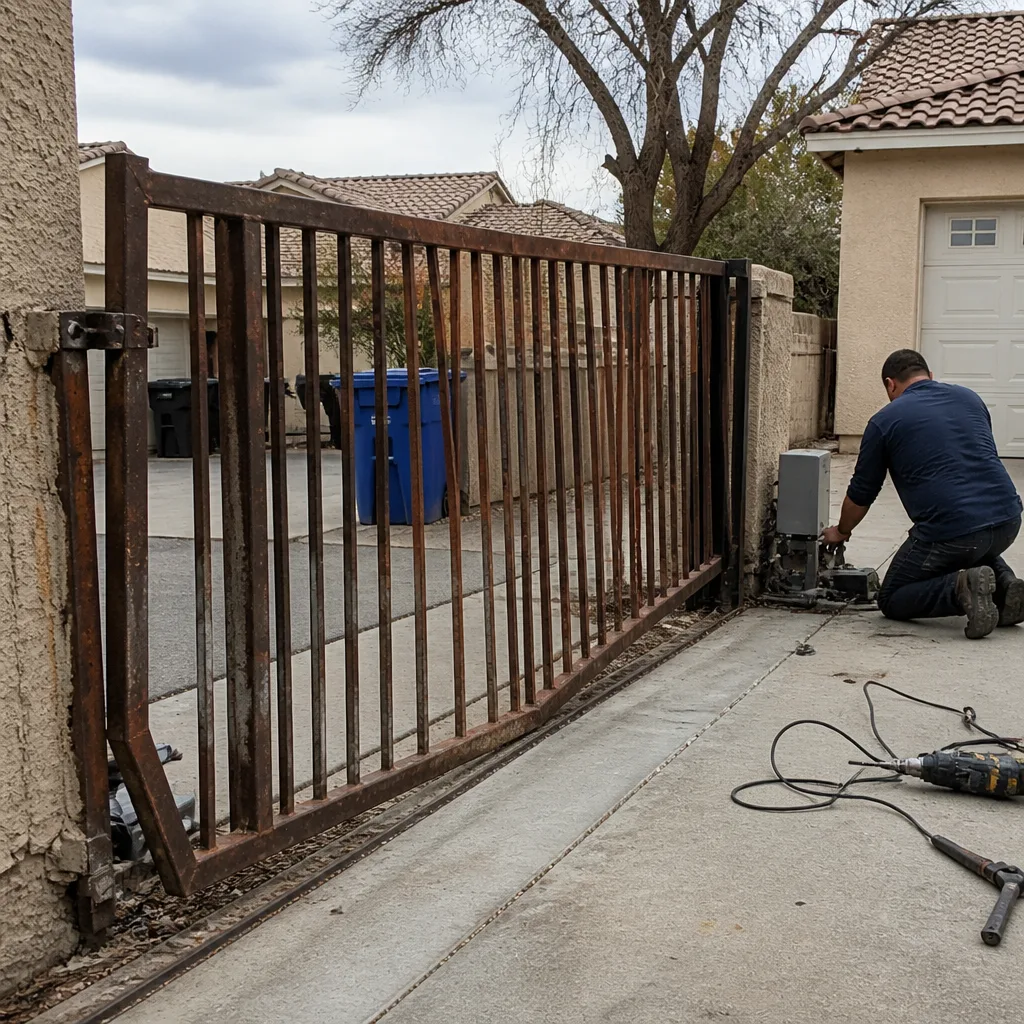 Before
 After
 Before
 After
When to Call a Professional
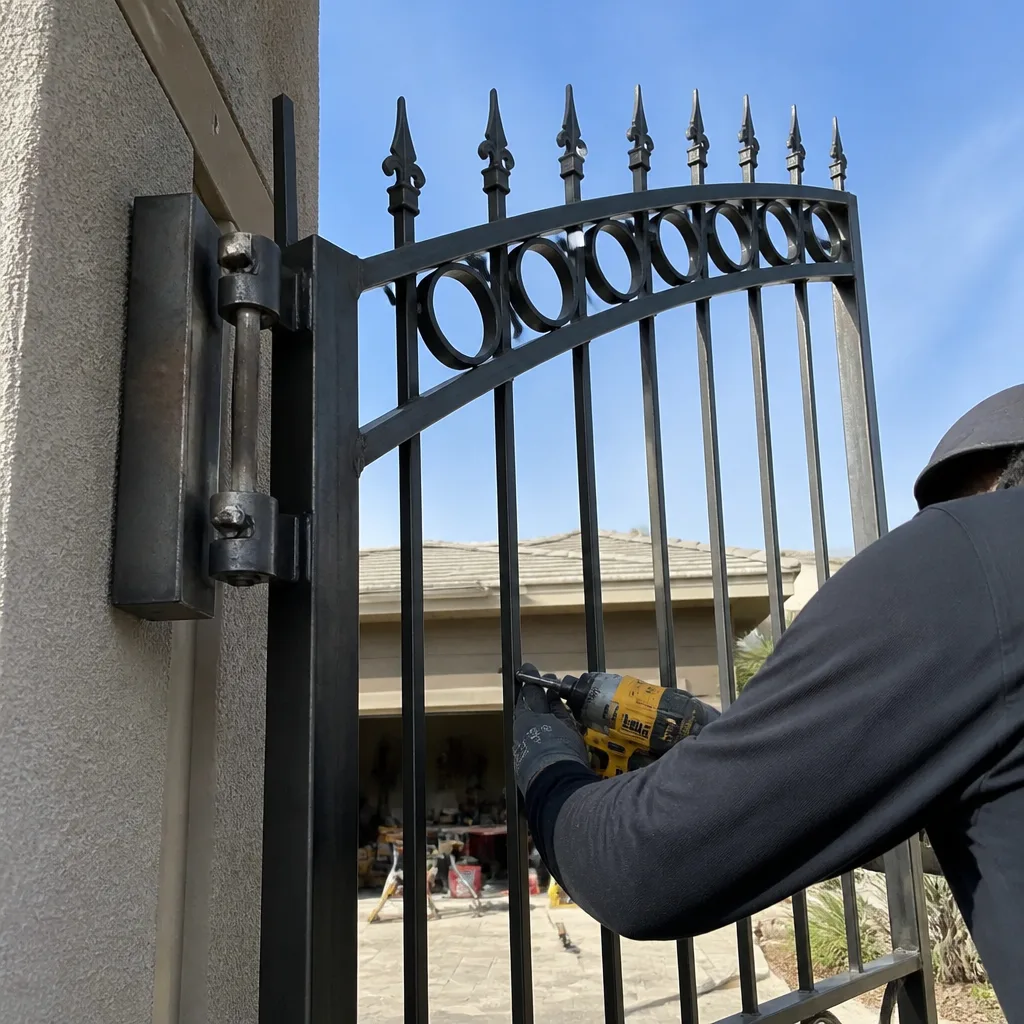
Call a professional the moment the gate behaves in a way that could hurt someone or leave the property open: it reverses unexpectedly, it moves on its own, the motor runs without moving the gate, a fault code won’t clear, or a photo-eye is faulting after apparent damage. Also call if the manual release won’t operate – that means the hardware itself needs attention, not a workaround. For the genuine emergencies on this list, a live person answers our line at any hour. For everything else, schedule it in daylight. Vance Gate Repair Summerlin offers free estimates in Summerlin – call (844) 797-2809. Our technicians have up to 12 years of experience, every price is written and agreed before work starts, and every completed repair is covered by the 365-Day Done Right Promise. If you have a written estimate from another company and want a second look, bring it in and we’ll review it at no cost. Start with the Vance Gate Repair Summerlin home page to see how we work.
Frequently Asked Questions
First, identify whether it’s stuck closed with a vehicle behind it or stuck open. If closed, use the manual release to free the gate by hand, then call for service. If open, secure it safely (see the overnight section) so the property isn’t left unsecured, and call for service. Don’t force a gate that’s still engaged to the motor. Call (844) 797-2809 for an exact quote – estimates are free.
Yes, on almost every residential operator, using the manual release key or lever. The catch is that every brand – LiftMaster, Viking, Ghost Controls, DoorKing, FAAC, and the rest – puts the release in a different spot, and it needs the right key. Find it and test it before you need it. If the release won’t operate by hand, stop and call rather than forcing it.
Only the community entry gate and shared internal gates, not your private driveway gate. The entry gate belongs to the HOA and is serviced under their contract; your driveway gate is your responsibility. Know which gates fall to the HOA before an emergency so you call the right number at the right time.
It depends on the failure – a photo-eye realignment is a very different job from a gearbox replacement – which is why we don’t quote a number before we’ve seen the gate. What we do guarantee is that the flat price is written and handed to you before any work begins, so there’s no surprise invoice at the end. Call (844) 797-2809 for a free estimate.
Many repair calls can be handled quickly, and a live person answers our line 24 hours a day for emergencies. Whether a specific repair is same-day depends on the failure and the parts involved. Installation and new-gate work is measured, ordered, and scheduled rather than handled same-day.
That’s common, and it’s exactly what makes the next diagnosis slower and costlier. We start every visit by documenting what we actually find – control-board settings, limit positions, wiring – and leave you a photo record of what was adjusted and installed. You shouldn’t be paying a second technician to rediscover a problem the first one already solved.
The Bottom Line
A gate emergency in Summerlin is survivable if you’ve prepared three things: you know your operator brand and where its manual release lives, you have the override key and the emergency number in the same place, and you know which gates are yours versus the HOA’s. The failure that needs a professional now – unexpected reversing, a motor running without moving the gate, a gate operating on its own – is a safety call. Everything else can be secured safely overnight and scheduled in daylight. Build the gate file this week, test the manual release, and put a live number in the garage. When something does go wrong, you’ll already know exactly what to do.
Call Vance Gate Repair Summerlin at (844) 797-2809 for a free estimate. Every job gets a written price before work starts, a documented photo record when we leave, and the 365-Day Done Right Promise behind it.
Written by the team at Vance Gate Repair Summerlin.