
Last updated November 17, 2026
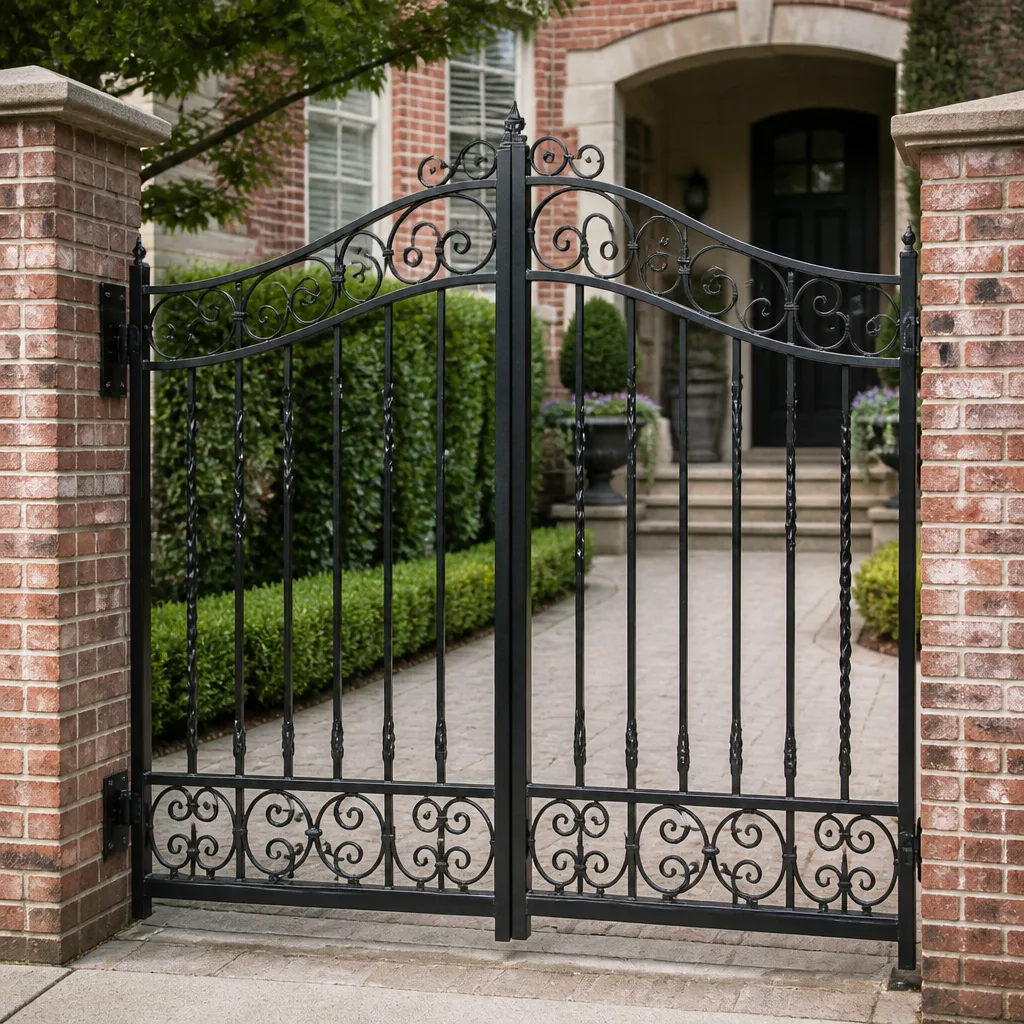 Wrought iron
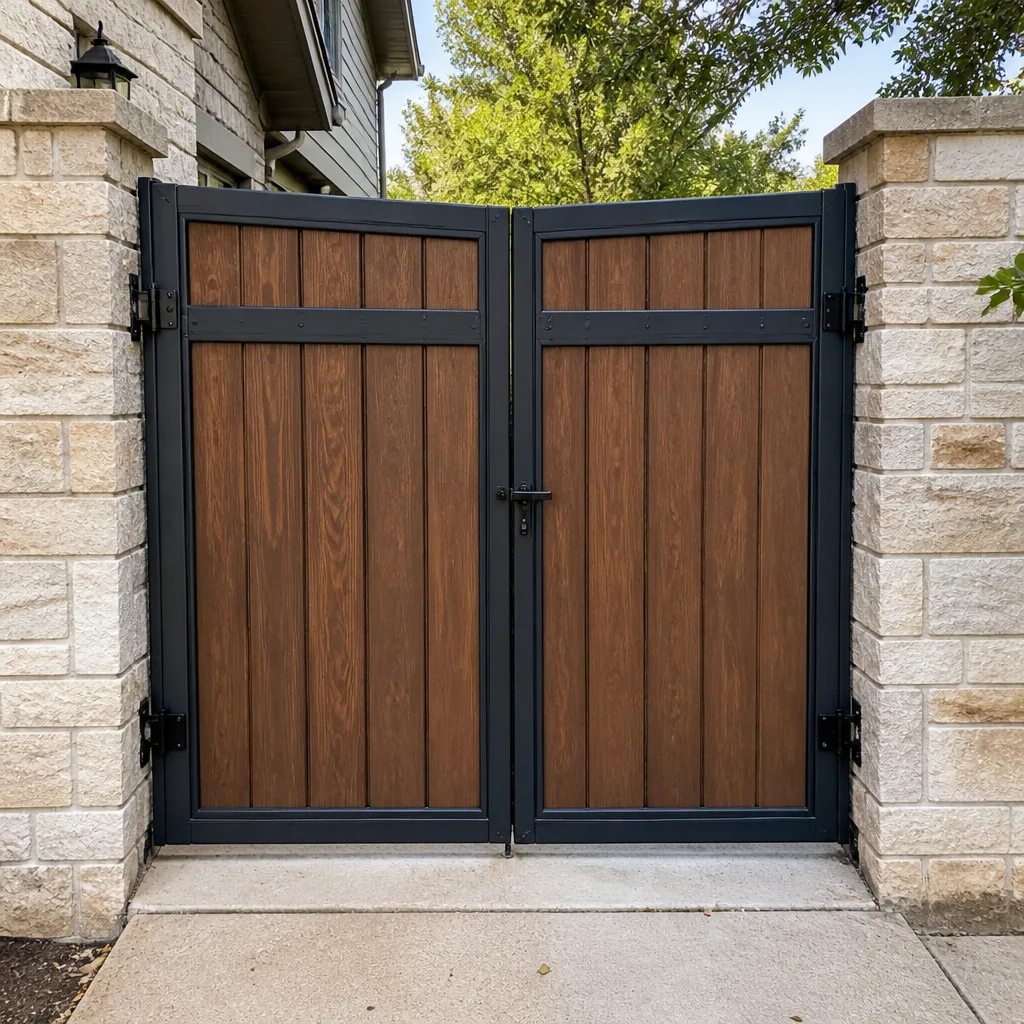 Wood & steel frame
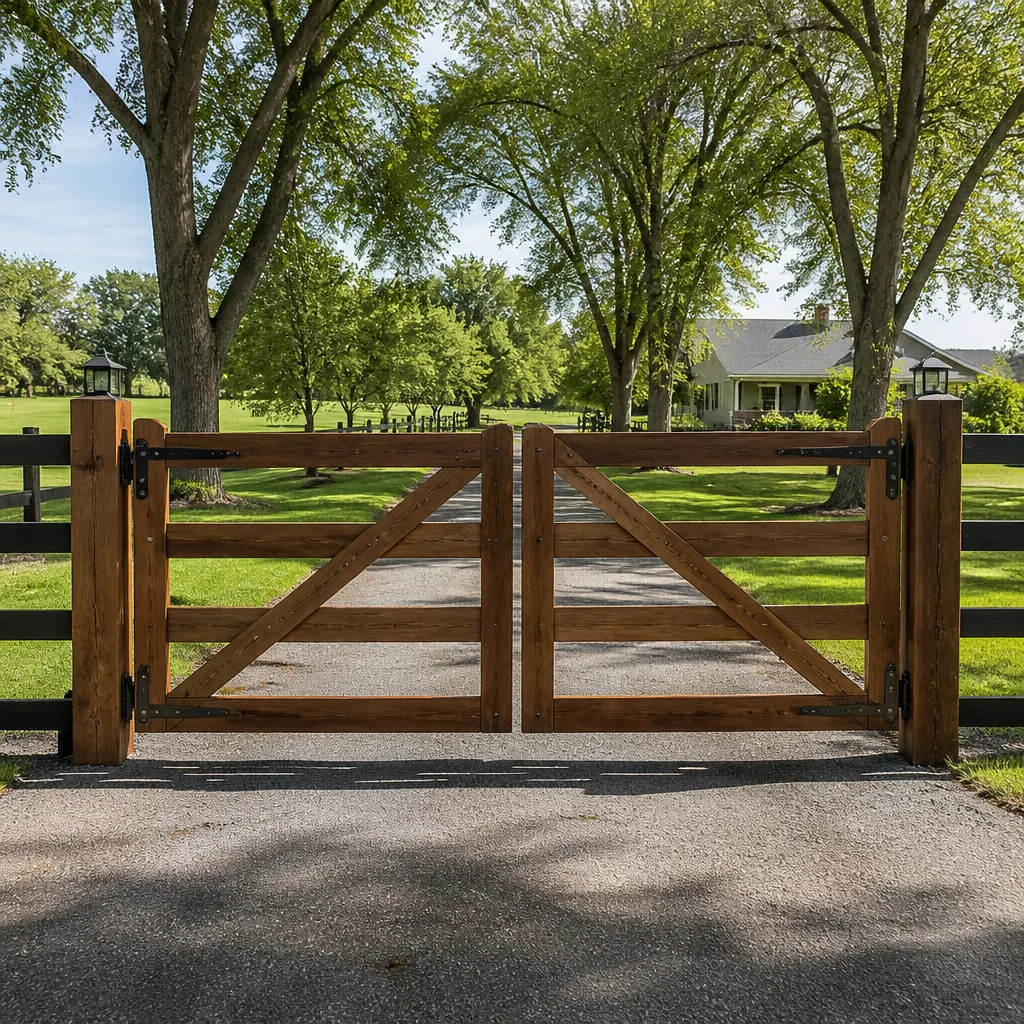 Farm & ranch
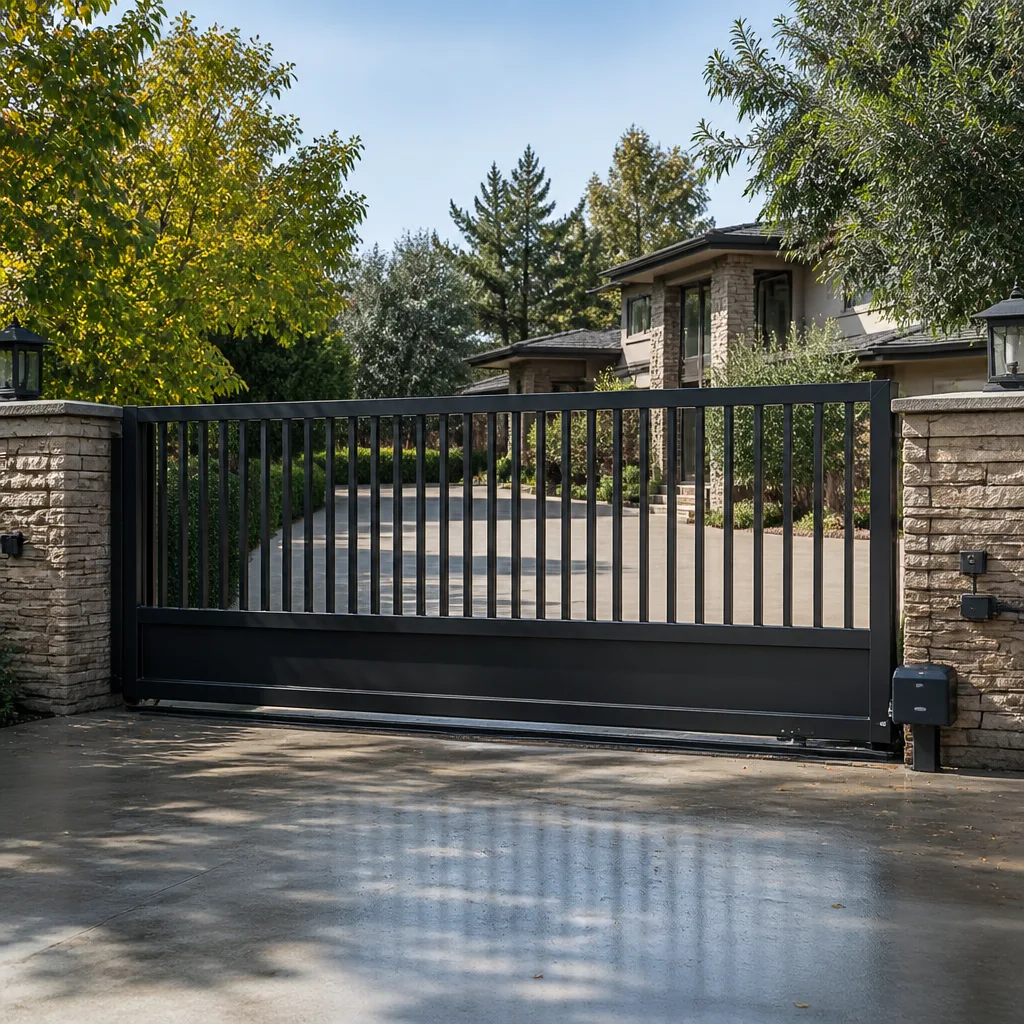 Sliding driveway gates
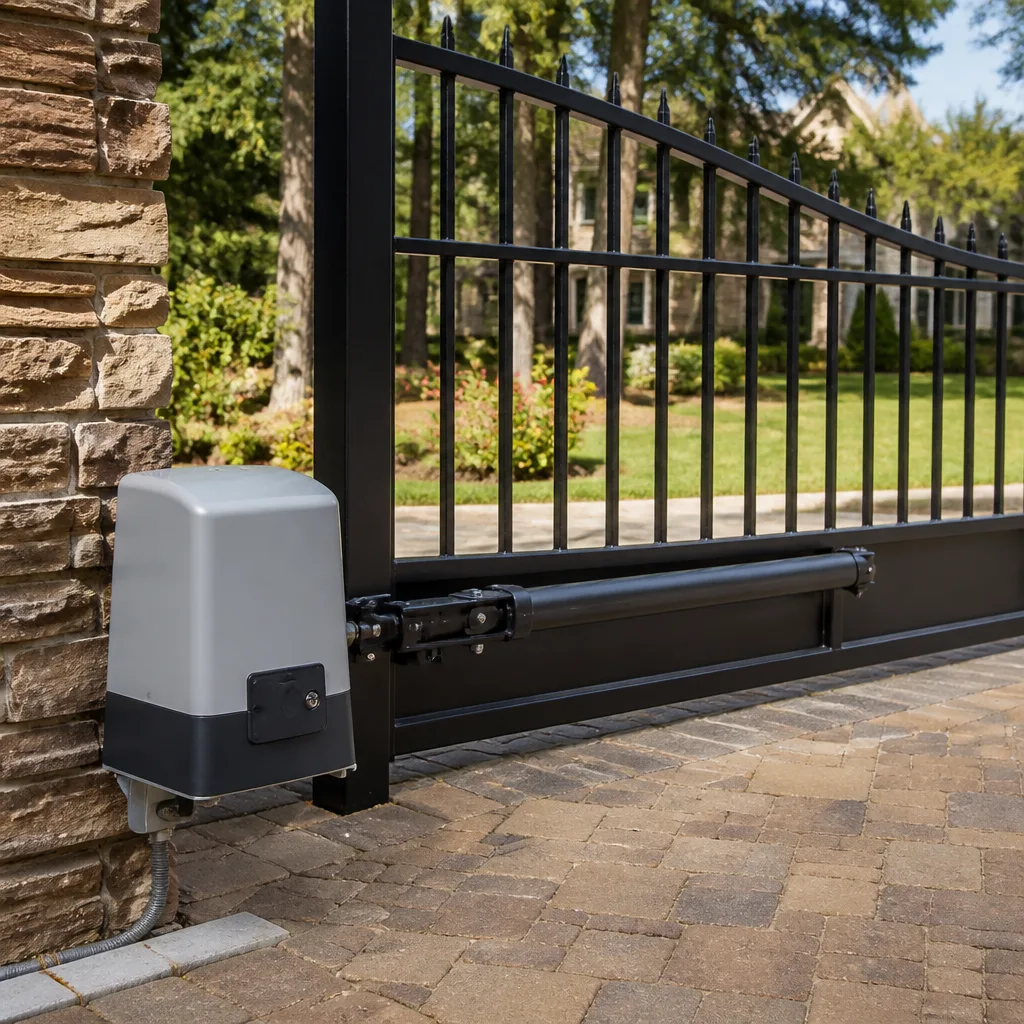 LiftMaster operators
Free on-site gate assessment - hinges, posts, and your LiftMaster or Nice gate operator checked before anything is quoted
The assessment is free and the quote is the invoice.
Get your free estimateGate Repair Permits, Codes & Inspections in NV: What You Need to Know
A gate operator swap looks like a simple repair. In Clark County, it can trigger a mechanical permit requirement, and an unpermitted installation has a way of becoming a disclosure problem the day you list your house. That’s the part nobody warns you about when the motor starts grinding and a handyman says he can swap it Saturday. In this guide we’ll walk through where Nevada actually draws the line between repair and new installation, how the Summerlin HOA overlays stack on top of county rules, what a UL 325 entrapment check really involves, and what remediation looks like if the gate you bought came with somebody else’s unpermitted work. By the end you’ll know exactly which gate jobs in Summerlin need paperwork and which don’t.
Quick Answer
In Nevada, most gate repairs don’t require a permit, but new operator installation, structural post replacement, and new electrical service connections typically do, especially under Clark County building rules. A gate in Summerlin can also need HOA architectural approval in parallel with any county permit, and every automatic gate is expected to meet UL 325 entrapment protection regardless of who installed it.
Styles & brands we work with
- Wrought iron
- Wood & steel frame
- Farm & ranch
- Sliding driveway gates
- LiftMaster operators
Table of Contents
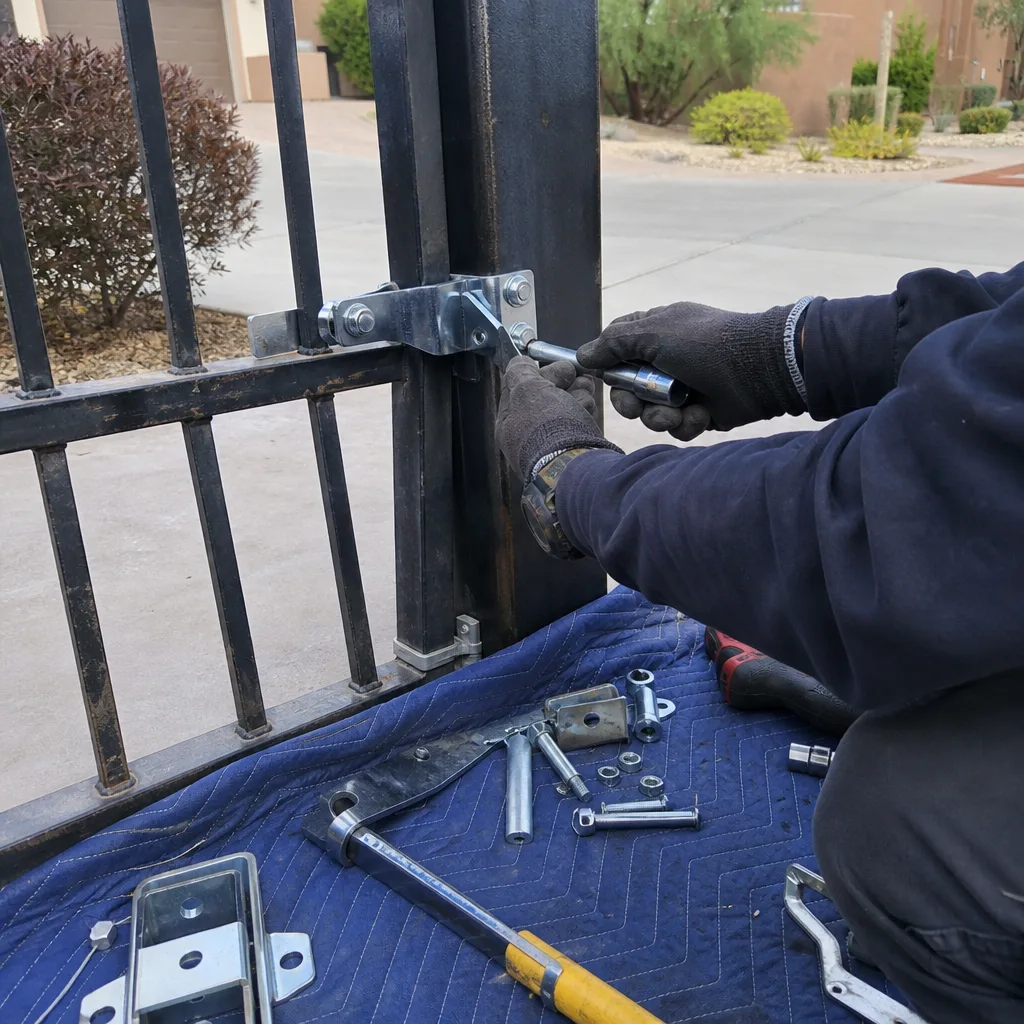
- Where Nevada Draws the Line: Repair vs. New Installation
- The Clark County Permit Threshold for Gate Work
- Summerlin HOA Overlays: The Vistas, The Paseos, Stonebridge
- UL 325 Entrapment Protection and How to Check an Existing Gate
- What the Inspector Actually Looks At
- How Unpermitted Gate Work Shows Up on a Property Record
- Remediation If a Previous Owner Skipped the Permit
- Common Mistakes to Avoid
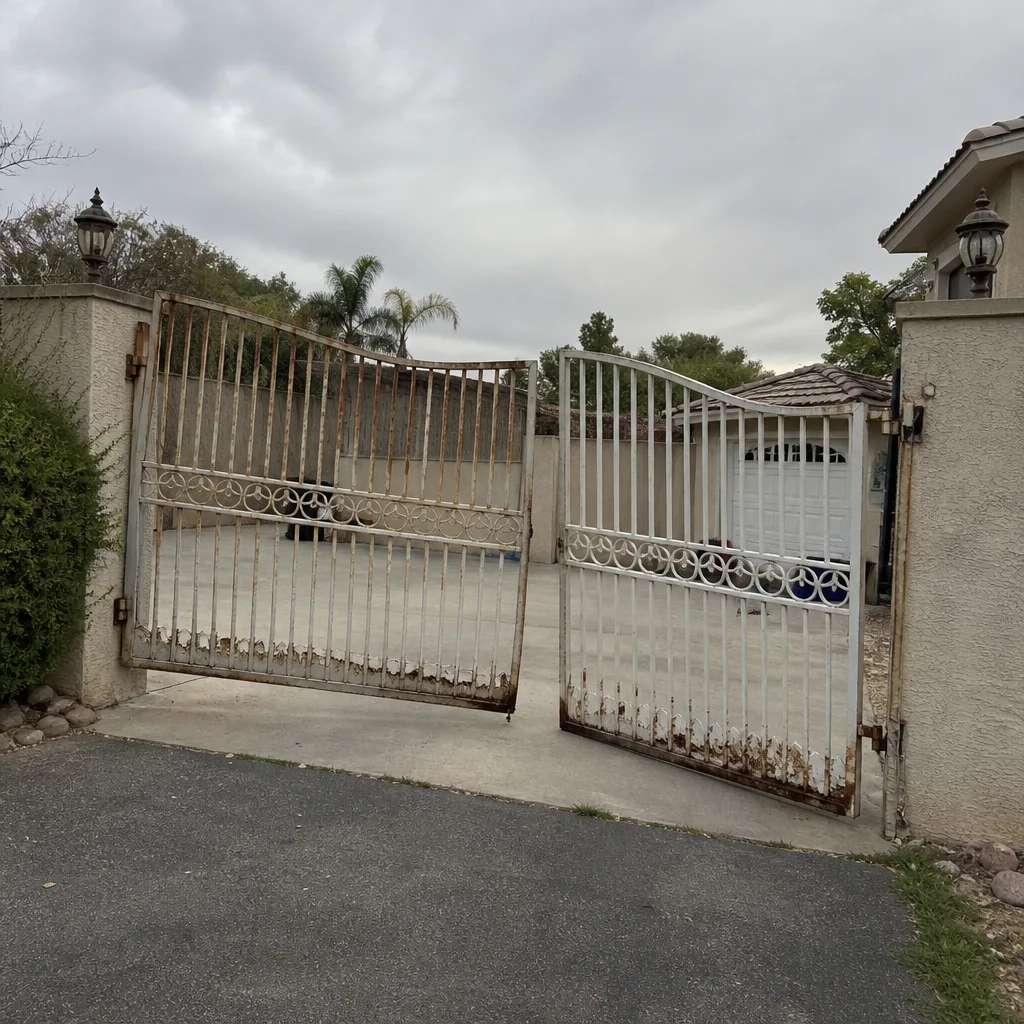 Before
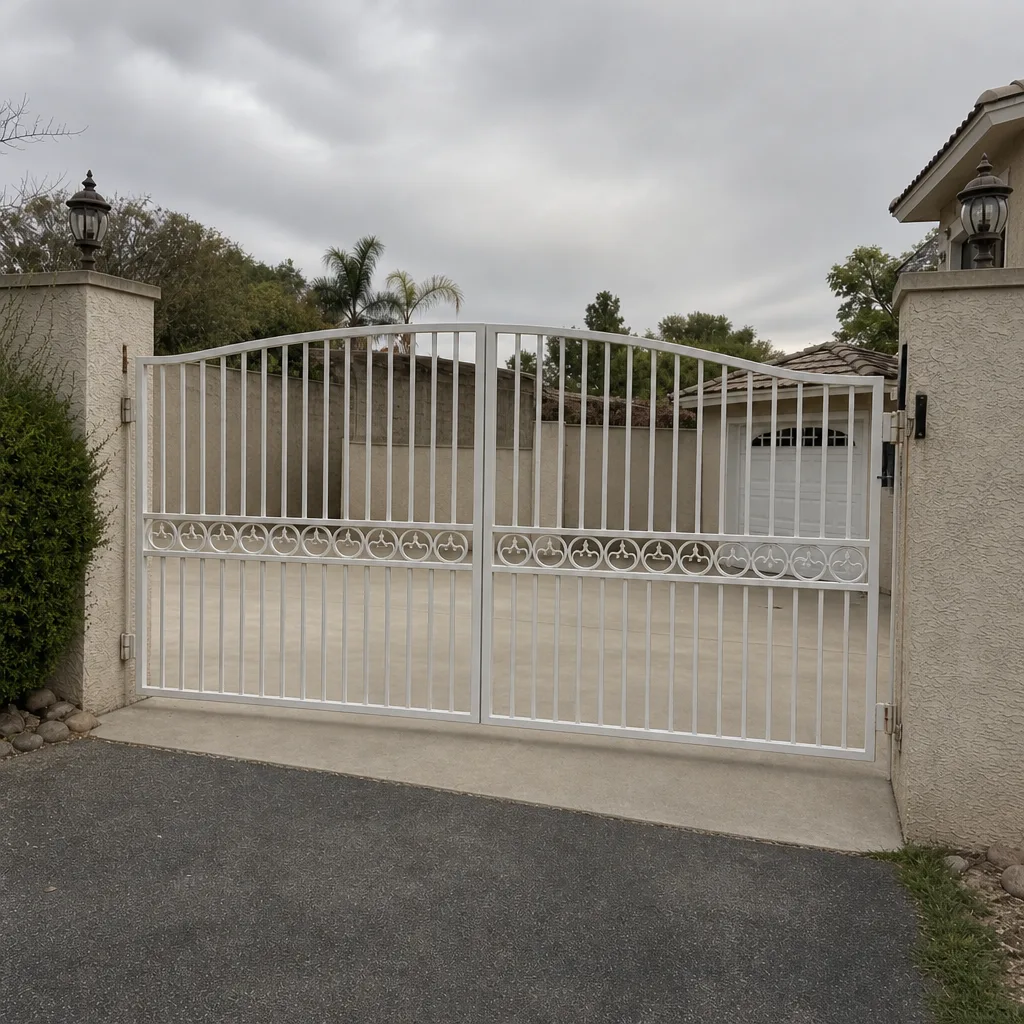 After
Where Nevada Draws the Line: Repair vs. New Installation
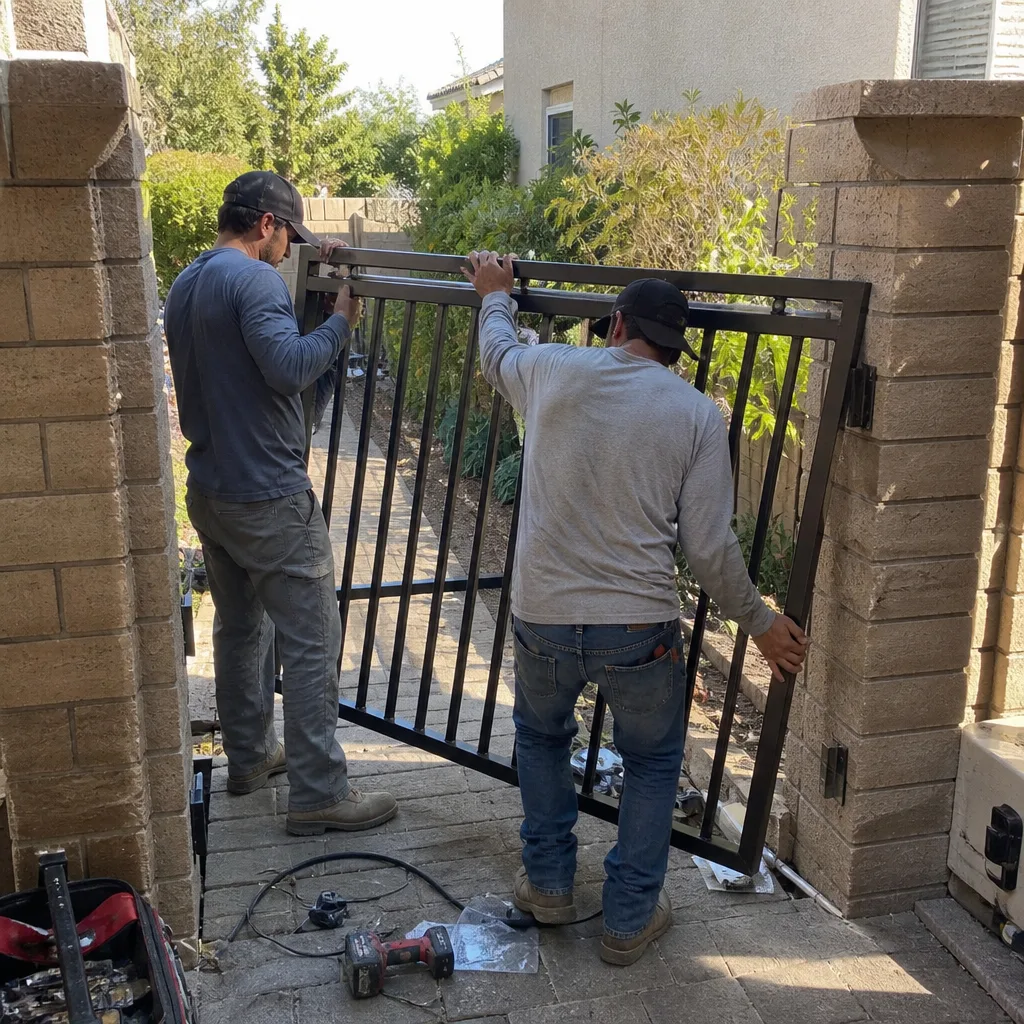
The single most useful distinction in Nevada gate code is the one between maintaining an existing assembly and creating a new one. Repair means bringing a gate back to the condition it was already approved in: new hinges, a fresh spring, a weld on a sagging frame, a replacement photo-eye. New installation means adding something that wasn’t there before or changing the assembly in a way that affects structural, mechanical, or electrical systems. Repairs generally don’t pull permits. Installations often do.
Under NRS and the International Building Code as adopted in Nevada, the work that typically falls on the “permit required” side includes:
- Installing a new automatic operator on a gate that had none before
- Replacing a structural post or changing the post footing depth
- Adding a dedicated electrical circuit or running new conduit to the gate location
- Changing gate dimensions, materials, or swing radius enough to affect clearances
- Adding a pedestrian access gate to an existing driveway gate
The work that almost never requires a permit:
- Replacing a motor of the same class on an existing, permitted operator assembly
- Resetting limit switches, replacing a control board, swapping a battery backup
- Aligning photo-eyes, replacing safety edges, retensioning a chain
- Cosmetic refinishing or hardware swaps that don’t change structure
The gray zone that catches homeowners in Summerlin is replacing a motor with a different class of operator. If the original equipment was a light-duty residential arm and a heavier LiftMaster or Elite unit goes in, that’s a functional change, not a like-for-like repair. In our experience, that’s exactly when a mechanical permit is warranted and often skipped.
The Clark County Permit Threshold for Gate Work
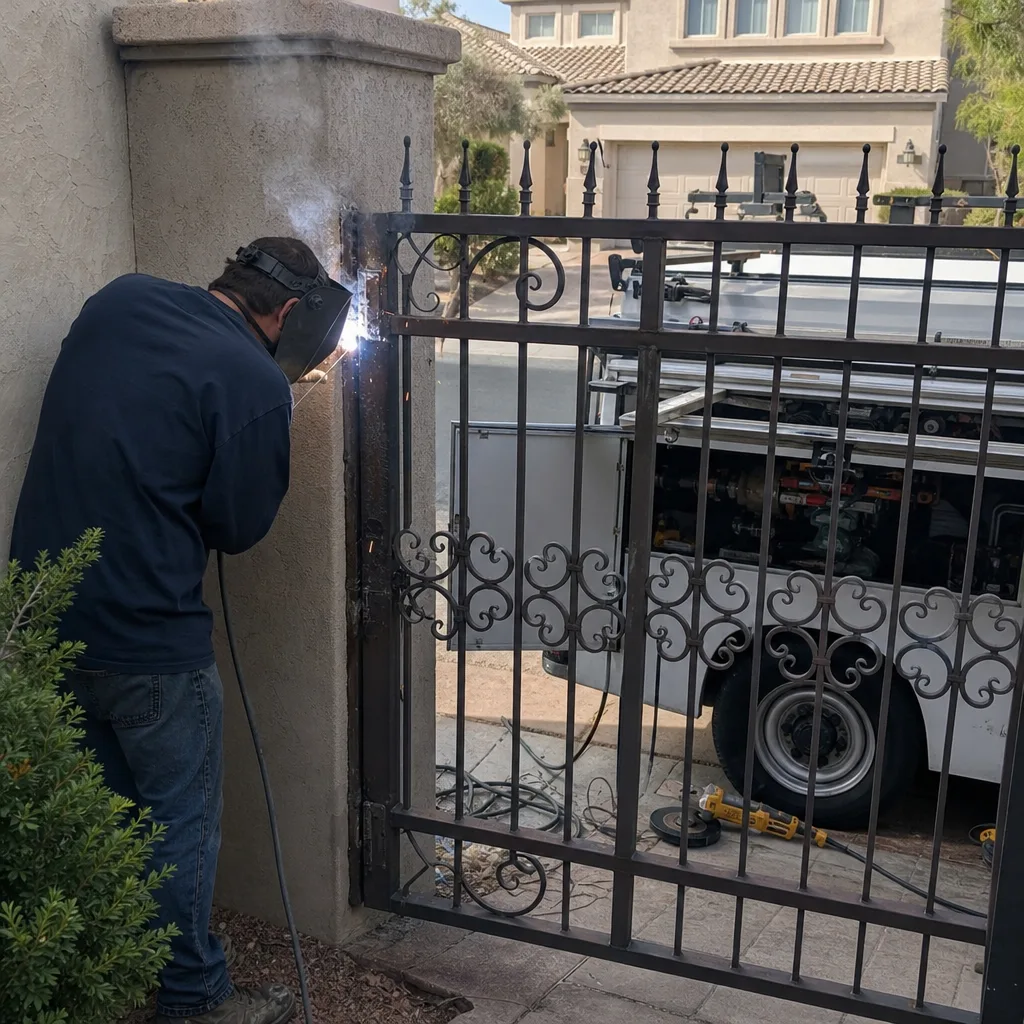
Clark County’s building department treats mechanical and electrical permits separately, and gate work can touch both. A new automatic operator generally needs a mechanical permit under the mechanical code section that covers “other than HVAC” equipment. The dedicated 120-volt circuit that feeds the operator generally needs a separate electrical permit if one isn’t already in place. Structural post replacement or a new footing can pull a building permit on top of that.
What that means in practice:
- Confirm what’s already permitted. Pull the property record through the county’s online portal. If the original operator was permitted, a like-for-like motor swap is usually treated as repair.
- Check the electrical. If the gate is fed by a dedicated circuit that’s already on the record, no new electrical permit is needed for a motor swap. If the circuit is a homeowner extension cord run or a shared line, expect a permit.
- Confirm the structural question. If the post footing stays intact and the assembly stays the same, the structural permit usually drops away.
- File before you dig. If a footing change or a new operator is on the menu, apply before the work, not after.
The permit window for a straightforward gate mechanical permit in Clark County runs a few business days in our experience, though the county’s queue flexes with volume. The permit fee is usually modest compared to the cost of discovering the issue at resale. That’s the whole argument for getting it right up front.
Summerlin HOA Overlays: The Vistas, The Paseos, Stonebridge
Summerlin adds a layer that most Nevada permit write-ups ignore: architectural review. The master-planned communities here, including The Vistas, The Paseos, and Stonebridge, each run their own architectural review process through the community association. That approval is separate from any Clark County permit. You can have a fully permitted gate that still violates the HOA’s design guidelines, and the HOA can require you to tear it out.
The order that works:
- Read the design guidelines for your village first. The Vistas, The Paseos, and Stonebridge all restrict gate height, style, finish, and (in some sections) restrict visibility through the gate.
- Submit the architectural request. Drawings and finish samples usually go with it. Turnaround runs a few weeks in our experience.
- Get county approval where required. This can happen in parallel, but don’t let the contractor start before both are in hand.
- Keep the approval letter. When you sell, the architectural approval letter is the piece of paper that answers “was this gate approved?” faster than anything else.
We’ve seen Summerlin homeowners order a beautiful custom gate, install it, and then face a removal order because the finish didn’t match the village guidelines. That’s an expensive way to learn the rule. Architectural review is not the same as a permit, and neither one replaces the other.
UL 325 Entrapment Protection and How to Check an Existing Gate
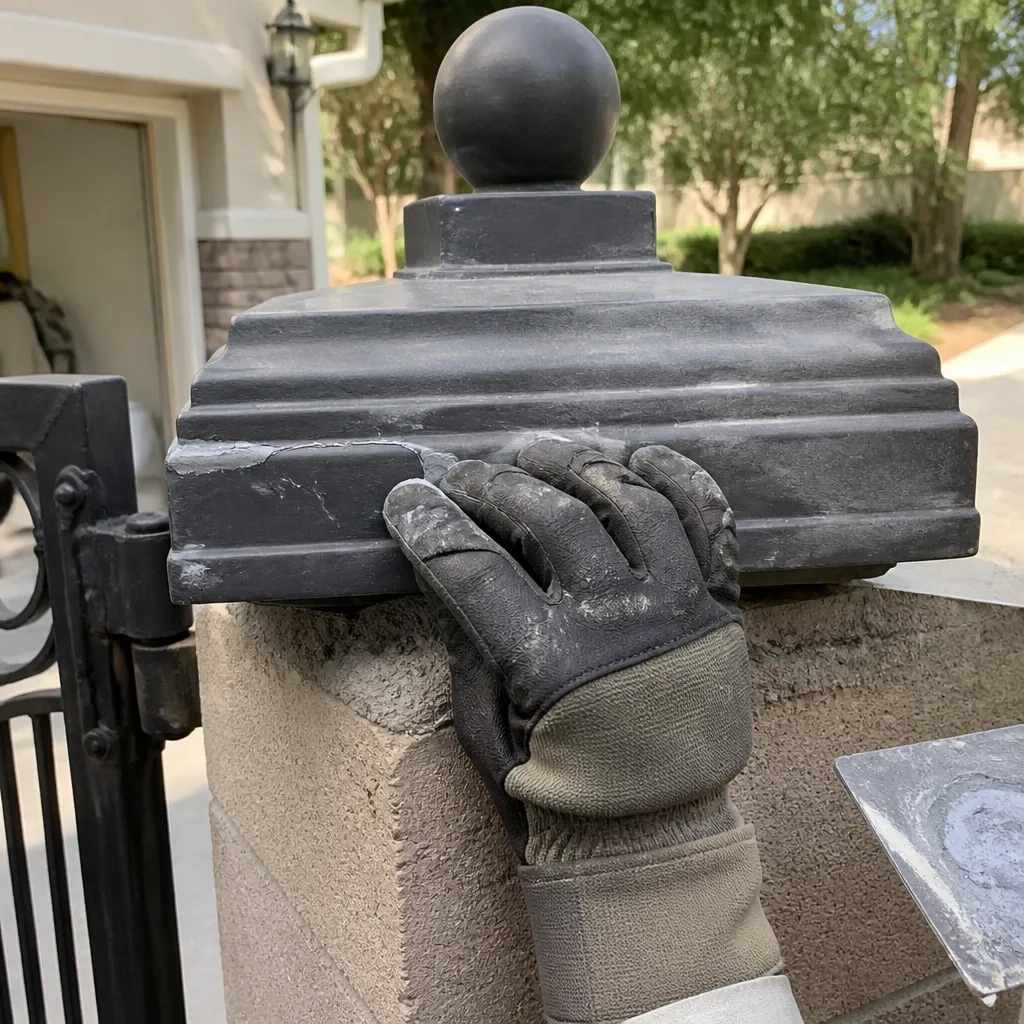
UL 325 is the safety standard that governs every automatic vehicular gate. It’s what requires a gate operator to have entrapment protection: the photo-eye beam, the safety edge on the gate face, and (for some operators) a built-in timer that reverses the gate if it doesn’t complete travel. The standard applies whether or not a permit was ever pulled. If your gate replaced a driveway gate and it moves automatically, UL 325 is the bar.
You can verify most of it without a full re-install:
- Photo-eye test. Break the beam with your hand while the gate is closing. The gate should reverse. If it keeps going, the eye is misaligned or dead.
- Safety edge test. Press the leading edge of the gate (with the operator moving) and confirm the gate reverses. On older gates without a safety edge, this is often the missing piece.
- Manual release. Confirm the release handle actually works and the gate can be pushed open by hand. Confirm it doesn’t need a key that’s lost.
- Warning signage. There should be a visible warning placard on the gate. It’s a cheap fix and one inspectors look for.
- Operator spec. Check the UL 325 class rating on the operator label. DoorKing and LiftMaster label theirs clearly and it takes thirty seconds to read.
Where homeowners get into trouble is when a prior owner disabled the photo-eye because the family dog kept tripping it. That’s a real story we’ve walked into more than once. Re-enabling it is often a five-minute reset. Leaving it off is a liability question nobody wants.
What the Inspector Actually Looks At
When a permit is required, the inspection is usually more straightforward than homeowners fear. The inspector isn’t reading every line of the manual. They’re confirming the installation matches what was permitted, that it’s safe, and that the documentation supports both.
What inspectors typically check on a gate permit:
- That the operator installed matches the permit application. Brand, model, class.
- That the electrical connection is correct. Conduit terminations, disconnect location, GFCI on the supply if applicable.
- That UL 325 entrapment protection is present and functioning. Photo-eye reversal and, where required, safety edge.
- That the structural post and footing match the approved drawings. Depth, material, anchoring.
- That the gate operates cleanly through a full open-close cycle. No binding, no over-travel, limit switches set correctly.
The documentation that speeds approval every time:
- The permit application and any approved drawings, on-site
- The operator’s manufacturer spec sheet and UL 325 class statement
- Wiring diagram for the control circuit
- Photos of the post footing before backfill
- The HOA architectural approval letter, if applicable
We hand over the full package on every permitted job because it isn’t just for the inspector. It’s for the next technician, and for the day the house sells. Under Clause 4 (Evidence on every job) at Vance Gate Repair, every visit includes a documented photo record at no additional charge. For permitted installs, that record goes with the homeowner as part of the closeout.
How Unpermitted Gate Work Shows Up on a Property Record
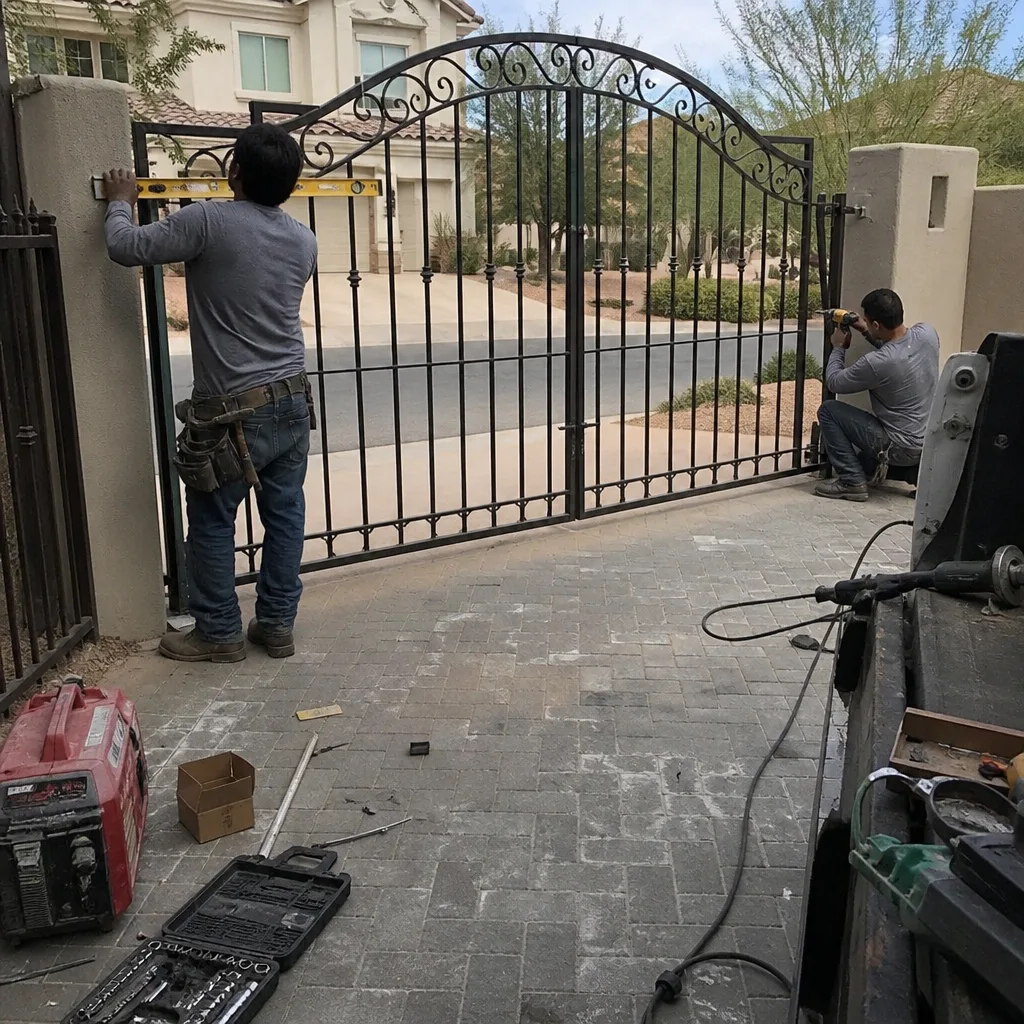
Unpermitted gate work typically surfaces in three places. First, the county’s parcel record: the operator or footing doesn’t appear under permits, so there’s no evidence the change was ever approved. Second, the seller’s disclosure: in Nevada, sellers are required to disclose known unpermitted improvements, and a gate operator that was swapped without a permit is one. Third, the buyer’s inspection: any competent gate technician doing a pre-purchase inspection will spot the discrepancy between the operator’s date code and the last permit on record.
The practical fallout:
- Negotiation leverage. The buyer’s agent uses the discrepancy to argue for a credit or a price reduction.
- Lender scrutiny. Some lenders want confirmation that permitted improvements are documented before they fund.
- Insurance questions. If a gate operator is involved in a claim, an unpermitted install muddies the picture.
None of these are catastrophic. All of them cost the homeowner time and money at the worst possible moment, usually mid-escrow when there’s no time to sort it out.
Remediation If a Previous Owner Skipped the Permit
Remediation almost always follows the same path, and it’s manageable. The first step is figuring out what was actually installed and when. If the operator is a Mighty Mule or a comparable residential unit that was clearly a like-for-like replacement, the fix is usually a retroactive inspection and a closeout, not a tear-out. If the install included a new post or new electrical, expect a small permit and an inspection.
Typical remediation sequence:
- Pull the permit history. Confirm what’s on record and what isn’t.
- Document what’s installed. Operator brand, model, date code, electrical feed, post condition. Photographs help.
- File a permit as a “replacement in kind” where the install supports it. This is the least invasive path.
- Bring the gate to UL 325 compliance. Photo-eye, safety edge if the operator class requires it, warning placard.
- Walk the inspection. With the documentation in hand, most of these pass first time.
If the install was structurally noncompliant (undersized post, wrong footing), the remediation can require replacement of the affected component. That’s why the initial inspection matters: it tells you which path you’re on before anyone picks up a shovel.
Common Mistakes to Avoid
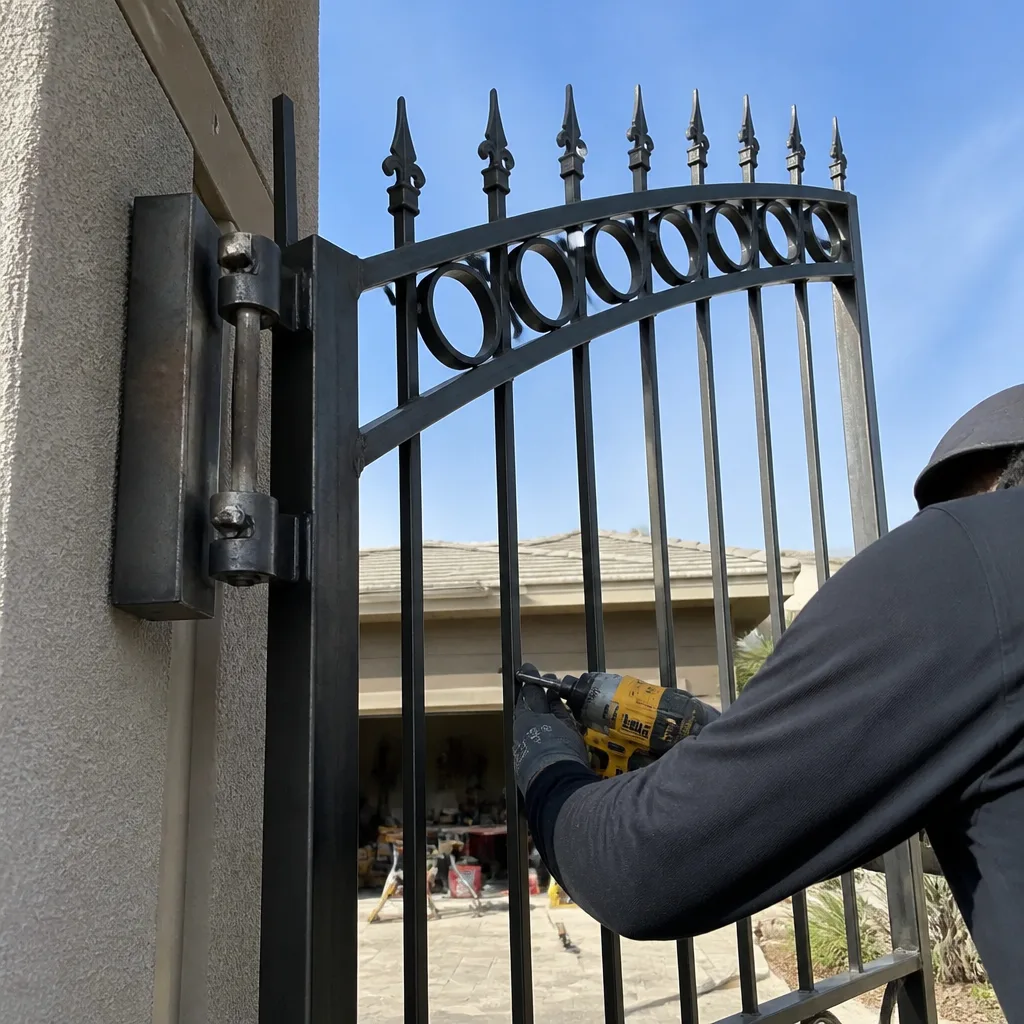
- Assuming the contractor pulled the permit. If you didn’t see a permit number, it probably wasn’t pulled. Ask for the number in writing before the invoice is paid.
- Swapping to a heavier operator without permitting it. A residential-to-commercial-class upgrade is a functional change. In Summerlin, we’ve seen this flagged at resale more than once.
- Skipping HOA approval because the county permit came through. County approval does not satisfy architectural review in The Vistas, The Paseos, or Stonebridge.
- Ignoring the photo-eye because the dog trips it. That’s a UL 325 violation, and it’s the first thing any inspection will catch.
- Letting an electrician run the feed without a permit. The 120-volt circuit needs its own electrical permit if it isn’t already documented on the property record.
- Discarding the manufacturer spec sheet. The inspector wants the UL 325 class statement. Without it, the inspection stalls.
See the difference
BeforeAfter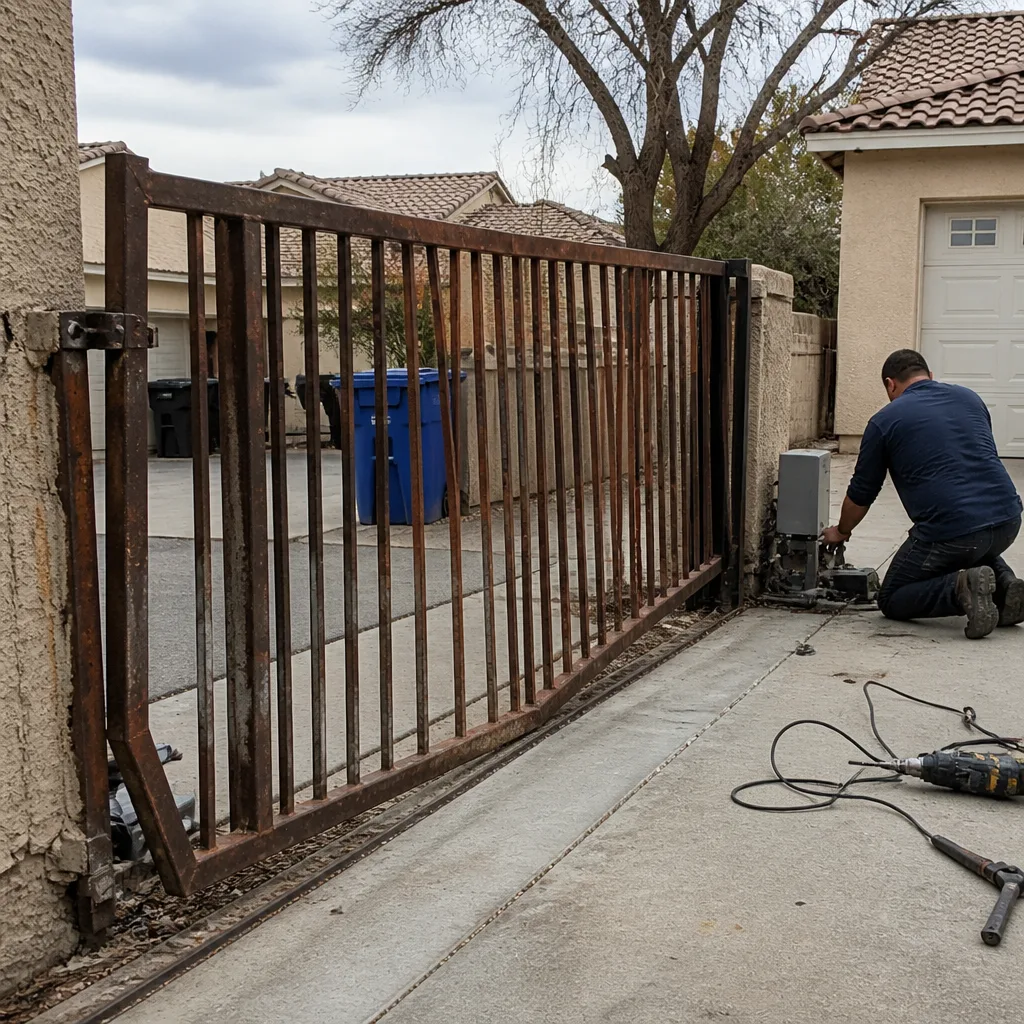 Before
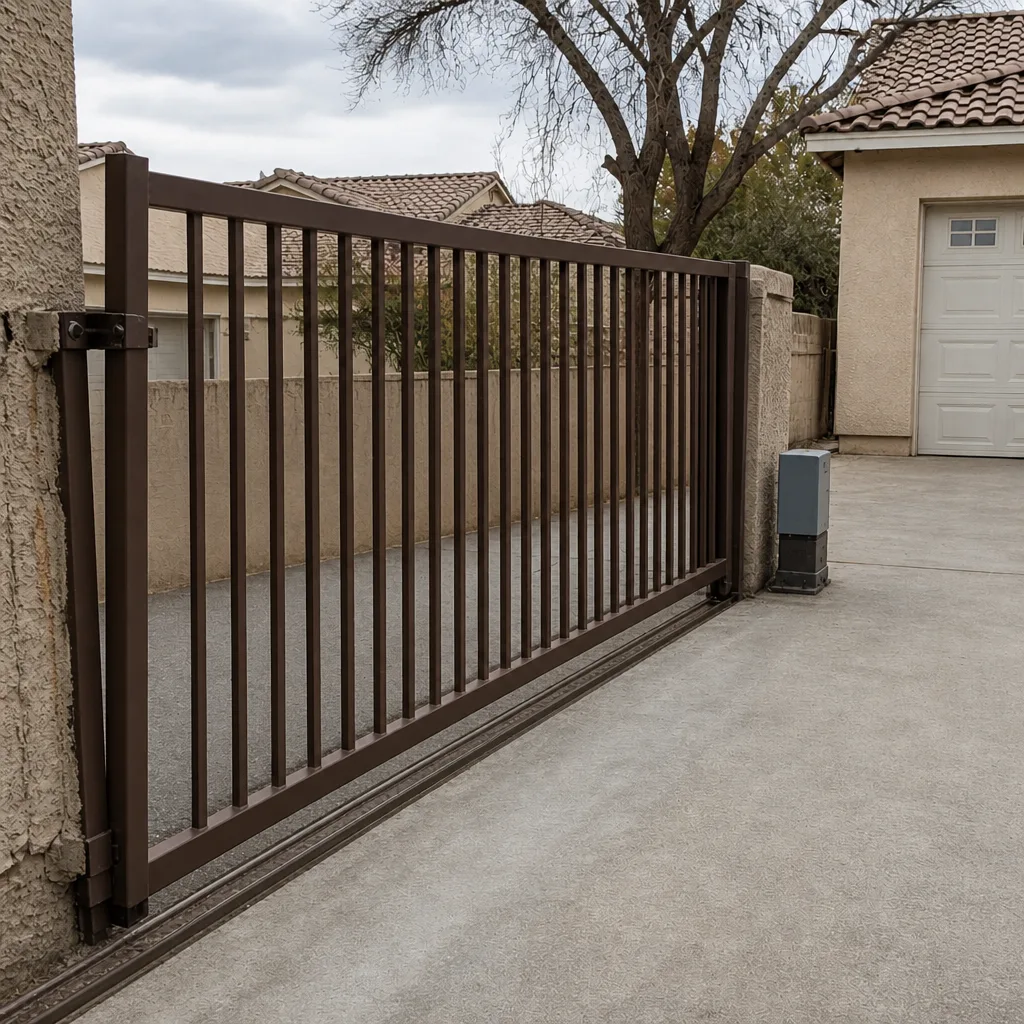 After
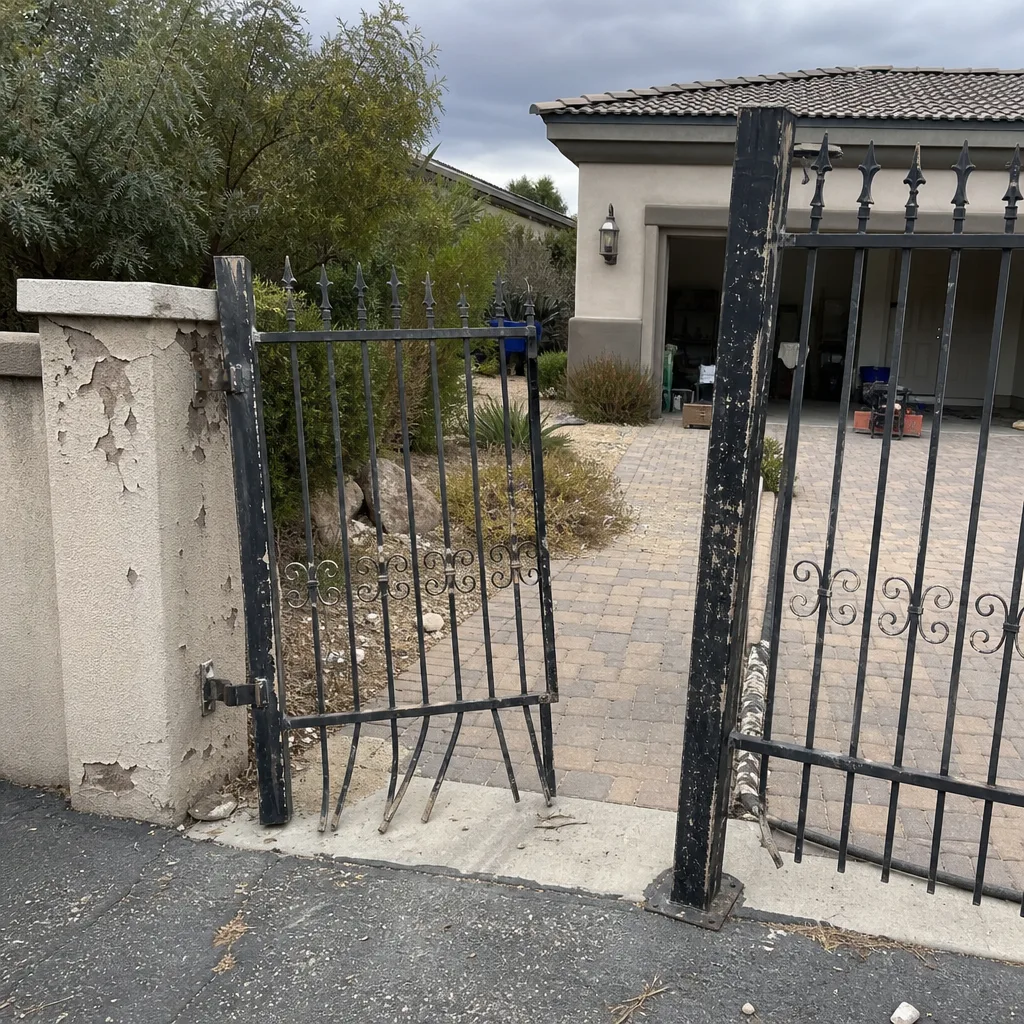 Before
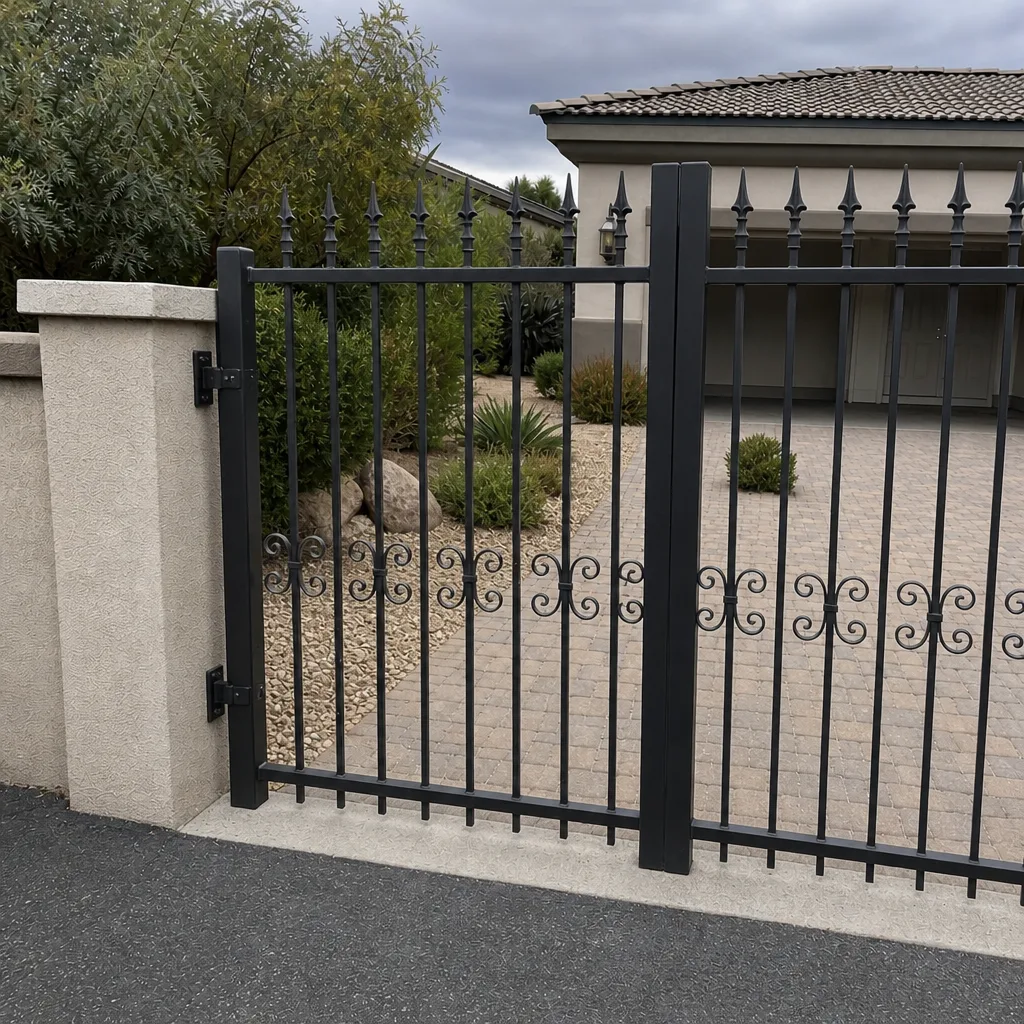 After
When to Call a Professional
Call a professional when the work involves anything above ground level on the post, anything that changes the electrical service to the gate, or any operator swap where the class or brand is changing. Call when the operator is binding through travel, when the photo-eye isn’t reversing the gate, or when the manual release won’t move the gate by hand. Call before you accept a quote that doesn’t include a permit line item for work that clearly needs one. And call when you’re selling a Summerlin home and can’t find the paperwork for the last gate install. Vance Gate Repair Summerlin offers free estimates in Summerlin. Call (844) 797-2809 and we’ll look at the gate, the paperwork, and the property record with you. You get the finding in writing before any work starts, and a photo record when we leave.
Frequently Asked Questions
Most gate repairs in Nevada don’t require a permit: replacing a motor of the same class, resetting limits, aligning a photo-eye, and swapping hardware are repair work. Permits usually kick in for new operator installation, structural post replacement, or a new electrical circuit. Call (844) 797-2809 and we’ll confirm which category your job falls into before anyone schedules it.
Yes, in most cases. A new automatic operator in Clark County typically requires a mechanical permit, and the dedicated 120-volt circuit that feeds it usually needs an electrical permit if one isn’t already documented. A like-for-like motor swap on an existing permitted operator is usually treated as repair, not installation. Call (844) 797-2809 for a written scope.
Yes. The Vistas, The Paseos, Stonebridge, and the other Summerlin villages each run architectural review through the community association. That approval is separate from a Clark County permit, and both can be required for the same job. Get the HOA approval in hand before the contractor orders materials. Call (844) 797-2809 if you’re not sure which approvals your job requires.
Check three things: that the photo-eye reverses the gate when you break the beam, that the safety edge (if the operator class requires one) reverses the gate when pressed, and that a warning placard is visible on the gate. If any of those fail, the gate doesn’t meet UL 325. Call (844) 797-2809 and we’ll walk it through with you.
The requirement to disclose known unpermitted improvements applies in Nevada, so you’ll need to disclose it, and it usually turns into a negotiation credit or a remediation task before closing. It’s fixable. The remediation typically involves pulling a permit as a replacement in kind and walking the inspection with documentation. Call (844) 797-2809 to get ahead of it before the listing goes live.
It can complicate a claim, but “invalidates” is too strong a word. The insurer’s question is usually whether the installation was done to code and by a qualified installer. An operator that doesn’t meet UL 325 is a weak point in any claim involving the gate. Call (844) 797-2809 if you want a written assessment of what’s installed and what it would take to bring it to code.
The Bottom Line
Most Nevada gate repair doesn’t need a permit. The work that does (new operator installation, structural post replacement, new electrical service) is precisely the work homeowners are most likely to have done without asking. In Summerlin, the picture includes a second approval layer through the village HOA, a UL 325 standard that applies regardless of permit status, and an inspection that is faster and cheaper when the documentation is on-site. The cost of getting it right is small. The cost of discovering an unpermitted install mid-escrow is not. If you’re unsure which side of the line your job falls on, that’s the call worth making.
To get a written scope, a written price, and a documented photo record on any gate job in Summerlin, call Vance Gate Repair Summerlin at (844) 797-2809 for a free estimate. You get the number in writing before work starts, and a live person answers at any hour. For more on the specific services, see our Vance Gate Repair Summerlin home page, our Gate Repair in Summerlin service, our Gate Installation in Summerlin page for new builds and replacements, and our Gate Motor & Opener in Summerlin page for operator questions.
Written by the team at Vance Gate Repair Summerlin.