
Last updated November 17, 2026
 Wrought iron
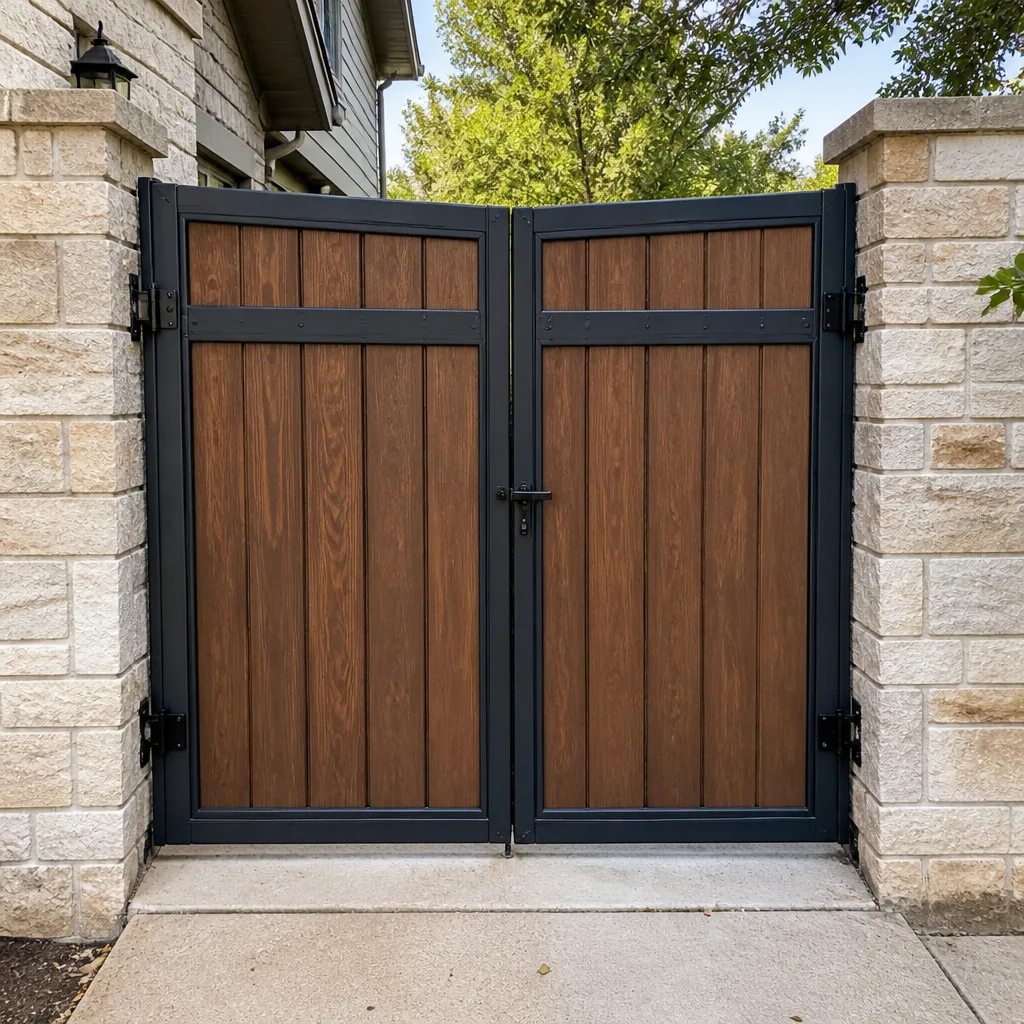 Wood & steel frame
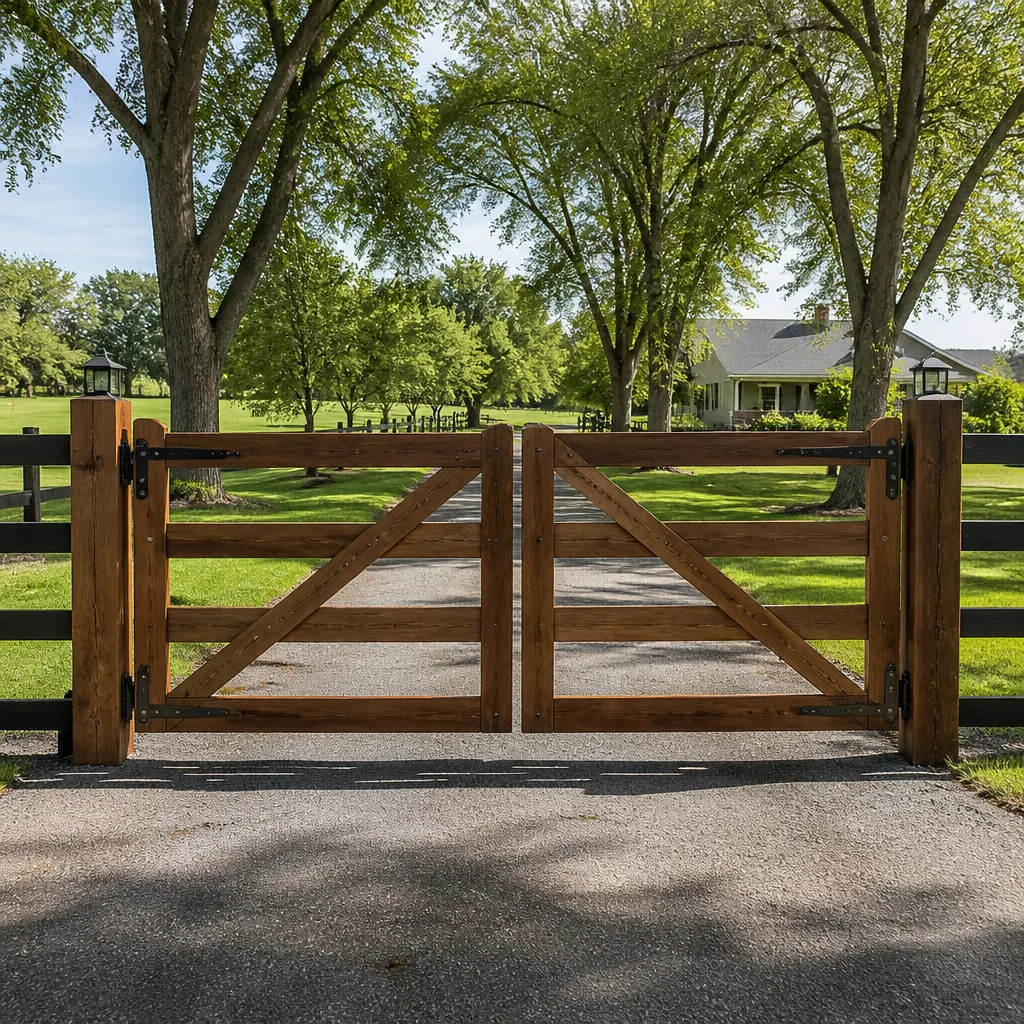 Farm & ranch
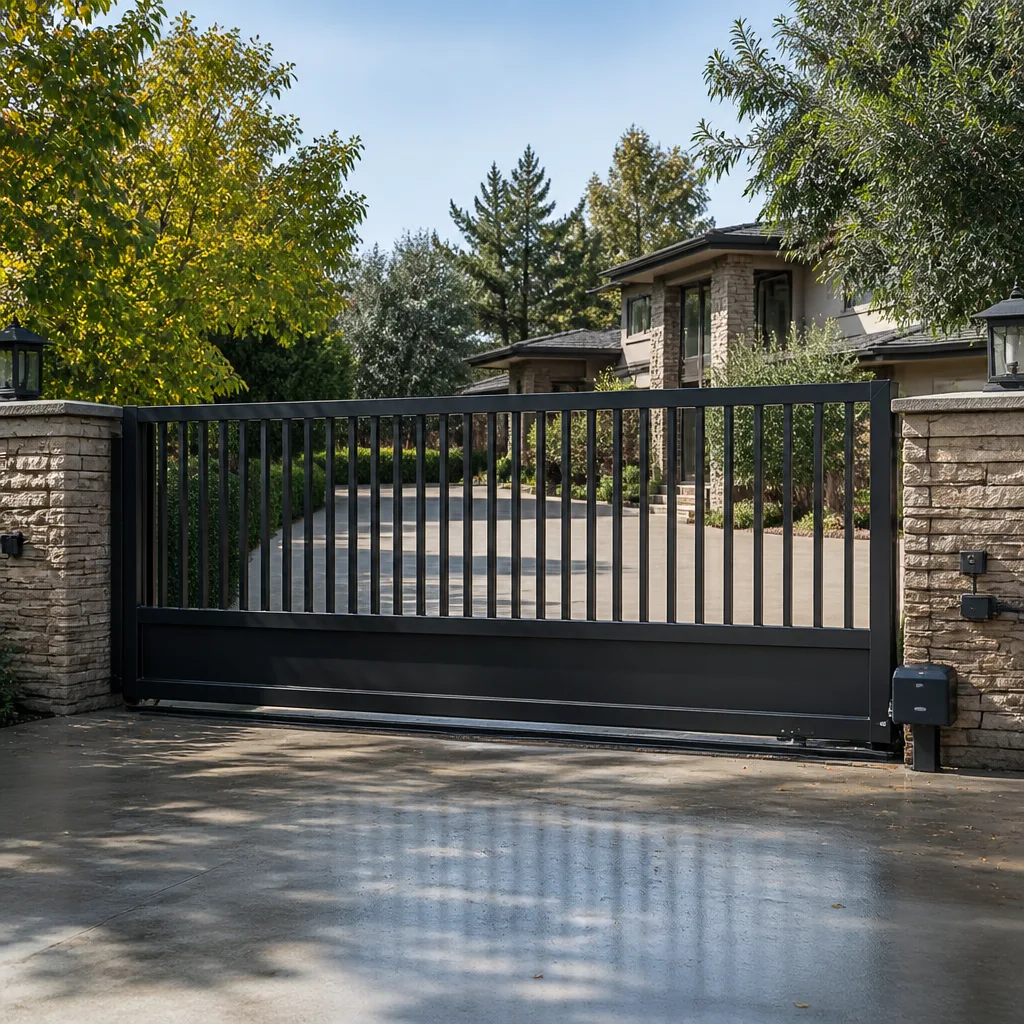 Sliding driveway gates
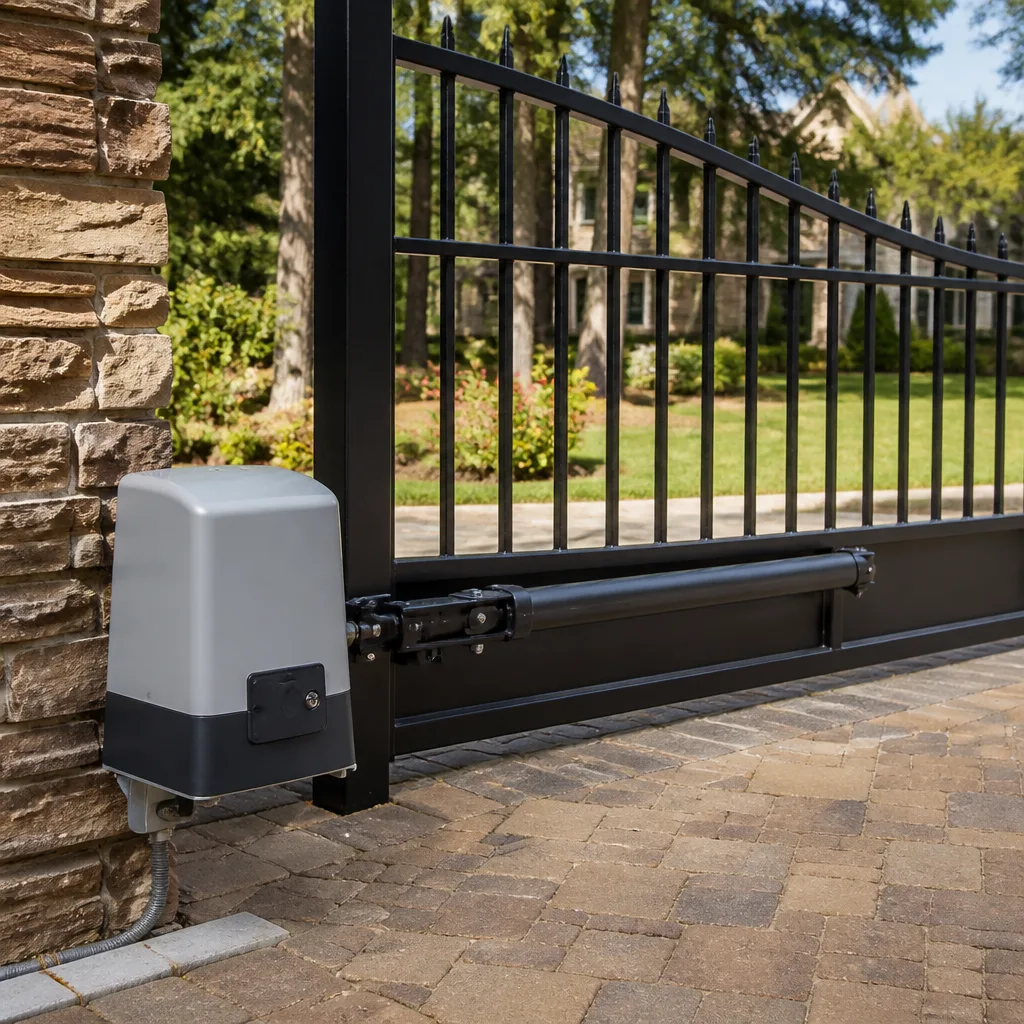 LiftMaster operators
Free on-site gate assessment - hinges, posts, and your LiftMaster or Nice gate operator checked before anything is quoted
The assessment is free and the quote is the invoice.
Get your free estimateGate Repair Maintenance Schedule: What to Do and When
Most gate maintenance advice you’ll find was written for a temperate climate, and it shows. That generic “lubricate every six months” rule has a real problem in Summerlin: chain and hinge lubricant burns off in roughly 90 days once summer sets in, and dust collects inside control board housings on a monsoon rhythm, not a calendar quarter. If you’ve been following a quarterly checklist and your gate still acts up every August, the schedule is the issue, not your gate. This guide replaces the generic list with a heat-and-dust-aware calendar built for Summerlin, plus the self-inspections you can safely run and the thresholds that mean it’s time to call us.
Quick Answer
In Summerlin, gate maintenance should follow seasonal heat and irrigation cycles rather than fixed calendar quarters: lubricate chains, hinges, and rollers every 90 days through summer, inspect the control board in April before the first heat wave, check wiring and photo-eyes in October after monsoon season, and verify limit switches in mid-winter. Self-inspection covers visual and hands-on checks only. Springs, high-voltage wiring, and control board work should go to a trained technician.
Styles & brands we work with
- Wrought iron
- Wood & steel frame
- Farm & ranch
- Sliding driveway gates
- LiftMaster operators
Table of Contents
- Why a Calendar Schedule Fails in Summerlin
- The Summerlin Month-by-Month Maintenance Calendar
- What You Can Safely Inspect Yourself
- Building a Maintenance Log That Actually Helps a Technician
- Irrigation Overspray and the Two-Foot Clearance Rule
- What a Professional Visit Should Leave Behind
- Common Mistakes to Avoid
- When to Call a Professional
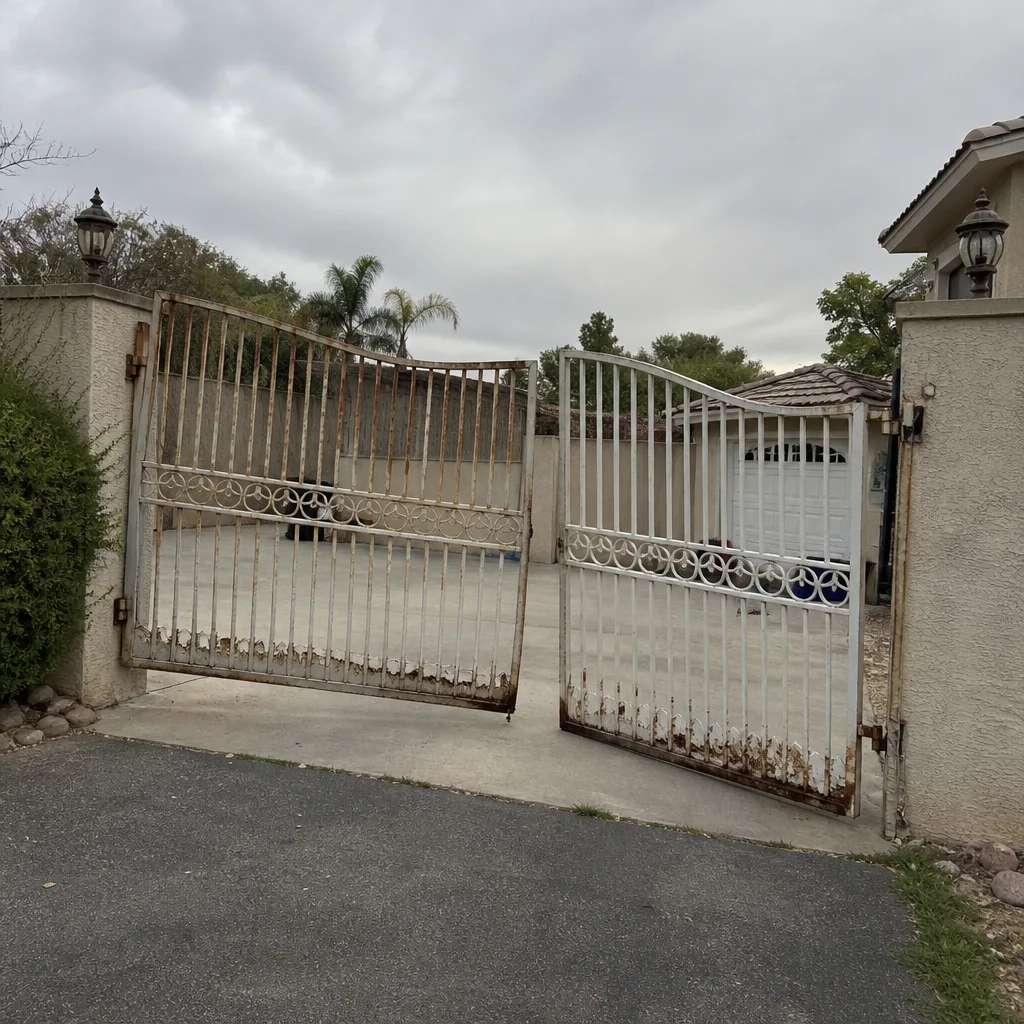 Before
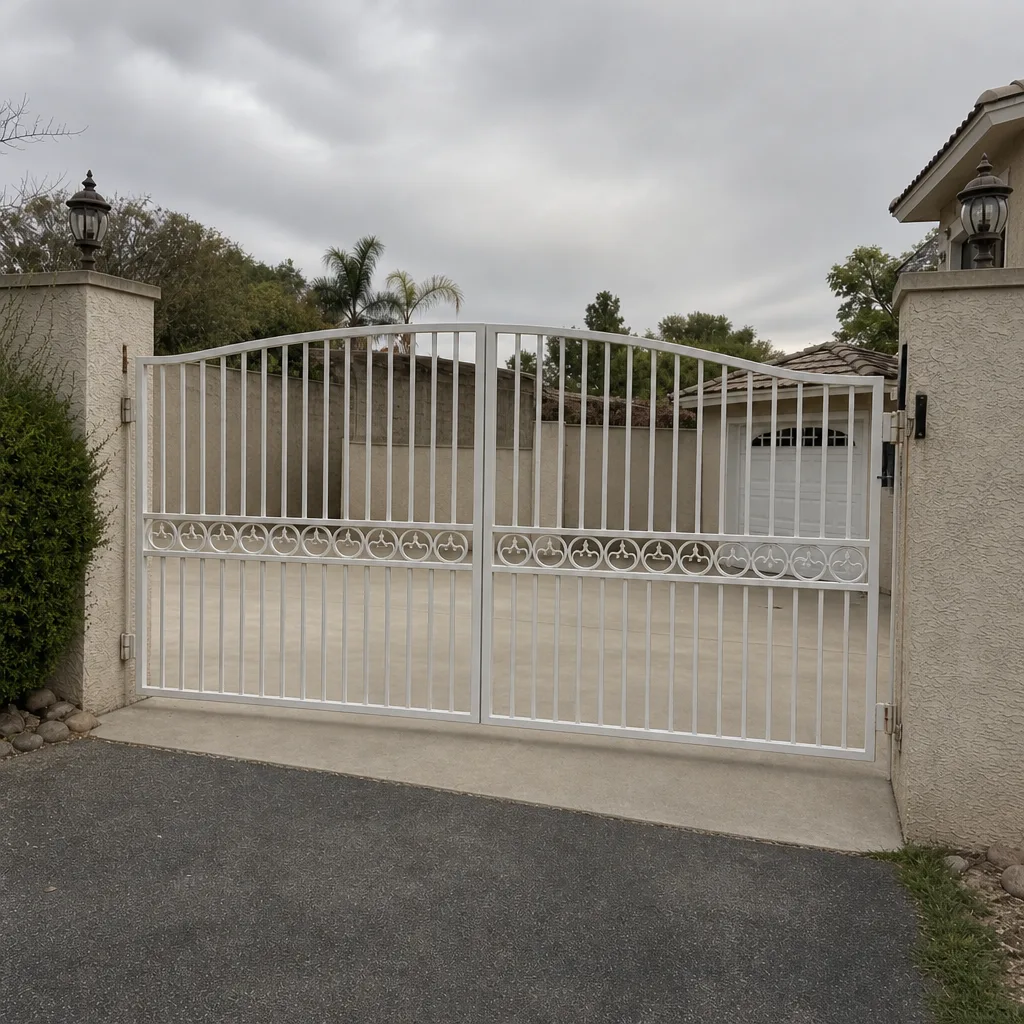 After
Why a Calendar Schedule Fails in Summerlin
The standard maintenance advice assumes mild, fairly humid seasons. Summerlin doesn’t run that way. From June into September, surface temperatures on dark metal operators and chain runs climb high enough that standard lithium grease thins and migrates off the contact points. By the 90-day mark, what was a well-lubricated chain in May is running dry in August, and the wear that follows is measurable.
Then monsoon season flips the problem. Wind-driven dust and fine grit settle into the control board housing, the photo-eye lenses, and the hinge pins. That dust doesn’t follow a quarterly schedule either. It arrives with the storms, which is why the inspection point that matters most in Summerlin lands in October, right after the season closes.
We see this pattern repeat across the valley. A gate in The Ridges on a quarterly plan and a gate in Red Rock Country Club on the same plan will fail at different times because they sit on different irrigation schedules and different wind exposures. The calendar that works here is tied to heat events and irrigation cycles. That’s the whole adjustment, and it’s the difference between a gate that runs reliably through July and one that starts grinding.
One more local factor: Summerlin’s new-build density means a lot of gates here are relatively young, and young gates lube and inspect differently than a 15-year-old operator. Age changes the interval more than most people expect. If you’re near the edge of an interval or unsure where your gate stands, our Gate Repair in Summerlin page covers what a diagnostic visit looks like.
The Summerlin Month-by-Month Maintenance Calendar
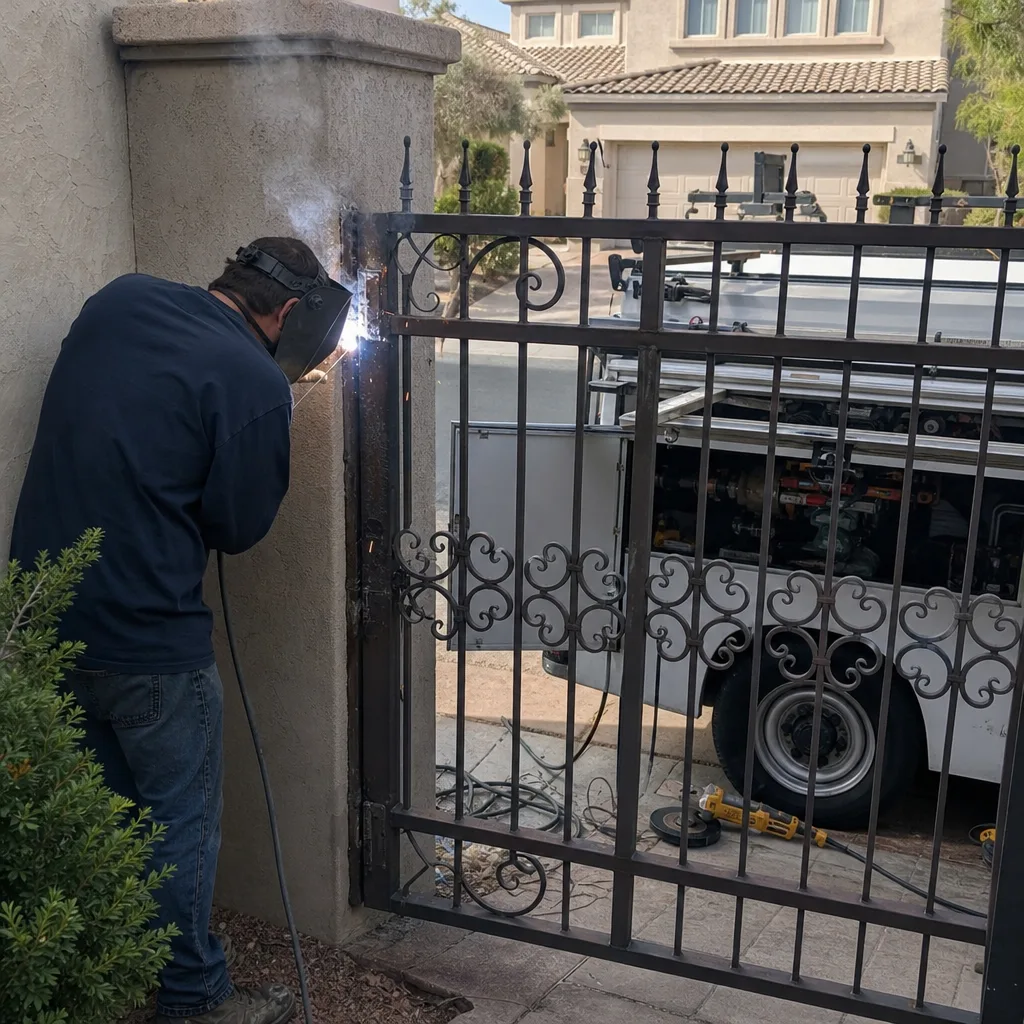
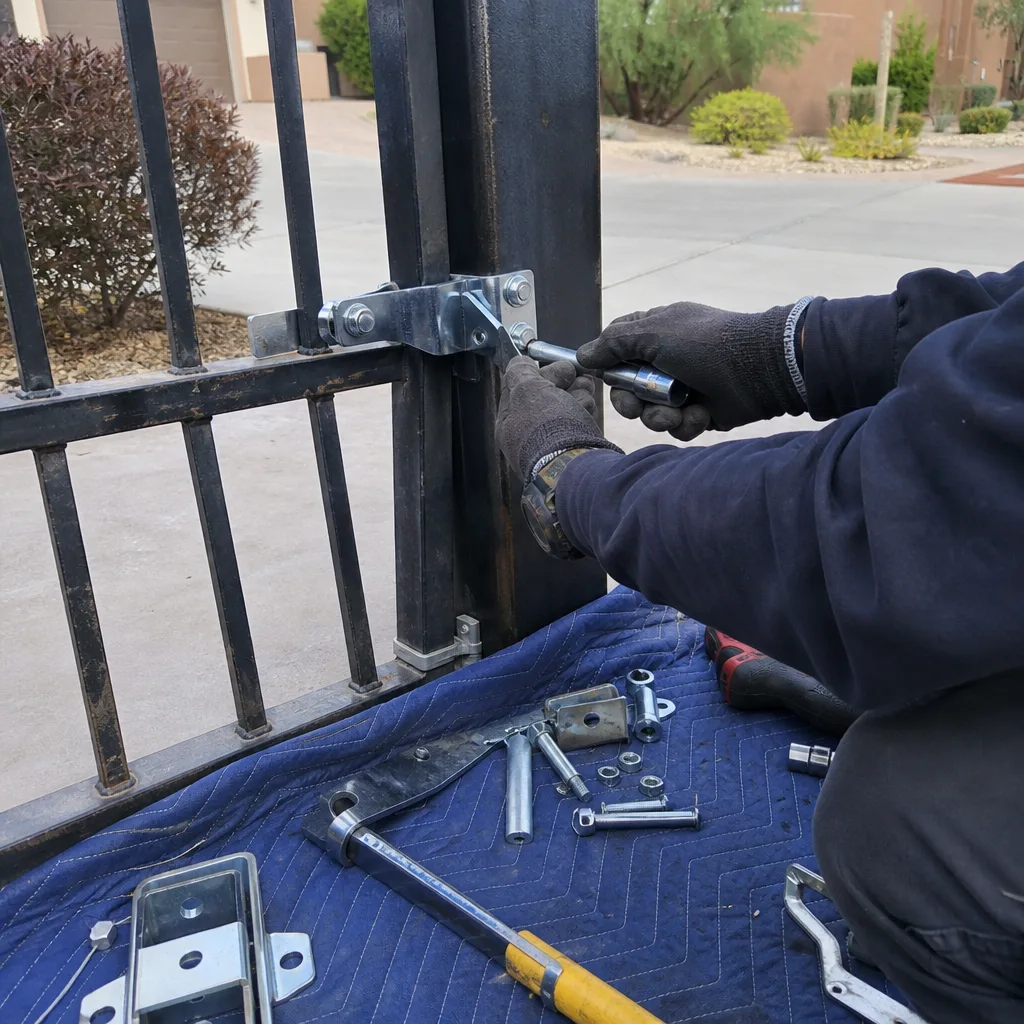
Here’s the schedule we recommend for residential gates in Summerlin. Not every gate needs every task every month, but the seasonal anchors are firm.
- April (pre-summer): Full control board inspection. Look for dust buildup and spider webbing inside the housing, check that terminal connections are tight, and confirm the board is clean before the first sustained heat. This is the single most important annual task in this climate.
- May through September (every 90 days): Lubricate the chain, hinges, rollers, and track with a lubricant rated for high heat. Re-check at roughly the 90-day mark each time, because that’s when summer burn-off happens.
- June and August: Wipe and clean photo-eye lenses. Dust and fine grit settle on them fast during high-heat months, and a dirty lens mimics a misalignment problem.
- October (post-monsoon): Wiring check. Inspect exposed conduit and connections for grit intrusion, moisture, and loosened fittings after the storm season. Clean out the control board housing again.
- November: Verify the manual release works. Cooler weather makes this an easy check and it’s the function you’ll rely on most during a power interruption.
- December through February (mid-winter): Verify limit switches. Cold mornings exaggerate any drift in travel settings, so a limit switch that was set correctly in summer can reveal itself now.
- March: Full visual walk-through – hinge gaps, chain tension by eye, gate sag, and any new rust at the weld points. This sets the stage for the April board inspection.
Print it. Put it inside the operator housing door or on the inside of the garage wall. The schedule only works if it’s visible when you’re standing at the gate.
What You Can Safely Inspect Yourself
Plenty of a gate’s health is visible to a careful homeowner. A few checks, done correctly, catch most developing problems before they become repair calls. Here’s what’s safe to handle, and the threshold that means stop and call.
- Chain tension (visual and a light press): With the gate powered off, press down on the middle of the chain run. A small amount of give is normal. If it sags more than about half an inch below the chain guide or slaps audibly when the gate moves, it needs adjustment from a technician. Don’t tighten it yourself; over-tensioning wears the operator gear.
- Hinge gap measurement: Use a tape measure or caliper at each hinge. If the gap changes noticeably from the top hinge to the bottom, or grows more than about 1/8 inch over a season, the hinge pin or gate post is shifting. That’s a structural signal, not a lubrication issue.
- Photo-eye lens cleaning: Wipe both lenses (the infrared beam that stops the gate if something crosses the path) with a soft cloth and mild glass cleaner. Do this monthly through summer. If the gate still reverses on its own after cleaning, the alignment needs a technician’s tool.
- Listen test: Stand near the operator as the gate cycles. A smooth hum is normal. Grinding, clicking, or a rhythmic squeak means a wear point has already developed.
- Manual release check: With the gate powered off, release the arm or clutch and move the gate by hand. It should glide with modest effort. If it takes real force, the track or hinges need attention.
What you should not touch: the torsion spring assembly, the high-voltage supply wiring, or anything inside the control board housing beyond a visual look. Springs store enormous energy, and a released spring can cause serious injury. Wiring carries live current. Those jobs belong to a trained technician, full stop. If you’re working through a specific repair and want to understand what a technician will actually check, our guide to Gate Motor & Opener in Summerlin walks through the components involved.
Building a Maintenance Log That Actually Helps a Technician
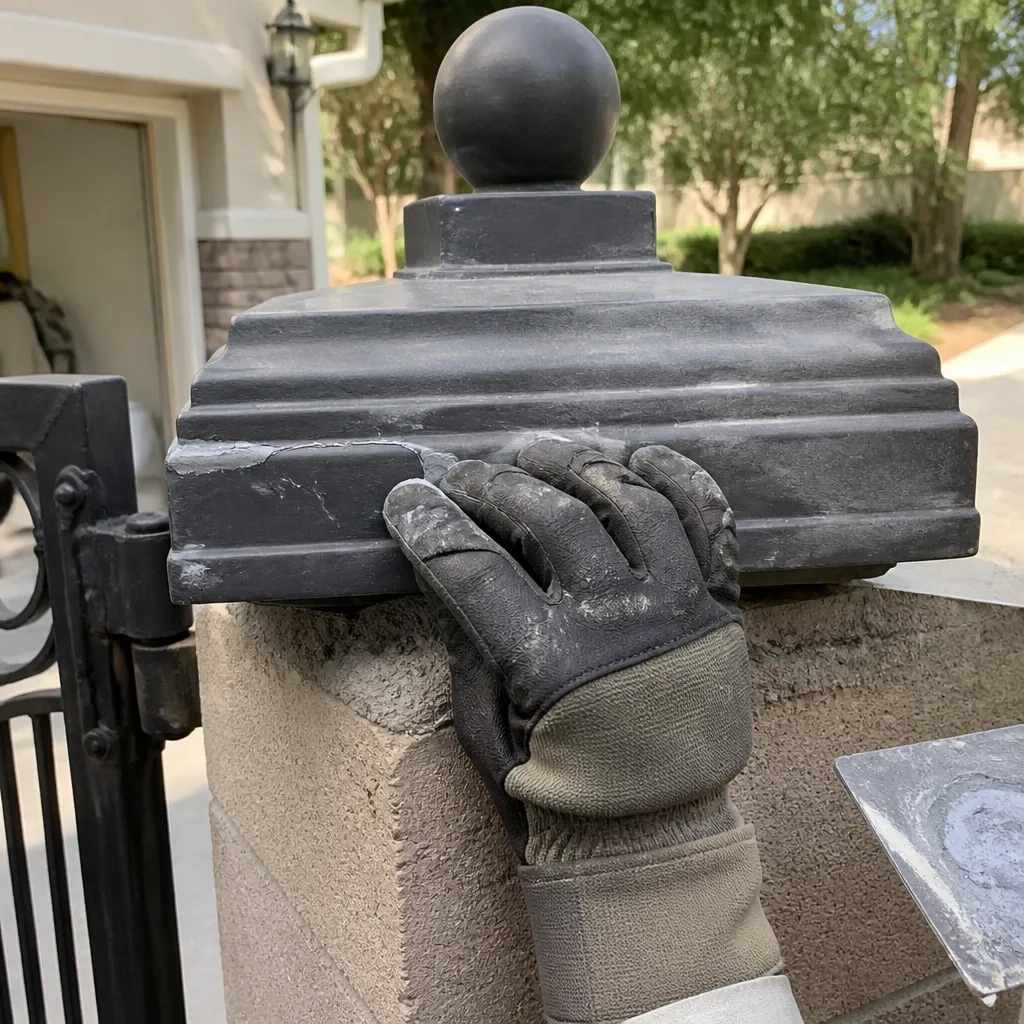
Most homeowners don’t keep a log. The ones who do make every future diagnosis faster and cheaper, because the technician walks in with a baseline instead of a mystery. Here’s the format that works.
Keep a simple notebook or a note on your phone. After every self-inspection, record five things in a single entry:
- Date and time of the inspection.
- What you checked and the reading. “Chain press test: about 1/4 inch give at mid-run” is more useful than “checked chain.”
- Anything that changed since last time. New squeak, slower cycle, one photo-eye reversing more often.
- Any lubrication or cleaning you performed, with product name if you have it.
- A photo of the gate at the inspection if you can. One shot of the operator housing and one of the gate in the closed position is enough.
Why bother? Because when you call us and say “the gate started reversing last week, and my log shows the photo-eyes cleaning was six weeks ago and the chain give went from 1/4 inch to 1/2 inch,” we can often diagnose the likely cause before we arrive. That saves diagnostic time on the visit, and the documented baseline means we can confirm what we found rather than guess. Under Clause 4 of Vance Gate Repair Summerlin home‘s Haven Standard, every visit already includes our own photo record. Your log adds a second set of eyes to that record.
Irrigation Overspray and the Two-Foot Clearance Rule
Irrigation overspray is the leading cause of accelerated corrosion on residential gates in Summerlin, and it comes up again and again on our visits. The pattern is predictable: a sprinkler head sits a foot or two from the gate post or the wiring conduit, gets bumped or loses its arc adjuster, and starts misting the operator housing and the conduit fittings every morning. Every morning of every week. For a full season.
That’s how a two-year-old gate ends up with rust at the hinge pins and a corroded terminal block. It’s not the gate; it’s the spray pattern.
The two-foot clearance rule means what it sounds like: no sprinkler head should sit within two feet of the gate frame, the operator housing, the control board enclosure, or any exposed wiring conduit. Standing water and direct spray within that radius accelerate corrosion and push moisture into sealed components. In practical terms:
- Adjust, cap, or relocate any head within two feet of gate metal or conduit.
- Check the arc on nearby heads after every landscaping change. A newly planted shrub often comes with a newly moved sprinkler.
- Look at the bottom hinge and conduit fittings after a season of irrigation. Rust blooming there is a spray-pattern issue.
If you’re already seeing corrosion at the hinge pins or wiring conduit, get a technician to look before it spreads to the operator. A parenthetical note for planning: if the corrosion has progressed too far, replacement parts and new gate hardware may be the faster path, and our Gate Installation in Summerlin page covers what a scheduled install looks like when repair no longer makes sense.
What a Professional Visit Should Leave Behind
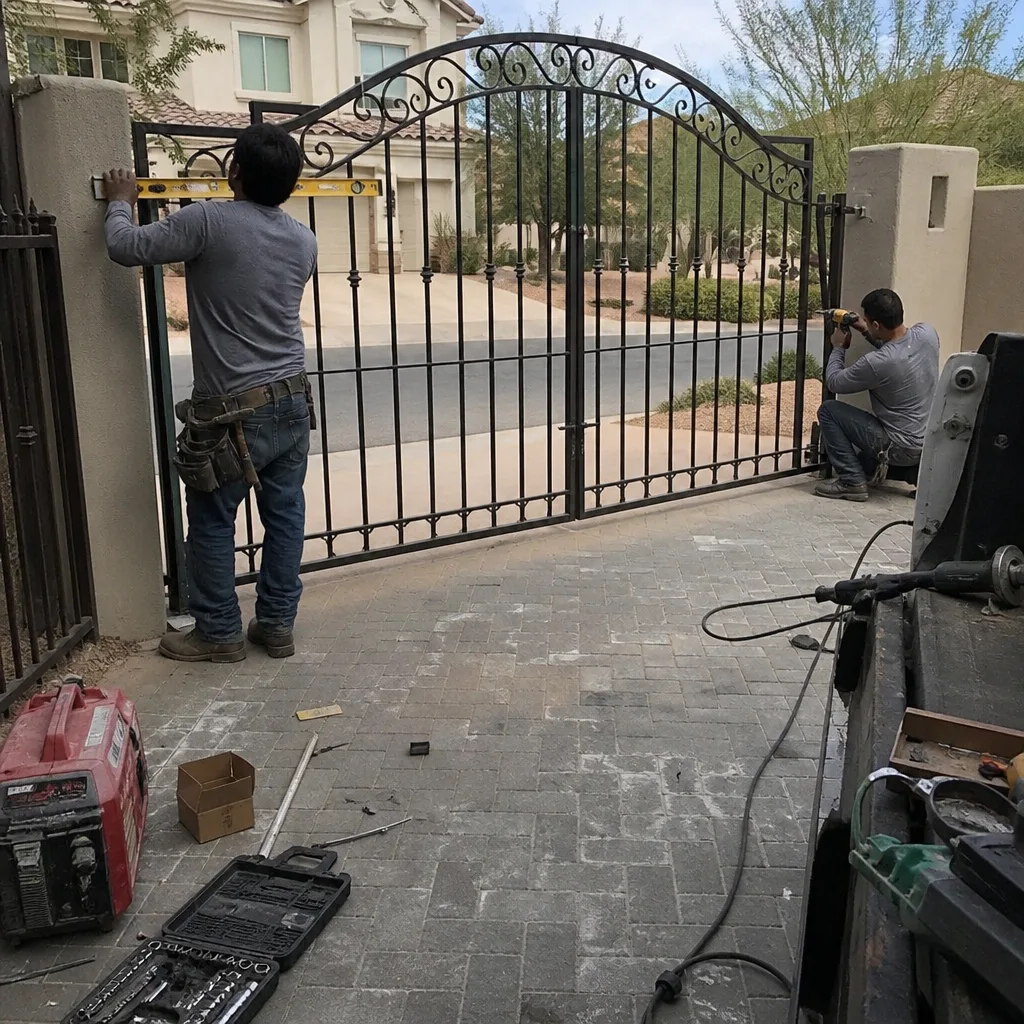
A maintenance visit isn’t finished when the technician packs up. It’s finished when you have documentation in hand. Here’s what a proper visit should leave with you, and how to use it to compare against future repair claims.
Expect, at minimum:
- A written scope and a written price before any work starts. Under Haven Standard Clause 1 (Have it in writing), the flat price is on paper and in your hand before a tool is picked up. No verbal estimate, no “call for a quote” at the end.
- A photo record of every adjustment and replacement. A photo of the limit switch before and after, a photo of the hinge pin you replaced, a photo of the photo-eye after alignment. This is the documented record our technicians leave on every job.
- A part number on anything that was replaced. The specific model, not just “a motor.” The operator on your gate is likely one of the nine brands we service – LiftMaster, FAAC, BFT, Linear, Viking, Ghost Controls, DoorKing, Elite, and Mighty Mule – and the part number tells you exactly what’s installed.
- A written note on anything to watch. If the technician saw a developing wear point and it wasn’t in scope, that should be written down.
Compare that documentation against a future repair claim. If a technician quotes you for a part and the record shows the same part was replaced six months earlier and is still under the 365-Day Done Right Promise, you have a documented basis for the conversation. That’s why we photograph every visit: 22,000+ gates in the record since 2014, each with a written price and a photo log on file. Comparing documentation also makes it easier to spot upsell: if a quote names a part your record shows was recently addressed, ask why.
Common Mistakes to Avoid
- Following a generic quarterly schedule. The “lubricate every six months” rule was written for mild climates. In Summerlin, 180 days between lubrications during summer leaves the chain running dry for roughly 90 of those days.
- Lubricating the track with the wrong product. Heavy grease applied to the track on a 110-degree day catches dust and grit instead of reducing friction, making the wear worse. Use a lubricant rated for high heat and apply it lightly.
- Ignoring photo-eye cleaning. A dirty lens on a summer afternoon is the most common cause of phantom reversing calls we get. A monthly wipe through summer prevents most of them.
- Treatment of irrigation as a landscaping-only consideration. Sprinkler overspray within two feet of a hinge pin or conduit fitting is the number one corrosion driver in Summerlin; adjust the head or cap it.
- Skipping the post-monsoon wiring check. Monsoon wind and rain push grit and moisture into conduit fittings. The October check catches more problems than any other single task on the calendar.
- Keeping no record. A gate with no history is diagnosed by guesswork. A single line per inspection, over time, saves diagnostic time and prevents duplicate work.
- Over-tensioning a chain yourself. A too-tight chain wears the operator gear and shortens motor life. If tension is off, a technician sets it correctly in a few minutes.
When to Call a Professional
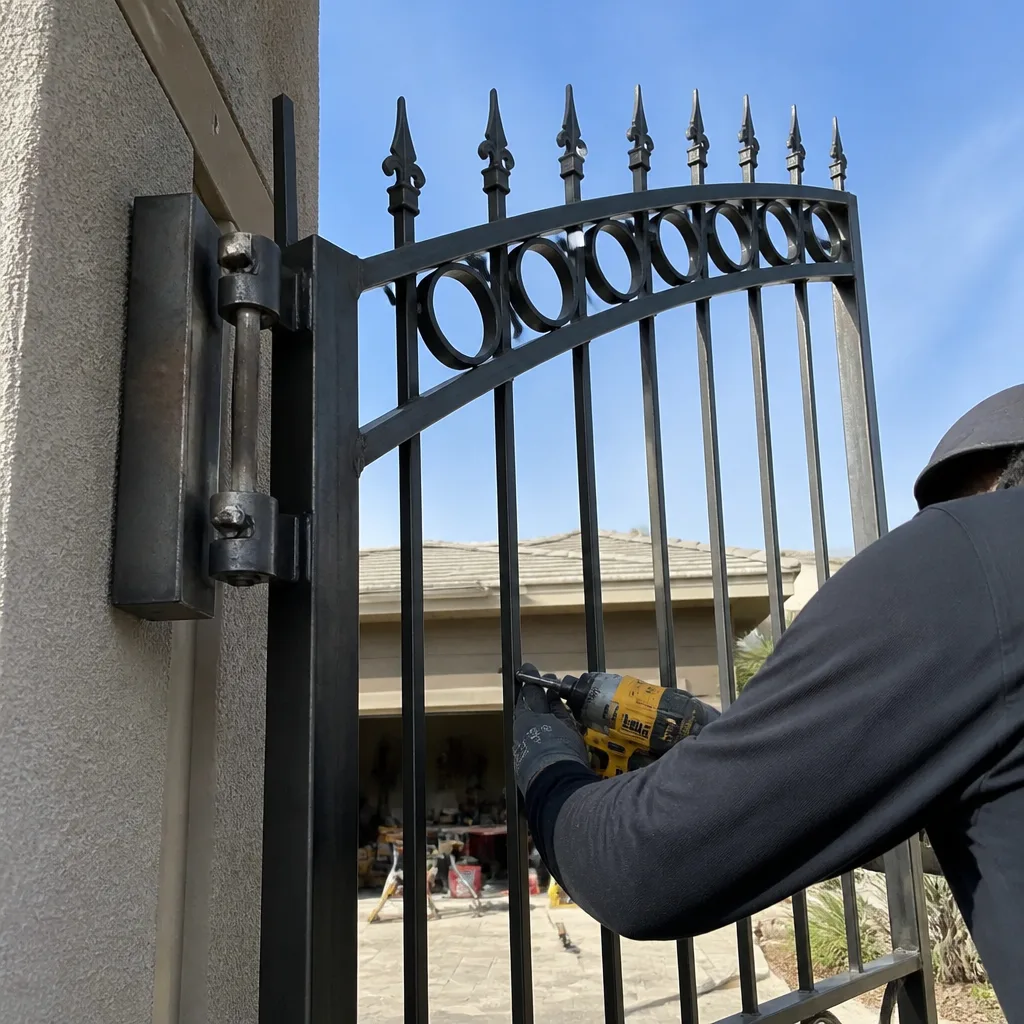
Call a professional if the gate reverses unpredictably even after cleaning the photo-eyes, if you hear grinding or clicking from the operator, if the gate sags or clears the ground unevenly, or if the manual release no longer works. Also call if you see corrosion at the hinge pins or wiring conduit; corrosion that reaches the operator housing is a bigger repair than the same corrosion caught a season earlier. Springs, high-voltage wiring, and control board internals always need a trained technician, never a homeowner. Vance Gate Repair Summerlin offers free estimates in Summerlin, and we’ll put the written price in your hand before any work starts. Call (844) 797-2809.
Frequently Asked Questions
Every 90 days during summer, not every six months. Summerlin heat burns off standard lubricant in about three months, so a May lubrication is likely dry by August. Lubricate in May, again in August, and once more as needed through the shoulder seasons if the gate starts sounding dry.
No. Limit switches set where the gate stops and reverses, and an over-travel setting can strain the operator or cause the gate to strike a post. A technician verifies and sets them with the correct tools, then photographs the new position so the setting is documented. Verifying limit switches in mid-winter is a professional task, not a homeowner one.
Dirty or misaligned photo-eyes are the most common cause, and heat expands tracks and frames just enough to shift the beam slightly. Clean both lenses first. If the gate still reverses, the alignment needs a technician’s tool and a check of the operator’s safety input. Call (844) 797-2809 for an exact quote; estimates are free.
Irrigation-driven corrosion at hinge pins and conduit fittings, followed by photo-eye issues from dust and grit after monsoon season. Both are preventable with the calendar above. The third most common is a dry chain run that went unlubricated through a summer.
Ask for the specific part number and the written scope under Clause 1. If the record from the last visit shows the same part was addressed, that’s a conversation worth having before you approve the work. Under our 365-Day Done Right Promise, any repair we completed in the past year is covered for correction at no additional charge. Call (844) 797-2809 for an exact quote.
Likely yes. Vance Gate Repair Summerlin services nine major automation brands, including Viking, Ghost Controls, DoorKing, and Elite. We don’t steer you toward a replacement because we can’t service the motor. If your operator is on that list, we can work on it. Call (844) 797-2809 for an exact quote; estimates are free.
The Bottom Line
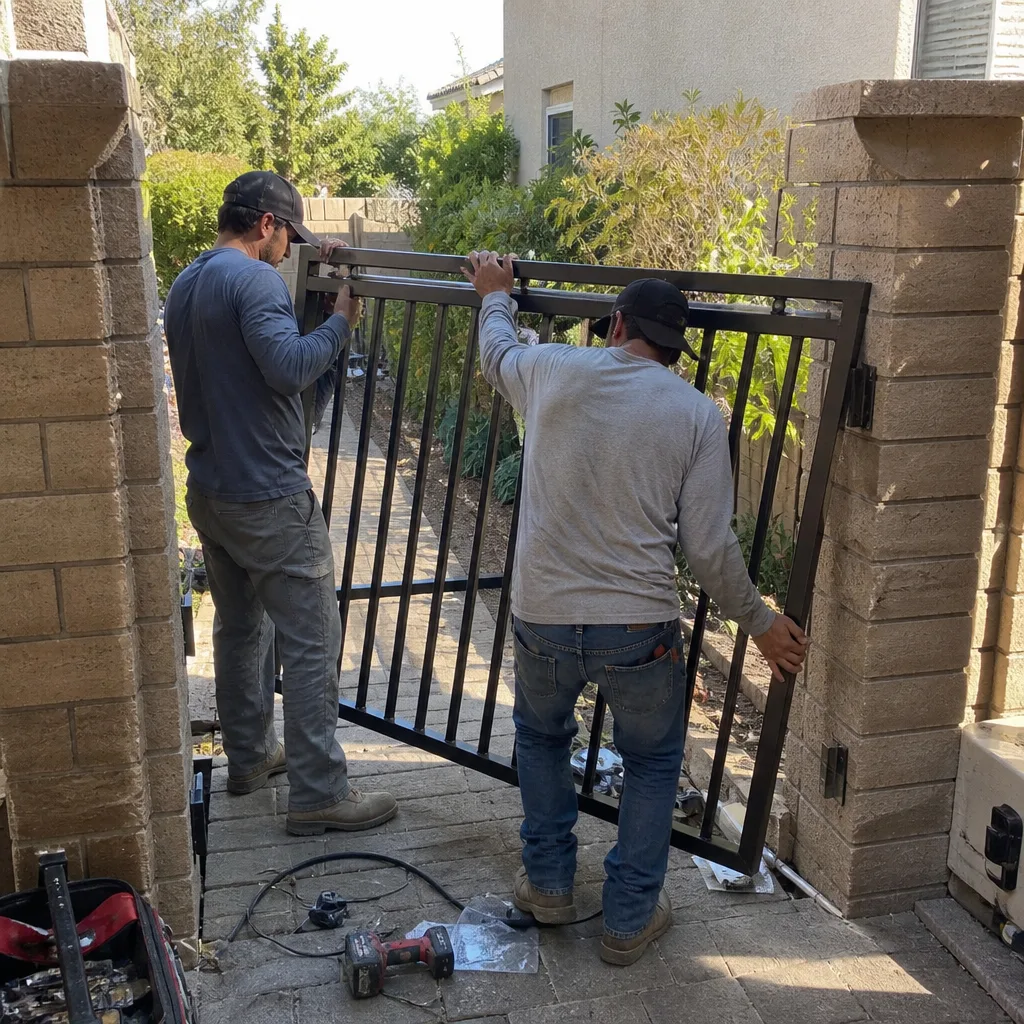
A calendar-based maintenance schedule doesn’t fit Summerlin’s climate; a heat-and-dust-aware one does. Lubricate every 90 days through summer, inspect the control board in April, check wiring and photo-eyes after monsoon season in October, and verify limit switches in mid-winter. You can safely handle chain-tension checks by eye, hinge-gap measurements, photo-eye cleaning, and a simple maintenance log. Leave springs, wiring, and control board internals to a technician. And demand documentation: a written price before work starts, a photo record after. That’s how you keep a gate running through a Summerlin summer without paying twice to rediscover the same problem. Call (844) 797-2809 for a free estimate.
Written by the team at Vance Gate Repair Summerlin.
See the difference
BeforeAfter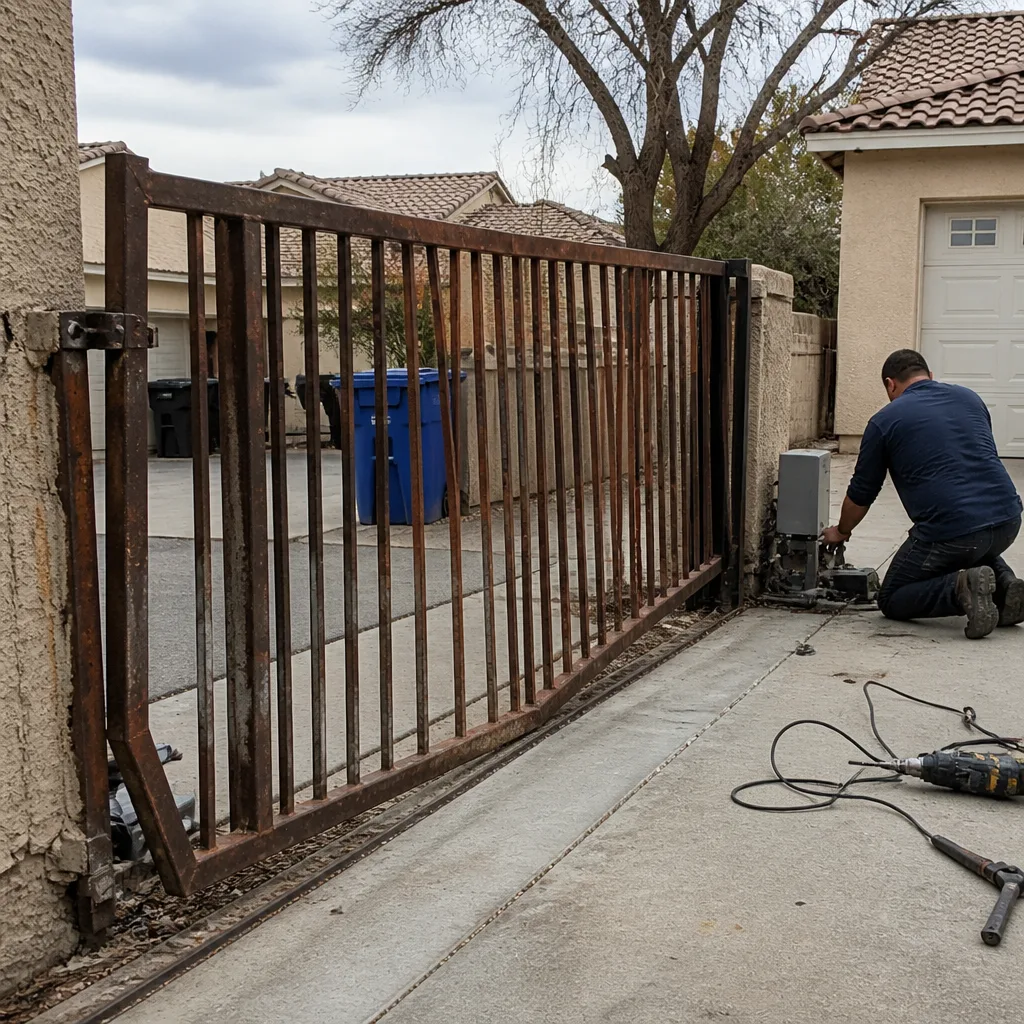 Before
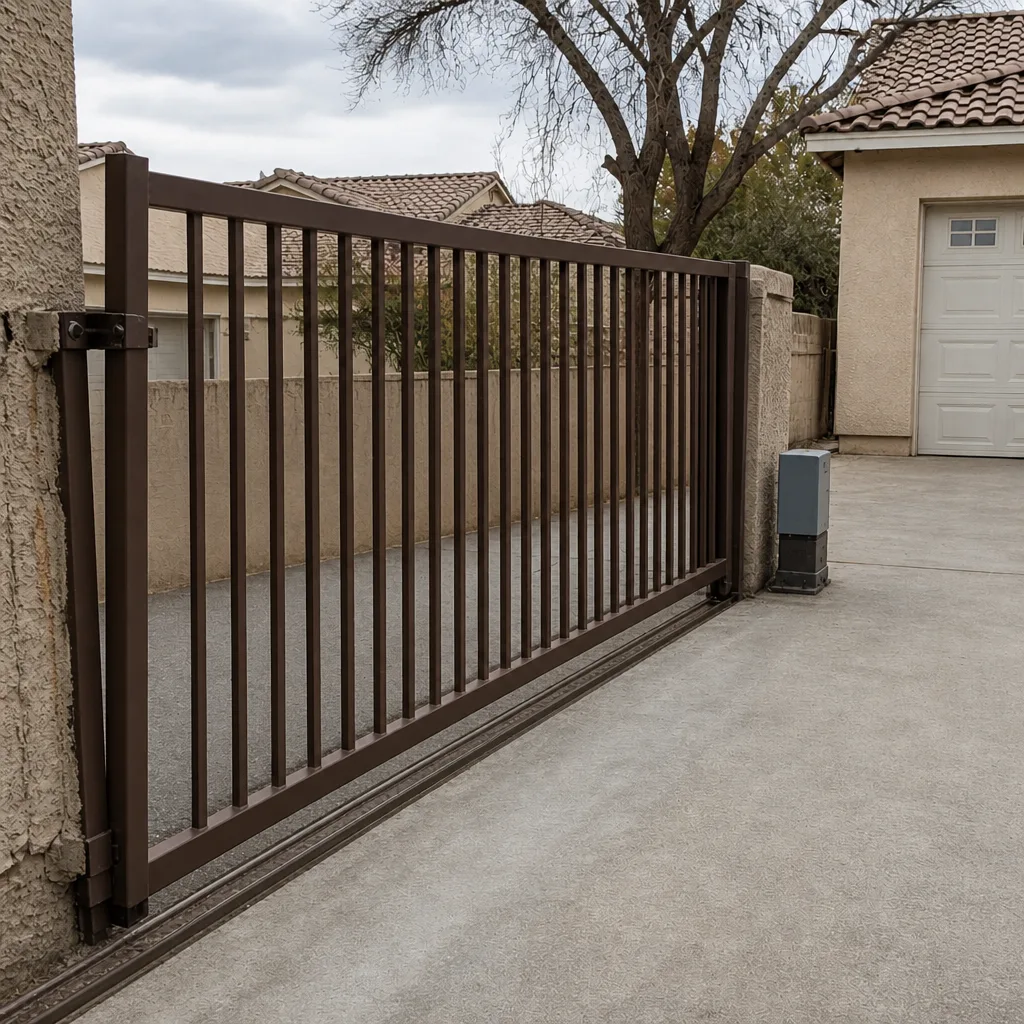 After
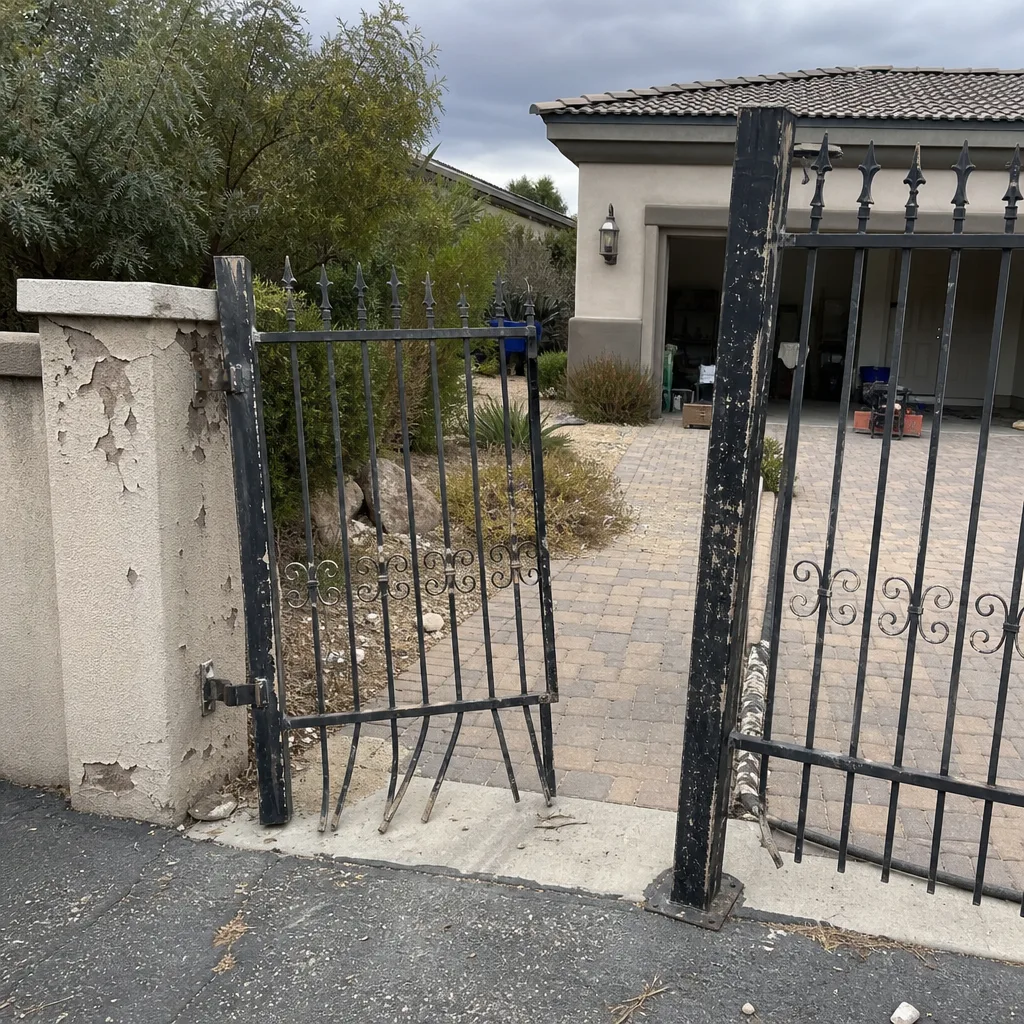 Before
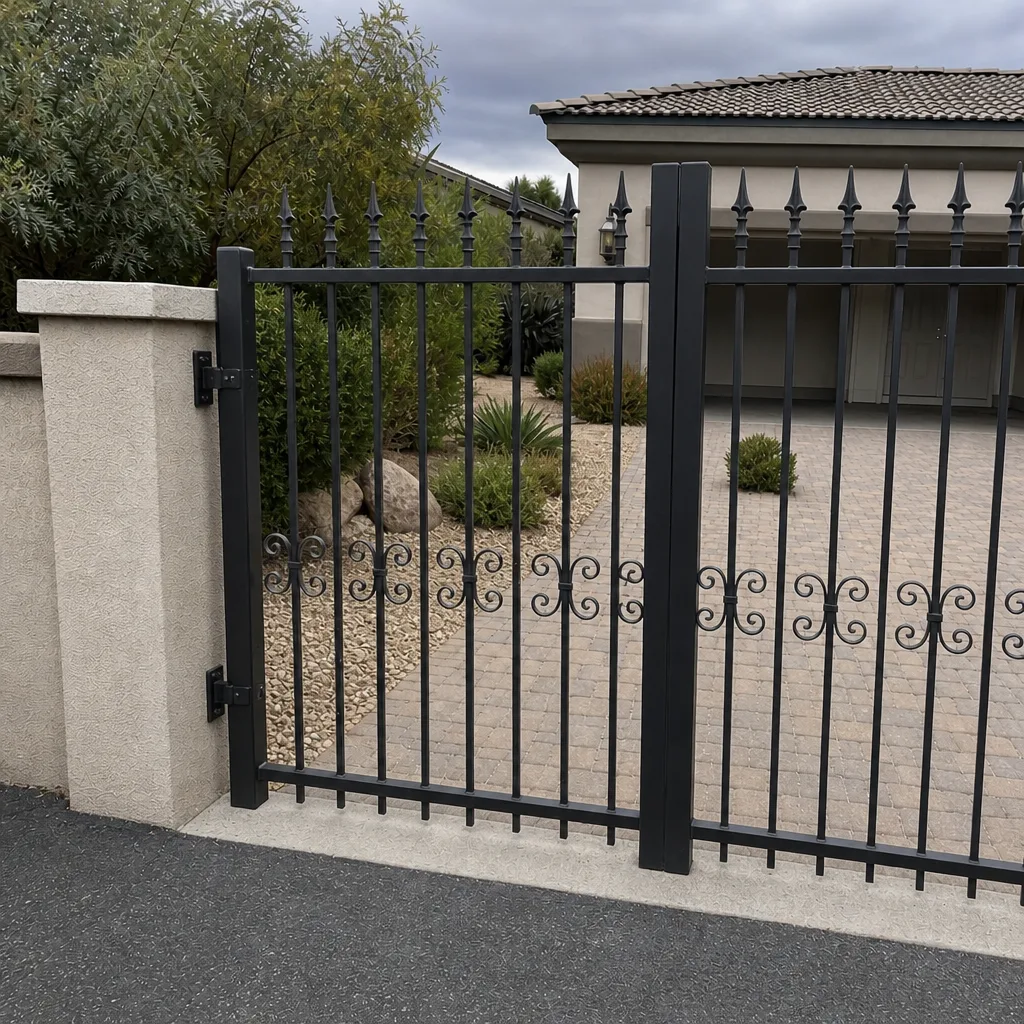 After