
Last updated November 17, 2026
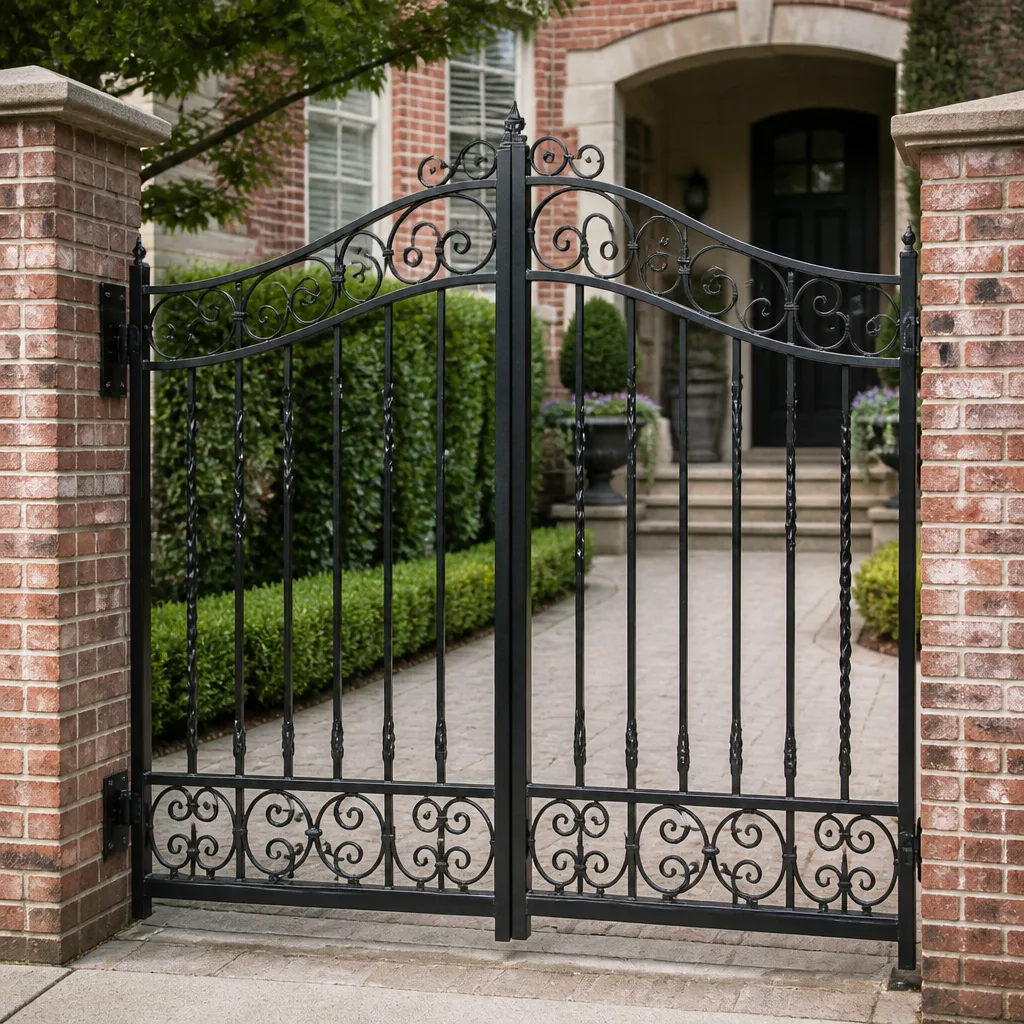 Wrought iron
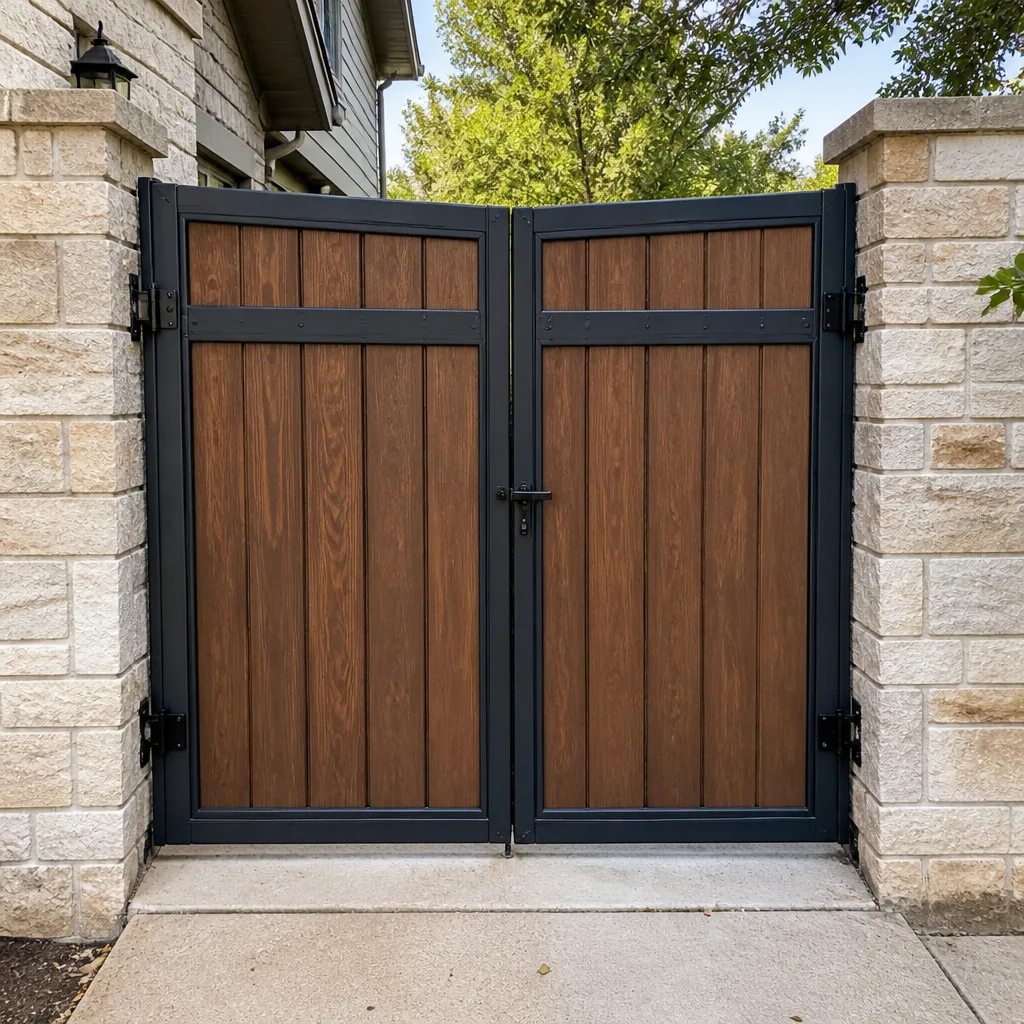 Wood & steel frame
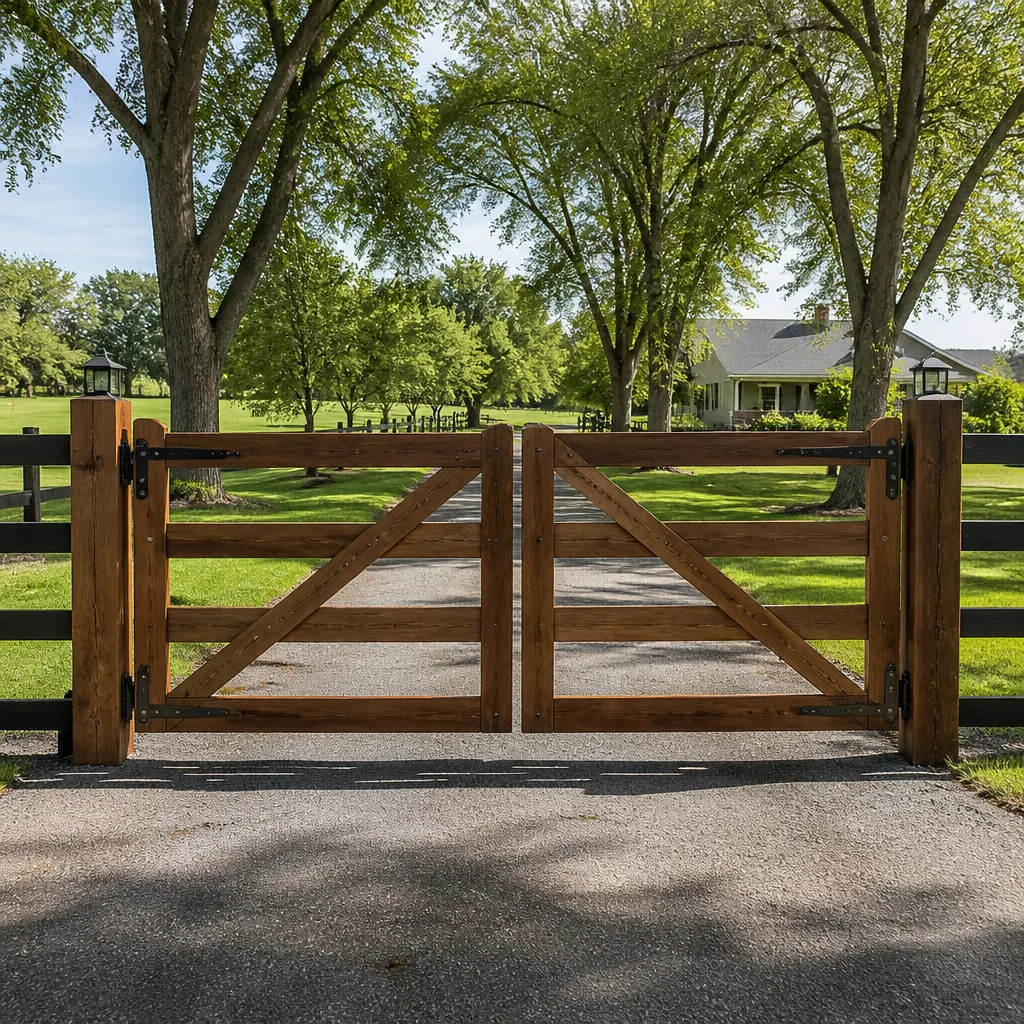 Farm & ranch
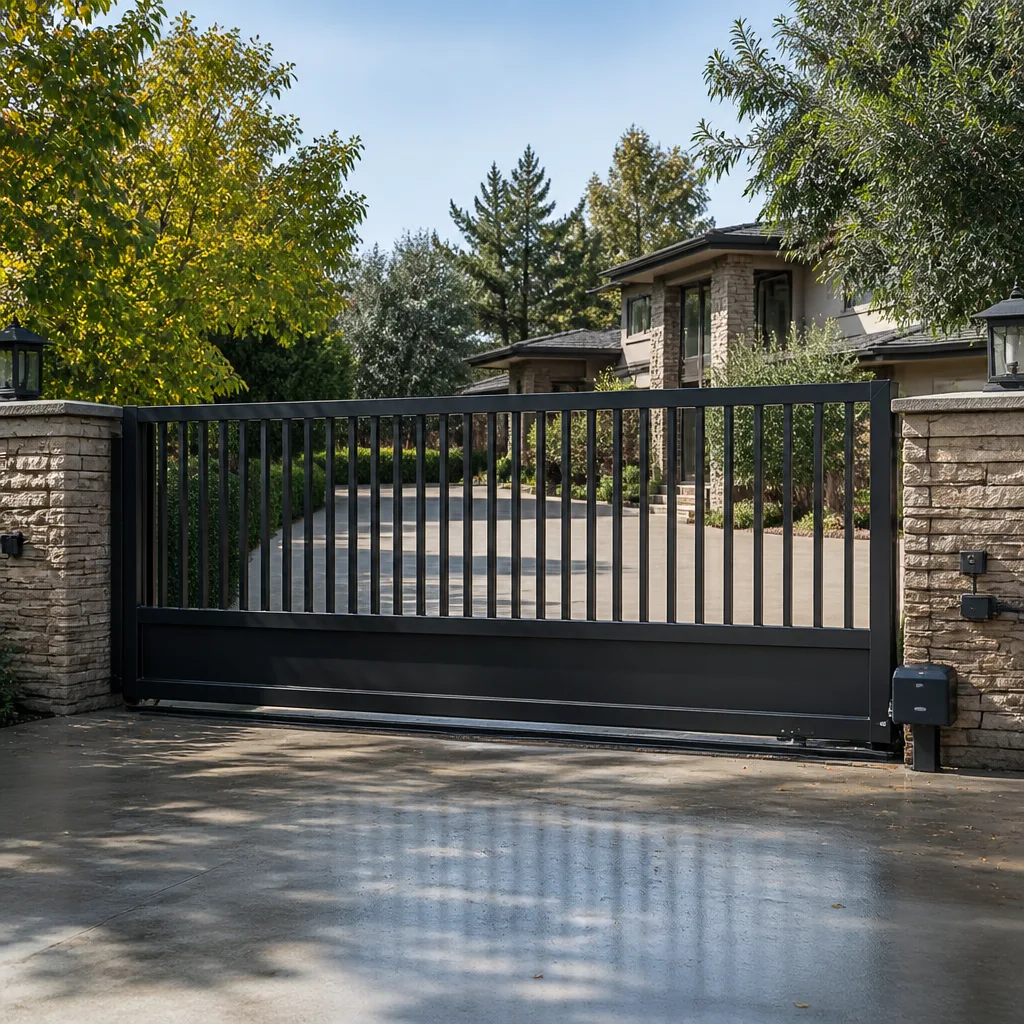 Sliding driveway gates
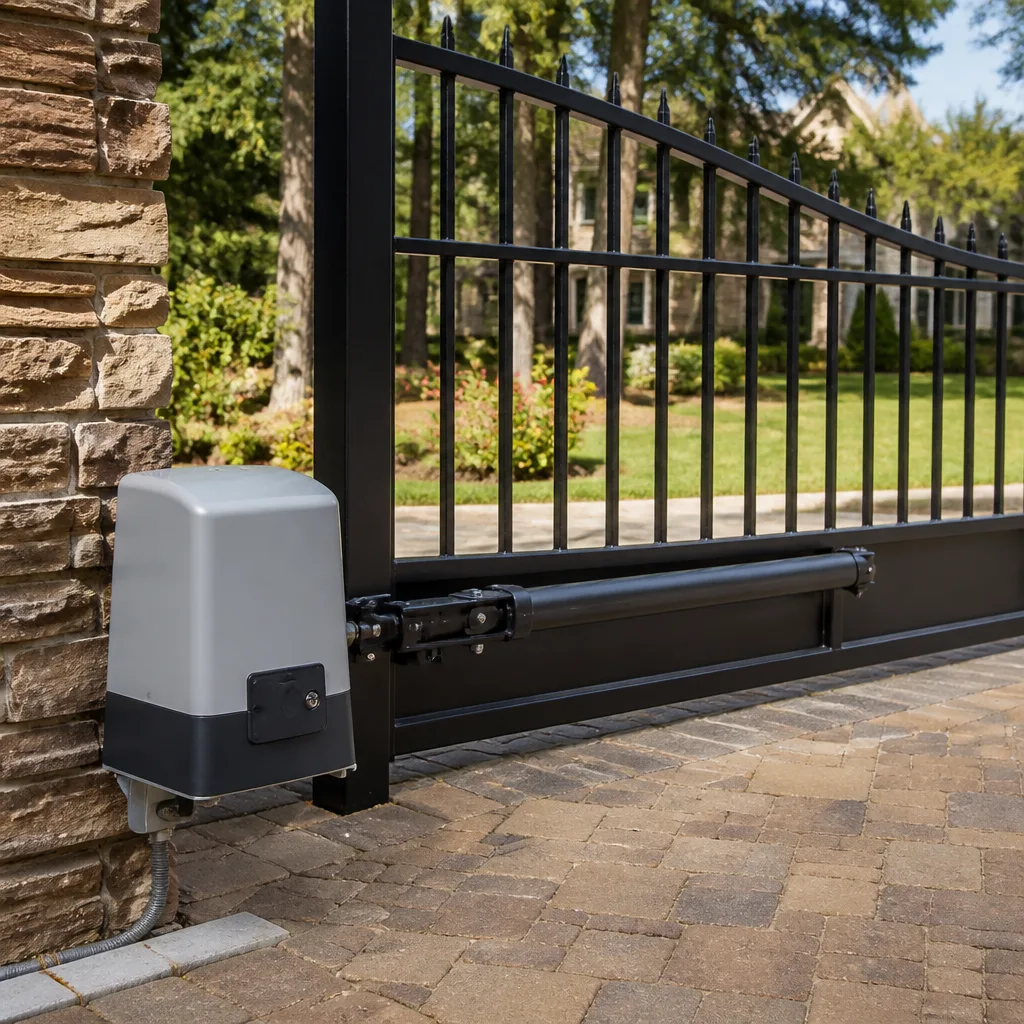 LiftMaster operators
Free on-site gate assessment - hinges, posts, and your LiftMaster or Nice gate operator checked before anything is quoted
The assessment is free and the quote is the invoice.
Get your free estimateGate Parts & Welding Maintenance Schedule: What to Do and When
Weld fatigue doesn’t announce itself. It accumulates in millimeters of movement that no one measures because no one recorded the starting position. We’ve opened gates in Summerlin where the top hinge had crept a quarter inch over four summers, and the only reason anyone called was that the gate finally dragged the ground. The weld itself let go the week before. This guide is about the boring, measurable routine that catches that drift before it becomes a fabrication job: gap tolerances, hinge play, post plumb, finish schedules, and the written record that makes it all repeatable.
Quick Answer
A gate needs a visual check monthly, a measurement-based inspection every six months, and a structural and finish review once a year. Automated gates need the monthly pass more often because the operator applies continuous load. The point of every visit is recorded numbers, so next time you can see what moved.
Styles & brands we work with
- Wrought iron
- Wood & steel frame
- Farm & ranch
- Sliding driveway gates
- LiftMaster operators
Table of Contents
- Why Gate Maintenance Schedules Fail
- The Monthly Walk-Around
- The Six-Month Measurement Visit
- The Annual Structural and Welding Review
- How Summerlin’s Temperature Swing Stresses Welds
- The Finish Schedule and Why It Protects the Weld
- What a Maintenance Visit Should Leave in Writing
- Automated vs. Manual: Why Frequency Is Different
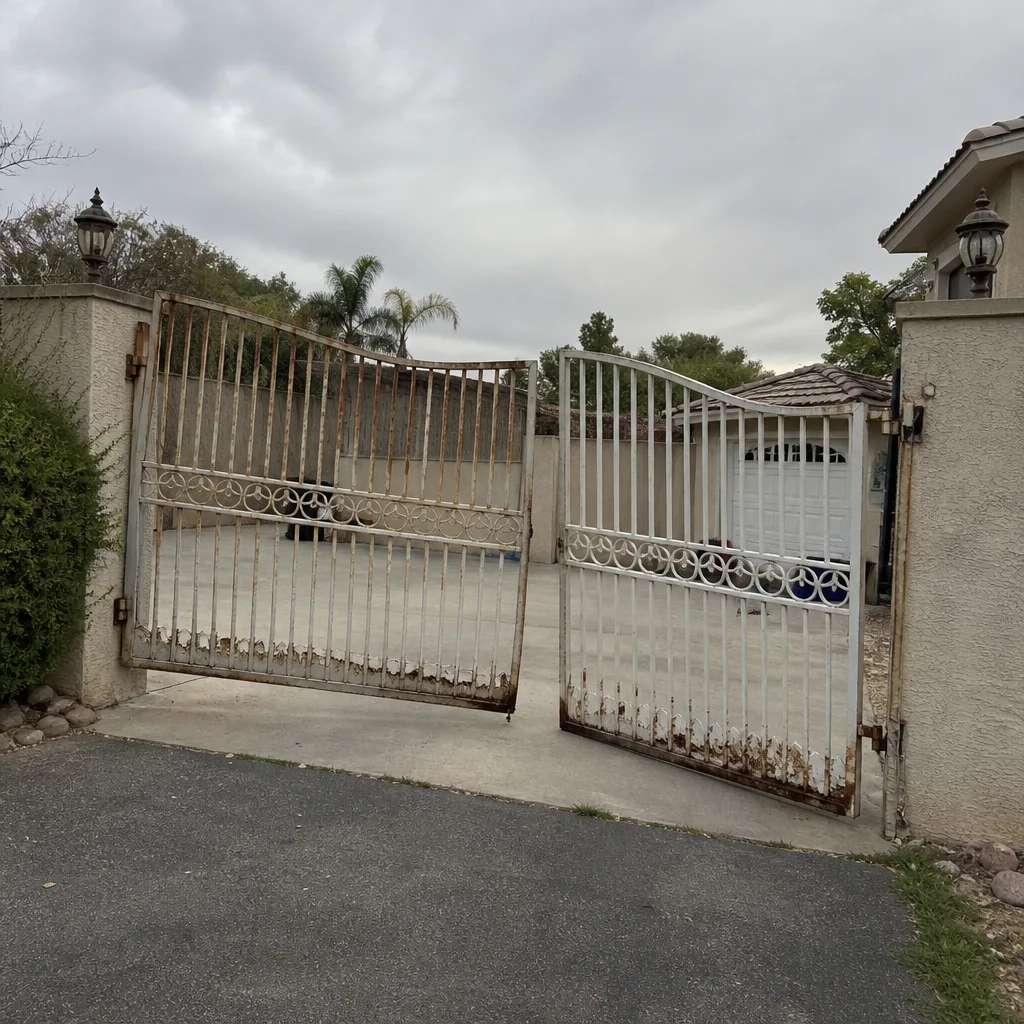 Before
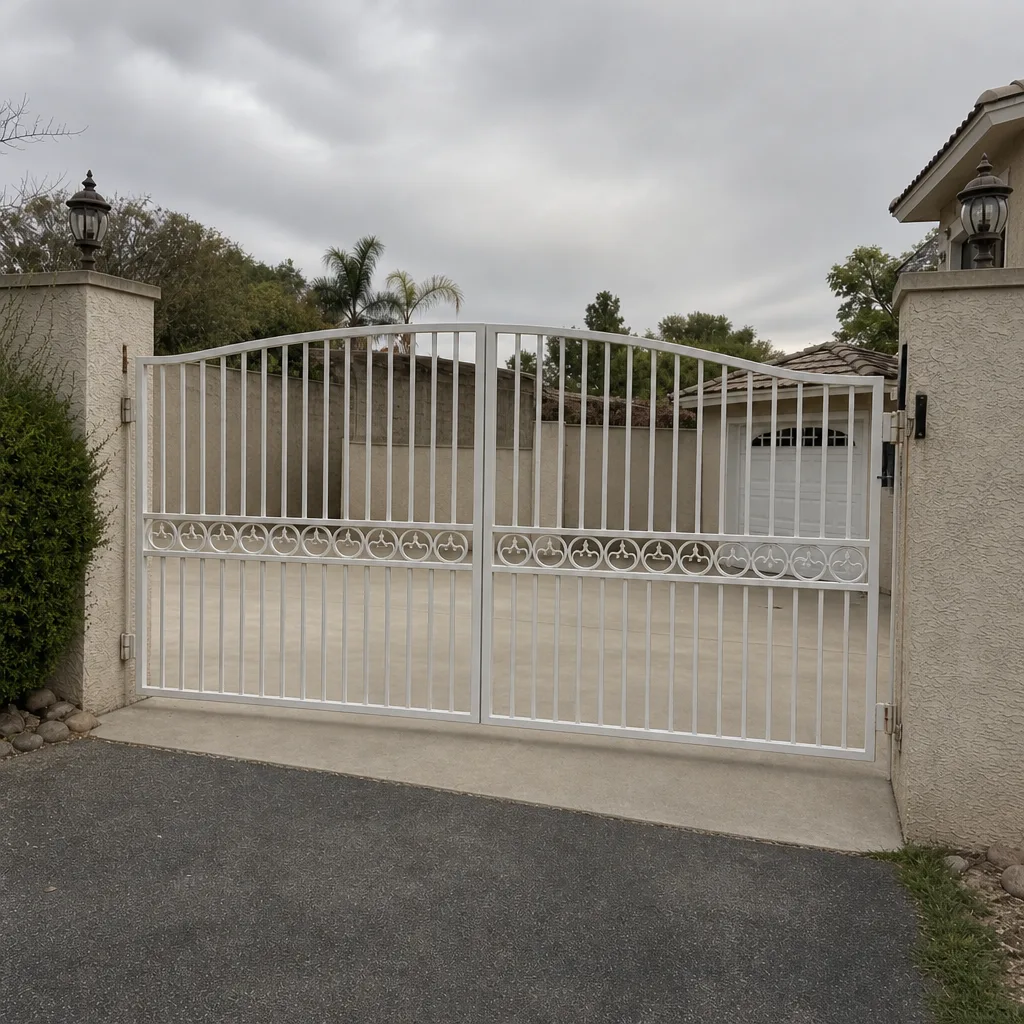 After
Why Gate Maintenance Schedules Fail
Structural maintenance on gates has no forcing function. Your HVAC tells you when it’s struggling. A pool pump gets loud. A gate that’s slowly losing post plumb does nothing at all until a weld cracks, a latch stops catching, or the gate swings into the pillar. By then, the repair is a fabrication job, not a maintenance item.
In our records, structural failures on residential driveway gates almost always trace back to a measurement that was never taken. The gate wasn’t neglected in any dramatic sense. Nobody dropped a truck on it. It just moved a little at a time, and no one had a starting number to compare against.
That’s the entire premise of a maintenance schedule: it exists so that drift is visible. If you know your gate’s post plumb was 0.0 degrees at install and it’s 0.4 degrees two years later, you have a real conversation. Without that record, you have a feeling.
The Monthly Walk-Around
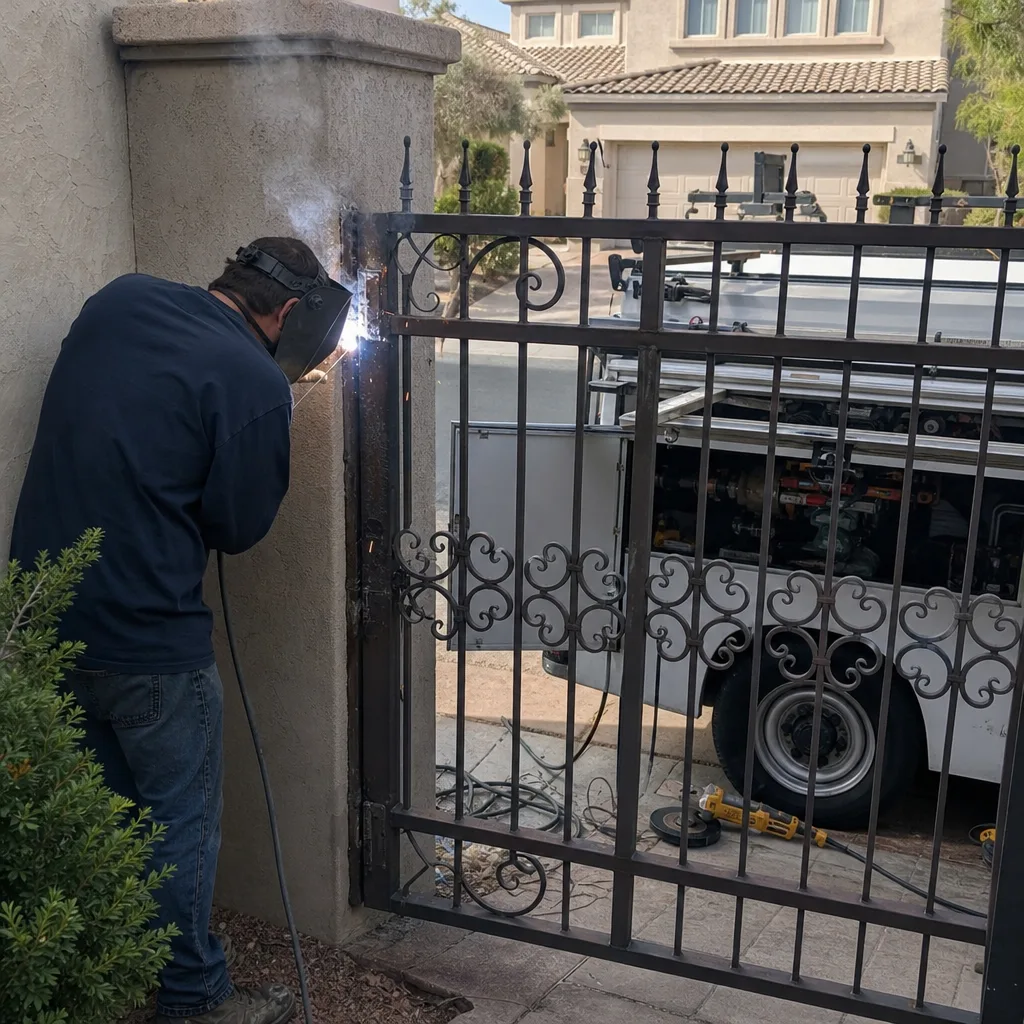
The monthly check takes ten minutes and requires nothing but your eyes and hands. Do it on the same day each month so you don’t lose track.
- Open and close the gate by hand (with the operator disengaged on automatic gates). Listen for grinding, scraping, or a change in effort at any point in the arc.
- Look at the hinges. Lift the gate slightly by the outer stile. Any vertical play is hinge wear, and even a sixteenth of an inch compounds.
- Check the latch and strike alignment. If the gate has started needing a nudge to latch, something moved.
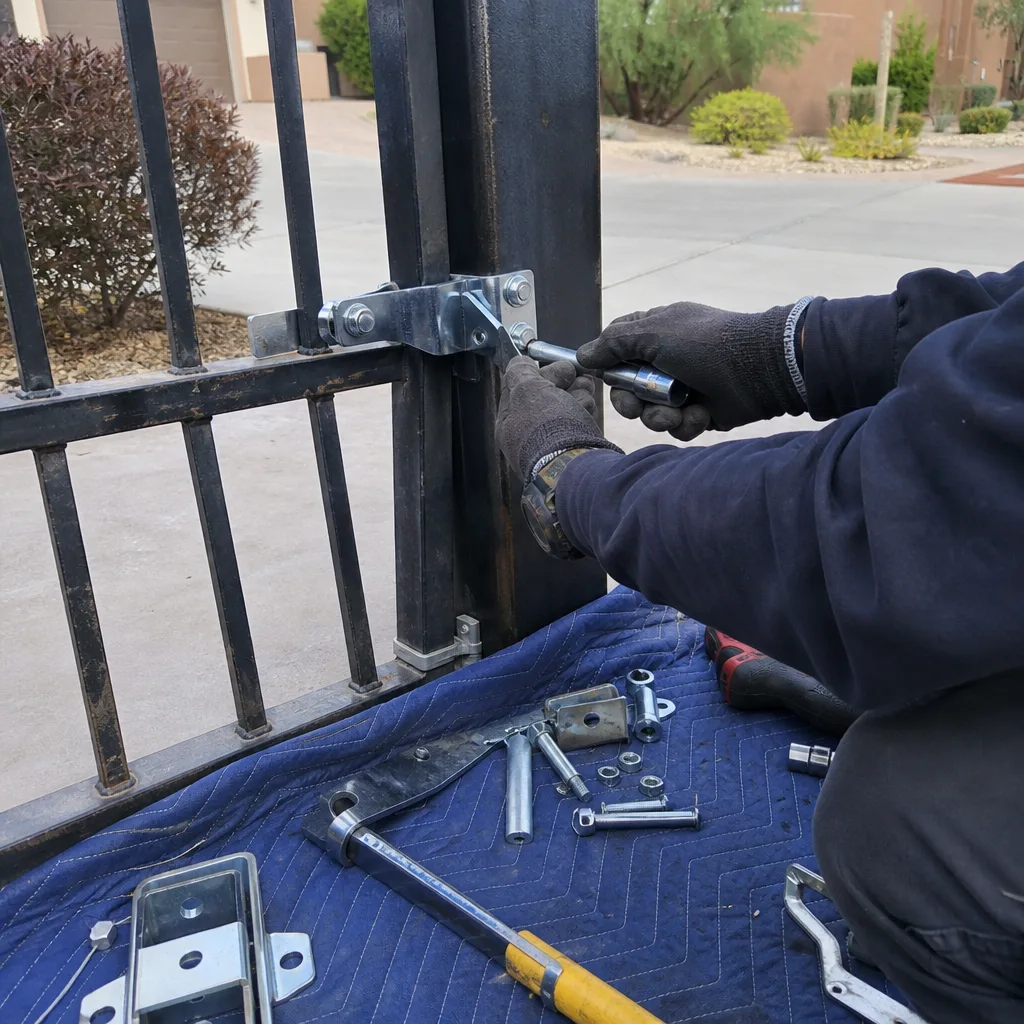
- Walk the weld seams at the corners of the frame. Look for rust blooms, hairline cracks in the paint, or a fine line of rust where two members meet. A crack in the paint over a weld is often the first visible sign of flex.
- Scan the posts for cracks in the concrete at the base, exposed anchor hardware, or fresh soil movement around the footer.
- Photograph the gate from the same angle each time. A dated photo stack is the cheapest drift detector there is.
On automatic gates, add a check of the safety devices. A photo-eye (the infrared beam that stops the gate if something crosses the path) should be wiped clean and confirmed working by breaking the beam. If you’re not certain the safety reversal is functioning, that’s a call-us-today item, not a wait-until-next-month item. For a full breakdown of gates in Summerlin that need hands-on attention, our gate repair in Summerlin page covers the common failure points.
The Six-Month Measurement Visit
This is where most homeowners stop reading, and it’s exactly the visit that saves money. Twice a year, take actual numbers and write them down.
- Post plumb: a magnetic level on each post, in degrees or in inches of deviation at the top. Record the value and the date.
- Gap tolerances: the vertical and horizontal gap between gate and post at the hinge side and the latch side, measured with a tape at the top and bottom. Uneven gaps tell you which direction the gate is leaning.
- Hinge play: measured as the vertical lift at the outer stile before the gate starts to bind. Record it.
- Weld seam inspection: same seams as the monthly pass, but photographed close-up and compared against the prior six-month photo.
- Operator arm and limit positions: photograph the arm bracket and the limit settings. If a technician ever resets them, the photo shows where they were.
Six months is also the right interval to check the hardware torque on anchor bolts, hinge bolts, and operator brackets. Loose fasteners are the second-most-common cause of weld failure after ground movement. If the gate is an automatic system, this is also when we recommend a quick brand-aware look at the motor itself. LiftMaster and FAAC operators have internal clutch settings that drift, and a slipping clutch quietly loads the gate frame every cycle. Our gate motor & opener in Summerlin page covers the operator-side checks.
The Annual Structural and Welding Review
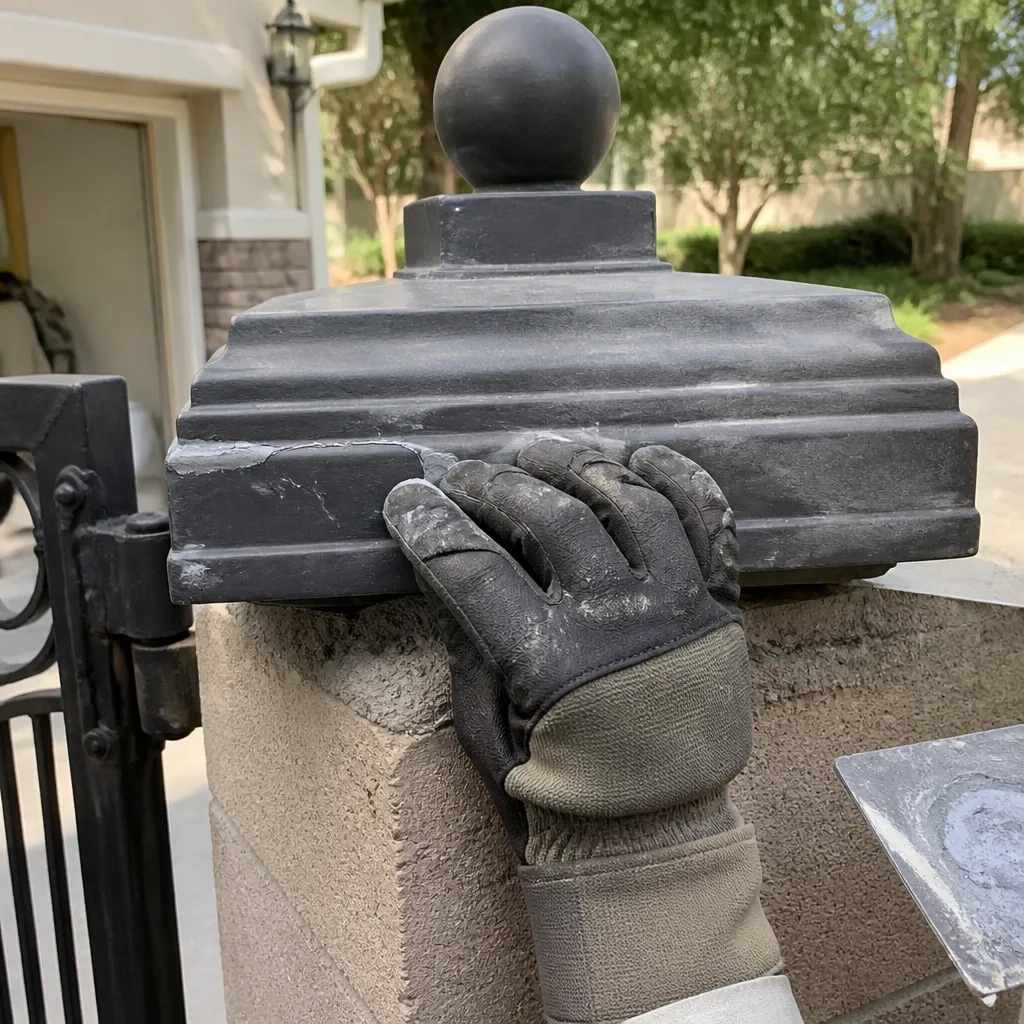
Once a year, take the structural review seriously. This is the visit that actually protects the weld.
- Pull the six-month records and compare. Any trend in one direction – plumb, gap, or play – is the finding. A single measurement tells you where you are; two tell you where you’re going.
- Inspect every weld on the frame with a bright light. Look for cracked paint, rust bloom at the seam, or any flex when the gate is loaded by hand.
- Check the footer and anchor hardware including concrete cracks and bolt torque. Loose anchors in the footer are the single most common cause of a gate that gradually leans out of alignment.
- Review the finish before it fails, not after. Chipped powder coat and cracking paint at the weld seams are the early sign.
- Photograph everything with the date in the frame. The annual record is the baseline for the year ahead.
In Summerlin we see the most structural grief on gates that face the west sun with no shade from a wall. The heat load on one side of the frame is genuinely higher than the other, and the frame grows on the hot side first. Annual reviews catch that. The gate doesn’t need to fail to need an adjustment.
How Summerlin’s Temperature Swing Stresses Welds
Summerlin’s swing is the story. A steel frame that sits at 140°F+ surface temperature in July afternoon sun is not the same steel as the same frame at 45°F on a January morning. The metal expands and contracts along its length, and the welded joints absorb the difference between one side of the frame and the other when the sun hits one face only.
The weld doesn’t fail in the heat. It fails in the return. Repeated thermal cycling is what turns a small amount of flex into a fatigue crack, and a fatigue crack at a corner weld on a residential gate can widen from hairline to structural in a few months once it starts.
Two practical consequences for Summerlin properties: gates on south and west exposures need the annual structural review more, well, attentively than shaded ones. And powder coat, which is a barrier against corrosion, actually cracks first at the highest-stress weld seams. That crack in the finish is your early warning, if you’re looking. The gate installation in Summerlin page covers how material and exposure are chosen on new work, and the same principles apply when we schedule maintenance on existing gates.
The Finish Schedule and Why It Protects the Weld
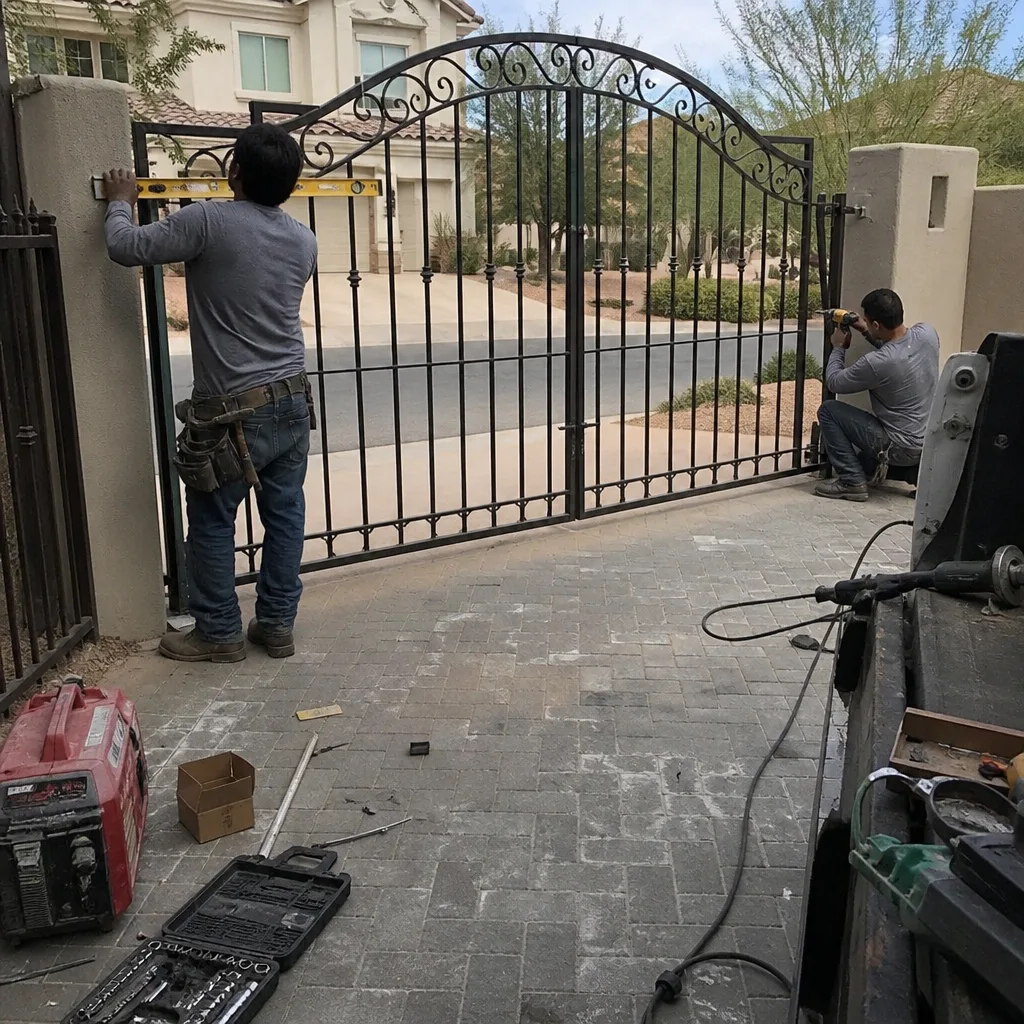
Paint and powder coat are not cosmetic. They are the corrosion barrier over the weld, and the weld is the part of a gate you can’t replace without cutting steel.
- Every six months: wash the frame, inspect weld seams and the bottom rail (where moisture and irrigation spray collect), and photograph the finish. Spot-touch bare metal immediately, not next season.
- Every two to three years: inspect the full finish for chalking, chipping, or crack lines at the welds. Touch-up with the correct primer and topcoat on the weld seams.
- On powder-coated gates: a powder coat touch-up kit from the installer’s color code is worth having on hand. Field-applied rattle-can paint over powder coat looks fine for one summer and flakes in the heat.
Summerlin irrigation is a quiet culprit here. Sprinkler overspray on the bottom rail and the base of the posts creates a wet-dry cycle that corrodes faster than plain weather exposure. If your gate sits within a few feet of a sprinkler head, add a third finish check per year and look hard at the bottom rail. This is exactly the kind of fact we record on every visit under Clause 4 (Evidence on every job), where every visit includes a documented photo record at no additional charge.
What a Maintenance Visit Should Leave in Writing
This is where most gate maintenance falls apart. Homeowners get a verbal “looks fine” and lose the record. The next technician – or the next owner of the house – starts from zero, and you pay to rediscover the same problem.
A proper maintenance record includes:
- Post plumb readings, dated, in degrees or inches, at each post.
- Gap tolerances at the hinge side and latch side, top and bottom.
- Hinge play measurement.
- A close-up photo of every weld seam you inspected, plus a dated wide shot of the gate.
- The part numbers of anything replaced, and the exact position of any limit switches or operator settings that were adjusted.
- A written note on the finish: what was chipped, what was touched up, and what needs watching next visit.
Under The Haven Standard, that record is what every Vance Gate Repair Summerlin visit leaves behind – the wiring diagram, the photographed limit-switch positions, the notes on what moved. The 365-Day Done Right Promise means if something we adjusted isn’t right within the year, we make it right at no additional charge. That guarantee is possible because the record exists. A verbal estimate and a handshake can’t back a promise like that up.
Automated vs. Manual: Why Frequency Is Different
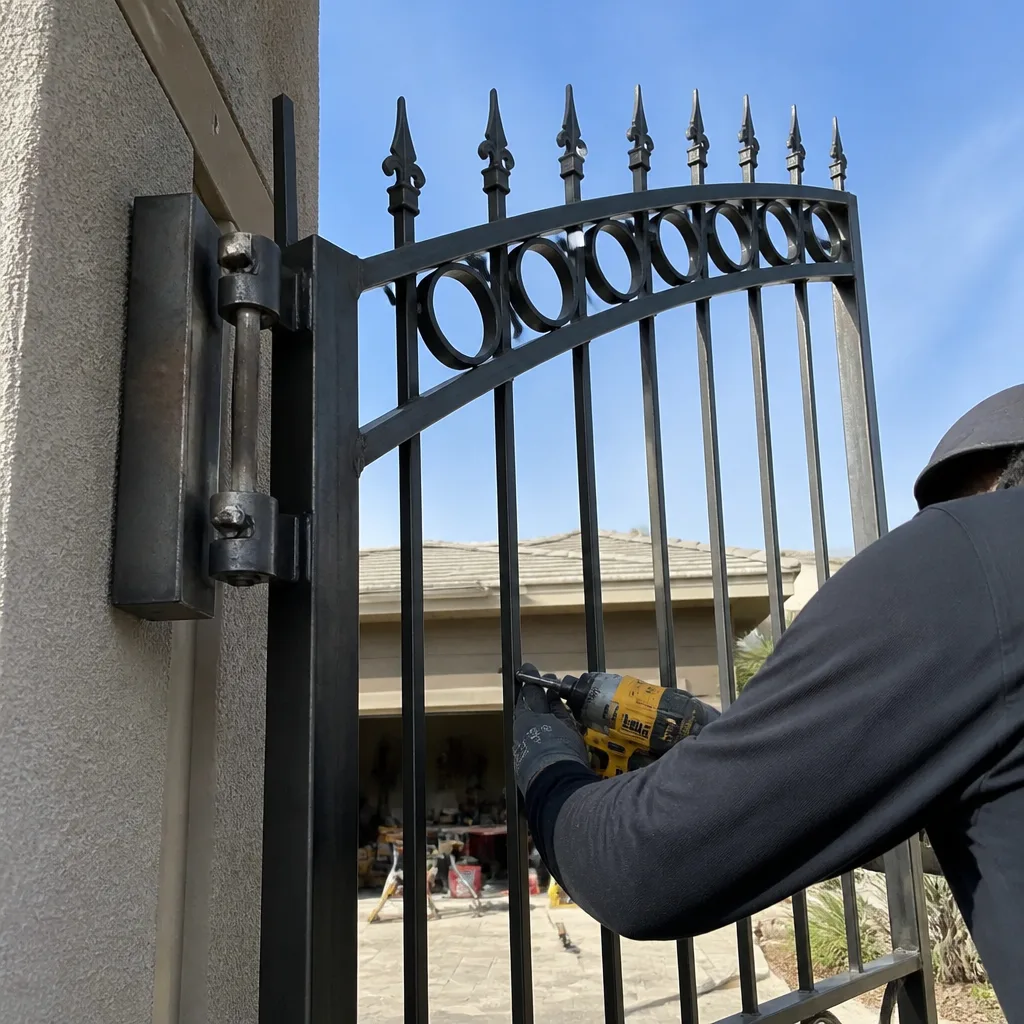
A manual gate only moves when someone pushes it. An automatic gate moves several times a day, every day, with an operator applying continuous torque through the arm and hinge assembly. That changes the schedule.
Manual gates tolerate the monthly and six-month cadence comfortably. The load on the weld is intermittent and low.
Automatic gates put the wear on the hinge and the weld every cycle. We recommend the monthly walk-around on a strict same-day-each-month rhythm, the six-month measurement visit without skipping, and the annual review as the structural checkpoint. The operator itself – whether it’s a Mighty Mule arm or a heavier LiftMaster or FAAC system – also needs its own quick check each six months: clutch setting, limit positions, and the safety-reversal test. Gate parts wear faster under motor load than under hand load; the schedule should reflect that. Our Vance Gate Repair Summerlin home page lays out the full service picture.
Common Mistakes to Avoid
- Skipping measurements because the gate “looks fine.” Looks is exactly the problem. Drift is invisible until it’s structural.
- Waiting for a weld to crack before doing anything. By the time it cracks, you’re in fabrication territory. The crack is the end of the story, not the start.
- Repainting over a hairline crack in the weld seam. Paint hides the flex. You need to see that crack, not cover it.
- Ignoring sprinkler exposure. Summerlin properties with irrigation spray on the bottom rail corrode faster than dry-exposed gates, and the bottom rail weld is the one that carries the gate’s weight.
- Adjusting the operator when the real problem is a bound hinge. A slipping clutch or limit reset can hide the gate problem while the weld keeps flexing.
- Losing the record. A maintenance visit without a written, dated record is a visit you’ll pay for twice.
- Lubricating hinges without checking play first. Lubrication can mask a worn hinge while the weld takes the load and starts to fatigue.
See the difference
BeforeAfter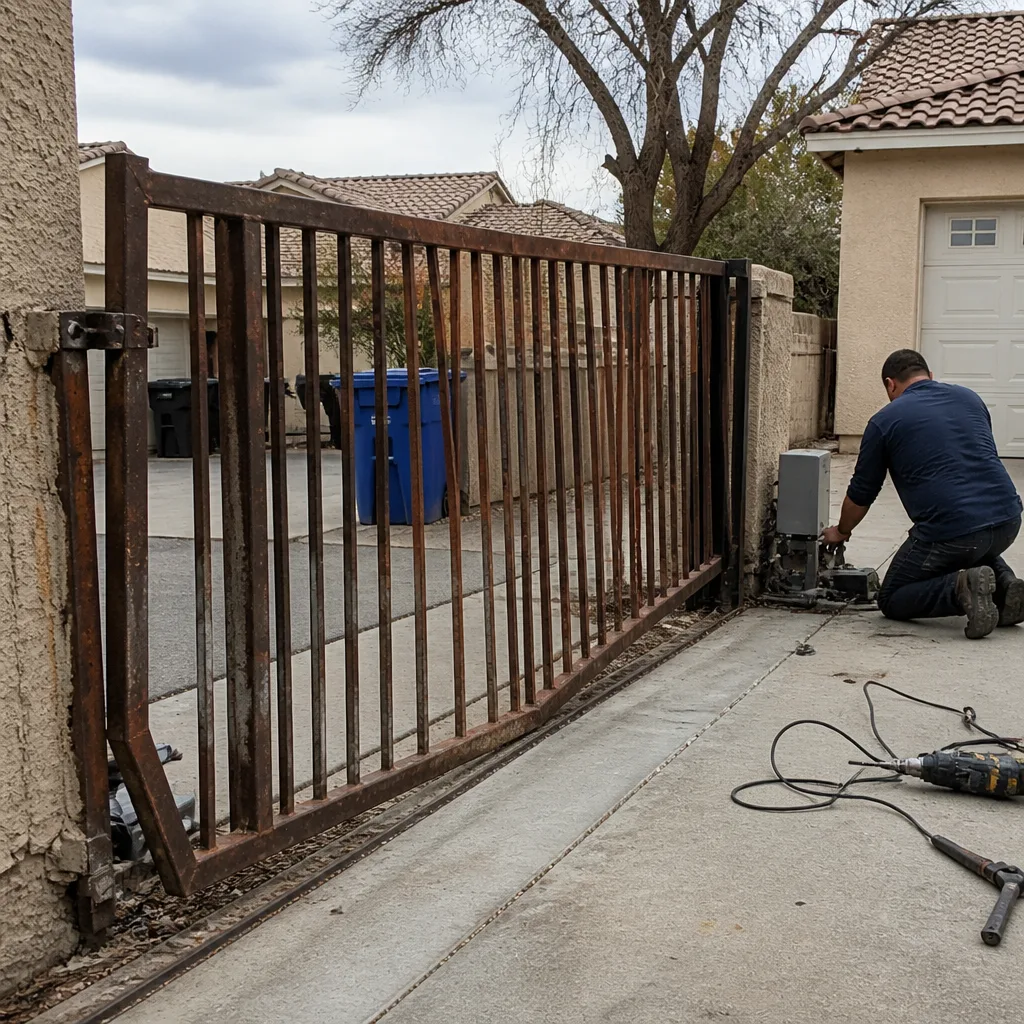 Before
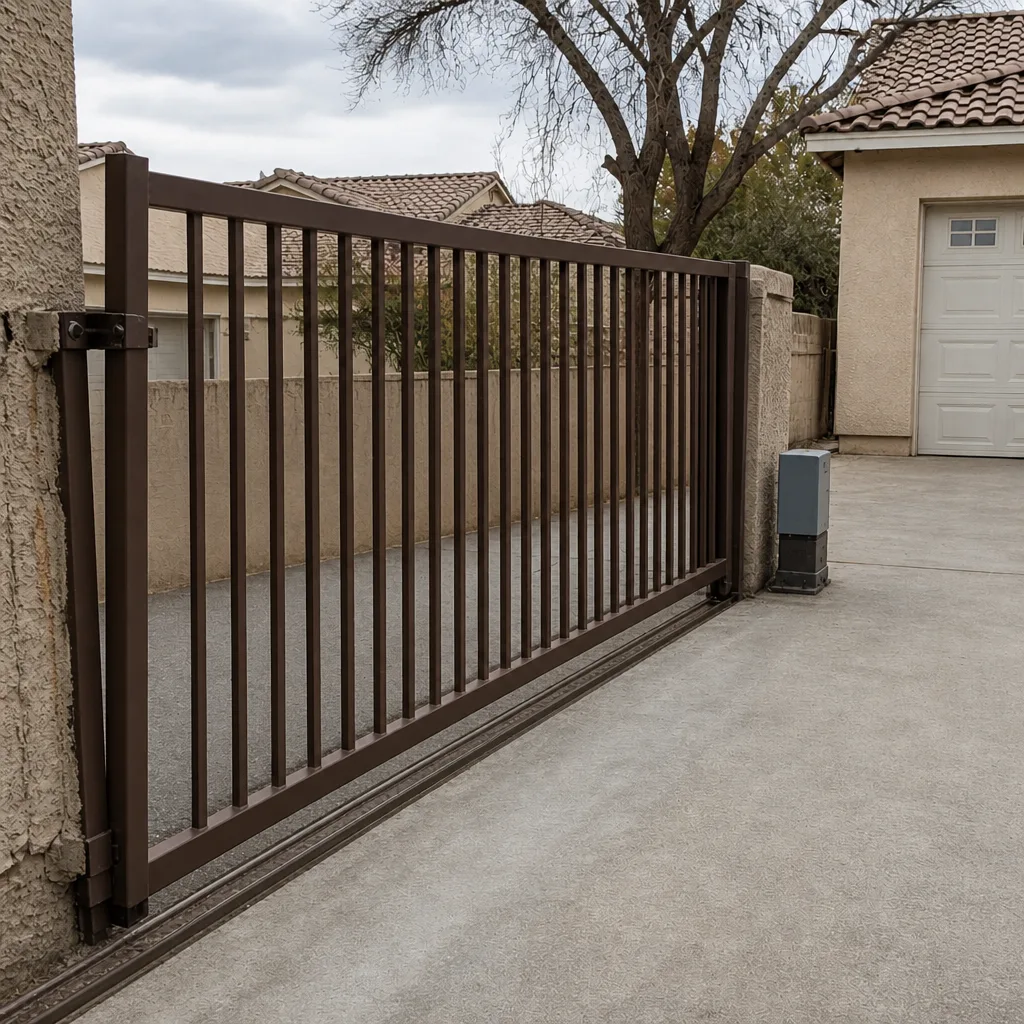 After
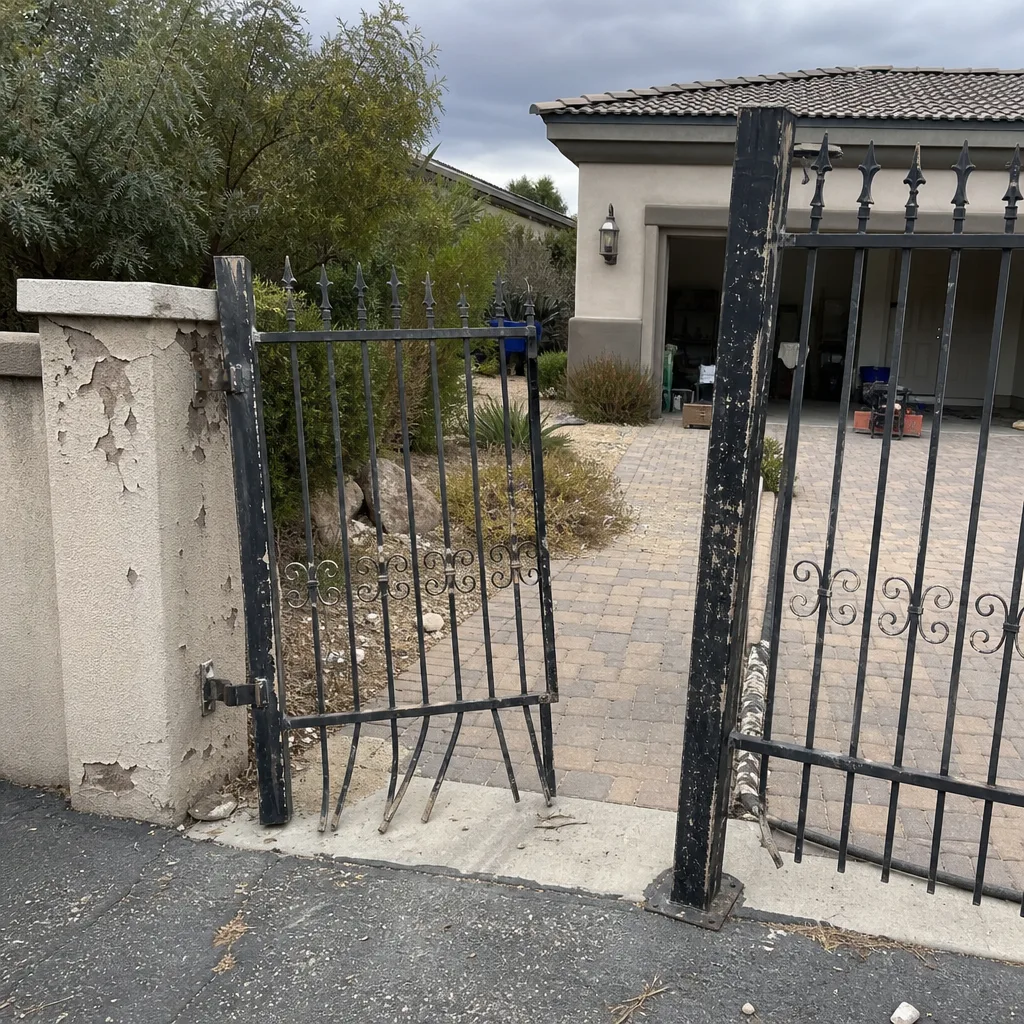 Before
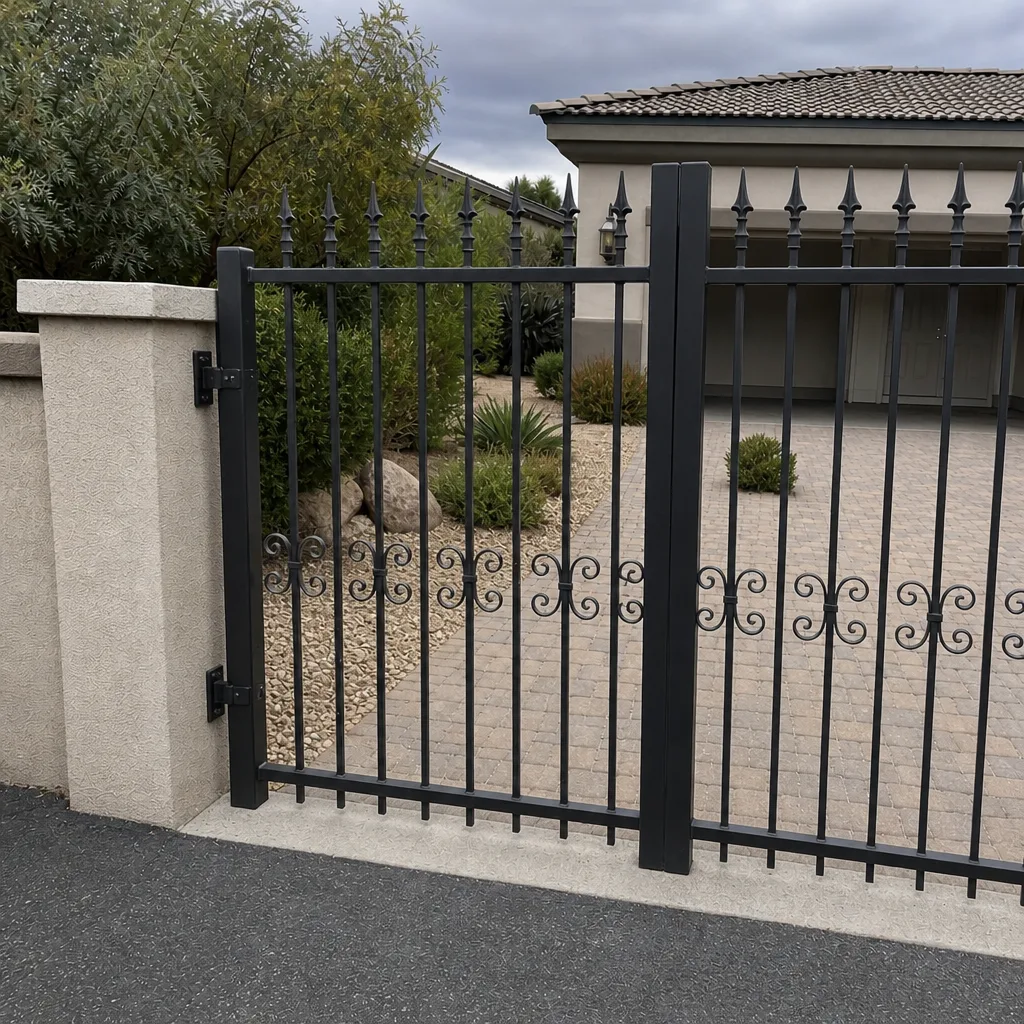 After
When to Call a Professional
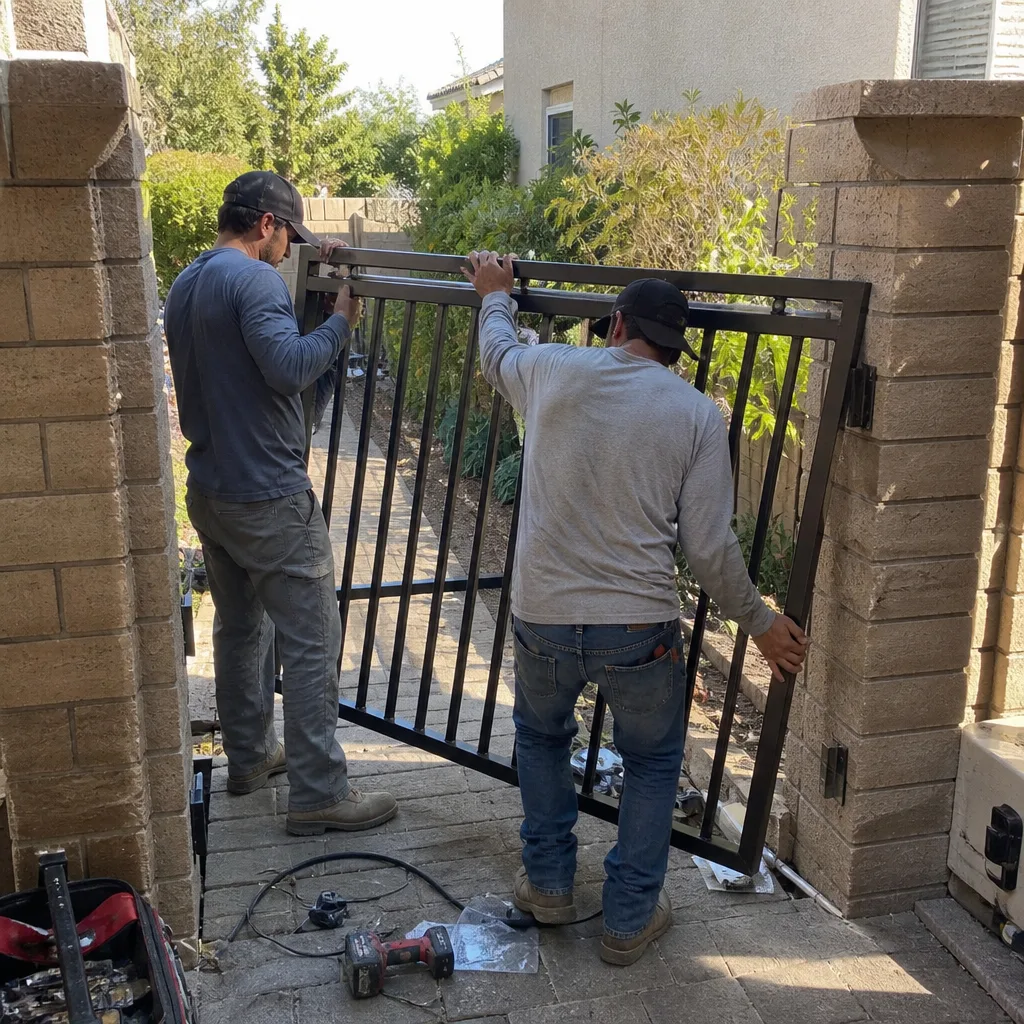
Some findings are DIY maintenance. Some are not. Call a professional when you see a crack in the paint or the weld itself, when the gate has visibly leaned or dropped at the latch, when the post footer or anchor hardware is cracked or loose, or when you can’t get the gate to latch without forcing it. On automatic gates, any safety-reversal failure is a call-today item. Welding repairs, post re-alignment, and operator clutch or limit resets are genuinely trained-professional work, and the safety systems on an automatic gate protect people, not just property. Vance Gate Repair Summerlin offers free estimates in Summerlin – call (844) 797-2809.
Frequently Asked Questions
A visual check monthly, a measurement-based inspection every six months, and a full structural and weld review annually. Automated gates should hold to the monthly rhythm strictly because the operator loads the frame every cycle. The annual review is the checkpoint that catches a fatigue crack before it widens.
Typical residential gate weld repairs in Summerlin run from a small seam repair up to a full corner re-weld with repaint, depending on how much has to come apart and how the finish has to be restored. Exact pricing depends on the gate, the access, and the film or powder coat. We hand you a written price before any work starts – call (844) 797-2809 for a free estimate.
Yes, it can be the first visible sign of flex in the joint. Paint is brittle; it cracks before the steel does. A crack line running parallel to a weld on a loaded seam is worth an inspection, not a repaint.
Thermal expansion. A Summerlin gate in direct sun heats on one face first, and the frame grows asymmetrically. If the post plumb and gap tolerances are recorded, you can tell the normal seasonal swing from actual ground movement. Without a record, the two look identical.
Post plumb readings, gap tolerances, hinge play, dated photos of every weld seam inspected, the part numbers of anything replaced, and the exact positions of any operator limits that were adjusted. That record lets the next technician pick up from the last visit instead of starting over.
Yes. The photo-eye and safety-reversal systems should be tested monthly on an automated gate, and any failure is a stop-and-fix item. The structural and welding review is the annual checkpoint. Both matter; they just live on different schedules. Call (844) 797-2809 for a free estimate if you’re not sure the safety systems are right.
The Bottom Line
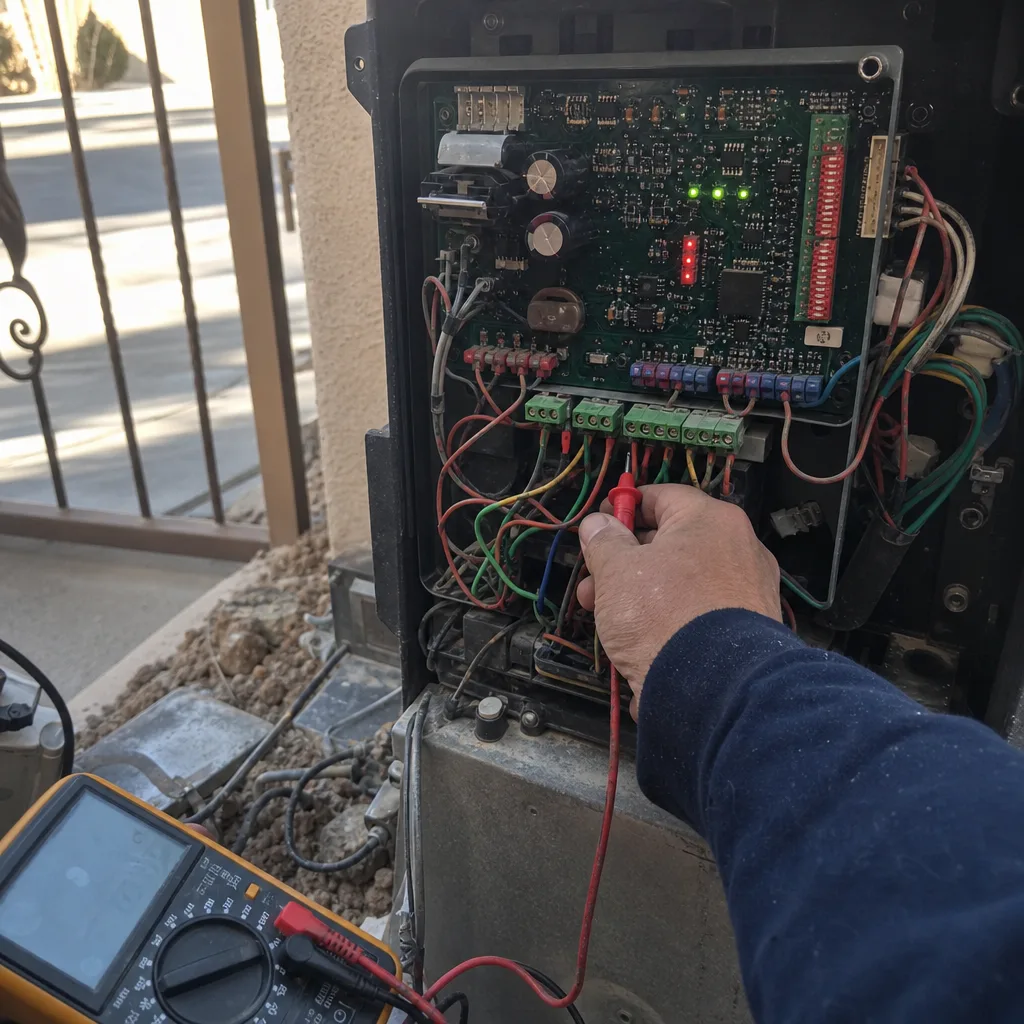
Gate welding and structural maintenance is a measurement discipline, not a feeling. Record post plumb, gap tolerances, and hinge play every six months; inspect seams and finish annually; photograph everything; and keep the written record. Summerlin’s sun and thermal swing do the rest of the stressing on their own, and a documented baseline is what lets you see it before it becomes a fabrication job. If you want the schedule done by people who leave the record behind, our technicians have up to 12 years of experience and we write the price before we pick up a tool.
Call (844) 797-2809 for a free estimate. A live person answers, any hour.
Written by the team at Vance Gate Repair Summerlin.