
Last updated November 17, 2026
 Wrought iron
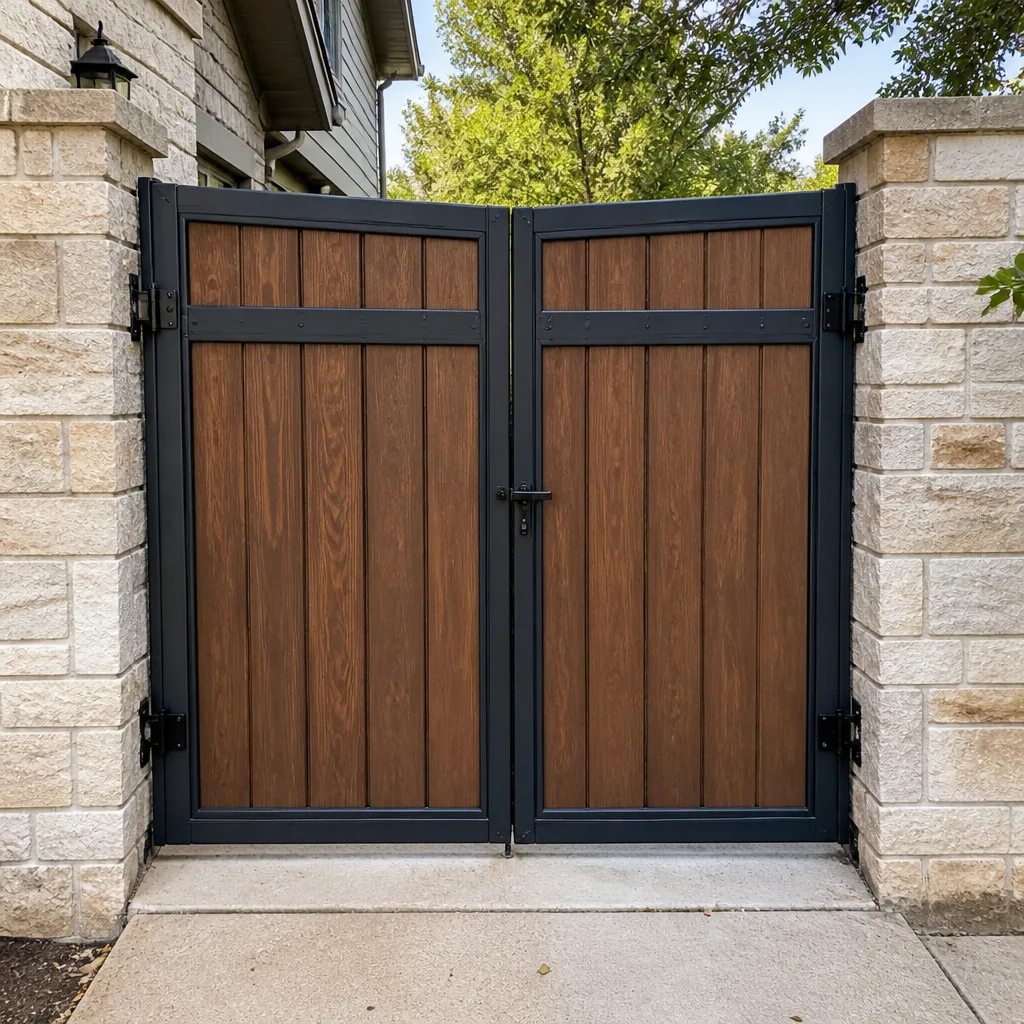 Wood & steel frame
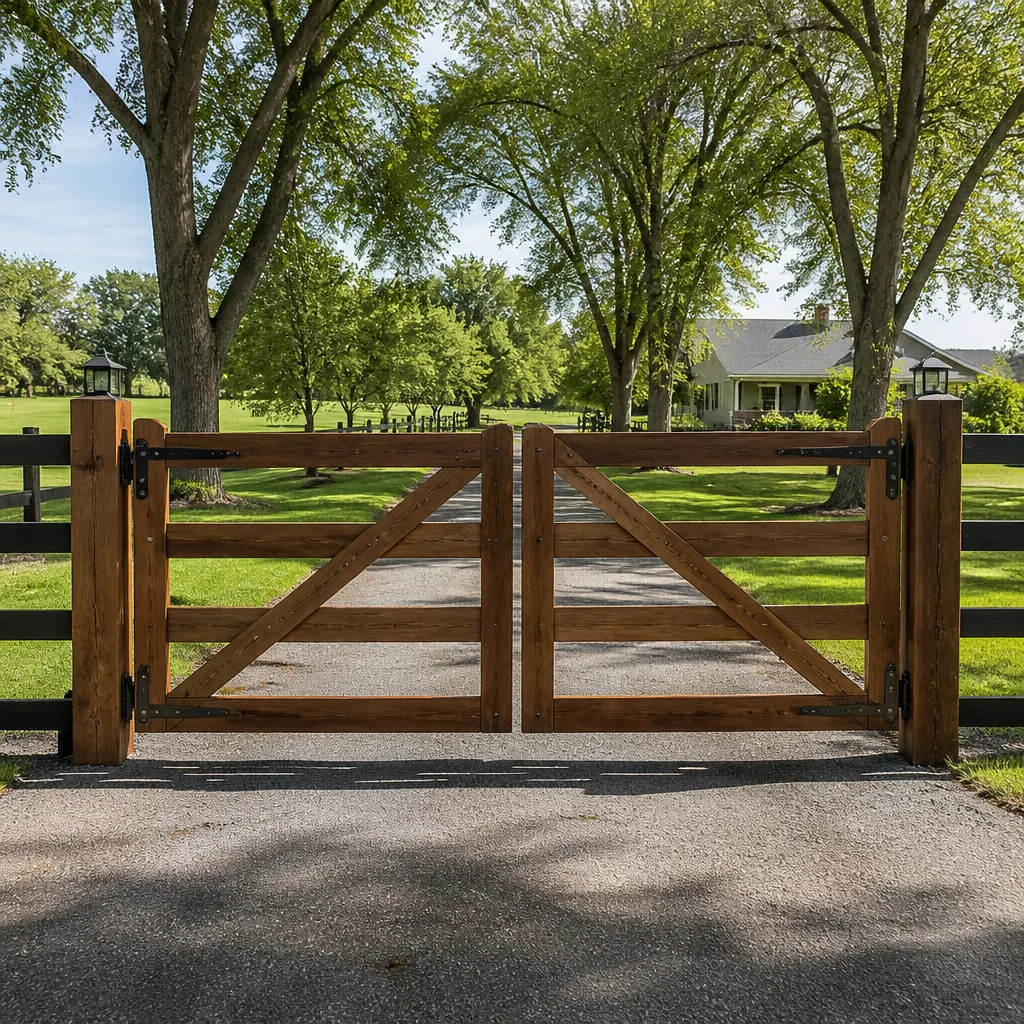 Farm & ranch
 Sliding driveway gates
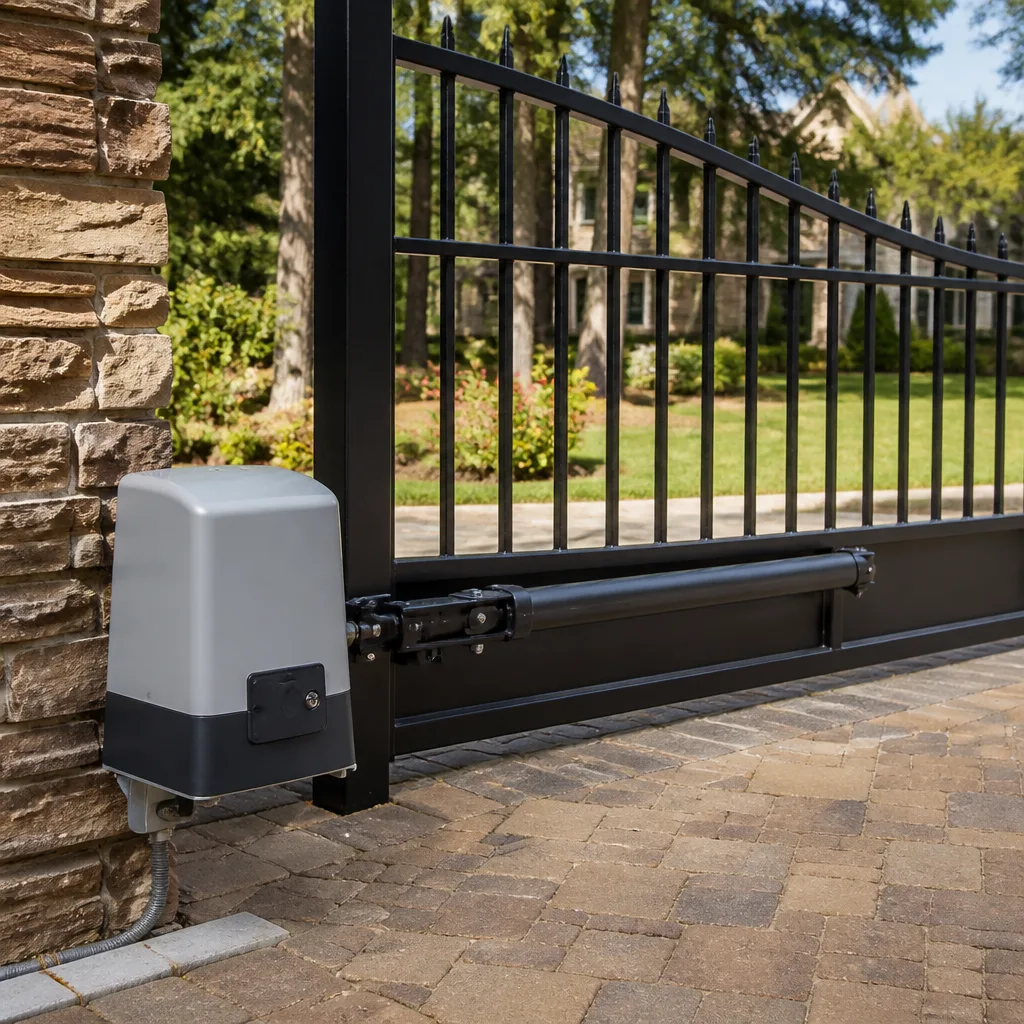 LiftMaster operators
Free on-site gate assessment - hinges, posts, and your LiftMaster or Nice gate operator checked before anything is quoted
The assessment is free and the quote is the invoice.
Get your free estimateGate Access Control Maintenance Schedule: What to Do and When
A gate that fails at 11 PM on a Friday almost always has a maintenance log that stops six months before the failure, or never existed at all. In our work across Summerlin, that’s the pattern we see more than any single brand defect: the hardware was fine, the paperwork wasn’t. Access control systems drift quietly. A loop detector loses sensitivity by degrees. A transformer sags under summer load. A limit switch creeps a few degrees past travel each cycle. None of it announces itself. But it’s all measurable, and it’s all recordable. This guide lays out exactly what to check, how often, and what readings and photos you should capture so the next technician walks in with a baseline instead of a guess.
Quick Answer
A working gate access control maintenance schedule has three tiers: monthly walk-around checks (visual and safety), quarterly instrumented inspections (loop detectors, limit switches, transformer output, documented with readings and photos), and an annual deep service (motor, battery, hinges, and a full log review). In Summerlin, quarterly inspections matter more than the calendar suggests because the desert heat cycle pushes transformers and loop detectors harder than manufacturers’ baseline intervals assume.
Styles & brands we work with
- Wrought iron
- Wood & steel frame
- Farm & ranch
- Sliding driveway gates
- LiftMaster operators
Table of Contents
- Why the Maintenance Log Matters More Than the Task List
- The Three Tiers: 30-Day, 90-Day, and Annual
- Summerlin Heat Cycles and What They Do to Your Gate
- What Readings and Photos to Capture at Each Visit
- Limit-Switch Drift and Why Baseline Readings Matter
- What a Completed Visit Should Leave Behind
- Common Mistakes to Avoid
- When to Call a Professional
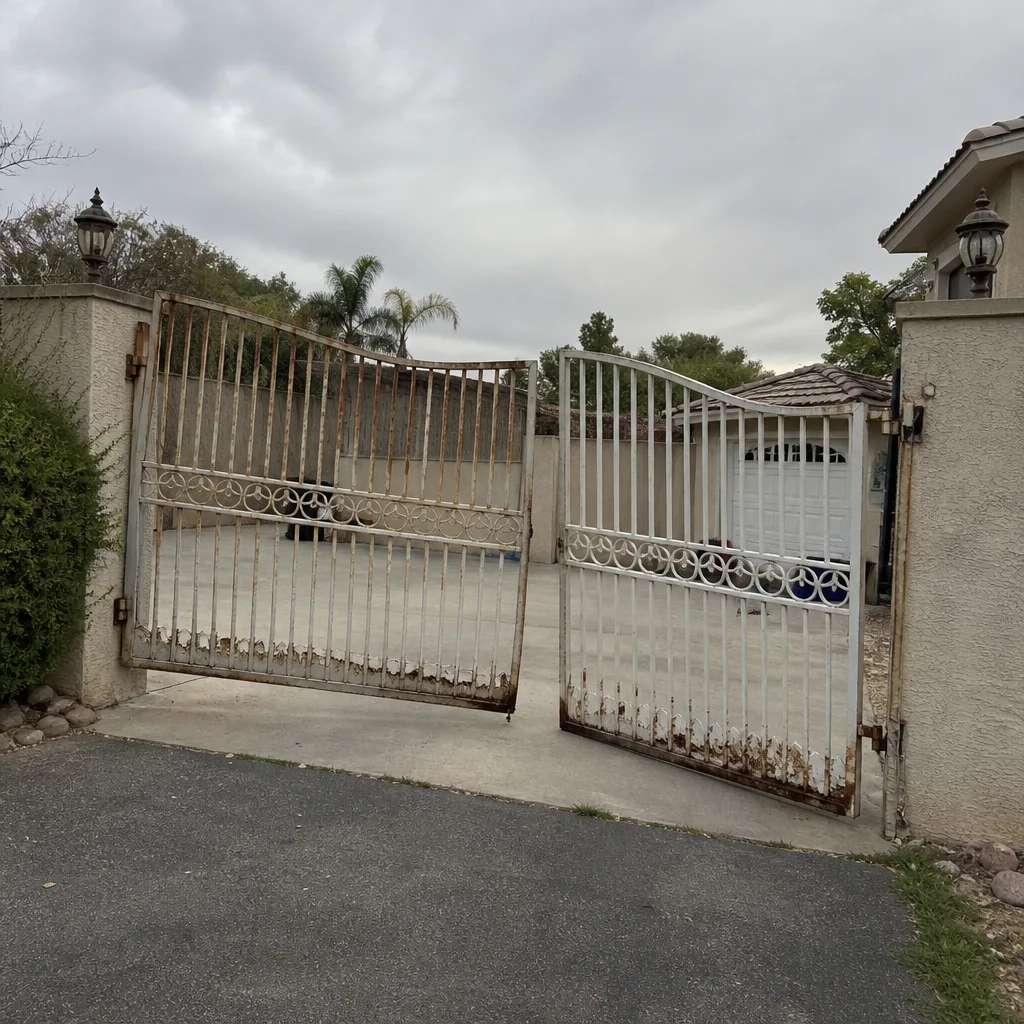 Before
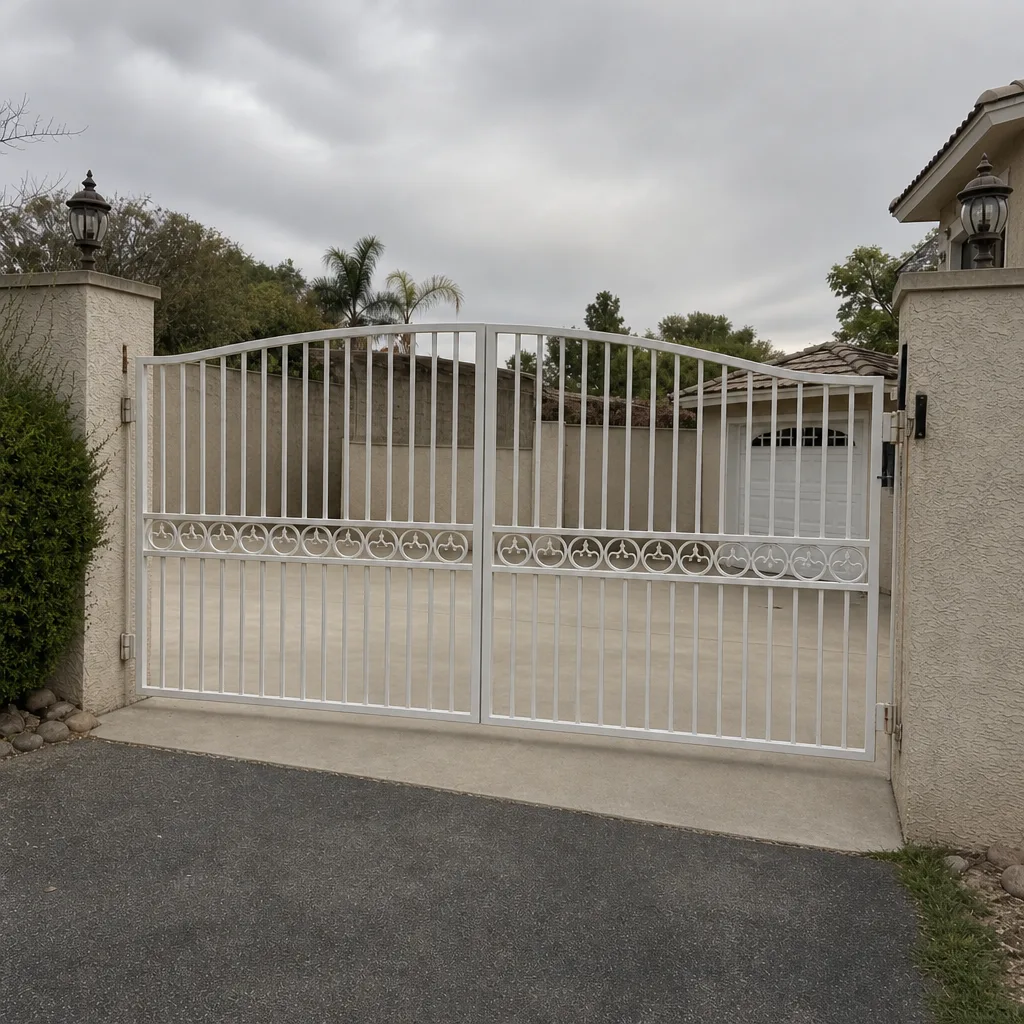 After
Why the Maintenance Log Matters More Than the Task List
Search “gate access control maintenance schedule” and you’ll find dozens of pages with nearly identical task lists: “inspect hinges, lubricate chain, test safety edges, check battery.” They aren’t wrong. They’re just useless on their own. A task list tells you what to do. A log tells you what changed since last time, and change is where failures live.
Consider a real sequence we documented in Summerlin last spring. A swing gate on a LiftMaster operator passed its 90-day inspection in January. At the April visit, the technician photographed the limit-switch cam position and noted the open-travel reading had drifted 6 degrees from baseline. In July it had drifted another 4 degrees. By September the gate was slamming into its hard stop and the homeowner had lost confidence in the whole system. Nothing was broken. But because the drift was recorded, we reset it in a single visit and the homeowner never paid for a diagnostic on a problem that had a six-month paper trail.
That’s the thesis here: documentation is not the paperwork that follows the work. It is the work. The Haven Standard we operate under puts this in writing as Clause 4, evidence on every job, but the principle applies to any homeowner maintaining any gate, regardless of who services it. Keep a log. Record readings. Photograph everything. When a technician opens your gate and finds a folder of baseline measurements, they spend ten minutes diagnosing and fifty minutes fixing. Without that folder, they spend an hour re-discovering what the last person already knew.
For context on what a first-time service visit should include, our gate repair in Summerlin page walks through the diagnostic process step by step.
The Three Tiers: 30-Day, 90-Day, and Annual
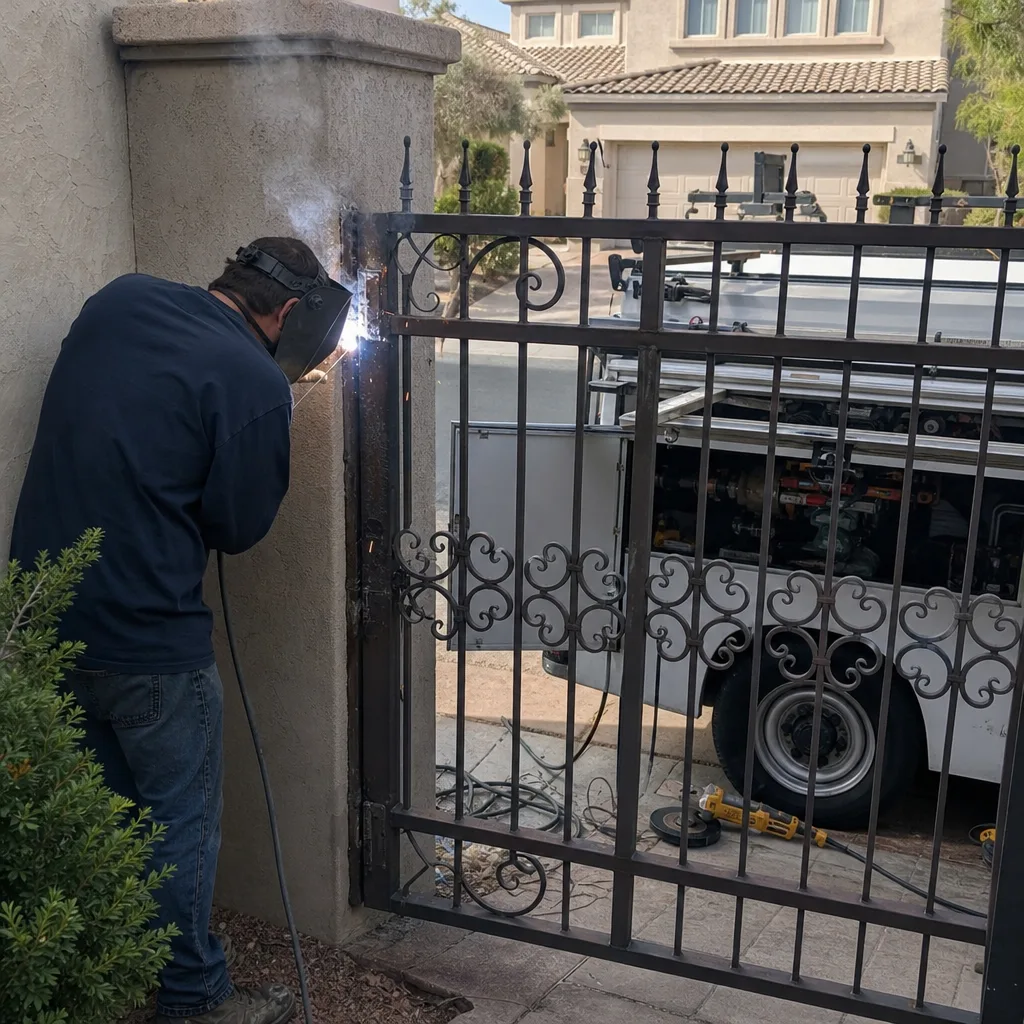
The most common mistake we see in homeowner-run schedules is collapsing everything into one annual “gate service.” That conflates tasks with very different intervals. A safety-edge reverse test needs to happen monthly because a failed safety edge is a liability the day it fails, not the month you happen to notice. A motor-brush inspection can wait a year because wear accumulates slowly and predictably. Put them in the same bucket and one gets skipped every time. Here’s how to split them.
Every 30 Days (Ten Minutes, No Tools)
- Walk the full travel path and look for new cracks, chips, or vegetation encroaching on the swing arc.
- Test the safety reverse: break the photo-eye beam with your hand while the gate is closing. It should stop and reverse within a foot. If it doesn’t, stop using the gate and call for service.
- Press the manual release and push the gate open by hand. It should move smoothly with modest effort. Grinding or stiffness means hinges or rollers need attention.
- Confirm the keypad, intercom, and any remote fobs still work. Dead batteries are the single most common “system failure” call we get.
- Photograph the gate in its open and closed positions. The photos establish a visual baseline against which future wear becomes visible.
Every 90 Days (Instrumented, Needs a Multimeter and a Notepad)
- Test loop detectors with a known vehicle and a bicycle-sized metal object. Record the detection distance in feet.
- Measure and record transformer output voltage at the operator. Compare to nameplate spec.
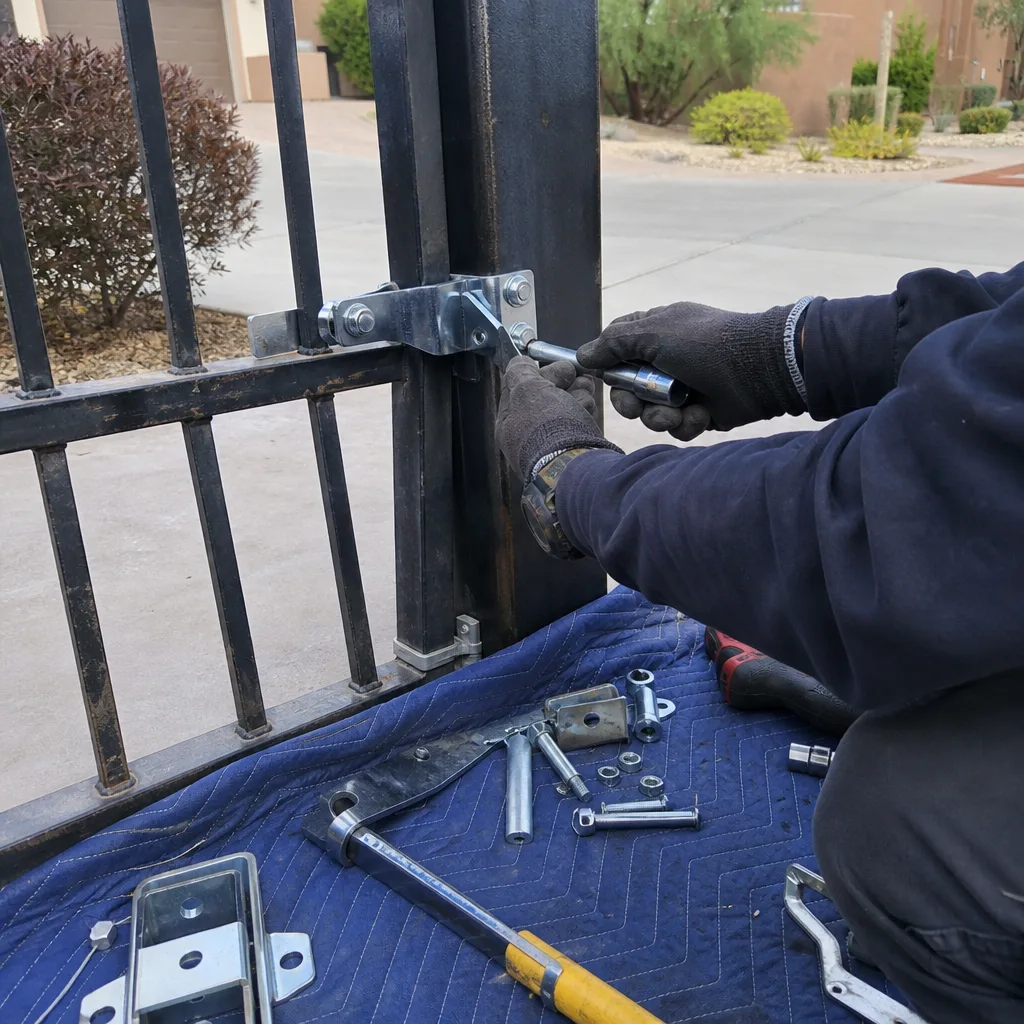
- Read and photograph the limit-switch cam position (see the section below on drift).
- Lubricate hinges, rollers, and the drive chain per manufacturer spec.
- Check all weather seals and enclosures, especially the control box, for dust ingress and heat discoloration.
Annually (Deep Service)
- Full motor and gearbox inspection, including brush wear and oil condition on oil-bath units.
- Battery load test on any backup battery. Replace if it fails load, not just if it fails voltage check.
- Full review of the log from the last twelve months. Identify any reading that drifted more than one increment and schedule a targeted service.
- Weld and post inspection on the gate frame. On Summerlin’s drying soils, post movement is worth checking every year.
- Safety edge physical inspection (the rubber or foam edge itself, not just the beam).
Summerlin Heat Cycles and What They Do to Your Gate
Manufacturers write their maintenance intervals for a generic climate. Summerlin is not generic. Between June and September, ground temperatures in full sun routinely exceed 140°F, and control enclosures bake. We’ve measured three predictable failure modes in Summerlin that show up earlier than the manual suggests.
- Loop detector drift. The inductive loop in your driveway expands and contracts with heat. In Summerlin, a loop that detects reliably in January can miss a small car by August. That’s why 90-day loop checks matter more here than the annual interval a Northern-climate schedule calls for.
- Transformer sag. Control transformers output less voltage when ambient temperature rises. A transformer that outputs a clean 24V at 70°F may sag to 21V at 130°F inside a sun-baked enclosure. Sagging voltage means erratic operator behavior, phantom opens, and premature motor wear. Recording output at each visit lets you spot seasonal sag against the baseline.
- Battery capacity loss. Backup batteries that live in a hot enclosure lose capacity faster than spec. A battery that “tests good” in winter can fail to open the gate on the first hot day loss-of-power event in July.
Summerlin’s gate stock also matters. Up here we work on a lot of decorative iron swing gates and long cantilever sliders on larger lots, more than the shorter residential gates you see closer to the valley floor. Longer and heavier gates amplify drift. A limit-switch drift of 4 degrees on a 12-foot swing becomes a much bigger positional error than the same drift on an 8-foot gate. That single fact changes how often limit positions should be read on Summerlin properties.
If your gate has reached the point where repair no longer makes sense, our gate installation in Summerlin page covers what a replacement involves and what we photograph before we recommend it.
What Readings and Photos to Capture at Each Visit
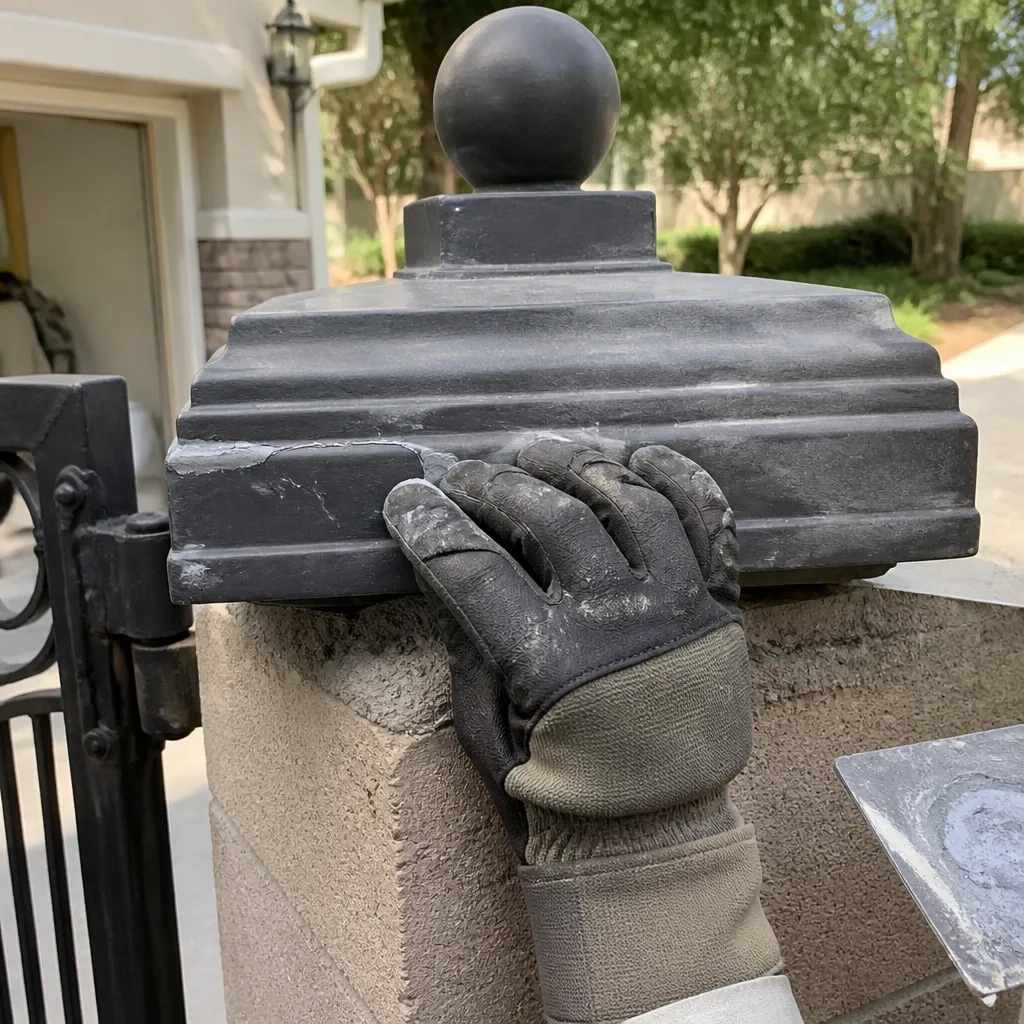
“Inspected and lubricated” written on a service ticket is not a record. It’s a claim. For a log to be useful to a future technician, it needs numbers and images. Here’s exactly what we capture on every visit, and what you should ask for whether you’re hiring us or anyone else.
Readings (Numbers, Not Adjectives)
- Limit-switch cam position for open and closed travel, in degrees or in a written position reference.
- Transformer output voltage at the operator, with ambient temperature noted.
- Loop detector sensitivity and detection distance, in feet, for each loop on the property.
- Battery voltage under load, not just open-circuit voltage. A battery that reads 12.6V at rest but drops to 9.4V under load is a battery that will strand you.
- Motor current draw during open and close cycles, in amps, compared to nameplate spec.
Photos (With Framing)
- Limit-switch cam position, framed tightly enough that the cam notch is visible against the switch body.
- Control box interior, wide shot, before and after any adjustment.
- Each loop seal seam in the driveway, so seasonal heave is visible next visit.
- Gate post bases on both sides, so any ground movement is comparable year over year.
- Part numbers on any component adjusted or replaced.
The documentation habit is the one thing we brought over from commercial access-control work, where a DoorKing or Elite installation on a commercial site always gets a wiring diagram and a labeled photo set. Vance Gate Repair Summerlin applies the same standard on residential gates: the photo log stays with the homeowner, and a copy lives in our job record.
Limit-Switch Drift and Why Baseline Readings Matter
A limit switch is a mechanical contact that tells the operator “stop here.” It’s set at install to the precise open and closed positions of your specific gate. Over hundreds or thousands of cycles, the cam screw loosens by a fraction of a degree, the switch body flexes, the gate itself settles, and the “stop here” point drifts. Slowly. Invisibly. Until one day the gate slams into a hard stop, or stops a quarter-inch short of latching, or reverses mid-travel because the operator thinks it hit an obstruction.
Here’s what drift looks like in practice across a year, on a typical Summerlin swing gate:
- Month 0 (install or major service): open travel limit set at reference 0°. Closed limit at 0°. Photographed and logged.
- Month 3: open travel reads 2° past reference. Within tolerance. Logged as “watch.”
- Month 6: open travel reads 4° past reference. Beginning to affect soft-stop behavior. Logged.
- Month 9: open travel reads 7° past reference. Gate now contacts its mechanical stop on every open. Homeowner reports “a clunk.” Logged as service-due.
- Month 12: reset. Photographed at new baseline. The record shows the drift so the next technician knows this gate drifts approximately 7° per year and can pre-adjust the schedule accordingly.
Without baseline readings, month 12 is a diagnostic call. With them, it’s a 15-minute adjustment. That’s the entire argument for documentation in one sequence: it converts diagnostic time into service time, and diagnostic time is what you pay for when you don’t have a record.
Limit-switch work is one of the higher-risk tasks on a gate because it interacts directly with the safety reverse. Read our gate motor and opener in Summerlin page for the equipment we work on and how the safety circuit is tested after any adjustment.
What a Completed Visit Should Leave Behind
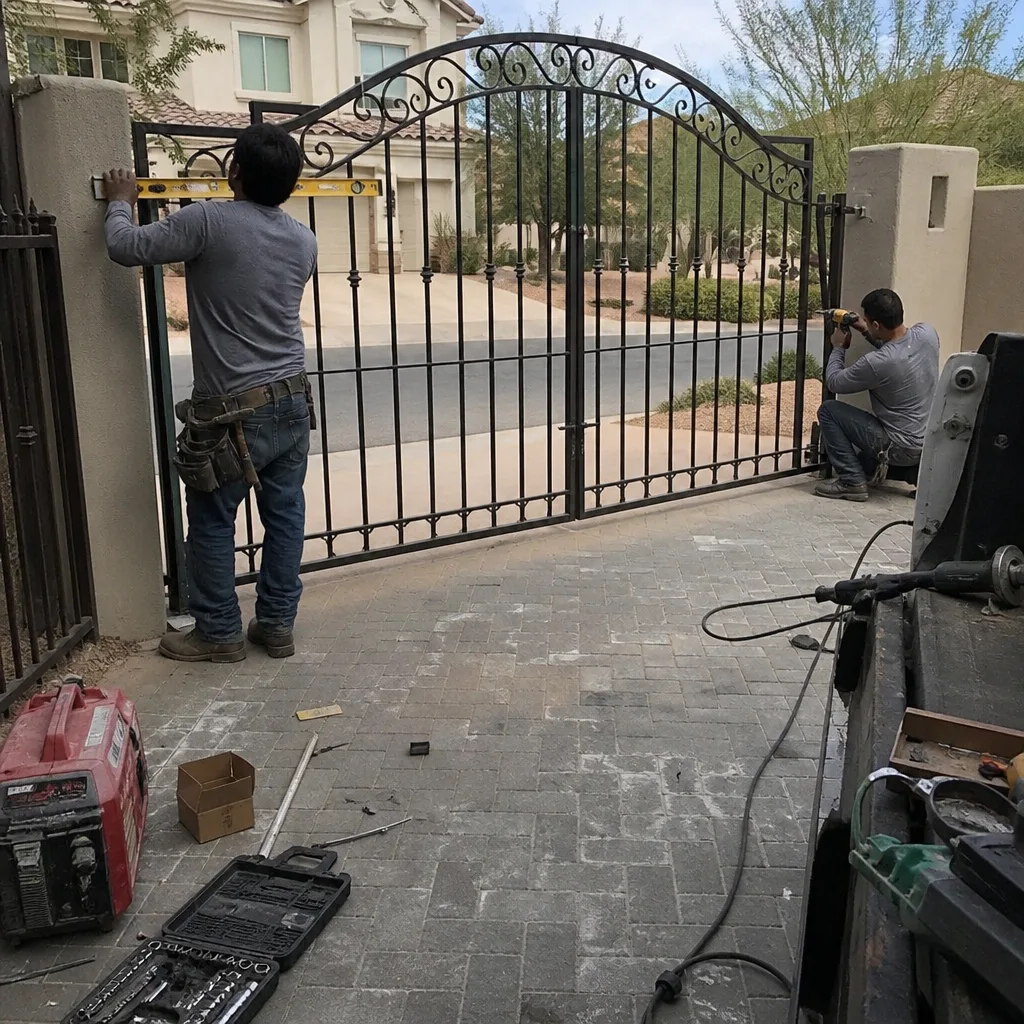
A lot of gate companies hand you an invoice. That’s a receipt, not a record. When a maintenance visit is finished, here’s what should be in your hands before the technician pulls out of the driveway.
- A written scope of what was found and what was done. Not “serviced gate.” Specific sentences like “open-travel limit reset from 7° past reference to baseline; cam screw torque-checked.”
- Photographs of every adjustment and every part replaced. Framed so the change is visible against the prior baseline photo.
- Readings recorded against spec. Loop detection distance, transformer output, motor current draw, all compared to the previous visit’s numbers.
- Part numbers for anything installed. So the next technician can match without guessing brand or revision.
- A written price that was agreed before any work started. This is non-negotiable, and any company that won’t put the price in writing before touching the gate is a company worth walking away from.
In our operation that’s what the Haven Standard requires on every single visit: written price before work starts (Clause 1), documented photo record when the visit ends (Clause 4), and the 365-Day Done Right Promise covering anything we repaired for a full year afterward. Whether you hire us or someone else, ask for those four things before you schedule: written price upfront, photo record after, readings-on-spec, part numbers. If a company can’t produce them, you’ll be the one paying for the gap later.
Common Mistakes to Avoid
- Skipping the monthly safety-reverse test because the gate “seems fine.” A failed safety reverse is invisible until a child or a pet is in the path. Ten minutes a month eliminates the one class of failure that can actually hurt someone. Test it.
- Lumping all maintenance into one annual call. The monthly items get deferred, the quarterly instrumented checks get skipped, and you get a watered-down visit that satisfies nobody. Split the tiers.
- Not recording readings. A technician who inspects without writing the measurement down has done half the job. If the visit ends without numbers on paper, demand them.
- Ignoring transformer output through the summer in Summerlin. Readings taken in January don’t tell you what your control box is actually doing in August. Check in the heat, not just in the mild months.
- Trusting a verbal estimate. Once work starts, verbal estimates have a way of growing. Every dollar should be written before the first bolt turns.
- Replacing the motor because the limit switch drifted. We’ve seen homeowners pay for a full motor replacement when the actual fault was a 6-degree cam drift and a worn cam screw. Get a documented diagnosis before anyone recommends replacement.
- Letting the log lapse after a change of technician or company. Hand your log to whoever services the gate next. A technician with your history is worth twice a technician without it.
When to Call a Professional
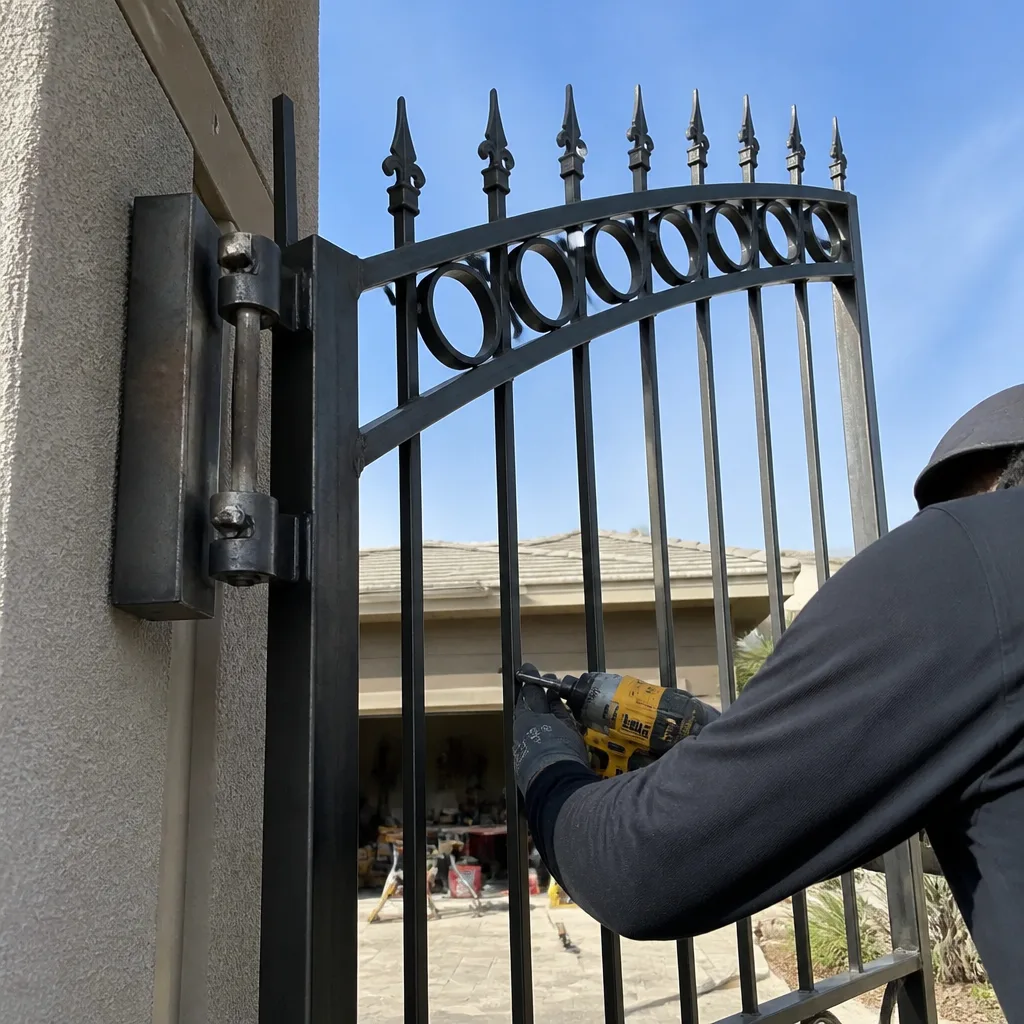
Monthly walk-around items are homeowner territory: visual checks, safety reverse test, battery replacement, clearing vegetation. Quarterly instrumented checks are professional work. Multimeter readings on live control circuits, loop detector calibration, and any adjustment that touches the safety reverse circuit belong to a trained technician. Beyond the schedule, call for service immediately if the safety reverse fails at any point, if the gate moves erratically or reverses mid-travel, if the motor hums but the gate doesn’t move, if you see heat discoloration in the control box, or if the gate frame or post has shifted visibly. High-voltage control circuits and any work on operators that use high-tension springs or arms carry serious injury risk; don’t open the control enclosure yourself to investigate. Vance Gate Repair Summerlin offers free estimates in Summerlin and works on LiftMaster, FAAC, BFT, Linear, Viking, Ghost Controls, DoorKing, Elite, and Mighty Mule equipment. Call (844) 797-2809 for an exact quote, and a live person will answer whether it’s a weekday afternoon or a Sunday night.
For the full picture of what we service in the area, start with our Vance Gate Repair Summerlin home page.
See the difference
BeforeAfter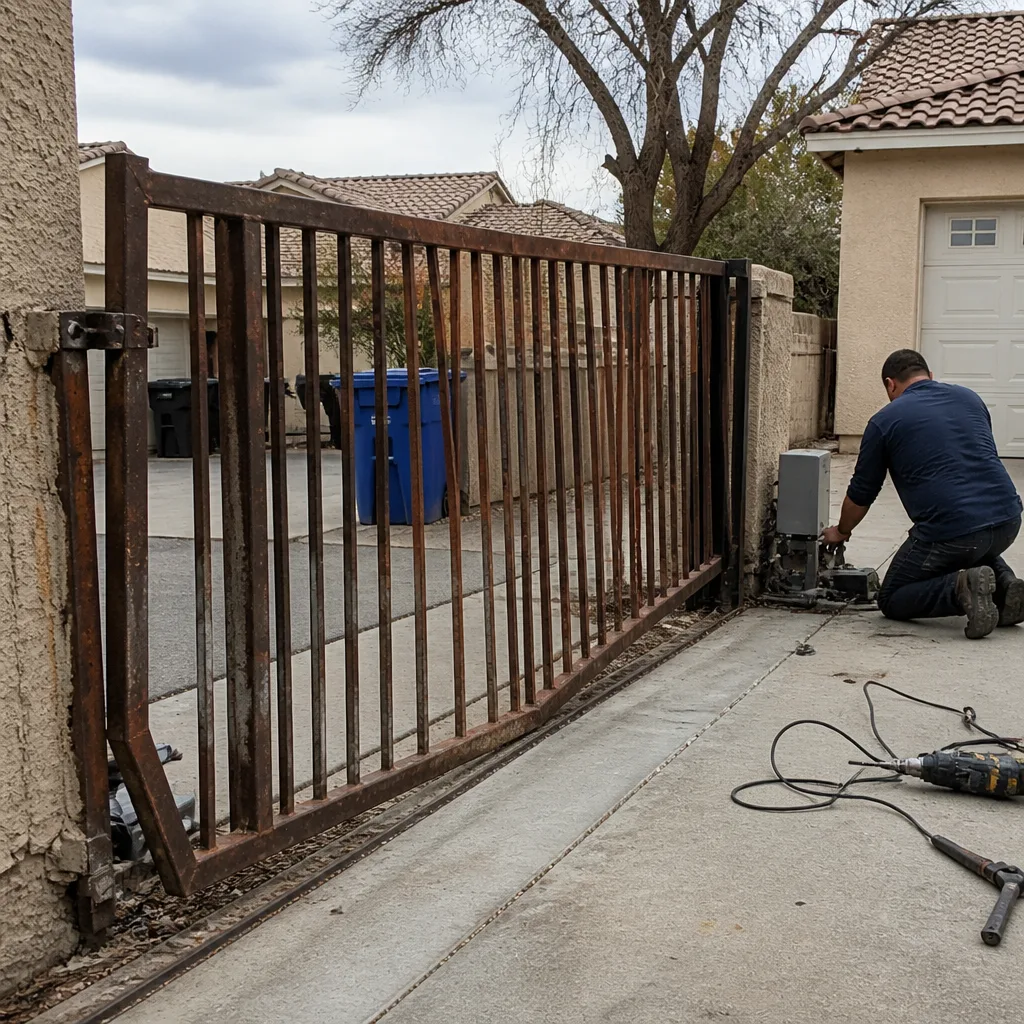 Before
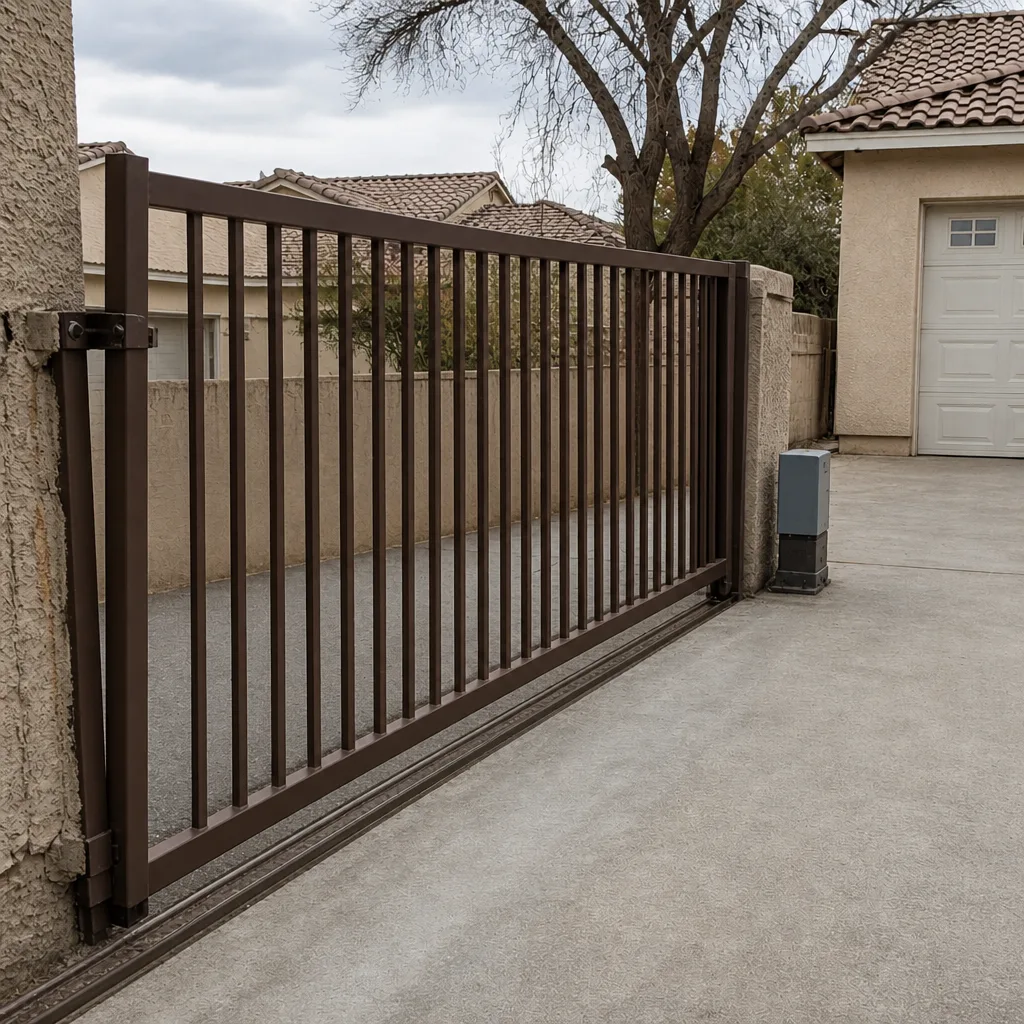 After
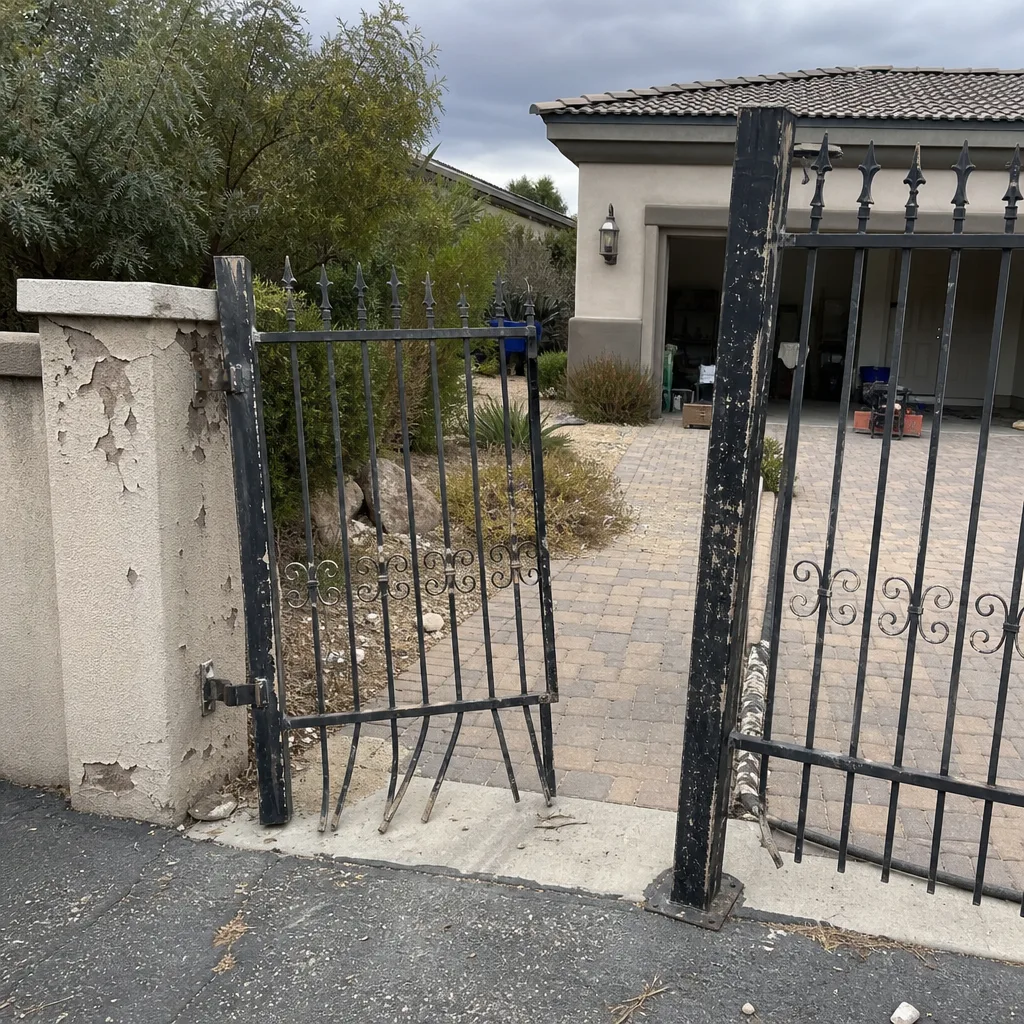 Before
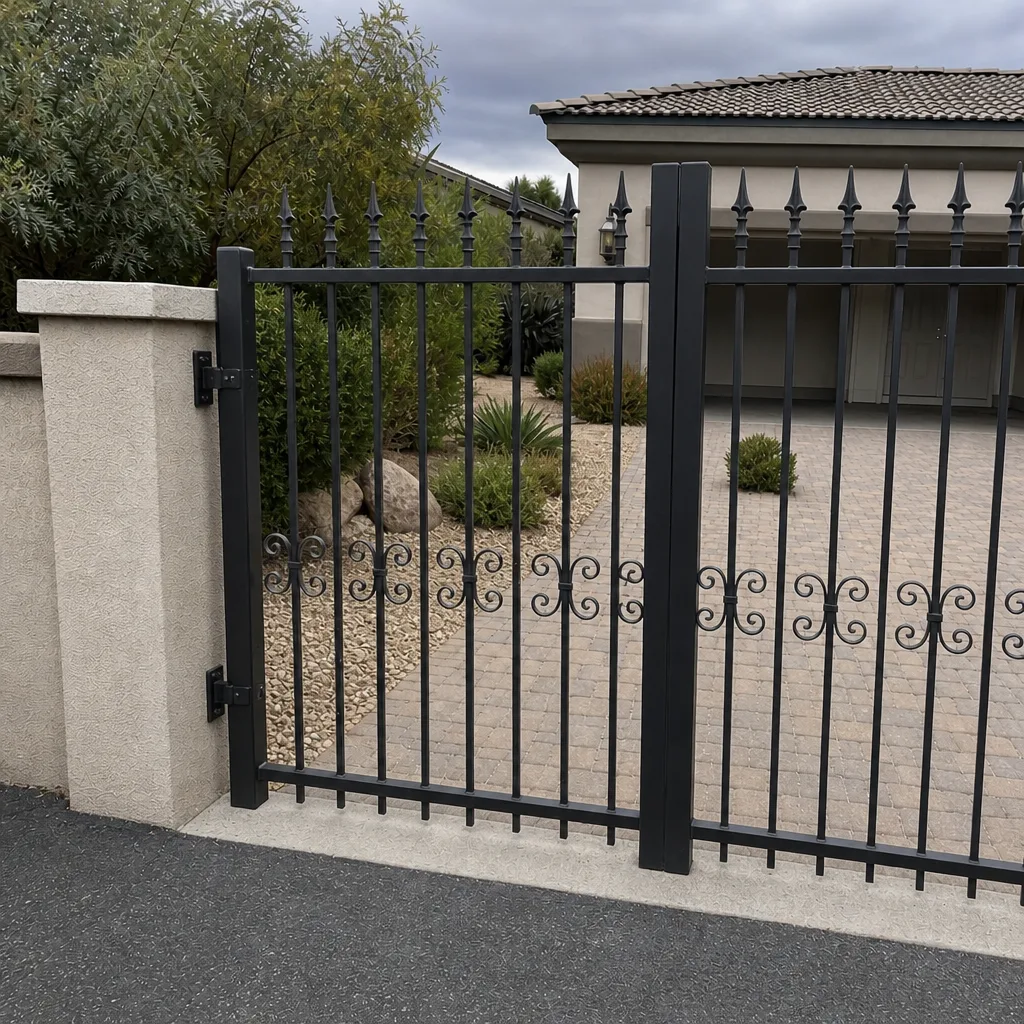 After
Frequently Asked Questions
Quarterly instrumented inspections plus an annual deep service, with a monthly ten-minute walk-around in between. In Summerlin specifically, the quarterly tier matters more than the manufacturer’s default schedule because heat cycles accelerate loop-detector drift and transformer sag, both of which are only caught by measuring at the interval. Call (844) 797-2809 for an exact quote on setting up a schedule for your gate; estimates are free.
The limit-switch cam position, the transformer output voltage, and the loop detection distance, all compared to the previous visit’s numbers, plus a framed photo of each. Those three readings catch the majority of failures before they become service calls. A visit that ends without them is a visit you paid for twice.
Yes. The monthly walk-around is visual and safety testing only: walk the arc, test the safety reverse by breaking the photo-eye, press the manual release and push the gate by hand, confirm remotes and keypads work, photograph both gate positions. Do not open the control enclosure or adjust the limit switches yourself; those tasks involve live control circuits and the safety reverse system.
Routine scheduled maintenance typically runs $150 to $300 per visit depending on gate type and how many loops and operators are on the property. Any repair found during the visit is quoted separately in writing before the work begins, and you approve it before a tool is picked up. Call (844) 797-2809 for an exact quote; the estimate is free.
A written scope of what was found and what was done, a photo log of every adjustment and every part replaced, readings recorded against spec, and part numbers for anything installed. Under the Haven Standard, that documented photo record comes with every visit at no additional charge, and the 365-Day Done Right Promise covers any repair for a full year. Ask any company you hire for the same four items.
Almost always a limit-switch drift that has accumulated past the mechanical stop, which is a maintenance adjustment rather than a hardware failure in most cases. It becomes a repair only if the drift is severe enough to have worn the stop or the operator’s gear. A trained technician can tell in about fifteen minutes with a multimeter and a camera. Call (844) 797-2809 for a free estimate if you want a documented diagnosis before anyone touches the gate.
The Bottom Line
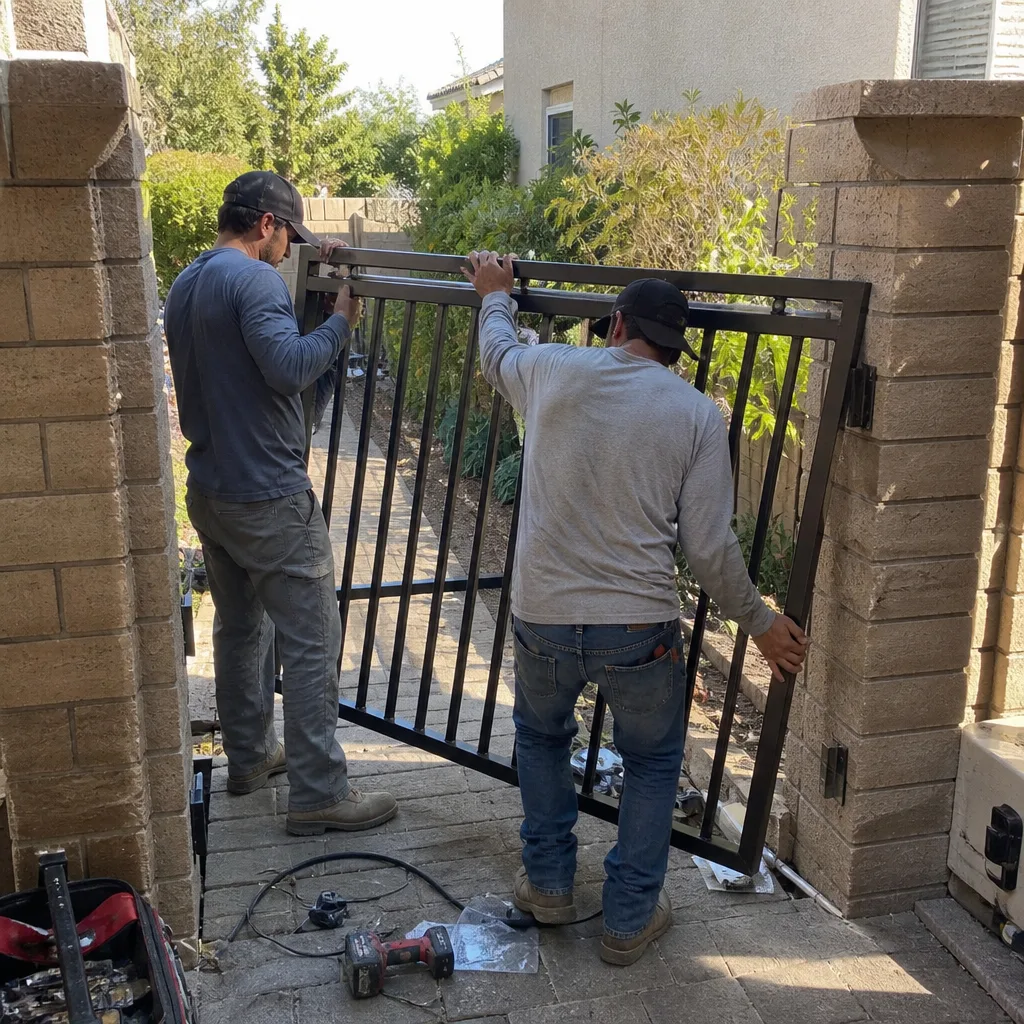
A gate access control maintenance schedule is only as good as the record it produces. The tasks matter, but the documentation is what keeps the next technician from re-discovering what the last one already knew. Split your maintenance into monthly, quarterly, and annual tiers. Measure, don’t just eyeball. In Summerlin, move the quarterly checks ahead of the heat season rather than treating them as a calendar exercise. And when a company quotes you, ask for the price in writing before anything starts. Vance Gate Repair Summerlin writes the price before the work, photographs what we found, and promises to make any repair right for a full year afterward. If that sounds like the standard you want on your gate, call (844) 797-2809 for a free estimate, any time, any day, and a live person will answer.
Written by the team at Vance Gate Repair Summerlin.