
Last updated November 17, 2026
 Wrought iron
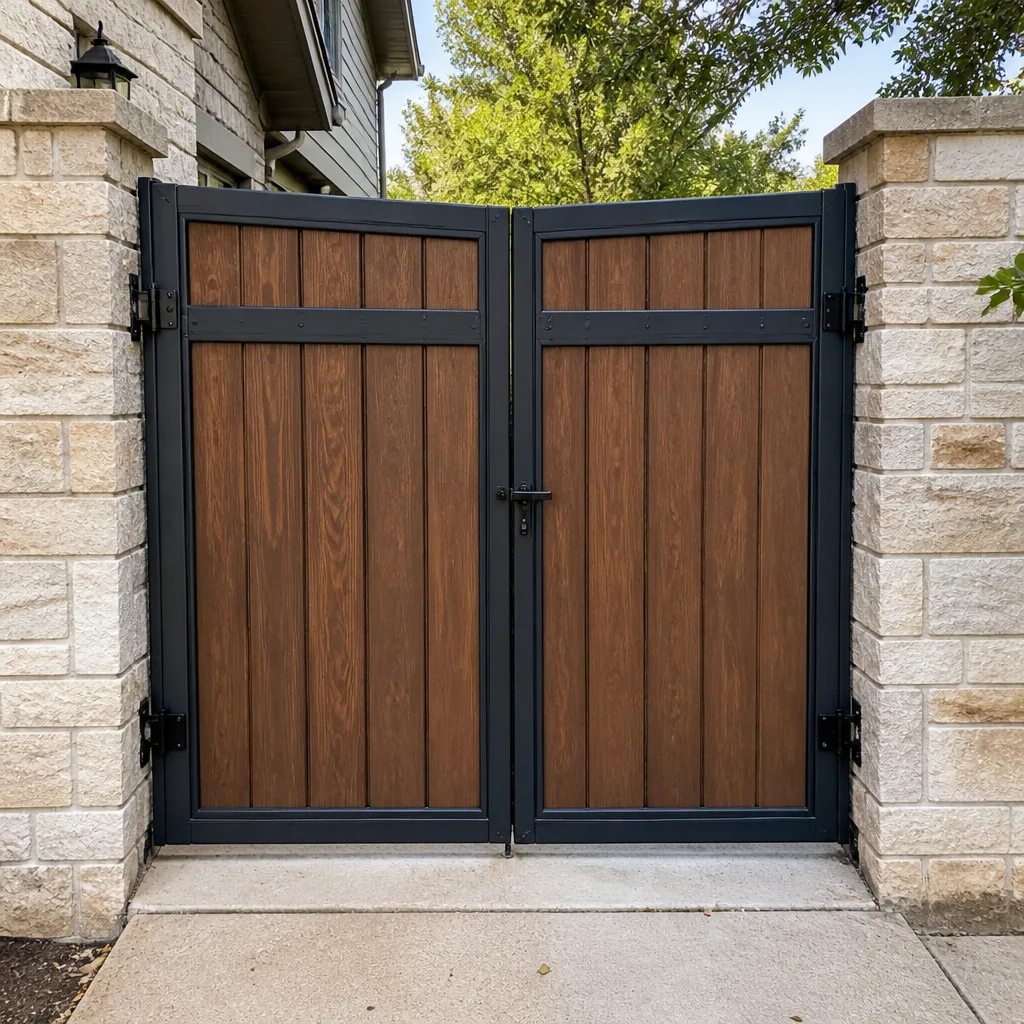 Wood & steel frame
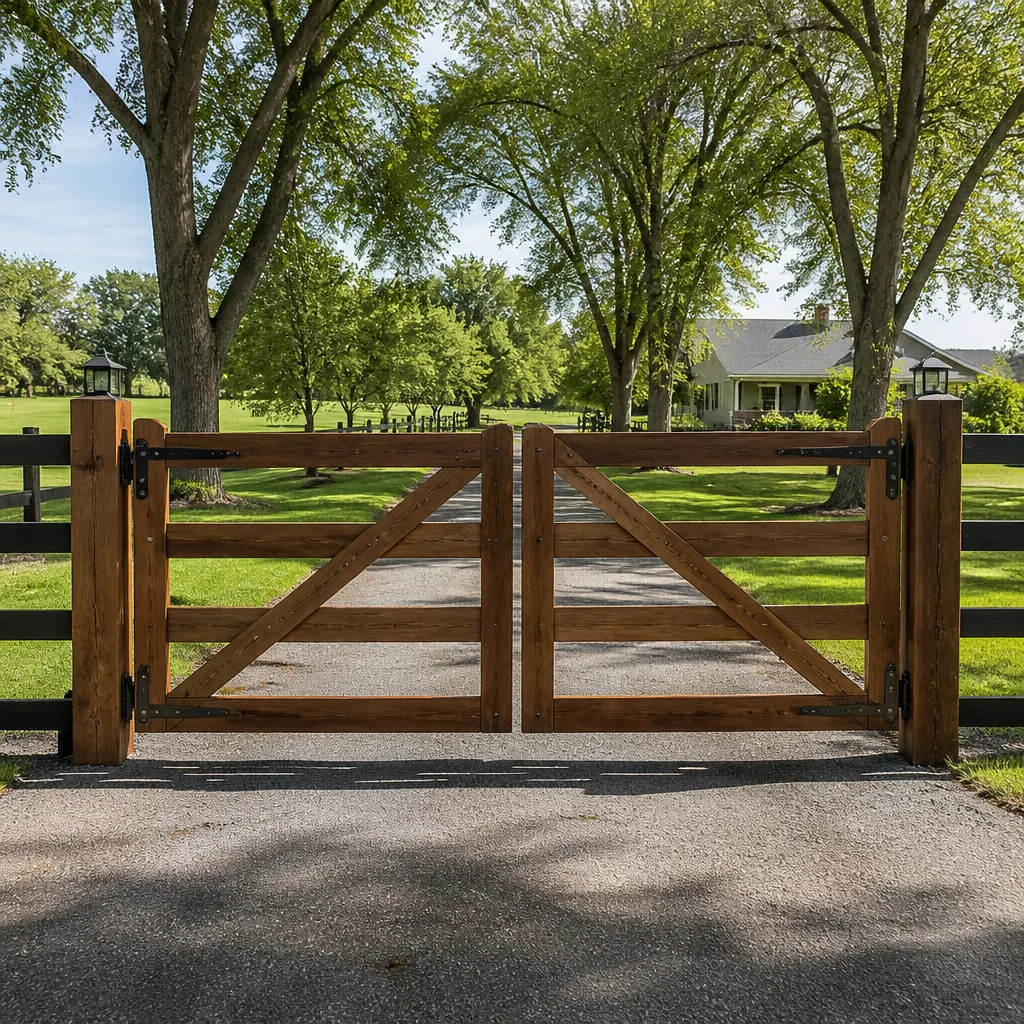 Farm & ranch
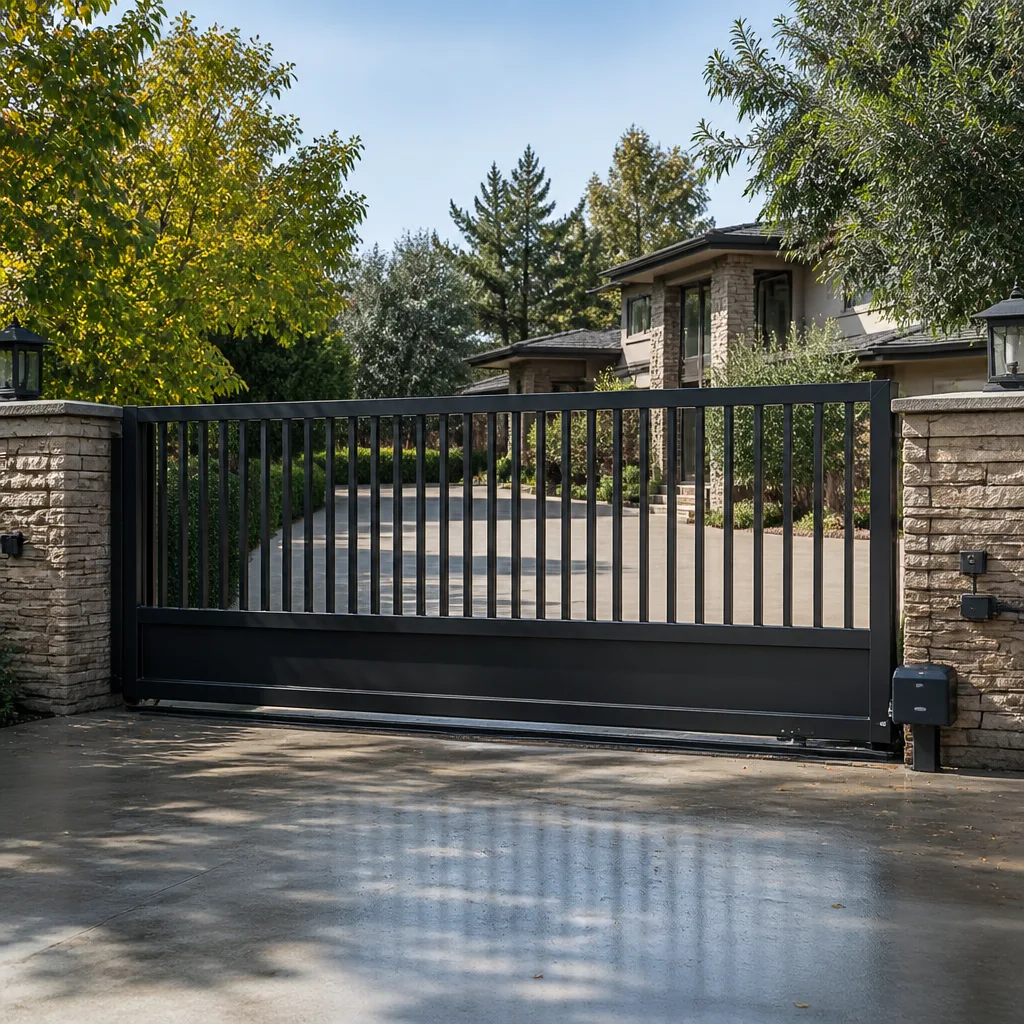 Sliding driveway gates
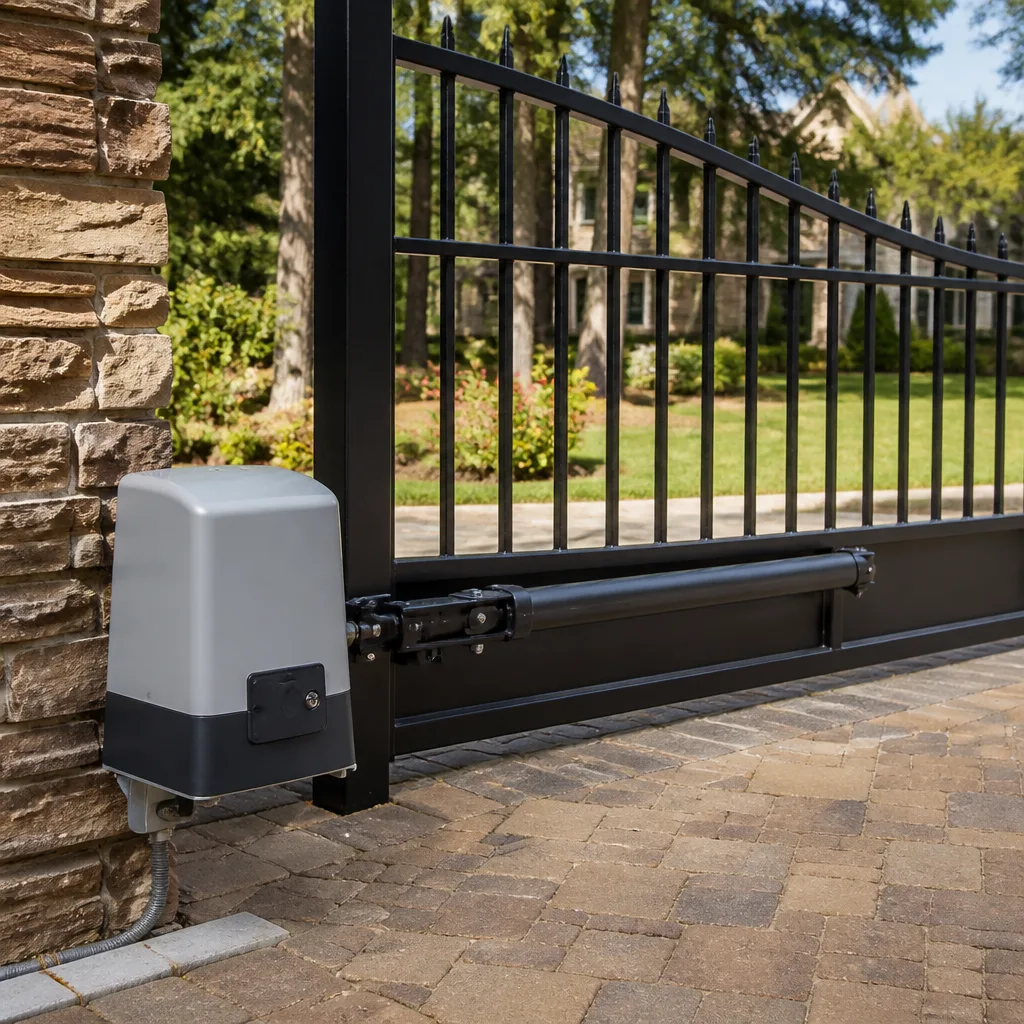 LiftMaster operators
Free on-site gate assessment - hinges, posts, and your LiftMaster or Nice gate operator checked before anything is quoted
The assessment is free and the quote is the invoice.
Get your free estimateGate Installation Maintenance Schedule: What to Do and When
Gate installers hand over the remote and leave. Almost none of them tell homeowners that the operator’s chain tension needs to be re-checked at 60 days after installation because initial stretch is predictable and measurable. Skipping that check is how a $40 adjustment becomes a $400 chain replacement. The first year of a gate’s life is the highest-risk period for alignment drift and fastener loosening, and the problems that are cheap to correct at 60 days get expensive at 18 months. This guide walks through the exact new-install maintenance sequence, from the first 30-day inspection through the handoff to an annual schedule, with notes specific to how gates behave in Summerlin’s climate.
Quick Answer
A new gate installation needs four inspections in its first year: at 30 days, 60 days, 90 days, and 12 months. The 30-day and 60-day visits catch fastener loosening and chain stretch while they’re still minor adjustments. The 90-day visit confirms the gate has settled into alignment. The 12-month visit establishes the baseline measurements every future service call will be compared against. Everything after year one moves to an annual schedule, with fastener checks and photo records kept the same way.
Styles & brands we work with
- Wrought iron
- Wood & steel frame
- Farm & ranch
- Sliding driveway gates
- LiftMaster operators
Table of Contents
- Why the First Year Is the Riskiest Period for a New Gate
- The 30-60-90 Day Inspection Sequence
- Why Fastener Re-Torque Is a First-Year Task
- How Summerlin’s Climate Speeds Up Loosening
- Building a First-Year Maintenance Record
- Moving from New-Install Schedule to Annual Schedule
- What Should Have Been in Your Installation Scope
- Chain Tension, Limit Switches, and the Parts That Fail First
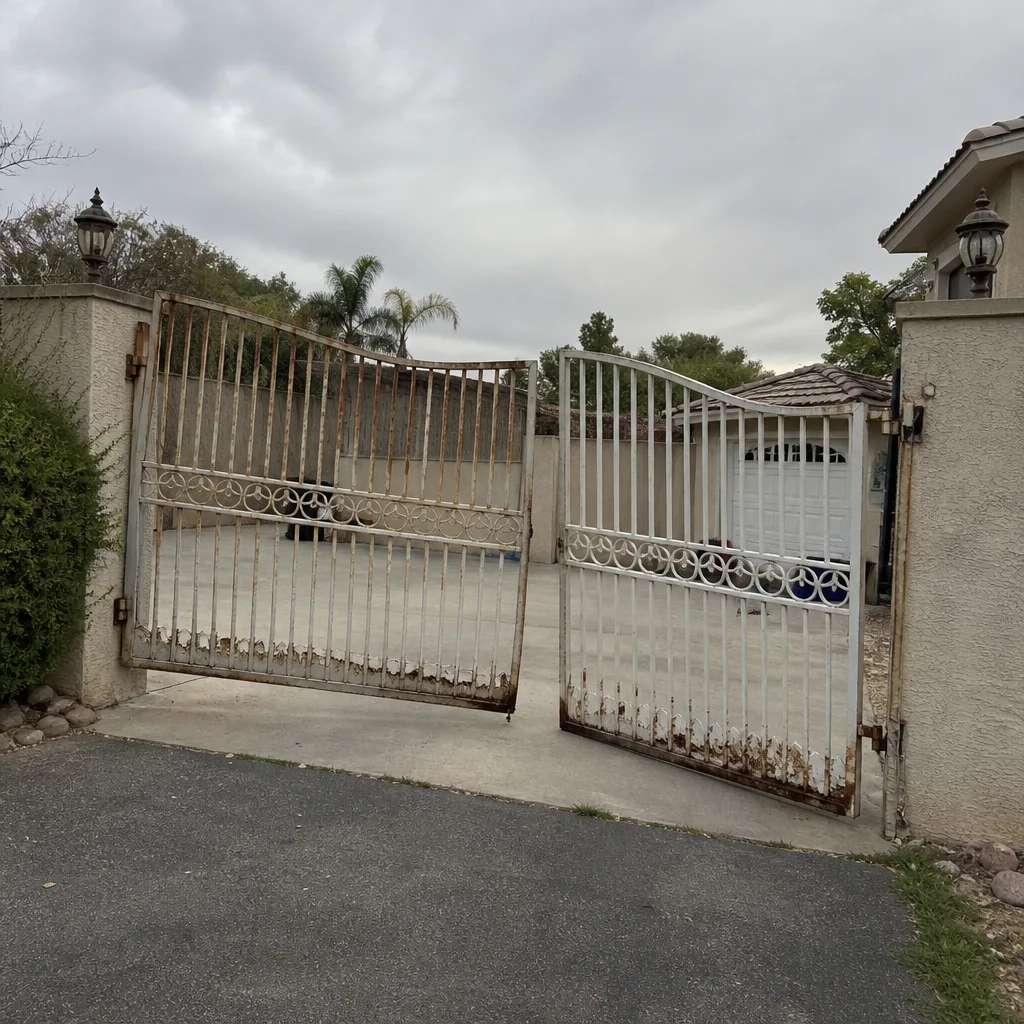 Before
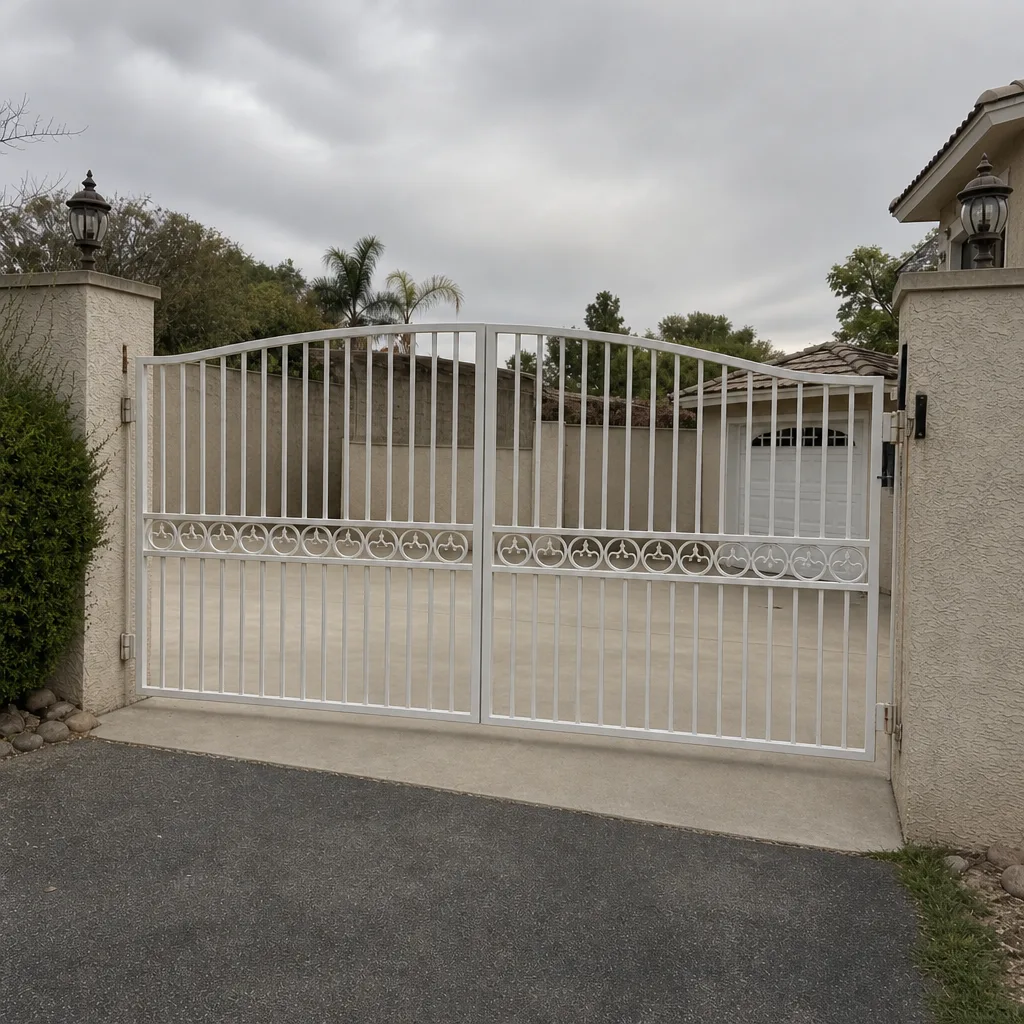 After
Why the First Year Is the Riskiest Period for a New Gate
Every gate installation goes through a settling phase. Concrete footings cure and shift slightly. Hinges seat themselves under load. Chain and belt drives stretch. Wood and composite pickets absorb or release moisture depending on the season. None of that is a defect; it’s the normal physics of a mechanical system finding its resting position. The trouble is that most installers don’t come back to watch it happen.
In our experience working on gates across Summerlin, the problems that surface in the first 12 months fall into three categories:
- Alignment drift – the gate leaf swings a degree or two off level, which puts uneven load on the operator and wears the hinge pins faster.
- Fastener loosening – mounting bolts on the operator bracket and hinge plates back out under vibration and thermal cycling.
- Chain and belt stretch – new drive systems stretch measurably in the first 60 days and need re-tensioning before they start skipping.
Each of these is a small adjustment if caught early. Left alone, alignment drift can rack the gate frame, and a slack chain can jump the sprocket and damage the motor. That’s the difference between a service call and a repair.
The 30-60-90 Day Inspection Sequence
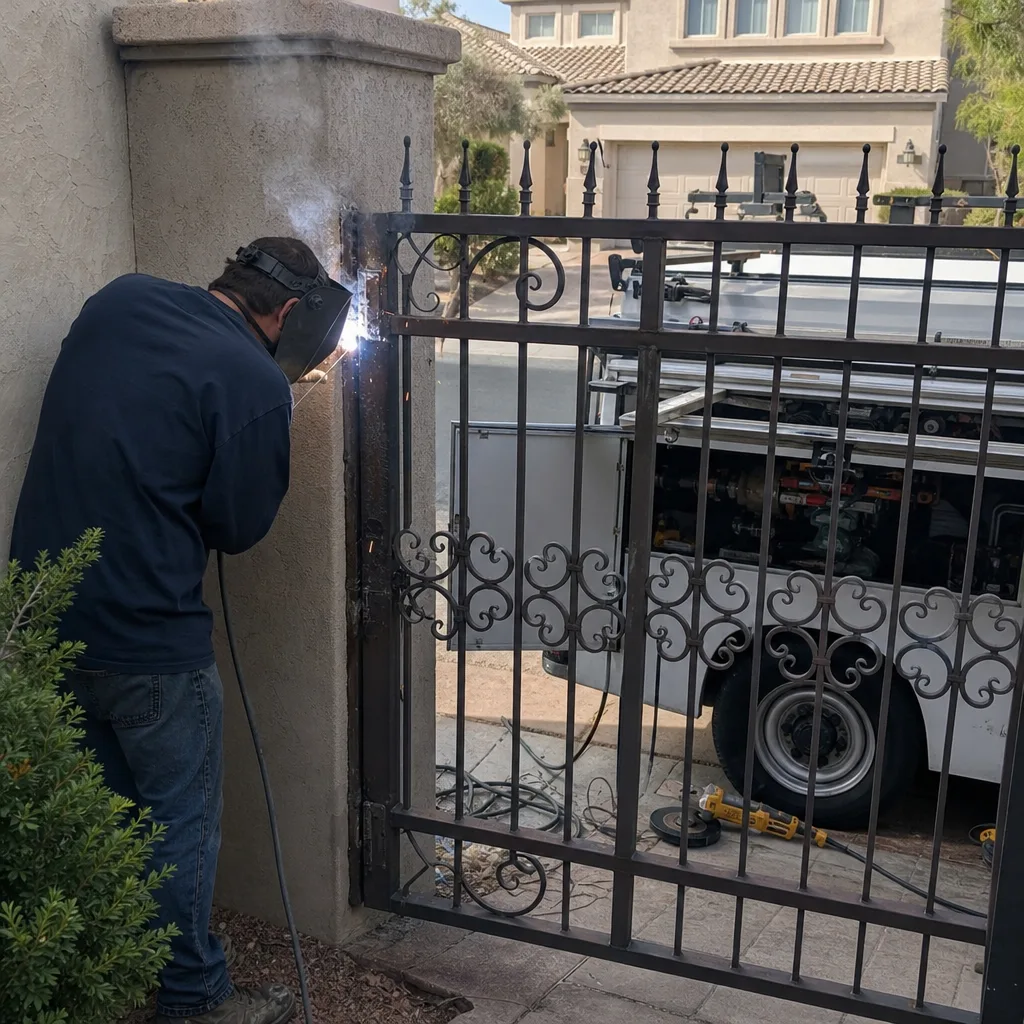
This is the sequence we recommend for every new install, and it’s the one most homeowners never hear about. Each interval has a specific job. Here’s what to check at each stage and what counts as a pass versus a service-needed finding.
30-Day Inspection
- Walk the gate through its full cycle five times. Watch for hesitation, grinding, or a leaf that drags at one end of the swing. Pass: smooth travel both directions.
- Check hinge fasteners by hand. You’re looking for any bolt that wiggles. Pass: no movement.
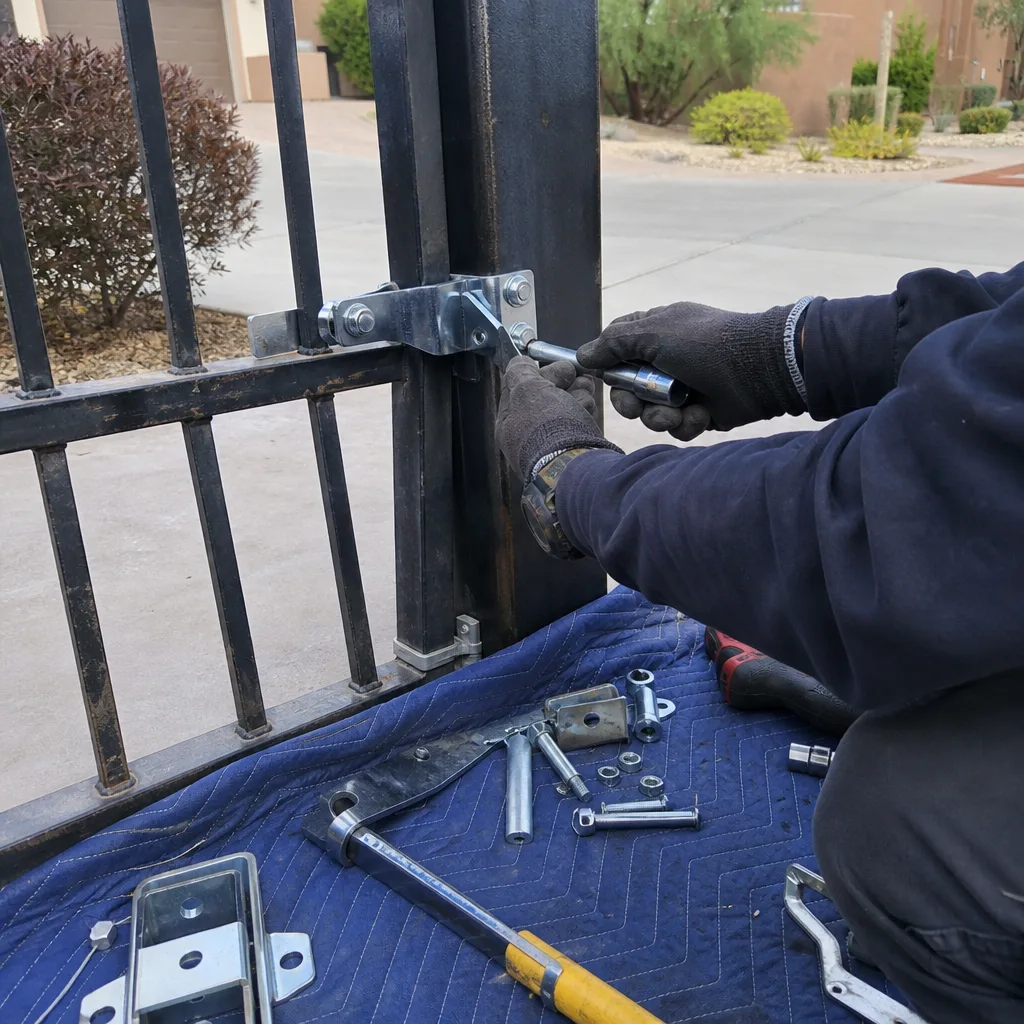
- Photograph the operator bracket, hinges, and limit switch positions. This becomes your baseline.
- Test the safety photo-eye (the infrared beam that stops the gate if something crosses the path) by walking through it. The gate should reverse. Pass: it reverses every time.
- Look at the chain or belt for visible slack. A new chain should have a small amount of play, not a sag. Pass: minimal deflection.
60-Day Inspection (the one that matters most)
At 60 days, initial chain stretch is at its highest. This is when a professional re-tensions the chain or belt and re-torques the operator mounting bolts. A gate that ran perfectly at 30 days can start skipping at 70 days if this step is skipped. Check the chain tension by pressing on the midpoint; if it deflects more than about half an inch on a standard roller chain, it needs adjustment.
90-Day Inspection
By 90 days the gate has settled. This is the alignment check. Confirm the leaf is level, the hinges aren’t binding, and the limit switches still stop the gate at the same points photographed at 30 days. Any drift here is a sign the footings or hinge plates need attention before the problem compounds.
A gate that passes all three inspections is on solid footing for year two. If any inspection finds something, that finding becomes the priority for the next visit.
Why Fastener Re-Torque Is a First-Year Task
Most installation guides list “check fasteners” as an as-needed item. That’s the wrong approach for a new gate. Fastener loosening isn’t random; it’s predictable, and it’s concentrated in the first year. The reason is thermal cycling.
Every day the gate’s metal components expand in the afternoon heat and contract overnight. That cycle works on bolts the same way a wrench does, a tiny fraction of a turn at a time. After a few hundred cycles, a bolt that was torqued to spec on install day has backed off enough to matter. The hinge plates and operator mounting bracket take the most abuse because they carry the full load of the gate leaf plus the motor’s torque.
A first-year re-torque schedule catches this before the bolt has loosened past the point where it needs more than a wrench. Our technicians log the torque values they find and the values they set, so the next visit starts from a known state rather than a guess.
This is also why documentation matters. Without a written record of the torque values from the first year, a technician years later has no way to know if the bolt he’s looking at was ever torqued correctly.
How Summerlin’s Climate Speeds Up Loosening
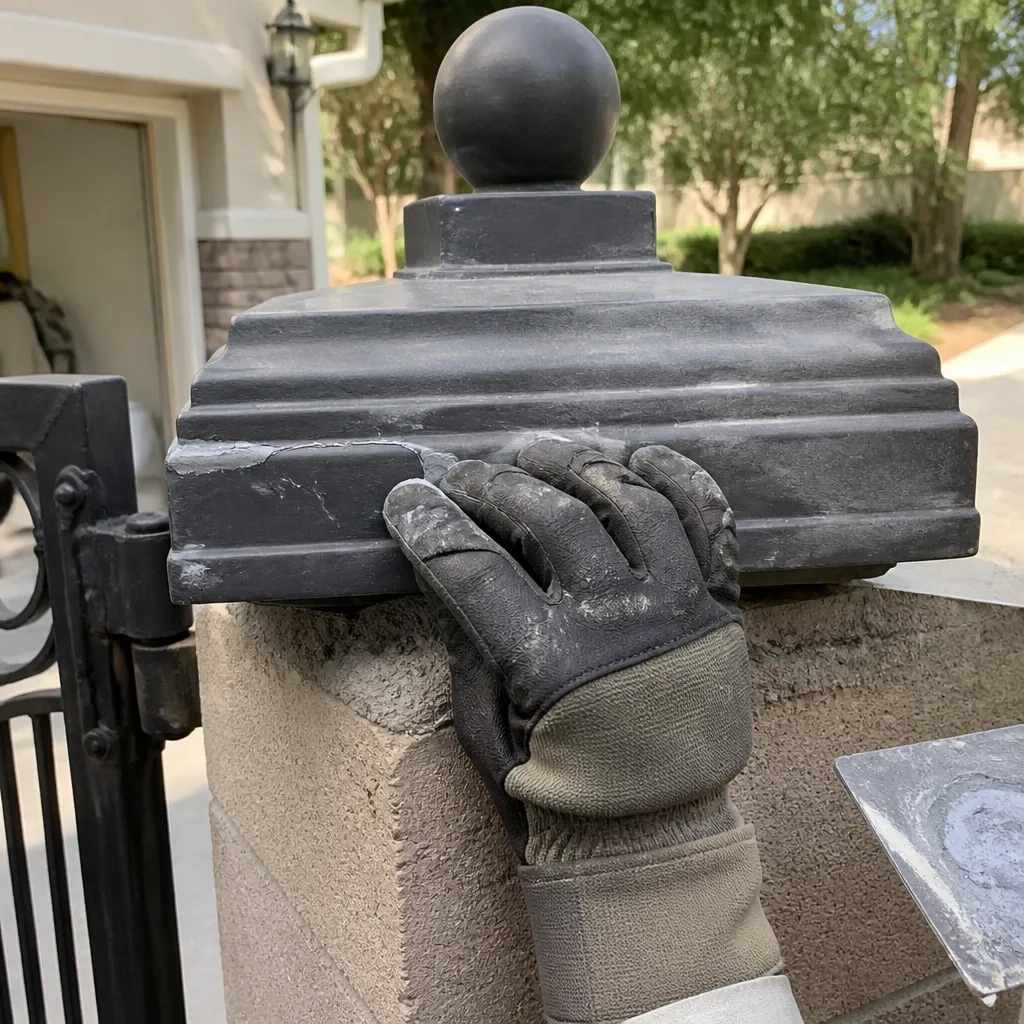
Summerlin sits in a desert climate with a wider daily temperature swing than most of the country sees. Afternoon highs and overnight lows can differ by 30 degrees or more for much of the year. That swing is what drives the expansion-contraction cycle that loosens fasteners.
In our experience working on gates in Summerlin neighborhoods, two other factors add to the load:
- Dust and grit settle into hinge pins and track rollers, and the abrasive paste that forms accelerates wear on moving parts.
- UV exposure degrades rubber seals, photo-eye gaskets, and the protective boots on operator arms faster than in cooler, wetter climates.
A gate installed in a milder climate might get away with a fastener check once a year. In Summerlin, the first-year schedule matters more, and the ongoing annual schedule should include a hinge and track cleaning step that a Midwest homeowner might skip.
This is one reason we recommend a gate repair in Summerlin professional look at any new gate before the first summer ends. Catching a loose bracket in May is cheaper than replacing a stripped hinge plate in September.
Building a First-Year Maintenance Record
The first-year inspections are only valuable if you write down what you found. That record becomes the baseline for every future visit. Without it, a technician three years from now has no way to know what “normal” looked like for your gate.
Here’s what we photograph and log on every first-year visit, and what a homeowner should ask for:
- Photo of the operator bracket and every hinge plate. Close enough that the bolt heads are visible.
- Photo of the limit-switch positions, with the gate in both fully open and fully closed positions. This is how a future technician knows where the gate is supposed to stop.
- Written torque values for the hinge and bracket bolts. Recorded before and after adjustment.
- Chain tension measurement taken at the midpoint of the drive run.
- Photo-eye alignment photo showing both the emitter and receiver and the beam path between them.
- Date and name of the part numbers installed, if any were replaced.
Under the Haven Standard, every Vance visit includes a documented photo record at no additional charge. The customer keeps a copy, and the job file keeps one too. That’s the difference between a gate with a paper trail and one where every technician starts from scratch.
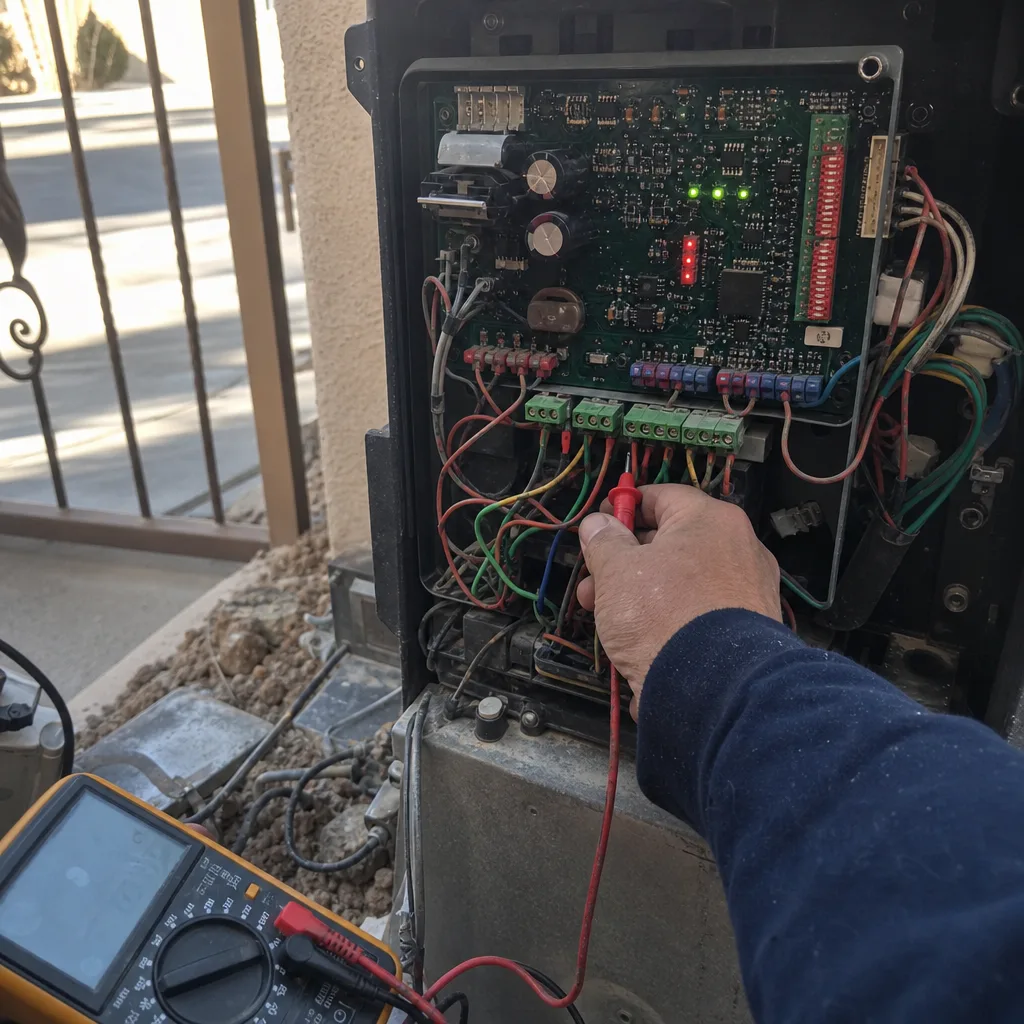
If you’re setting up your own record for a gate that’s already been installed, a gate motor and opener check is a good starting point. That visit will give you baseline readings on the operator, which you can add to the visual record.
Moving from New-Install Schedule to Annual Schedule
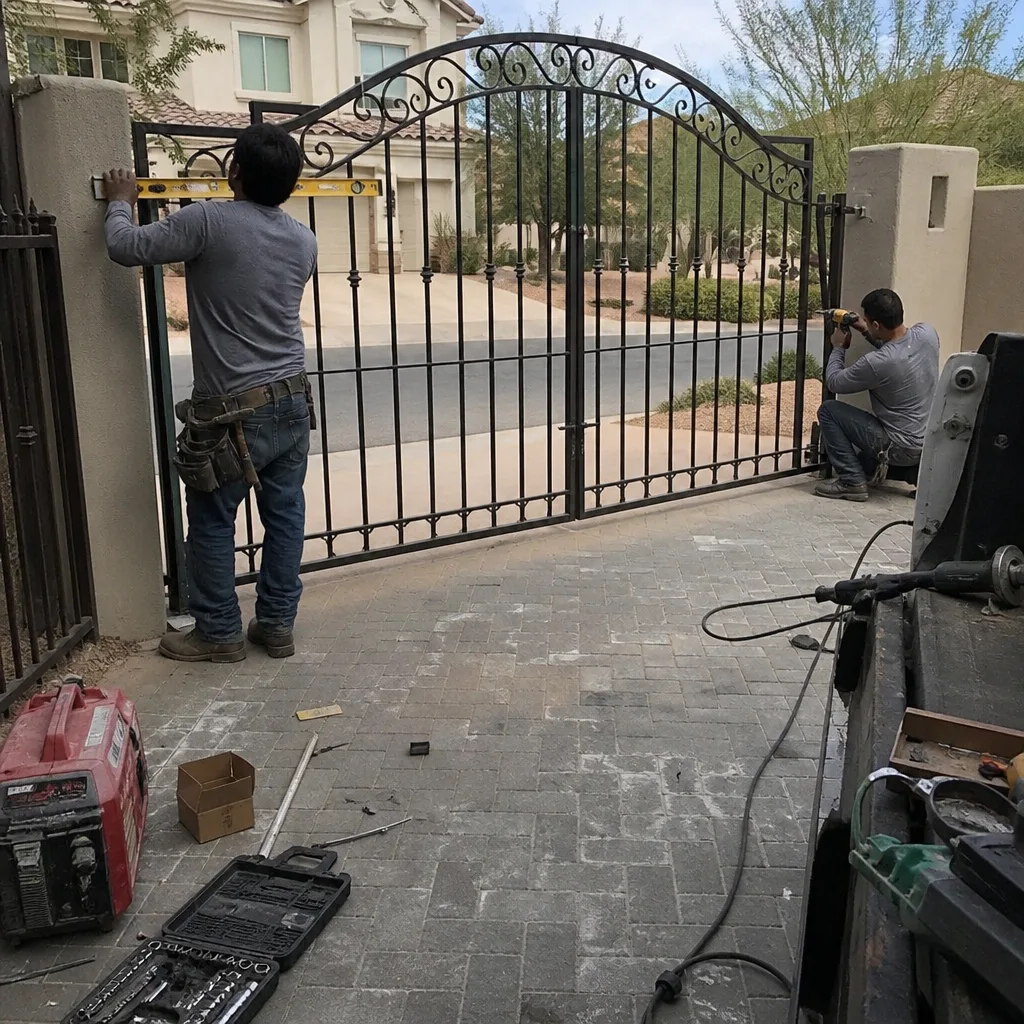
Once a gate has passed its 12-month inspection, the schedule changes. The intense first-year attention isn’t needed anymore, but most of the inspection items stay. Here’s what changes and what doesn’t.
What Stays the Same
- Annual photo documentation of hinges, bracket, limit switches, and photo-eye alignment.
- Hinge and track cleaning, especially given Summerlin’s dust.
- Chain or belt tension check.
- Safety photo-eye test every visit.
- Written record of any adjustment or part replacement.
What Changes
- Fastener checks move from quarterly to annual. After year one, the bolts have settled into their working positions and loosen much more slowly.
- Chain re-tensioning typically becomes annual instead of at 60 days. Once stretched, the chain settles.
- Battery backup testing for the operator gets added to the annual checklist, since backup batteries degrade over two to three years.
- Motor and gear inspection becomes a standard annual item.
The baseline from year one makes the annual visits far more useful. When a technician can compare this year’s limit-switch reading to the one from year one, drift becomes visible before it becomes a problem.
If you’re moving into the annual phase and want to catch up on a gate that hasn’t been touched since install, a gate installation in Summerlin team can run the full baseline inspection and set up the record retroactively.
What Should Have Been in Your Installation Scope
The best time to lock in a maintenance schedule is before the gate is installed. If the original scope didn’t include a first-year schedule, it can still be added now, but it’s harder, and you want to know what to ask for.
Here’s what a complete installation scope should specify:
- The first-year inspection intervals (30, 60, 90, 12 months), with what each visit includes.
- The measurement and photo documentation the installer will provide at handoff. You want a baseline, not just a receipt.
- The torque specifications for hinge and bracket bolts, so future service can verify.
- Chain tension tolerance, recorded at install.
- Limit-switch positions, photographed at final commissioning.
- Wiring diagram, especially for operators from FAAC, BFT, Linear, or Viking, whose control boards use different terminal layouts.
If you didn’t get any of that, don’t wait. Request the documentation retroactively. Most installers keep install records for at least a year. If they don’t have it, a service call can reconstruct the baseline from the gate as it sits today. That’s not ideal, but it’s far better than starting with nothing.
Chain Tension, Limit Switches, and the Parts That Fail First
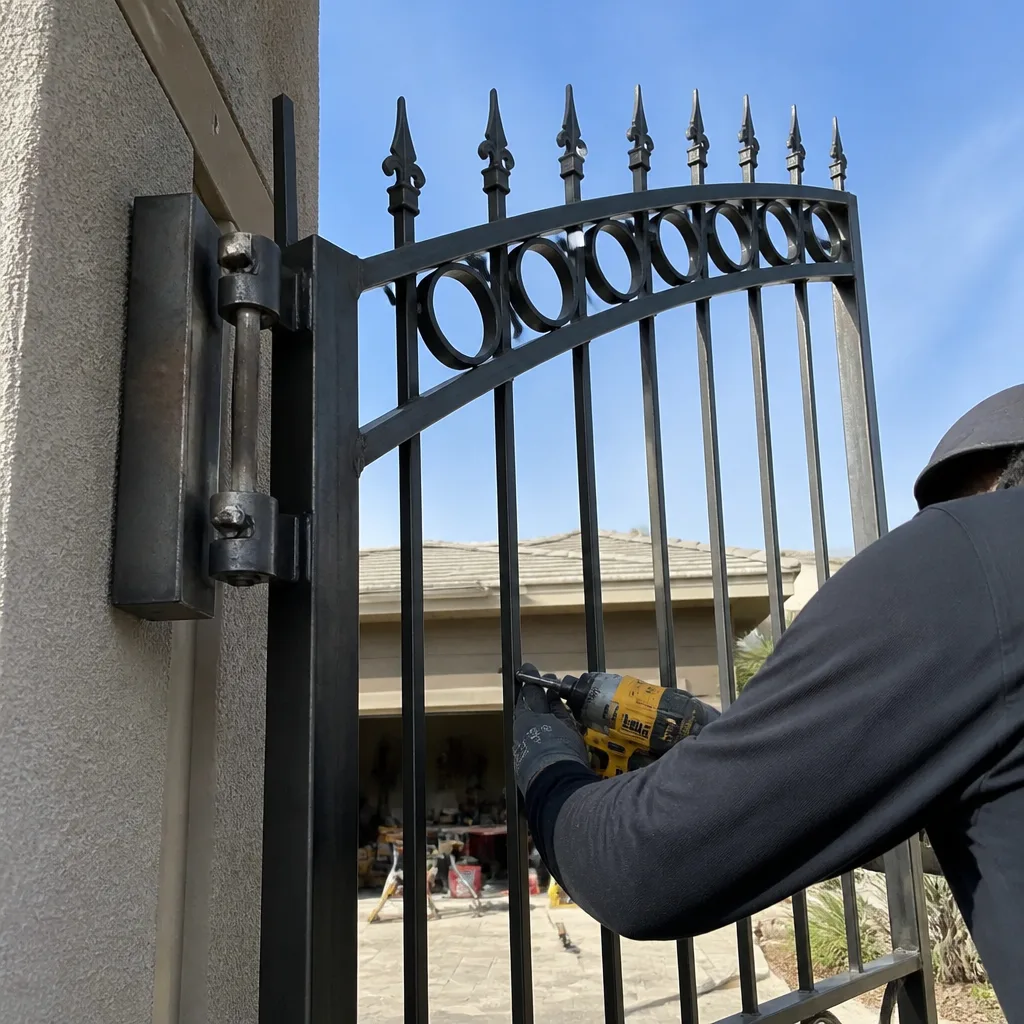
Most of a gate’s maintenance attention goes to a short list of parts. Knowing which ones fail first tells you where to look.
Chain tension and drive belts. As covered above, initial stretch is the most common first-year issue. After year one, annual checks are usually enough.
Limit switches. These tell the operator where the gate is fully open and fully closed. They can drift after the first-year settling phase and need resetting. We photograph the position at every visit so a future technician can compare.
Hinges and hinge pins. The most-loaded parts of any swing gate. In Summerlin, dust infiltration wears them faster. First-year re-torque and annual cleaning are both standard.
Photo-eyes (the infrared safety beams). The rubber gaskets that seal them degrade under UV and need checking at each annual visit. A photo-eye that fails is a safety issue, not just a convenience one.
Backup batteries. The operator’s battery backup should be tested annually after year one. A gate without working backup is a gate that won’t open during a power outage, which matters in a Summerlin summer when grid strain spikes.
For any of these, a Vance Gate Repair Summerlin home visit can diagnose the issue and leave a written record of what was found. We service all nine major automation brands, including FAAC, BFT, Linear, and Viking, so we work with whatever motor is already on your gate rather than steering you toward a replacement.
Common Mistakes to Avoid
- Skipping the 60-day chain check. It’s the single most expensive omission in the first year. A slack chain that jumps the sprocket can damage the motor, and the repair cost is ten times the adjustment.
- Waiting for “as needed” maintenance. Fastener loosening doesn’t announce itself. By the time you notice a wobble, the bolt is often past the point of a simple re-torque.
- Not asking for the install documentation. If your installer left without a written record of torque values and limit-switch positions, request it before the first year is up. It’s much harder to reconstruct later.
- Assuming a desert climate means less wear. In Summerlin, the wide daily temperature swing accelerates fastener loosening rather than slowing it. Dust and UV add to the wear.
- Ignoring the photo-eye test because the gate still opens. A misaligned safety beam is a safety problem even when the gate runs fine. Test it every visit.
- Running the same annual schedule from year one. The first-year schedule is intentionally denser. Matching it to a new gate’s settling period is what makes it work.
- Letting different companies touch the same gate without a shared record. Every time a new technician starts from zero, you pay to rediscover the same baseline. Keep the record with the gate.
See the difference
BeforeAfter Before
 After
 Before
 After
When to Call a Professional
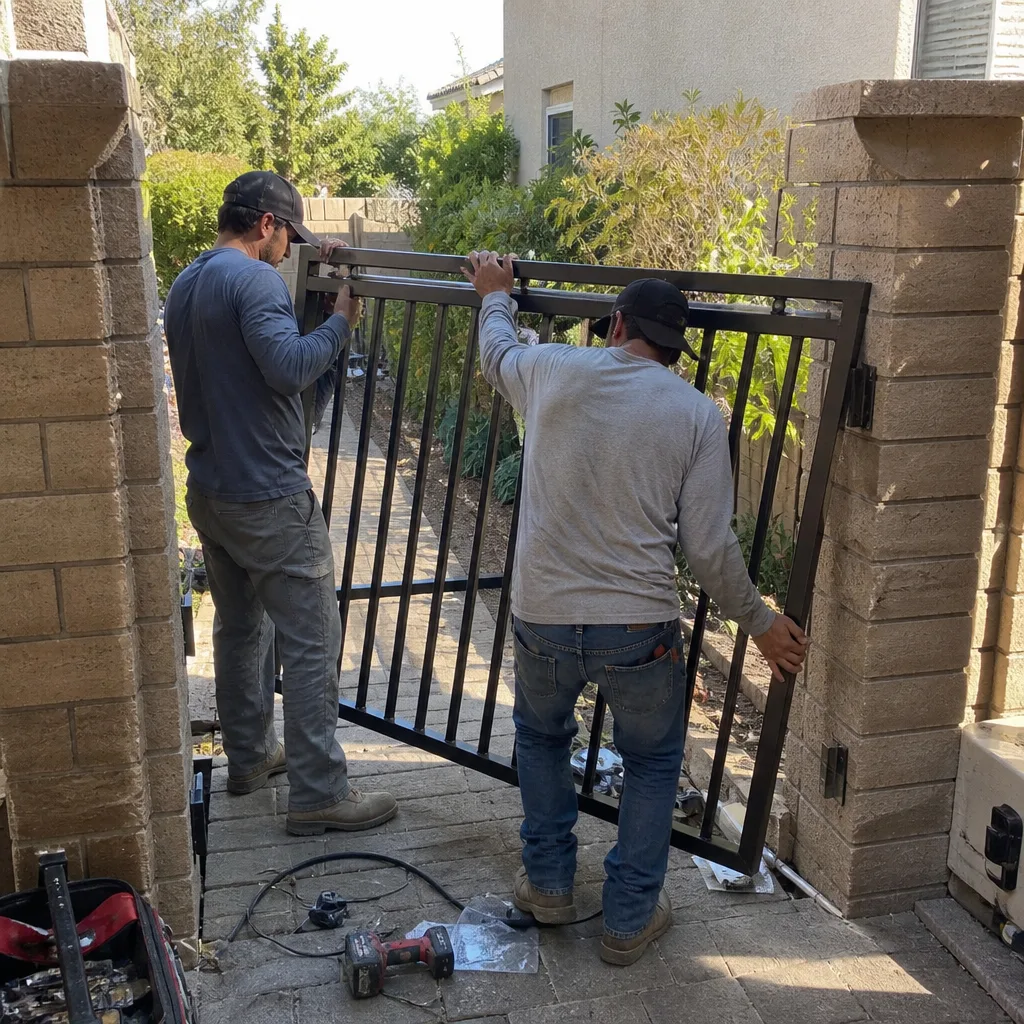
Some maintenance is a homeowner task: checking the photo-eye by walking through the beam, clearing dust from hinges, watching for visible chain slack. Other things need a trained technician. Call a professional if the gate hesitates, reverses without a trigger, grinds at any point in its travel, or if you can wiggle a hinge or bracket bolt by hand. Those are signs that the first-year schedule has slipped. High-tension springs and gate operator wiring are not homeowner jobs; get a pro for anything inside the motor housing or the spring assembly. Vance Gate Repair Summerlin offers free estimates in Summerlin and a free second opinion on any written estimate from another company. Call (844) 797-2809.
Frequently Asked Questions
Because chain and belt stretch is at its highest in the first 60 days. New drive systems stretch measurably as they break in, and a chain that ran perfectly at install can start skipping by day 70. Re-tensioning at 60 days takes minutes; replacing a jumped chain and sprocket later costs far more. Call (844) 797-2809 for an exact quote on a first-year inspection.
Most first-year inspections, combined with minor adjustments, fall in the $150 to $350 range depending on the operator brand and how many items need correcting. A chain re-tension alone is a small line item, but if the visit turns up alignment drift or a hinge issue, expect the higher end of that range. The price is written and handed to you before any work starts. Call (844) 797-2809 for an exact written quote.
Usually, yes. If the bolts haven’t stripped and the hinge plates aren’t cracked, re-torquing to the recorded specification restores the joint. That’s the point of catching loosening early. If a bolt has already backed out far enough to damage the plate, that’s a repair rather than an adjustment. Call (844) 797-2809 and we’ll tell you which you’re looking at.
Summerlin’s wide daily temperature swing drives a bigger expansion and contraction cycle than most climates see, which works bolts loose faster. Dust infiltration into hinge pins and UV degradation of rubber parts add to the load. The net effect is that a gate in Summerlin benefits from a slightly more attentive first-year schedule than a gate in a milder climate. Call (844) 797-2809 for a Summerlin-specific inspection.
Yes. We service nine major automation brands, including FAAC, BFT, Linear, Viking, LiftMaster, Ghost Controls, DoorKing, Elite, and Mighty Mule. If the motor already on your property is on that list, we work with it rather than pushing for a replacement. Call (844) 797-2809 and have the brand and model ready.
The schedule moves to annual. Fastener checks, chain tension, hinge cleaning, photo-eye testing, and motor inspection continue once a year. The main change is that the 30, 60, and 90-day cycles are no longer needed because the gate has settled. The photo record from year one becomes the baseline every future visit compares against. Call (844) 797-2809 to set up the annual schedule.
The Bottom Line
A new gate’s first year is its highest-risk period, and most installers don’t mention it. The 30-60-90 day inspection sequence catches the small things: chain stretch at 60 days, fastener loosening from thermal cycling, and slight alignment drift before it gets expensive. Writing down what you find at each visit turns into a baseline every future technician can use. In Summerlin, the wide daily temperature swing makes the first-year checks matter more, not less. Everything after year one moves to an annual schedule, and the photo record carries forward. If you’re past year one without a baseline, a service call can reconstruct it. Call (844) 797-2809 for a free estimate and a written schedule for your gate.
Written by the team at Vance Gate Repair Summerlin.