
Last updated November 17, 2026
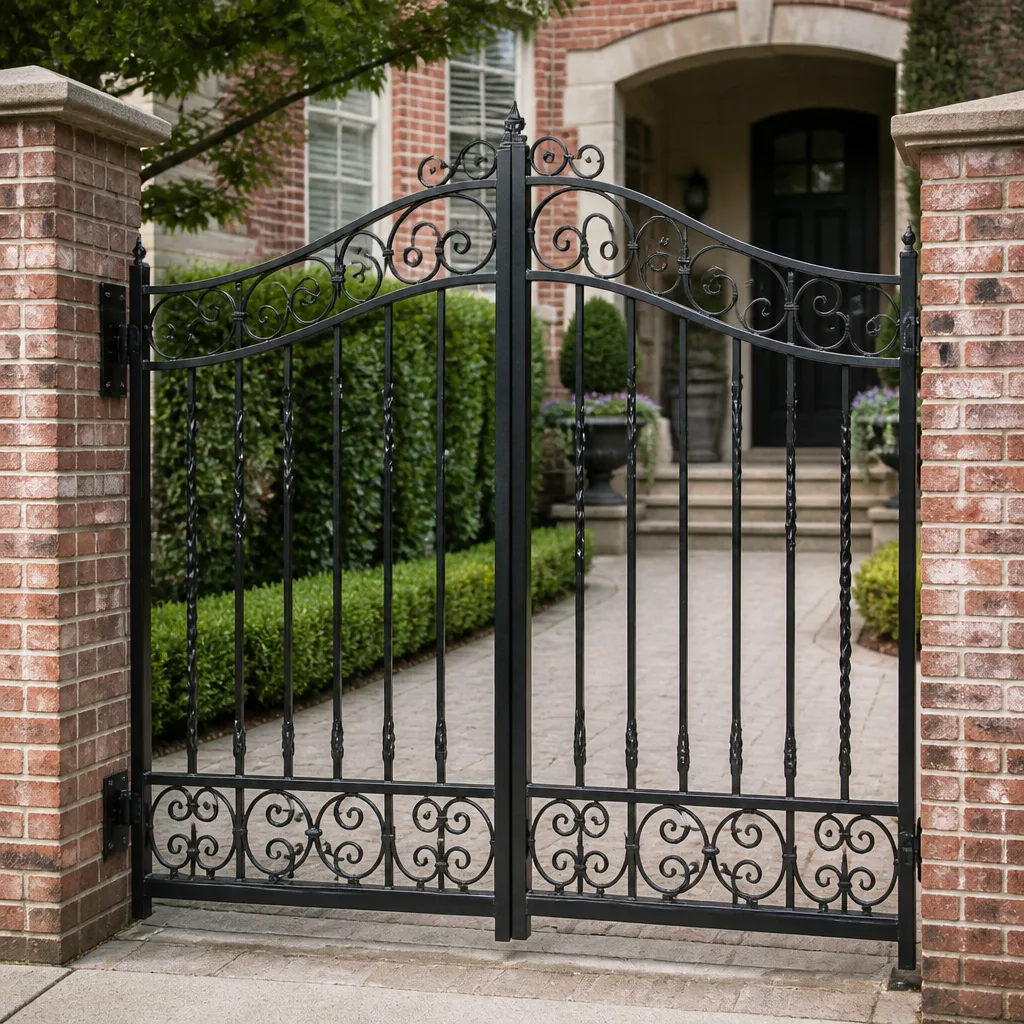 Wrought iron
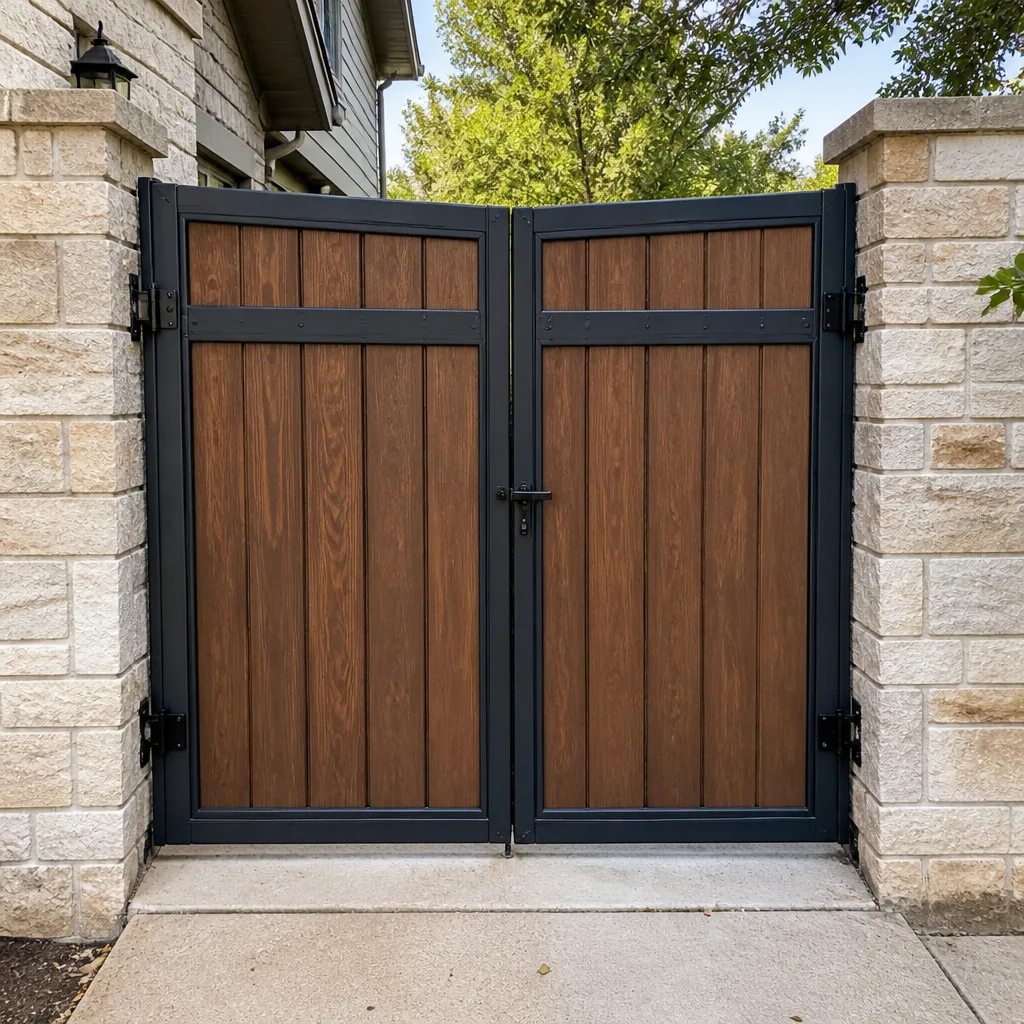 Wood & steel frame
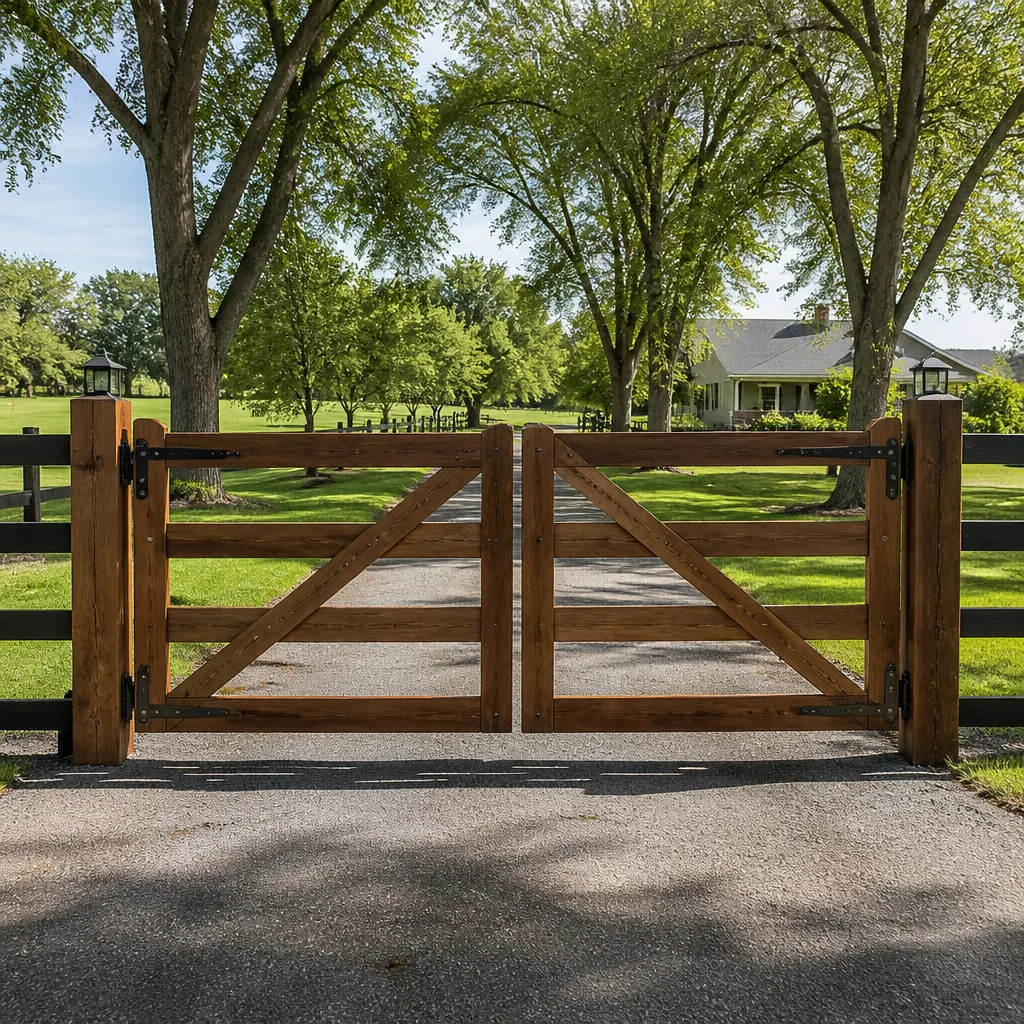 Farm & ranch
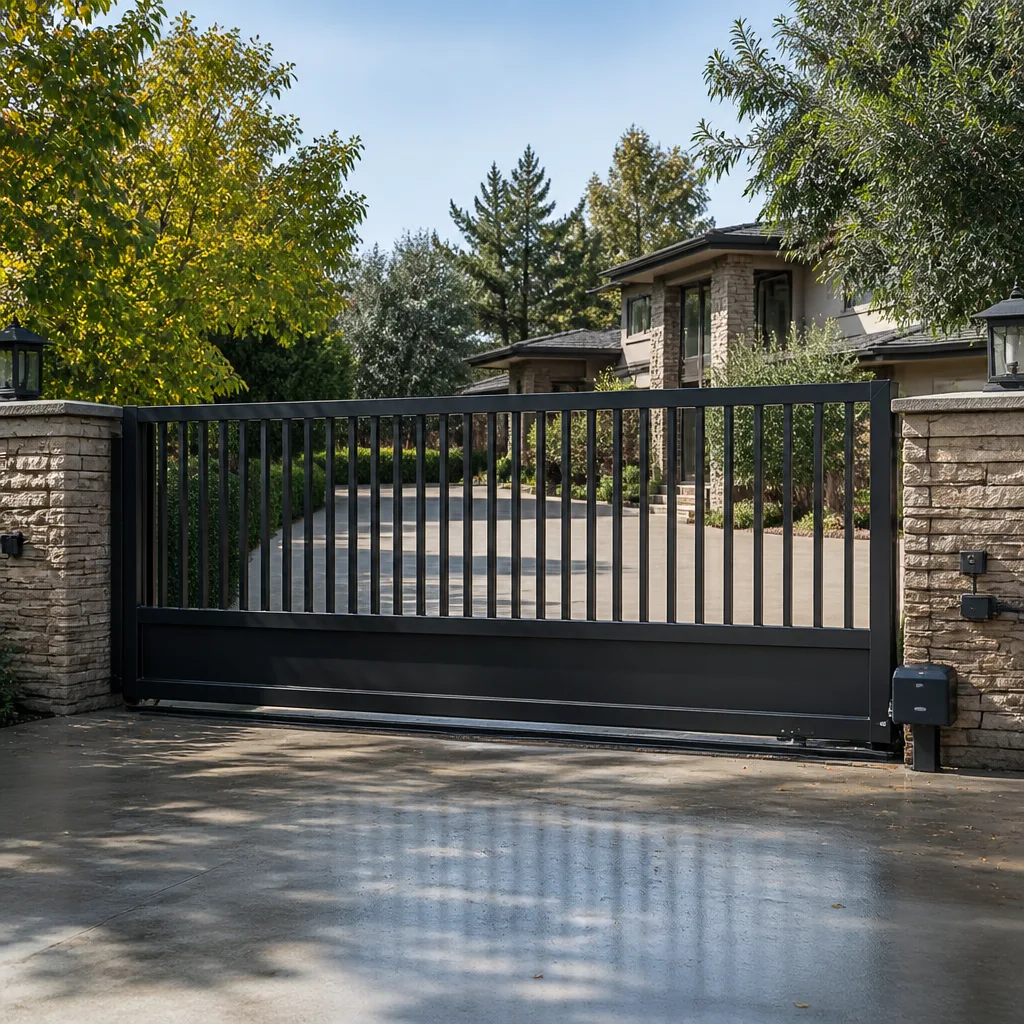 Sliding driveway gates
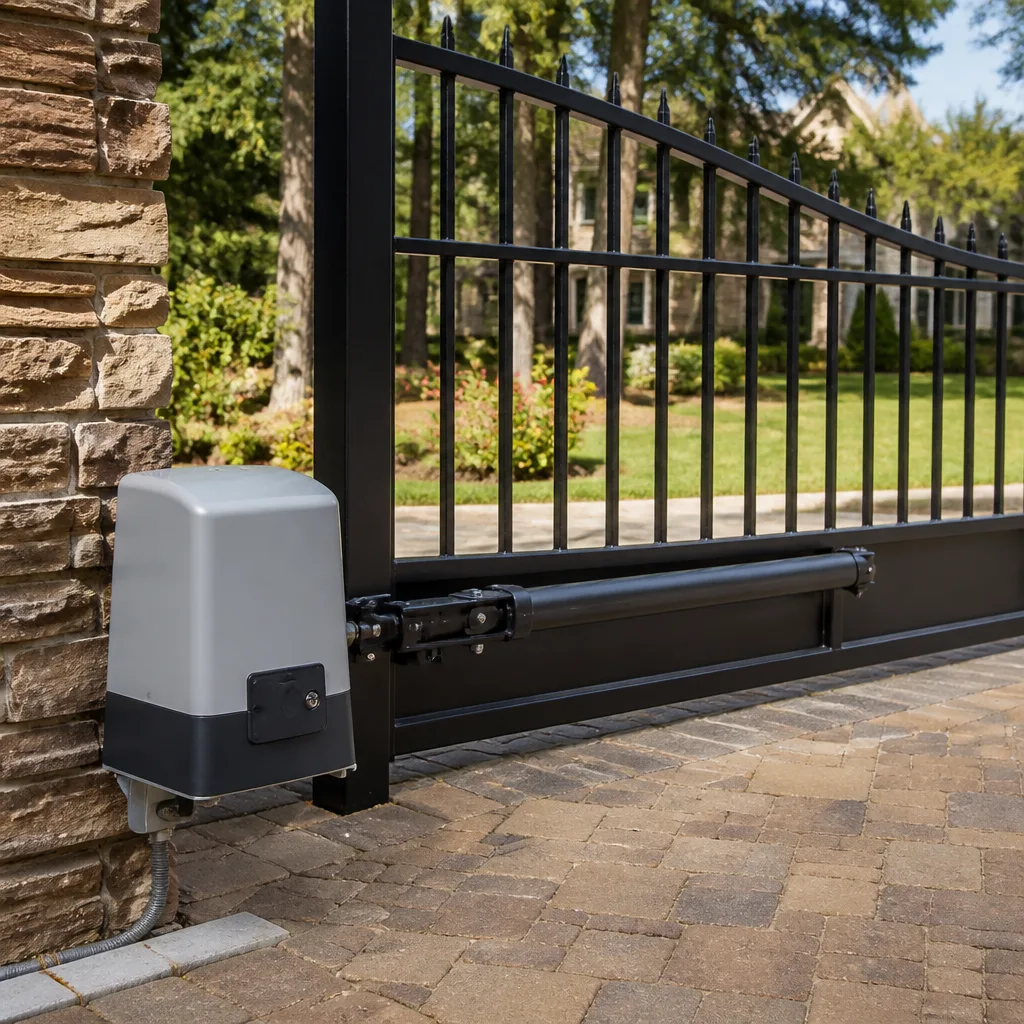 LiftMaster operators
Free on-site gate assessment - hinges, posts, and your LiftMaster or Nice gate operator checked before anything is quoted
The assessment is free and the quote is the invoice.
Get your free estimateDIY vs Professional Gate Repair: The Summerlin Homeowner’s Decision Guide
A gate spring under tension stores enough energy to break a bone or worse, and a miswired 24VAC control board can destroy a $600 operator in under a second. Neither fact appears in the YouTube tutorials that make gate repair look straightforward. We’re not here to talk you out of picking up a wrench. We’re here to draw a line at the component level, because the DIY-or-professional question in Summerlin isn’t really about how handy you are. It’s about which specific tasks carry physical or liability risk that shifts the math no matter how capable you are. You’ll learn which jobs are genuinely safe to handle, which ones cost more when you touch them, and how to tell the difference.
Quick Answer
Some gate repair tasks are genuinely safe for a homeowner: cleaning photo eyes, re-pairing a remote, lubricating hinges and rollers, and minor alignment. Spring replacement, control board swaps, post repair, and full operator installation are professional-only work because of stored energy, low-voltage wiring risk, and the documentation your insurance claim will need. The dividing line is the component, not your confidence level.
Styles & brands we work with
- Wrought iron
- Wood & steel frame
- Farm & ranch
- Sliding driveway gates
- LiftMaster operators
Table of Contents
- The Task-by-Task Breakdown: What’s Safe, What’s Not
- The Nevada Liability Question: What Happens If a DIY Repair Fails
- What You Actually Need to DIY a Photo Eye or Remote
- The Documentation Gap in DIY Repairs
- When a Professional Repair Is Cheaper Than Your DIY Attempt
- Summerlin-Specific Factors: Heat, Wind, and HOA Rules
- Why We Won’t Give You Step-by-Step Instructions for Springs
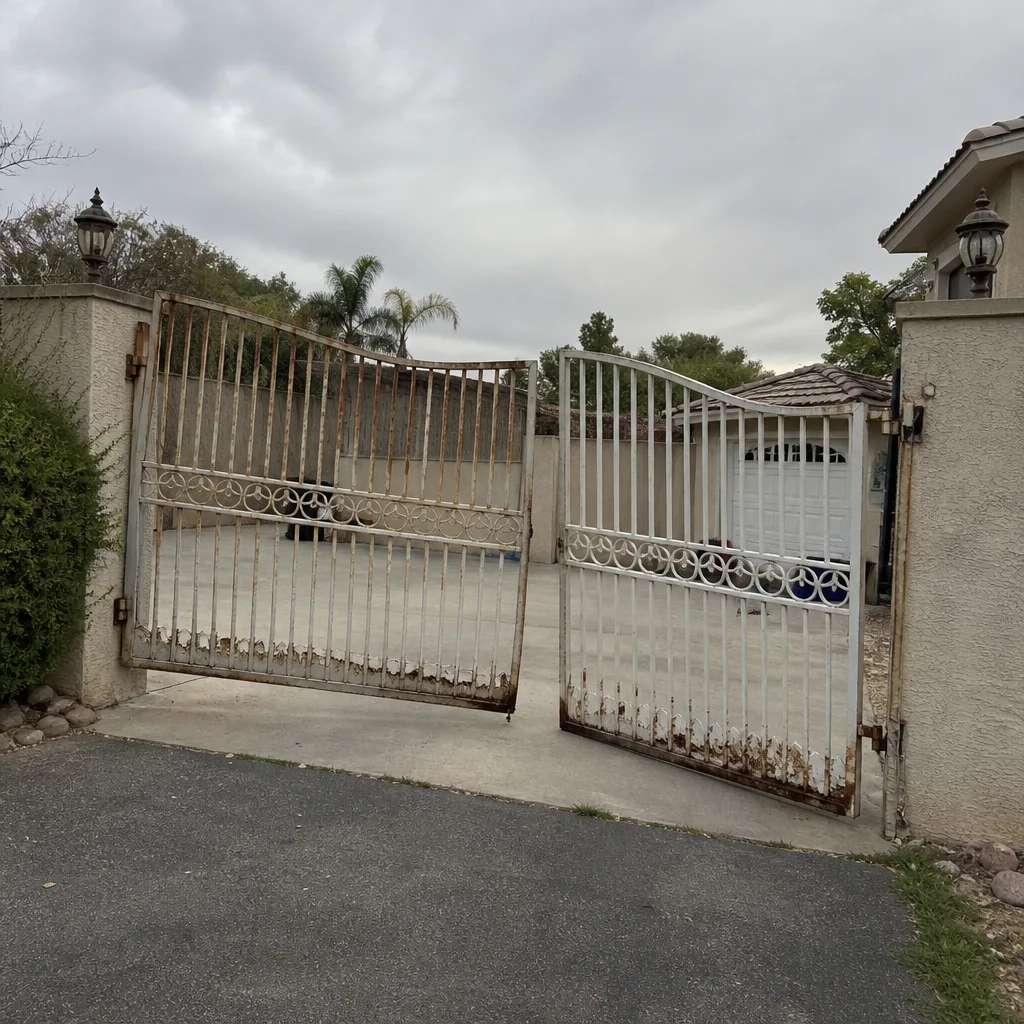 Before
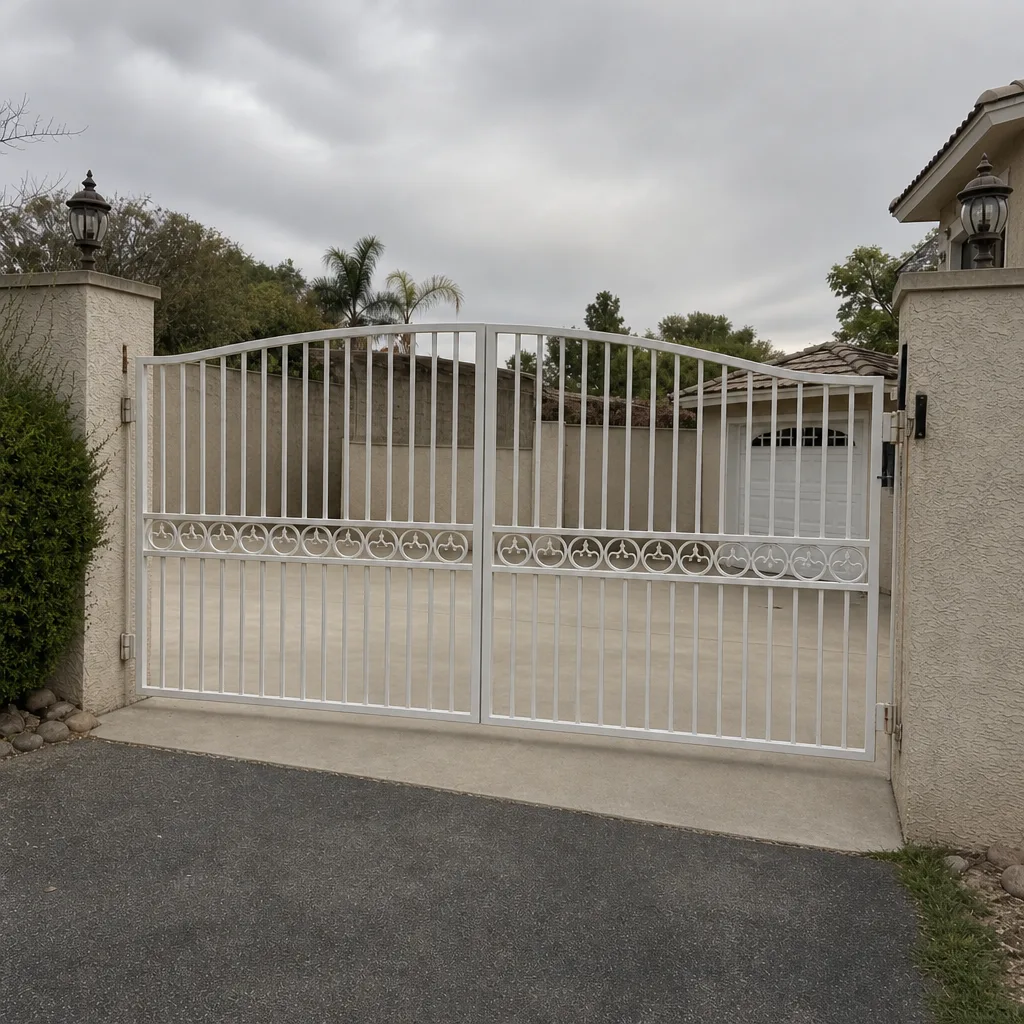 After
The Task-by-Task Breakdown: What’s Safe, What’s Not
The single most useful thing we can give you is a classification. Not “call a pro if you feel unsure” (you already know that), but a specific list of jobs tagged by the physical and legal risk they carry. Here’s how we sort gate repair tasks after 22,000+ jobs.
Genuinely DIY-safe
- Photo eye cleaning. Dust and spiderwebs across the infrared lens cause more “my gate won’t close” calls than any other single issue. A soft cloth and a few minutes fixes it.
- Remote programming. Pairing a new remote to an existing receiver is a button sequence, not a repair. It’s safe on Linear and Viking remotes, though the exact sequence differs by model.
- Lubrication. Hinges, rollers, and the track benefit from a lithium or silicone spray two to three times a year. Avoid greasy products that collect Summerlin’s dust.
- Minor alignment. If a swing gate is dragging slightly at the latch, adjusting a hinge bolt is within reach.
Requires caution
- Limit switch adjustment. Low voltage, but getting it wrong can drive the gate into a hard stop and stress the motor. Measure twice.
- Minor wiring at low voltage. Swapping a photo eye or reconnecting a control wire is 24VAC, not mains, but a crossed wire can still fry a board.
Professional-only
- Spring replacement. Stored energy. No exceptions.
- Control board swap. A $600 operator can be destroyed by a single crossed lead.
- Post repair. Set in concrete, load-bearing, and often tied to a fence line that must stay plumb.
- Operator installation. Requires the power run, the safety edges, and the commissioning readings to be right.
The Nevada Liability Question: What Happens If a DIY Repair Fails
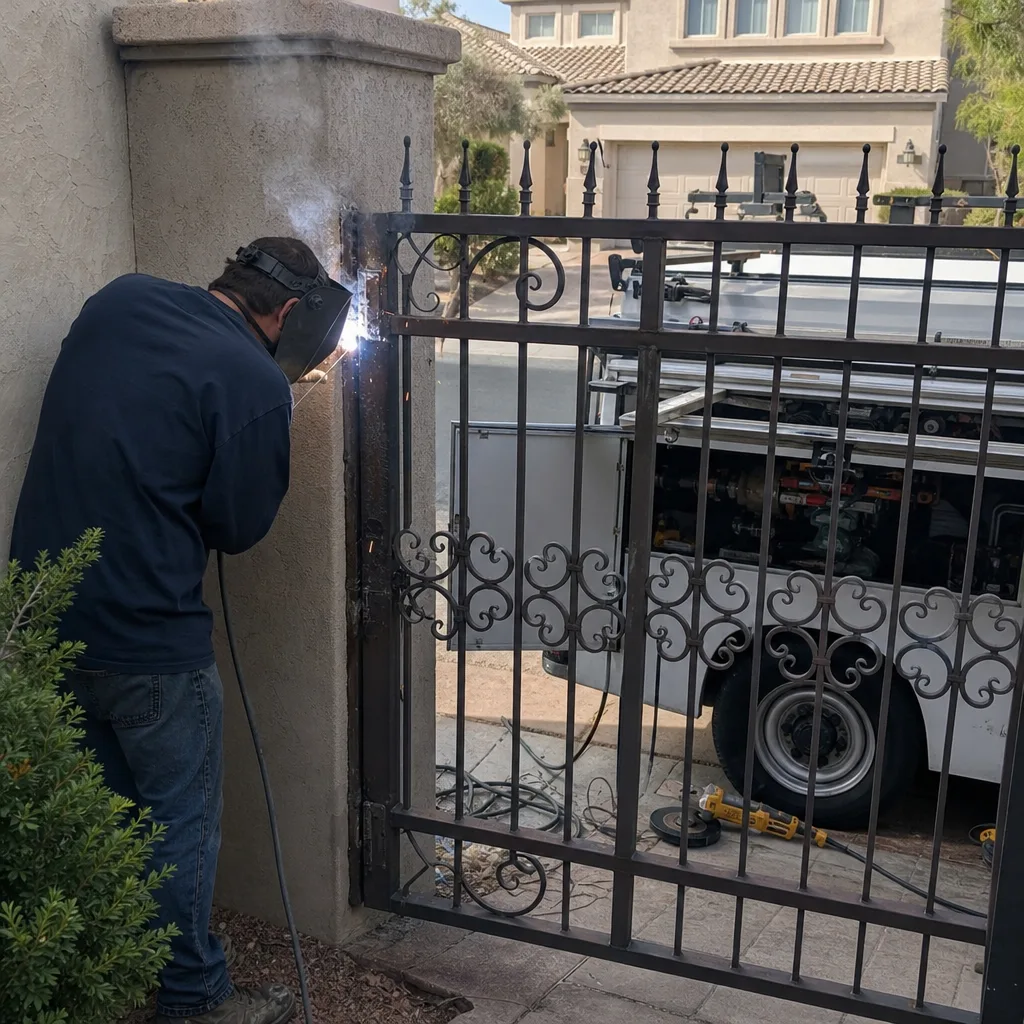
Here’s the part most guides skip. If a gate repair you performed yourself fails and injures a visitor, a delivery driver, or a child on your property, the lack of a licensed installation can follow you into the insurance claim. Homeowners policies typically cover accidents on your property, but they also ask who performed the work and whether it met code. A DIY repair with no permit, no inspection, and no documentation gives the adjuster a reason to scrutinize, delay, or deny.
Nevada doesn’t license gate repair as a standalone trade the way it licenses electricians, but low-voltage wiring that ties into a property’s power still falls under general electrical expectations, and automatic vehicular gates fall under safety-standard rules around obstruction detection. When a gate is repaired by a documented, insured technician, the claim has a paper trail. When it’s repaired on a Saturday by the homeowner with a YouTube video, it has a story.
The liability question also touches HOA rules. Many Summerlin communities require that gate automation be serviced in a way that maintains the original safety features, particularly the photo eye and the safety edge. A repair that removes or bypasses either one can put you in violation of the association’s rules even if nothing ever goes wrong. For a deeper look at what proper repair looks like in this market, see Gate Repair in Summerlin.
What You Actually Need to DIY a Photo Eye or Remote
Two jobs are worth doing yourself, and both are simpler than the internet makes them sound. Here’s the specific tool list and sequence.
Photo eye alignment
- Tools: a soft cloth, a Phillips screwdriver, a small level, and a helper or a phone to watch the indicator light.
- Clean both lenses first. Wipe the transmitter and receiver on each side of the gate path. Nine times out of ten, that’s the whole fix.
- Check the indicator. Most receivers have an LED that goes solid when the beam is aligned and blinks when it isn’t.
- Loosen the bracket, adjust, retighten. Nudge the receiver in small increments until the LED holds steady. A two-inch misalignment is enough to stop a gate.
- Test the safety function. Walk through the beam while the gate is closing. It should reverse. If it doesn’t, stop and call.
Where the process differs: Linear photo eyes usually use a single LED on the receiver side; DoorKing units often have dual indicators and a diagnostic code; Viking systems sometimes pair the eye with a separate safety edge circuit that has to be confirmed independently.
Remote re-pairing
- Locate the receiver or the operator’s “learn” button. On LiftMaster operators it’s under the light cover; on Ghost Controls it’s on the control box face.
- Press and hold until the LED blinks or clicks. The exact hold time varies by brand.
- Press your remote button within the learning window. Typically 30 seconds.
- Test from the farthest point in the driveway. If the remote works only up close, the receiver may need a new antenna wire, not a new remote.
The Documentation Gap in DIY Repairs
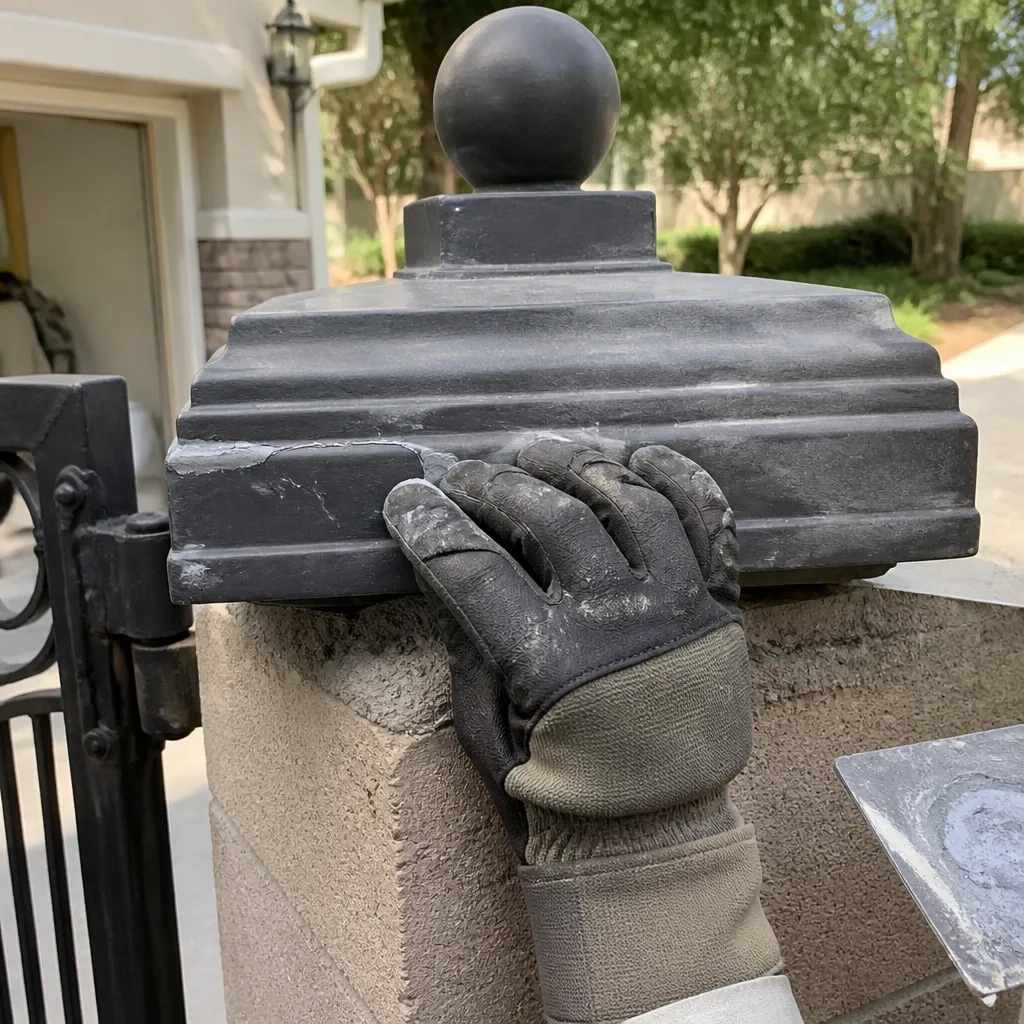
Every professional visit we make leaves a photo log: what was found, what was set, what part number was installed. That record matters because gates are systems, and the next person to open the control box inherits whatever the last person left. When there’s no record, that inheritance is guesswork.
Consider a limit switch. A homeowner adjusts it two degrees past the factory setting to stop a nuisance reversal. It works for a year. Then the gate starts short-cycling in July heat, and the next technician has no idea the setting was changed because nothing was written down. They spend an hour tracing a fault that a single photo of the old position would have answered in thirty seconds. That’s billable time.
Wiring is the same story. Swapping a photo eye, a homeowner disconnects the old unit and reconnects the new one by color. Most of the time that’s fine. Occasionally the previous installer used a nonstandard color or spliced in a length of wire, and the next service call becomes a reconstruction project. Under Haven Standard Clause 4 (Evidence on every job), every visit includes a documented photo record at no additional charge, and that record is what stops a small repair from becoming an archaeology dig six months down the road.
If you’re considering a full system change instead of a repair, the documentation habit carries into installation. Our Gate Installation in Summerlin work includes the wiring diagram and the commissioning readings on file from day one.
When a Professional Repair Is Cheaper Than Your DIY Attempt
DIY is supposed to save money. In three specific scenarios, it does the opposite, and we’ve seen all three in Summerlin.
Scenario 1: You buy the wrong part
Gate automation parts are not interchangeable across brands. A control board pulled for a Linear system won’t fit a DoorKing operator, and buying the wrong one means a return, a restocking fee, and often a second purchase at the markup a local supplier charges for one-off orders. A professional carries the right part because they’ve diagnosed the fault, not guessed at it.
Scenario 2: Your attempt damages an adjacent component
Cross a wire on a 24VAC control board and you can take out the board, the receiver, and the surge suppressor in one shot. A repair that would have been $180 becomes a $600 operator rebuild. The math flips fast.
Scenario 3: You fix the symptom, not the cause
A gate that reverses randomly is usually a photo eye or a safety edge, but it can also be a failing limit switch or a dying motor capacitor. Clean the photo eye and the symptom goes away for a week. The underlying fault keeps cooking. By the time it fails outright, the eventual bill is larger because the motor strained longer than it should have. For a fuller look at what motor and operator repair actually involves, see Gate Motor & Opener in Summerlin.
Summerlin-Specific Factors: Heat, Wind, and HOA Rules
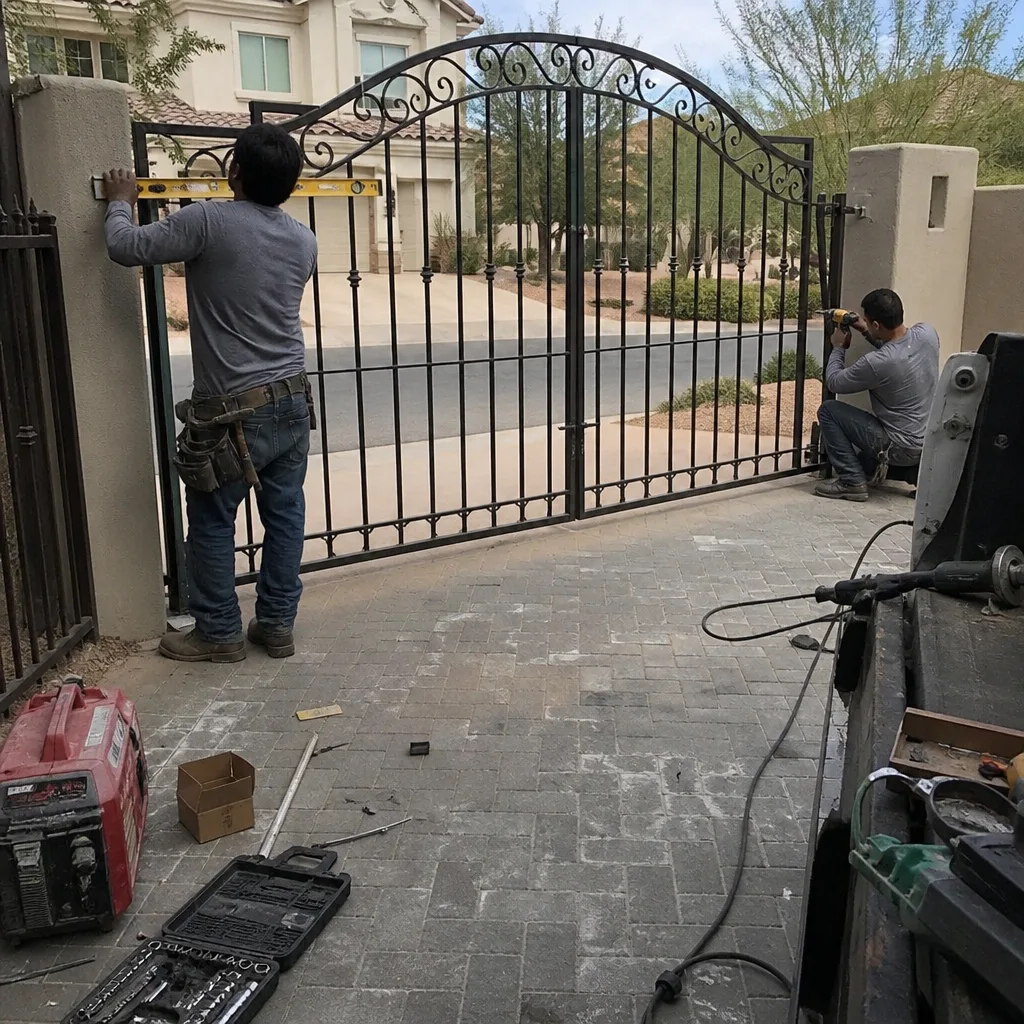
Summerlin’s climate puts specific pressure on gate hardware that homeowners in cooler metros don’t face. Summer surface temperatures on a west-facing metal gate can climb high enough to soften lubricants that were fine in April, which is why we recommend a silicone or lithium spray rather than a grease that thins and migrates. Wind, particularly on the ridgelines above The Ridges and on the open stretches near Red Rock, works hinge bolts and post anchors loose over time. Dust storms push fine grit into tracks and limit-switch housings, and a limit switch packed with grit is a limit switch that drifts.
HOA rules vary across Summerlin’s villages, but the common thread is this: any repair that changes the appearance of the gate, the color of the hardware, or the visible automation has to match what the association approved. A post repair that requires new paint is a small job with a large approval question. We flag that before any work begins, because a repair that gets you a violation letter isn’t a repair. If you’re in one of the older Summerlin villages with a gate style that’s been out of production for years, the parts sourcing question is real, and it’s worth a call before you buy anything online.
All of this is why a written price before work starts matters here more than in most markets. When you can see the scope, you can see what’s inside it. If you’re weighing whether to repair or replace, our Vance Gate Repair Summerlin home page lays out the full service picture.
Why We Won’t Give You Step-by-Step Instructions for Springs
We’re going to name the danger plainly and then stop. A torsion spring on a residential swing or slide gate holds enough stored energy to cause a serious injury, and the specific failure mode most common in DIY attempts is a spring that lets go during the tensioning process, not after. Extension springs and torsion springs behave differently, and neither should be handled without the correct winding bars and the specific technique for the exact spring on your gate. We don’t publish step-by-step instructions because the instructions themselves, followed imperfectly, are how people get hurt.
The same logic applies to any repair that ties into a property’s power run or bypasses a safety edge. A trained technician carries the tools, the training, and the insurance for exactly these scenarios. If your gate is on a LiftMaster or a Ghost Controls operator and the spring is involved, that’s a call to a professional, not a weekend project. The 365-Day Done Right Promise covers the repair for a full year, so the work is warrantied in a way a DIY job never can be.
Common Mistakes to Avoid
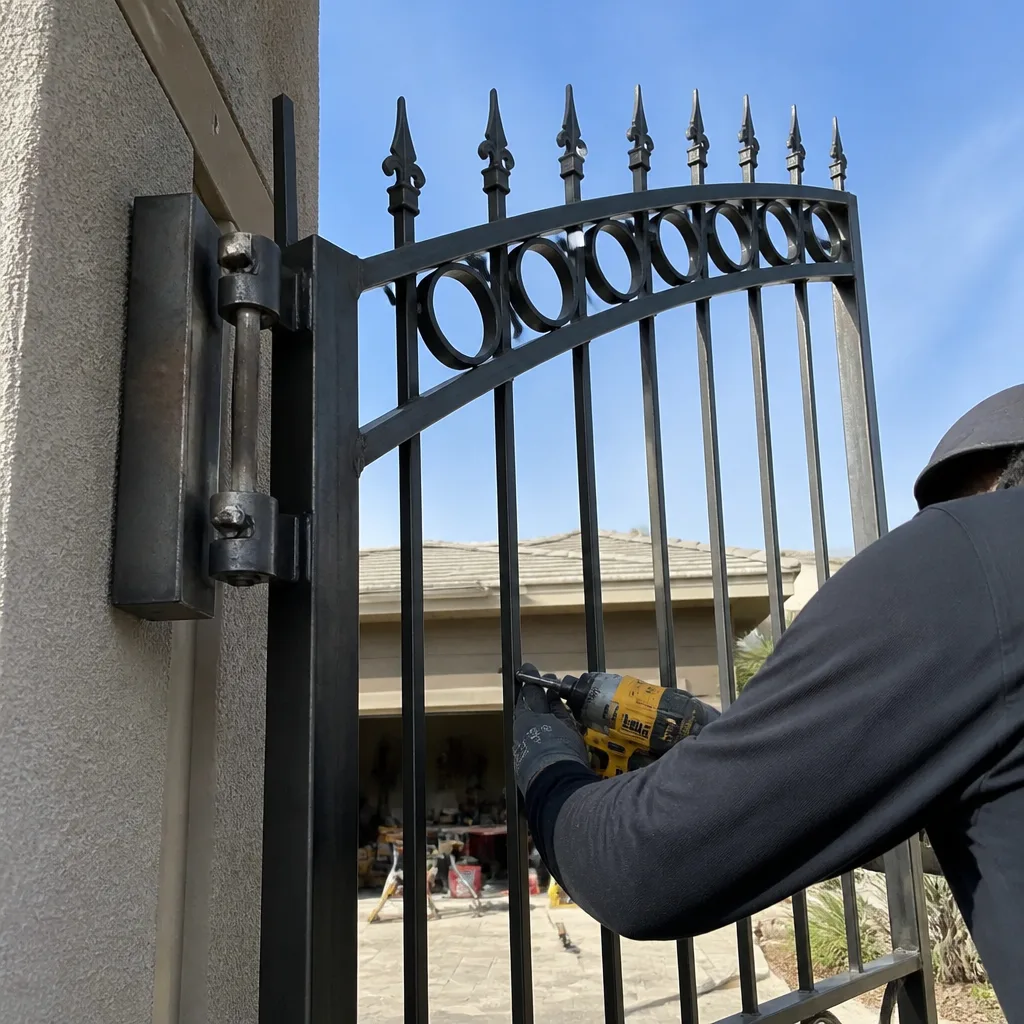
- Adjusting a limit switch without recording the original setting. Mark the old position with tape or a photo before you turn anything. The next technician will thank you, and you may be that technician.
- Bypassing the photo eye “just for now.” It’s a safety device, and in Summerlin, leaving it bypassed can put you into HOA violation territory even if nothing ever goes wrong.
- Greasing a track that needs cleaning, not lubrication. Dust collects in grease and turns it into an abrasive paste. Clean first, then use a dry or silicone spray.
- Buying a remote online without confirming the frequency. A remote that’s the wrong frequency won’t pair no matter how many times you follow the sequence. Check the receiver’s model number before you order.
- Assuming a reversing gate needs a new board. In our experience, random reversals trace to photo eyes and safety edges far more often than to control boards. Diagnose before you replace.
- Working on a gate without checking whether it’s on the HOA’s approved-parts list. A replacement motor that looks identical can still fail an inspection if the brand or model isn’t approved for your village.
- Ignoring a small post wobble. A post that moves an eighth of an inch in July can be a quarter-inch off by October. Small alignment fixes are cheap; post replacement is not.
See the difference
BeforeAfter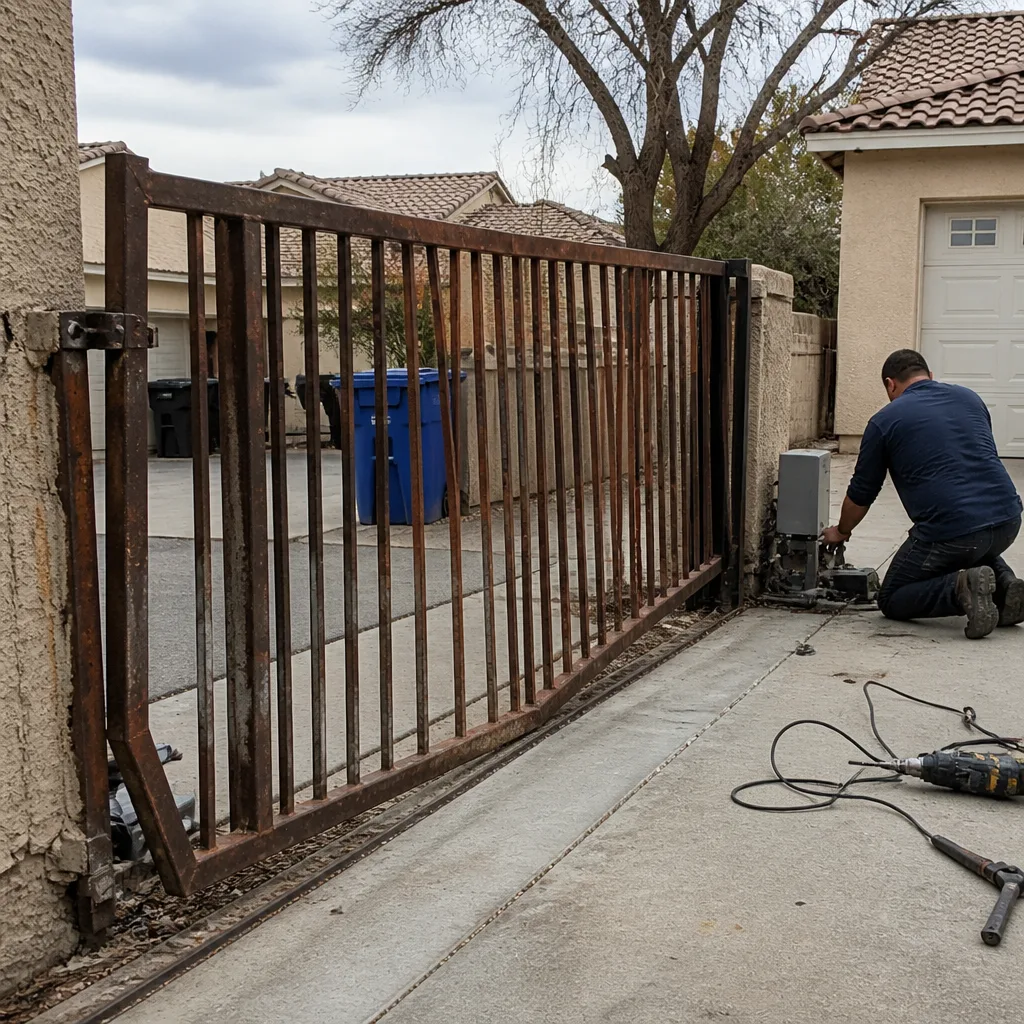 Before
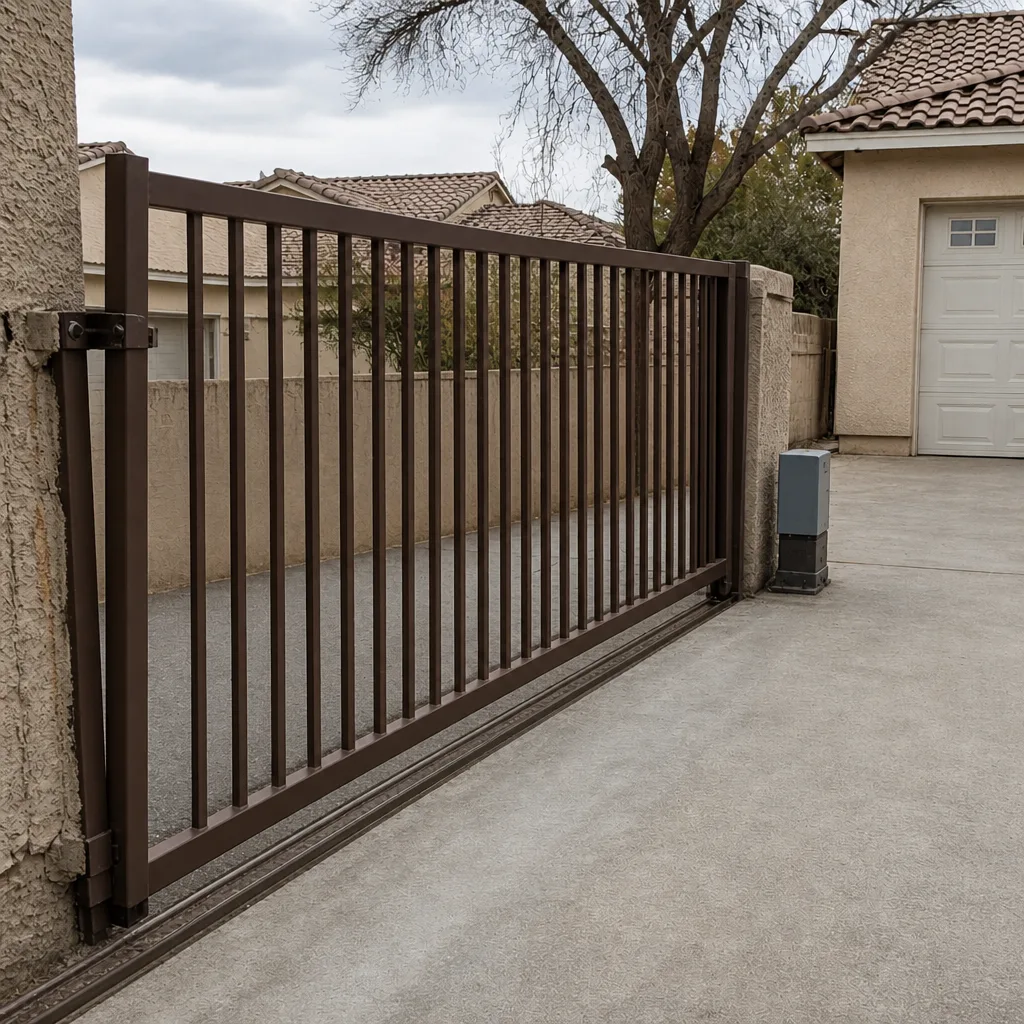 After
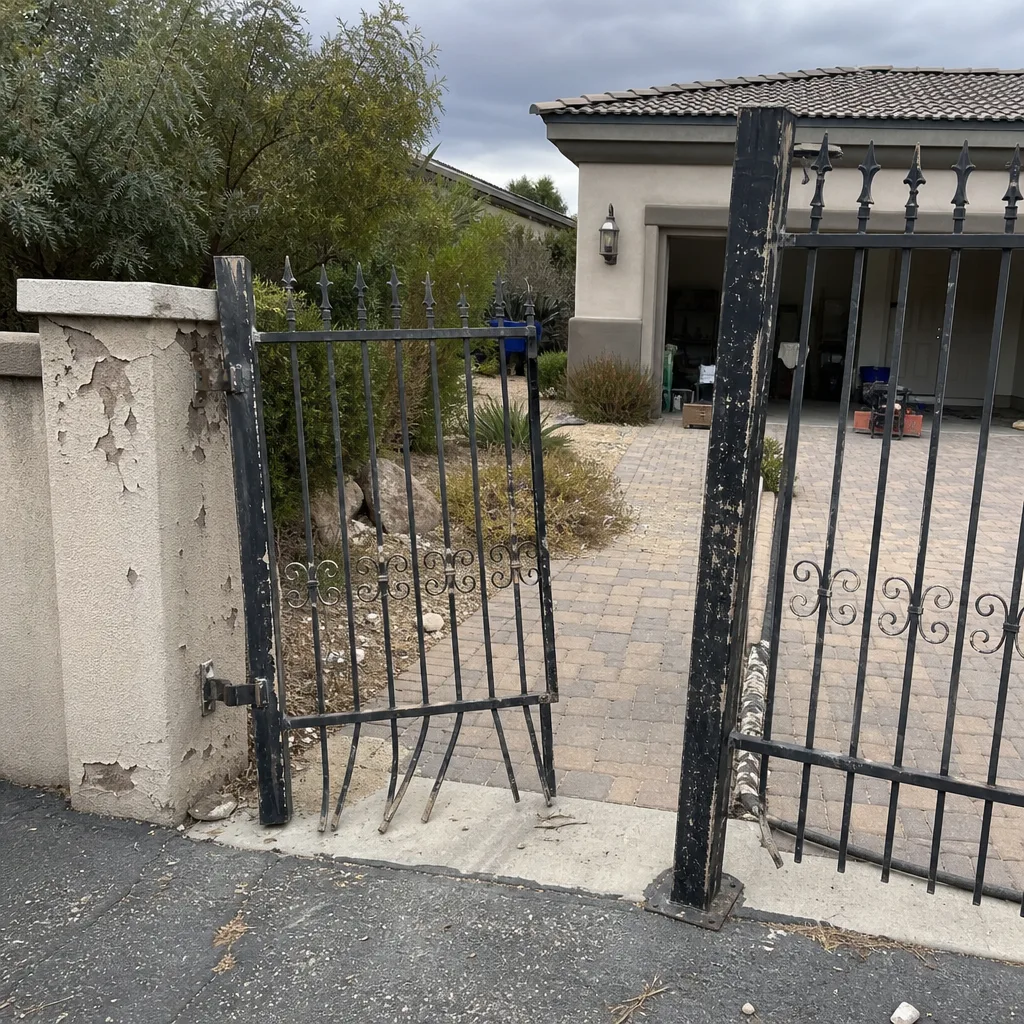 Before
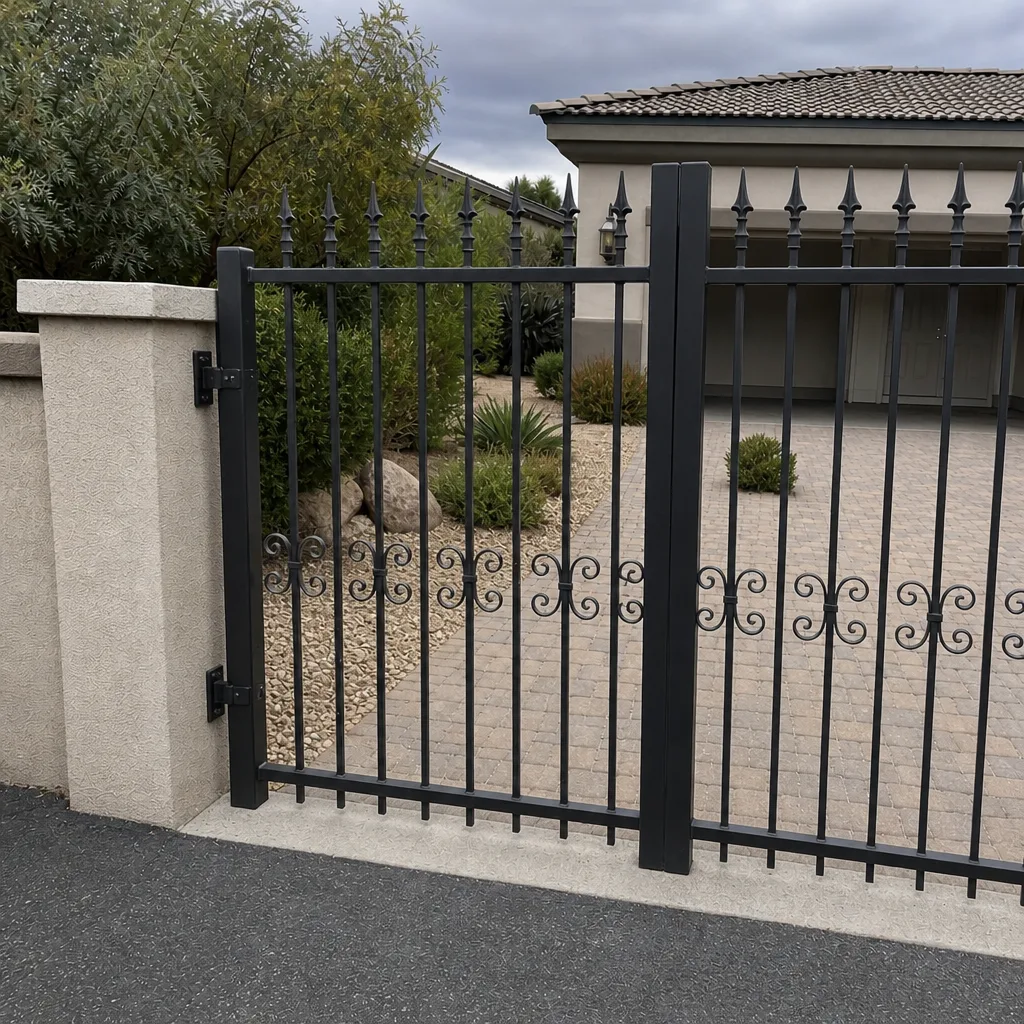 After
When to Call a Professional
Call a professional when the repair involves a spring, a control board, a post, a power run, or any safety device you’re tempted to bypass. Call when the gate has reversed unexpectedly more than once, when you smell hot plastic near the operator, or when the gate is on a slope and gravity is part of the equation. Call when you’re in an HOA that requires documented service. And call when you’ve already tried a DIY repair and it didn’t hold, because the second attempt costs more than the first. Vance Gate Repair Summerlin offers free estimates in Summerlin and a free second opinion on any written estimate you’ve received from another company. Call (844) 797-2809.
Frequently Asked Questions
It’s safe for specific tasks: photo eye cleaning, remote programming, lubrication, and minor hinge alignment. Spring replacement, control board swaps, post repair, and operator installation are not safe to DIY because of stored energy and low-voltage wiring risk. The dividing line is the component, not your confidence.
Your policy may still cover an accident on your property, but a DIY repair with no documentation, no permit, and no inspection gives the adjuster a reason to scrutinize or deny the claim. A professional repair with a written scope and a photo record leaves a trail the claim can follow.
Most residential gate repairs in Summerlin fall between $150 and $450 depending on the component: a photo eye alignment is at the low end, a control board or motor repair at the high end. Every price is written and handed over before any work starts. Call (844) 797-2809 for an exact quote.
In many cases, yes. A gate stuck open is a security issue, and we prioritize those calls. A live person answers the phone 24 hours a day at (844) 797-2809, so you’re never routed to voicemail.
We service nine major gate-automation brands, including LiftMaster, FAAC, BFT, Linear, Viking, Ghost Controls, DoorKing, Elite, and Mighty Mule. That means we work on the motor already on your property rather than steering you toward a replacement. Call for a written quote.
Yes, always. Under Haven Standard Clause 1 (Have it in writing), the flat price is written and handed to you before any tool comes out of the case. There’s no surprise invoice at the end. Call (844) 797-2809 to get your written estimate.
The Bottom Line
Gate repair in Summerlin splits cleanly along component lines. Photo eyes, remotes, lubrication, and minor alignment are yours to handle, and we’d rather you do them than pay for a service call. Springs, control boards, posts, and operator installations aren’t, because the risk is physical and the liability follows you into the insurance claim. Document everything you touch, and if a repair on your gate fails, the paper trail is what protects you. Our technicians have up to 12 years of experience, and every visit comes with a photo record and the 365-Day Done Right Promise. If you’re weighing a repair, call (844) 797-2809 for a free estimate.
Written by the team at Vance Gate Repair Summerlin.