
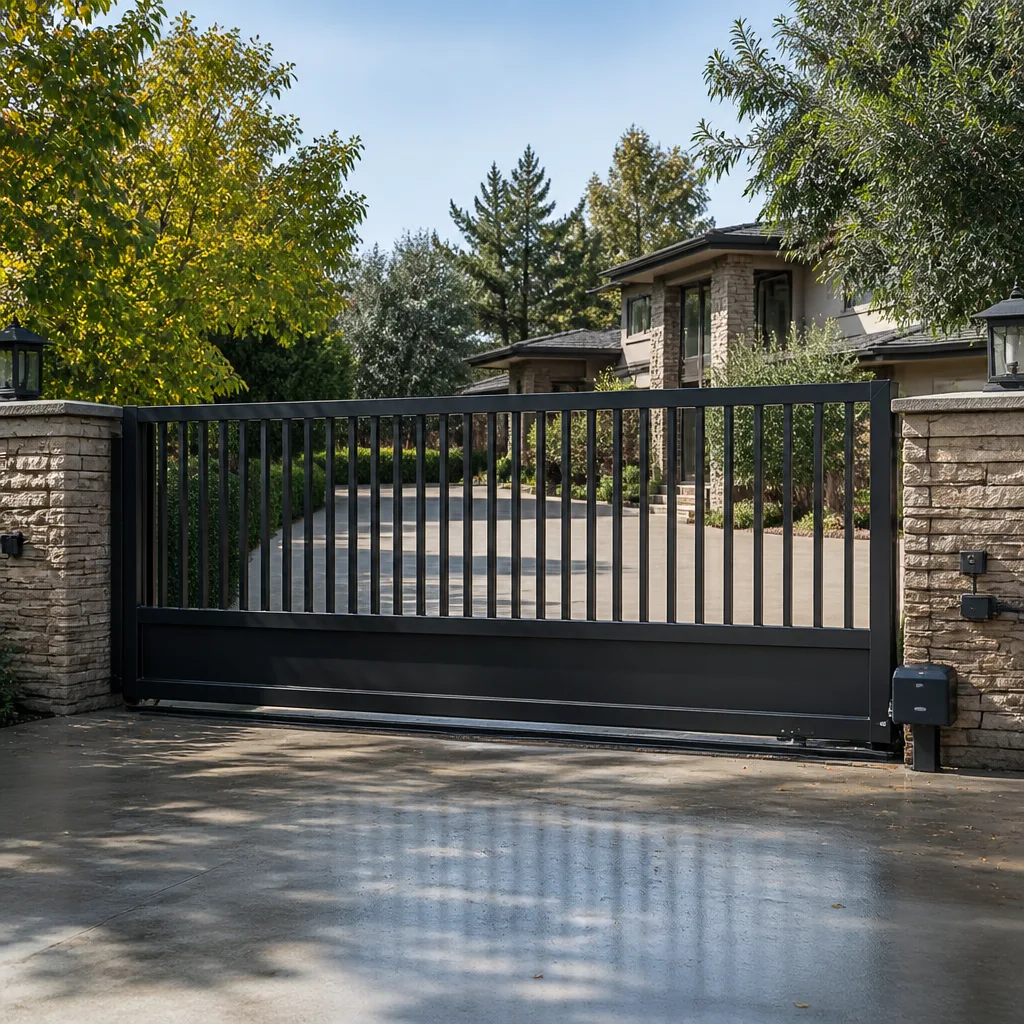
 Sliding driveway gates
 Wrought iron
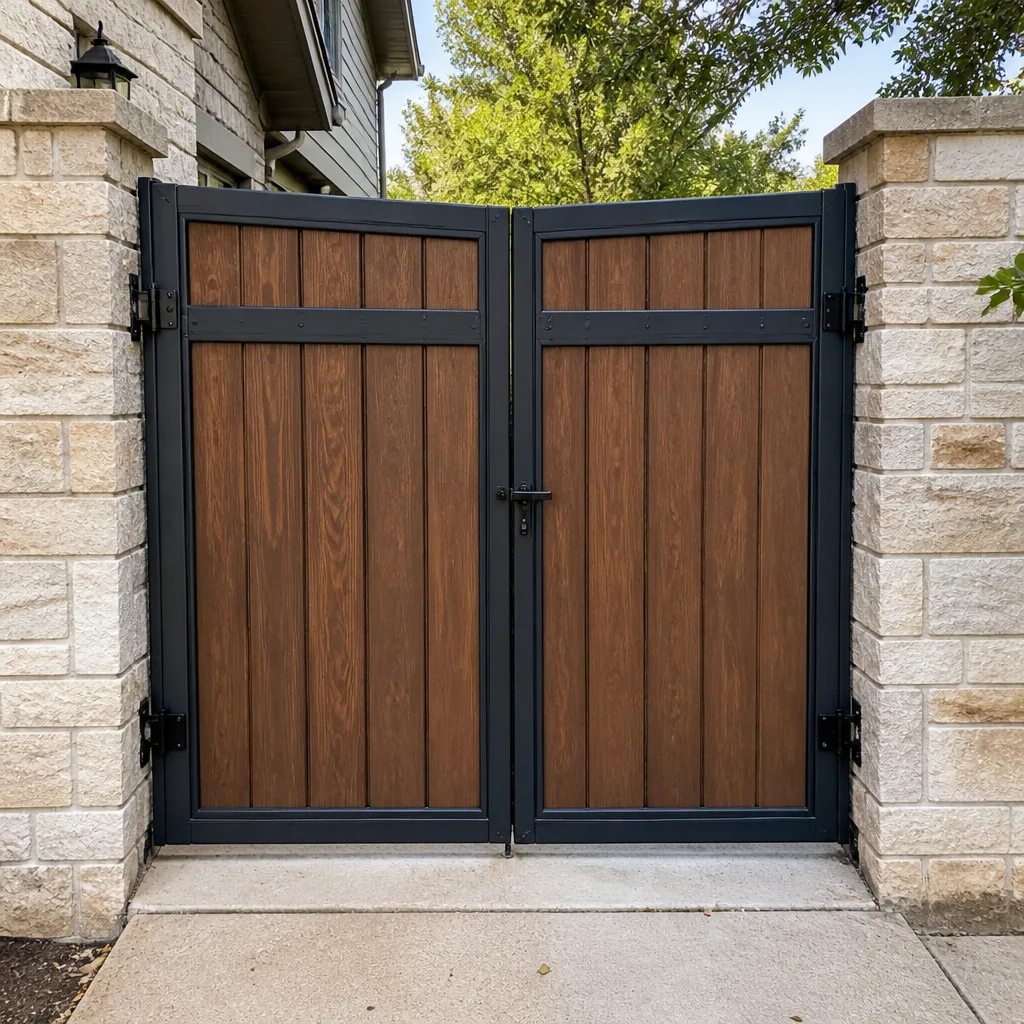 Wood & steel frame
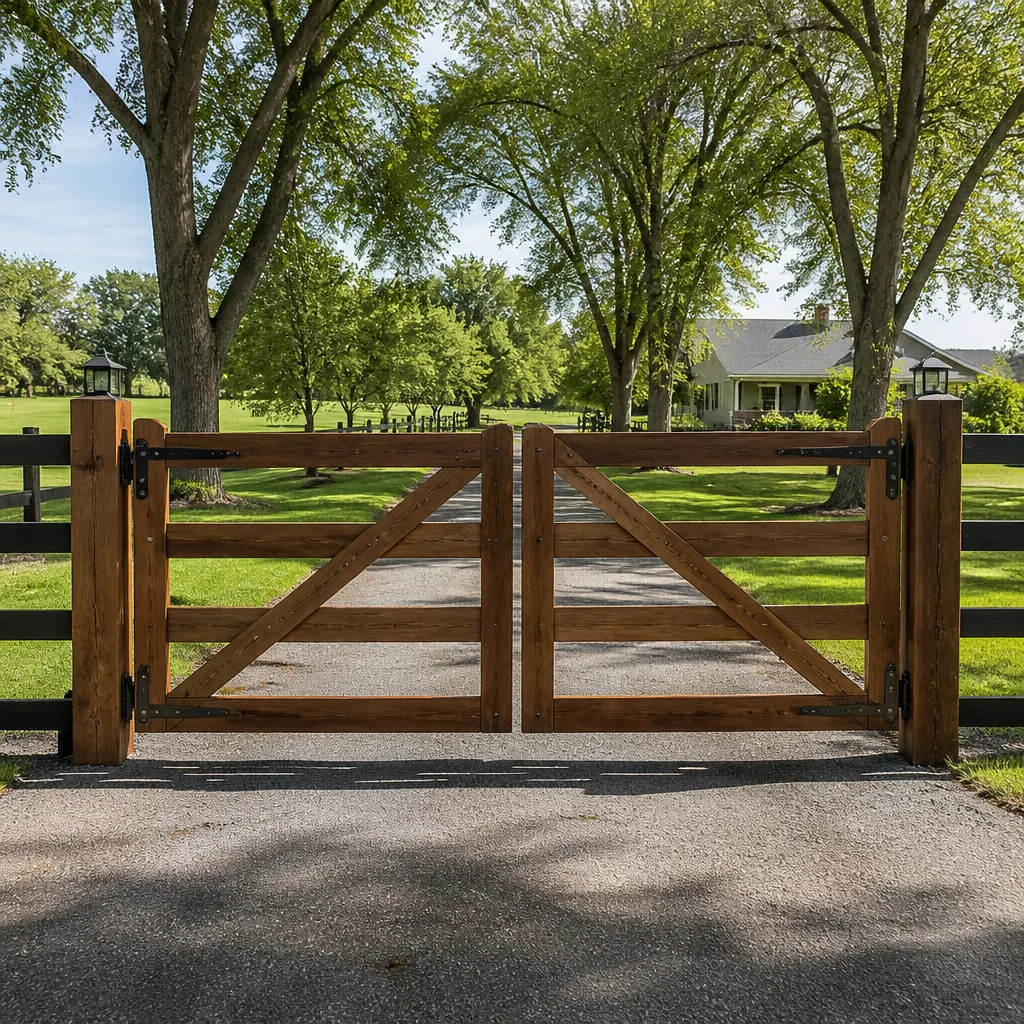 Farm & ranch
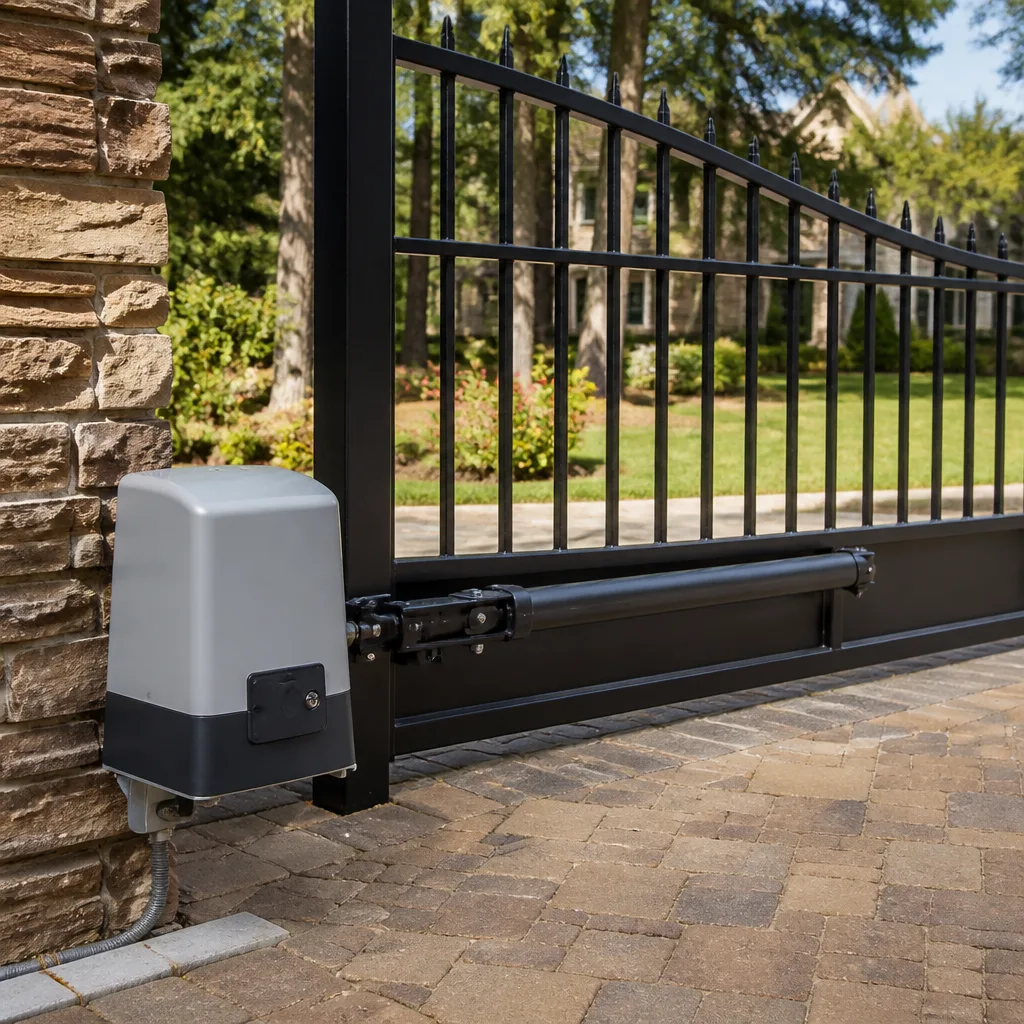 LiftMaster operators
Free on-site gate assessment - hinges, posts, and your LiftMaster or Nice gate operator checked before anything is quoted
The assessment is free and the quote is the invoice.
Get your free estimateStyles & brands we work with
- Wrought iron
- Wood & steel frame
- Farm & ranch
- Sliding driveway gates
- LiftMaster operators
See the difference
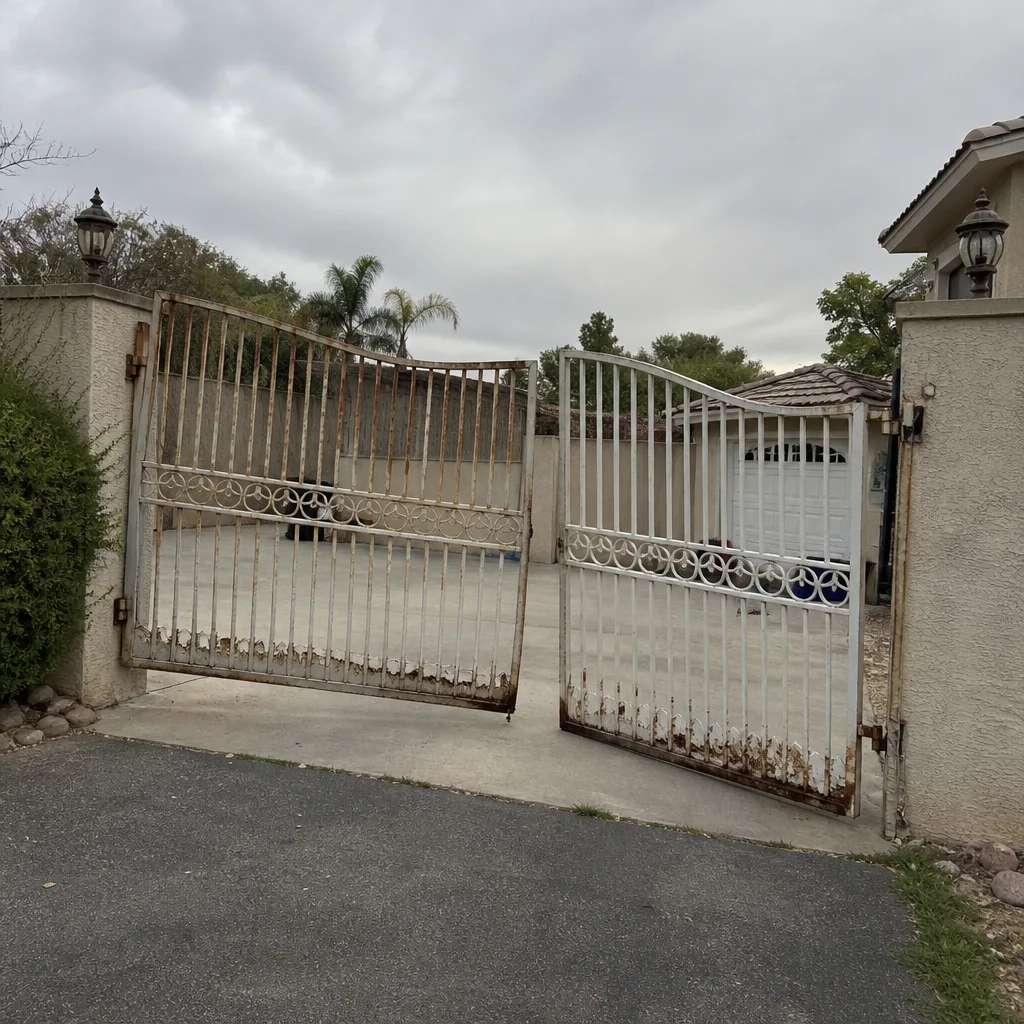 Before
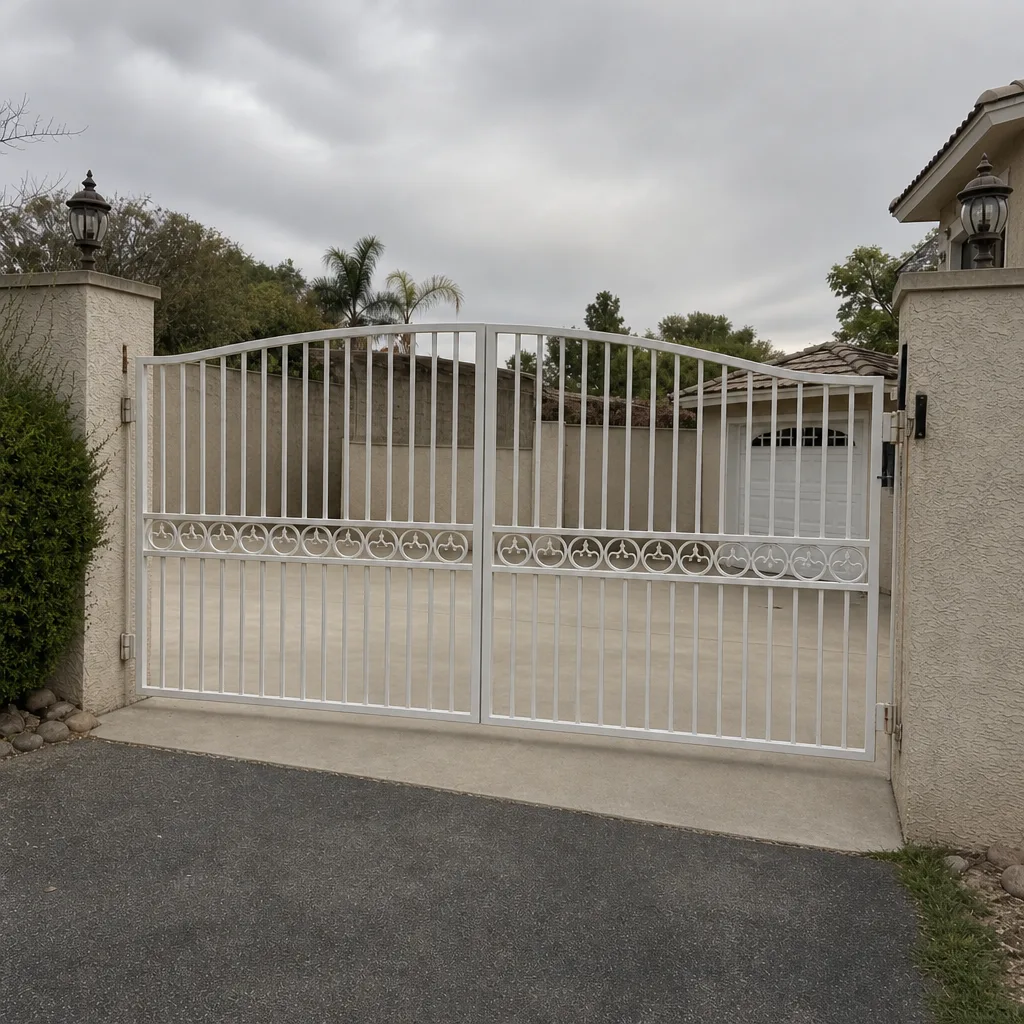 After
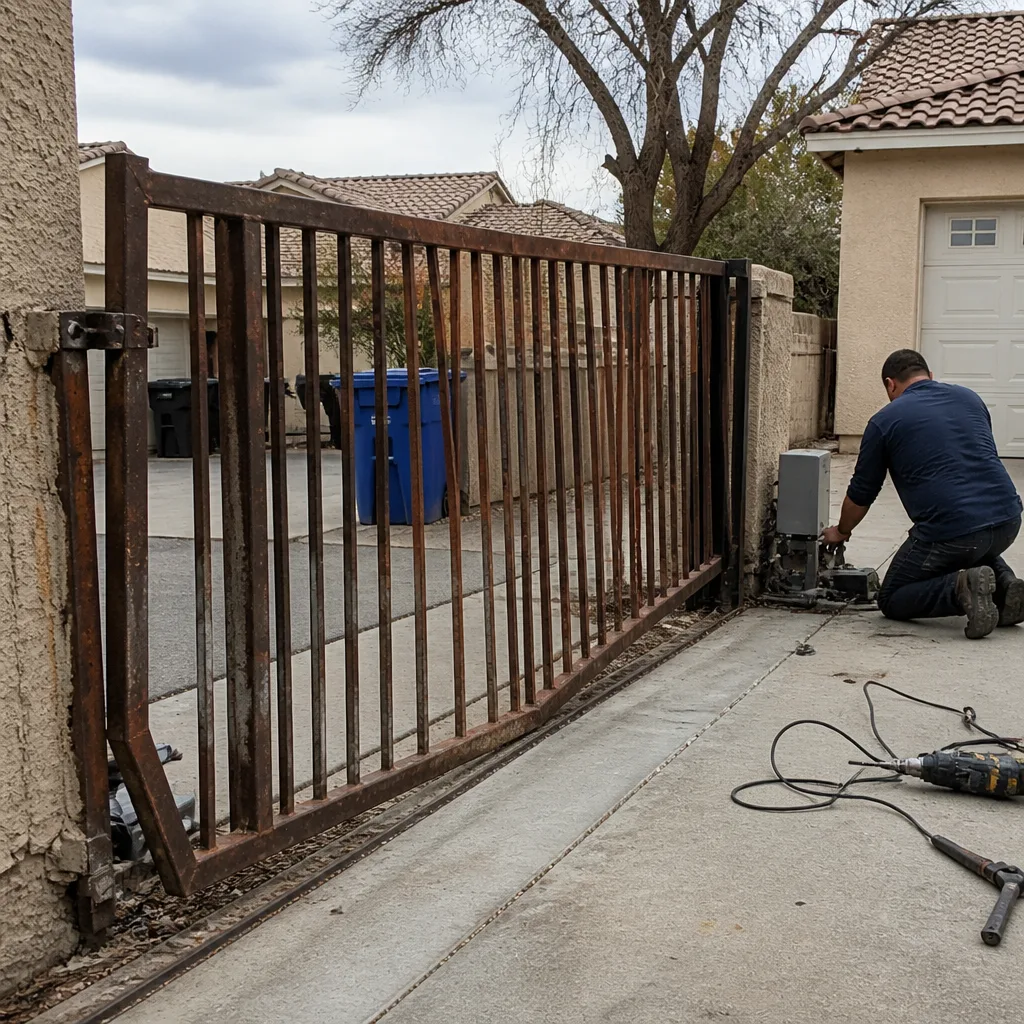 Before
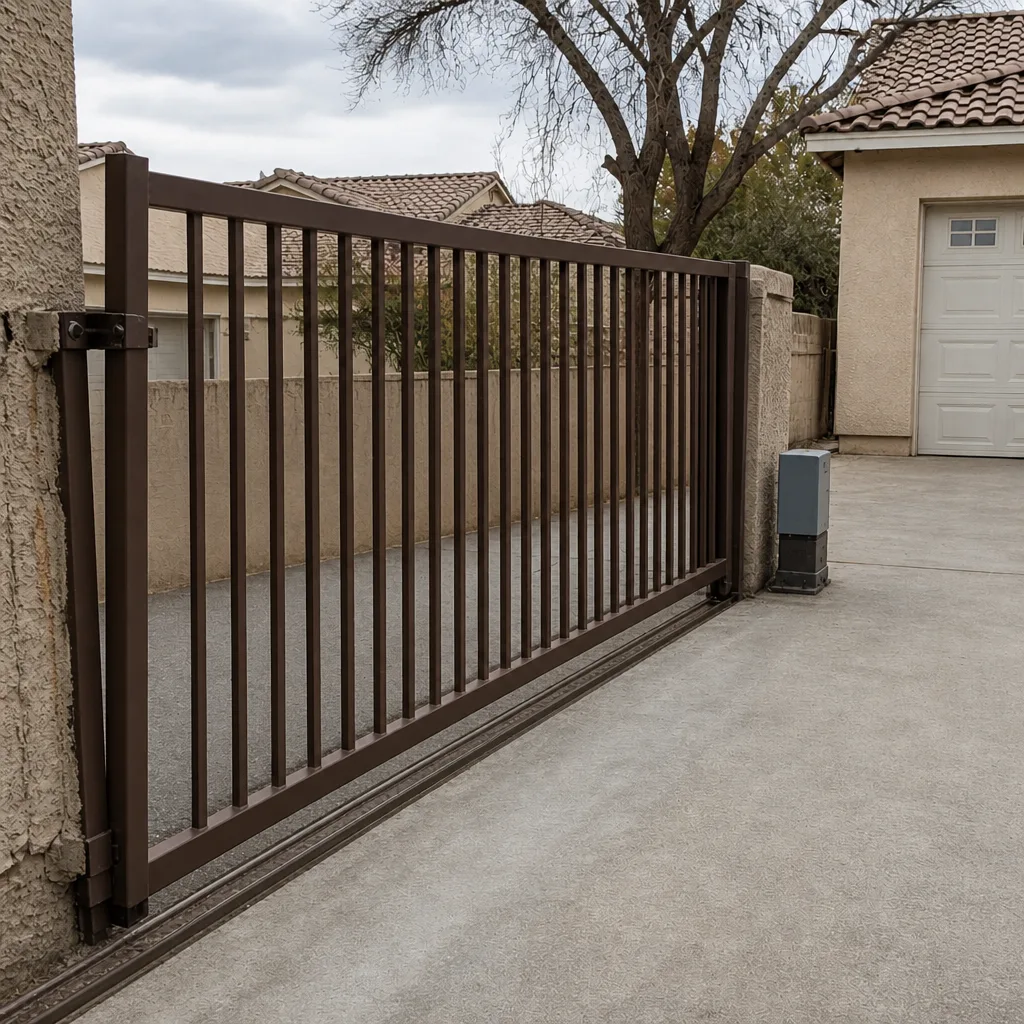 After
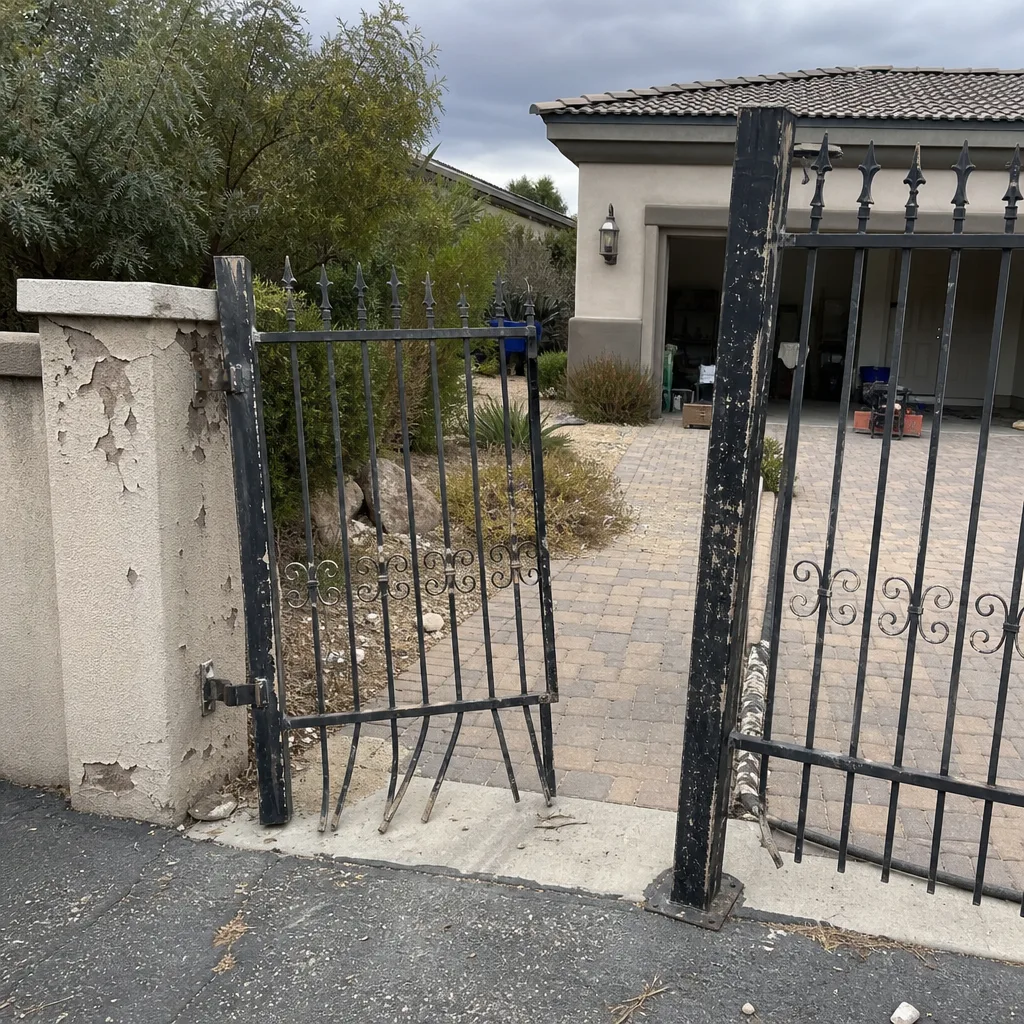 Before
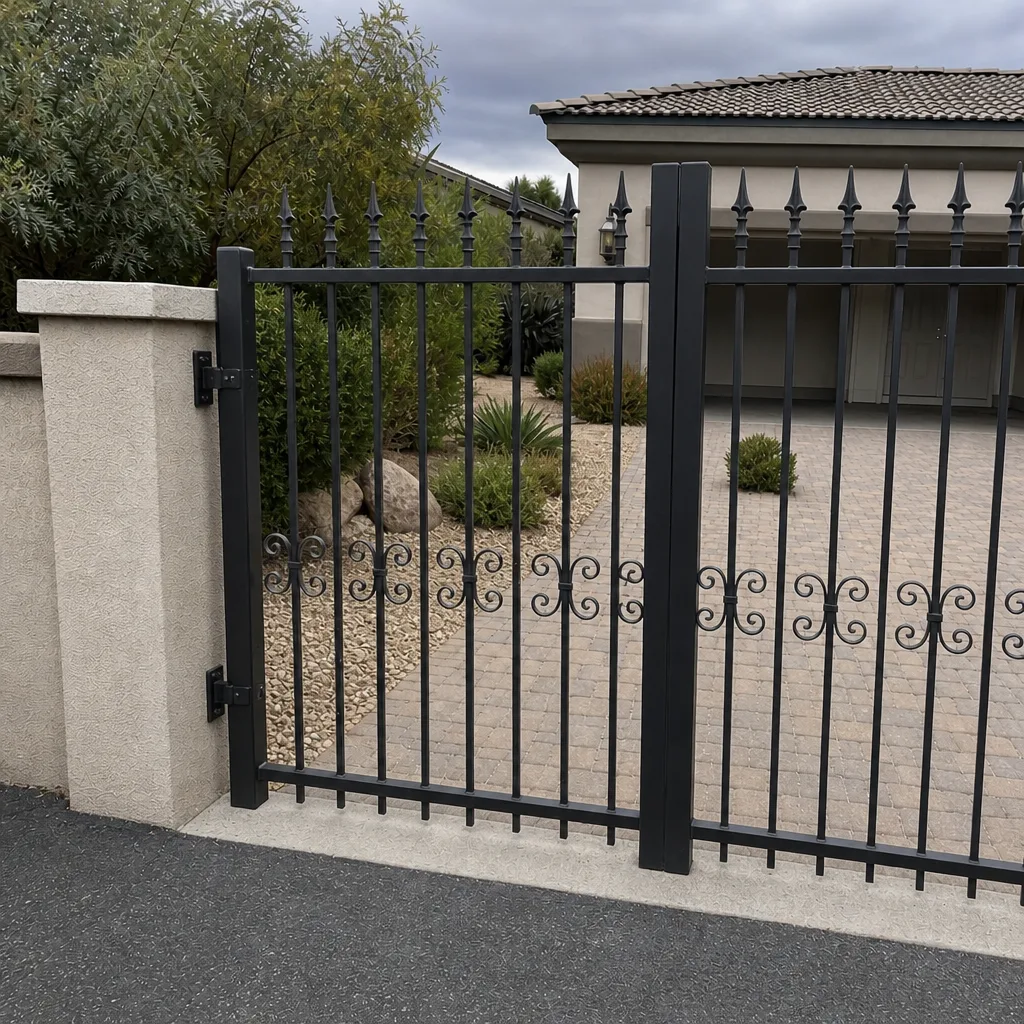 After
Driveway Gate Maintenance in Summerlin, NV: The Desert Calendar Your Gate Actually Needs
Driveway gate maintenance in Summerlin should follow a desert-specific calendar, not a generic guide written for a mild climate: check post plumb in March, lubricate hinges and pivots with high-temp grease in May, clean the photo-eye sensors in July, inspect powder-coat in October, and test the control board and capacitors in January. Summerlin’s 100°F-plus summers and wet-dry clay soil punish hinges, finishes, and post footings on a faster cycle than most maintenance checklists assume. If your gate is already sticking, sagging, or out of alignment, call (844) 797-2809 for a free written estimate.
Most of what you’ll read about gate care was written somewhere with soft seasons and steady humidity. Summerlin is a master-planned, HOA-governed community built mostly from the 1990s on, and the combination of intense sun, caliche-laden soil, and HOA architectural rules changes the schedule. Here’s what we look for and when.
The Summerlin Annual Gate Maintenance Calendar
Here’s the sequence we recommend to homeowners in Summerlin. It’s built around how this valley actually behaves, not a temperate-climate template.
- March – post plumb check. Do this before the clay dries out and locks the post into its summer position. A post that has heaved over the winter shows up now.
- May – hinge and pivot lubrication. Use a high-temp, UV-stable synthetic grease before the first 100°F days arrive. Standard light oil burns off fast here.
- July – photo-eye sensor cleaning. Monsoon dust storms coat the infrared lenses; a dirty photo-eye (the beam that stops the gate if something crosses its path) is one of the most common “my gate won’t close” calls we get.
- October – powder-coat inspection. Look for chalking and micro-cracking before winter moisture works into any cracks and starts rust.
- January – control board thermal test and capacitor check. Low temperatures give you accurate baseline readings on the board and motor capacitors. This is the month to catch a capacitor that’s drifting.
Each item takes less time than homeowners expect. The point is timing: doing the plumb check in March instead of August means you catch footing movement before it throws the gate out of swing clearance and you’re calling for an emergency repair.
Why Summerlin’s Powder-Coat Fails in a Predictable Order
UV exposure on a Summerlin gate doesn’t degrade the finish all at once. It moves through four stages, and knowing which one you’re in tells you whether you’re looking at cosmetic touch-up or a structural problem.
- Stage 1 – gloss loss. The finish goes flat and dull. Mostly cosmetic.
- Stage 2 – chalking. A powdery film wipes off on your hand. This is the stage to act.
- Stage 3 – micro-cracking. Fine cracks open in the coating. Moisture can now reach the steel.
- Stage 4 – bare metal and rust. The coating has failed; rust initiates at the cracks and joints.
Here’s the part a lot of Summerlin homeowners learn the hard way: an HOA architectural notice typically lands at stage 3 or stage 4, when the gate is visibly failing. That’s also the point where repair costs more. If you catch the finish at stage 2 – while it’s still just chalking – a recoat stops the sequence before moisture gets in, and you avoid both the repair bill and the violation letter. The wrought-iron and decorative gates common to Summerlin villages are especially exposed because the finish is part of the approved design; changing the color to cover a failing coat isn’t an option without architectural sign-off.
BeforeAfterThe Right Lubricant for a Summerlin Gate Hinge
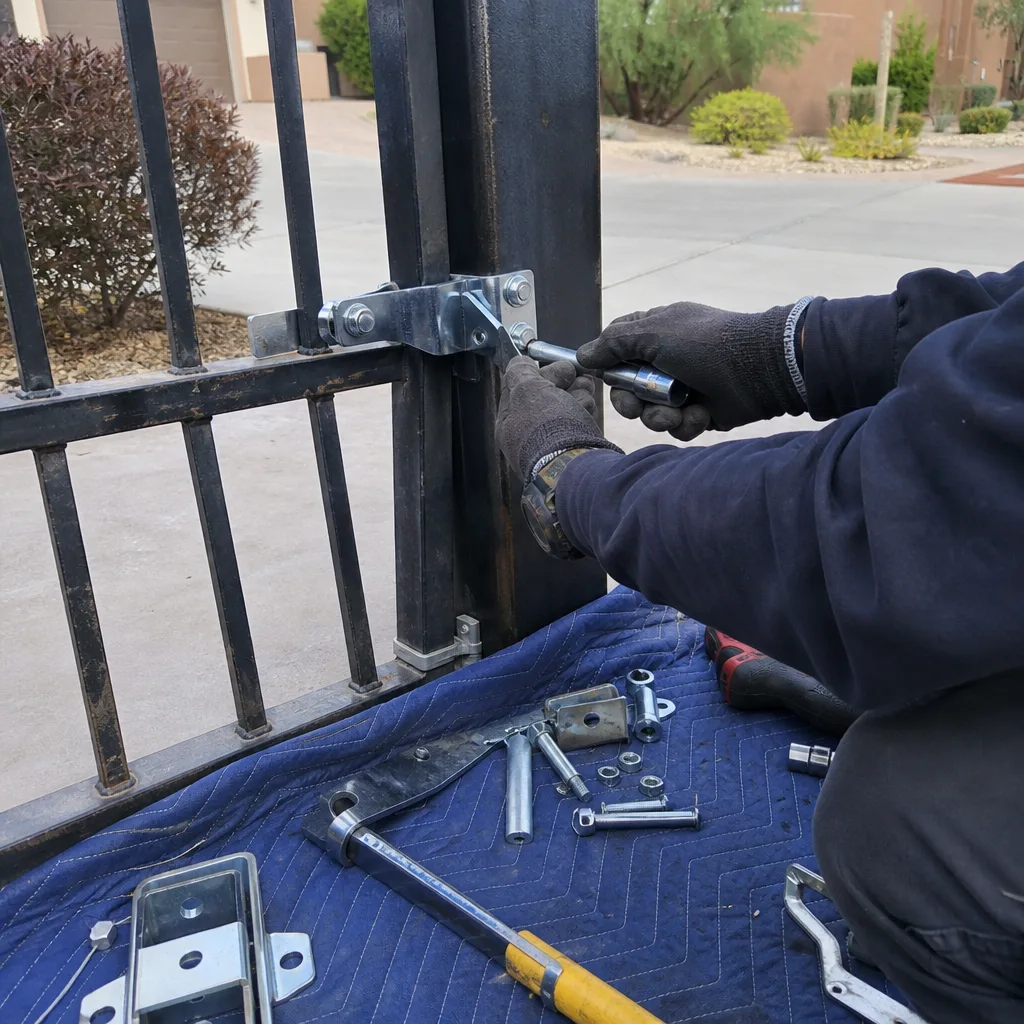
Standard WD-40 or light penetrating oil evaporates within weeks at 110°F, and what’s left behind is a sticky residue that traps caliche dust and actually accelerates hinge wear. The correct product is a synthetic high-temp grease that stays where you put it through the full summer cycle. When we service a gate, we clean the old residue out first – you can’t just spray new grease over a dust-loaded hinge and expect it to hold – then pack the pivot points with high-temp grease that’s rated for the temperature swings this valley delivers.
The same logic applies to the operator arm and closer. West-side wind and monsoon dust storms routinely blow gates out of alignment and snap closer or operator arms. Those parts survive longer when the moving surfaces are properly greased, not left to run dry through July and August.
A Post-Plumb Check You Can Do Without Tools
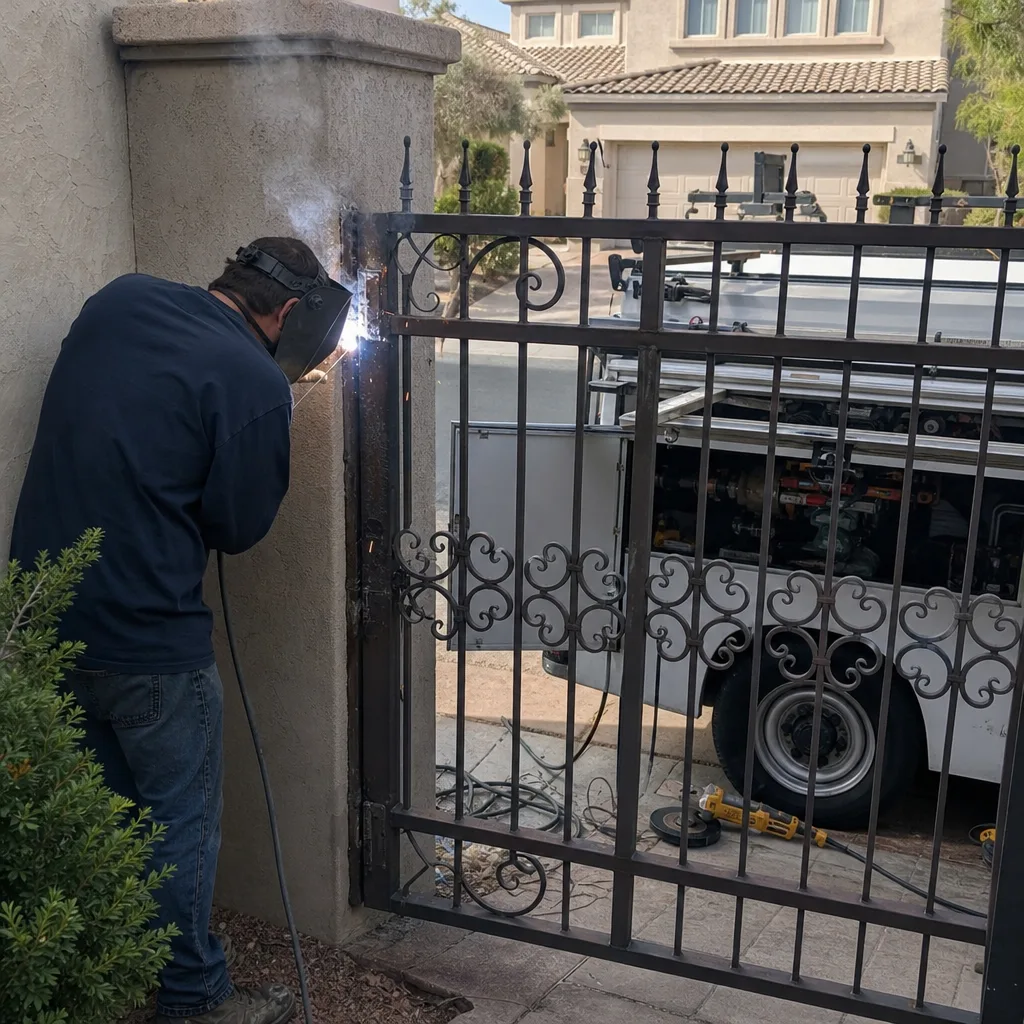
Summerlin lots sit on fill and caliche, and the region’s expansive clay moves with every wet-dry cycle. A gate that “just needs adjusting” often turns out to have a heaving or settling post footing that has to be re-set, not simply re-hung. You can spot footing movement before it becomes a failure with a basic check.
- Hold a 4-foot level against the vertical face of the gate post.
- Read the bubble, then hold the level against the perpendicular face and read again.
- Photograph the bubble position in both directions.
- Repeat the same check in fall and compare the photos.
If the reading changes measurably from spring to fall, the footing is moving. That’s worth assessing before the gate loses swing clearance or the operator starts straining against a misaligned frame. This is the kind of drift that ends in a snapped arm or a gate that binds shut.
Why a Documented Baseline Matters for Summerlin Gates
The single best maintenance tool you can have is a record of what “normal” looked like for your gate before something went wrong. When Vance Gate Repair Summerlin services a gate, the visit leaves behind more than a fixed hinge: photographed hinge condition, limit-switch readings, board LED status, and the part numbers installed. That’s the same documentation habit we built in commercial access-control work, applied to residential gates.
The practical value is this: if you have that record from a prior service call, you can compare current condition to your baseline and spot drift before it becomes a breakdown – without paying a diagnostic fee just to establish what normal looked like. On a Summerlin gate that lives under this much UV and soil movement, that baseline is worth more than any single tune-up.
It’s also why we price the way we do. Under The Haven Standard, you get a written scope and a written flat price before any work starts, and a document of what we found and set when we leave. If you have a written estimate from another company, we’ll give you a free second opinion on it – bring the paperwork and we’ll review it at no cost. Our technicians have up to 12 years of experience and work on all nine major automation brands, including Viking, Ghost Controls, DoorKing, and Elite, so we can service whatever motor is already on your gate rather than steering you toward a replacement. Every repair is covered by our 365-Day Done Right Promise. A live person answers the phone 24 hours a day, seven days a week.
For the full scope of what we handle beyond scheduled upkeep – from a stuck operator to a bent gate – see our Gate Repair service, and for more on our work across the area, visit Gate Repair in Summerlin or start at the home page.
FAQs
Twice as often as most generic guides suggest – we recommend a full hinge and pivot lubrication every spring with high-temp synthetic grease, and a mid-season touch-up on any gate that gets daily use. At 110°F, ordinary light oil evaporates within weeks and leaves a dust-trapping residue that speeds up wear, so the product you use matters as much as the schedule. If your hinges feel stiff or squeal, call (844) 797-2809 for a free written estimate.
Because intense desert UV breaks down powder-coat in a predictable sequence: gloss loss, then chalking, then micro-cracking, then bare metal and rust. Chalking is the stage to act, since that’s before moisture gets into the cracks – and well before your HOA issues an architectural notice, which typically lands at stage 3 or 4. Catching it early saves both the repair and the violation. Call (844) 797-2809 and we’ll write the price down before any work begins.
More often than not it’s a dirty or misaligned photo-eye (the infrared beam that tells the operator something is in the path), or a post that has shifted on Summerlin’s expansive clay. A quick sensor cleaning fixes the first; the second needs a plumb check and possibly a footing re-set. Either way, it’s worth a look before the operator strains against a misaligned frame. Call (844) 797-2809 for a free estimate.
Yes – every Vance Gate Repair Summerlin visit leaves a photographed record: hinge condition, limit-switch readings, board LED status, and the parts installed. That gives you a reference point so you can compare current condition to what normal looked like and catch drift before it turns into a failure, without paying a diagnostic fee to rediscover it.
If you’d rather have it looked at, Vance Gate Repair Summerlin offers a no-pressure assessment in Summerlin – call (844) 797-2809 for a free estimate and a written price before any work begins.
Written by the team at Vance Gate Repair Summerlin, serving Summerlin, NV.