
Last updated November 17, 2026
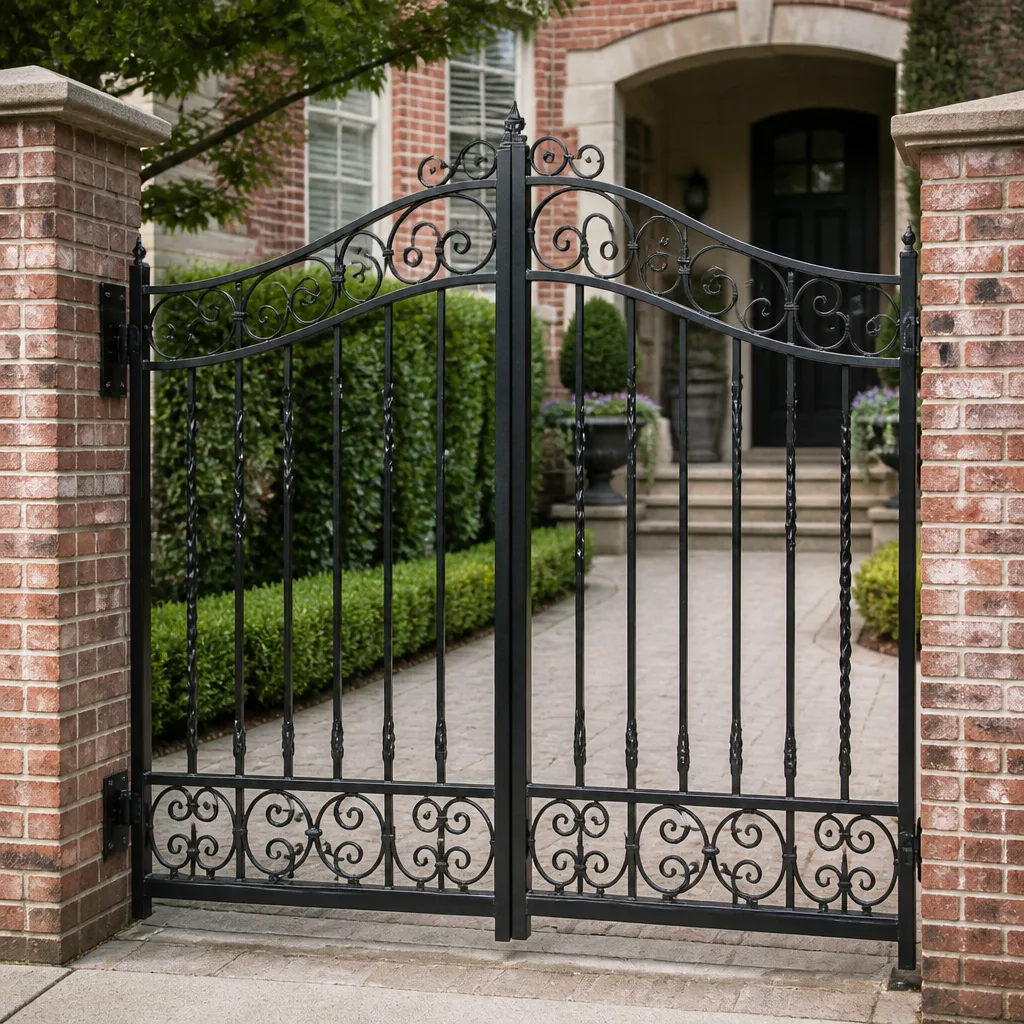 Wrought iron
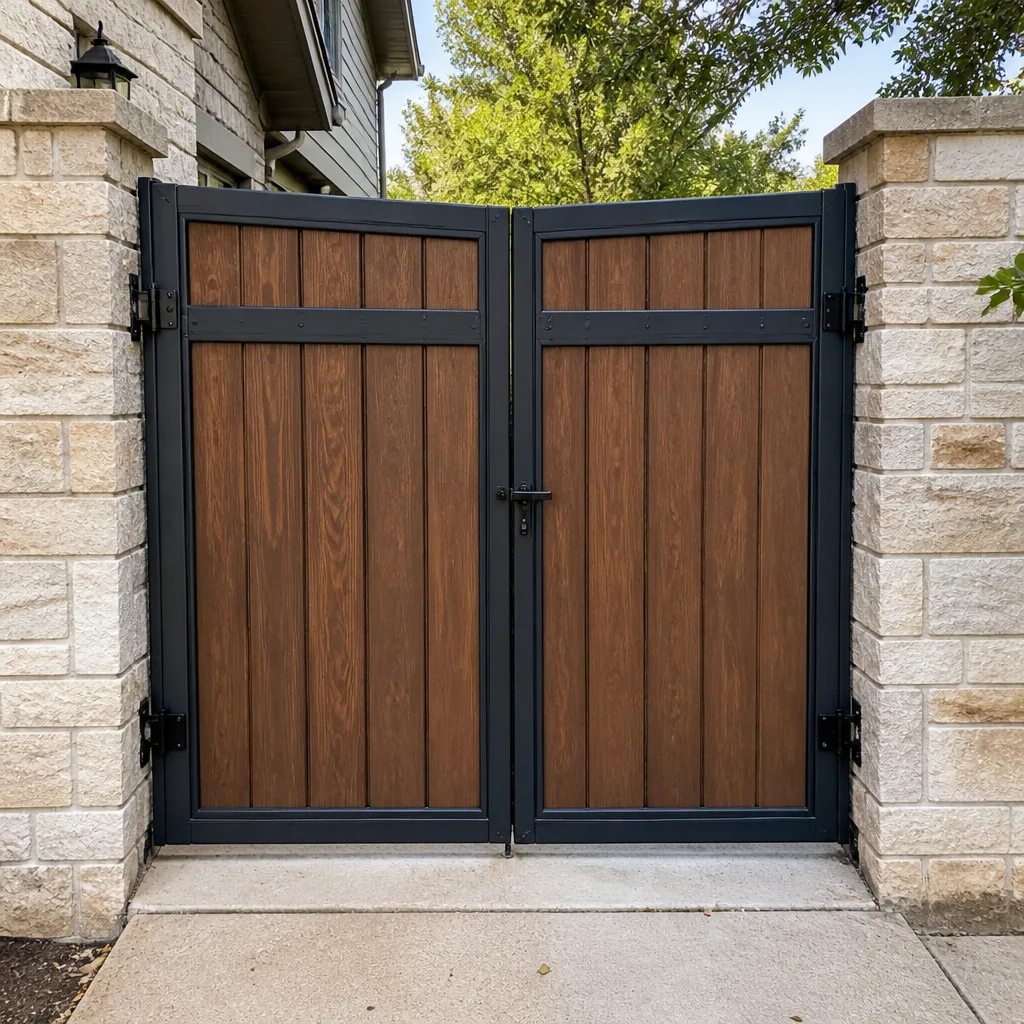 Wood & steel frame
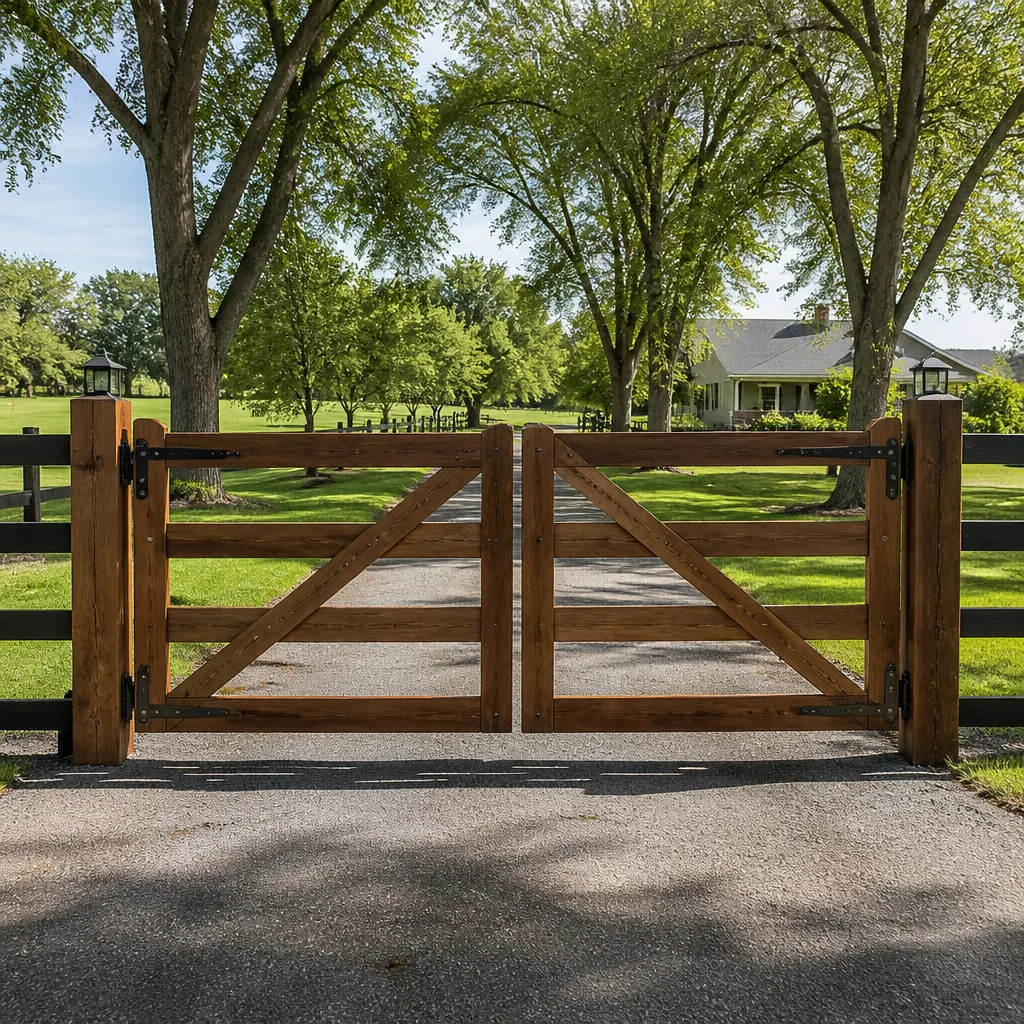 Farm & ranch
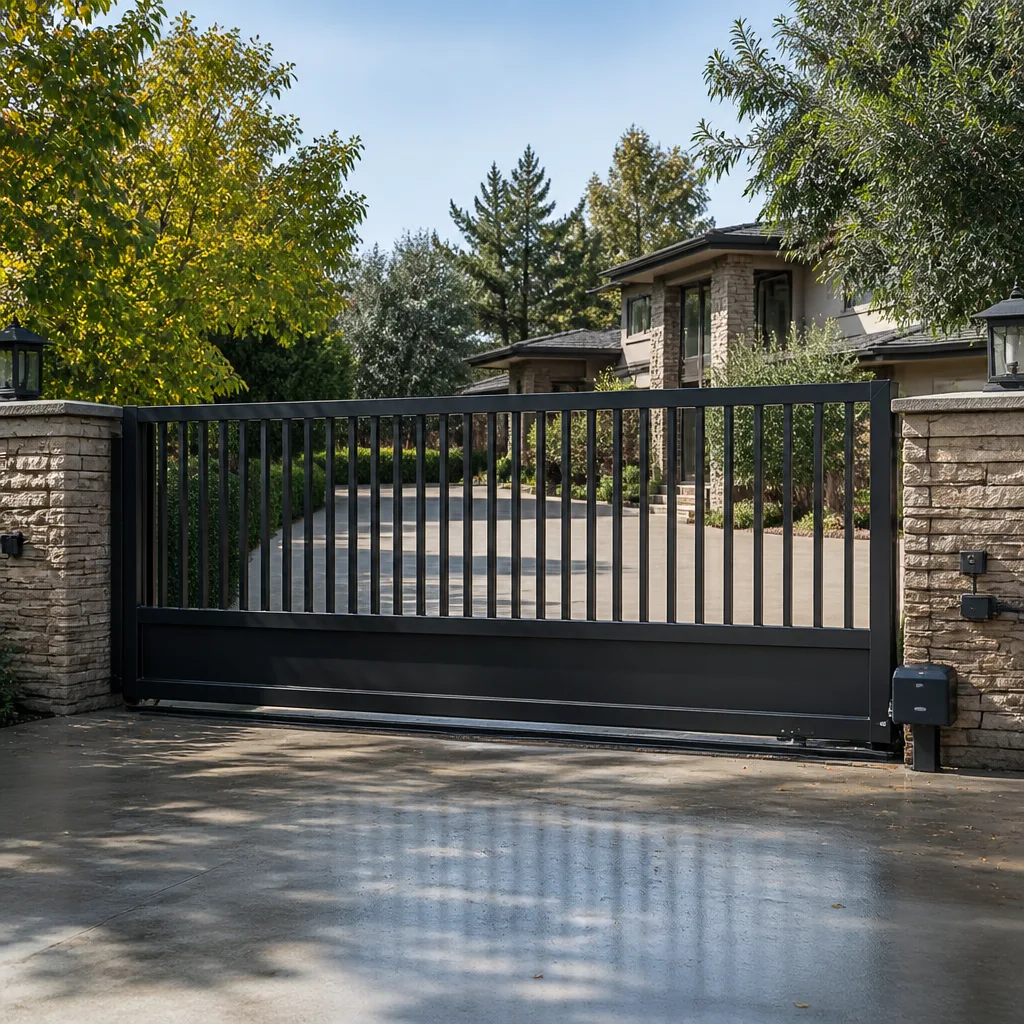 Sliding driveway gates
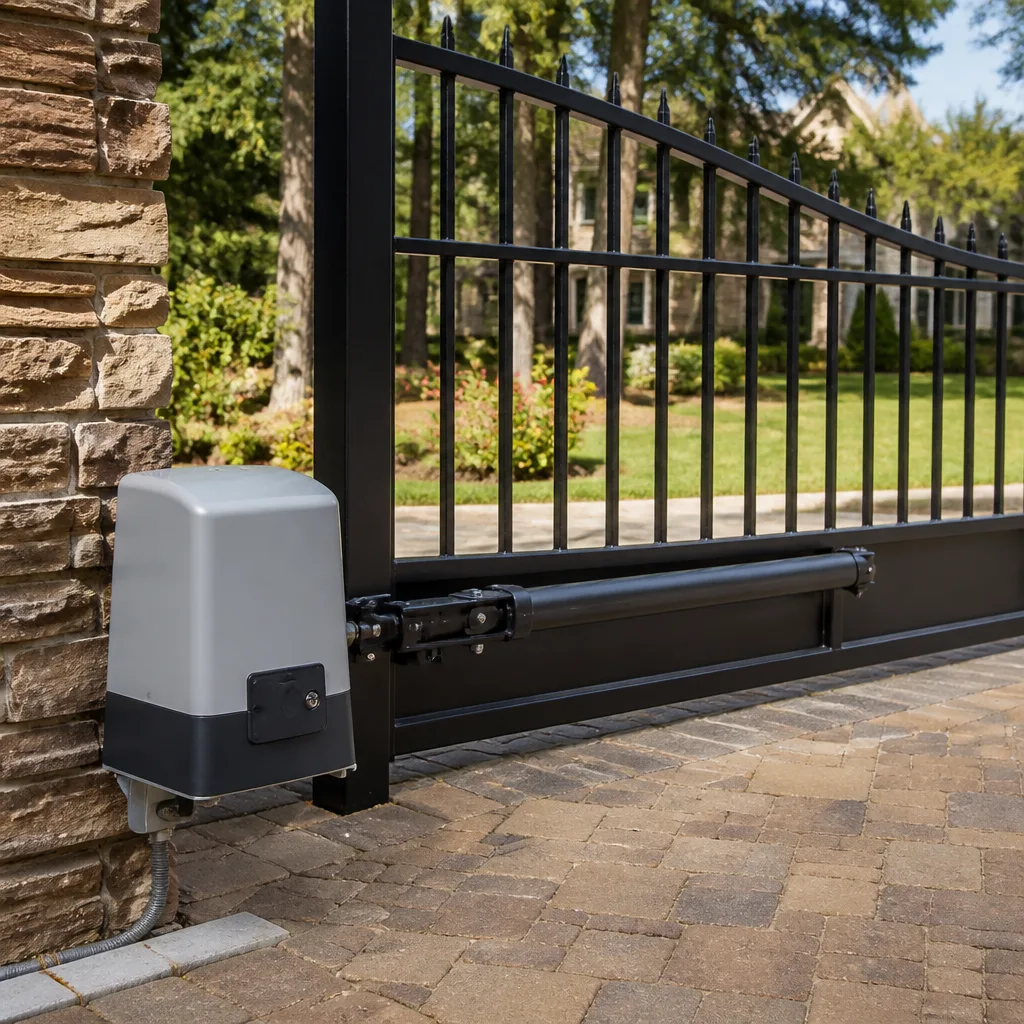 LiftMaster operators
Free on-site gate assessment - hinges, posts, and your LiftMaster or Nice gate operator checked before anything is quoted
The assessment is free and the quote is the invoice.
Get your free estimateThe Complete Gate Repair Guide for Summerlin Homeowners
Most gate failures we see in Summerlin trace back to one of three causes the original installer never wrote down: a buried wiring splice corroded by irrigation overspray, a limit switch set for a Michigan winter, or a post footing that shifted in caliche. None of those are on a standard repair checklist, and none of them show up in a generic gate guide written for flat, mild climates. Summerlin isn’t flat and it isn’t mild. Sustained heat above 110°F, dust-laden spring wind, and soil that swells and shrinks with every irrigation cycle put stresses on a gate that the manufacturer’s manual never accounted for. This guide maps those local failure patterns to their fixes, so you know what you’re looking at before anyone arrives at your driveway.
Quick Answer
Gate repair in Summerlin costs roughly $180 to $650 for most residential fixes, with motor and control-board replacements running $450 to $1,100 depending on the automation brand. The most common local failures are corroded buried splices from irrigation overspray, limit switches set for a colder climate, and posts that have shifted in caliche soil. A written price before any work starts should be standard on every job, and it isn’t always.
Styles & brands we work with
- Wrought iron
- Wood & steel frame
- Farm & ranch
- Sliding driveway gates
- LiftMaster operators
Table of Contents
- How Caliche Soil Stresses Summerlin Gate Posts
- Why Summerlin Heat Ages Control Boards Faster
- Buried Wiring Splices and Irrigation Overspray
- Limit Switches Set for the Wrong Climate
- Gate Types by Summerlin Neighborhood and Their Failure Modes
- The Documentation to Request After Any Repair
- How to Read a Written Repair Scope vs a Verbal Estimate
- Repair or Replace: Reading the Evidence
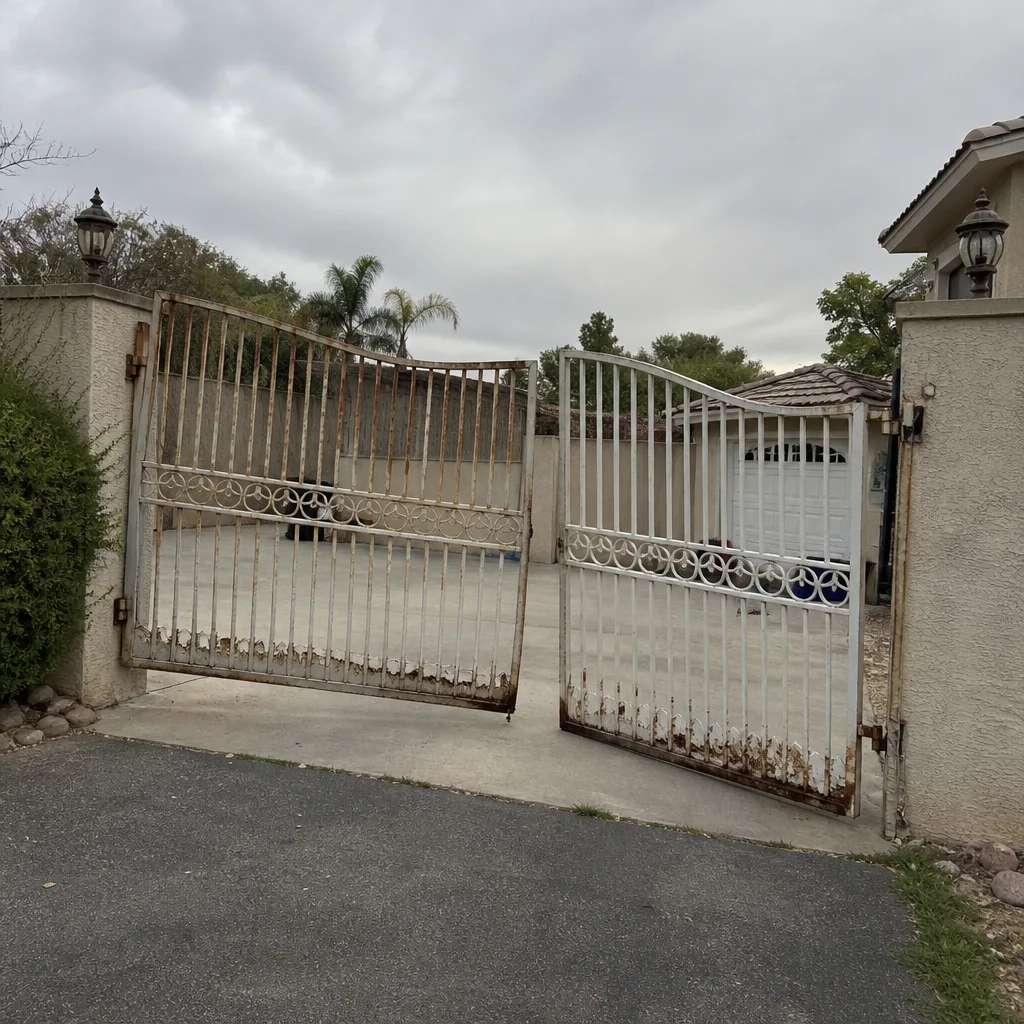 Before
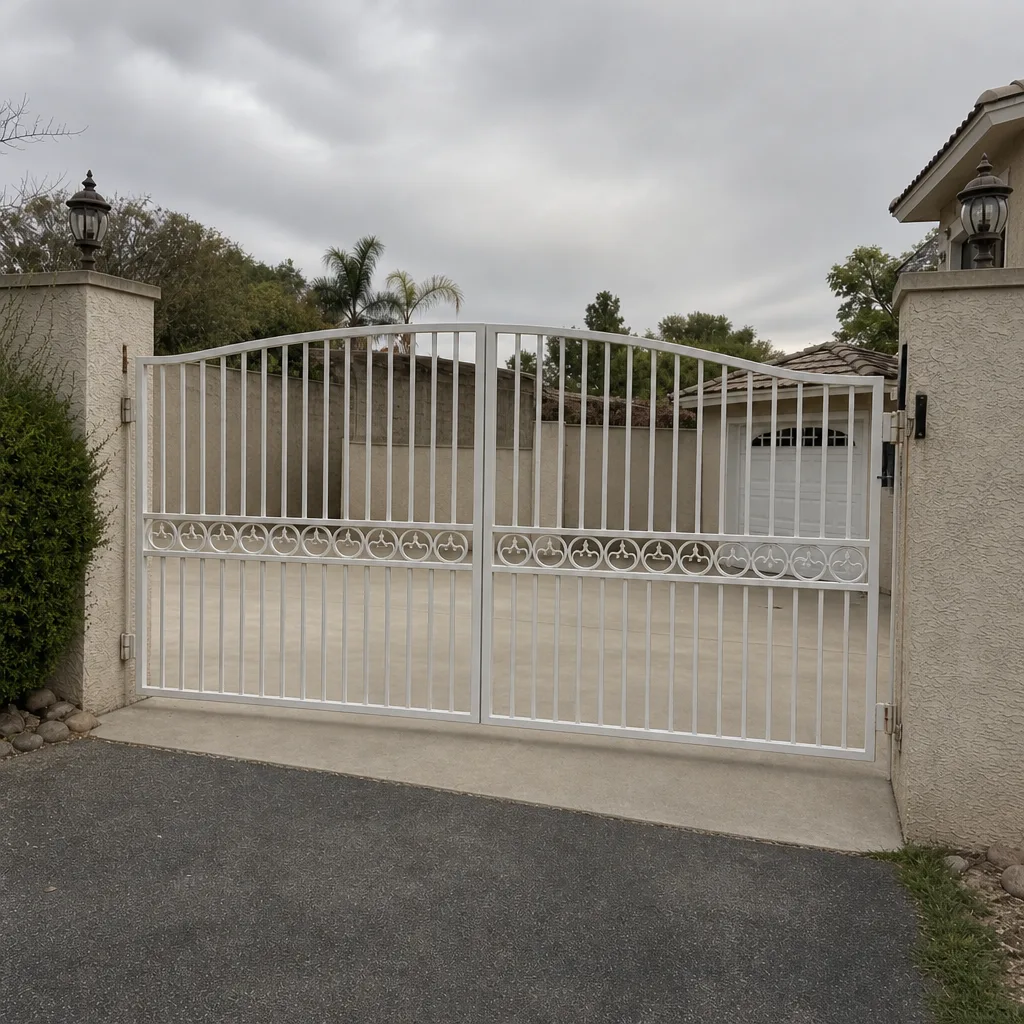 After
How Caliche Soil Stresses Summerlin Gate Posts
Caliche is the calcium-carbonate layer that sits under much of the Las Vegas Valley, including most of Summerlin. It behaves like a soft concrete shelf in some spots and a fractured, uneven plate in others. When a gate post footing is set into caliche, the soil doesn’t drain the way a homeowner might expect. Water from irrigation or a rare monsoon collects against the calcium layer and either pools or channels sideways.
That water does two things. First, it softens the caliche around the footing, letting the post settle unevenly. Second, when the soil dries out – and it dries out fast in Summerlin – it contracts and pulls away from the concrete collar, leaving a gap that the next cycle fills with water again. Over a few seasons the post tilts. On a swing gate, a post tilt of even half an inch throws the operator arm out of alignment, and the gate starts dragging, stalling, or reversing mid-travel.
What this looks like at the gate
- A swing gate that closes fully but binds on the last foot of travel
- An operator that reverses when it hits the stop, as if something is in the way
- A visible gap between the post base and the surrounding concrete or pavers
- Chain or arm tension that changes with the season
- A slide gate that jumps or rumbles at one specific point along the track
Fixing the automation without addressing the post is a common mistake. We’ve seen three motor replacements on the same gate in Summerlin where the actual cause was a footing that had shifted an inch. The motor was working correctly the whole time; the gate it was pushing had moved. Before you commit to a new motor, have the post checked for plumb and the footing checked for the tell-tale gap.
Why Summerlin Heat Ages Control Boards Faster
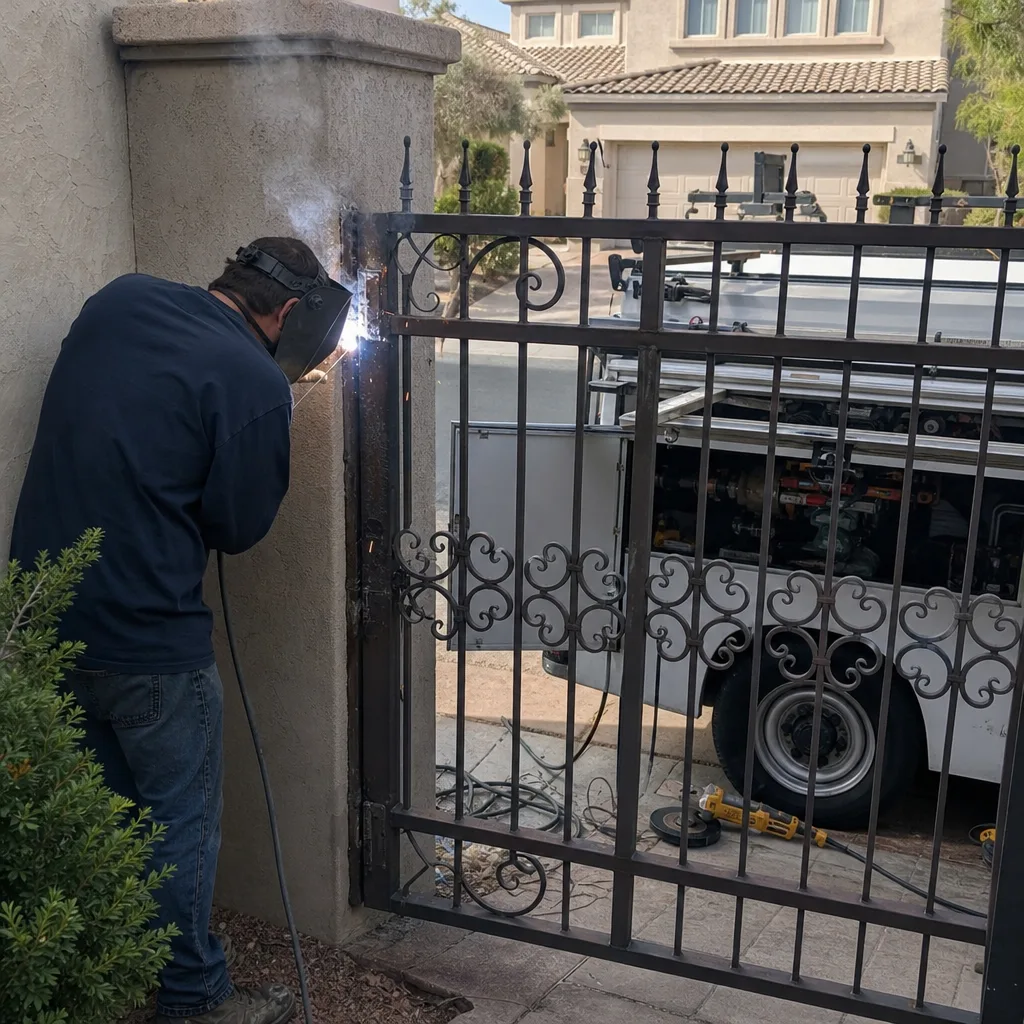
Control boards are rated for a range of operating temperatures, and most manufacturers test their boards to a reasonable ambient ceiling. The problem is that ambient temperature and the temperature inside an enclosure baking in the sun are not the same number. A control box mounted on a south-facing wall in Summerlin can run 20 to 30 degrees hotter than the air around it in July. That shortens capacitor life, cracks solder joints, and dries out the conformal coating that protects the board from dust.
In practical terms, we see expected lifespan on control boards in Summerlin running at roughly half to two-thirds of the manufacturer’s stated timeline. A board rated for ten years in a laboratory may fail at five or six here. That changes the repair-versus-replace math.
Reading the evidence on a control board
- Look for bulging or leaking capacitors. On a Summerlin gate, a bulged cap on a five-year-old board is heat damage, not a fluke.
- Check for a dark or browned area on the board near the power supply. That’s a hot spot.
- Look at the conformal coating. If it’s chalky or flaking, the board has been baking.
- Read any fault codes the operator stored before you reset anything. FAAC and BFT boards usually keep a short fault history.
- Check whether the enclosure has a sun shield, a vent, or a cooling fan. A board that failed with no thermal protection in Summerlin will fail the same way on the fifth replacement.
If the board shows heat damage, the fix is the board plus a shield or relocation. If it shows a single failed component and the coating is intact, repair is often the better call. When we assess a control board, we photograph it before and after and note the temperatures and conditions we found, so there’s a record to compare against next time.
Buried Wiring Splices and Irrigation Overspray
Low-voltage control wiring for a gate operator runs from the house or a control box out to the gate and then to the safety devices. Where that wire is spliced underground, the splice has to be waterproof. In Summerlin, it also has to survive year after year of irrigation overspray drifting onto the same patch of ground. Most fail at the splice long before they fail at the wire itself.
The classic symptom is intermittent behavior. The gate works in the morning and stops in the afternoon. The safety photo-eye trips on its own. The keypad works when it’s dry and doesn’t when the sprinklers have just run. Every one of those points at a corroded splice.
How to tell an underground splice is the problem
- Faults that appear only after irrigation, or only in the morning when the ground is wet
- A photo-eye that reports a blockage with nothing in the way
- Voltage at the operator that reads low or fluctuates when tested
- Corrosion or green copper visible where the wire exits the ground at a post
- A safety device that resets itself after the operator has been off for a while
Chasing an intermittent fault is one of the most expensive things a homeowner can do without documentation, because the technician is starting from scratch each visit. A proper fix means finding the splice, testing it, replacing it with a waterproof connection in a protected location, and writing down where it is. An operator like a Linear or a Viking might get the blame for a bad splice three feet away, and there are gates in Summerlin where the wrong part was replaced for this reason.
Limit Switches Set for the Wrong Climate
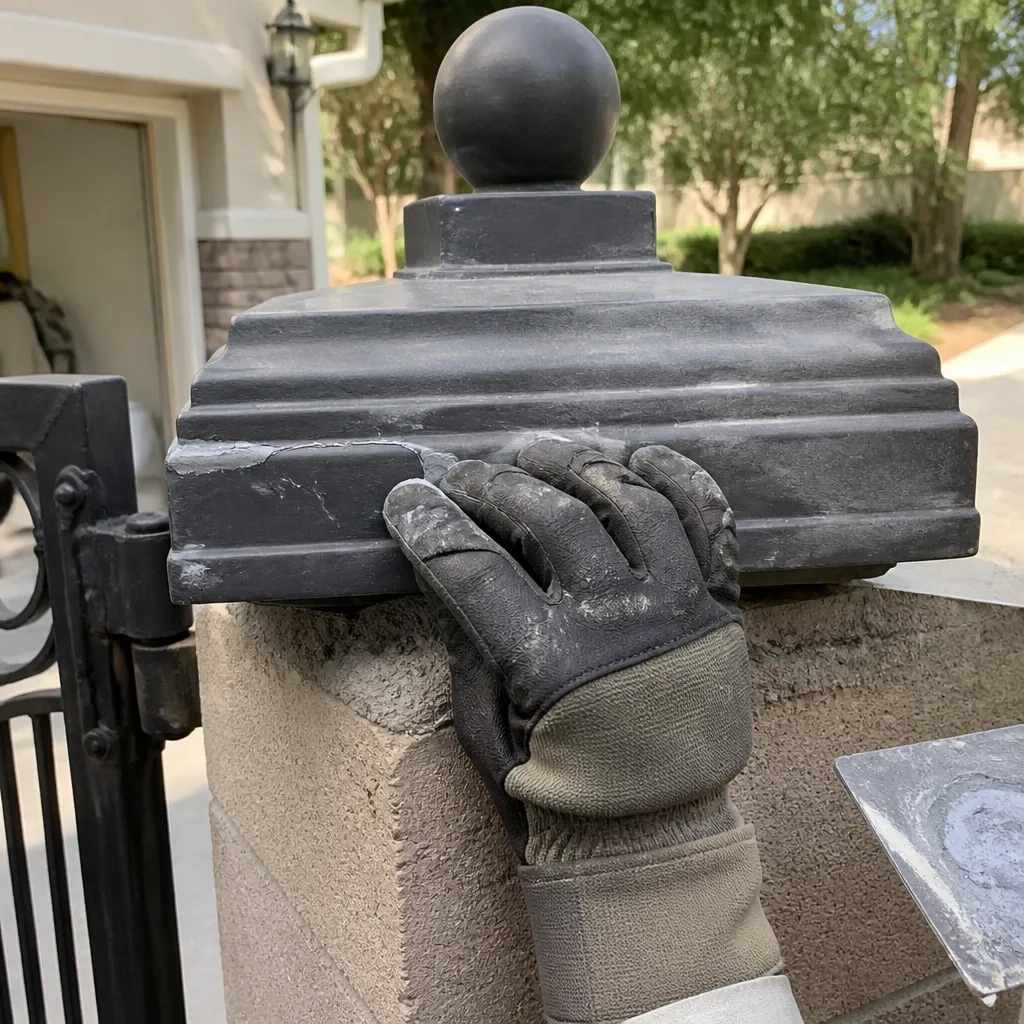
A limit switch tells the operator where the gate stops. When it’s set correctly, the gate travels to its full open or closed position and stops cleanly. When it’s set wrong, the motor keeps pushing against a hard stop, the gate reverses at random, or the operator reports a fault every few cycles.
Here’s the Summerlin problem. Gates installed by crews who came up in colder climates often have limits set conservatively to allow for metal contraction in winter. In Summerlin, the metal expands in July. A limit set for a Michigan winter means the gate stops short in the heat, and the operator keeps trying to complete travel. That means strain on the motor, gear, and arm every cycle. Multiply that across a summer and you wear the motor out years early.
The correct way to set a limit switch
- Run the gate to its open position under manual control and record where it naturally stops.
- Set the open limit just past that point, allowing for thermal expansion at the hottest part of the day.
- Repeat for the close position, checking the gate isn’t binding on the ground or track.
- Cycle the gate ten times and watch for reversing or hard stops.
- Write down the limit-switch readings so the next technician has a baseline.
The number is the point. We photograph the limit position and note the reading, so the next person knows what “correct” looked like in Summerlin at a specific temperature. Without that record, every technician starts from zero and adjusts by eye, and the gate drifts back out of tolerance in a season or two.
Gate Types by Summerlin Neighborhood and Their Failure Modes
Summerlin is not one neighborhood; the gate you own and how it fails depends a lot on where you live. Here’s what we see in different parts of the community.
Iron slide gates
Common around The Ridges and parts of Red Rock Country Club, iron slide gates are heavy and they need a straight, level track. In Summerlin’s caliche, the track is where trouble starts: a slight shift in the footing under the track beams causes the gate to bind and the operator to strain. The failure mode to watch is a gate that runs smoothly for the first two-thirds of travel and then hesitates. By the time you notice, the operator has been working hard for months.
Iron swing gates
Iron swing gates are everywhere in Summerlin, and they’re the ones most sensitive to post tilt. When a post shifts in caliche, the operator arm geometry goes out of alignment and the gate binds at the end of travel. Swing gates also suffer more from limit-switch drift, because the arm travels through a longer arc. On a heavy iron swing gate, an operator from FAAC or BFT set correctly will last, but a limit set wrong will wear it out in a few summers.
Aluminum swing gates
Aluminum gates are lighter and generally hold up better against the post movement, because there’s less weight to bind. Their weakness is UV and heat on the operator instead. An aluminum gate with a small operator on a sun-facing wall is the classic Summerlin control-board failure pattern. If your aluminum swing gate has been through one motor replacement and is heading for a second, look at the enclosure before you replace the motor again. A shield is cheaper than a board.
Any of these gates, if it needs repair beyond the cosmetic, belongs in the hands of someone who knows the automation. For a full look at what that service covers, see Gate Repair in Summerlin. If the gate is new or needs replacing, the conversation starts at Gate Installation in Summerlin. And if the motor itself is the problem, the detail lives at Gate Motor & Opener in Summerlin.
The Documentation to Request After Any Repair
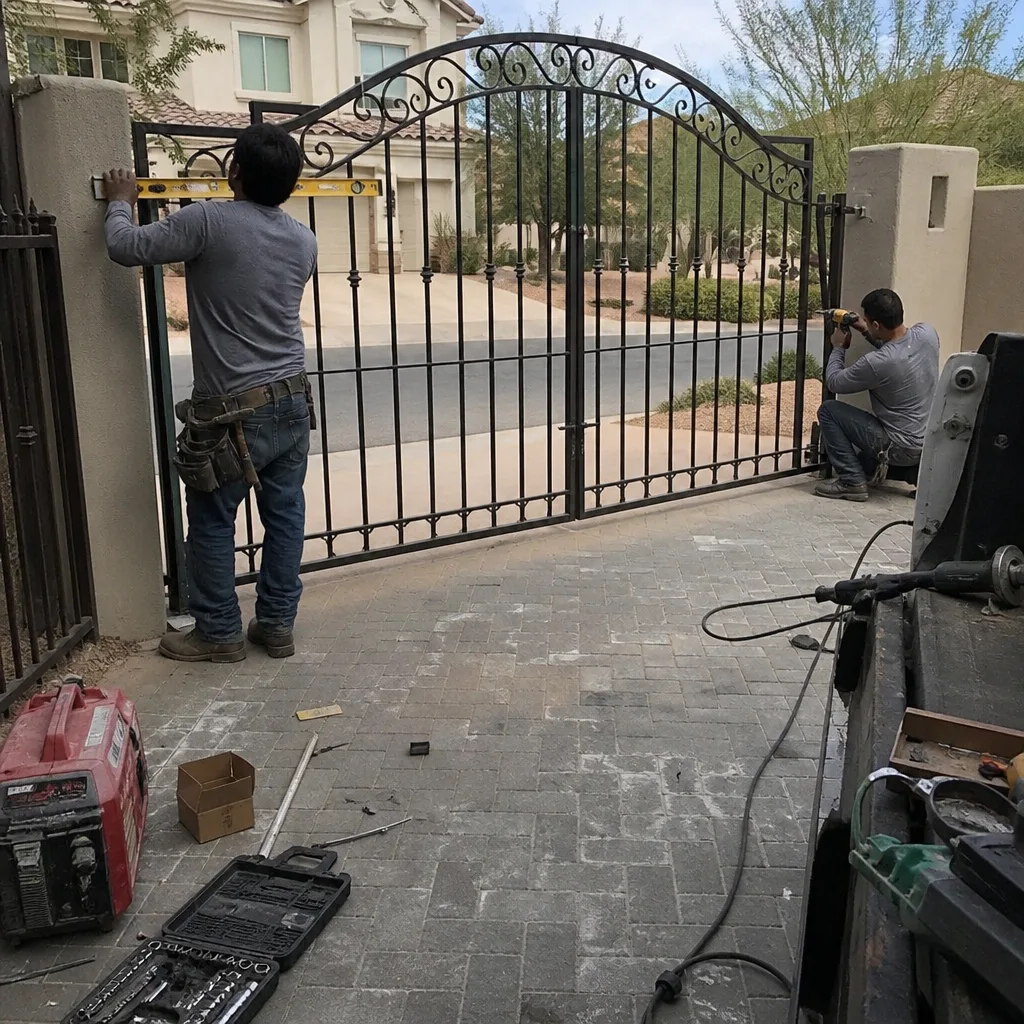
This is the single most useful habit you can carry into owning a gate in Summerlin. If you get a repair done, ask for the record. Not a verbal summary on the driveway, a written document you can hand to the next technician. The first technician who worked on your gate may not be the one who works on it in three years, and without a record, the second one starts from zero and bills you to rediscover everything.
What to request
- A wiring diagram showing how the operator, safety devices, and controls are connected, if any wiring was touched
- Limit-switch readings for open and close positions, with the temperature at the time they were set
- A photo of drive-chain tension, or arm angle on a swing gate
- The part number and brand of any component replaced (FAAC board, BFT receiver, Linear transmitter, Viking keypad, and so on)
- A photo of the splice location if buried wiring was repaired
- The date and a description of what was found, not just what was done
Under The Haven Standard, every visit includes a documented photo record of what was found, what was set, and what was installed, left with the homeowner and filed in the job record. That’s not a sales flourish; it’s the difference between a technician who fixes your gate and one who solves it. The photo record is what turned a frustrating repeat visit pattern into a solvable one on our commercial access-control work, and it works the same way on a residential gate in Summerlin.
How to Read a Written Repair Scope vs a Verbal Estimate
A verbal estimate is a number spoken on your driveway. A written scope is a document. The difference matters more than most homeowners realize, because a verbal estimate can omit anything that wasn’t obvious at the moment, and if a hidden problem turns up mid-repair, the number changes.
What a good written scope includes
- The specific diagnosis, not just the symptom (“operator reverses on close” is a symptom, “limit switch set 12 degrees past travel” is a diagnosis)
- The parts by name and number, with the brand
- Labor broken out from parts
- The price, all in, with nothing conditional
- What’s not included, if anything
- The warranty terms in writing (our 365-Day Done Right Promise covers every repair)
What verbal estimates frequently leave out
- The buried splice, because it wasn’t visible and the technician didn’t test for it
- Post footing work, because the gate was moving but nobody checked why
- Photo-eye realignment, because it wasn’t part of the original complaint
- The second visit needed to confirm the fix held
- Sales tax, shop supplies, or a trip charge
- The cost of a control board if the motor diagnosis turns out to be wrong
The rule: don’t let work begin until the price is written and in your hand. Under Haven Standard Clause 1, that’s what we do on every job, without exception. If a company can’t hand you a written price before starting, ask why. If the answer is complicated, that’s your answer.
Repair or Replace: Reading the Evidence
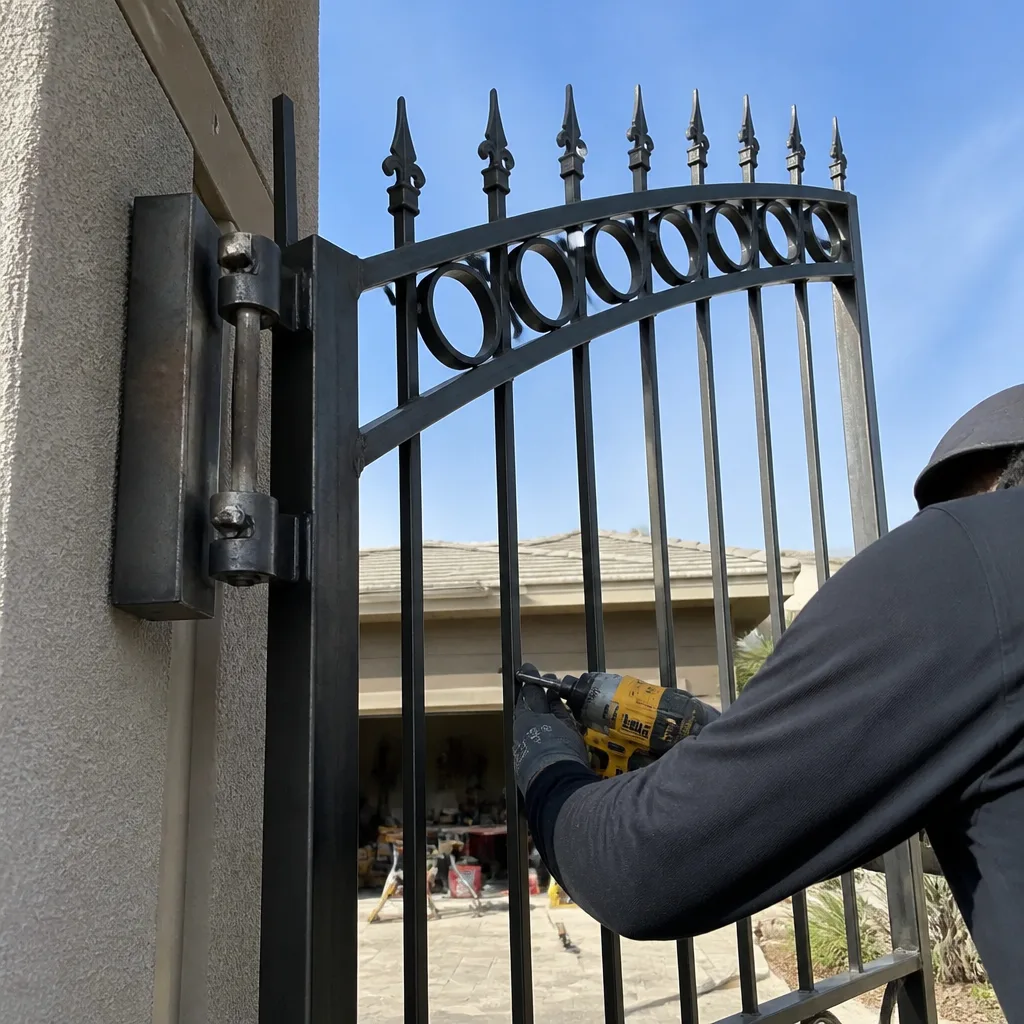
The decision isn’t a gut call; it’s a reading of the evidence. Here’s how we approach it in Summerlin.
Lean toward repair when
- The gate structure is sound and the posts are plumb
- The failed component is one part on an otherwise healthy operator
- The operator is on an automation brand we can still get parts for: FAAC, BFT, Linear, Viking, LiftMaster, Ghost Controls, DoorKing, Elite, and Mighty Mule are all brands we service
- The control board shows a single failure and the conformal coating is intact
- The original installation was documented well enough to confirm the rest of the system is correct
Lean toward replacement when
- The board shows heat damage and there’s no sun protection, so a new board will fail the same way
- The post has shifted and the footings need rebuilding regardless
- The gate is heavier than the operator was ever rated for
- The operator is no longer supported by the manufacturer and the parts are unavailable
- Repeated repairs on the same component have added up to the cost of a new operator
The most common mistake in this decision isn’t choosing wrong; it’s choosing without evidence. If someone is recommending a full replacement and you don’t have a photo record and a written diagnosis in front of you, get one before you commit. A second opinion is free on any written estimate from another company, and it’s worth having.
Common Mistakes to Avoid
- Replacing a motor without checking the post. A tilted post fights the motor every cycle, and the new motor will fail the same way the old one did. Have the post checked for plumb first.
- Ignoring an intermittent fault because it “fixed itself.” In Summerlin, an intermittent fault is usually a corroded buried splice, and it gets more expensive the longer you wait.
- Accepting a verbal estimate on a job with any hidden conditions. The driveway, caliche, and buried wiring are exactly where surprises live.
- Skipping the sun shield on a south- or west-facing control box. Without it, a new board on a Summerlin gate will fail again in a few summers.
- Resetting the operator without recording the fault history and limit-switch readings. You’ve thrown away the evidence that would have told you what went wrong.
- Letting a non-specialist replace a control board with a “compatible” part. On an FAAC or BFT board, a wrong receiver or a wrong rating usually shows up as a fault in a few weeks.
- Choosing a repair company based on a phone quote alone. The written scope is the only thing you can compare across estimates.
See the difference
BeforeAfter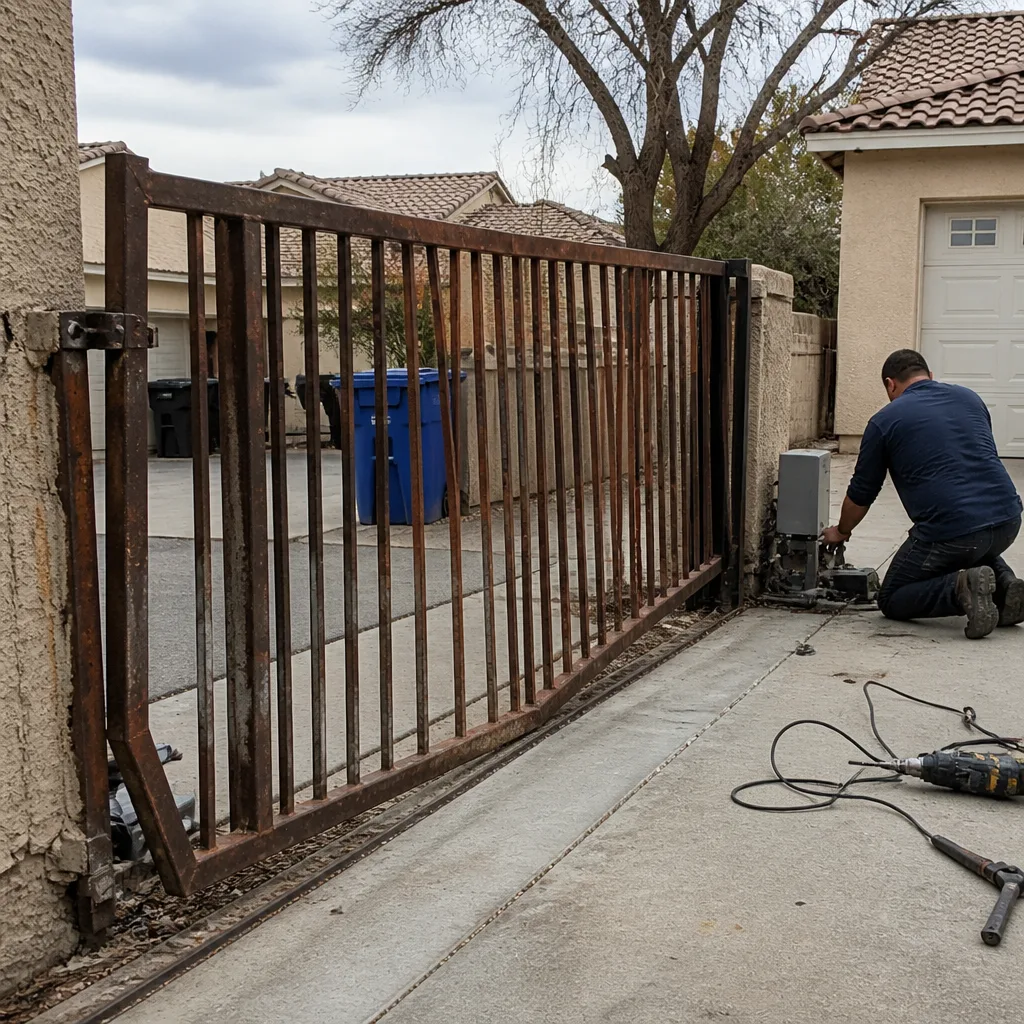 Before
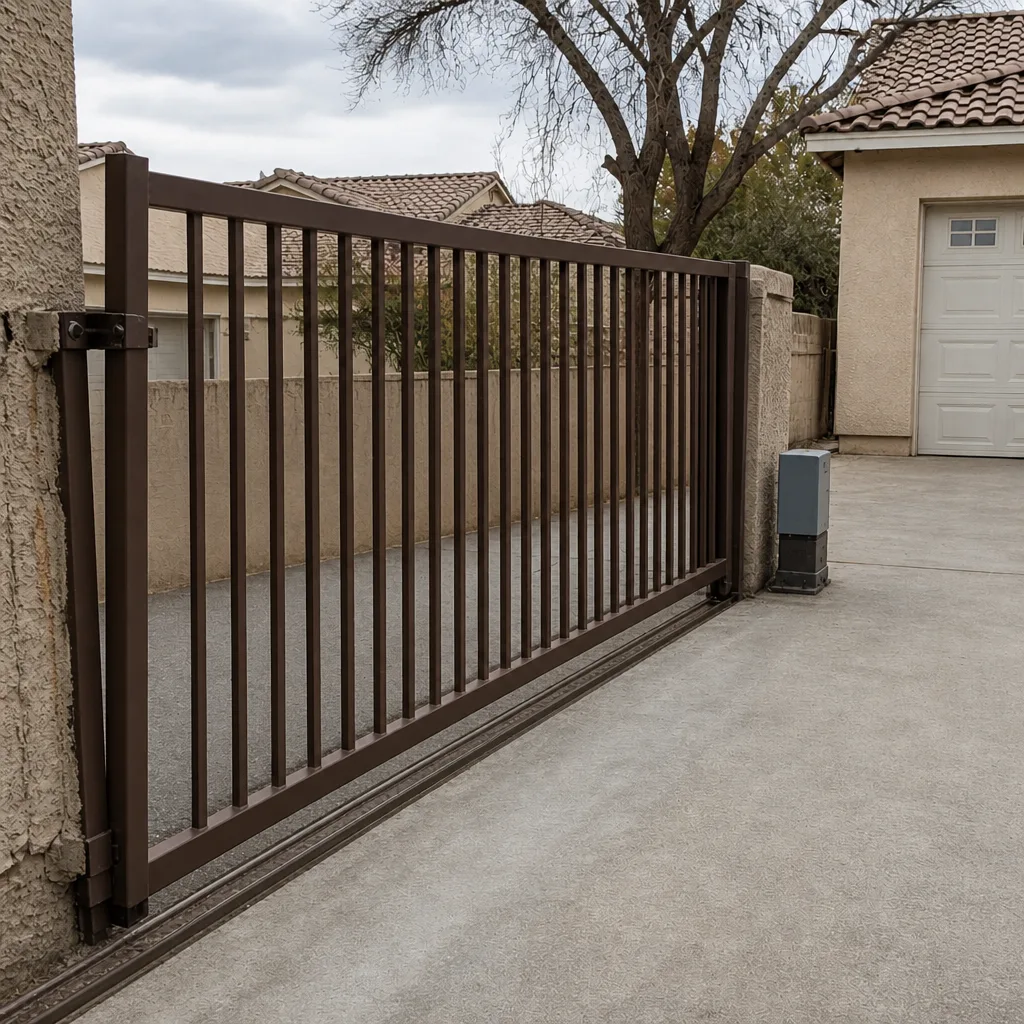 After
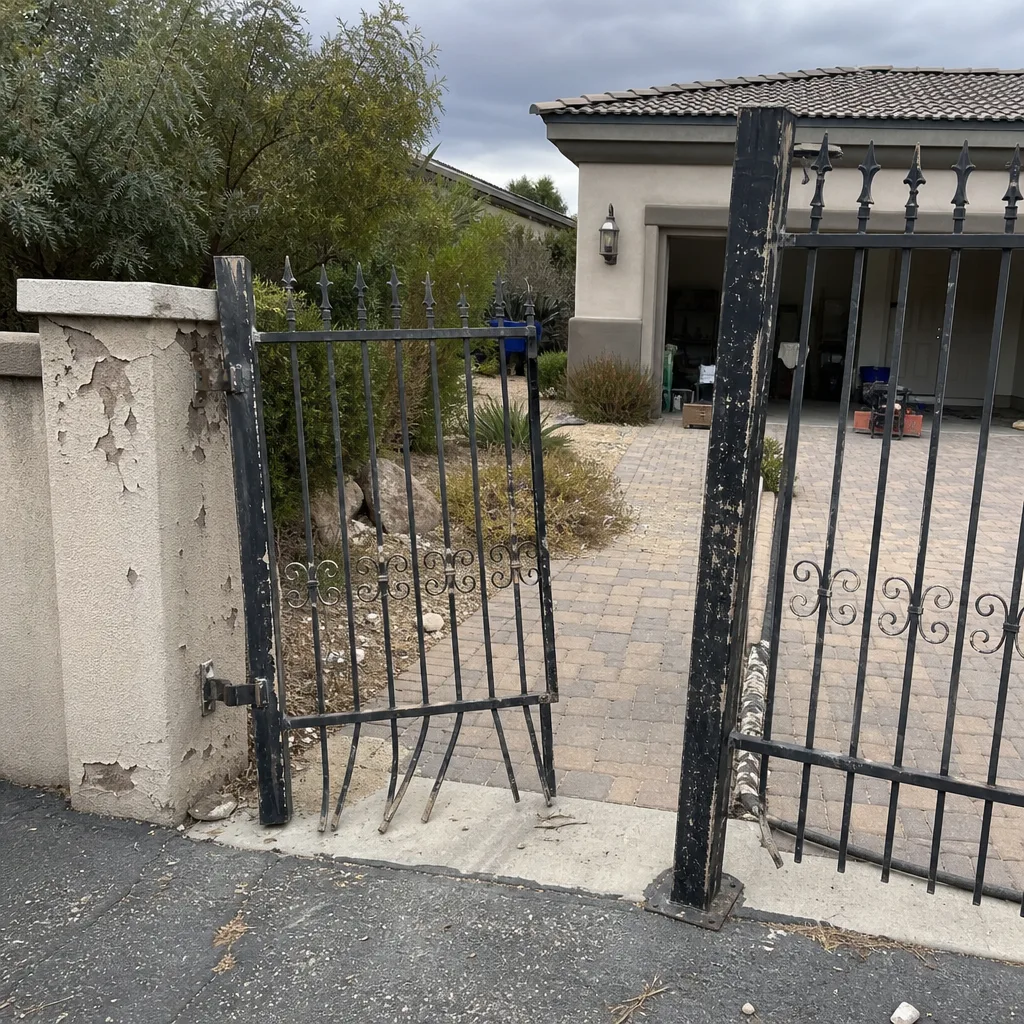 Before
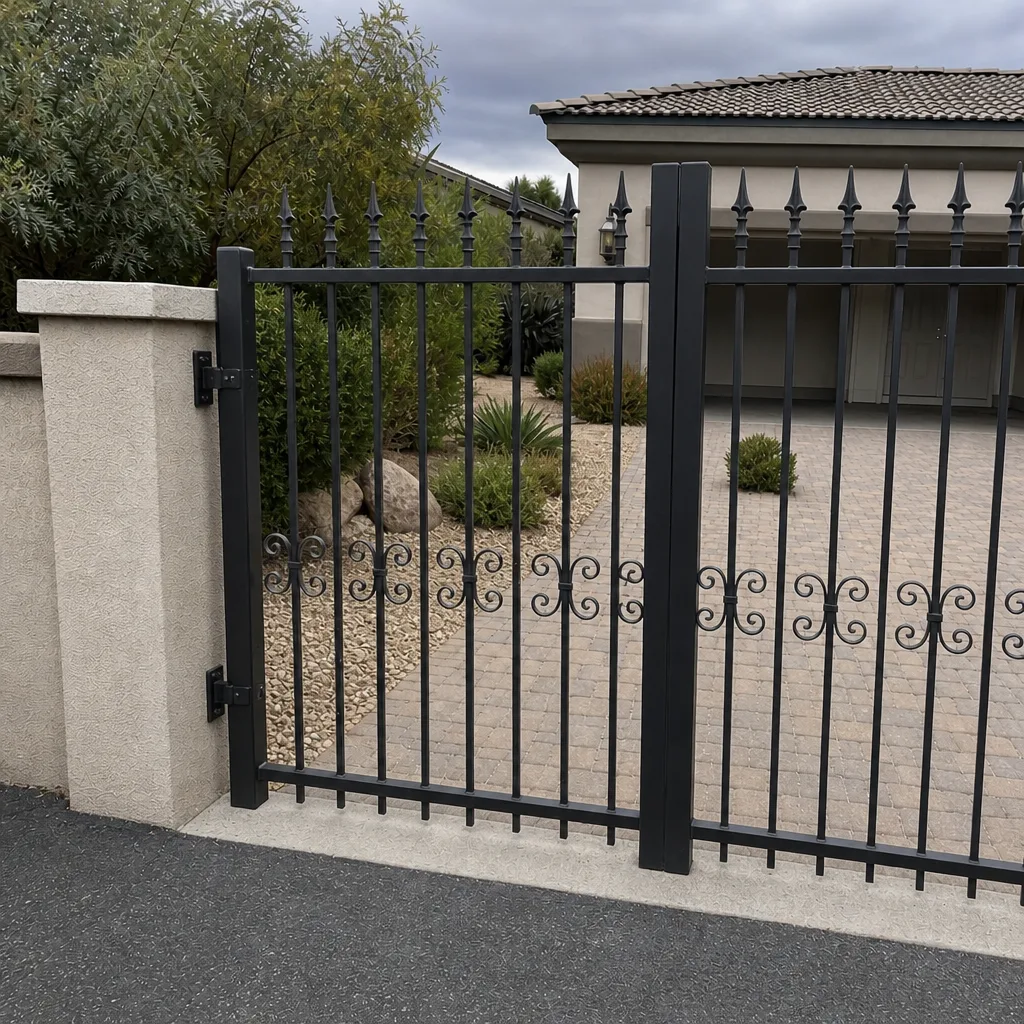 After
When to Call a Professional
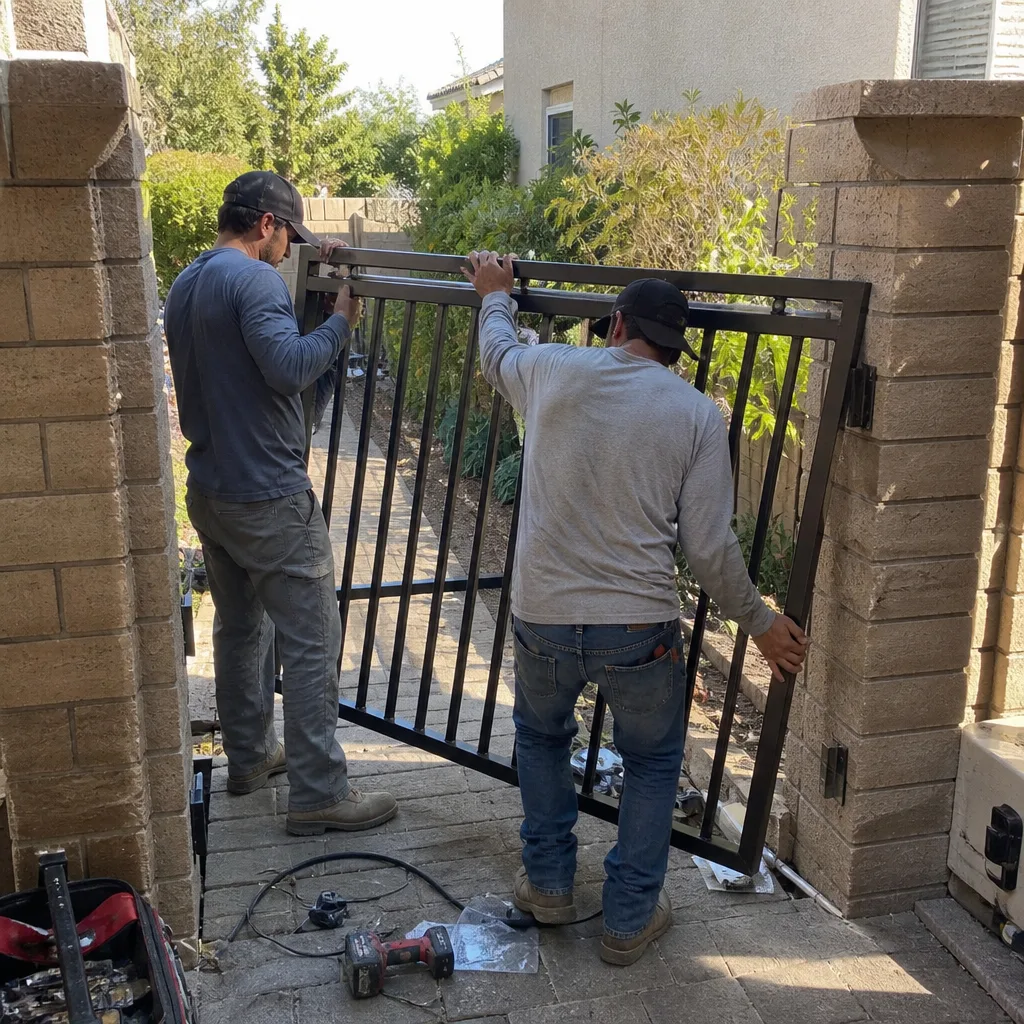
Some things on a gate are reasonable to check yourself: the physical clearances, whether the photo-eye is blocked, whether the gate is binding at the last foot. But several things on this list are genuinely dangerous, and those are the ones to hand off. Gate motors run on mains power, control boxes have live 120V components inside, and a poorly supported gate on a heavy iron slide can cause serious injury if the track or post fails while someone is working it. Don’t open the control box or touch the wiring. Don’t remove a post footing or dig around a splice. Don’t try to correct a limit switch on a heavy gate without an understanding of how the operator will behave if it hits a hard stop wrong.
What you can do is get an accurate description of what’s happening. Vance Gate Repair Summerlin offers free estimates in Summerlin; call (844) 797-2809 for a written price before anything begins. A live person answers, day or night.
Frequently Asked Questions
Most residential gate repairs in Summerlin run $180 to $650, with motor and control-board replacements between $450 and $1,100 depending on the brand. Post footing work and buried splice repairs are often the hidden variable. The written price you get before work starts is the number that matters; schedule a free estimate with us at (844) 797-2809.
That pattern points to a corroded buried splice, usually the one where the low-voltage control wiring was joined near the gate. Irrigation overspray and Summerlin heat work together to corrode the connection, and the fault clears as it dries. The diagnosis is straightforward once you’re looking for it, so get it checked before it becomes a bigger repair.
Look for a visible gap between the post base and the surrounding concrete or pavers, and check whether the gate binds at the very end of travel. Both are signs that caliche expansion and contraction have moved the footing. A plumb check and a look at the footing will confirm it. Call (844) 797-2809 for a free estimate on what it would take to correct.
Repair is often the right call when the board shows a single failed component and the protective coating is intact; replacement is usually the right call when the board shows heat damage and there’s no sun shield. In Summerlin, that second case is common. Get a written diagnosis with photos before deciding.
We service nine major automation brands, including FAAC, BFT, Linear, Viking, LiftMaster, Ghost Controls, DoorKing, Elite, and Mighty Mule. That means we work on the operator already on your property instead of steering you toward a replacement. Call (844) 797-2809 with the brand and model, if you have it.
Ask for the written record: the wiring diagram if wiring was touched, the limit-switch readings with the temperature, a photo of drive-chain tension or arm angle, and the part number and brand of anything replaced. Under The Haven Standard, we leave that record with you on every visit. If you have an estimate from another company, we’ll review it at no cost before you commit.
The Bottom Line
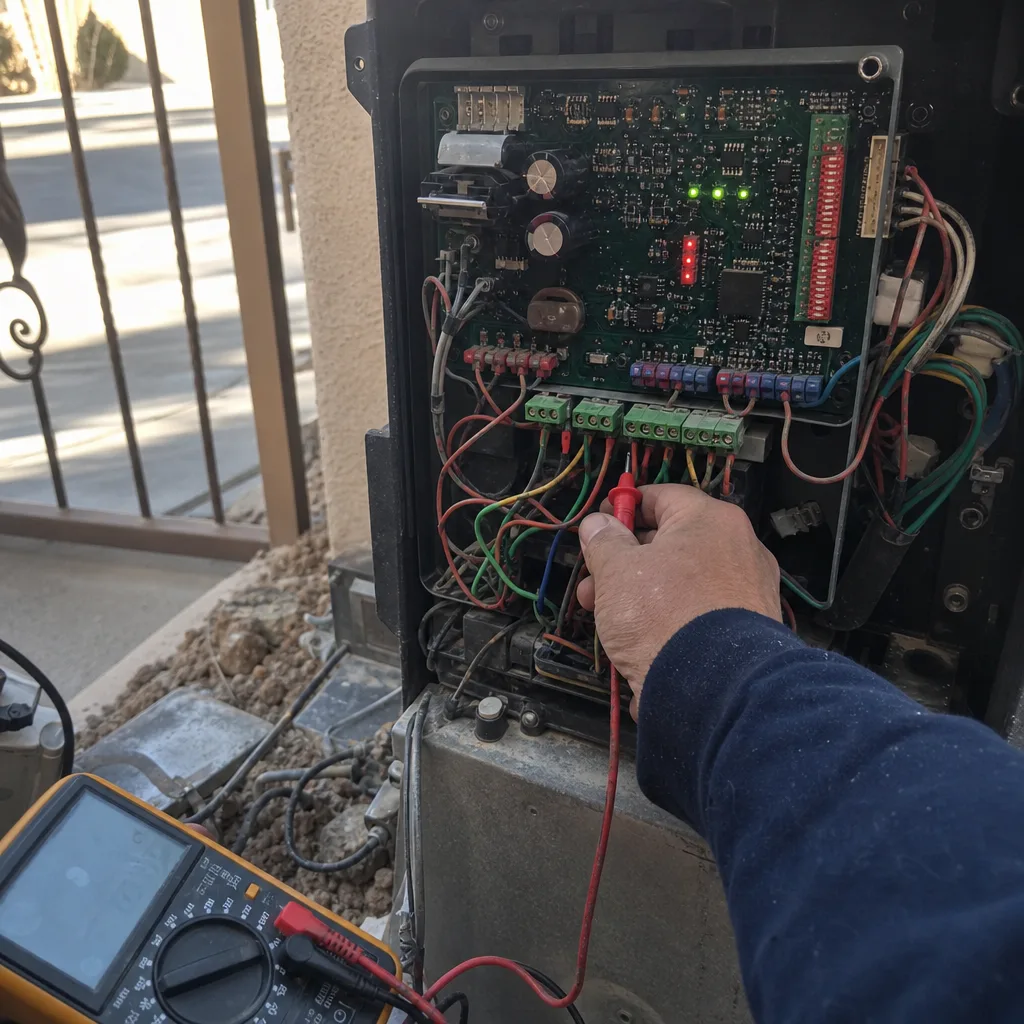
Gate failures in Summerlin follow a local pattern, and knowing that pattern is what saves you money. Caliche moves the posts; heat ages the boards faster than the manual promises; irrigation overspray eats the splices; and limits set for a colder climate quietly wear out operators that were otherwise fine. Every one of those problems has a specific fix and a specific record you should ask for afterward. When you’re ready to know exactly what’s going on with your gate, get a written scope and a written price before anyone picks up a tool. That’s the one habit that makes the rest of this guide work.
For a free estimate with a written price in hand before the work starts, call Vance Gate Repair Summerlin at (844) 797-2809. A live person answers 24 hours a day, seven days a week.
You can also start at the Vance Gate Repair Summerlin home page to see the full range of what we handle.
Written by the team at Vance Gate Repair Summerlin.