
Last updated November 17, 2026
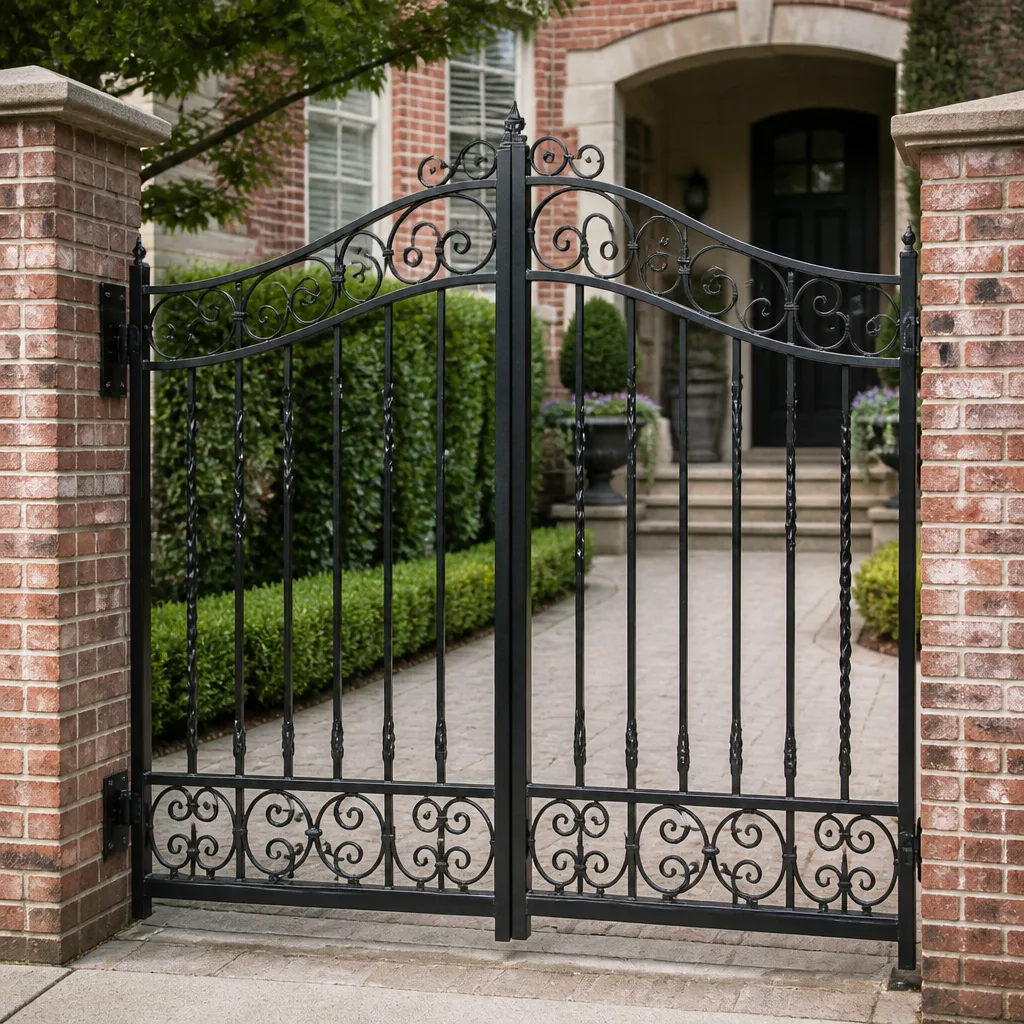 Wrought iron
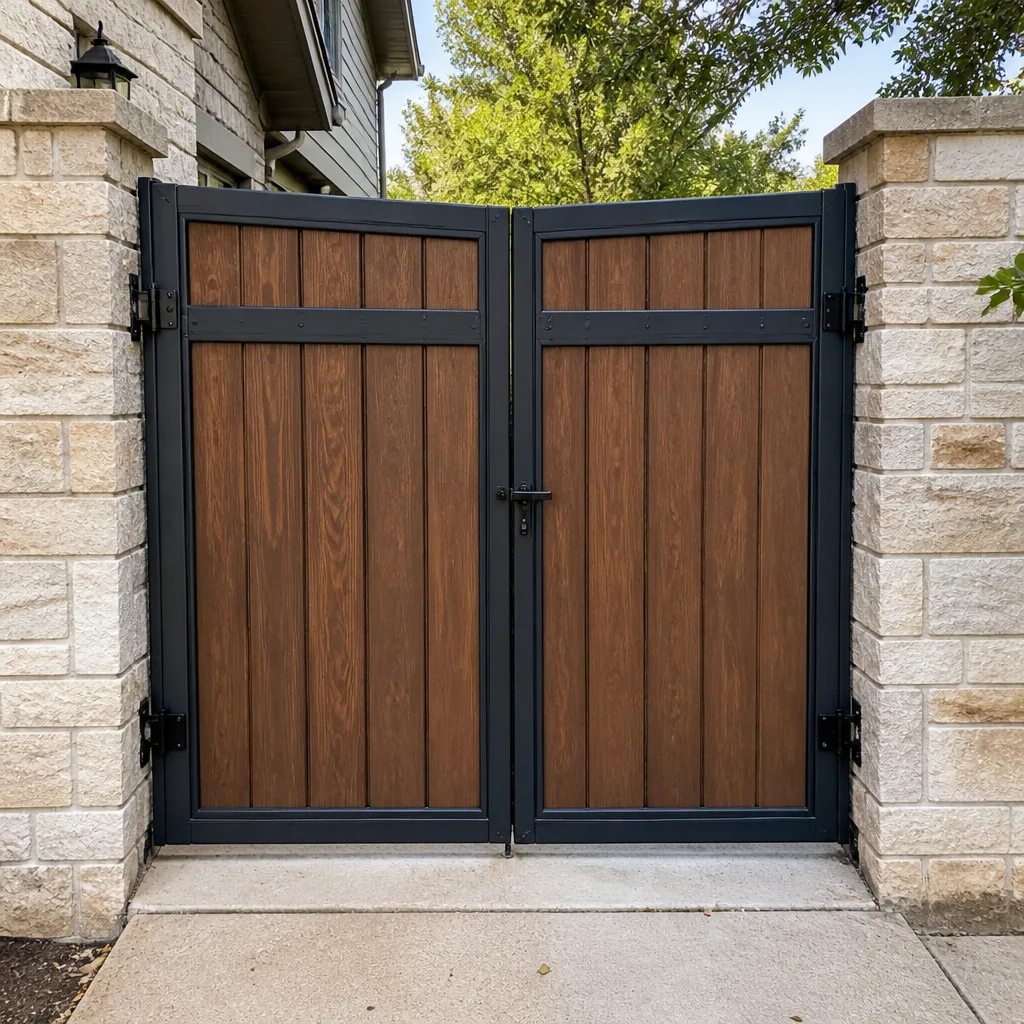 Wood & steel frame
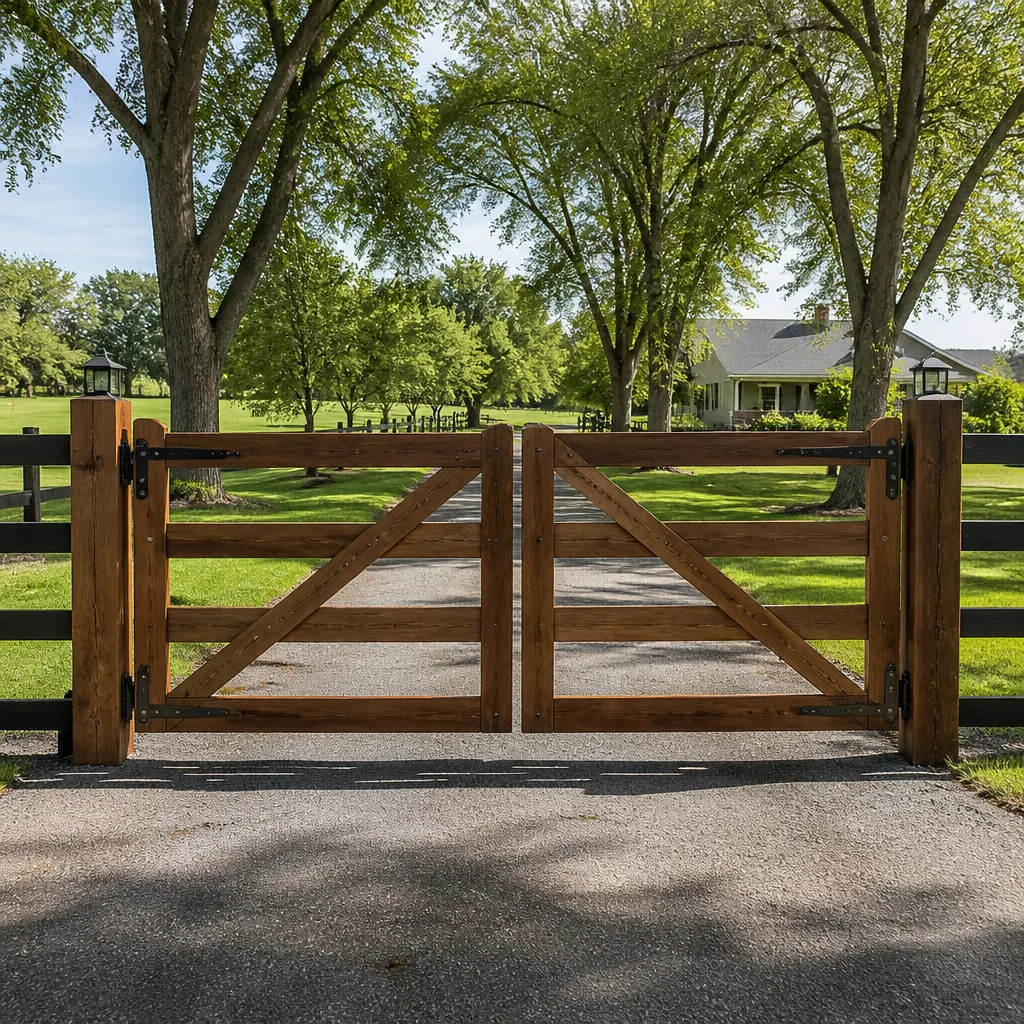 Farm & ranch
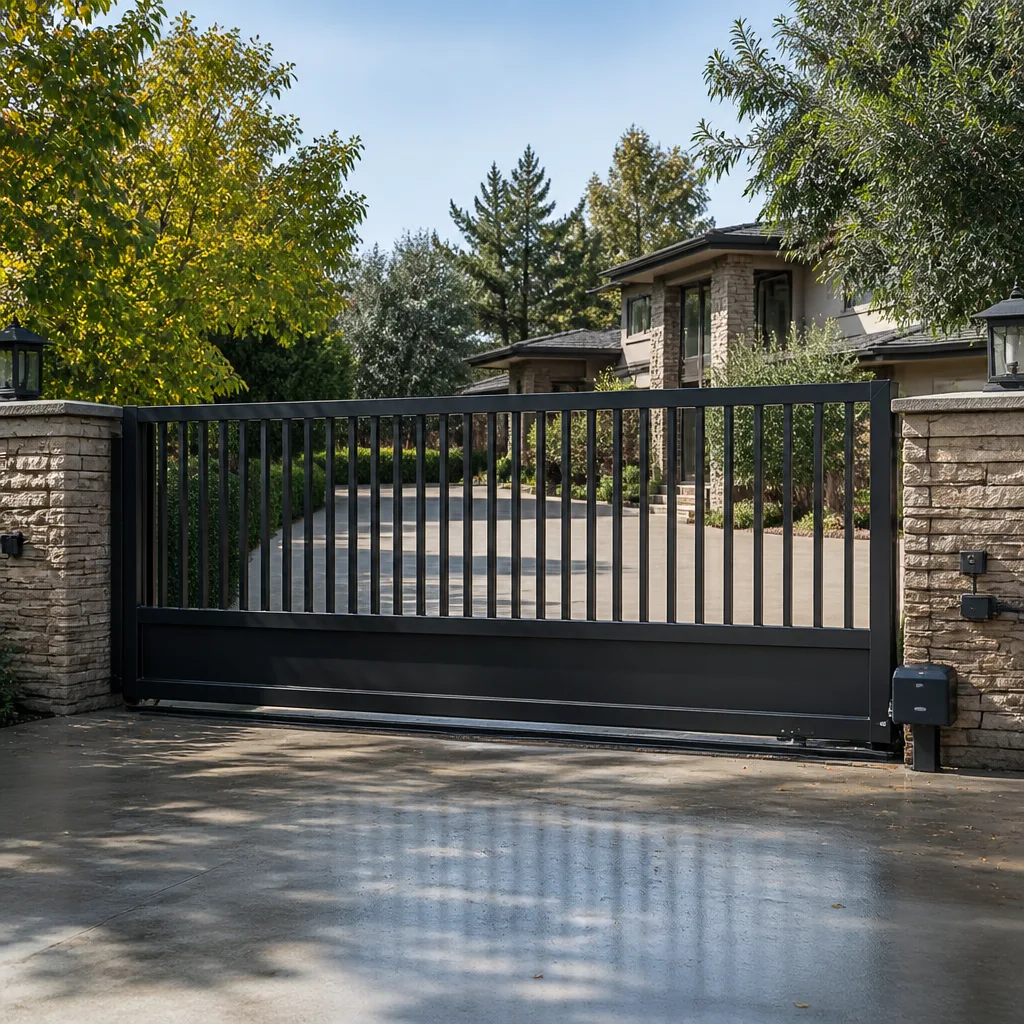 Sliding driveway gates
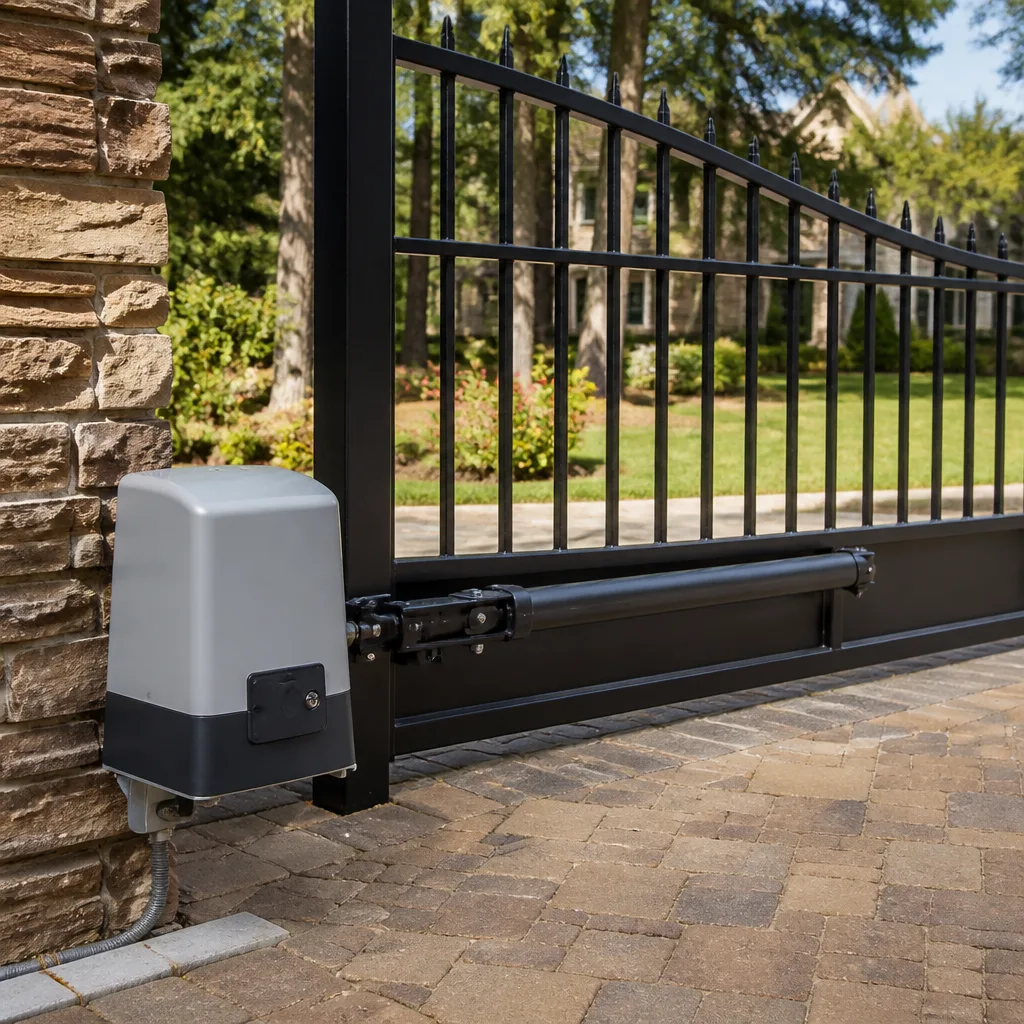 LiftMaster operators
Free on-site gate assessment - hinges, posts, and your LiftMaster or Nice gate operator checked before anything is quoted
The assessment is free and the quote is the invoice.
Get your free estimateDIY vs Professional Gate Installation: What’s Safe to Do Yourself
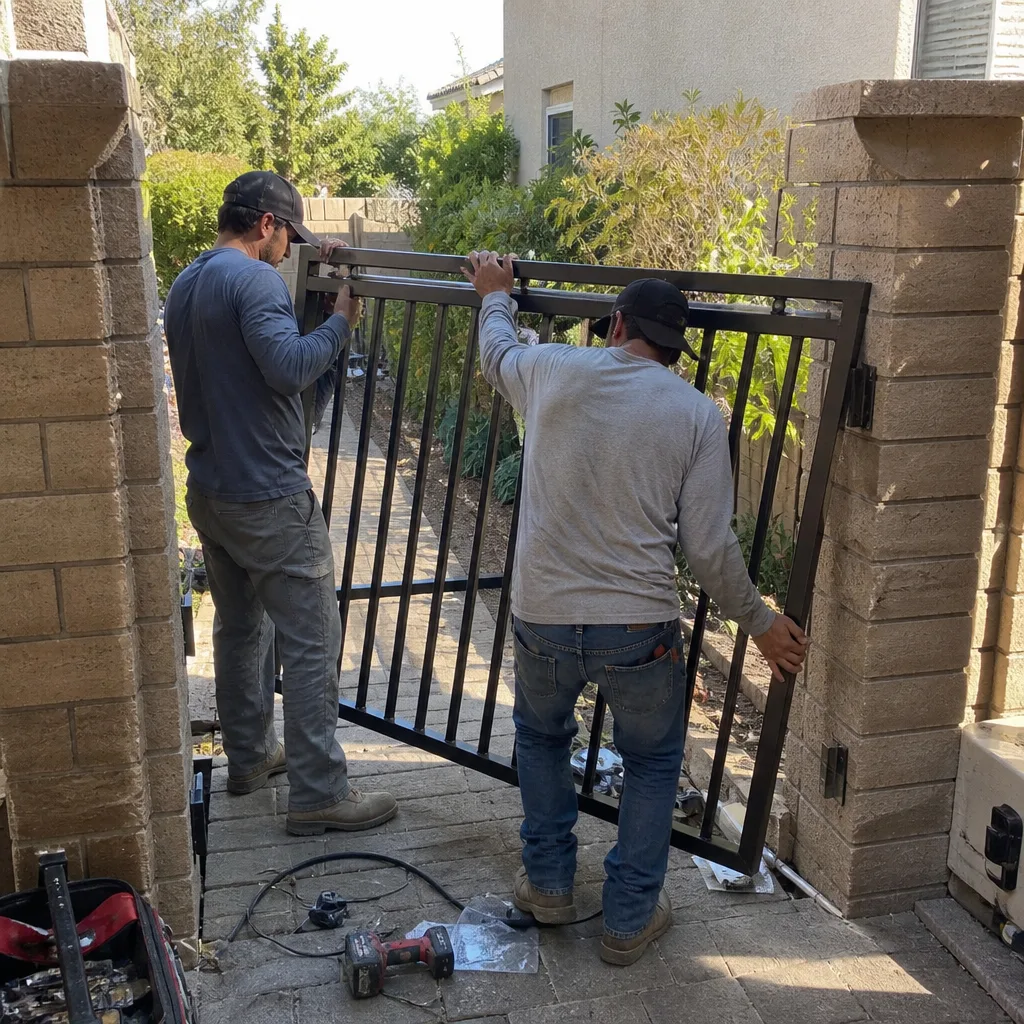
Here’s the part of gate installation that surprises people: a gate can be hung perfectly level, swing smoothly, and still cost you thousands at resale. When Summerlin HOAs audit architectural records during a home sale, they don’t just want to see that the gate works. They want the submittal package, the footing documentation, and proof the electrical work was done to code. A gate that looks right but lacks that paper trail can trigger a forced removal and a permit retrofit before closing. This guide isn’t about whether you’re handy enough to hang a gate. It’s about the load, voltage, and permit boundaries that determine whether a project belongs in your weekend or in a licensed installer’s scope of work.
Quick Answer
DIY gate installation is only realistically safe for low-voltage (solar or battery-powered) pedestrian gates under 150 lbs, on a property with no HOA architectural oversight and no permit requirement. Any driveway gate, any 120V-powered operator, any gate over 300 lbs gross, or any HOA-governed property in Summerlin should be installed by a licensed professional who can produce the permit, footing, and wiring documentation your HOA and future buyer will ask for.
Styles & brands we work with
- Wrought iron
- Wood & steel frame
- Farm & ranch
- Sliding driveway gates
- LiftMaster operators
Table of Contents
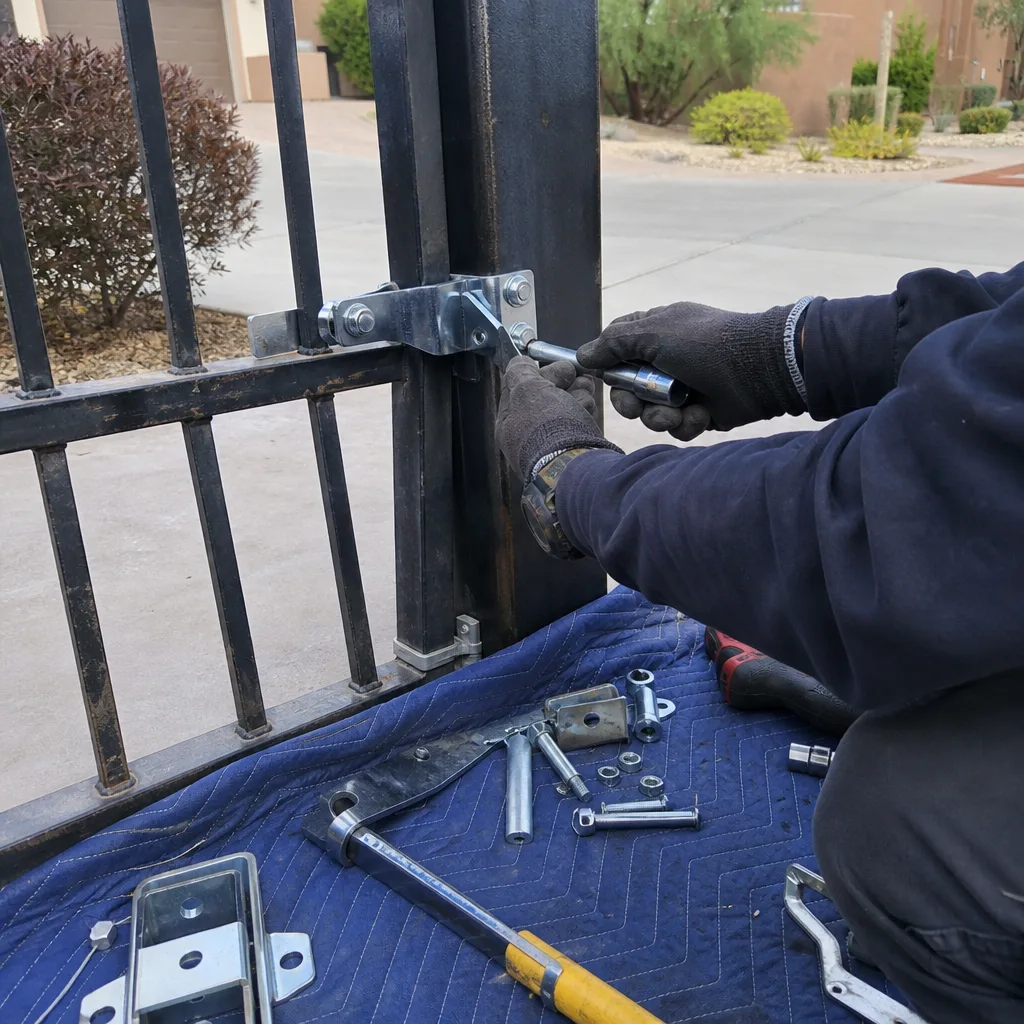
- The Three Automatic Disqualifiers for DIY Gate Installation
- What Summerlin HOA Architectural Committees Actually Require
- What a DIY Installer Cannot Legally Provide in Nevada
- The Documentation a Professional Install Produces – and Why It Has Value at Resale
- The Real Cost Comparison (Including the Hidden DIY Costs)
- What You Can Actually Do Yourself
- How to Tell Whether Your Gate Install Will Pass Inspection
- When to Call a Professional
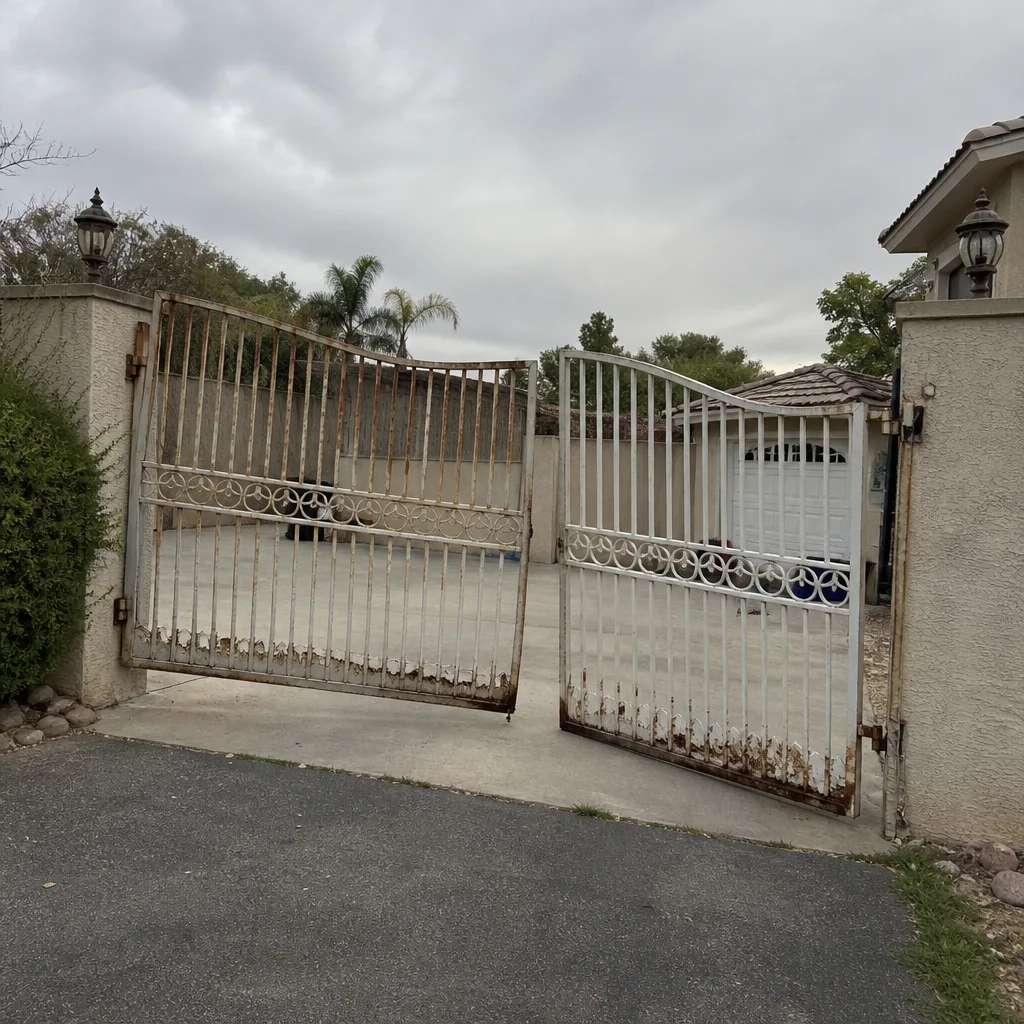 Before
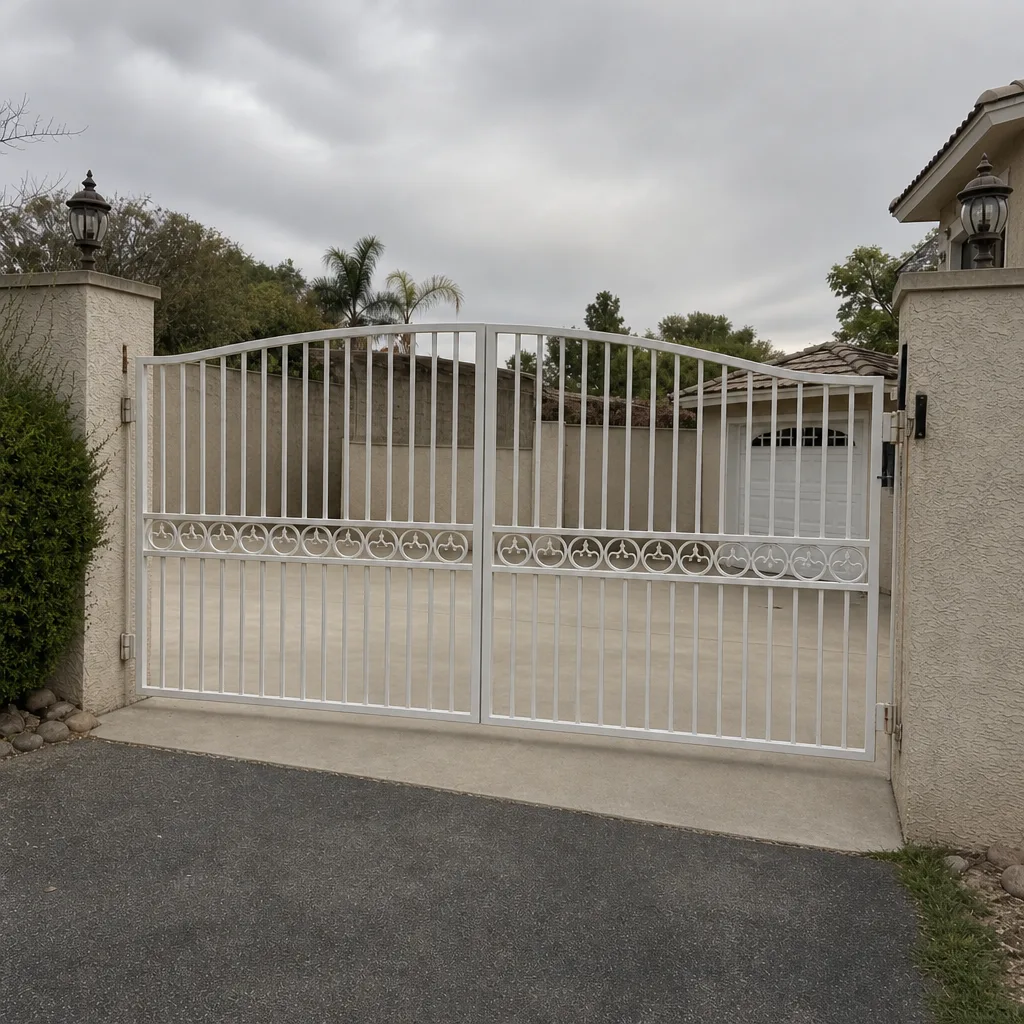 After
The Three Automatic Disqualifiers for DIY Gate Installation
Most homeowners who call us after a DIY attempt don’t get stuck because they lack skill. They get stuck because their project trips one of three thresholds that move it from “weekend project” to “regulated installation.” If any of these apply to your Summerlin property, the DIY window is closed regardless of how capable you are:
- The property is HOA-governed. Most of Summerlin’s master-planned communities require architectural review committee (ARC) approval before any gate is installed, replaced, or materially modified. Approval requires a submittal package, and close-out requires documentation. Without that paper trail, your gate is technically non-compliant no matter how well it was built.
- The gate requires 120V operator power. Any gate operator that plugs into line voltage or hard-wires to a circuit requires electrical work. In Nevada, that work must be performed by a licensed electrician and typically inspected. A homeowner can pull an owner-builder permit in some counties, but cannot self-certify the electrical work in the way insurance and resale disclosures expect.
- The gate exceeds 300 lbs gross weight. A weight threshold for a driveway gate is a serious safety issue. A 300+ lb gate failing at a hinge or falling off a track can injure someone. Above 300 lbs, footing depth, hinge load ratings, and operator torque all need to be engineered – not guessed.
Below 150 lbs gross, on a non-HOA property, running on a solar or battery operator like a Mighty Mule, a pedestrian gate is genuinely DIY-viable. The materials are lighter, the anchoring is more forgiving, and no line voltage is involved. Between 150 and 300 lbs is the gray zone – some homeowners manage it, but the margin for error in footing depth and hinge alignment tightens fast.
What Summerlin HOA Architectural Committees Actually Require
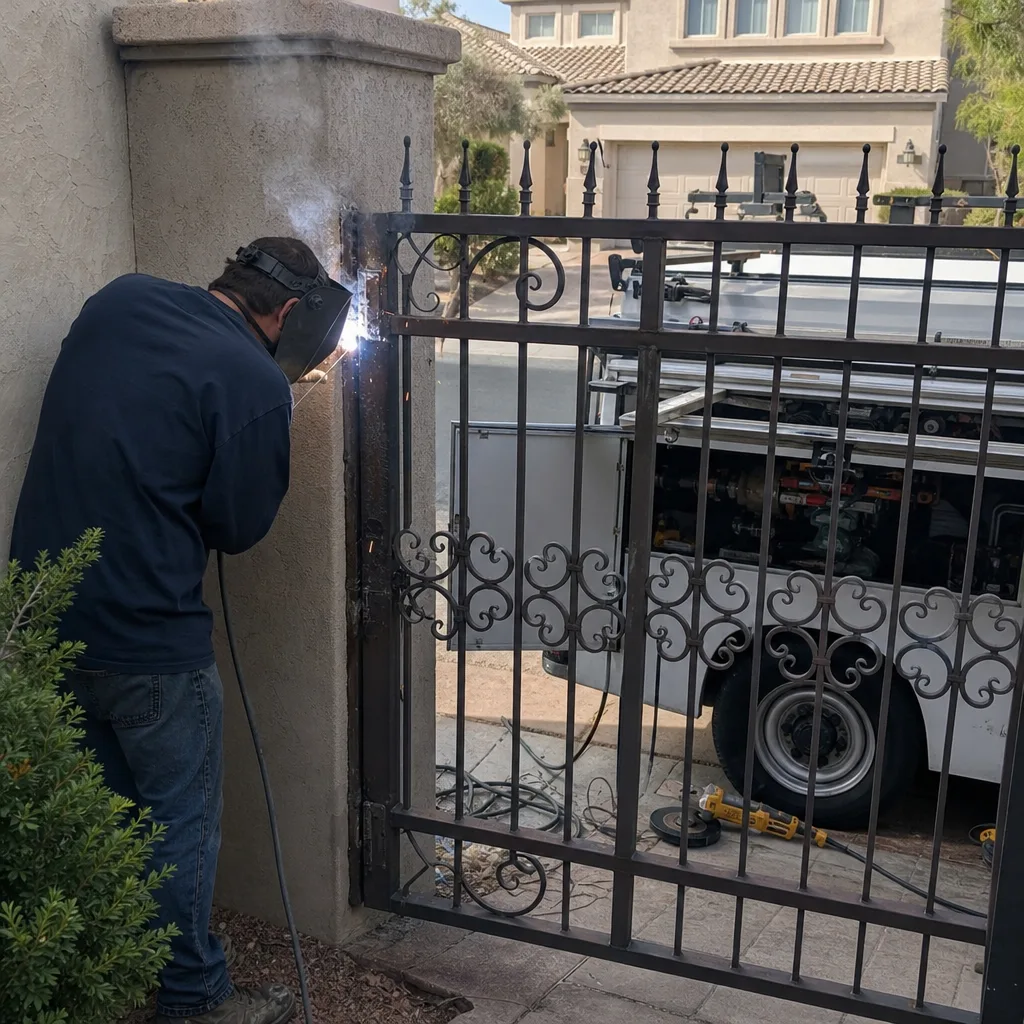
Summerlin HOA architectural review committees ask for more than a sketch. In our experience preparing submittals for clients across the master plan, a gate installation package typically includes:
- Site plan showing the exact location of the gate, the property line, and the setbacks from any walls or easements.
- Elevation drawing of the proposed gate – height, material, finish color, and the style matched to the existing architecture (or a close match approved in advance).
- Material specification including metal gauge, finish warranty, and hardware manufacturer.
- Operator specification with the brand, model, and voltage – LiftMaster, DoorKing, Elite, and similar brands are commonly accepted as long as the model is listed on the submittal.
- Contractor license and insurance certificate from the installing company.
- Post-installation close-out documentation submitted back to the HOA after the work is done: photos of the finished install, permit sign-off where required, and a written confirmation that the install matches the approved drawings.
Here’s the gap: a homeowner installing a gate themselves can fill out the first four items – the drawings, spec sheets, and operator details are all available. What a homeowner cannot self-produce is item five, the license and insurance certificate, or item six, the close-out documentation that a licensed trade is expected to submit. Summerlin HOAs that review submittals carefully (and most of the newer villages do) will flag that missing paperwork at close-out. That’s before the resale audit ever happens.
What a DIY Installer Cannot Legally Provide in Nevada
The most underrated consequence of a DIY gate installation is what happens to your insurance and your resale disclosure. A licensed electrician can document that electrical work was performed to code – a signed permit sign-off and an inspection record. A homeowner cannot. And in Nevada, that distinction has concrete downstream effects:
- Homeowner’s insurance. Some policies exclude coverage for injury or property damage caused by unpermitted or un-inspected electrical work on a property.
- Resale disclosure. Nevada requires sellers to disclose known material defects and unpermitted work. A gate operator wired without a permit is a disclosure item that has to be resolved before closing.
- Code enforcement. Clark County and the incorporated areas of Summerlin enforce electrical code on gate operator circuits. Work done without a permit can be required to be brought up to code, which means pulling the wire and redoing it.
- Warranty voiding. Many of the operator brands we service – LiftMaster and DoorKing among them – will refuse to honor a manufacturer warranty on an operator that was installed without following the published electrical requirements.
None of this requires anything unusual of the homeowner. It just means that a gate installation on a 120V circuit isn’t purely a handyman question. It crosses into licensed trade territory the moment power is involved.
The Documentation a Professional Install Produces – and Why It Has Value at Resale
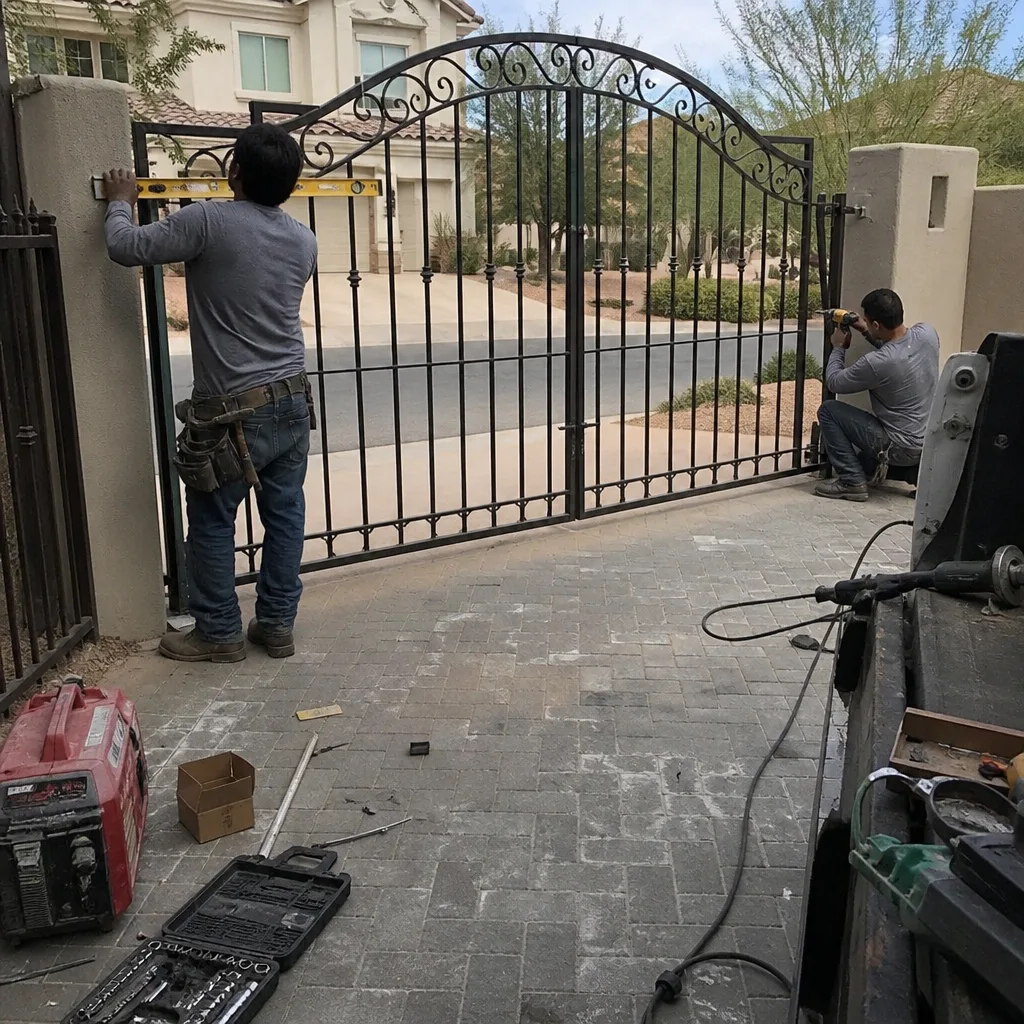
A professional gate installation should leave behind a written record, not just a functioning gate. At a minimum, that record includes:
- As-built wiring diagram – the actual circuit and control layout as installed, not the manufacturer’s generic schematic. This is the single most valuable document when a future technician has to diagnose a fault.
- Footing depth photograph – a photo showing the excavated footing with a tape measure or reference marker, taken before the concrete pour. Proof of footing depth is what protects you if the gate ever settles or leans.
- Operator programming sheet – the limit positions, force settings, and delay-to-close values exactly as the technician set them. Without this, any future adjustment starts from scratch.
- Photo record of every component installed, including the brand and model of operator, safety photo-eye (the infrared beam that stops the gate if something crosses its path), and any access control hardware.
We leave a documented photo record on every installation. Under the Haven Standard Clause 4, every visit – not only installs, but every repair call – includes a file of what was found, what was adjusted, and what was replaced. That record goes to the homeowner, and a copy is retained. For Summerlin homeowners, that file is the answer to the HOA’s close-out question and the resale disclosure question at the same time. It has real financial value even though it costs nothing at the time.
The Real Cost Comparison (Including the Hidden DIY Costs)
The headline numbers make DIY installation look like a clear win until you add the failure costs. Here’s what we see when homeowners compare full outcomes in Summerlin:
| Cost item | DIY installation | Professional installation |
|---|---|---|
| Materials (gate, hardware, operator) | $800-$2,400 depending on size and brand | $800-$2,400 (same materials) |
| Permits | Often skipped; $150-$500 if properly pulled | Included in quoted scope |
| Electrical work | Cannot be self-certified; $300-$800 for a licensed electrician post-hoc | Included in quoted scope, with permit sign-off |
| HOA submittal | Attempted; usually incomplete | Prepared and submitted as part of the install |
| HOA remediation (if non-compliant) | $400-$1,500 to bring to compliance | $0 – compliant by design |
| Professional retrofit (if install fails inspection) | $600-$2,000 | $0 |
| Resale disclosure resolution | Variable – often $1,000+ | $0 – documentation on file |
The pattern is consistent: a DIY install that goes smoothly saves money. A DIY install that trips any of the three disqualifiers above usually ends up costing more than the professional install would have, because the homeowner pays once for the attempt and again for the correction. If you have a written estimate from another company, we’ll review it and give a second opinion at no charge – bring the paperwork and we’ll tell you straight whether it covers what it needs to.
What You Can Actually Do Yourself
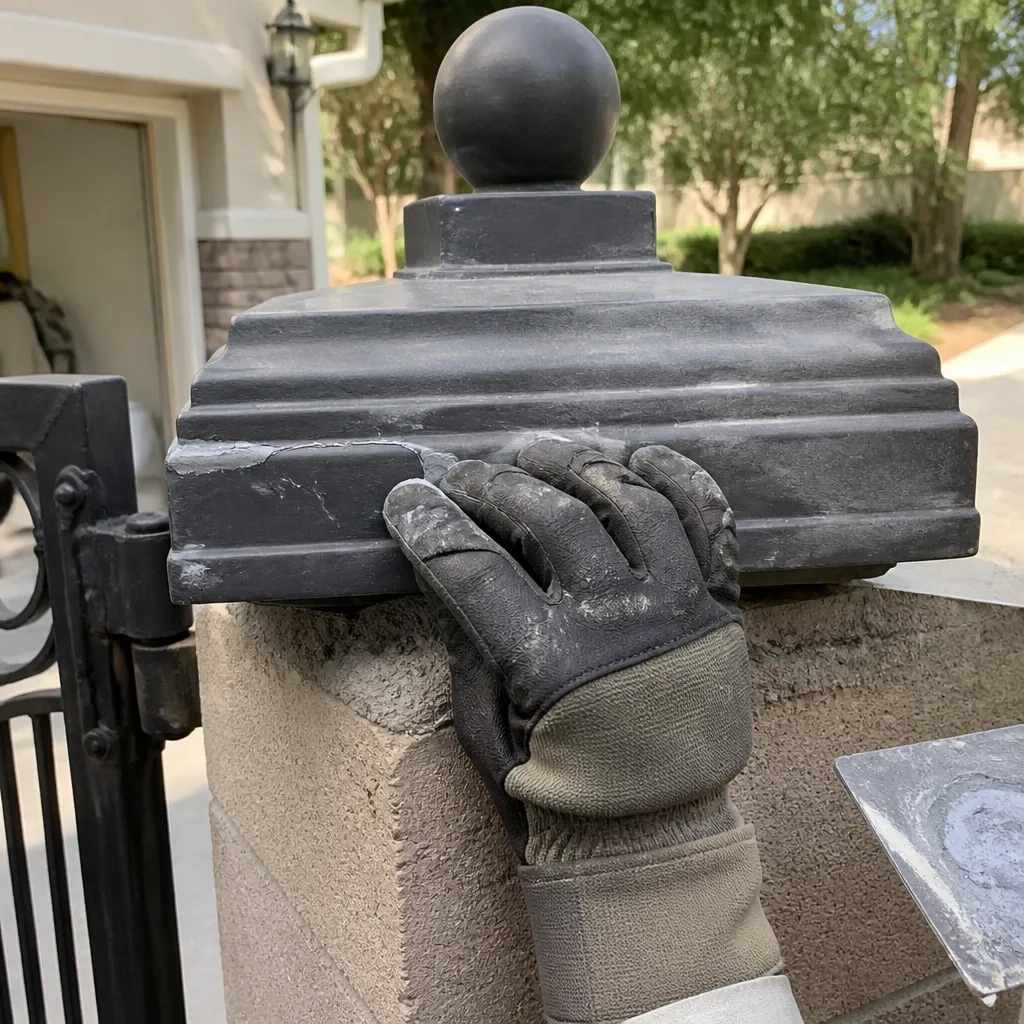
The good news: a substantial amount of gate work is genuinely DIY-viable in Summerlin. Here’s where the line sits in our experience:
- Safe to DIY: Painting and refinishing a metal gate; tightening and replacing hinges; replacing a gate latch; adjusting a photo-eye that’s been knocked out of alignment on a battery operator; replacing batteries in a solar operator; clearing debris from a track.
- Possible with care: Hanging a lightweight pedestrian gate (under 150 lbs) on a property with no HOA oversight; installing a solar operator on an existing gate where no line voltage is involved; replacing a small section of picket or lath damage.
- Not DIY-viable: Any driveway gate install; any 120V operator wiring; any gate over 300 lbs; anything requiring a permit or HOA submittal; any safety photo-eye or safety edge work on a powered gate (this is a life-safety system, not a convenience feature).
The photo-eye deserves a special note. This is the infrared beam that stops a moving gate if a person or pet crosses the path. It’s the single most important safety device on any automated gate, and a misaligned or bypassed photo-eye is how serious injuries happen. If your photo-eye has tripped, we’d rather you call than adjust it yourself. That’s not the place to learn.
How to Tell Whether Your Gate Install Will Pass Inspection
Before you commit to any installation plan, run through this checklist. If you answer “yes” to any item, you’re outside the DIY window:
- Is the property inside a Summerlin master-plan village with an architectural review committee? (Most of the newer villages are.)
- Does the gate design require 120V line power, or does it connect to household electrical?
- Will the total gross weight of the leaf and hardware exceed 300 lbs?
- Is there any line-voltage or control wiring that needs to be run underground between the house and the gate?
- Does the gate have a required safety system (photo-eye, safety edge, loop detector) that needs to be wired and tested?
- Is the gate operator brand one where a manufacturer warranty will be voided if the install wasn’t done by a licensed trade? (LiftMaster and DoorKing are among the common models where this matters.)
- Are you planning to sell the property in the next five to seven years? If yes, the close-out documentation question is going to come back up.
Any single “yes” pushes the project into professional scope. All “no” answers, and you’re in the genuinely DIY-viable window.
Common Mistakes to Avoid
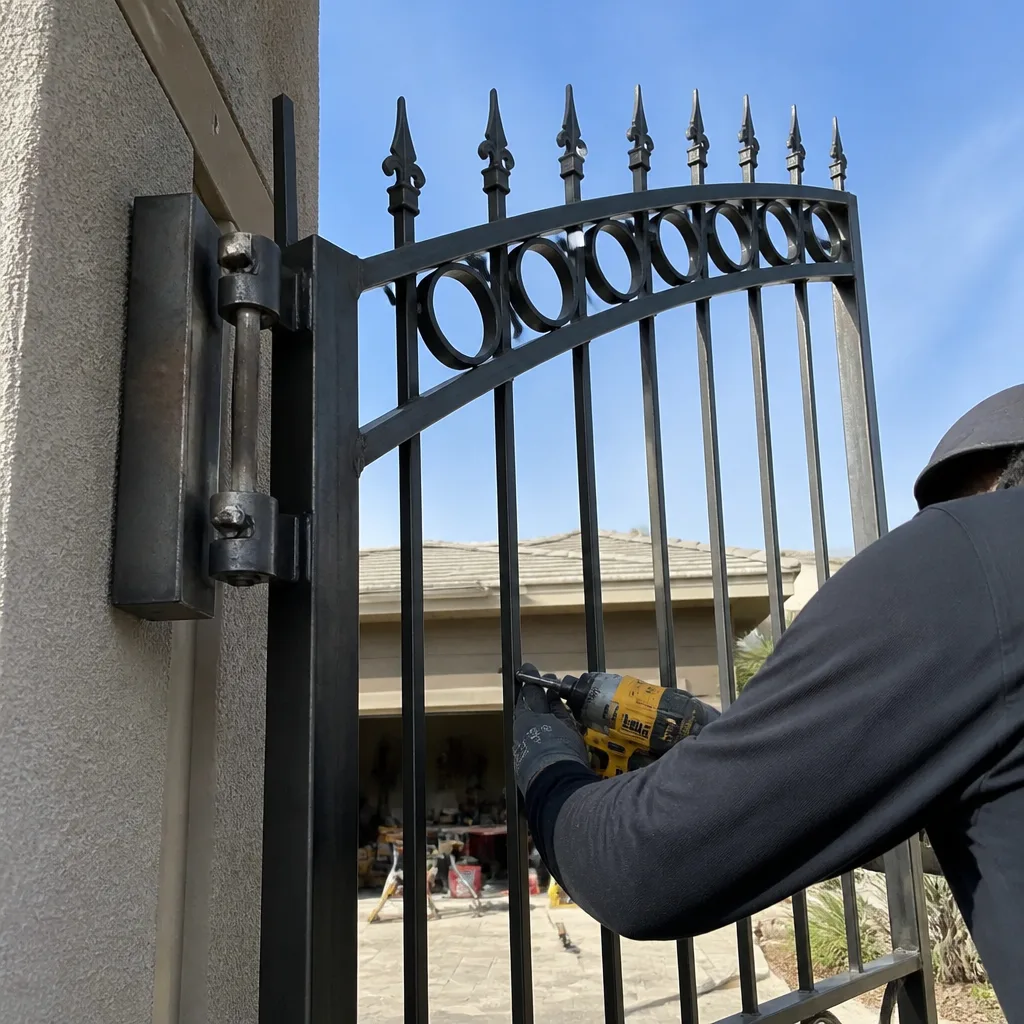
- Skipping the HOA submittal step entirely. Many Summerlin homeowners assume that because the gate was already there when they bought the house, replacing it doesn’t count as “new work.” Most HOAs treat gate replacement as a modification and require approval.
- Setting the operator’s limit switch by ear. A gate that sounds like it’s opening fine may be running against hard stops – which will eventually burn out the motor. The limit needs to be set by travel measurement, not by listening.
- Running the power wire without conduit. In Summerlin soils, direct-burial wire is exposed to heat and moisture cycling that shortens its life. Code requires conduit for a reason.
- Bypassing the photo-eye to make the gate “just open.” We’ve seen this more than once on homeowner-installed gates. It’s the number-one reason we’d recommend an immediate professional call.
- Anchoring footing to a paver base rather than a slab. The gate footing needs to bear into solid ground under the concrete, not into the pavers. In Summerlin’s caliche-heavy soil, that’s less forgiving than it sounds.
- Choosing an operator without checking the vertical. A LiftMaster that’s perfect for a 6-foot gate is the wrong call on a 9-foot gate. Match the operator to the leaf, not the other way around.
- Not keeping the estimate and install photos. When the HOA or a future buyer asks for the documentation, having it filed is the difference between a smooth transaction and a $1,000 remediation bill.
See the difference
BeforeAfter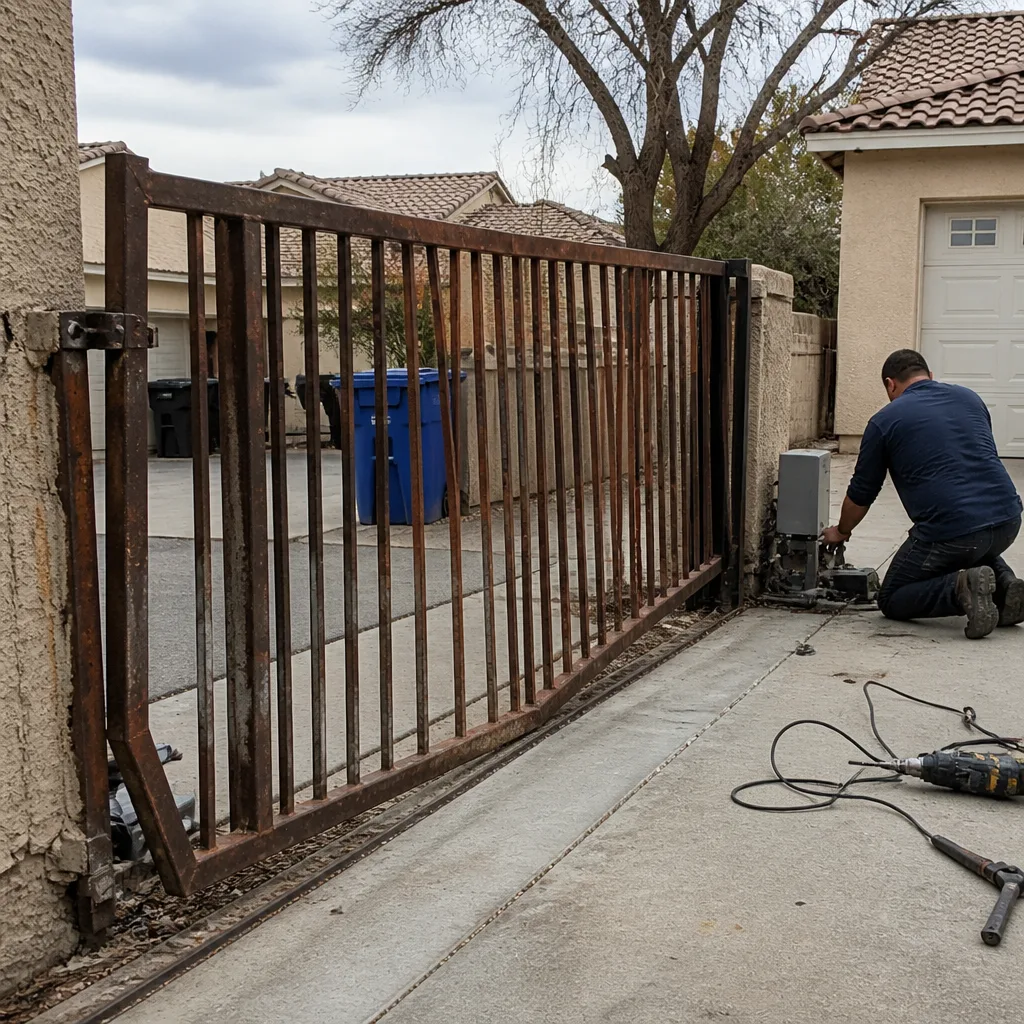 Before
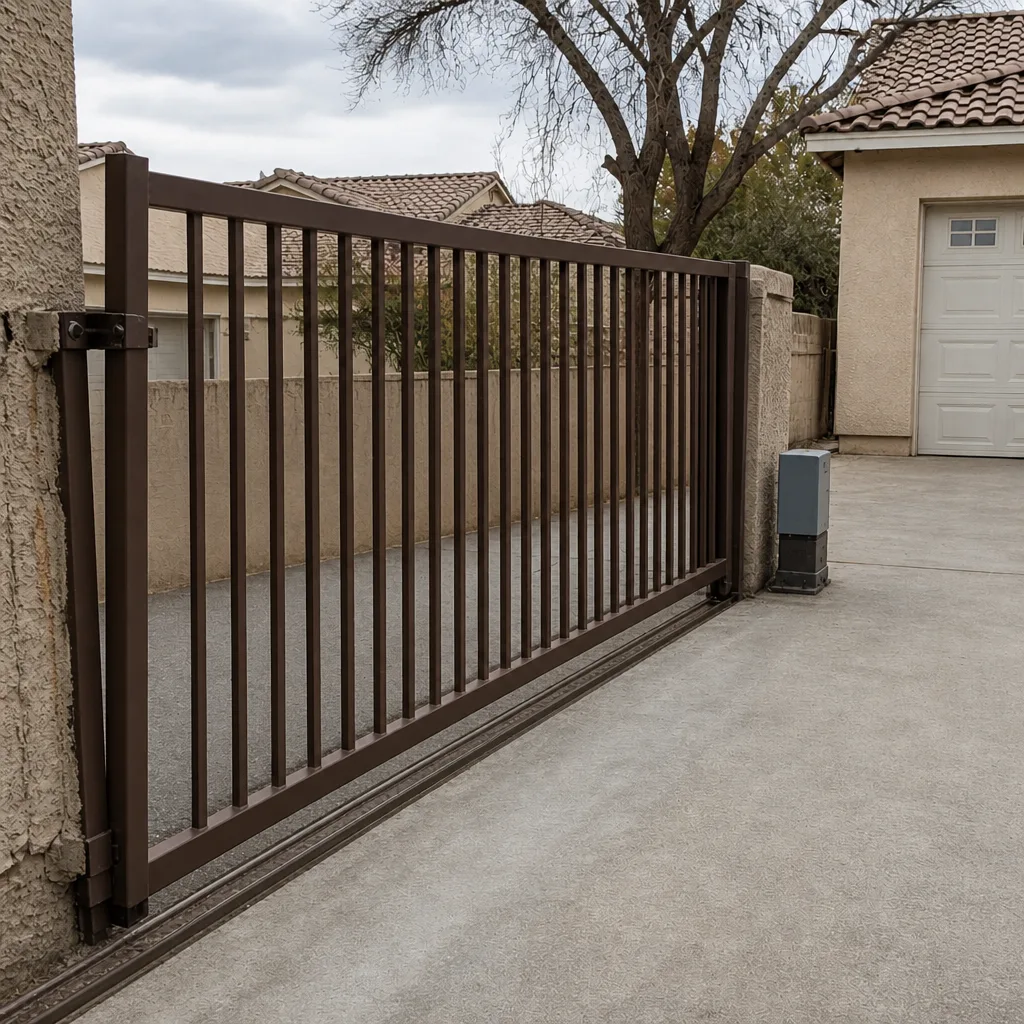 After
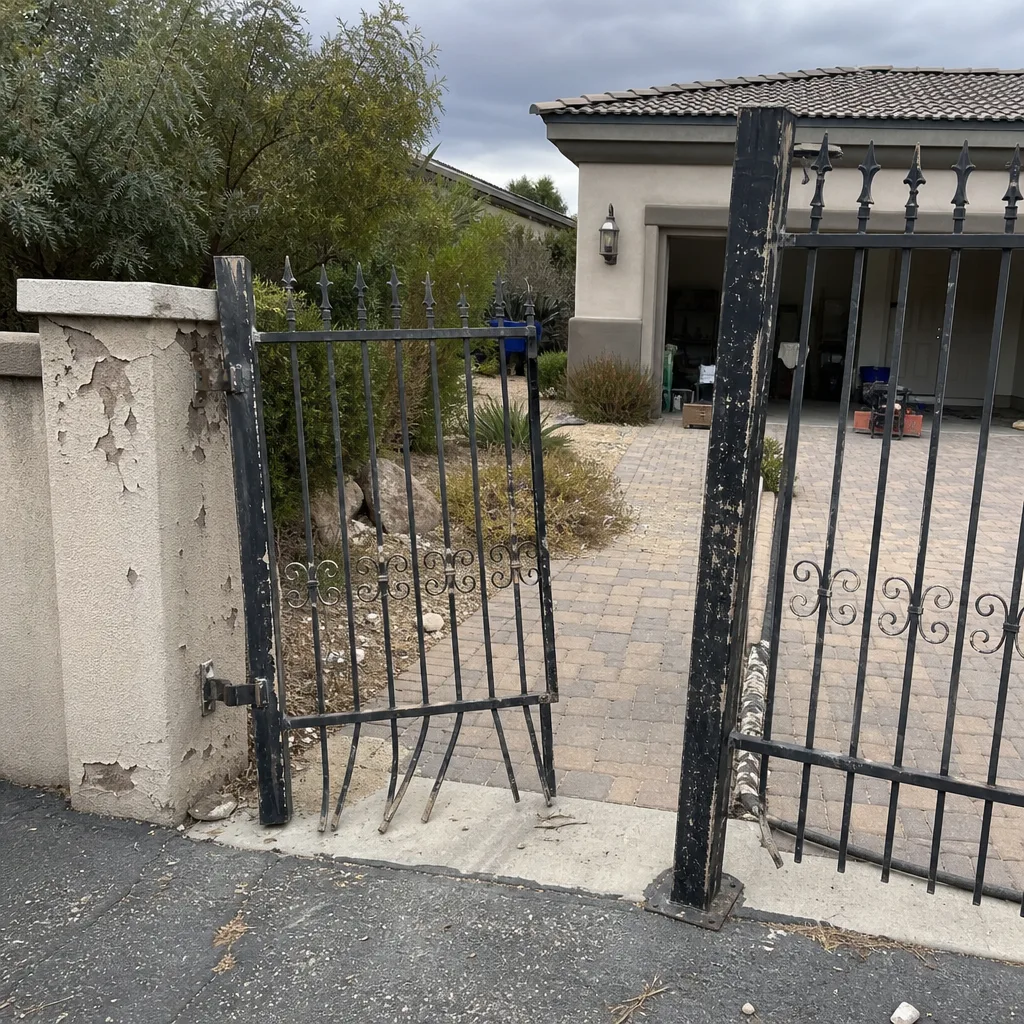 Before
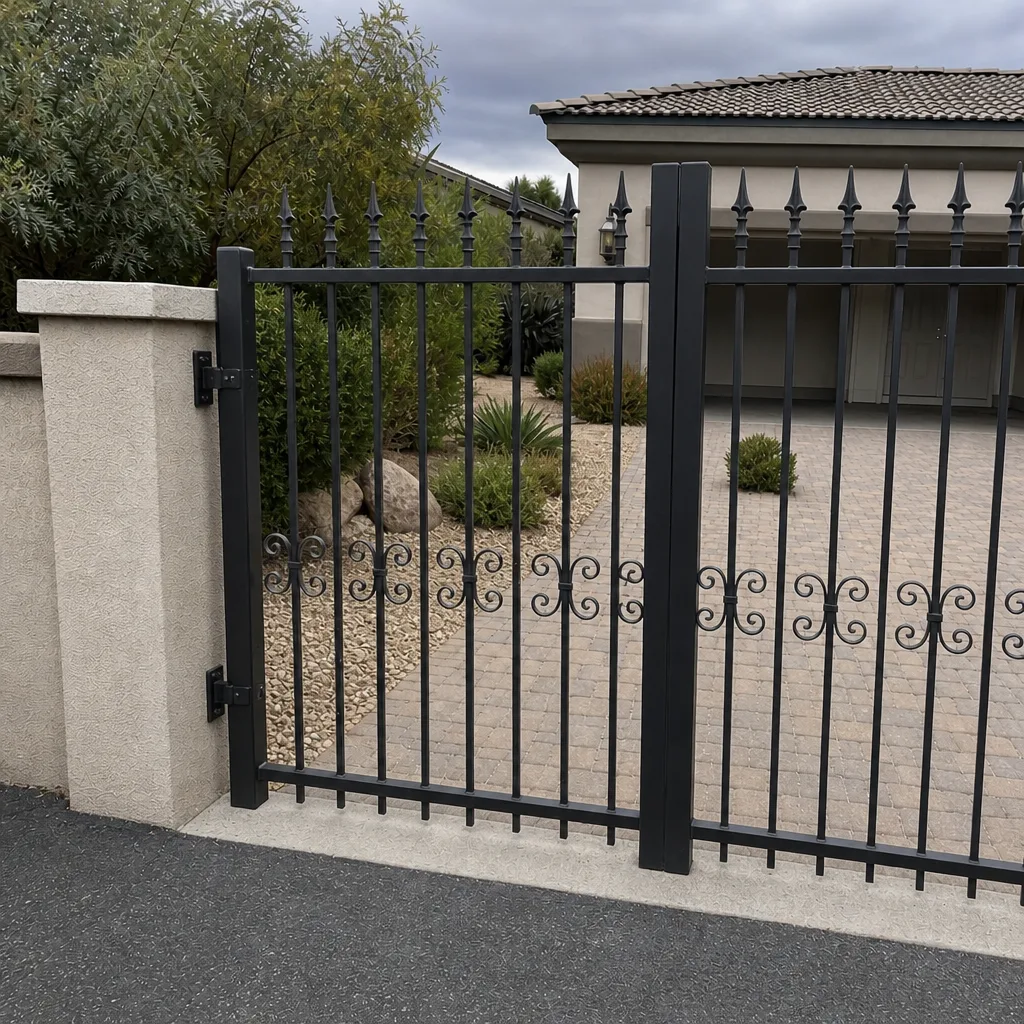 After
When to Call a Professional
Call a professional any time a gate install crosses one of the three disqualifiers, and also any time a powered gate develops a safety-system fault. Specifically: if the gate is 120V-powered, if the gate exceeds 300 lbs gross, if the property is HOA-governed and requires close-out documentation, or if there’s any photo-eye or safety edge issue. Vance Gate Repair Summerlin offers free estimates in Summerlin – call (844) 797-2809 – and every estimate is written and handed over before any work starts. If you’ve already had a DIY attempt go wrong, we’ll document what we found, correct what needs correcting, and leave a written record that answers the HOA and insurance questions you’ll face later.
Frequently Asked Questions
No, not safely or compliantly. Any driveway gate is 120V-powered or exceeds 300 lbs gross in most cases, and most Summerlin properties are HOA-governed, which means close-out documentation is required. All three of those conditions put the project outside the DIY-viable window. Call (844) 797-2809 for a written estimate before you commit to a DIY attempt.
A pedestrian gate under 150 lbs on a non-HOA property, running on a solar or battery-powered operator (like a Mighty Mule), is the practical DIY floor. Below that weight, footing depth and hinge alignment are forgiving enough that a careful homeowner can manage the install. Above 150 lbs, the margin for error tightens fast.
Any install involving 120V electrical work requires a permit, and any install under HOA oversight requires architectural submittal and close-out documentation. A battery-powered pedestrian gate on a non-HOA property generally doesn’t require a permit. If you’re not sure which category your project falls into, call (844) 797-2809 – we’ll tell you honestly.
Often no. Many policies exclude injury or property damage caused by unpermitted or un-inspected electrical work. This is one of the most-overlooked costs of the DIY route – the install itself may cost $500 less, but the coverage gap can cost much more if something goes wrong. Call (844) 797-2809 for a written estimate on doing it compliantly.
A proper install produces four documents: the as-built wiring diagram, a footing depth photograph, the operator programming sheet, and a photo record of every component installed. We include all four on every install as part of the Haven Standard. If you’re evaluating another company’s estimate, ask to see a sample of their close-out package before you sign.
Yes, for hinge replacement and painting. But a photo-eye adjustment on a powered gate is not DIY-suitable – it’s a life-safety device, and a misaligned or bypassed beam is how serious injuries happen. If your photo-eye is tripping, call us rather than adjusting it yourself: (844) 797-2809. Every repair we complete is covered by the 365-Day Done Right Promise, so if the adjustment doesn’t hold, we come back and make it right at no additional charge.
The Bottom Line
DIY gate installation has a real but narrow window in Summerlin: low-voltage pedestrian gates under 150 lbs, on non-HOA properties. Everything else – any driveway gate, any 120V operator, any gate over 300 lbs, any HOA-governed install – belongs in professional scope, not because homeowners lack skill, but because the permit, electrical, and HOA documentation requirements are outside what a homeowner can produce. The financial math favors professional installation once you add the hidden costs: HOA remediation, insurance gaps, resale disclosure resolution, and retrofit. If you have a written estimate from another company, bring it in for a free second opinion. We’ll review it and tell you whether it covers what it needs to.
Call (844) 797-2809 for a free, written estimate. A live person answers around the clock – no voicemail, no callback queue. Every visit leaves you with a written scope, a written price before work starts, and a documented photo record when we’re done. That’s the Haven Standard, and it’s why we’ve completed more than 22,000 gate repairs and installs since 2014 without asking a homeowner to guess at what they were paying for.
For more detail on gate services in Summerlin, see our Vance Gate Repair Summerlin home, our Gate Repair in Summerlin service page, our Gate Installation in Summerlin overview, or our Gate Motor & Opener in Summerlin page.
Written by the team at Vance Gate Repair Summerlin.