
Last updated November 17, 2026
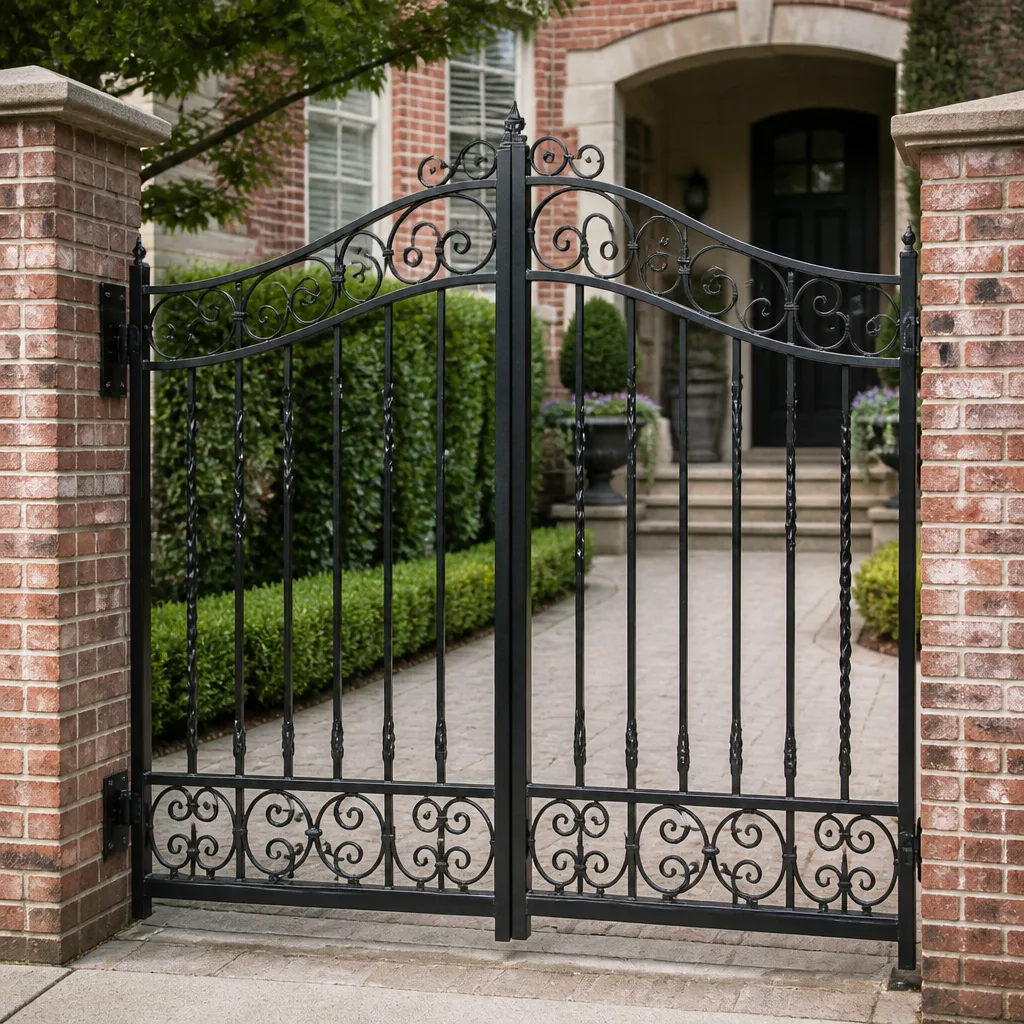 Wrought iron
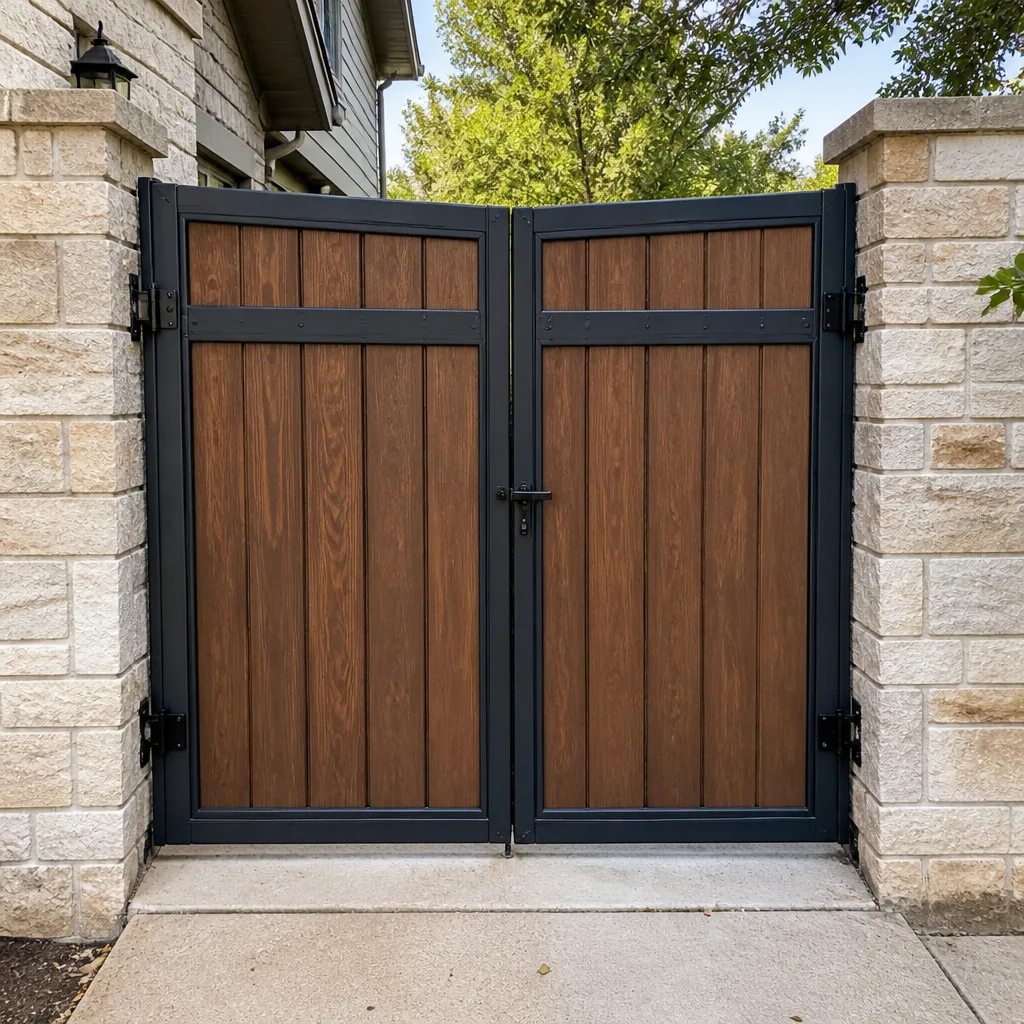 Wood & steel frame
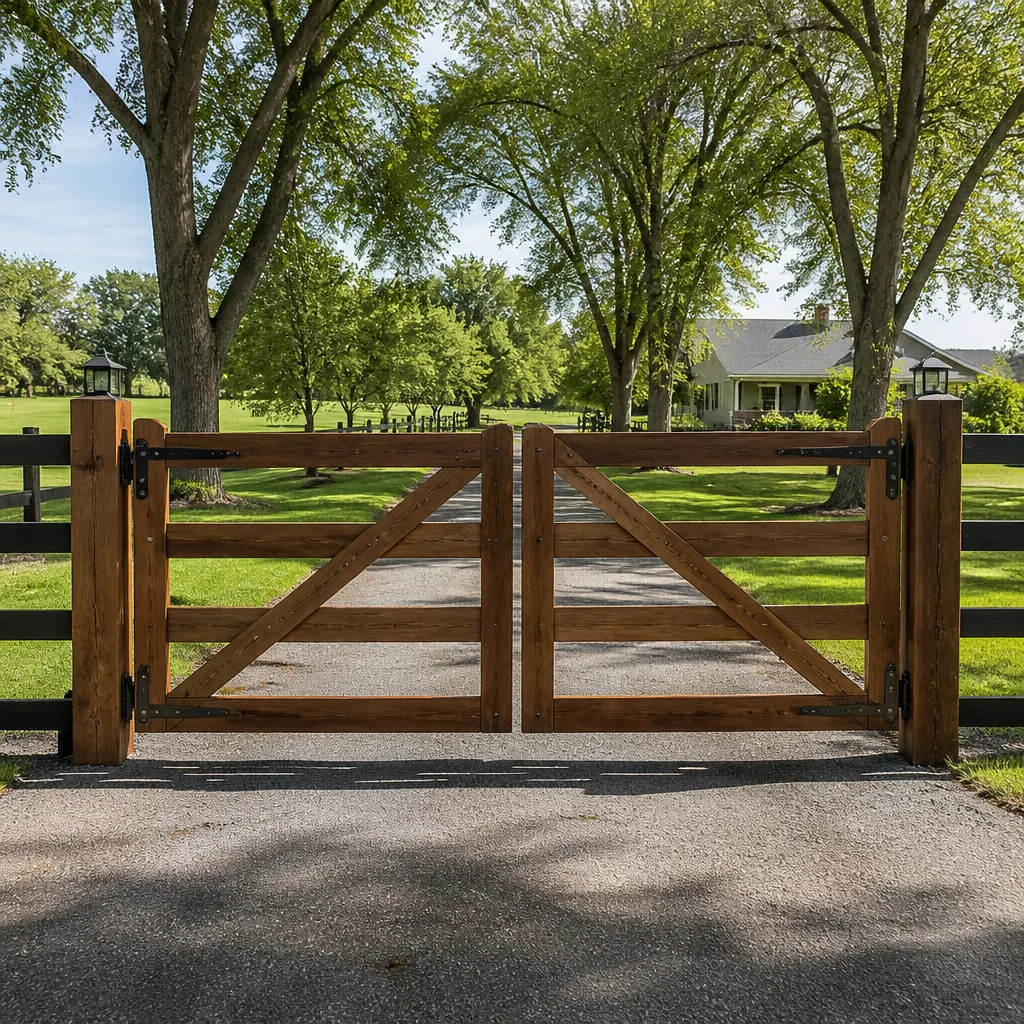 Farm & ranch
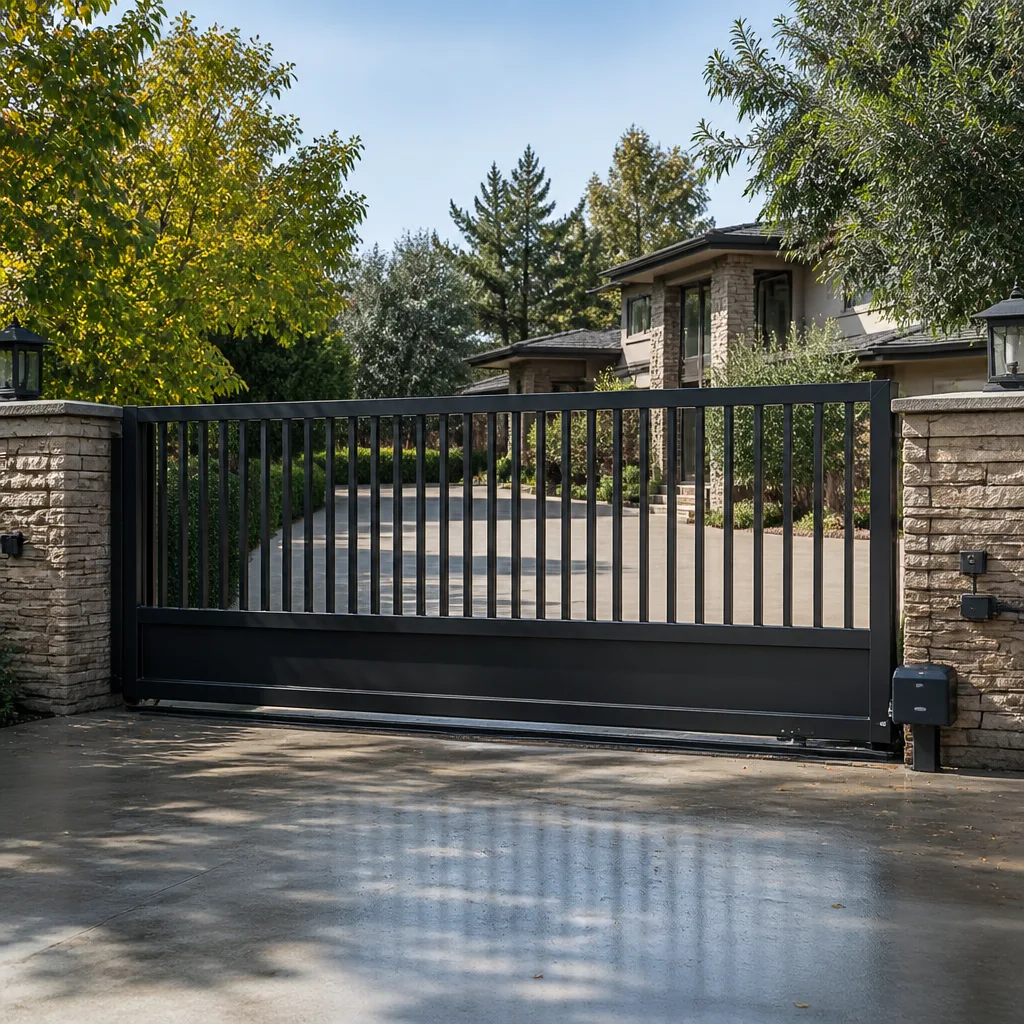 Sliding driveway gates
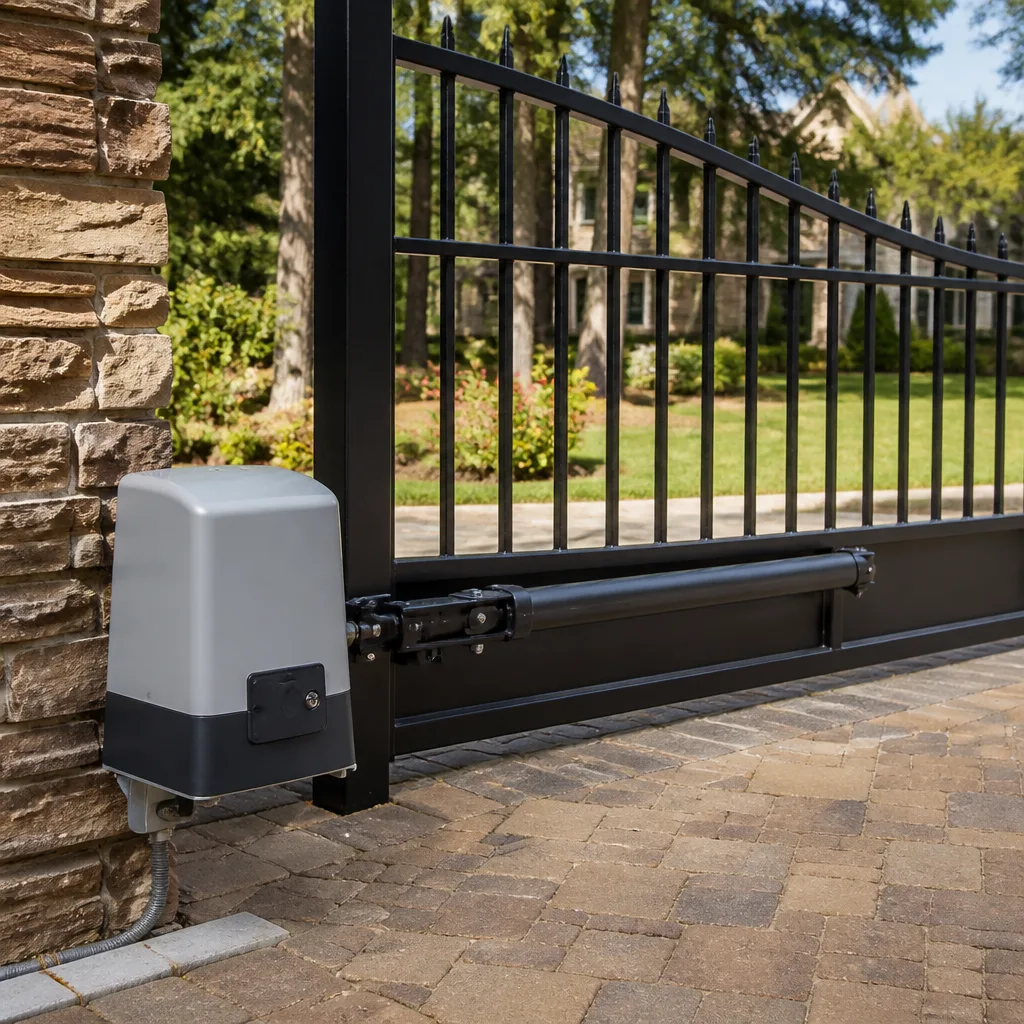 LiftMaster operators
Free on-site gate assessment - hinges, posts, and your LiftMaster or Nice gate operator checked before anything is quoted
The assessment is free and the quote is the invoice.
Get your free estimateThe Complete Guide to Gate Repair in Summerlin
The most common gate repair bill in Summerlin isn’t for a broken motor. It’s for a second visit to fix the thing that broke the motor, because the first technician never documented what they found. A driveway gate is not one object; it’s a system of five interdependent parts, and when one fails it almost always drags another down with it. We work on gates across Summerlin every week, and the pattern repeats: an operator that keeps tripping isn’t a bad board, it’s a hinge that bound up three months ago. This guide treats the gate as that system, so you can stop paying to fix symptoms while the actual cause keeps running. You’ll learn the diagnostic order, the failure modes specific to Summerlin’s soil and heat, and how to read the service record you should have been given.
Quick Answer
Gate repair in Summerlin generally means diagnosing the whole system in a fixed order: structure and its concrete foundation first, then the operator, then the controls and wiring. Skipping straight to the motor is why so many repairs fail twice. If the posts have shifted in caliche soil, no amount of motor replacement will keep the gate aligned, and the correct fix starts with the foundation, not the automation.
Styles & brands we work with
- Wrought iron
- Wood & steel frame
- Farm & ranch
- Sliding driveway gates
- LiftMaster operators
Table of Contents
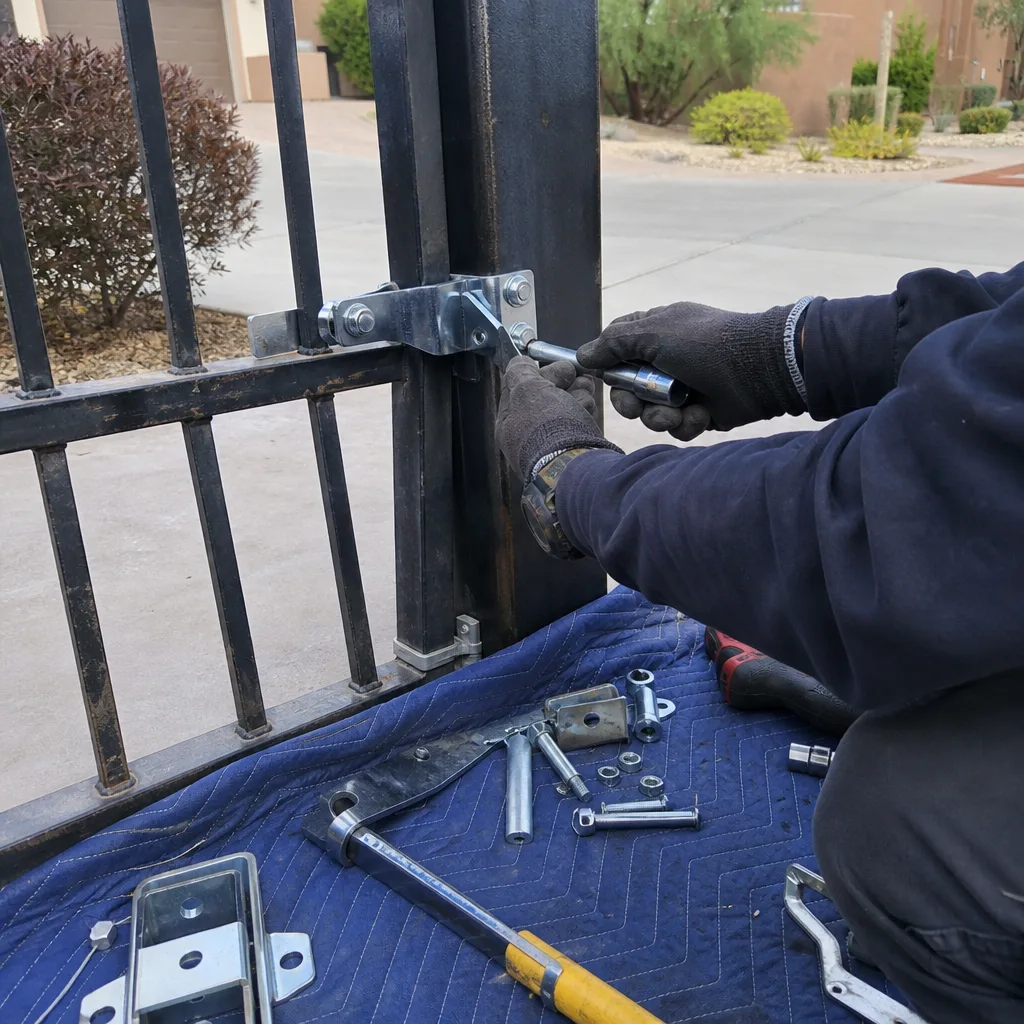
- Why a Gate Is a System, Not a Part
- How Summerlin’s Caliche Soil and Concrete Settling Bend Gates out of Alignment
- The Diagnostic Sequence: Structure, Operator, Controls
- Operator Types and the Failure Modes Specific to Each
- How to Read a Wiring Diagram Left by a Previous Installer
- What a Complete Service Record Looks Like and Why Its Absence Is a Warning Sign
- Heat, Dust, and Monsoon: What Summerlin Gates Endure
- What Gate Repair Costs in Summerlin
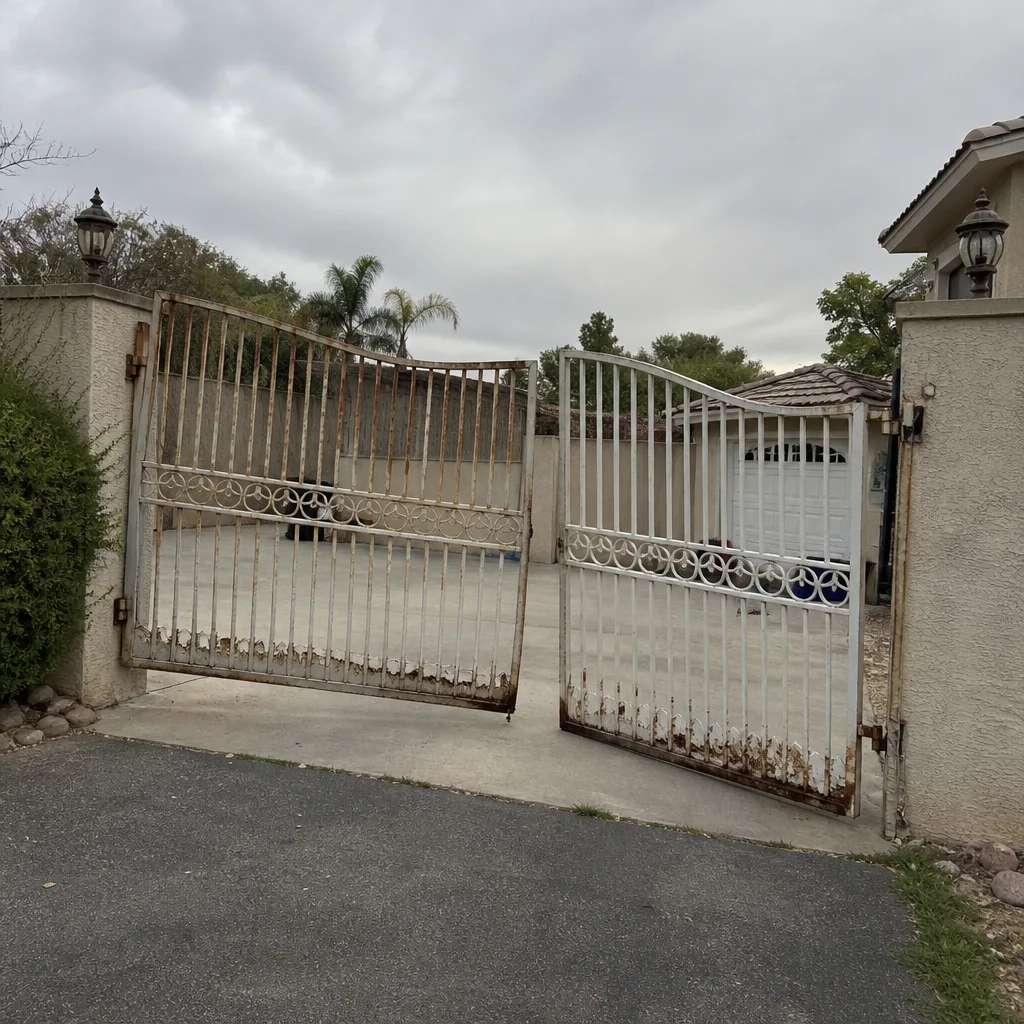 Before
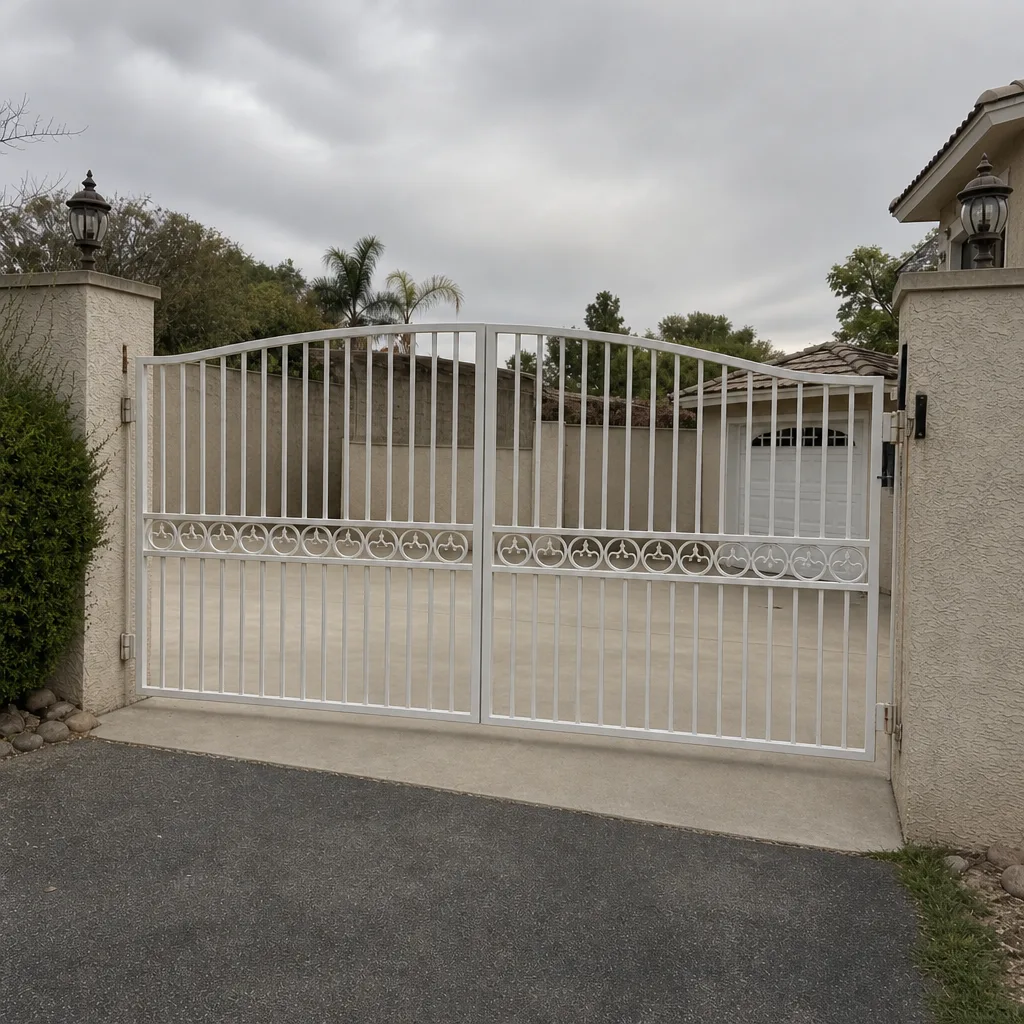 After
Why a Gate Is a System, Not a Part
A swinging driveway gate in Summerlin is really five things working against each other: the structure (frame, hinges, posts), the operator (the motor and gearbox), the control board, the limit switches, and the wiring that ties them together. They fail in a chain. A post that shifts by three-quarters of an inch pushes the gate leaf out of square. The out-of-square leaf loads one hinge, the hinge binds, and the operator now has to push through resistance it wasn’t sized for. The motor runs hot, the control board logs a stall, and eventually the board gives out. The board was the last domino, not the cause.
This is why we treat the gate as a system and not a single object. When someone calls us about a gate that won’t open, the question we need answered first isn’t “what’s wrong with the motor?” It’s “what changed over the last few months?” A gate that opened fine in spring and drags in August usually isn’t a motor problem at all.
- Structure: posts, frame, hinges, rollers, and the concrete under the posts.
- Operator: the motor, gearbox, and drive arm or actuator.
- Controls: limit switches, photo-eyes, keypads, and the control board.
- Wiring: the low-voltage run and the power feed.
- Environment: soil, heat, dust, and how the gate has settled over time.
Understanding this saves money. If your gate needs service, the guide on Gate Repair in Summerlin walks through how we scope the work, and it’s the same system-first thinking applied to a single job.
How Summerlin’s Caliche Soil and Concrete Settling Bend Gates Out of Alignment
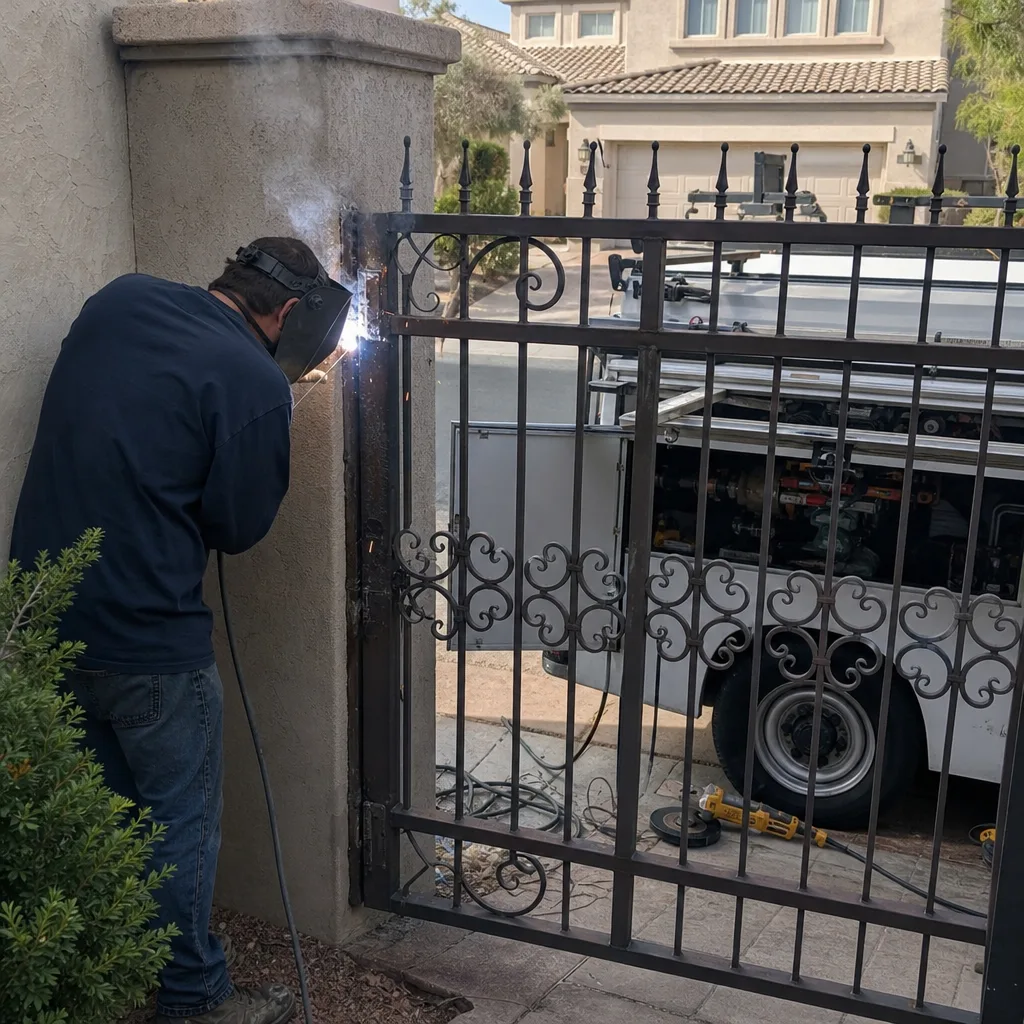
Summerlin sits on ground that includes caliche, a dense, cement-like layer of calcium carbonate that forms just beneath the surface in many parts of the valley. Caliche does two things to a gate. First, it makes digging a gate post hole genuinely hard work, so some installers set posts shallower than they should. Second, it moves water in ways homeowners don’t expect. When it rains, water pools on top of the caliche rather than soaking down, and that standing water softens the soil around the concrete footing. Over a few summers, the footing settles unevenly, the post tips a degree or two, and the gate stops lining up the way it did when it was new.
We see this constantly in the hillside neighborhoods above Summerlin Parkway, where grading and retaining walls concentrate runoff toward certain gate lines. We also see it in the newer sections on the community’s western edge, where fresh landscaping and irrigation change the moisture under the posts in the first few years. The gate looks fine from the street. Then the latch stops catching, the gate drags on the ground, and the operator starts straining.
The fix for a settled post is a structural repair, not an automation repair. We re-level the footing, reset the post plumb, and re-hang the gate before we touch the operator. If a technician skips that step and just adjusts the motor’s force setting to push through the resistance, the motor will last a few more months and then fail for real. Our broader Vance Gate Repair Summerlin home page covers how we approach these jobs across the community.
The Diagnostic Sequence: Structure, Operator, Controls
The order you diagnose in determines whether you fix the gate once or three times. Here’s the sequence a good technician follows, and the reason each step comes before the next.
- Test the gate by hand. Disconnect the operator and swing or slide the gate manually. It should move with light, even resistance across the whole arc. If it binds, drags, or rocks, the problem is structural and everything downstream is a symptom.
- Check the posts and footing. Look for gaps between the concrete and soil, cracks radiating from the post, or a post that’s out of plumb. Photograph and measure. On caliche ground, this step catches most of the “mystery” alignment failures.
- Inspect the hinges and hardware. Worn hinges let a gate sag; sagging misaligns the latch and loads the operator. Grease points that went dry in summer heat are a common culprit.
- Power the operator and observe. With the structure cleared, run the operator and watch for hesitation, motor heat, or a board that faults. Now a motor problem is a real motor problem.
- Read the limits and photo-eyes. Limit switches tell the board where the gate starts and stops. A limit set a few degrees past travel forces the operator into a stall every cycle. Photo-eyes out of alignment by an inch or two stop the gate mid-travel and mimic a motor failure.
- Trace the wiring. Loose low-voltage connections, corrosion at the terminals, and rodent damage in the conduit all present as control-board failures. A board replaced for a bad connection is money wasted.
Each step eliminates a whole category of causes before you spend a dollar on parts. The whole reason we document each step with photos and limit-switch readings is so the next visit doesn’t have to rediscover it. That same disciplined order shows up whether we’re doing repair or full Gate Installation in Summerlin, because the structural check comes first either way.
Operator Types and the Failure Modes Specific to Each
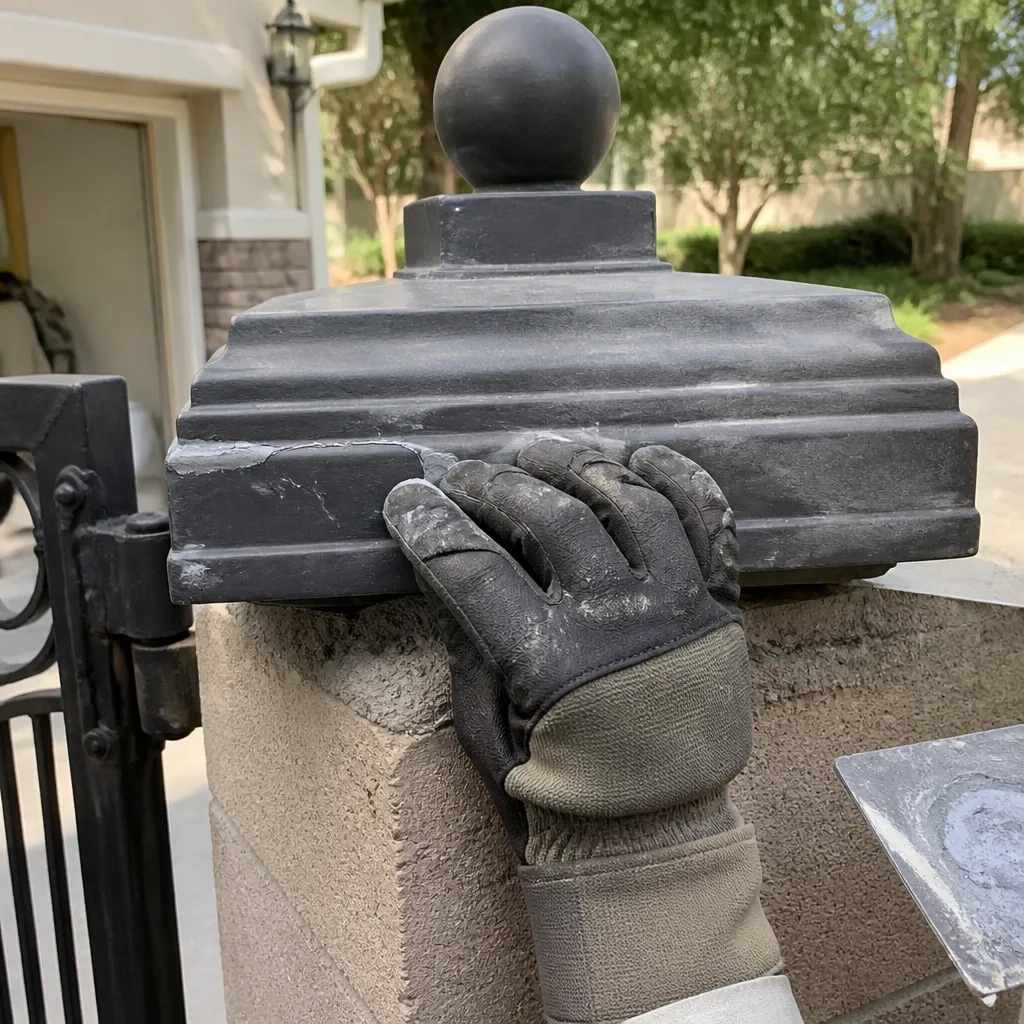
Different operators fail in different ways, and knowing which one is on your property helps you understand a repair quote. Four types cover almost every driveway gate in Summerlin.
- Swing arm operators (common on single swing gates, FAAC and BFT among the frequent brands). The arm pushes the gate open, so the arm bracket and gate hinge take the load. When the bracket loosens, the arm swings at the wrong angle and the motor strains. We check bracket torque and arm geometry first on these.
- Linear actuator operators (frequent on gates with a clean architectural look, where the ram is hidden behind the post). These fail most often at the pivot pins and seals. Dust wears the seals, heat dries them, and the ram slows before it quits. Lube and pin wear show up in the sound before they show up in the operation.
- Slide gate operators (used where the driveway has room to roll the gate along a track). The track and the rollers carry the load. A track that’s filled with blown sand or grit drags the whole gate, and the operator trips on overload. Keeping the track clear is most of the maintenance on these.
- Vertical pivot gates (used on tight lots where the gate lifts rather than swings). The counterbalance spring and pivot bearing do the work. A tired spring makes the operator raise weight it wasn’t sized for, and that shows up as a board that faults near the top of travel.
We work on the whole spread of major brands, including FAAC, BFT, Linear, and Viking, precisely because a homeowner shouldn’t have to replace a good operator just because it isn’t the brand a given company prefers. If you want to understand how a motor replacement gets scoped, the Gate Motor & Opener in Summerlin page covers brand fit and load sizing.
How to Read a Wiring Diagram Left by a Previous Installer
A wiring diagram is the map of your gate. When it’s present and accurate, a technician spends ten minutes understanding the system instead of an hour tracing it. When it’s missing, that hour becomes a charge on your invoice, and the next technician has to redo the same trace. Good installers leave a diagram taped inside the operator housing showing the terminal block, the photo-eye wiring, the keypad run, and where the low-voltage and high-voltage lines separate.
If your diagram exists, here’s what to read on it:
- Terminal labels. The board’s terminal block will name each connection (open, close, stop, common, photo-eye power). This tells you which wire does what without guessing.
- Voltage separation. The high-voltage feed should never share a conduit or terminal block with the low-voltage control wiring. Where a diagram shows them mixed, that’s a red flag worth photographing.
- Photo-eye connections. The diagram should show which terminals the safety beam uses. If the beams were added later and not drawn in, that’s the gap to look for.
- Limit switch setting notes. Some technicians record the limit positions. Those numbers let the next person reset to a known-good spot instead of tuning blind.
When no diagram exists, the correct response is to build one as you trace, not to guess. We draw the diagram during the repair and leave a copy in the operator housing and in the job record, so the homeowner holds the map even if they sell the house.
What a Complete Service Record Looks Like and Why Its Absence Is a Warning Sign
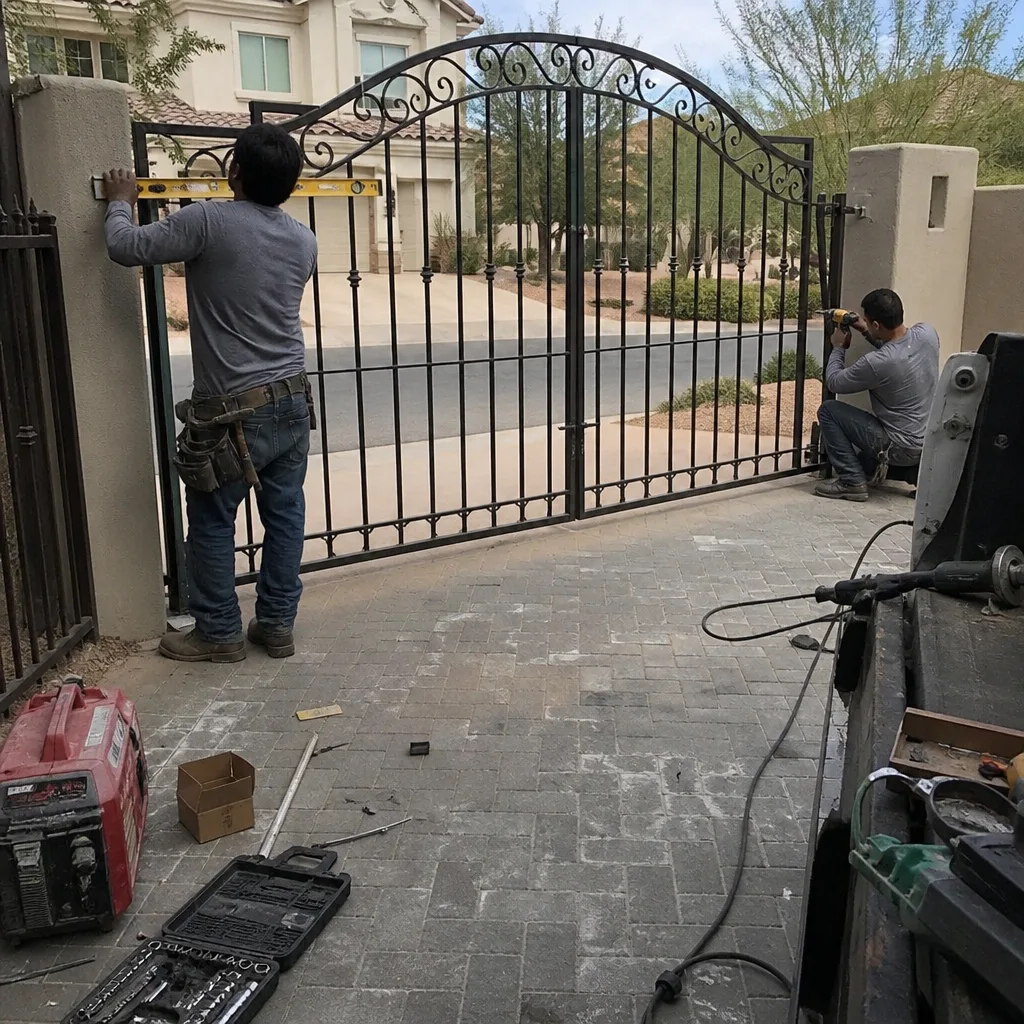
A complete service record is more than a receipt. It should include the date of each visit, the part numbers installed, the limit-switch readings set that day, photographs of what was found and what was adjusted, and a wiring diagram if the situation warranted one. That record is the difference between a technician who can pick up where the last one left off and a technician who starts from scratch and charges you to do it.
Here’s the case that matters most: buying a home in Summerlin with an existing gate. A gate can be in the middle of two or three band-aid repairs and look completely normal at a showing. The seller says “it was just serviced,” but there’s no paper trail. No dates, no part numbers, no photo record. That absence is itself information. It usually means the last fix was verbal, the diagnosis was skipped, and the underlying cause is still in the ground. When we do pre-purchase inspections, we document the whole system for the buyer, and the absence of a record is the first thing we flag.
This is the documentation habit behind the Haven Standard, the client-facing promise we work under: a written price before work starts, and a documented photo record on every visit. If a gate you’re looking at comes with a thick file of dated photos and part numbers, that’s a gate someone took care of. If it comes with a handshake, budget for a real diagnostic.
Heat, Dust, and Monsoon: What Summerlin Gates Endure
Summerlin is hard on gate hardware in ways that don’t show up in a manufacturer’s manual. The summer heat bakes the grease out of hinges and seals, so moving parts that were smooth in spring drag by July. Spring winds blow fine sand into tracks and pivot points, and that grit wears bearings faster than the calendar would suggest. When monsoon rain arrives, it pools on caliche and softens the footing around posts, which is when settled-post problems appear out of nowhere. And the freeze-thaw nights we get in some winters can crack a footing that was already on the edge.
Experienced technicians read the environment as part of the diagnosis. A gate that fails in late August is more likely to have a heat-and-dust problem than a board problem. If you’re looking for a straightforward annual service routine, our guide to Gate Repair in Summerlin covers cleaning tracks, greasing hinges, and checking post plumb before the season turns.
What Gate Repair Costs in Summerlin
Costs in Summerlin land in a predictable range, and a written quote should show you the line items before any work begins. The table below reflects the typical ranges we see for the common system repairs.
- Diagnostic visit (structure, operator, controls, wiring): $95 – $185, often applied to the repair if you proceed.
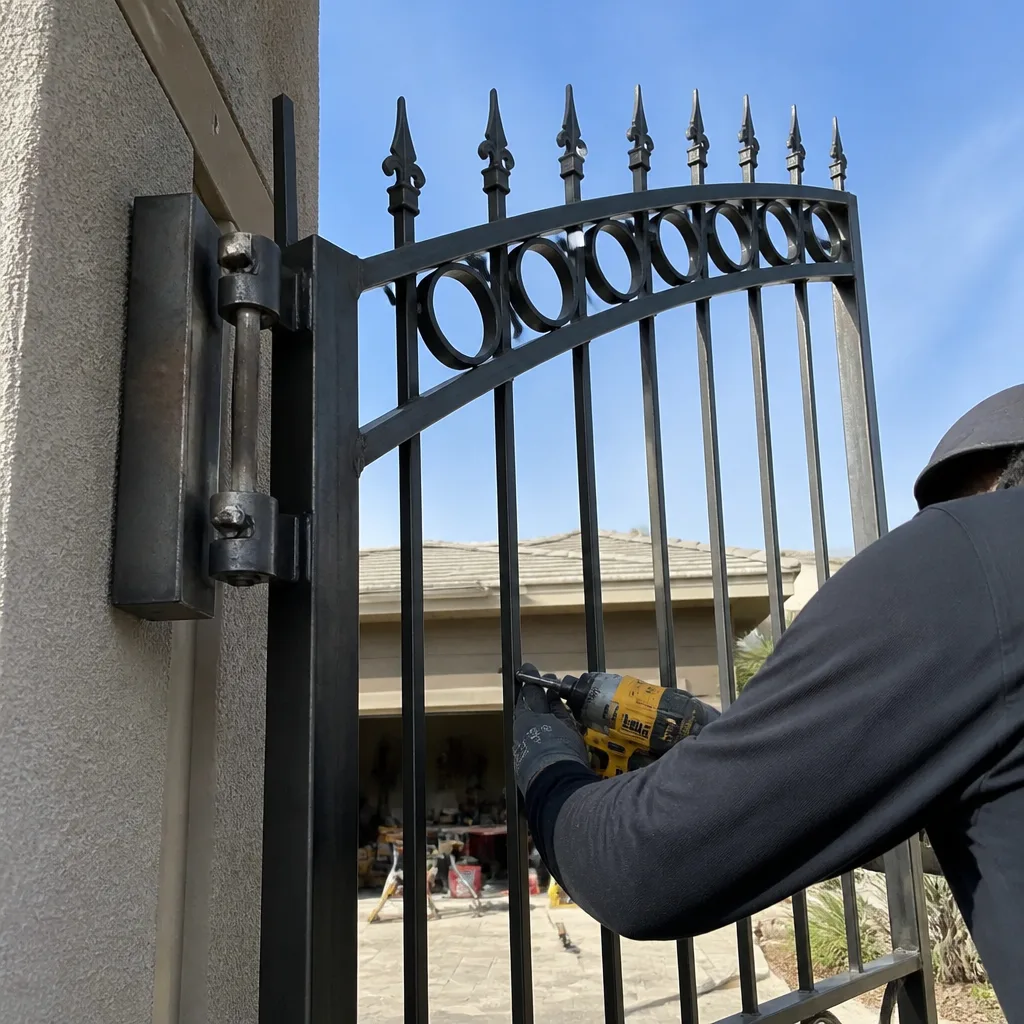
- Hinge replacement and re-hang: $150 – $320 per hinge set, depending on frame type.
- Post re-level and footing reset (caliche/settled ground): $350 – $900, depending on access and depth.
- Photo-eye realignment or replacement: $120 – $280.
- Limit switch set and control-board diagnosis: $140 – $310.
- Swing-arm or linear actuator motor replacement: $550 – $1,400, depending on brand and whether the bracket is intact.
- Wiring trace and low-voltage repair (per run): $180 – $420.
The rule we work under is simple: the flat price is written and handed to you before any tool comes out. There are no surprise invoices at the end. If a quote you have in hand from another company looks different from what’s on this page, we’ll review it at no cost, because a second opinion on a written estimate costs you nothing and sometimes reveals a whole step that was skipped.
Common Mistakes to Avoid
- Replacing the motor before checking the structure. If the gate binds by hand, the motor isn’t the problem. Paying for a motor on a binding gate means the new one fails the same way.
- Adjusting the force setting to push through resistance. Turning up the force hides a structural problem while the operator runs hot and the gears wear. It’s a shortcut that buys a few weeks and costs a motor.
- Ignoring a settled post because “it still closes.” On caliche ground, small settlement grows. A post that’s two degrees off plumb today will be dragging the latch in six months.
- Accepting a verbal estimate. A spoken number isn’t a quote; it’s a guess that becomes an invoice. Ask for the written scope and price before work starts.
- Cleaning the track with the wrong product. Blowing sand out of a slide-gate track with the right tool is fine. Spraying it with a lubricant that collects grit is worse than leaving it alone.
- Buying a home with a gate and no paper trail. No dates, no part numbers, no photos means the gate is a mystery. Budget for a proper diagnostic before you rely on it.
- Letting a “board fault” go untraced. Faults are often loose connections or a misaligned photo-eye, not a dead board. Replacing a working board is a common waste.
See the difference
BeforeAfter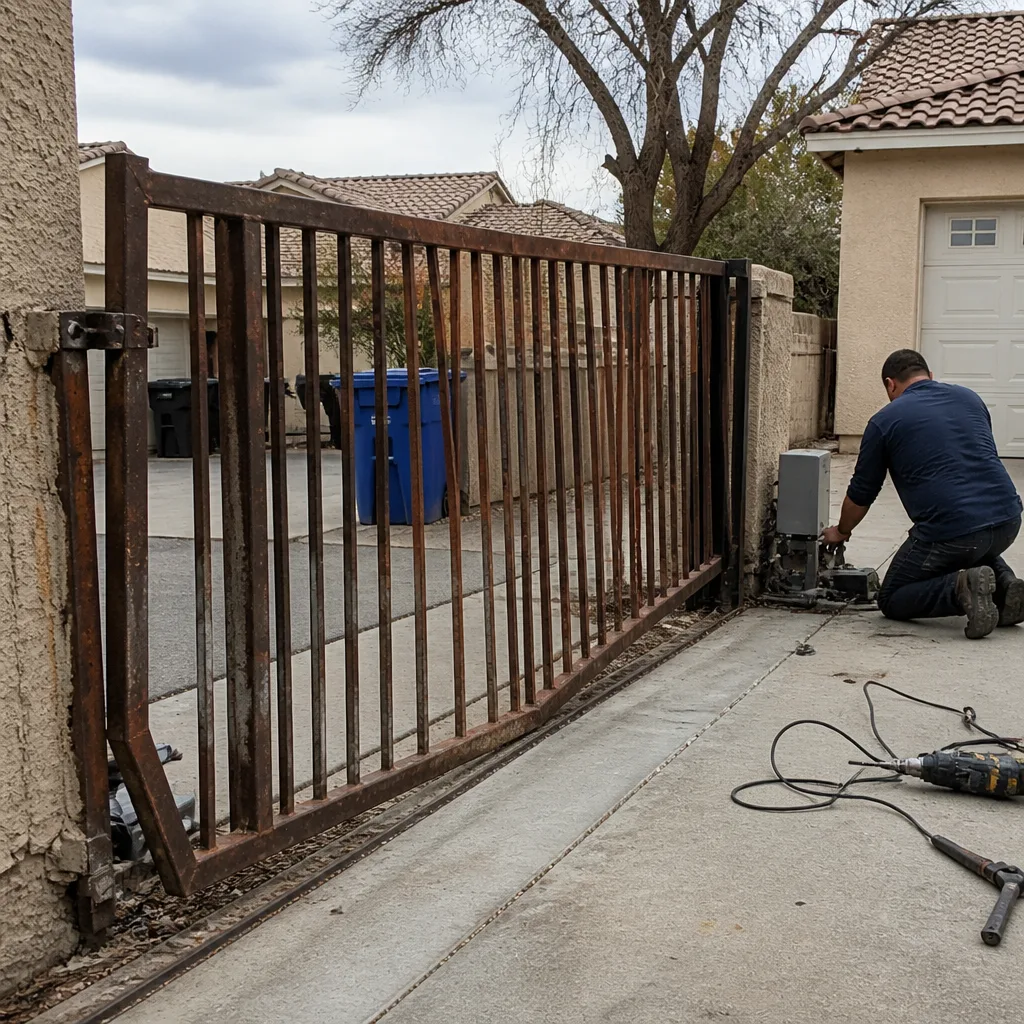 Before
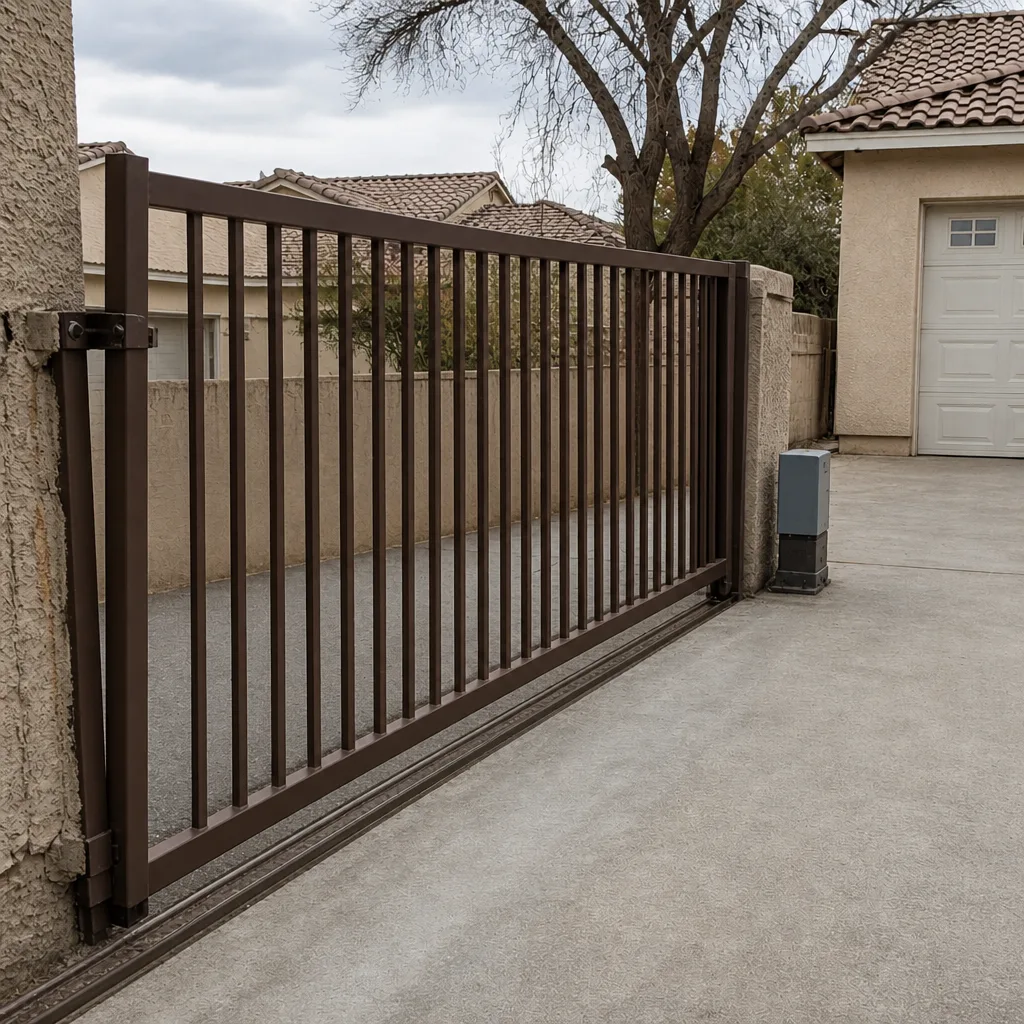 After
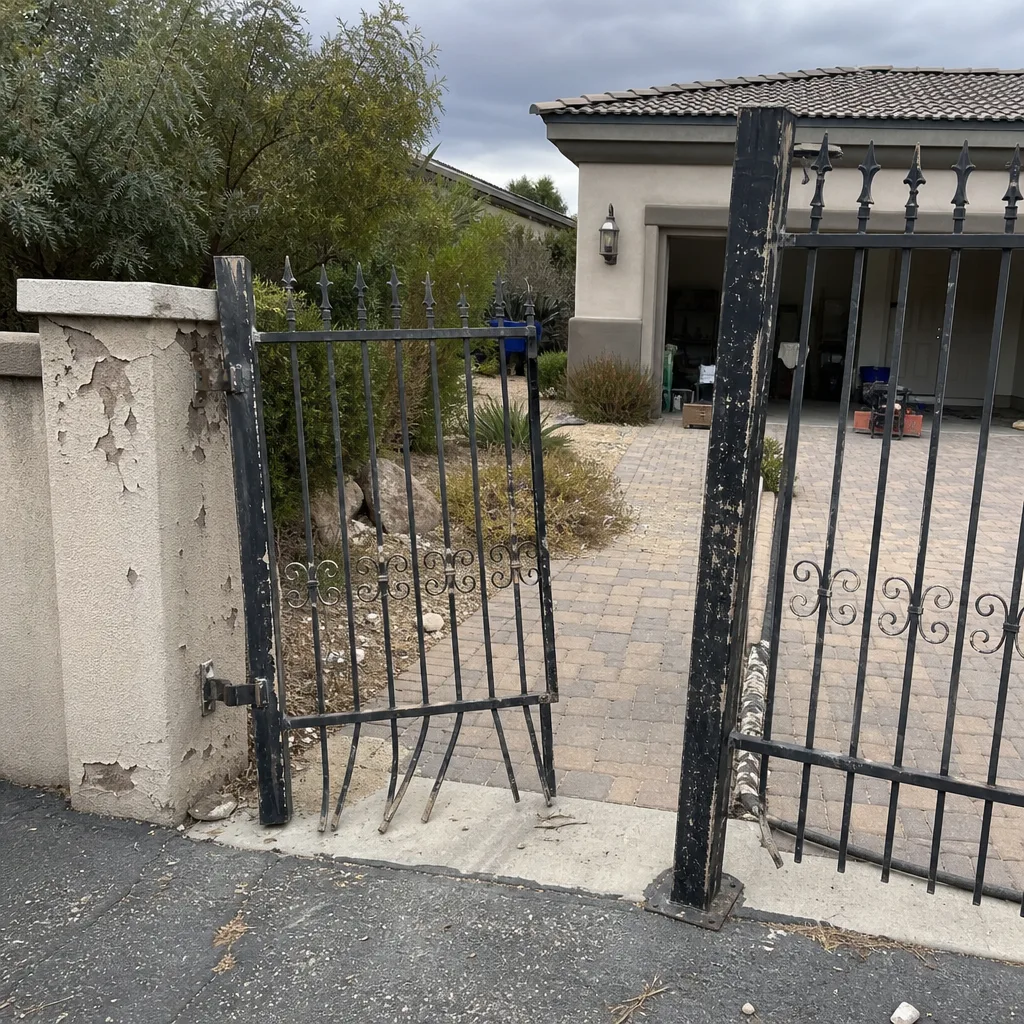 Before
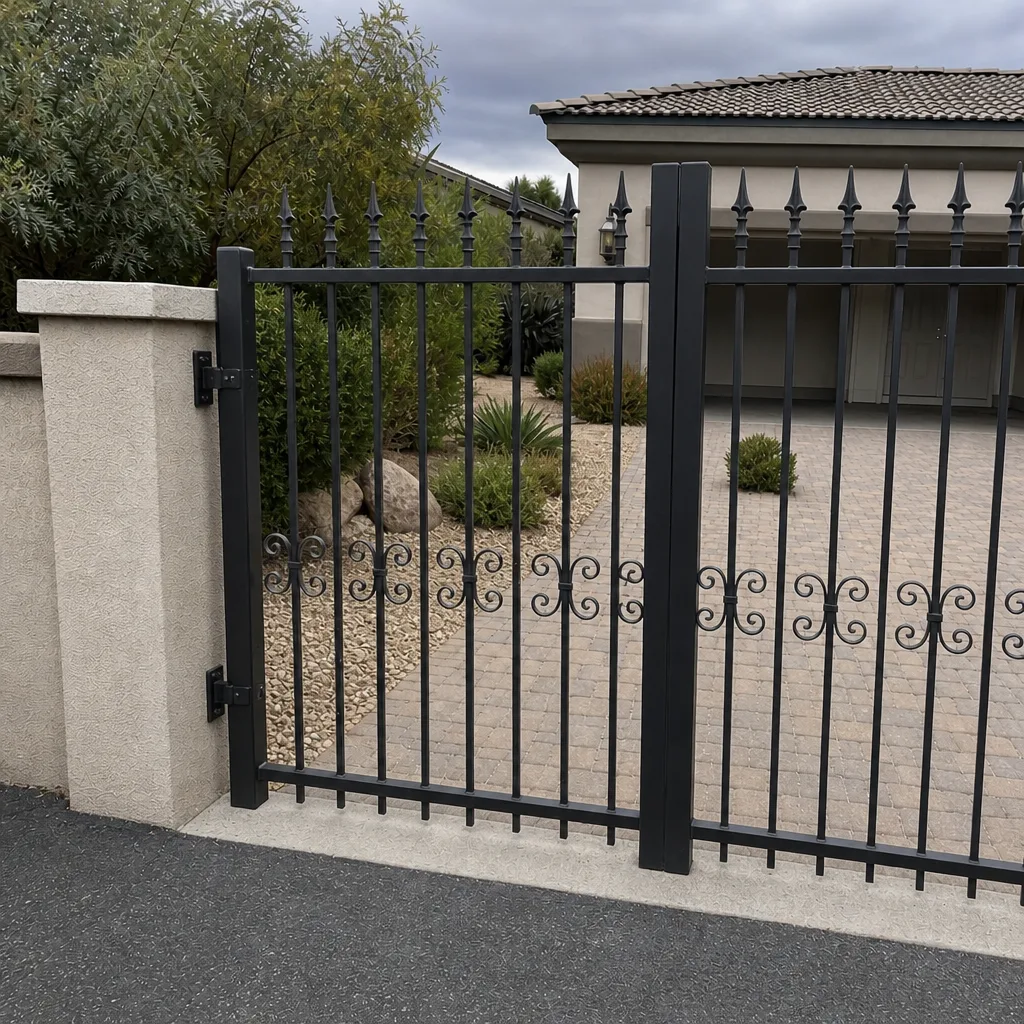 After
When to Call a Professional
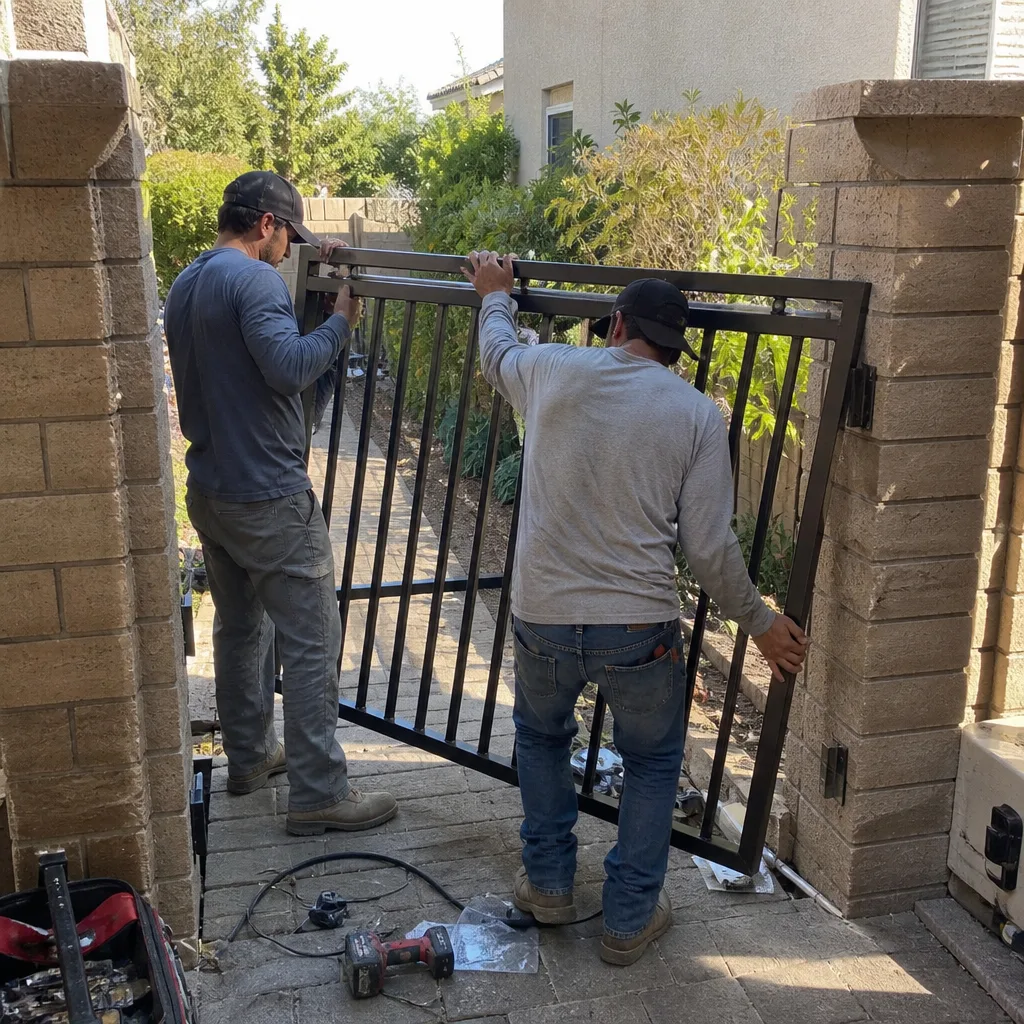
Some gate problems are genuinely dangerous to poke at yourself. The high-voltage feed to the operator, the control board, and the low-voltage wiring are all worth leaving to a trained technician, and a gate that’s come loose from a post under load can swing or fall with real force. Call us when the gate binds by hand, when a post is visibly out of plumb, when the operator faults every cycle, when the photo-eyes keep tripping, when the gate won’t stay on its track, or when you’re buying a home and want the full system documented before you close. A technician with the right tools and the right sequence will find the cause once, price it in writing, and photograph what was done so nobody has to rediscover it. Vance Gate Repair Summerlin offers free estimates in Summerlin – call (844) 797-2809.
Frequently Asked Questions
Gate repair in Summerlin typically runs from a $95 – $185 diagnostic visit up to $550 – $1,400 for a full motor replacement, with the exact price depending on whether the cause is structural, control-related, or a true hardware failure. The written flat price is handed to you before any work starts. Call (844) 797-2809 for an exact quote – estimates are free.
We answer the phone 24 hours a day, and a live person can schedule your visit without a callback queue or a voicemail loop. Same-day availability depends on the day and the diagnostic already queued, so the fastest answer is a quick call. Call (844) 797-2809 and we’ll tell you exactly what’s possible.
A control board that faults every cycle is usually reacting to an overload, a misaligned limit switch, or a photo-eye that keeps tripping, not a failed board. The cause is almost always upstream of the board. A proper diagnostic tests structure and operator before controls, so you pay for the real fix once.
A crooked, dragging gate is a structural problem nine times out of ten, and the cause is usually a post that’s settled in Summerlin’s caliche soil. The motor is doing its best to push a misaligned gate. Repair the post and re-hang the gate, and the operator often clears up on its own. Call (844) 797-2809 to get it assessed.
A complete service record includes the dates of every visit, the part numbers installed, the limit-switch readings, photographs of what was found and adjusted, and a wiring diagram where one applies. That record lets the next technician pick up where the last one stopped. Every Vance visit leaves a documented photo record before we go.
Ask the seller for dates, part numbers, and photographs of past service, and if there aren’t any, treat the gate as an unknown system. Missing records usually mean the last fixes were verbal and the root cause is still unresolved. A pre-purchase diagnostic that documents the whole system costs far less than discovering the problem after you close.
The Bottom Line
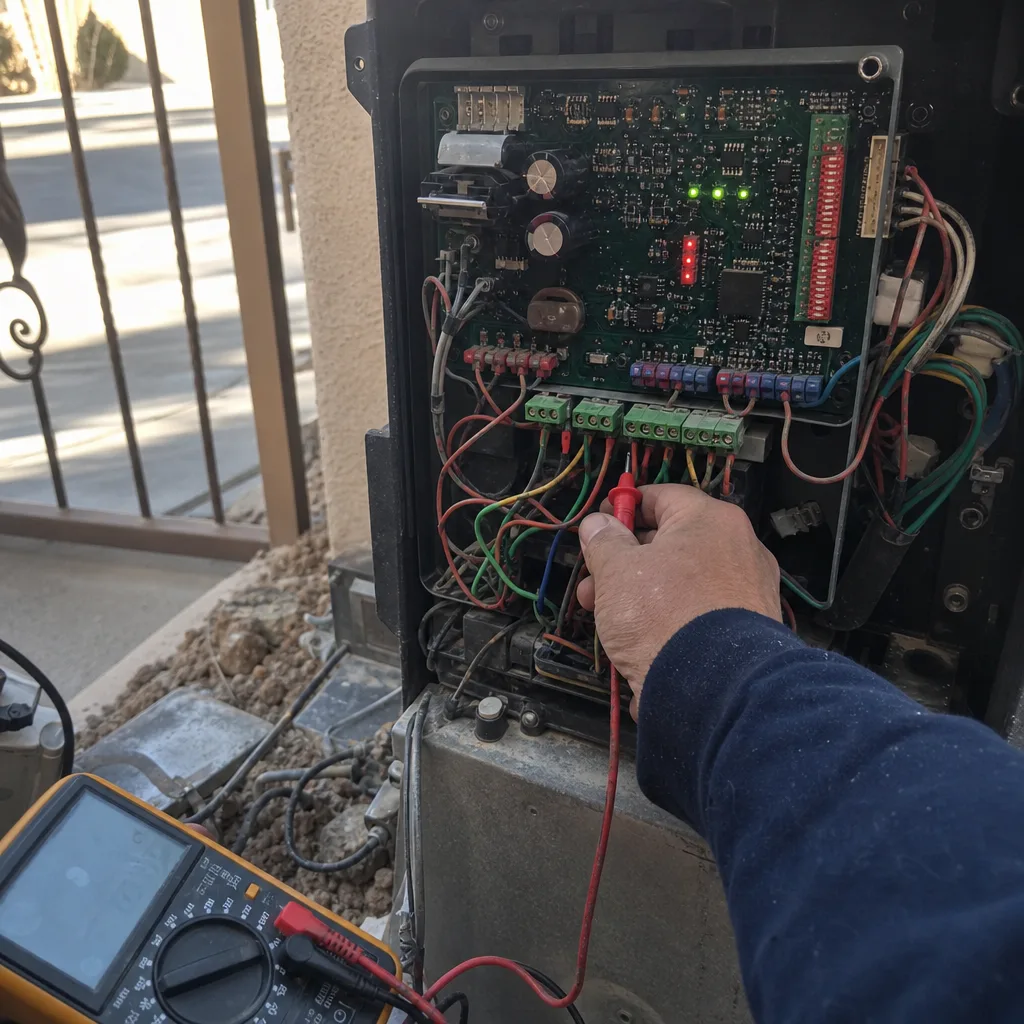
A gate in Summerlin isn’t one part that breaks; it’s a system of five that fail in a chain. The structure comes first, then the operator, then the controls, and the wiring ties it together. If you follow the diagnostic sequence, document every step, and insist on a written price before work starts, you stop paying for second visits. Summerlin’s caliche soil, heat, and monsoon runoff make all of this more urgent than in most climates, but the system-first approach works the same way. The one habit that saves the most money is the one most homeowners don’t ask for: a written record with photographs, left behind so the next technician never has to guess.
Call (844) 797-2809 for a free estimate. A live person answers around the clock, the written price arrives before any work begins, and every visit ends with a documented photo record of what we found, what we set, and what we installed. If you have a written estimate from another company, bring it and we’ll review it at no charge.
Written by the team at Vance Gate Repair Summerlin.