
Last updated November 17, 2026
 Wrought iron
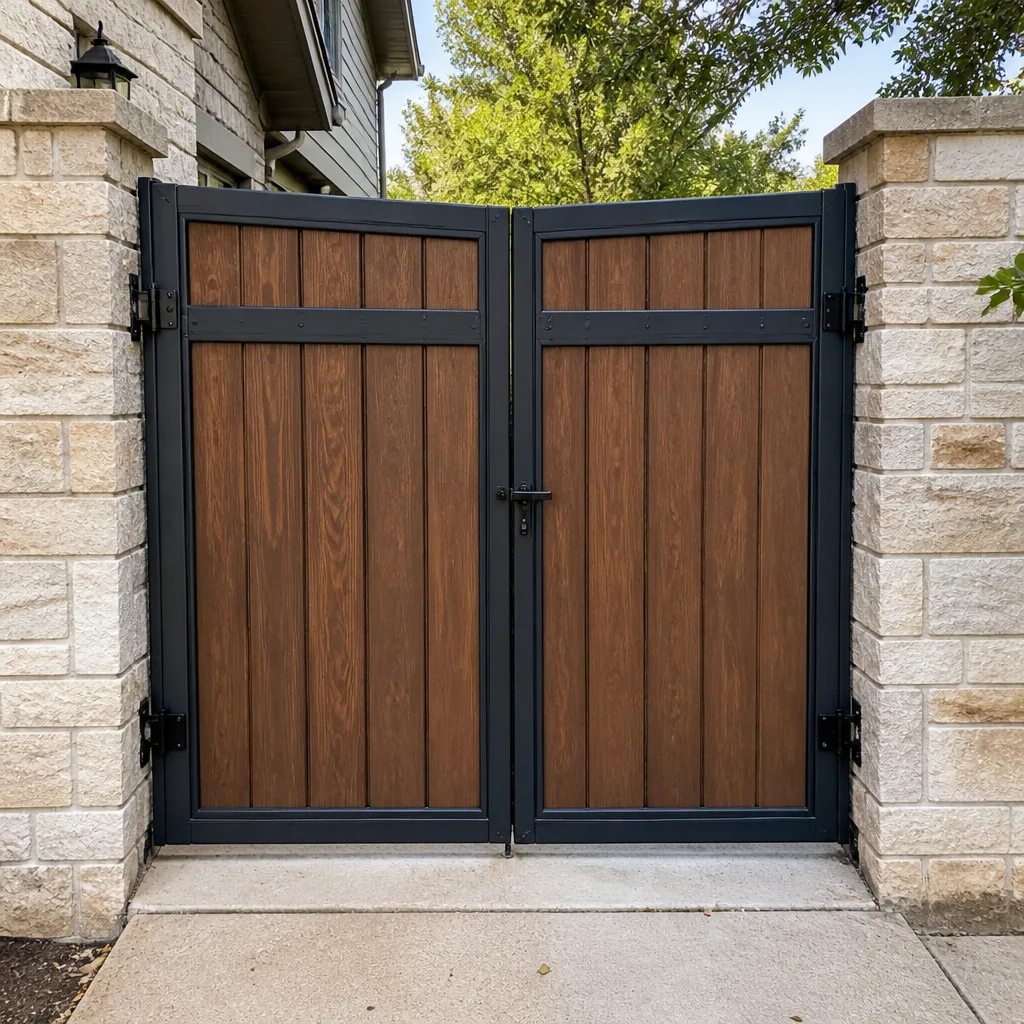 Wood & steel frame
 Farm & ranch
 Sliding driveway gates
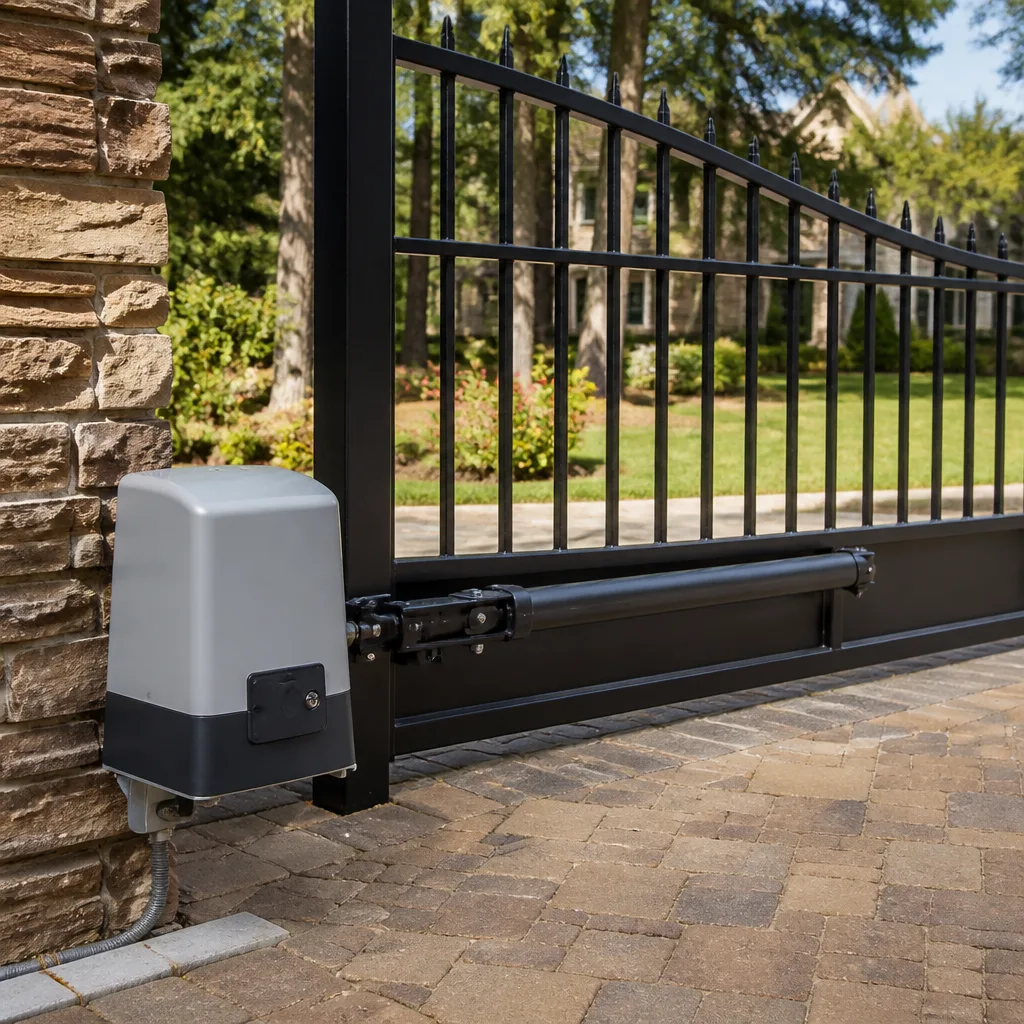 LiftMaster operators
Free on-site gate assessment - hinges, posts, and your LiftMaster or Nice gate operator checked before anything is quoted
The assessment is free and the quote is the invoice.
Get your free estimateSeasonal Gate Repair Care for Summerlin: Year-Round Homeowner’s Guide
The gate calls that spike every July in Summerlin aren’t random. They’re the predictable result of skipping the one service window in May, when heat expansion, UV degradation, and monsoon prep all need to be addressed at once. Miss it and you’ll meet the desert summer on its terms instead of yours: cutout switches tripping at 2 p.m., photo eyes blinded by baked lenses, and operator housings packed with fine dust that arrived in a single afternoon. This guide walks through Summerlin’s real stress calendar month by month, so you can catch the failures before they catch you.
Quick Answer
Summerlin gate care is not about four equal seasons. It’s about two stress periods (the June through September heat peak and the spring dust-storm window) separated by two low-maintenance windows. The single most important step is a May service visit that resets thermal cutouts, swaps lubricant for the heat, clears dust from operator housings, and confirms your photo eyes see clearly. Homeowners who do that step report far fewer July failures than those who wait for something to break.
Styles & brands we work with
- Wrought iron
- Wood & steel frame
- Farm & ranch
- Sliding driveway gates
- LiftMaster operators
Table of Contents
- Why Summerlin’s Heat Peak Strains Gate Operators
- The May Service Window: Before Temperatures Rise
- The Spring Dust Window: Haboob Infiltration and What It Leaves Behind
- Post-Monsoon Inspection: Reading a Control Board
- Winter Care: Condensation, Terminals, and Cold Batteries
- The Month-by-Month Gate Care Calendar
- Common Mistakes to Avoid
- Frequently Asked Questions
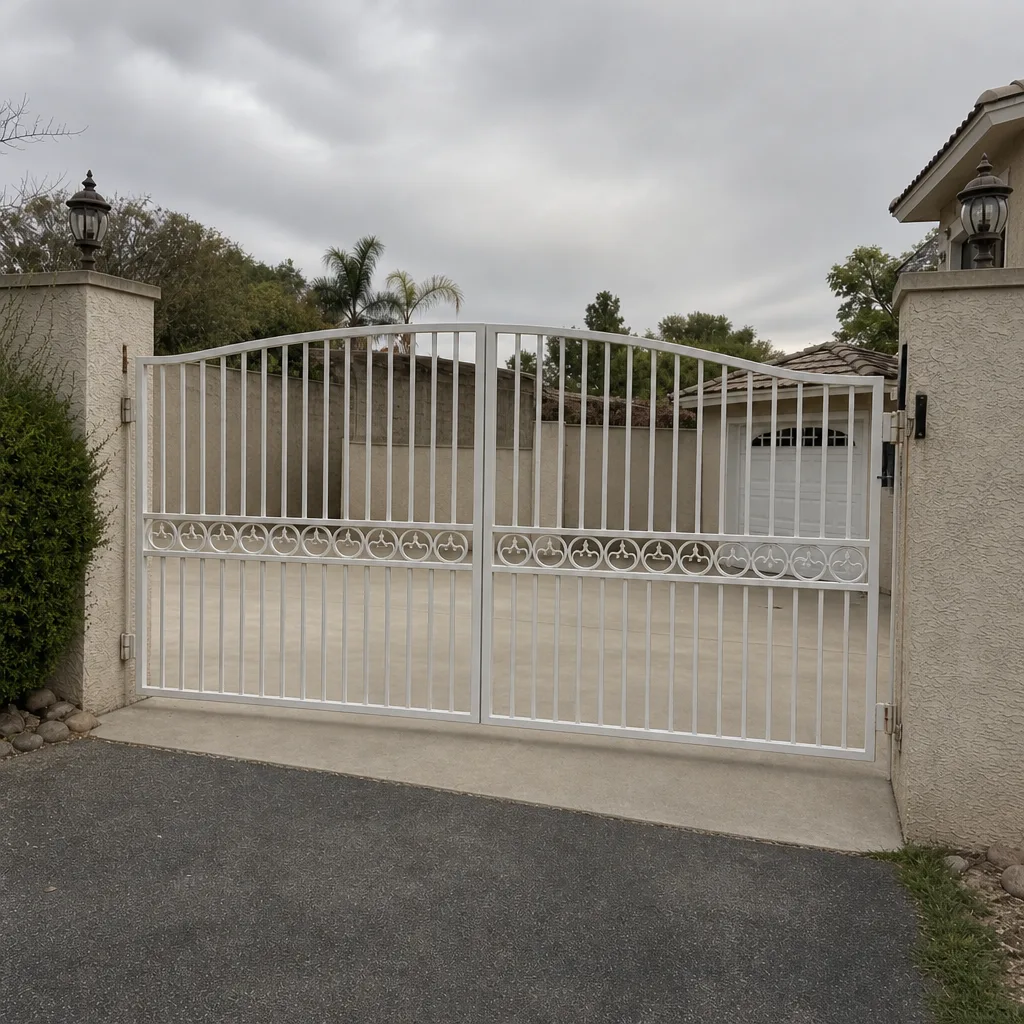
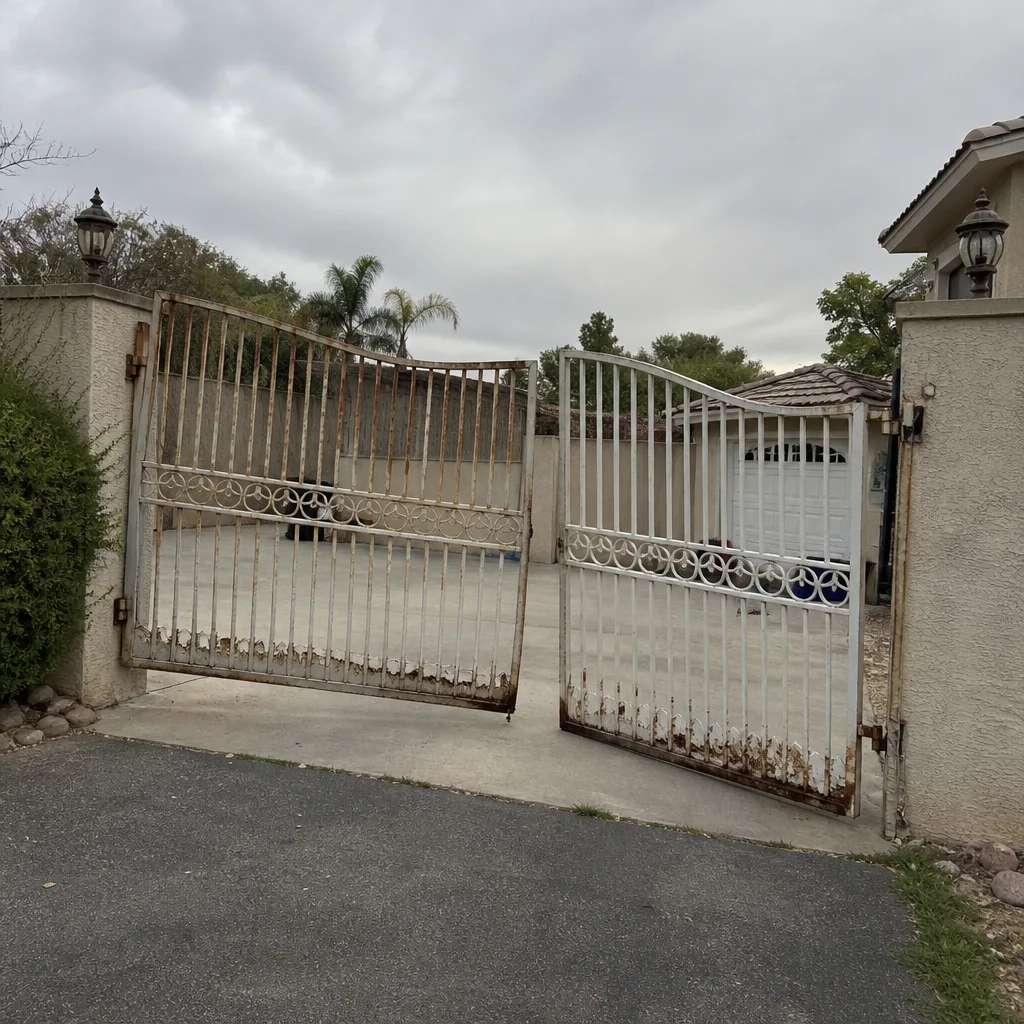 Before
 After
Why Summerlin’s Heat Peak Strains Gate Operators
Summerlin sits at roughly 3,000 feet in the Mojave, and its summers are relentless: sustained highs over 100°F from June into September, with UV indices that regularly top 10. That combination works on your gate from two directions at once. The first is thermal. Aluminum frames in Summerlin expand more than steel frames over the same temperature swing, and a swing gate whose hinge geometry was set in April can bind slightly by July. The second is UV. Photo-eye lenses, wiring insulation, and the plastic housing on operator control boards all degrade faster under a desert sun than most homeowners expect.
The operator itself is the weak point. Every automatic gate motor is rated to a duty cycle, and a Summerlin driveway gate that cycles 30 times a day during the school year does more thermal work each cycle in July than in December. When an operator’s thermal cutout trips, that’s not a fault; it’s the motor protecting itself. The problem is when it trips repeatedly in the same afternoon or when the cutout was never checked against the manufacturer’s spec for ambient temperature. If your gate stops mid-travel and restarts 20 minutes later, don’t reset the breaker and move on. Get it looked at.
We service nine gate automation brands, including Viking, Ghost Controls, DoorKing, and Elite, and the heat-related failures show up similarly across all of them: limit switches drifting past travel, control boards cooking in unvented housings, and photo eyes that look fine but can’t hold an infrared beam because the lens has clouded. For gates that need a repair rather than a part, our Gate Repair in Summerlin page covers the common failure modes and what to expect on timing.
The May Service Window: Before Temperatures Rise
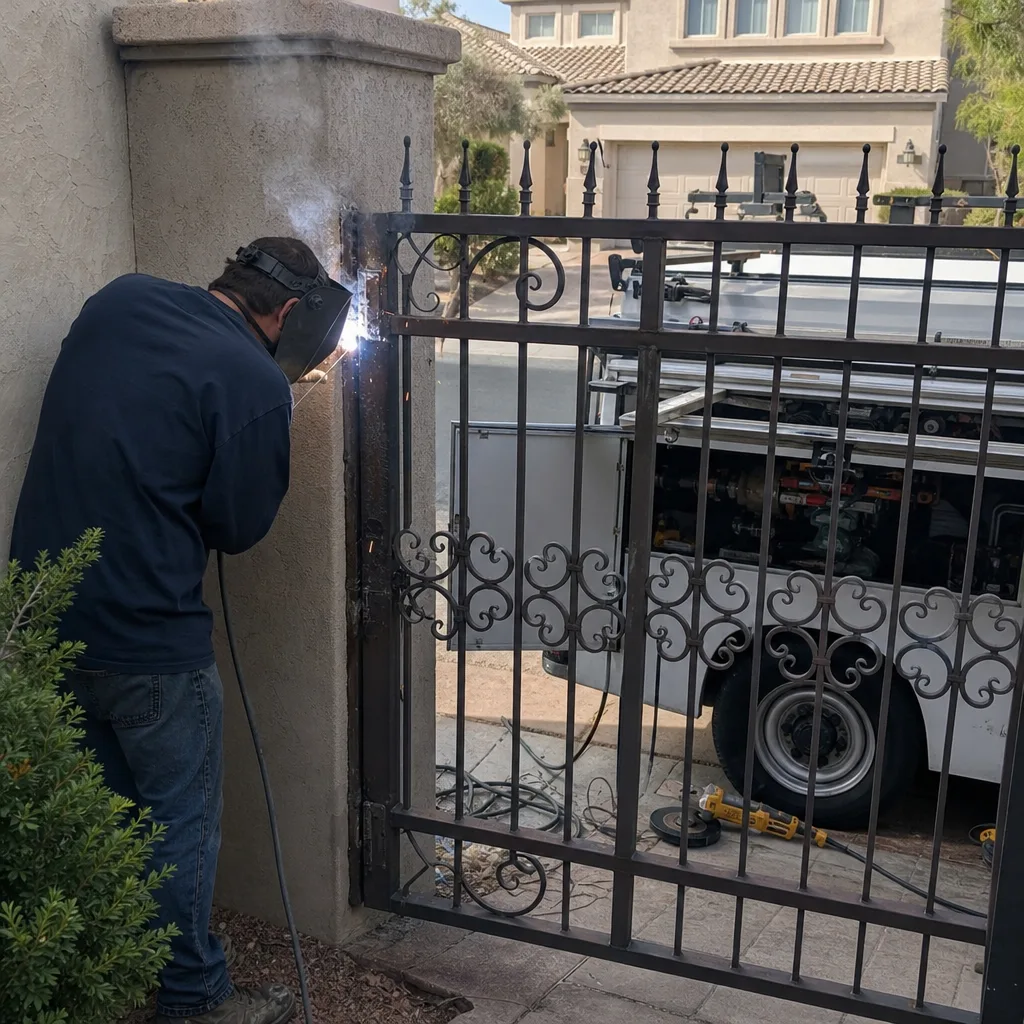
May is the hinge month in Summerlin. In a good year, days are in the mid-90s toward the end of the month, and the overnight lows stay low enough that a technician can work without the operator heat-soaking under them. That’s why nearly every preventive step we recommend lands in this window: it’s the last time before the heat peak when you can adjust a system without fighting the ambient temperature.
Here’s what a May service call should cover, in order:
- Thermal cutout verification. Check the operator’s cutout setting against the manufacturer’s spec for the hottest expected ambient temperature. A cutout set for mild climate will trip too often at 110°F; one set too high lets the motor run hot.
- Ventilation check. Confirm the operator housing vents are clear and that the control box isn’t sitting in direct afternoon sun with no airflow. A small shade panel on a west-facing housing is cheap insurance.
- Lubricant swap. Change any seasonal grease to a high-temperature-rated lubricant for the summer. The wrong grease thins out by July and runs off the gate’s moving parts.
- Photo-eye inspection and cleaning. Clean and re-align both photo eyes. If the lens is clouded by UV, replace it now, not after a failed close in July.
- Limit switch reading. Photograph and record the current limit-switch settings so a later adjustment has a baseline.
- Hinge and roller check. Look for the first signs of thermal expansion binding – a swing gate that’s harder to push by hand than it was in March is telling you something.
The Gate Motor & Opener in Summerlin service page covers brand-specific diagnostics if your operator is showing signs of age. For now, remember the point of the May visit: you’re buying yourself a quiet July.
The Spring Dust Window: Haboob Infiltration and What It Leaves Behind
Late March through May is Summerlin’s wind season, and when the region gets a haboob – the wall of dust that rolls across the valley – the fine particulate gets into everything. On a gate, that means the operator housing, the photo-eye lenses, the control board, and the older access-control readers if you have them. Dust doesn’t usually kill a gate on the day it lands. It kills the gate three weeks later when the particulate bridges a terminal or jams a limit switch.
What dust infiltration looks like when we open a housing after a wind season:
- A fine beige film on the control board and inside the wiring terminals
- Grit collected in the lowest channel of the operator housing, usually right under the board
- Photo-eye lenses with a semi-opaque scuff that a cloth won’t fix
- Limit-switch contacts with visible dust bridging the gap
- Loose fasteners on the housing cover where vibration has loosened a gasket
A proper post-dust inspection means opening the housing, not just wiping it. If your operator is a DoorKing or Elite model with a sealed board, the inspection is a look only; if it’s an older housing with exposed terminals, don’t run a compressor near it without a technician. A homeowner can safely clear dust from the outside of the housing, check the photo-eye lenses, and photograph any visible intrusion. Anything inside the board is technician territory. See our Vance Gate Repair Summerlin home page for how we document what we find.
Post-Monsoon Inspection: Reading a Control Board
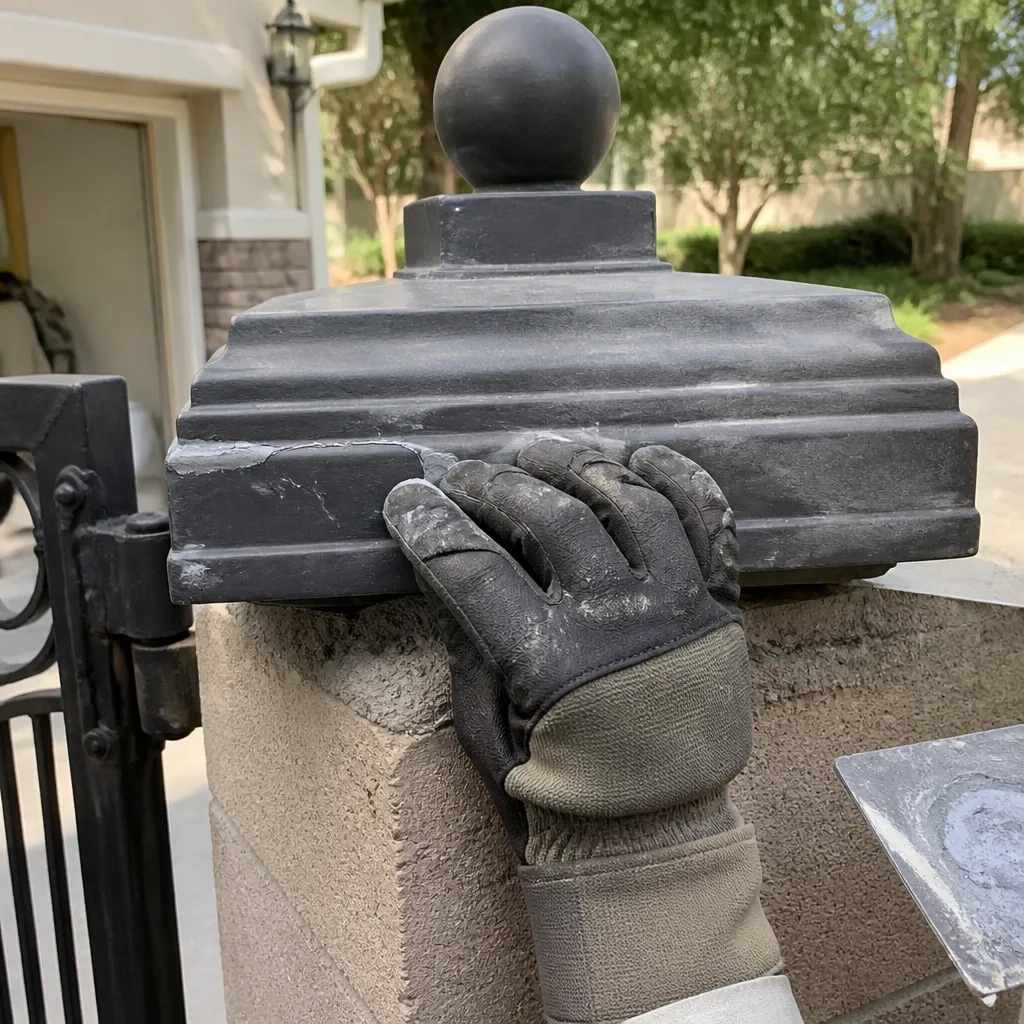
The North American monsoon reaches the Las Vegas Valley in July and August. Summerlin usually gets the edges of it – fast afternoon storms, gusty fronts, and enough moisture to make a dusty operator housing into a dusty, humid one. That’s the worst combination for a control board, because dust that’s dry is an insulator; dust that’s wet conducts. A terminal that had a fine dust film in June can start causing intermittent faults in August.
Here’s the post-monsoon inspection protocol we run, in order:
- Photograph the board before touching anything. A before photo is the difference between diagnosing what happened and guessing.
- Look for chalky white or green residue on terminals. That’s oxidation, and it’s the earliest sign of moisture intrusion.
- Check for a dark streak on the board surface. Carbon tracking from a shorted trace is a burned smell you can see.
- Test the photo eyes. If the gate won’t close reliably in the afternoon, a wet lens or a misaligned pair is the first suspect.
- Confirm the housing gasket is intact. A monsoon is a good test for whether your operator housing is actually sealed.
If you find oxidation, don’t scrubbing-brush it. Terminal cleaning requires the right tool and a documented reading of what the terminal was and what you set it to afterward. Our team records every limit-switch reading and wiring diagram on file so no future technician has to rediscover the same setup – a habit that started on commercial access-control sites and carried into every residential gate we touch. For Summerlin homeowners who want a printed record, the Gate Installation in Summerlin page also describes how our documentation works on new installs.
Winter Care: Condensation, Terminals, and Cold Batteries
Summerlin winters are mild, but they’re not dry. December through February, overnight lows dip into the 30s and 40s, and morning dew on an operator housing is normal. That temperature swing is what drives condensation inside a housing: warm daytime air, cool night, moisture pulled in and trapped. Two things suffer most: electrical terminals (which oxidize faster with any moisture present) and battery backup (which sags in cold and can fail to hold a gate open during a power outage).
Winter service priorities in Summerlin, in order:
- Check terminal tightness and look for oxidation on any exposed terminals
- Test battery backup under load at expected winter ambient temperature, not just voltage at rest
- Confirm the operator housing is actually dry inside; if there’s moisture, find the source before it freezes into a seal
- Lubricate moving parts with a winter-rated grease so they don’t stiffen
- Run a full open-close-open cycle and record any change in speed
If the gate feels slower in December than it did in October, that’s a signal to look at the battery and terminals before the next cold snap. Winter is also a good time to book the free second opinion we offer on any written estimate from another gate company – bring the paperwork and we’ll review it at no cost.
The Month-by-Month Gate Care Calendar
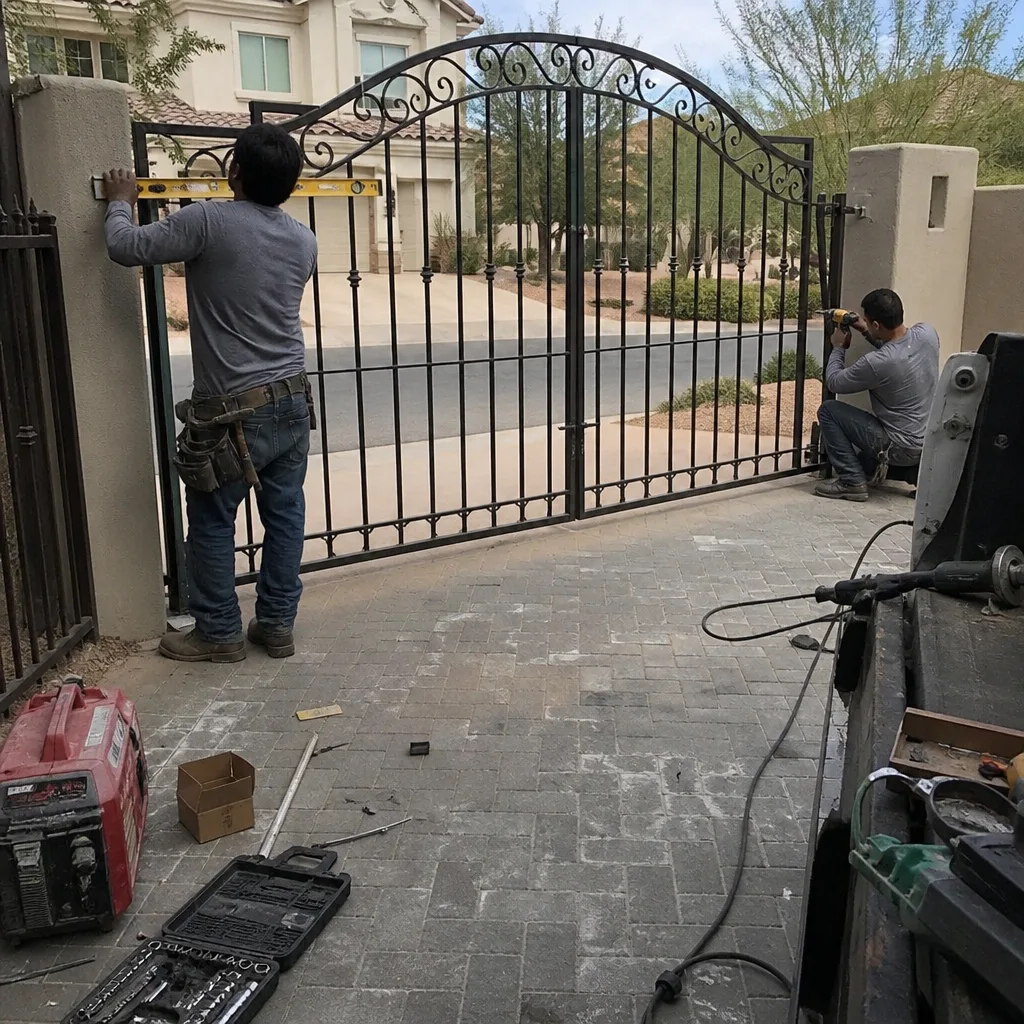
Here’s the calendar grid we hand Summerlin homeowners. It’s assigned to months, not seasons, so you can plug it into an existing home maintenance schedule. Tasks marked “pro” should be done by a technician; the rest are safe homeowner checks.
- January: Clear any visible moisture from the operator housing exterior. Test the gate’s open-close cycle once. Pro check: battery load test.
- February: Inspect photo-eye lenses for clouding. Photograph any visible oxidation on terminals. Pro check: tighten terminals, capture readings.
- March: Begin the wind-season watch. Clear debris from around the operator housing. Pro check: inspect the board for dust intrusion.
- April: Replace photo-eye lenses if UV-clouded. Confirm housing gasket is intact ahead of dust season. Pro check: post-dust inspection if the area had a haboob.
- May: The critical month. Run the full pre-summer service: thermal cutout verification, ventilation check, lubricant swap, photo-eye cleaning, limit-switch baseline, hinge binding check.
- June: First real heat. Watch for a gate that stops mid-travel or restarts after 20 minutes. Pro check: verify cutout and cooling.
- July: Monsoon onset. Check photo eyes weekly. Stop using the gate if it starts stopping mid-cycle and call a technician. Pro check: post-monsoon inspection after any storm.
- August: Peak heat and humidity overlap. Confirm terminals aren’t showing chlorophyll-green oxidation. Pro check: full board inspection.
- September: Last heat peak. Watch for hinge binding as aluminum frames expand. Pro check: spring-loaded hinge adjustment if needed.
- October: Cool-down window. Re-lubricate moving parts with winter-rated grease. Clear any dust from the housing exterior.
- November: Test battery backup. Confirm the operator housing is dry inside. Pro check: battery replacement if under load it fails.
- December: Clear debris. Confirm gate speed is normal in the cool morning. Pro check: winter readiness inspection.
The calendar is a starting point, not a rulebook. If your gate has a fault you can’t explain after any item on this list, stop and call.
Common Mistakes to Avoid
- Skipping May. The most expensive Summerlin mistake. A gate that got by on neglect through the spring usually fails in the first week of July.
- Resetting the breaker instead of diagnosing the trip. A thermal cutout is information. Resetting it and moving on just moves the failure to a worse time.
- Spraying compressed air into a dusty operator housing. It pushes grit deeper into terminals. A technician should open the housing and clear it by hand.
- Assuming a slow gate is an old gate. In Summerlin, a slow gate in winter is usually a cold battery or a stiff lubricant, not a worn motor. Diagnosis matters more than replacement.
- Replacing the photo eyes without checking alignment. A misaligned pair will fail again with the new parts installed. The alignment, not the eye, is usually the problem.
- Ignoring a gate that binds in July. That’s thermal expansion on the hinge or frame, and it wears the operator motor faster than most homeowners realize.
- Burying the operator in landscape. A housing that sits against a block wall with no airflow runs hotter in summer and traps monsoon moisture in fall. Airflow is a real part of an operator’s spec.
See the difference
BeforeAfter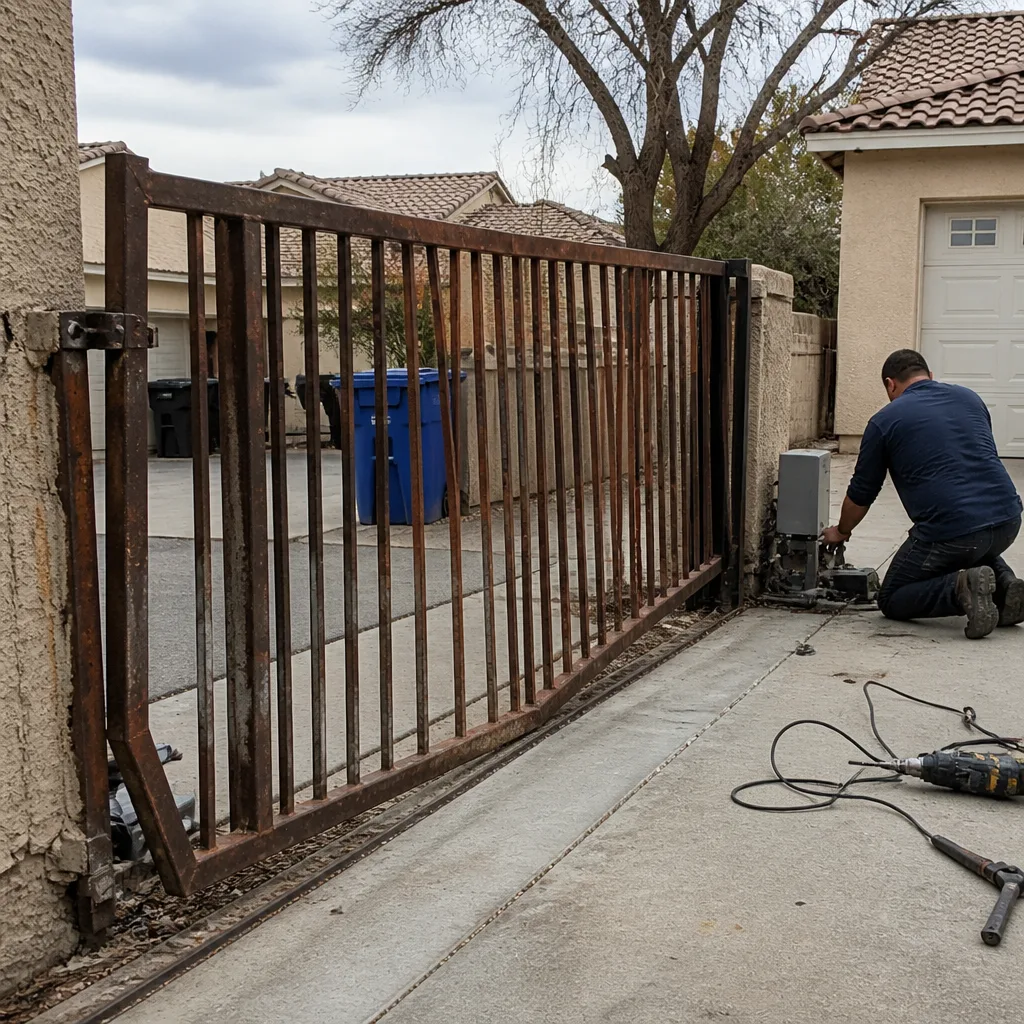 Before
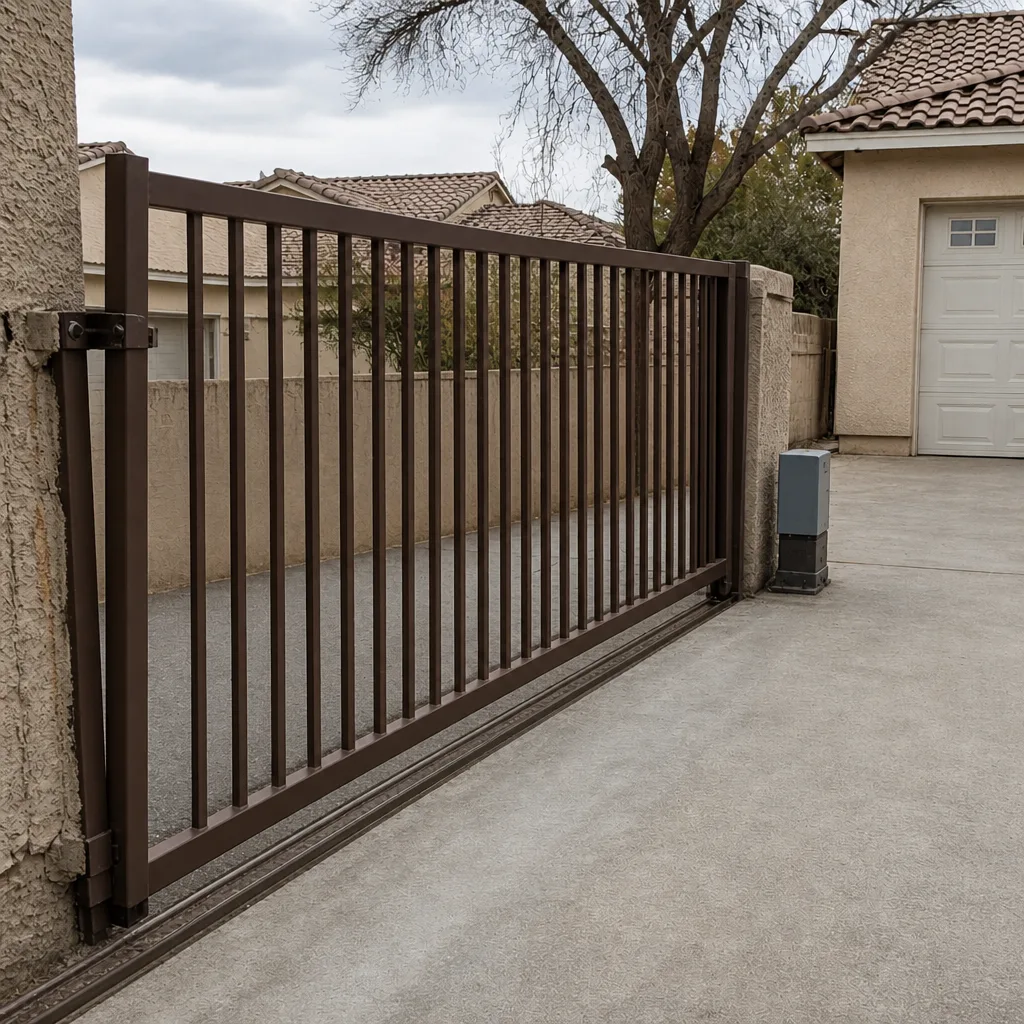 After
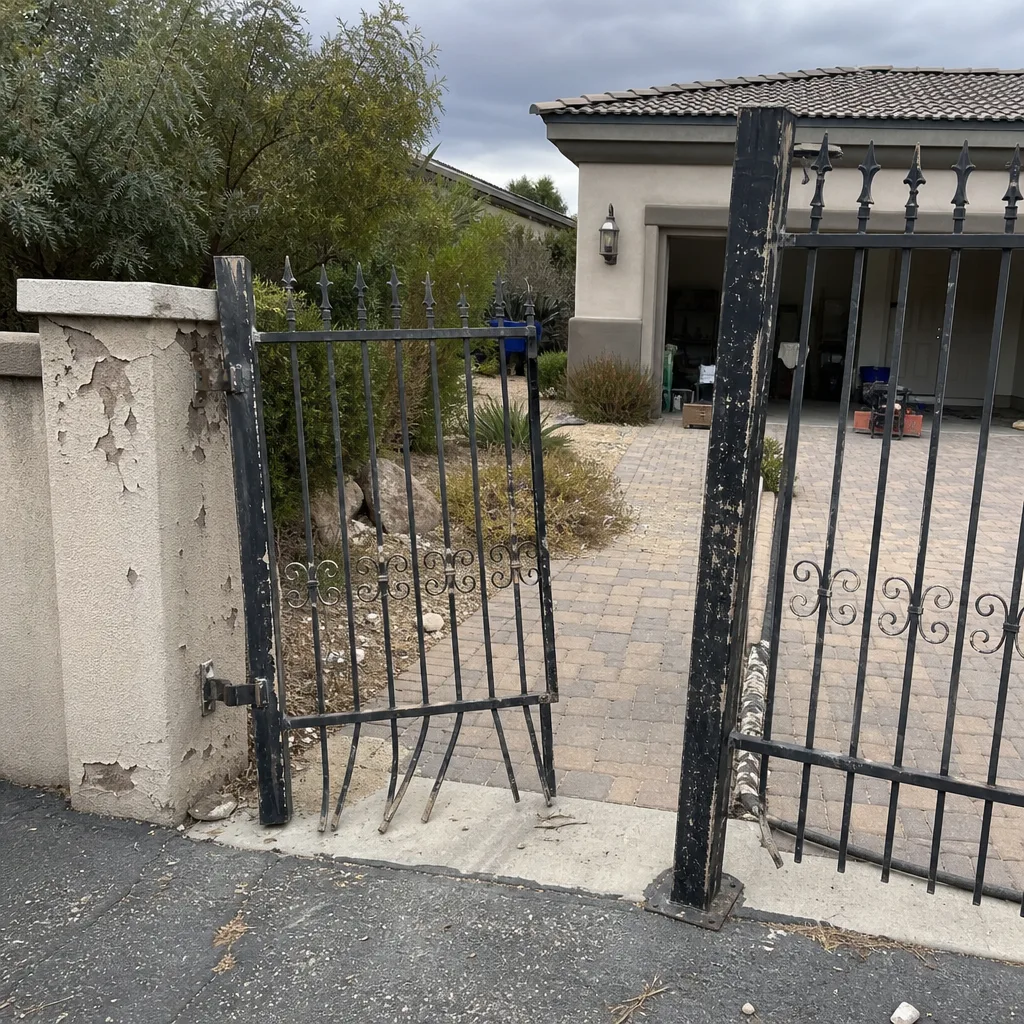 Before
 After
When to Call a Professional
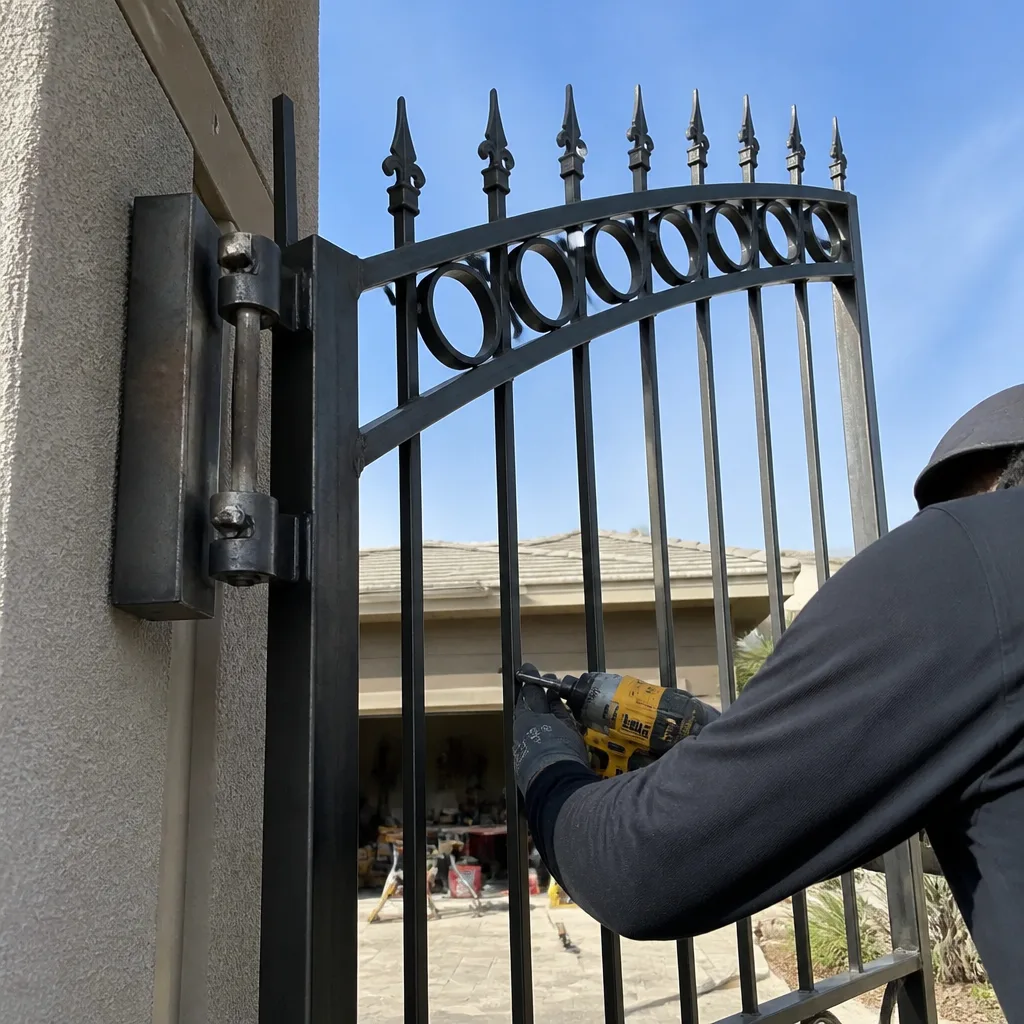
Some failures are diagnostic puzzles a homeowner can solve with a flashlight and a photo. Others aren’t. Call a professional if your gate stops mid-travel and restarts on its own, if the breaker trips repeatedly, if there’s any sign of oxidation or burning on the control board, if a high-voltage component inside the operator housing looks damaged, or if you see an exposed wire or a visible arc inside the housing. Gate operators run line voltage, and a shocked hand is not a diagnostic tool. Older gates with a worn spring or a tired hinge also need a technician on the first visit, because the tension in a well-used gate spring can cause serious injury. Vance Gate Repair Summerlin offers free estimates in Summerlin – call (844) 797-2809. Every job comes with the written price before work starts and a photographed record when the technician leaves, plus the 365-Day Done Right Promise on completed work.
Frequently Asked Questions
May is the most important month. It’s the last window before temperatures exceed 100°F when you can run a full pre-summer service – thermal cutout verification, ventilation check, lubricant swap, photo-eye inspection – so you enter the heat peak with a system set up for it. Call (844) 797-2809 to schedule a May visit; estimates are free.
Fine dust from the spring wind season gets into the operator housing and lands on the control board and photo-eye lenses. It’s an insulator when dry and a conductor when wet, so a housing that looks fine in March can cause intermittent faults in August once monsoon moisture arrives. A post-dust inspection in April or May catches it before it matters. Call (844) 797-2809 for a free estimate.
Yes, but for two specific reasons: condensation inside the operator housing and battery backup performance in cold. Overnight lows in the 30s and 40s drive moisture into a warm-day housing, and a battery that passed at room temperature may fail to hold the gate under load in December. A winter inspection checks both. Call (844) 797-2809 for a free estimate.
That pattern is almost always a thermal cutout trip or a misaligned photo eye. The motor is protecting itself, or the infrared beam between the eyes is being interrupted. Don’t reset the breaker and move on; get it looked at. A technician can read the limit-switch settings and confirm the cutout against the manufacturer’s spec. Call (844) 797-2809 for a free estimate.
You can safely clear debris from around the outside of the housing and clean the photo-eye lenses. Don’t open the housing or spray compressed air into it – the board and terminals need a technician. Anything that puts your hands inside the housing is a call-a-professional situation, because line voltage is present. Call (844) 797-2809 for a free estimate.
We service nine major gate automation brands, including Viking, Ghost Controls, DoorKing, and Elite. That’s intentional: a homeowner shouldn’t have to replace a working motor just because a company prefers one brand. If your operator is one we service, a technician can read the diagnostic codes and match the right part. Call (844) 797-2809 for a free estimate.
The Bottom Line
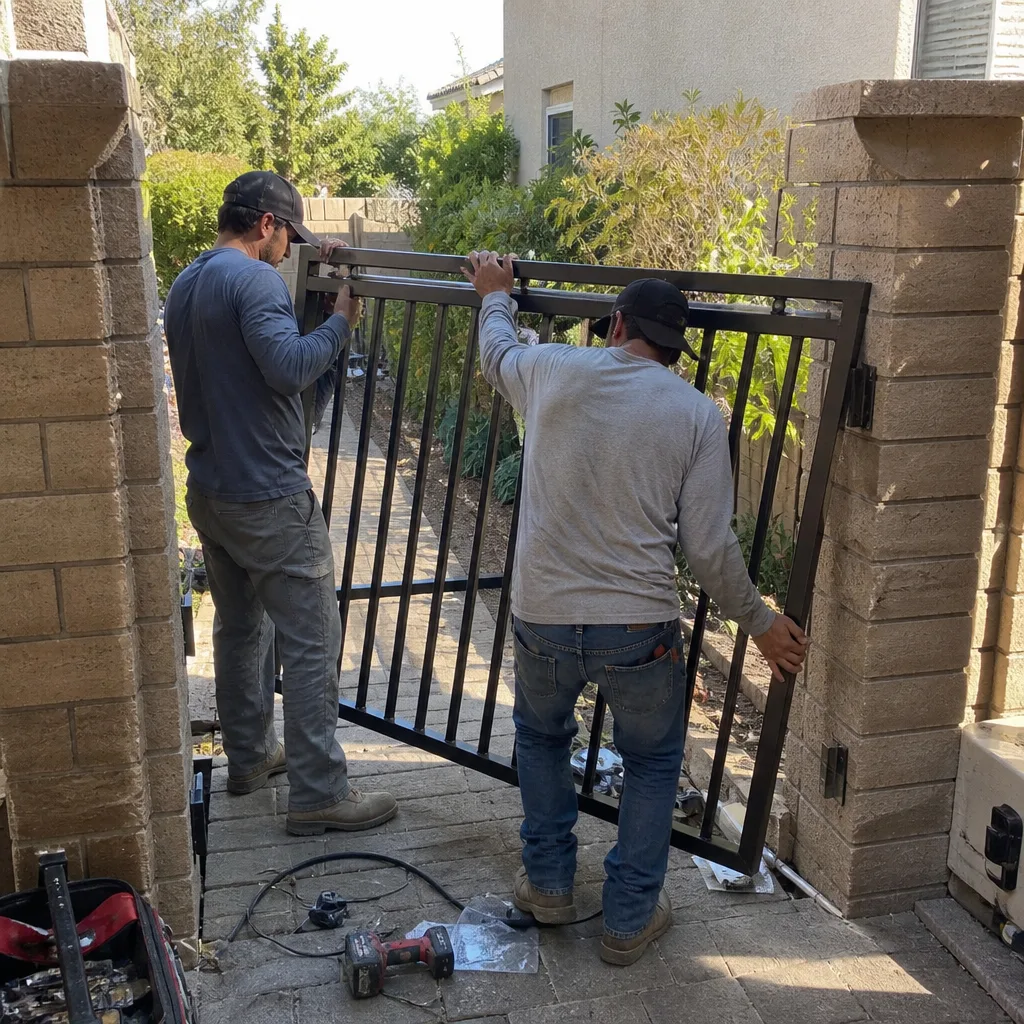
Summerlin’s gate wear is predictable once you stop treating the year as four equal seasons. The May service window is the one you can’t skip; it’s the visit that catches heat expansion, UV degradation, and dust prep before they have a chance to compound. Spring is the dust season; winter is the condensation season; summer is when the consequences show up. Put the month-by-month calendar somewhere you’ll see it, run the homeowner-safe checks, and let a technician handle anything inside the operator housing. A live person at Vance Gate Repair Summerlin is available any hour – call (844) 797-2809 for a free estimate, and under Haven Standard Clause 1, the flat price is in writing before any work starts.
Written by the team at Vance Gate Repair Summerlin.