
Last updated November 17, 2026
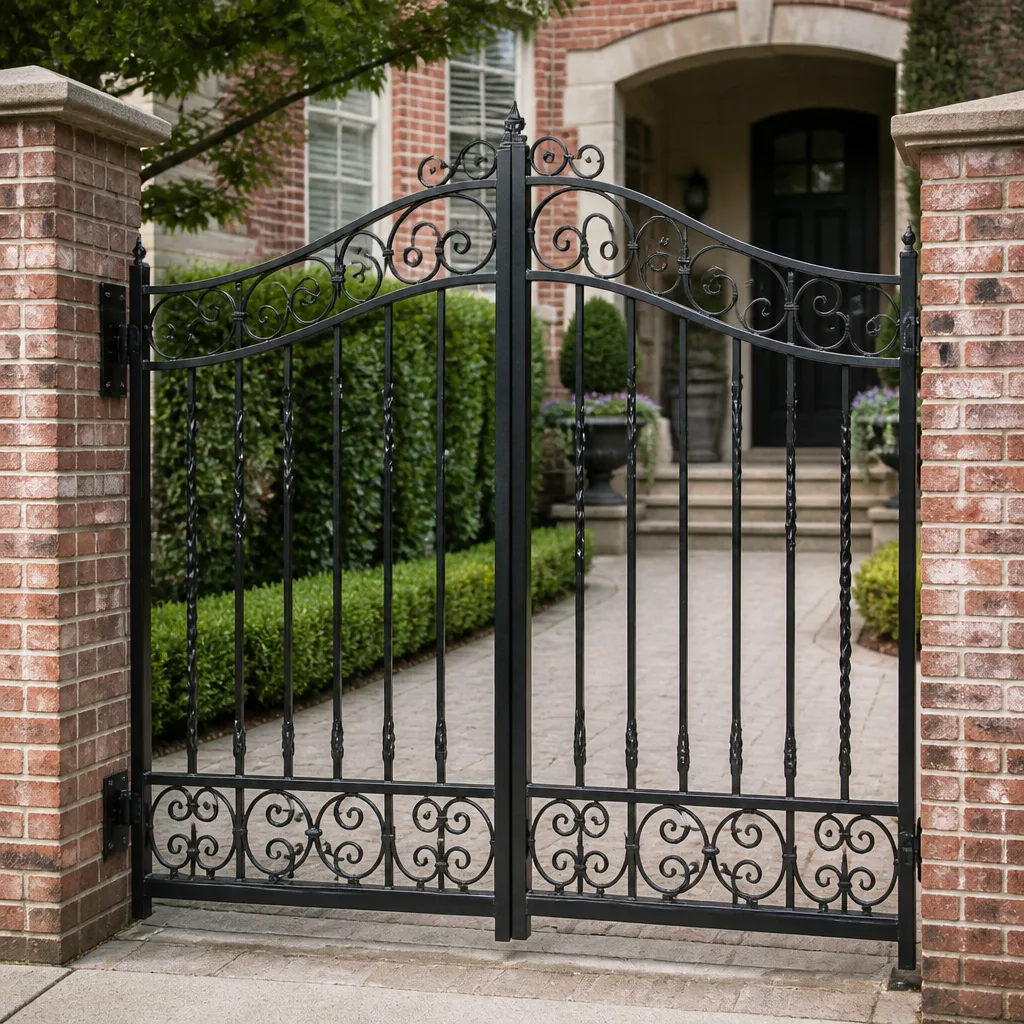 Wrought iron
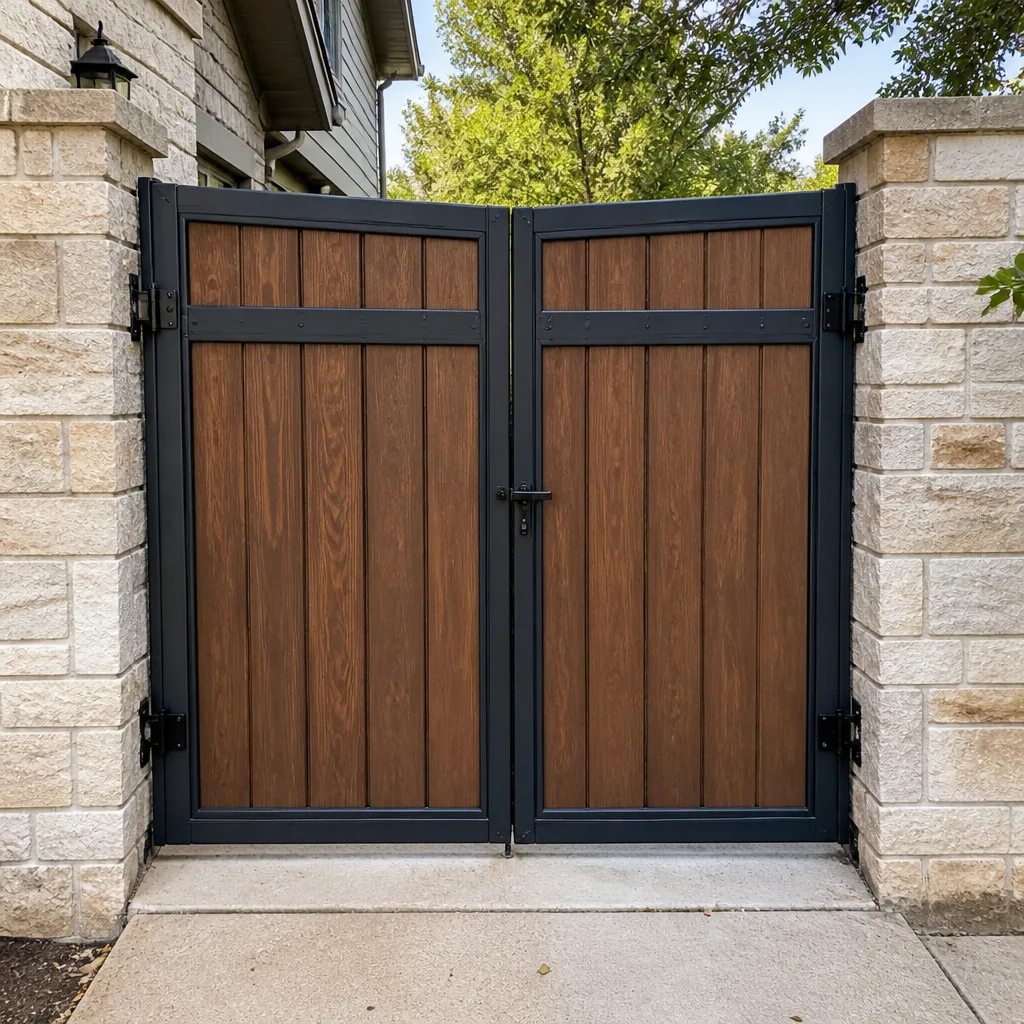 Wood & steel frame
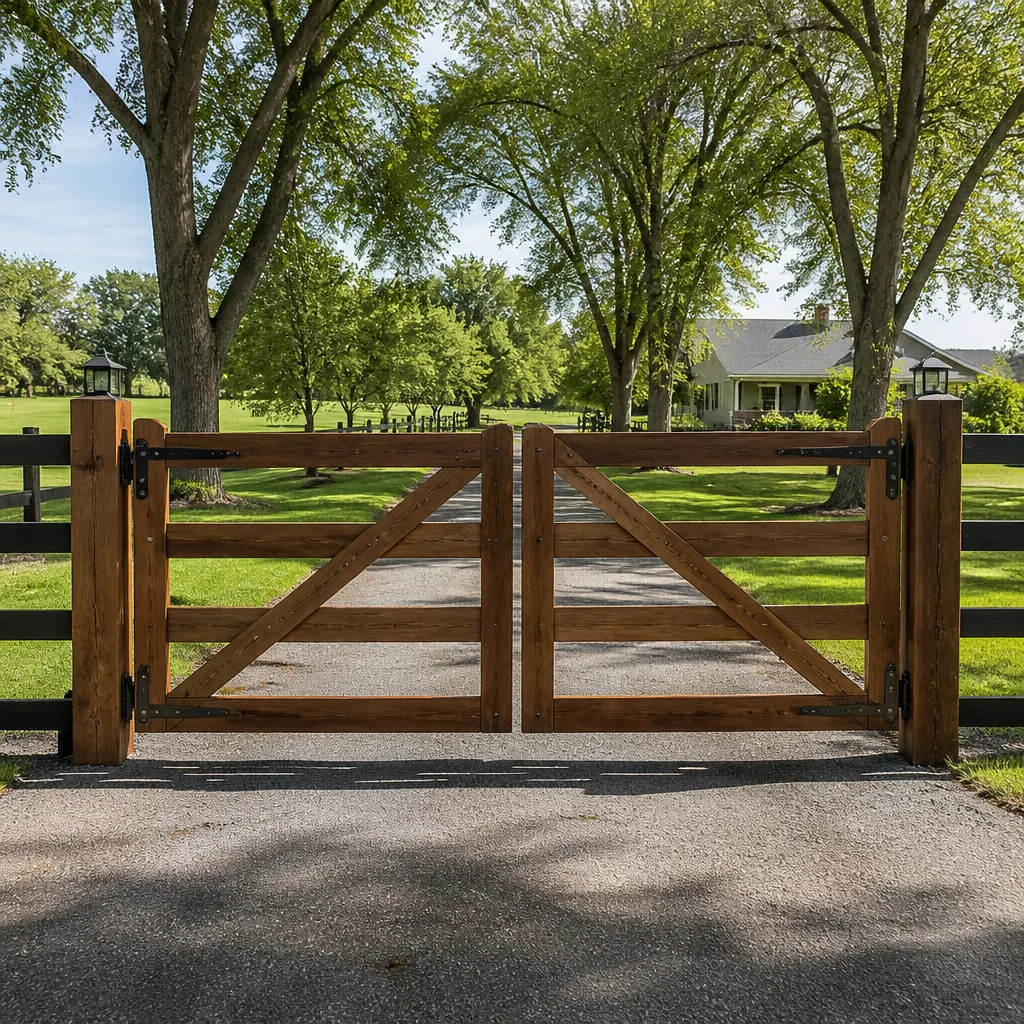 Farm & ranch
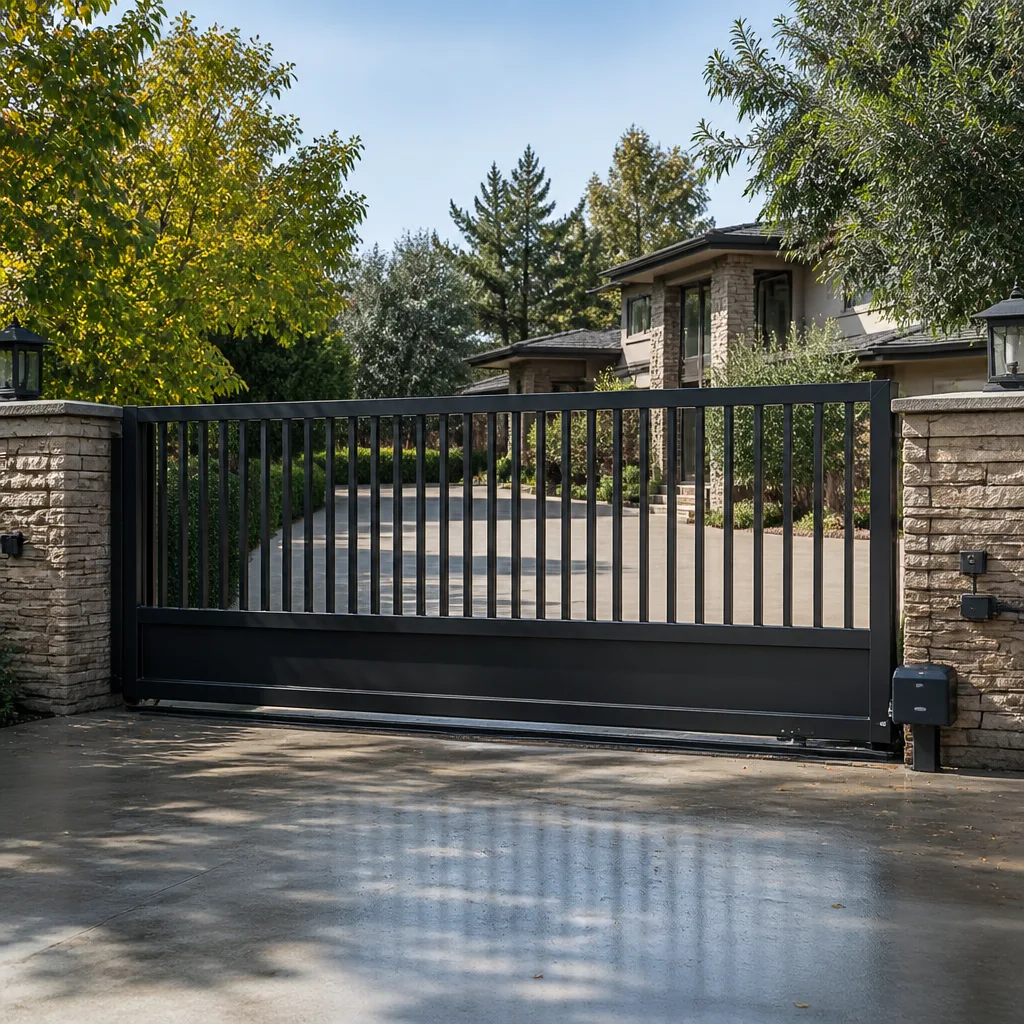 Sliding driveway gates
 LiftMaster operators
Free on-site gate assessment - hinges, posts, and your LiftMaster or Nice gate operator checked before anything is quoted
The assessment is free and the quote is the invoice.
Get your free estimateHow Long Does Gate Parts & Welding Take? Timelines and What to Expect
A weld that gets painted before it’s fully cooled and inspected is a weld that will be redone. The timeline that skips that step isn’t efficient – it’s incomplete. That’s the part most quotes leave out. When a Summerlin homeowner asks how long gate parts and welding take, the honest answer is that the visible work is only a fraction of the job. The assessment, the parts sourcing, the cooling window, the finish cure, and the documentation matter just as much as the bead itself. This guide breaks the whole thing down phase by phase, so you know what you’re paying for and what a realistic schedule looks like before anyone picks up a torch.
Quick Answer
Most gate parts and welding jobs take between one and five days from assessment to finished documentation. A simple stock-part swap with a small weld repair can be done in a single visit of two to four hours. Custom fabrication or structural welding on a gate frame usually runs three to five days because of parts sourcing, cooling periods, and paint cure time.
Styles & brands we work with
- Wrought iron
- Wood & steel frame
- Farm & ranch
- Sliding driveway gates
- LiftMaster operators
Table of Contents
- The Phase-by-Phase Time Breakdown
- Custom Fabrication vs. Stock Part Replacement
- How Summerlin Weather Affects Weld Work
- One-Visit vs. Two-Visit Repairs
- What Completed Structural Work Should Leave Behind
- Questions to Ask Before Accepting a Quote
- Common Mistakes to Avoid
- When to Call a Professional
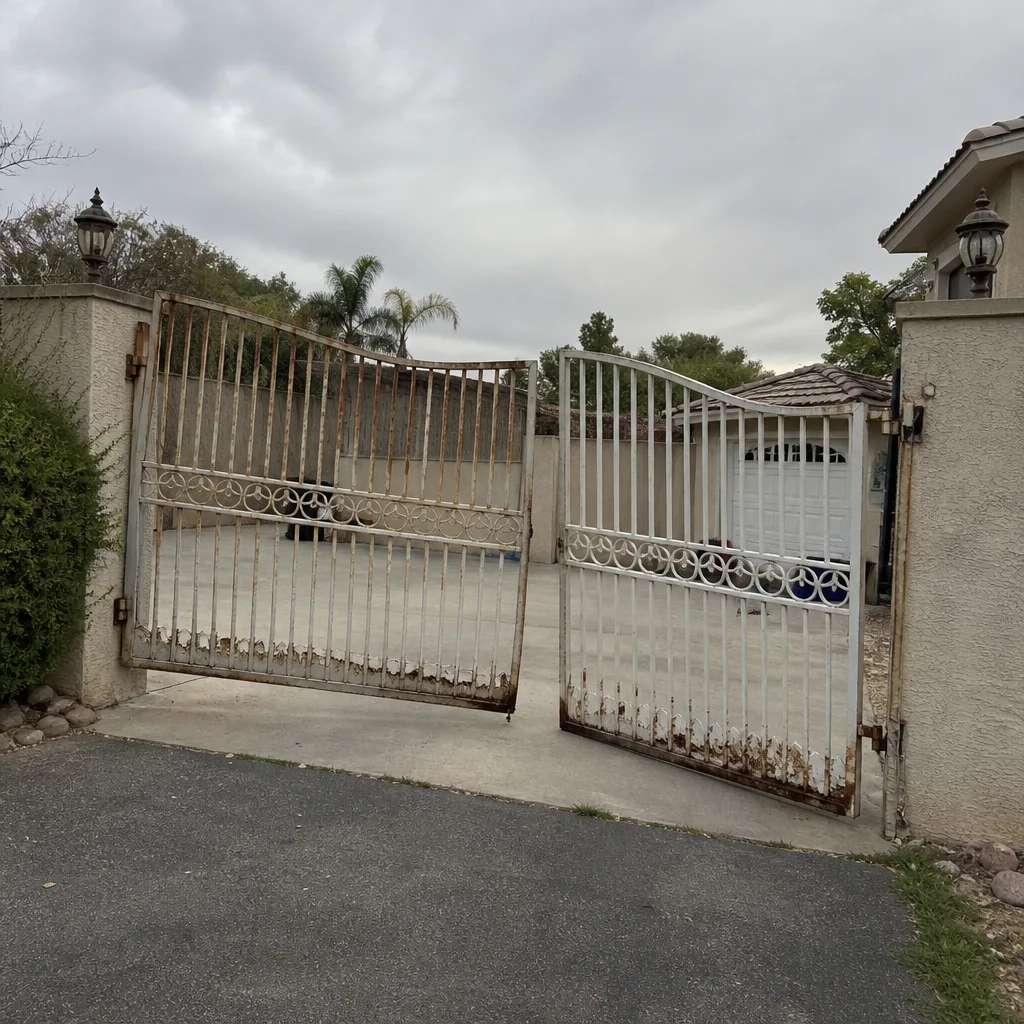 Before
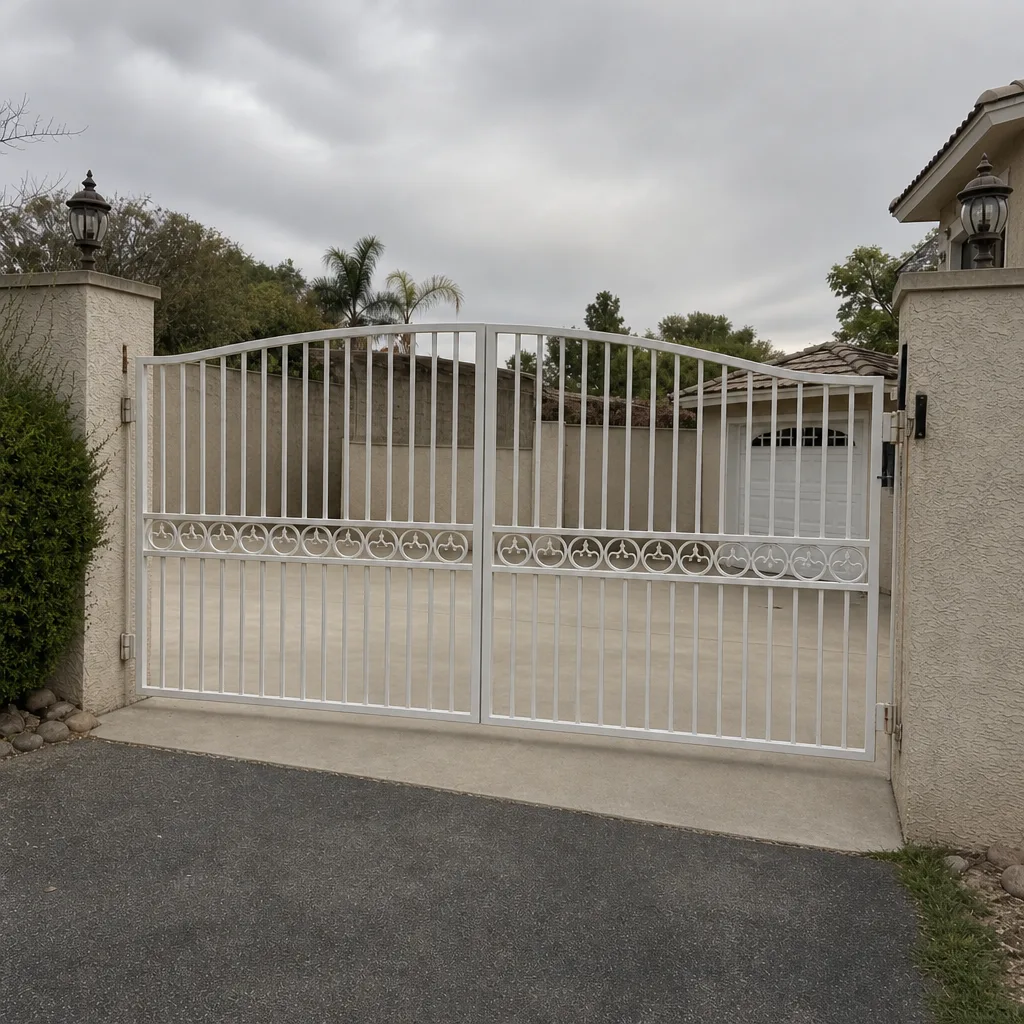 After
The Phase-by-Phase Time Breakdown
The single biggest reason welding timelines get underestimated is that the quote covers fabrication and welding time but not the site assessment, cooling and cure periods, finish work, and documentation that determine whether a repair actually lasts. Here’s the full picture, with realistic durations for each phase.
- Site assessment (30 to 60 minutes). We check hinge alignment, post stability, frame square, and the condition of the weld we’re replacing or repairing. This is also when we photograph the existing setup, so the record shows what was there before we touched it.
- Parts sourcing (same day to five business days). A stock hinge, roller, or latch from a common line can be pulled quickly. A matching part for an older DoorKing or Elite operator may take several days. Custom fabrication adds design and cutting time on top of that.
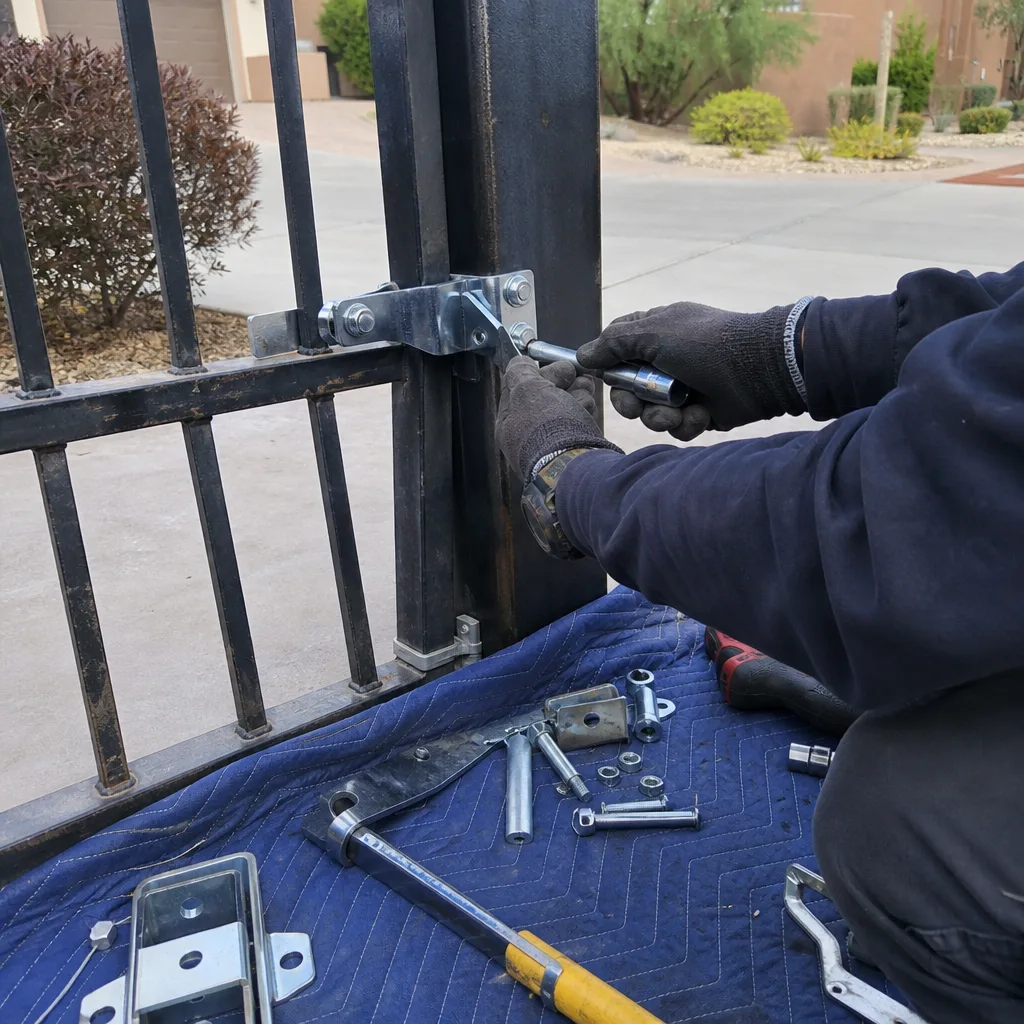
- Prep work (30 to 90 minutes). Grinding back old weld, cleaning the joint, and setting alignment before any bead goes down. Skipping prep is the fastest way to a weld that fails within a season.
- Welding (20 to 60 minutes of actual torch time). The bead itself is quick. What surrounds it is not.
- Cooling (30 to 60 minutes). A weld has to cool at a controlled rate before it’s inspected or painted. Rush this and you get cracking, distortion, or a finish that peels within months.
- Finish work (20 to 40 minutes, plus cure). Grinding the weld smooth, priming bare metal, and applying paint or powder-coat touch-up. Most finishes need several hours to cure before the gate sees regular use.
- Documentation (10 to 20 minutes). Photos of the finished weld, the alignment readings, and the part number installed. Left with the homeowner and filed to the job record.
Add it up and a mid-sized repair in Summerlin runs four to six hours of hands-on time spread across a day, or longer if parts have to be ordered. That’s why a same-day turnaround is possible for some jobs and not for others.
Custom Fabrication vs. Stock Part Replacement
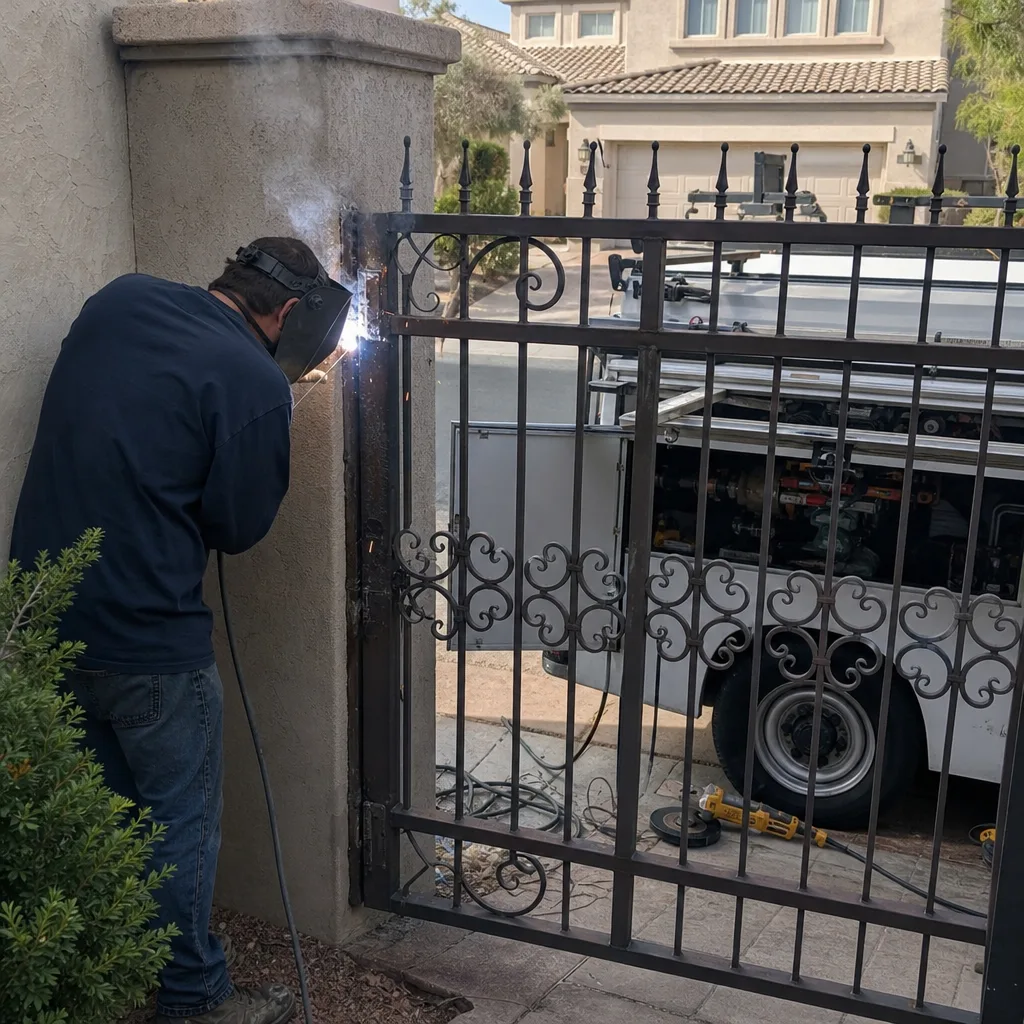
Whether your gate needs a custom fabrication or a stock part swap is the single biggest factor in how long the job takes. The two are not interchangeable, and a quote that treats them as the same thing is a quote you should question.
Stock part replacement covers the common wear items: hinges, rollers, latches, strike plates, and standard operator brackets. When the piece matches a line we service – Ghost Controls, Mighty Mule, Elite, and others – the part is often available quickly and the repair fits into one visit. Timeline: two to four hours on-site once the part is in hand.
Custom fabrication is different. If the gate frame has rusted through at the hinge point, if a post has shifted and the original geometry is gone, or if a homeowner wants a decorative element that no catalog carries, we’re cutting, fitting, and welding new steel to match the existing shape. That means measuring, cutting, test-fitting, welding, cooling, and finishing – and each of those is a separate step with its own clock.
Questions to Ask Before Accepting a Custom Quote
- Is the part being fabricated, or ordered? The answer changes the timeline by days.
- What’s the steel gauge and finish being used, and does it match the existing frame?
- Will the weld be primed and painted during the same visit, or scheduled for a separate trip?
- What happens if the new piece doesn’t fit the first time? Is a re-fit included in the quote?
If a gate company quotes you a flat price and a one-day window for a structural fabrication, ask why. Custom steelwork almost always stretches beyond a single visit, and the honest quote reflects that.
How Summerlin Weather Affects Weld Work
Summerlin sits at the edge of the Mojave, and the local climate directly affects how long weld work takes and when it can safely be done. Temperature swings, wind, and dust all factor in.
Heat. Summer afternoons in Summerlin regularly push past 100 degrees. Welding at those temperatures on a metal gate heats the surrounding frame faster, which raises the risk of warping and makes the cooling phase harder to control. We schedule structural welding for the early morning when we can, and we don’t push a job through a heat spike just to hit a timeline.
Wind. Afternoon gusts along the western edges of Summerlin near the Red Rock corridor kick up dust and grit. Wind can blow shielding gas away from a weld and drive grit into a fresh bead before it cools. On high-wind days, we reschedule rather than fight it.
Monsoon season. Late summer storms roll in fast. If there’s moisture in the air or on the metal, welding gets pushed. Wet steel and welding don’t mix, and painting a damp surface guarantees a finish that fails.
Cold snaps. Winter mornings in Summerlin can dip below freezing, which slows paint and powder-coat cure time. That adds hours to the finish phase, not minutes.
When to Reschedule vs. Push Through
- Reschedule: high wind, active rain, ambient temperature above 105 degrees, or metal that’s wet from a morning storm.
- Push through: cold-but-dry conditions (add cure time), light breeze, mid-day heat if the weld joint is small and the gate is in shade.
A gate company that never reschedules for weather is a company that’s cutting the cooling and cure phases. That’s the difference between a repair that holds and one you’ll be paying for again next year.
One-Visit vs. Two-Visit Repairs
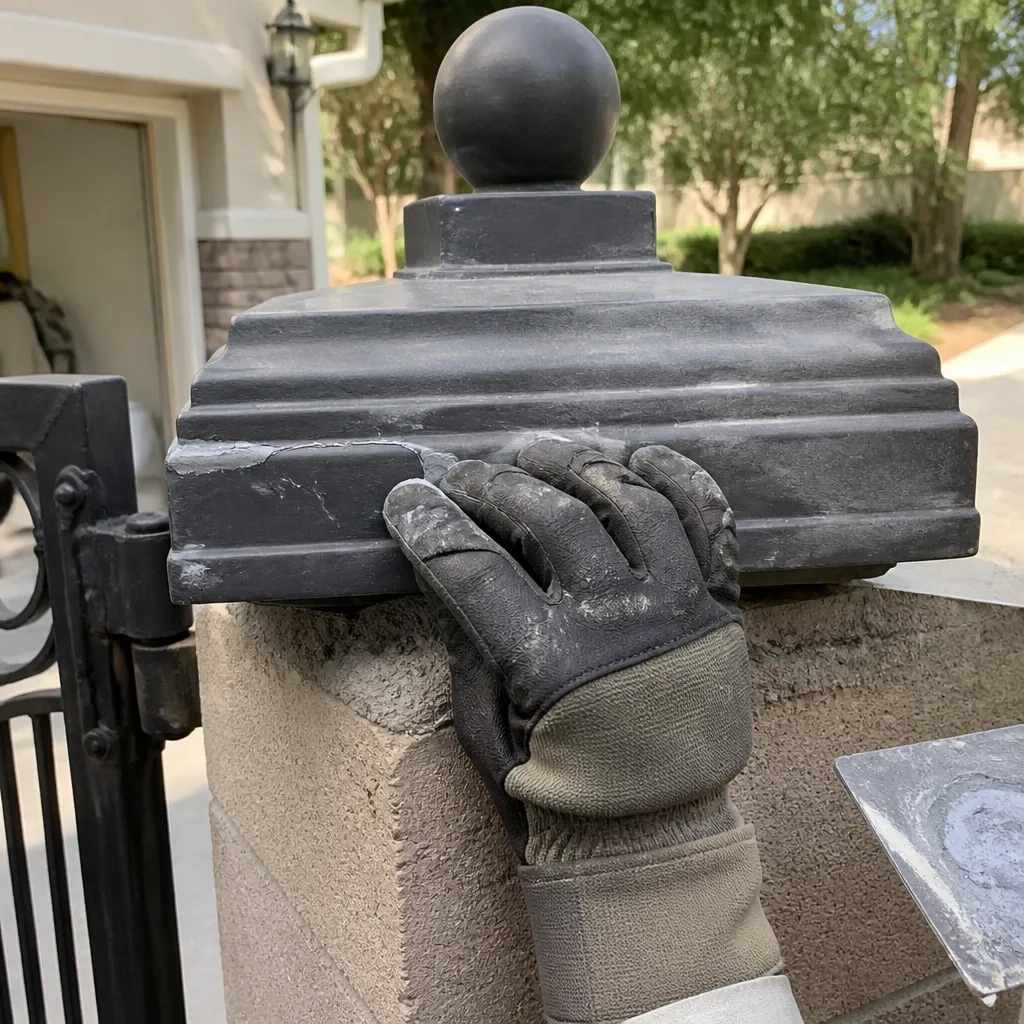
Homeowners often expect one visit to finish everything. That’s realistic for a good number of jobs, but not all of them. Here’s what separates the two.
A One-Visit Repair Usually Means:
- The part is a stock item already in the supply chain and can be sourced within the same day.
- The weld joint is small, accessible, and doesn’t require disassembly of the gate.
- No paint or powder-coat cure is required before the gate goes back into service.
- Alignment and limit-switch readings confirm the gate operates cleanly at the end of the visit.
A Two-Visit Repair is Triggered By:
- Custom fabrication that has to be cut, welded, cooled, and finished – which means the paint stage may fall on a second day.
- A part that has to be ordered from a supplier, especially for brands like Ghost Controls or Elite where the exact replacement may not be stocked locally.
- Post footing damage that requires concrete cure time before the hinge can be re-anchored.
- Anything structural on a gate frame where the steel has distorted from heat and needs to be re-squared after cooling.
In our experience, the two most common two-visit triggers in Summerlin are hinge-post footings that have loosened in the caliche-heavy soil near the western neighborhoods, and paint cure timing during the summer. Neither is a sign of a bad job. Both are signs that someone’s actually paying attention to the phases.
What Completed Structural Work Should Leave Behind
A finished weld isn’t a finished job. The documentation that follows is what separates a repair you can trust from one you hope holds. Under the Haven Standard, every visit is supposed to end with a photo log of the work.
What You Should Receive at the End of a Structural Repair
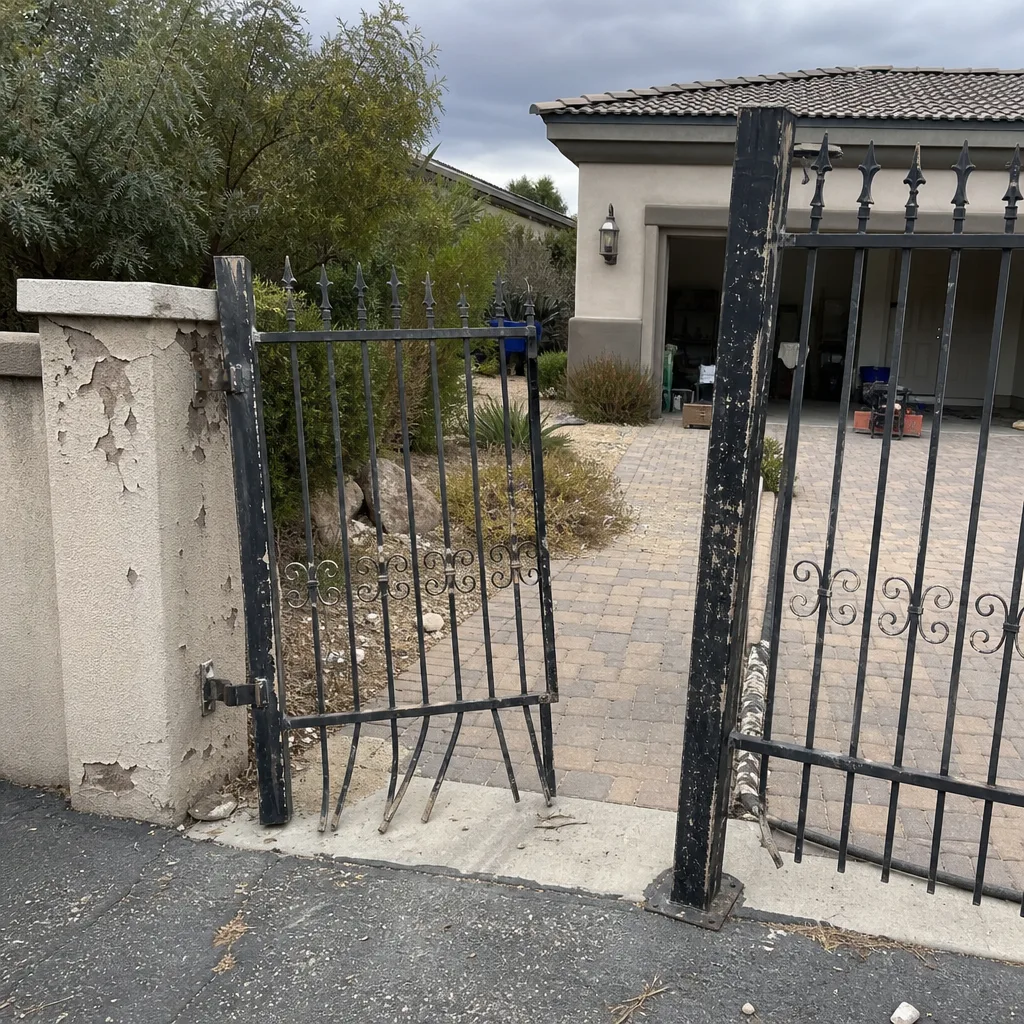
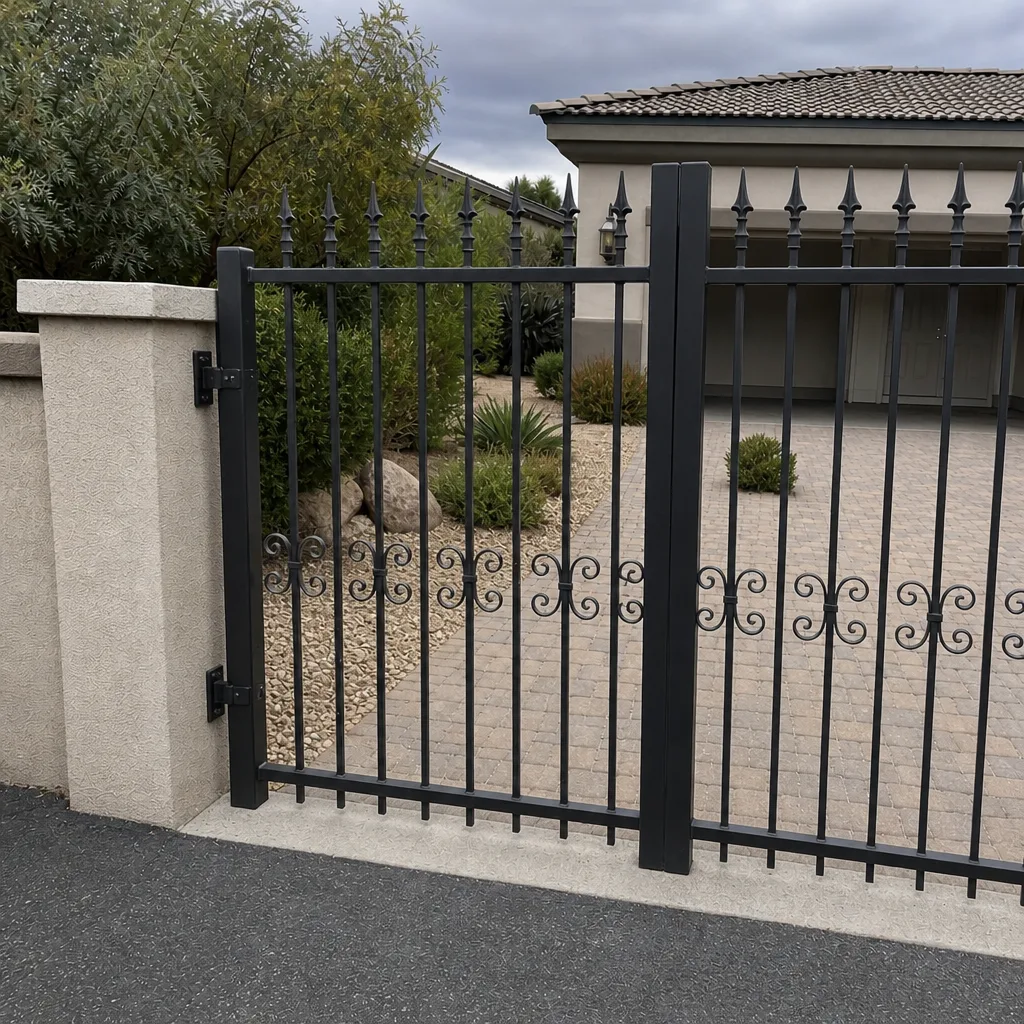
- Photos of the weld before and after. Bare joint, cooling bead, ground smooth, and finished. Every stage documented.
- Alignment and measurement readings. Gate square, hinge gap, and (where relevant) limit-switch position, in numbers.
- The part number and material spec. Steel gauge, finish type, and the brand of any hardware installed.
- A written summary of what was found and what was done. Not a phone call – a piece of paper or a file you can hand to the next technician.
- The warranty terms in writing. For us, that’s the 365-Day Done Right Promise. If the repair isn’t right within a year, we make it right at no charge.
The reason we document structural work this heavily is simple. A future technician looking at your gate shouldn’t have to guess what’s inside the frame or what was welded where. The record answers those questions, so nobody charges you twice to rediscover the same problem. This documentation habit came out of commercial access-control work, where every wiring diagram and limit-switch reading has to be on file. It’s the same standard we bring to a residential gate in Summerlin.
Questions to Ask Before Accepting a Quote
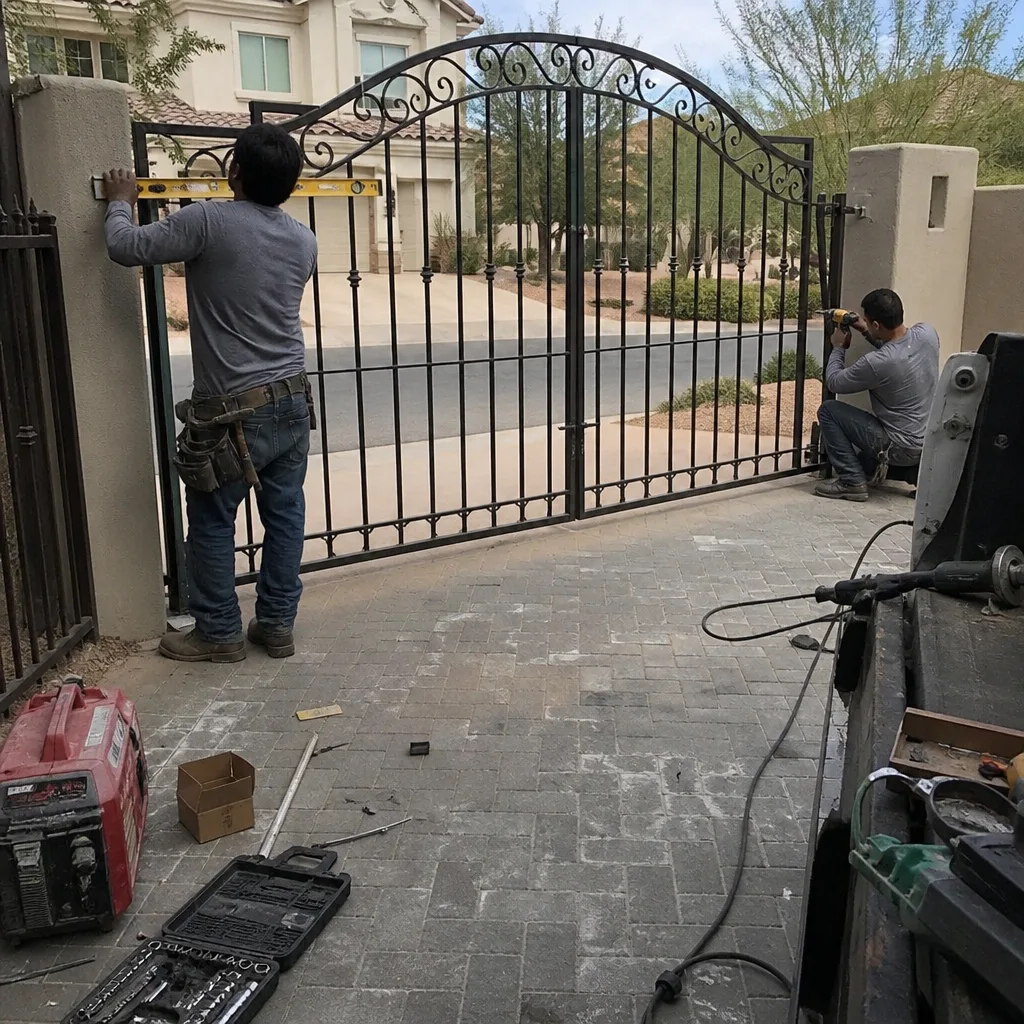
A written quote is the foundation of any repair. What’s in that quote – and what’s left out – tells you a lot about the timeline you’re being promised. Here’s what to ask before you sign.
- What’s the parts lead time? Stock parts are days or hours. Custom fabrication is longer. Ask for a specific window, not a range.
- Is the finish cure time included in the timeline? If a company says paint will be dry in an hour, ask what kind of paint.
- How many visits is this quoted for? A one-visit quote and a two-visit quote are different jobs. Get the right one.
- What happens if the new part doesn’t fit? A re-fit clause in writing protects you from being charged twice for the same measurement.
- What documentation will I get at the end? Photos, measurements, part numbers. If a company can’t answer that, they don’t produce it.
- What’s the warranty on the weld and the part? Welds and parts carry different guarantees. Get both in writing.
If you’re comparing quotes from multiple companies, we’ll review a written estimate from another company at no cost. Bring the paperwork, and we’ll look at what’s covered and what isn’t. That’s part of our standard practice, not a special favor.
For a broader look at what gate repair in this area covers, see our page on Gate Repair in Summerlin. If your job involves an operator or automation, the timing questions shift, and the Gate Motor & Opener in Summerlin page covers that side. And for a full replacement rather than a repair, the schedule is different again – that’s laid out in Gate Installation in Summerlin.
Common Mistakes to Avoid
- Accepting a verbal timeline. A quoted duration that isn’t in writing is a number that changes. Ask for the schedule in the same document as the price.
- Letting a shop skip the cooling phase. If a weld is painted the moment the torch comes off, the metal hasn’t stabilized. You’ll see cracking within a year in Summerlin’s heat swings.
- Ordering a “close-enough” part. A hinge that almost fits puts stress on the weld joint every time the gate swings. On a Mighty Mule or DoorKing operator, a mismatched bracket also throws off the limit settings.
- Ignoring the footing. In Summerlin, the caliche-heavy soil around many properties holds up well, but a footing that has cracked or shifted will fail a perfectly good weld within a season. The weld is only as solid as what it’s anchored to.
- Pushing a job through high wind or heat. A shop that insists on welding in 110-degree gusts to keep a schedule is trading today’s timeline for next year’s redo.
- Skipping the documentation. A repair with no photo record and no part number is a repair that has to be diagnosed from scratch next time.
- Assuming a low quote means a fast job. The lowest price often means the phases – cooling, cure, documentation – were cut. Fast and cheap rarely describe the same repair.
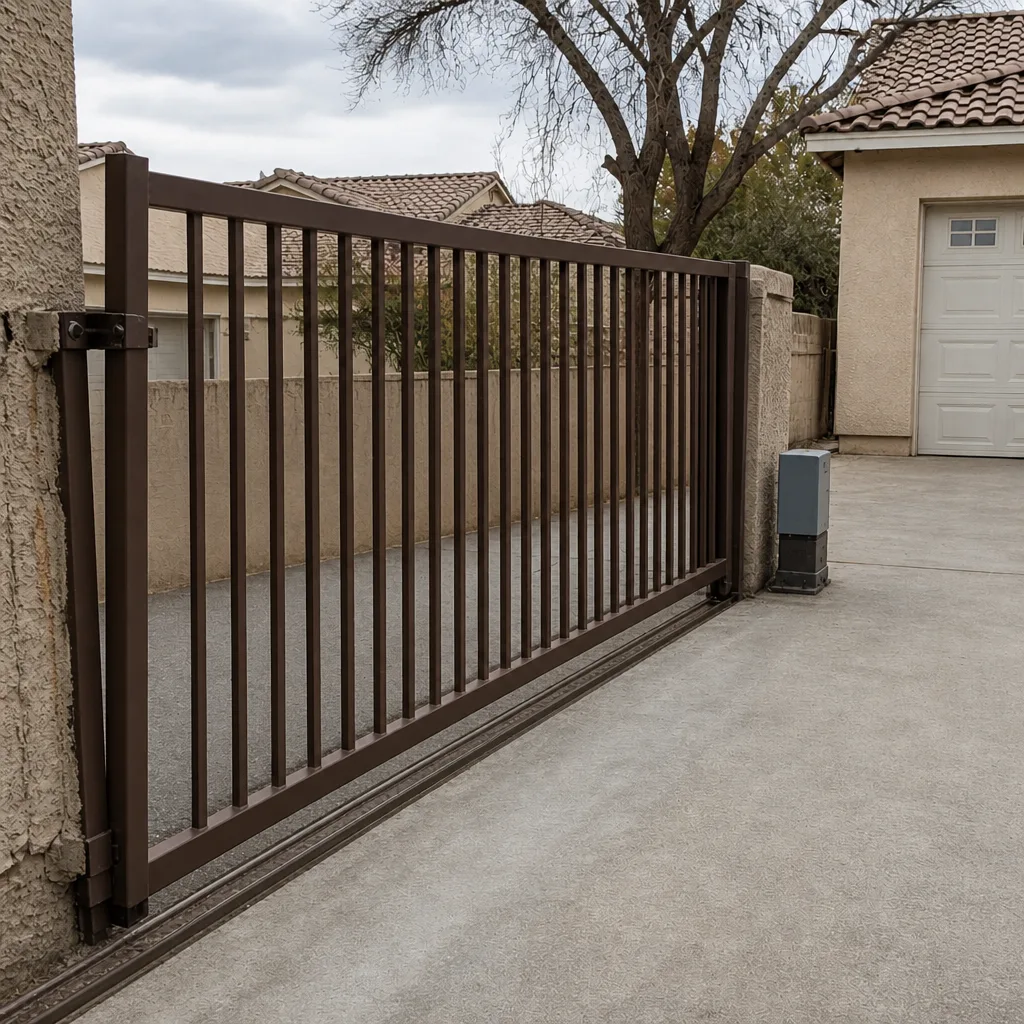
See the difference
BeforeAfter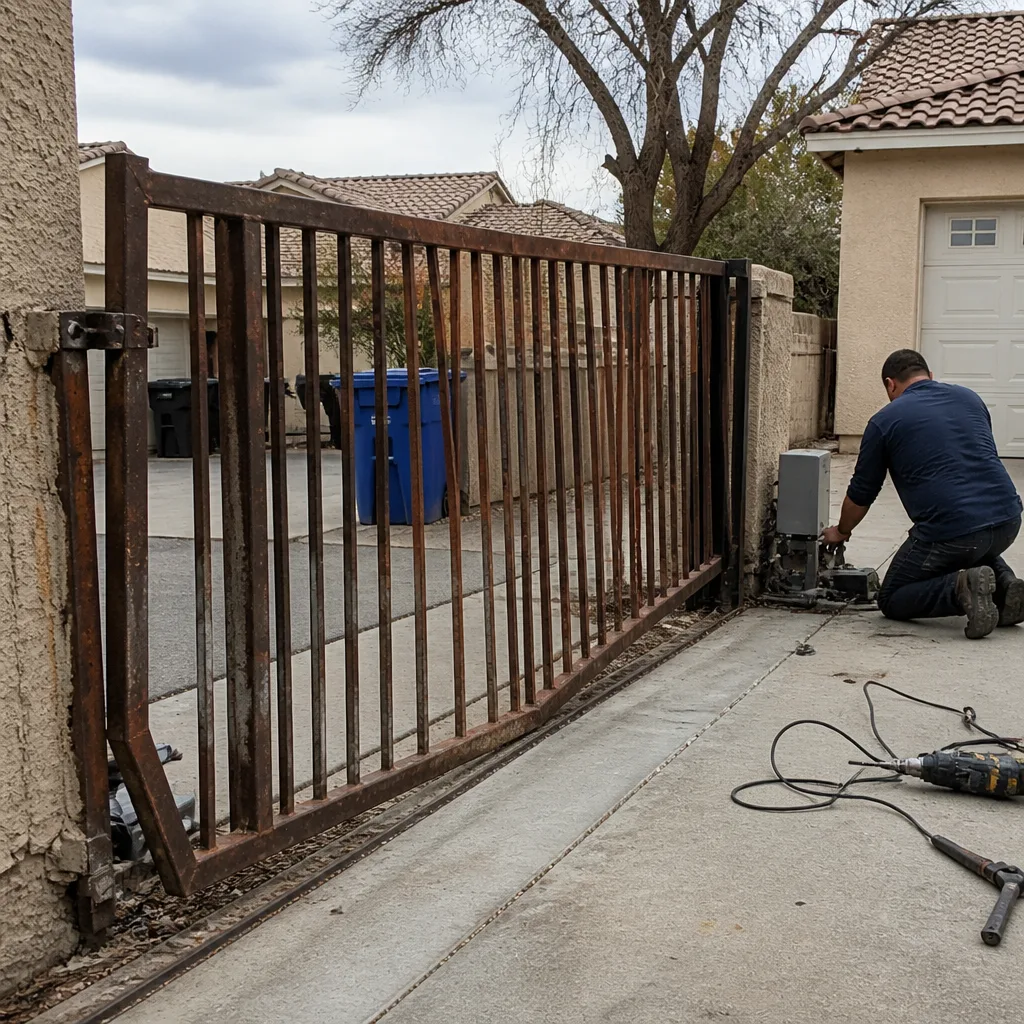 Before
 After
 Before
 After
When to Call a Professional
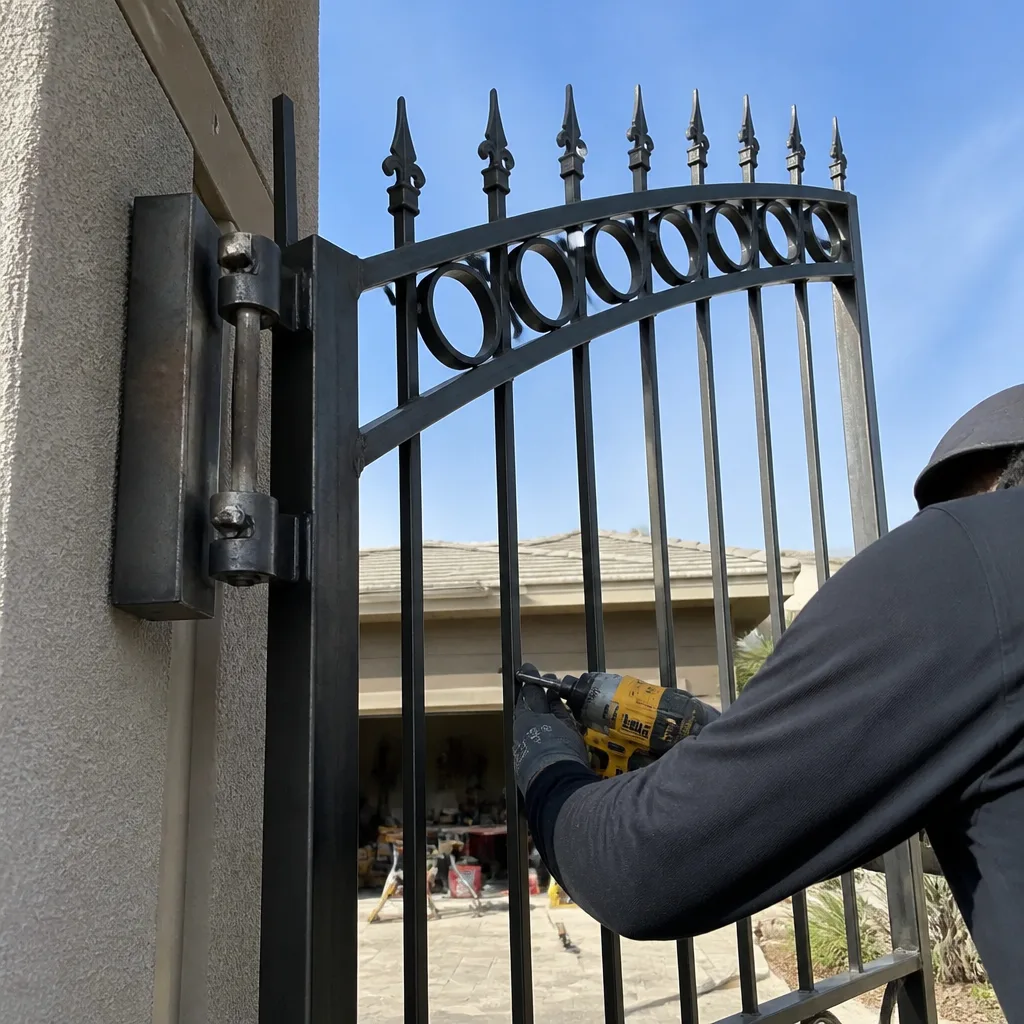
Some gate problems are safe to look at yourself, and some are not. Structural welding and gate frame repairs involve high heat, heavy metal, and in many cases a gate under spring or motor tension. If your gate has a visible crack at a hinge or post, has sagged after a hard hit, or is dragging on the ground, get a professional eyes on it before you operate it further. If the weld has failed on a gate with an active operator, don’t run the motor – a gate that swings off true can damage the gearbox and cost far more than the weld would have.
Two other cases warrant a call: an older gate where the rust has eaten into the frame near a hinge point, and any repair where a previous weld has already failed once. A repeat failure usually means the underlying cause (alignment, footing, or heat distortion) wasn’t addressed the first time. Vance Gate Repair Summerlin offers free estimates in Summerlin, and every estimate comes with the price written before any work begins. Call (844) 797-2809.
Frequently Asked Questions
Most Summerlin gate parts and welding jobs take one to five days from assessment to finished documentation. Small stock-part swaps with minor welds finish in a single visit of two to four hours. Custom fabrication or structural frame welding typically takes three to five days because of parts sourcing, cooling time, and paint cure. Call (844) 797-2809 for an exact timeline on your gate – estimates are free.
Yes, for stock-part replacements and small weld repairs where the part is available quickly. Same-day service depends on the part being in the supply chain and the weather cooperating. Structural fabrication and anything requiring a custom piece almost always extends past a single day. Call us and we’ll tell you honestly what’s realistic before we commit to a schedule.
Because a weld that’s painted or loaded before it’s cooled at a controlled rate can crack, distort, or lose its strength. The cooling phase is 30 to 60 minutes on a typical gate joint, and it’s part of the job, not a delay. Skipping it to save an hour is the fastest way to redo the repair within a year.
Usually not. Most gate weld repairs can be done with the gate locked in position. The exception is a structural repair where the frame has distorted – in that case, we may need to pull the gate off the operator arm to re-square it after cooling. We’ll tell you before we start.
We service nine major gate-automation brands, including Ghost Controls, DoorKing, Elite, and Mighty Mule. If your gate has an older motor or an unusual bracket, we’d rather find the right replacement than steer you toward a full replacement. Parts sourcing timelines depend on the brand, so ask for the specific window when you get your quote.
Yes. Every completed repair, including weld work and part installations, is covered by the 365-Day Done Right Promise for a full year. If something we fixed isn’t right within that window, we make it right at no additional charge. The promise is written on your paperwork, not just spoken. Call (844) 797-2809 for a free estimate.
The Bottom Line
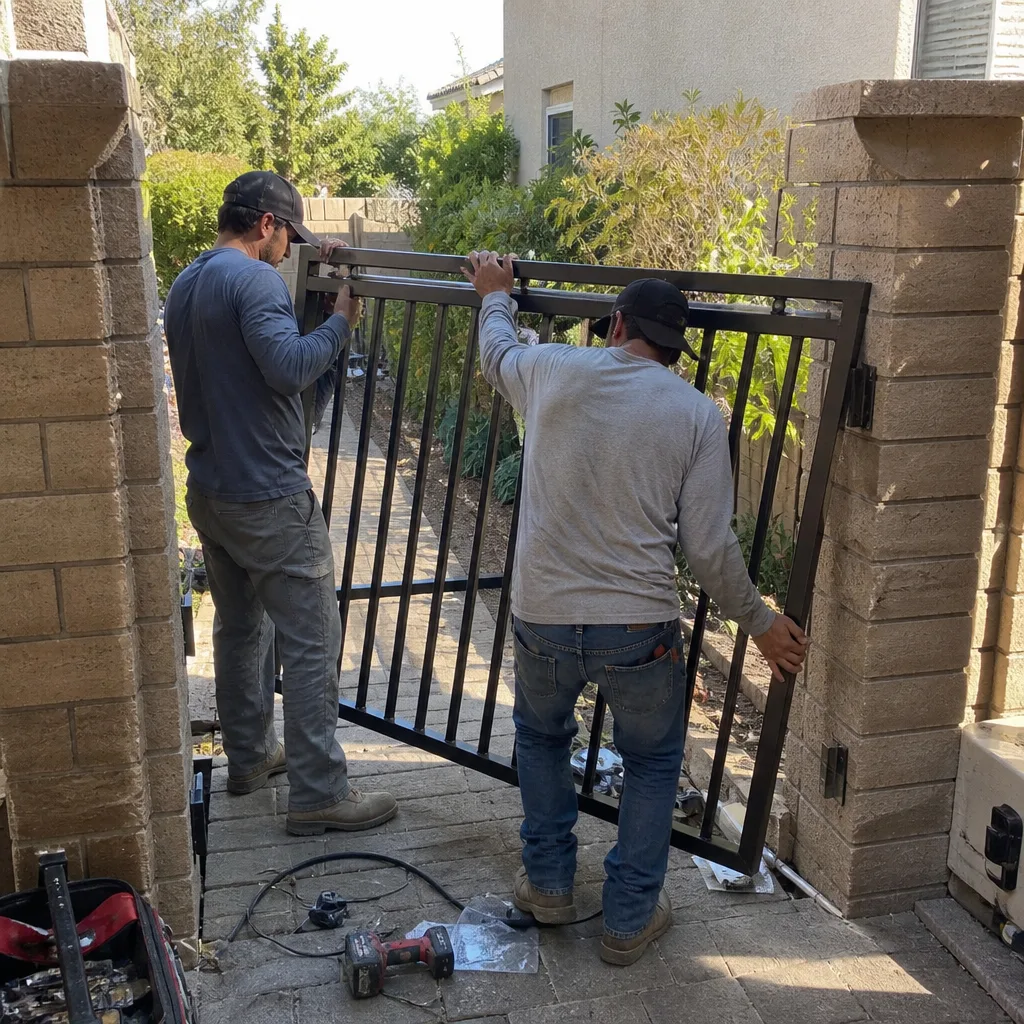
Gate parts and welding timelines aren’t just about how long the bead takes. The honest number covers the assessment, the parts sourcing, the prep work, the cooling phase, the finish cure, and the documentation that follows. A stock-part swap on a Summerlin gate can finish in a single visit of two to four hours; custom fabrication or structural welding usually runs three to five days. Weather – summer heat, monsoon wind, cold snaps – affects when a job should be scheduled and when it should be pushed. And any repair that ends without photos, measurements, and a part number on file is a repair the next technician has to guess at. Get the timeline in writing, get the phases accounted for, and the repair lasts. You can start at the Vance Gate Repair Summerlin home page to see how we schedule and what we promise on every job.
Ready to get a written timeline and price for your gate? Call (844) 797-2809 for a free estimate. We’ll tell you what we found, what it costs, and when it’ll be done – in writing, before any work starts. Our technicians have up to 12 years of experience, and every visit comes with a photo record and the 365-Day Done Right Promise.
Written by the team at Vance Gate Repair Summerlin.