
Last updated November 17, 2026
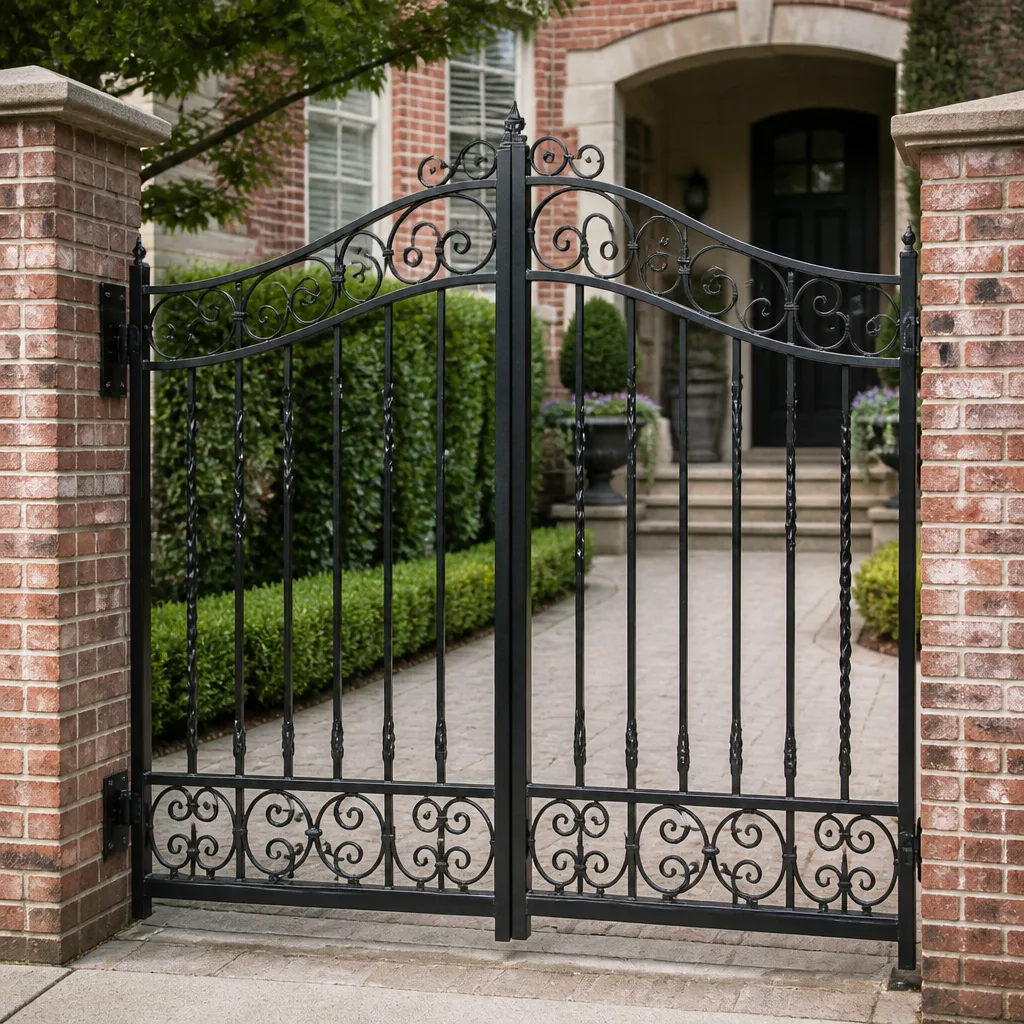 Wrought iron
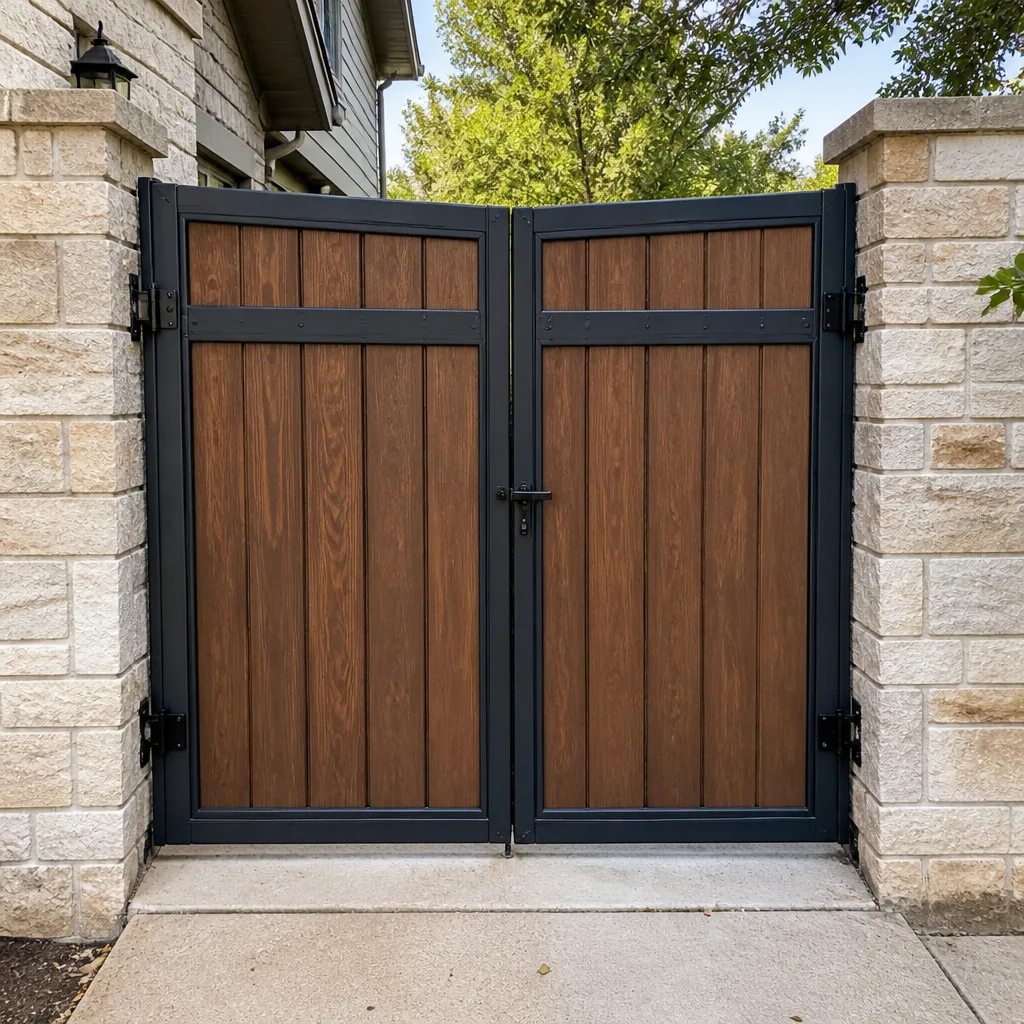 Wood & steel frame
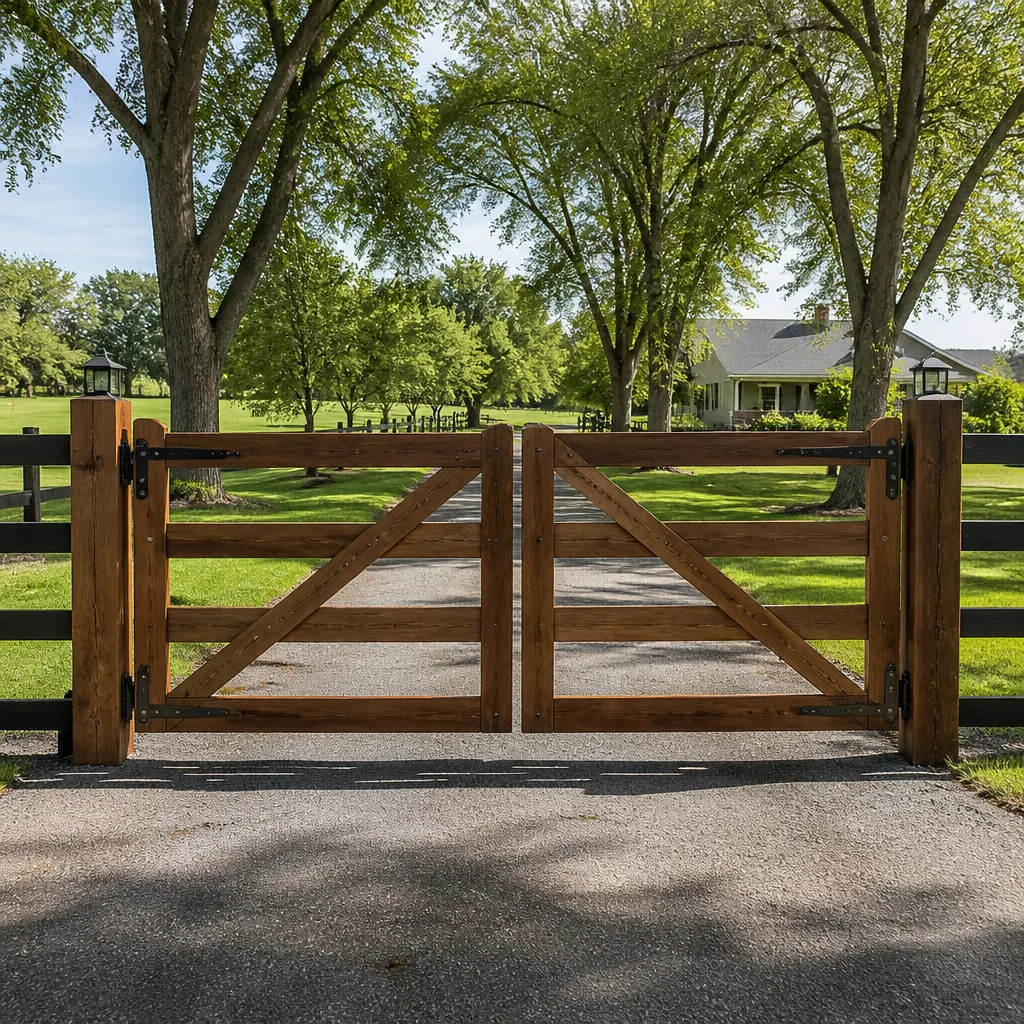 Farm & ranch
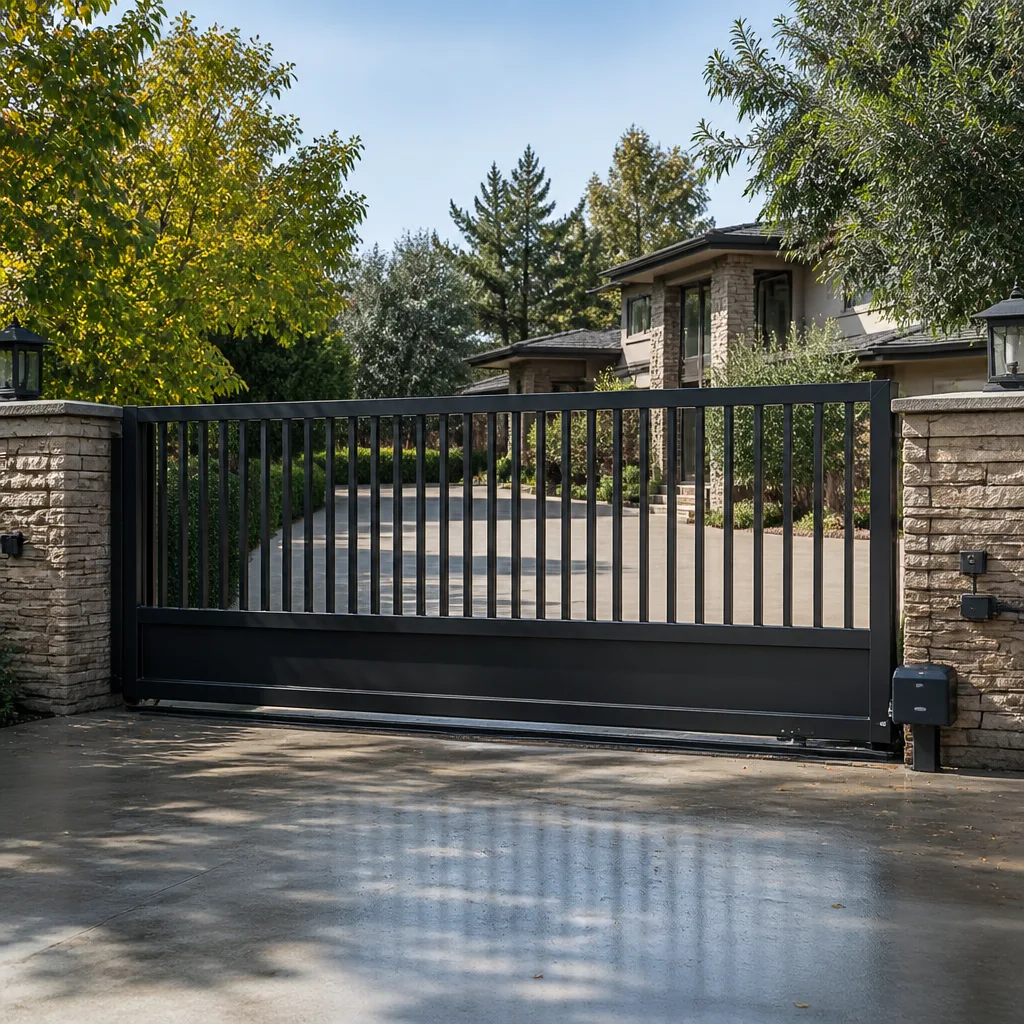 Sliding driveway gates
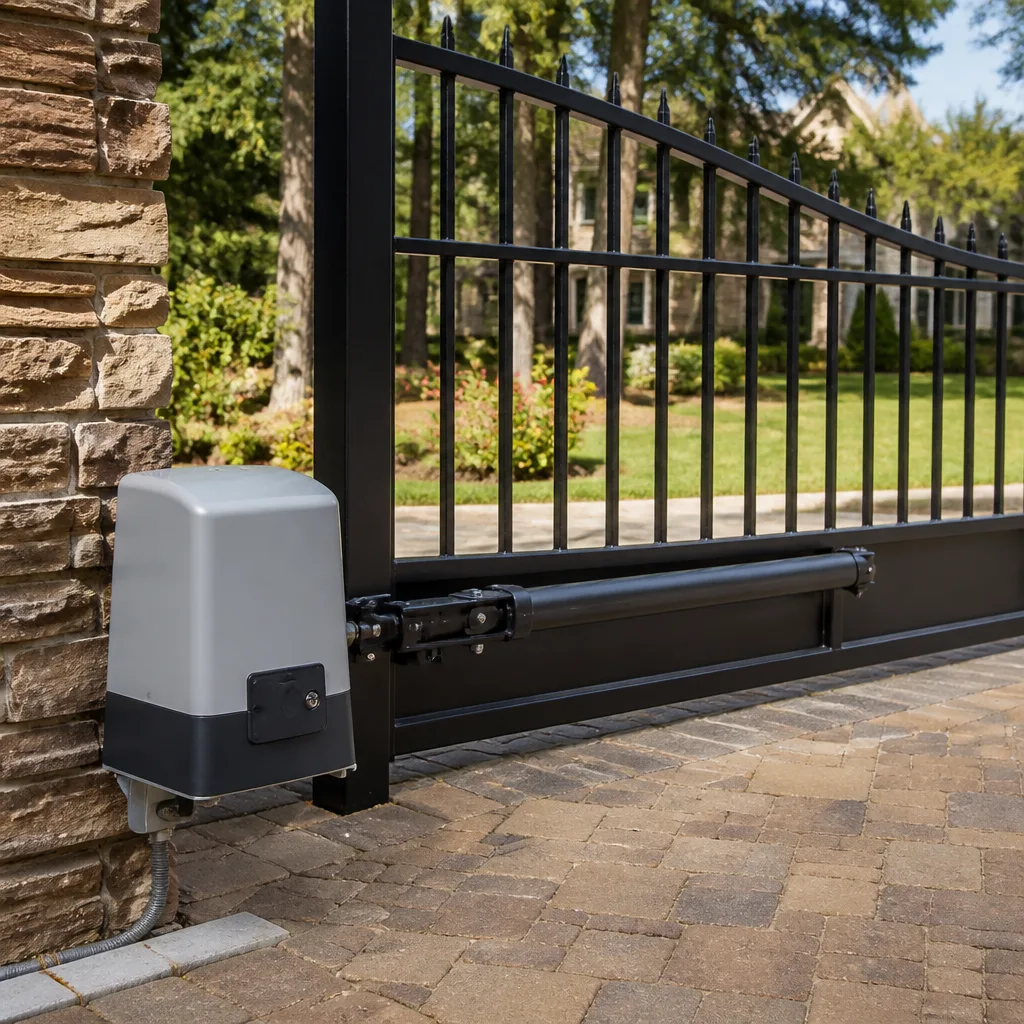 LiftMaster operators
Free on-site gate assessment - hinges, posts, and your LiftMaster or Nice gate operator checked before anything is quoted
The assessment is free and the quote is the invoice.
Get your free estimateHow Long Does Gate Motor & Opener Take? Timelines and What to Expect
Three different jobs all get called “motor replacement,” and they take one hour, three hours, and six to eight hours respectively. That gap is why a quote that sounded like a quick swap can turn into a full day. In Summerlin, where driveways are wide and most gates are welded steel or ornamental aluminum, the difference usually comes down to whether the existing bracket still lines up with the new motor – and nobody knows that until the cover comes off. This guide breaks down the three job types, what adds time beyond the swap itself, and what your written scope should say about the timeline so you’re not guessing when the technician is still there at hour five.
Quick Answer
A straight motor swap on an existing, intact bracket takes about 1 hour. A bracket-and-swap, where the mounting hardware has to be fabricated or repositioned, runs about 3 hours. A full new installation with conduit, power, and programming takes 6 to 8 hours, often split across two visits. Adding access control – keypad, intercom, or app module – adds 1 to 3 hours that is frequently left out of the original estimate.
Styles & brands we work with
- Wrought iron
- Wood & steel frame
- Farm & ranch
- Sliding driveway gates
- LiftMaster operators
Table of Contents
- The Three Job Types (and Which One You Actually Have)
- What Adds Time Beyond the Motor Swap
- The Access-Control Variable Nobody Quotes For
- What Your Written Scope Should Say About Timeline
- The “While You’re Here” Problem
- How Scheduling Actually Works for Motor Work
- Summerlin-Specific Factors That Affect Timing
- What You Should and Shouldn’t Touch Yourself
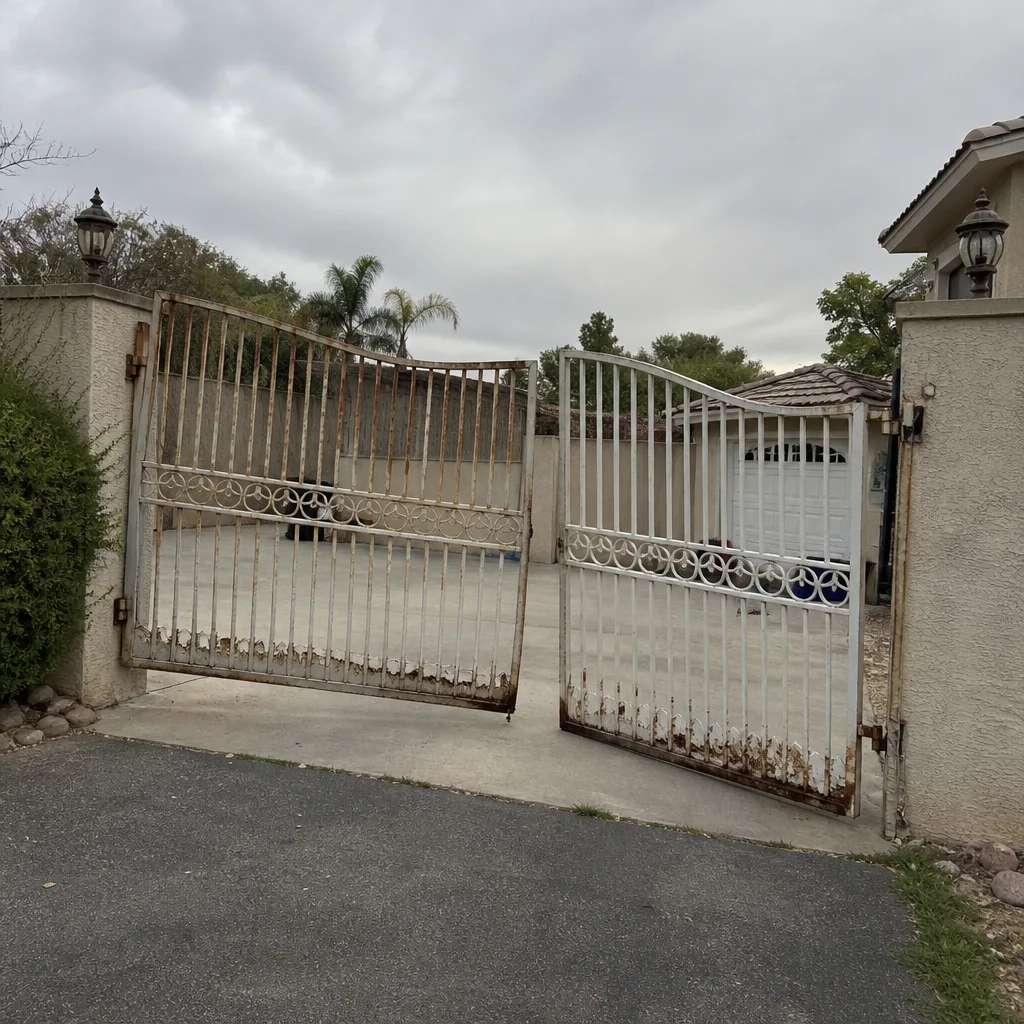 Before
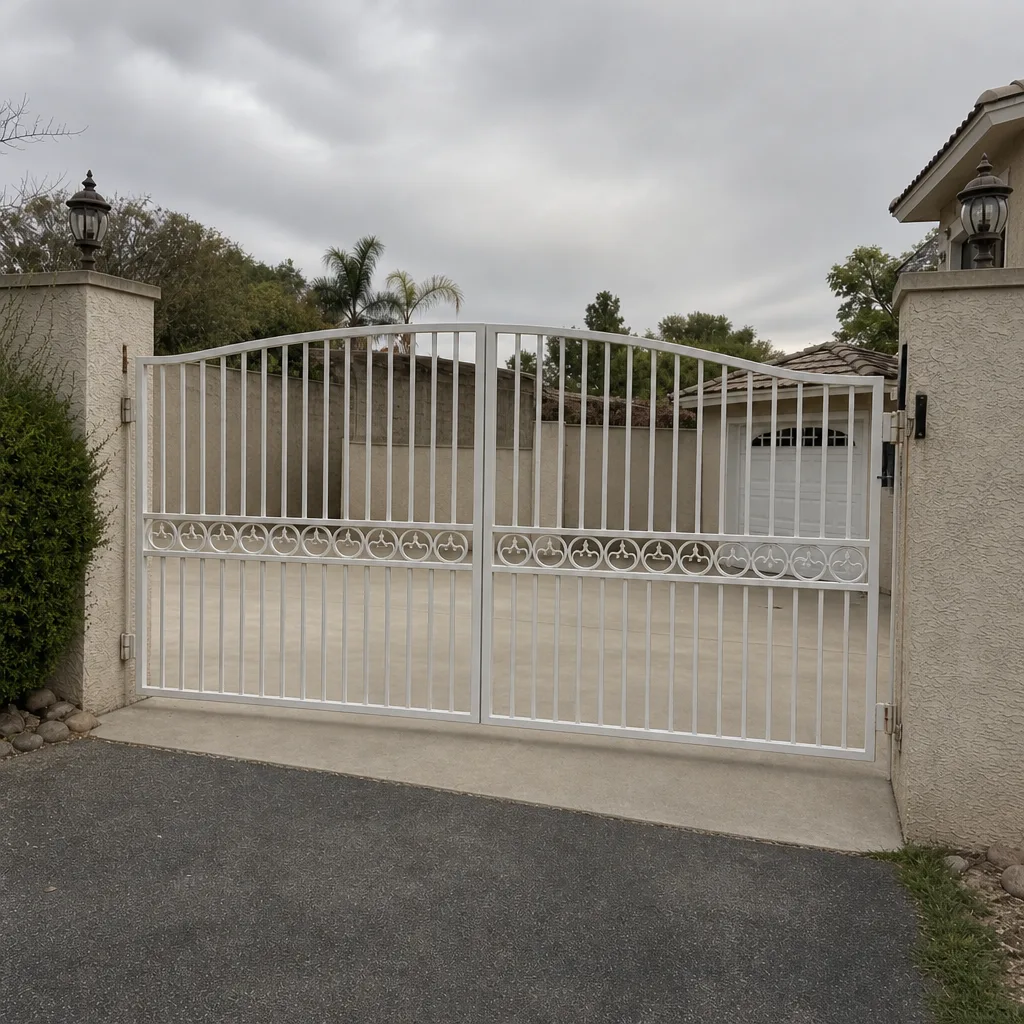 After
The Three Job Types (and Which One You Actually Have)
The single biggest source of timeline confusion is that “gate motor replacement” describes three very different jobs. Homeowners usually find out which one they’re getting when the technician opens the housing and starts measuring. Here’s how to tell them apart before you call.
Job 1 – Direct motor swap (about 1 hour). This is the clean case. The existing bracket, arm geometry, and control board all match the new motor. The old unit comes off, the new one goes on, limits get set, and the gate cycles correctly. It happens most often when the failed motor is a common model – LiftMaster and Elite units are frequently straightforward swaps because their mounting footprint hasn’t changed much across generations. If a company quotes you “one hour” sight unseen, they’re assuming Job 1 and hoping they’re right.
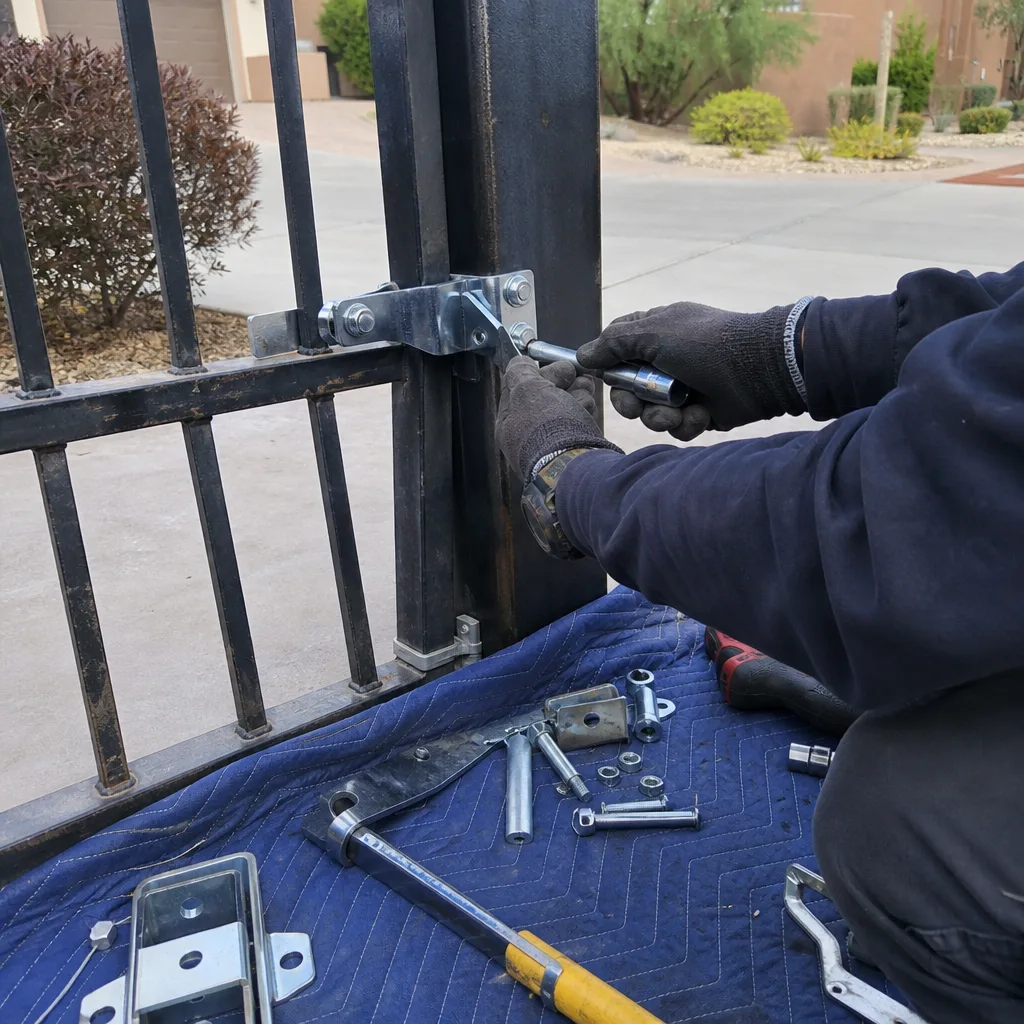
Job 2 – Bracket-and-swap (about 3 hours). The old motor is discontinued, or the bracket is bent, or the new motor’s arm sweeps a different arc than the old one. The technician fabricates or repositions mounting hardware, re-drills the gate frame, and re-calibrates limits from scratch. This is the most common scenario on gates 10 or more years old, and it’s the one that turns a one-hour quote into a three-hour visit. It’s still a repair, not a replacement, and it’s where a company’s parts access matters – a truck that only carries one brand turns Job 2 into a second appointment.
Job 3 – Full new installation (6 to 8 hours). No motor exists, or the old one is being replaced with a different brand that requires new power routing. This includes running conduit from the house to the gate post, wiring the control box, installing safety photo-eyes, mounting the operator, and programming remotes and limits. On a long Summerlin driveway with a paver apron, conduit fishing alone can eat two hours.
What Adds Time Beyond the Motor Swap
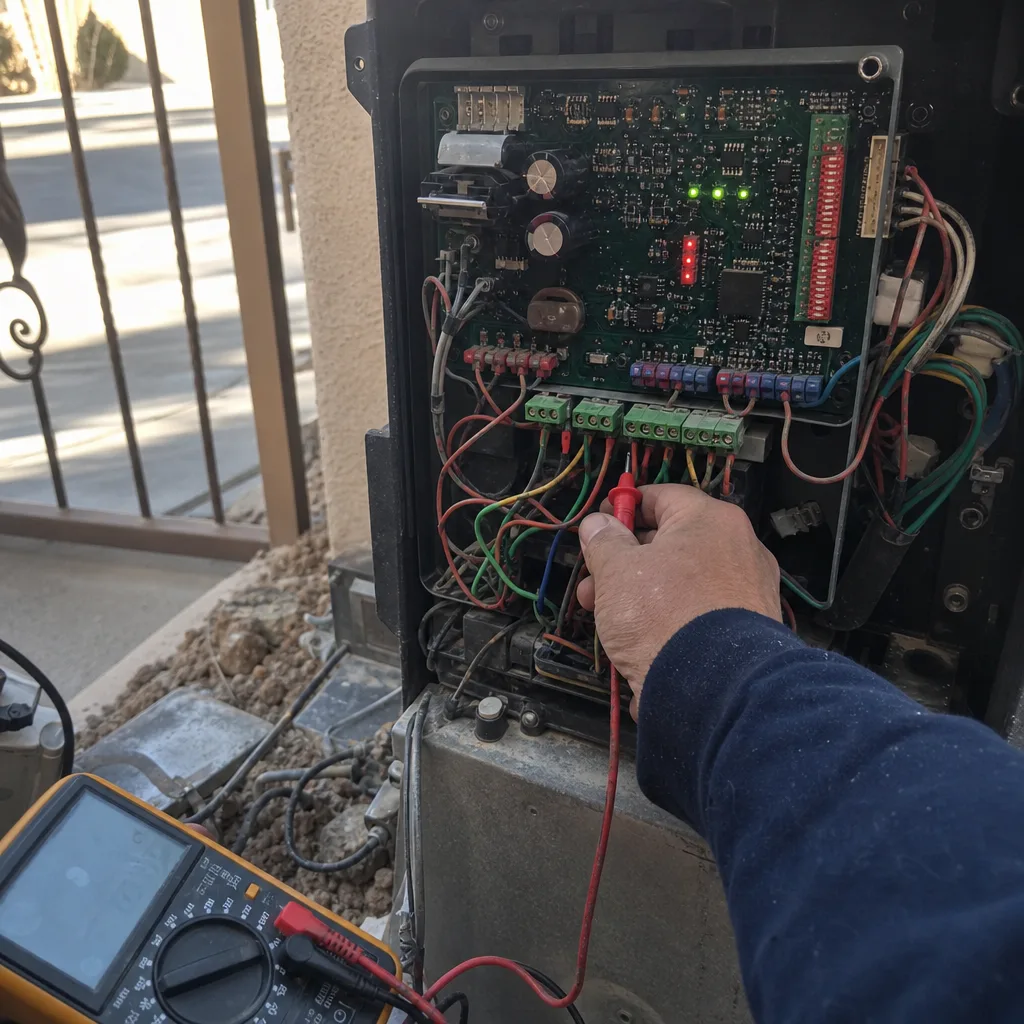
Once the motor is on the bracket, four more tasks stand between you and a working gate. Each has its own realistic time cost, and each is where a casual estimate tends to fall short. In our experience, the paperwork usually lists the swap and treats the rest as “included” – which is how a two-hour job becomes a four-hour day.
- Conduit fishing (1 to 3 hours). If power has to reach the gate post through new conduit – underground, through a paver run, or along a stucco wall – this is the slowest part of the job. It’s also the part most affected by Summerlin’s hard caliche soil, which resists a shovel and slows a trench to a crawl.
- Control board programming (20 to 45 minutes). Remotes, keypads, and any existing access modules have to be re-paired to the new board. On a DoorKing or LiftMaster system with multiple remotes and a shared code, this takes longer than the motor swap itself.
- Limit-switch calibration (20 to 30 minutes). The limit switches tell the motor when to stop. Set them two degrees off and the gate either stalls before closing or slams into the post. This is measured, not guessed, and the good ones photograph the final readings.
- Obstruction sensor alignment (15 to 30 minutes). Photo-eyes – the infrared beam that stops the gate if something crosses the path – have to be mounted, aimed, and tested. A misalignment of even a couple of inches causes phantom reversals a week later.
Add those up on a job that needs all four and you’re looking at 2 to 5 hours on top of the swap itself. That’s the honest range a written scope should reflect.
The Access-Control Variable Nobody Quotes For
Adding a keypad, intercom, or app-based control to a motor replacement is a separate job layered on top, and it adds 1 to 3 hours that frequently doesn’t appear on the estimate. This is the most common underquote we see when a homeowner brings us another company’s written estimate for a free second opinion – the motor line is accurate, but the access component is missing entirely.
Here’s why it takes time. A keypad has to be wired to the control board, programmed with a code, and tested against the gate’s travel. An intercom needs a power source and often a separate low-voltage run. An app module has to connect to the home network, and if the Wi-Fi doesn’t reach the gate post, you’re adding a repeater or a different approach. A DoorKing entry system with call-box integration is a genuinely different wiring job than a LiftMaster remote pairing.
The fix is simple: tell the company you want access control when you book, not when the technician is packing up. That way the written price includes the wiring and the programming, and the timeline is built around the real scope. Do you handle the power run and the safety edges? Yes – but only if they’re on the written scope before anyone picks up a tool.
What Your Written Scope Should Say About Timeline
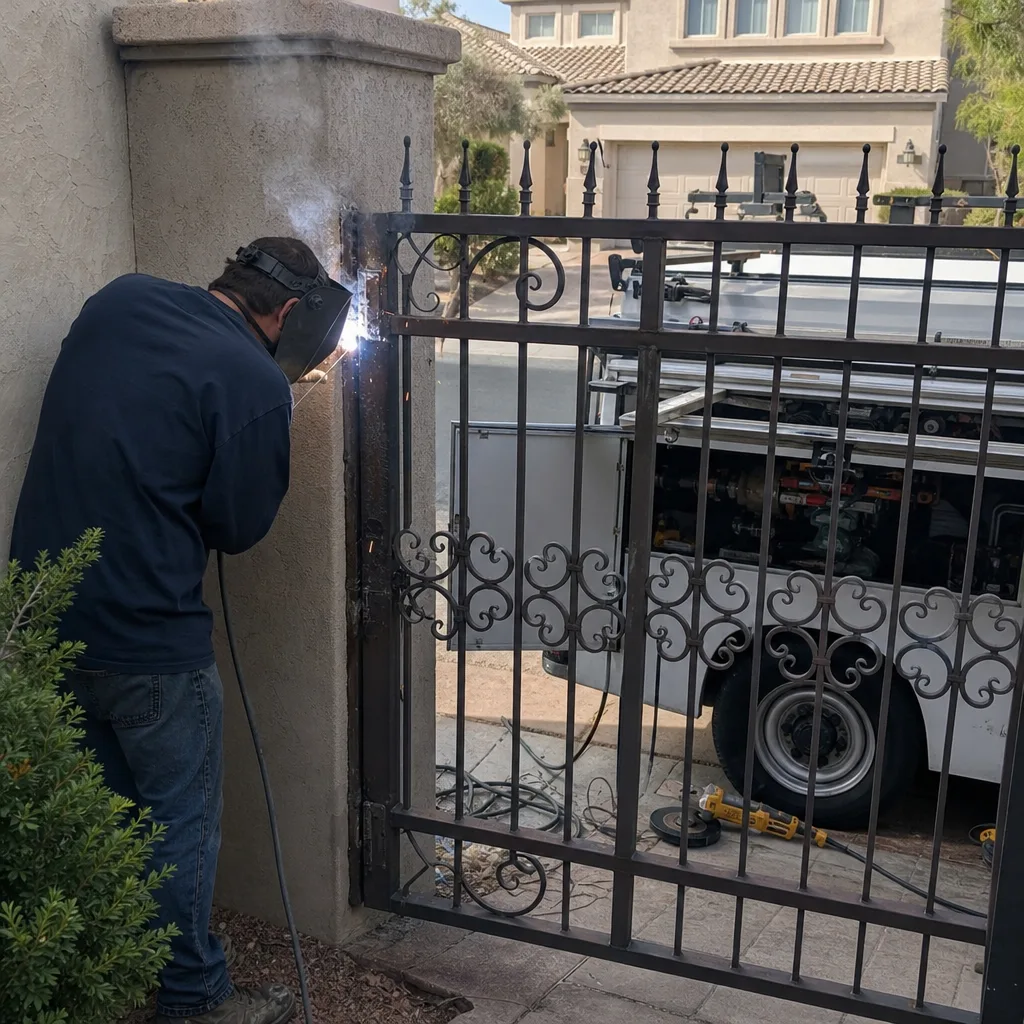
A written price before work starts is only half of what protects you. The other half is a written scope that says what’s included and what happens if the job runs over. Under our Haven Standard, every estimate we hand over includes both. Here’s what to look for on any written estimate, from any company.
- The job type, named. “Direct motor swap” and “bracket-and-swap” should be spelled out, not implied. If the scope just says “replace motor,” ask which of the three jobs it is.
- The parts list with model numbers. A written price without a part number is a promise without a receipt. You should know the exact motor going on your gate.
- The task list with time estimates. Conduit, programming, limits, and sensor alignment should each appear with a realistic time range, not a single optimistic number.
- What happens if it runs over. Any extra work found mid-job should be priced in writing and approved before it starts – not added to the invoice at the end.
- The evidence you’ll receive. A photo log of what was found, what was set, and what was installed. This is the record that saves the next technician from re-diagnosing the same problem.
If a company can’t produce a scope that covers those five points, the timeline conversation isn’t really happening yet. It’s a guess with a handshake behind it.
The “While You’re Here” Problem
Mid-job, it’s tempting to add work – a squeaky hinge, a second remote, a keypad you’ve been meaning to install. Sometimes that’s fine. Sometimes it wrecks both the timeline and the quality of the primary job.
The rule we work by: anything that changes the electrical load, the control board, or the bracket geometry gets its own written line and its own scheduling decision. Anything cosmetic – a hinge lube, a remote pairing – can usually ride along. The reason is focus. A technician watching a limit switch calibration while thinking about a keypad install is a technician who misses a calibration step.
If you find yourself saying “while you’re here,” ask this: does adding this change the scope of the written estimate? If yes, it’s a separate conversation with a separate price, and the honest answer might be “let’s schedule it for next week.” That’s not a brushoff – it’s how the primary repair gets done right the first time, which is the entire point of the 365-Day Done Right Promise. A correct repair under that warranty means no argument, no fee, and no expiration within the year.
How Scheduling Actually Works for Motor Work
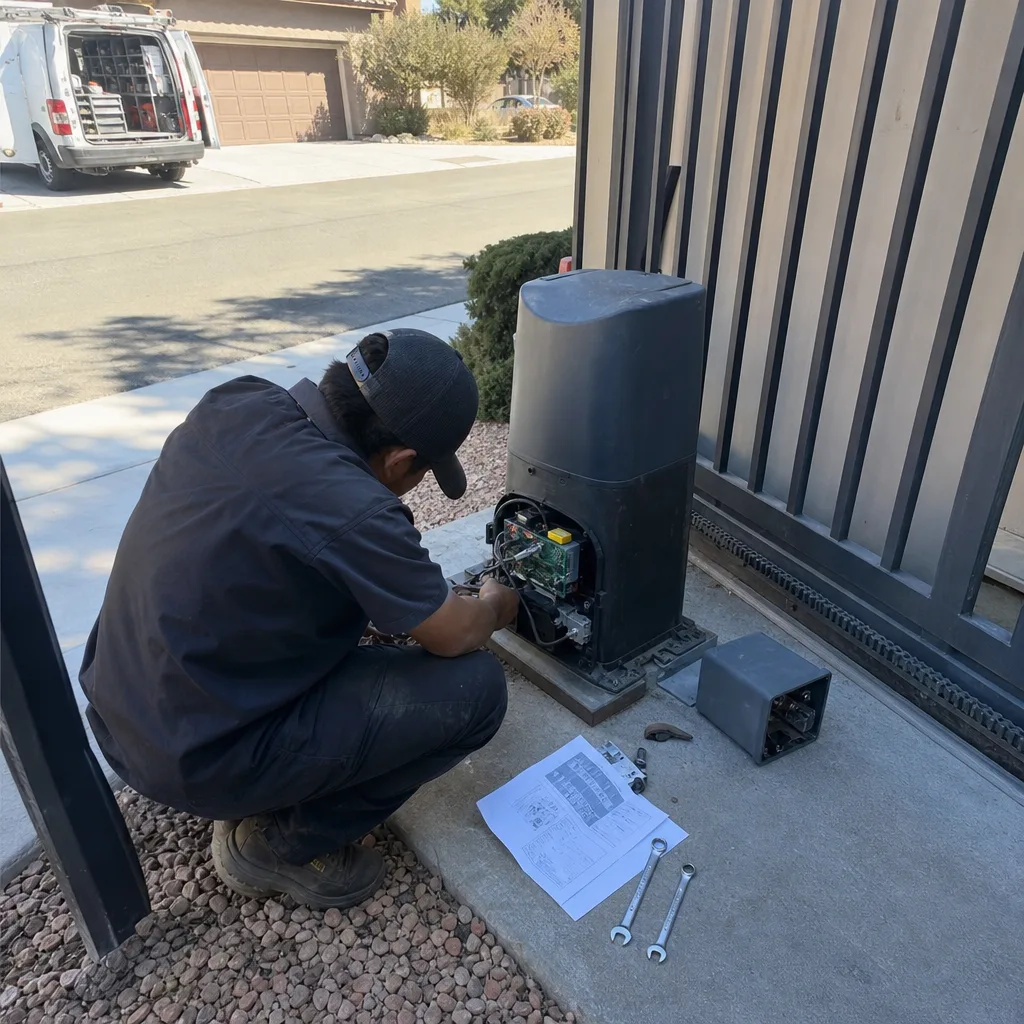
Motor and opener work is measured, ordered, and scheduled – not same-day emergency service. That’s a different rhythm from gate repair, where a broken hinge or a bent arm can usually be handled quickly. Knowing the difference keeps you from waiting on a promise that was never realistic.
- You call and describe the gate and motor. Brand, age if you know it, and what it’s doing. A live person answers 24 hours a day, seven days a week – no voicemail queue, no callback window.
- We photograph and diagnose. The first visit is often a measurement and documentation visit, especially if the existing motor is discontinued or the bracket condition is unknown.
- You get a written price before any work starts. The flat price is written and handed over – no “call for a quote,” no surprise invoice at the end.
- We order the exact part. Nine major brands serviced means we can work with whatever motor is already on your property rather than steering you toward a replacement.
- We schedule the install window. A direct swap is a short window. A bracket-and-swap is a half-day. A full new installation is a full day or two visits.
- We document and leave the record. Photo log, part number, and limit-switch readings, filed with you and in the job record.
For a fuller picture of how we handle motor diagnostics and calibration, the Gate Motor & Opener in Summerlin page walks through the parts and the process.
Summerlin-Specific Factors That Affect Timing
Timelines vary by region, and Summerlin has a few local conditions that push jobs toward the longer end of the range. If you’re comparing quotes across companies, ask whether they’ve accounted for them.
Caliche and hardpan. The soil under most Summerlin lots – The Ridges, Red Rock Country Club, The Trails – is notoriously hard. Any job requiring a new conduit run into the ground adds time here that a company from softer soil might not anticipate. A trench that takes 30 minutes elsewhere can take 90 here.
Heat and rubber seals. Summerlin’s summer heat stresses gate seals, motor housings, and photo-eye gaskets. A motor swap in July means checking every rubber component, because a gasket that looked fine in April may be brittle by August. That check adds 10 to 20 minutes.
Gate width and material. Summerlin driveways are often wide, and gates are frequently welded steel or heavy ornamental aluminum. A heavier gate means more careful limit calibration, because the motor has to push more mass. That’s not a big time add, but it’s a real one – and it’s why a generic “one-hour swap” quote is often optimistic here.
HOA documentation. Some Summerlin communities require documentation of exterior work. We photograph every install, which means the record you need for an HOA file is already in your hands when the technician leaves. If you’re starting from a broken gate rather than a motor swap, the Gate Repair in Summerlin page covers the repair side of the timeline.
What You Should and Shouldn’t Touch Yourself
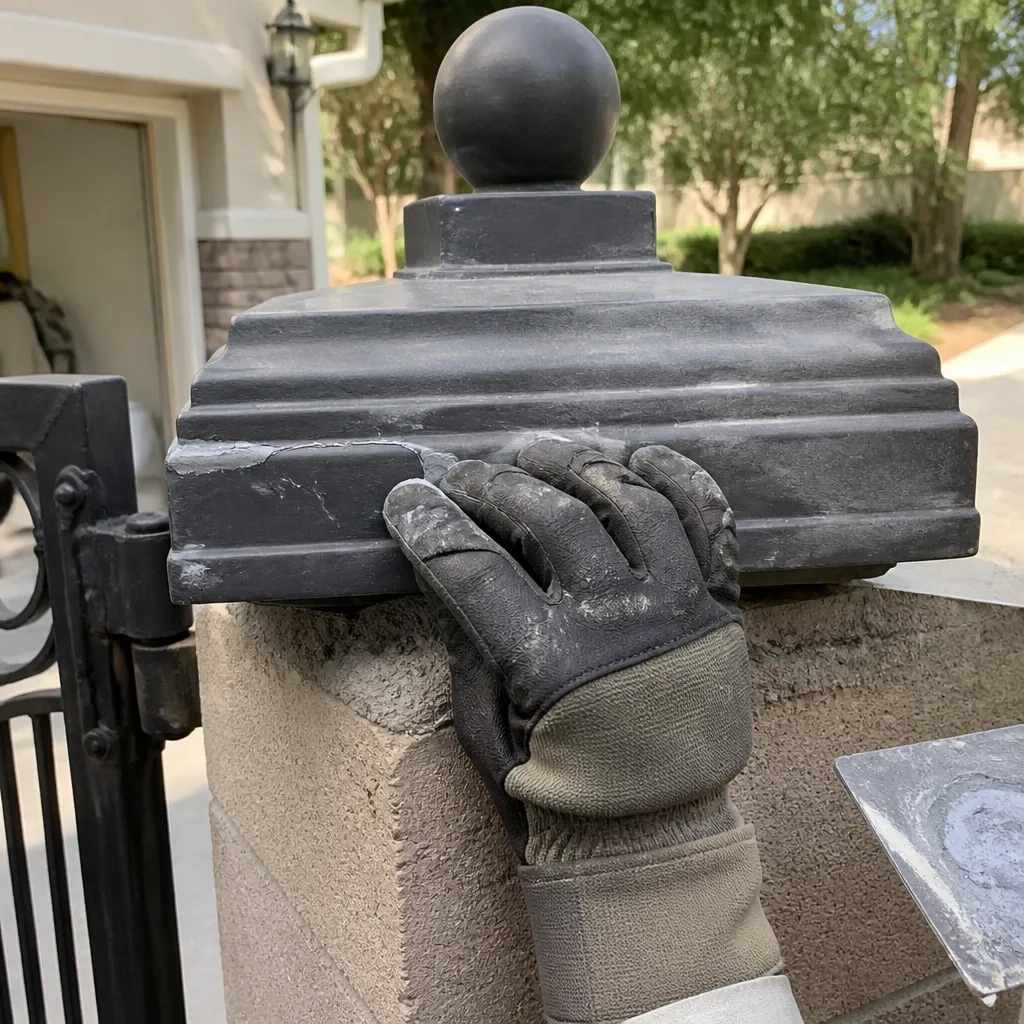
Some gate motor tasks are safe to do yourself. Others genuinely are not, and the safety line matters more than the time savings.
Safe to handle yourself: replacing remote batteries, cleaning debris from the gate track and photo-eye lenses, lubricating hinges with a manufacturer-approved grease, and clearing vegetation away from the travel path.
Not safe: anything involving the control board, the wiring, the conduit run, or the limit switches while the gate is powered. A gate motor is a mechanical system with hundreds of pounds of moving mass and stored force in the arm and springs. A mis-calibrated limit switch can cause the gate to slam, and a control board wired incorrectly can create a shock hazard. High-tension gate springs and the powered arm assembly should be touched only by a trained technician. If you’re unsure which side of the line a task falls on, treat it as a professional job – the cost of a service visit is nothing next to a hand injury or a damaged operator.
Common Mistakes to Avoid
- Accepting a verbal time estimate. “About an hour” is not a timeline, it’s a guess. Ask for the job type and the task list in writing. A one-hour quote that becomes a four-hour day is almost always a Job 1 quote on a Job 2 gate.
- Leaving access control off the original scope. A keypad or app module adds 1 to 3 hours. Adding it mid-job is how timelines slip and quality drops. Book it upfront.
- Assuming the bracket is reusable. On a gate 10 years or older, the bracket may be bent or the new motor may sweep a different arc. Ask the company to inspect the bracket before quoting a direct swap.
- Adding “while you’re here” work without a written line. If the extra task changes the electrical load, control board, or bracket geometry, it deserves its own written price and its own scheduling decision.
- Skipping the photo record. Without a documented record of limits, wiring, and part numbers, the next technician re-diagnoses the same problem and you pay twice. Ask what evidence you’ll receive before the technician leaves.
- Choosing the company that quotes the shortest timeline. In Summerlin, the fastest quote is often the one that skipped the caliche, the sensor alignment, and the access-control wiring. Short quotes are a prediction, not a promise.
- Steering toward replacement when repair is the better call. Nine brands serviced means the existing motor can often be repaired. A company that only stocks one brand will steer toward the brand it has.
See the difference
BeforeAfter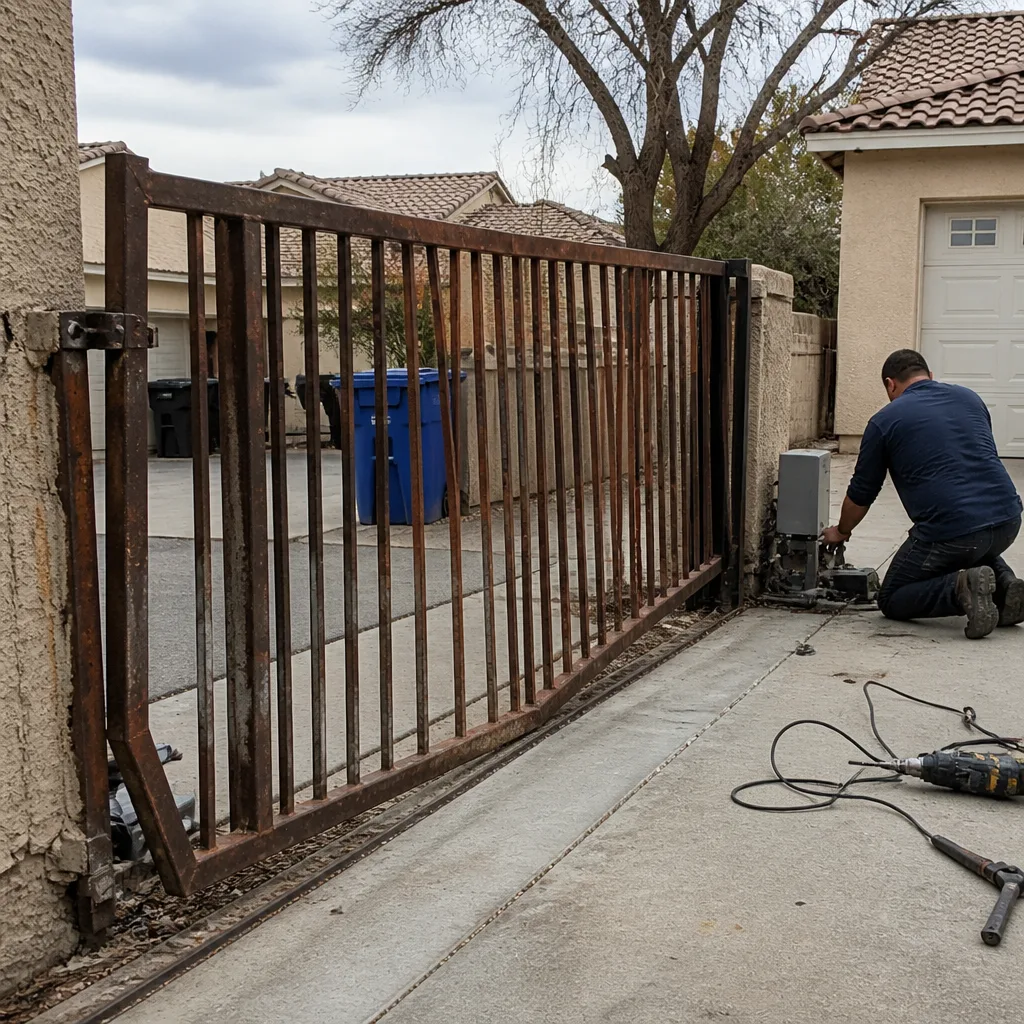 Before
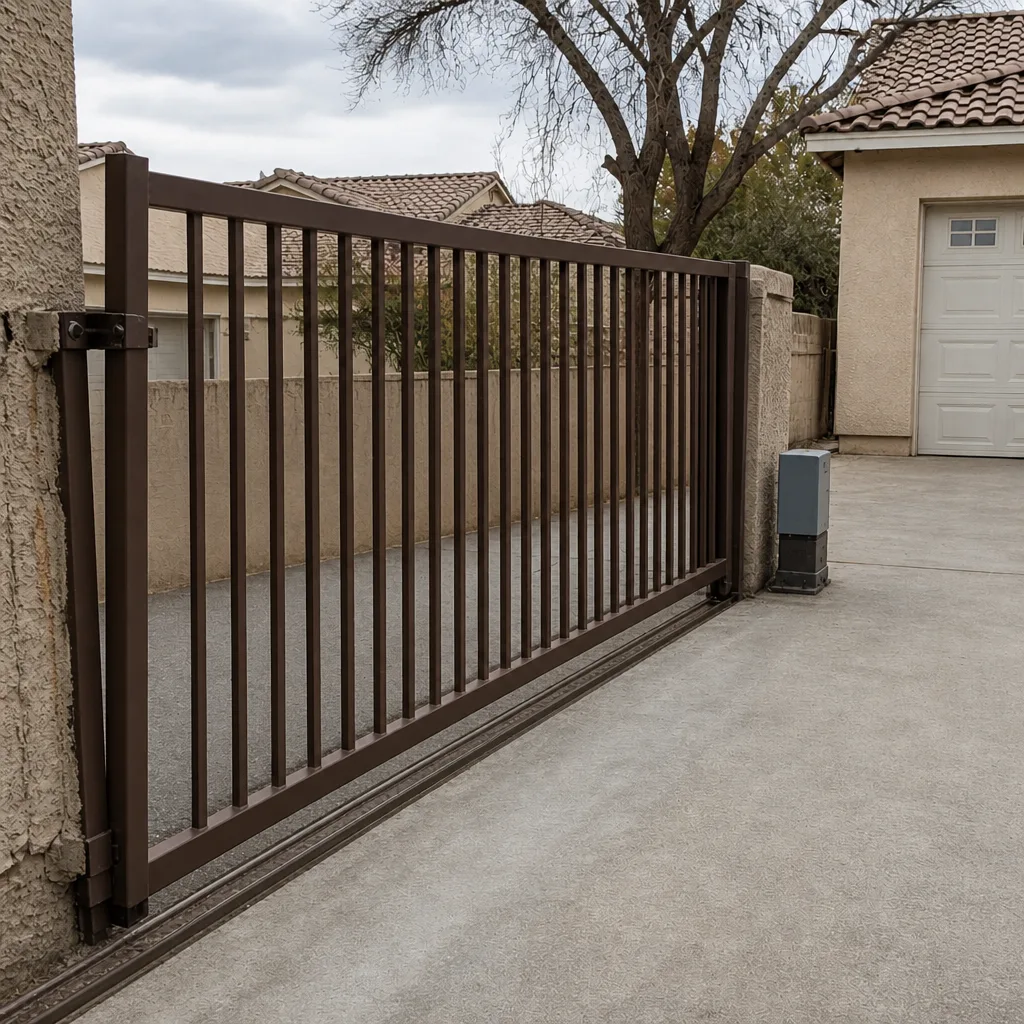 After
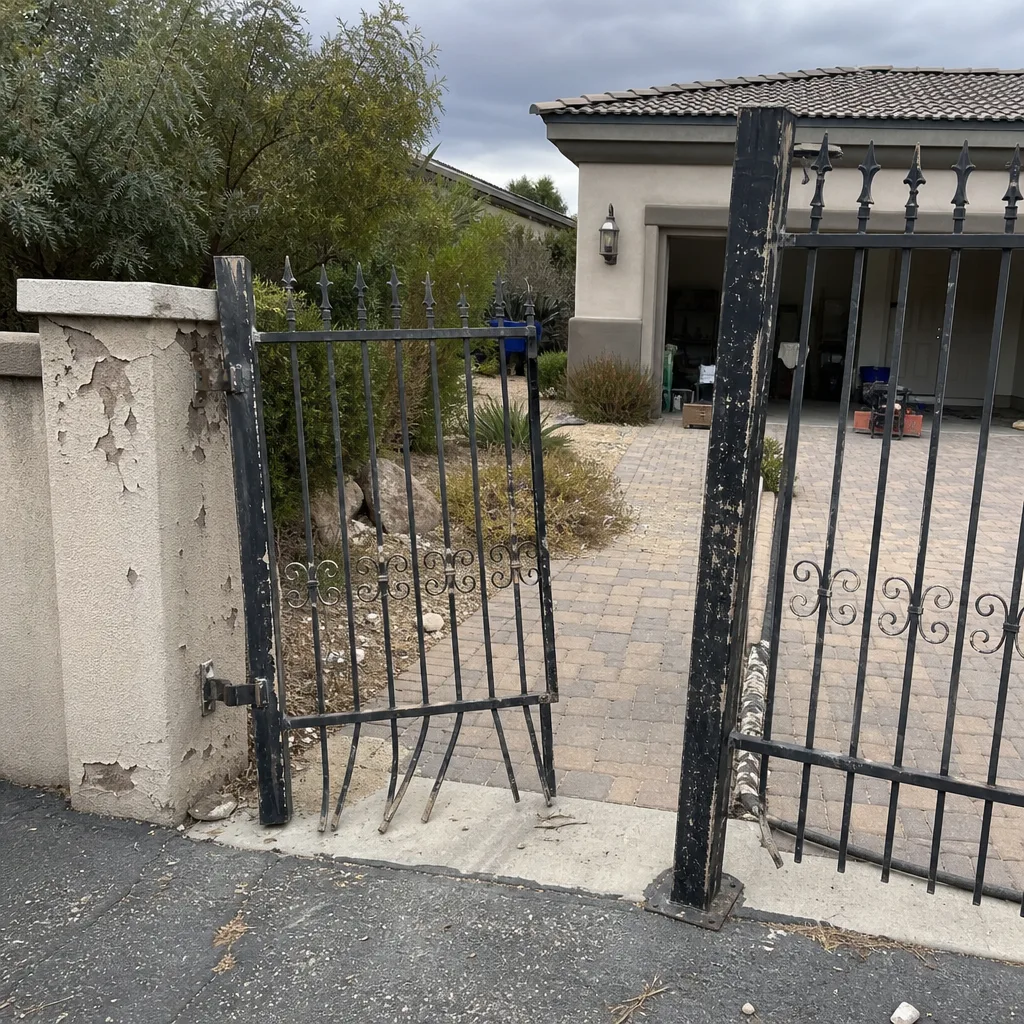 Before
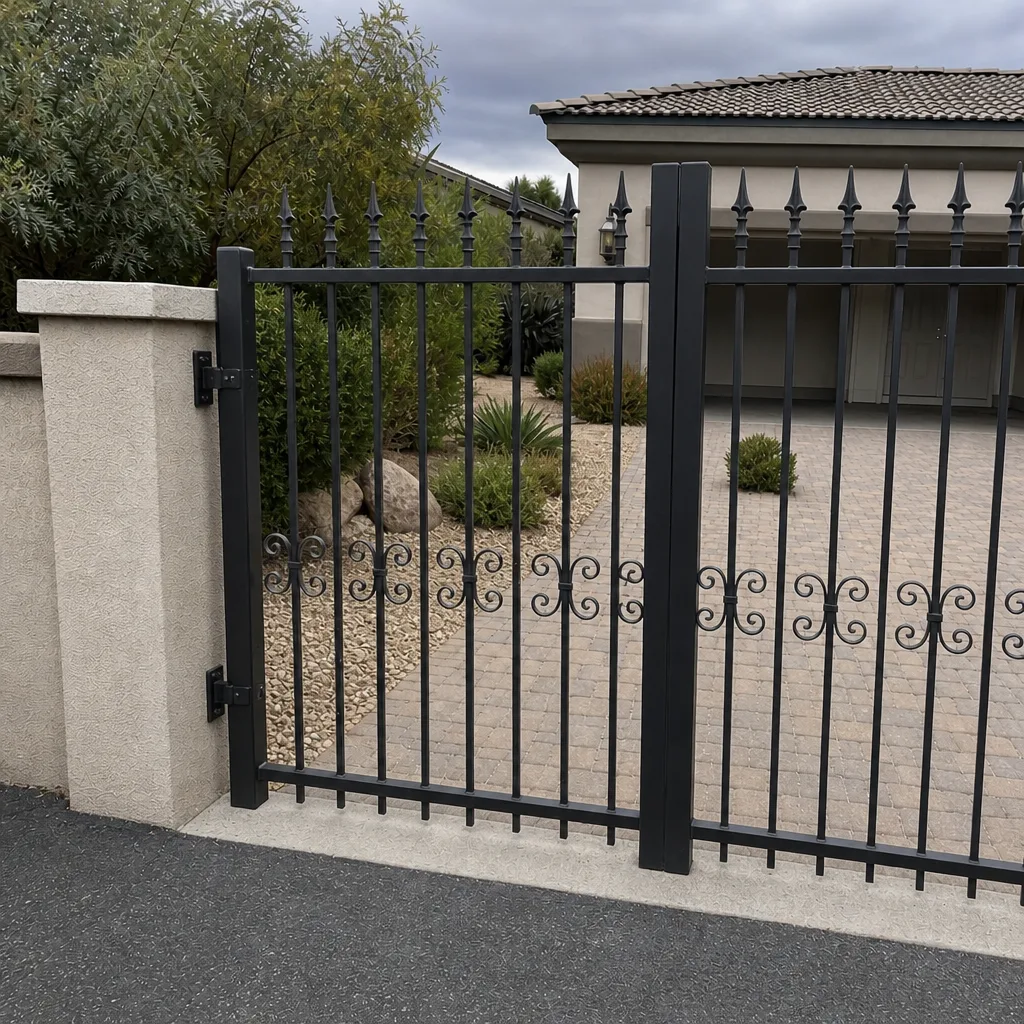 After
When to Call a Professional
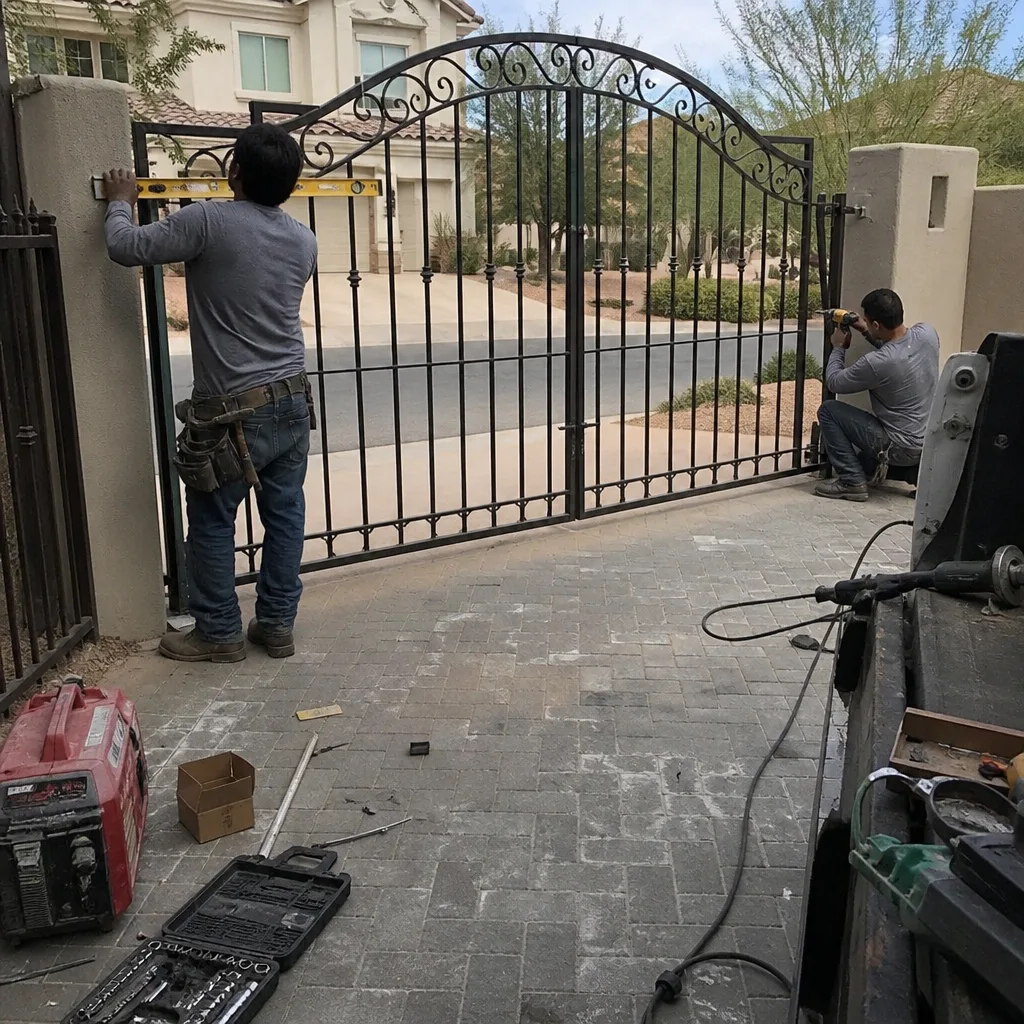
Call a professional if the gate won’t cycle at all, if the motor hums but the gate doesn’t move, if the gate reverses mid-travel for no reason, or if you’ve noticed the limit switches drifting. Call sooner if you see damaged wiring, a scorched control board, or a photo-eye that’s been knocked out of aim. In Summerlin, heat-related motor failures spike in July and August, so a motor that’s slow or balky in late June deserves a look before it fails entirely. If you’re weighing a repair against a new installation, the Gate Installation in Summerlin page explains what a full install involves. Vance Gate Repair Summerlin offers free estimates in Summerlin – call (844) 797-2809.
Frequently Asked Questions
A direct motor swap takes about 1 hour, a bracket-and-swap about 3 hours, and a full new installation with conduit and programming 6 to 8 hours, often split across two visits. Summerlin’s caliche soil and heavy steel gates tend to push jobs toward the longer end. Call (844) 797-2809 for an exact timeline – estimates are free and written before any work starts.
Because the quote assumed a direct swap on an intact bracket, and the actual job turned out to be a bracket-and-swap or a full installation. The three job types take 1, 3, and 6 to 8 hours respectively, and the difference isn’t visible until the motor housing is open. A written scope that names the job type prevents the surprise.
Yes – a keypad, intercom, or app-based module adds 1 to 3 hours on top of the motor work. Each requires wiring, programming, and testing against the gate’s travel, and if the Wi-Fi doesn’t reach the gate post, an app module may need a repeater. Book access control when you schedule, not when the technician is packing up.
Motor and opener work is measured, ordered, and scheduled rather than same-day – it isn’t emergency dispatch like a broken hinge or bent arm. A live person answers the phone 24 hours a day, seven days a week to start the process, and you’ll get a written price and a scheduled window. Call (844) 797-2809 to begin.
A full installation includes the conduit run from the house to the gate post, the control box wiring, mounting the operator on the bracket, installing and aiming the photo-eye safety sensors, and programming remotes, keypads, and limits. On a long Summerlin driveway, conduit fishing alone can eat two hours. The written scope should list each task with its own time estimate.
Ask for it in writing before it starts. Anything that changes the electrical load, control board, or bracket geometry gets its own written line and its own scheduling decision, even if that means a second visit. Under our Haven Standard, that written price is handed over before any work begins, so you’re never looking at a surprise invoice at the end.
The Bottom Line
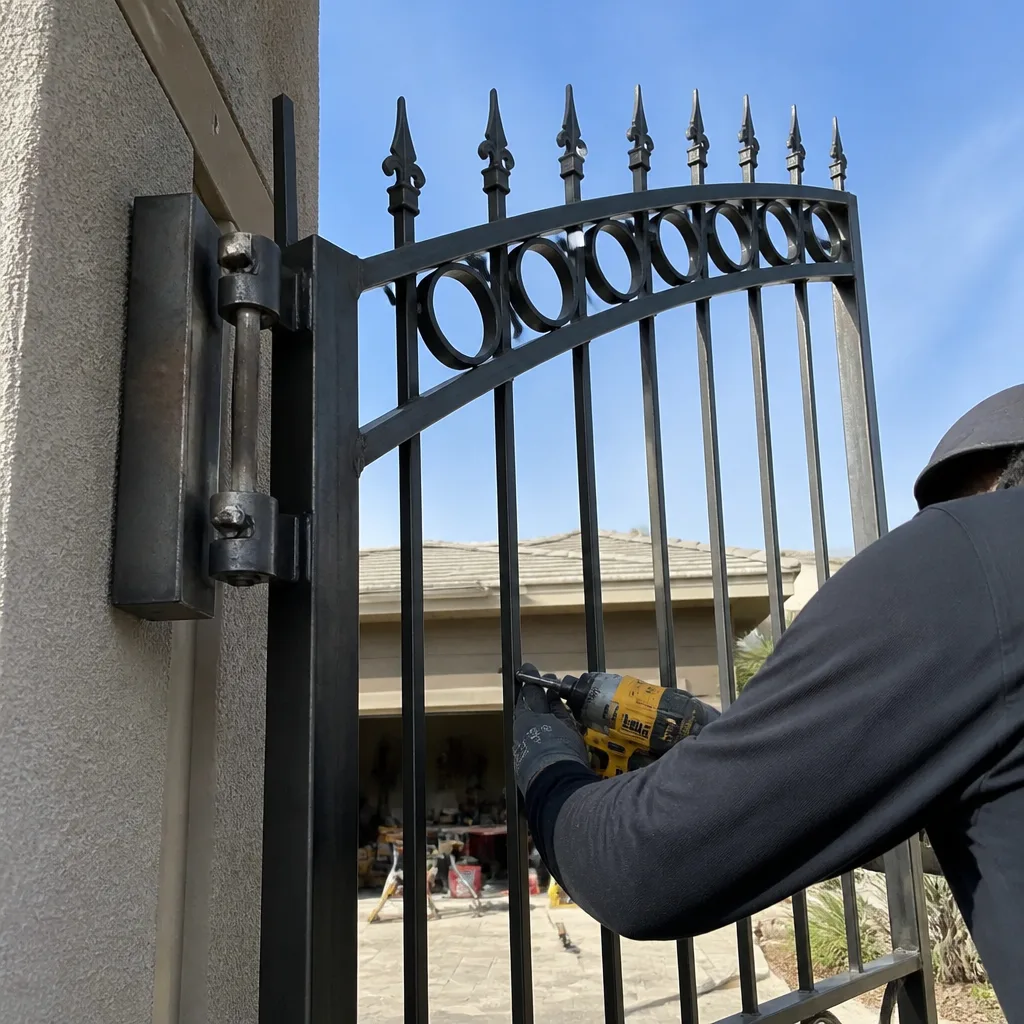
The timeline question has one honest answer: it depends on which of the three jobs you’re getting, and the only way to know is to have it inspected and written down. A direct swap is an hour. A bracket-and-swap is a half-day. A full installation is a full day or two. Add 1 to 3 hours for access control, 1 to 3 for conduit in Summerlin’s caliche, and 20 to 45 minutes for programming and calibration. The company that tells you this upfront and puts it in writing is the one you can plan around. The Vance Gate Repair Summerlin home page is where to start if you want to see how we document every job.
If your gate motor is failing, don’t wait for it to strand you. Call Vance Gate Repair Summerlin at (844) 797-2809 for a free estimate – a live person answers 24 hours a day, and the flat price is written and handed over before any work starts. Our technicians have up to 12 years of experience across nine major brands, and every visit leaves a photo record of what was found, what was set, and what was installed.
Written by the team at Vance Gate Repair Summerlin.