
Last updated November 17, 2026
 Wrought iron
 Wood & steel frame
 Farm & ranch
 Sliding driveway gates
 LiftMaster operators
Free on-site gate assessment - hinges, posts, and your LiftMaster or Nice gate operator checked before anything is quoted
The assessment is free and the quote is the invoice.
Get your free estimateDIY vs Professional Gate Motor & Opener: What’s Safe to Do Yourself
You can swap a gate motor battery yourself in about fifteen minutes and void nothing. You can also wire a new control board perfectly, test it, watch the gate glide shut, and still lose the manufacturer’s warranty on a $600 unit, because the warranty requires licensed installation and there is no way to prove who did the work. The line between DIY and professional gate work is not skill. It’s paperwork, code, and physics. In this guide we’ll draw that line task by task, say plainly which jobs a careful homeowner can own in Summerlin, and show you what a real record of completed work looks like.
Quick Answer
Battery replacement, remote reprogramming, photo-eye cleaning, and manual release operation are safe to do yourself. Anything involving 120V power, the control board, limit-switch calibration on a spring-loaded gate, or the physical arm and hinges is not, because those tasks carry warranty, electrical-code, or crush-injury consequences. The divide isn’t about whether you’re handy. It’s about what happens when something goes wrong afterward.
Styles & brands we work with
- Wrought iron
- Wood & steel frame
- Farm & ranch
- Sliding driveway gates
- LiftMaster operators
Table of Contents
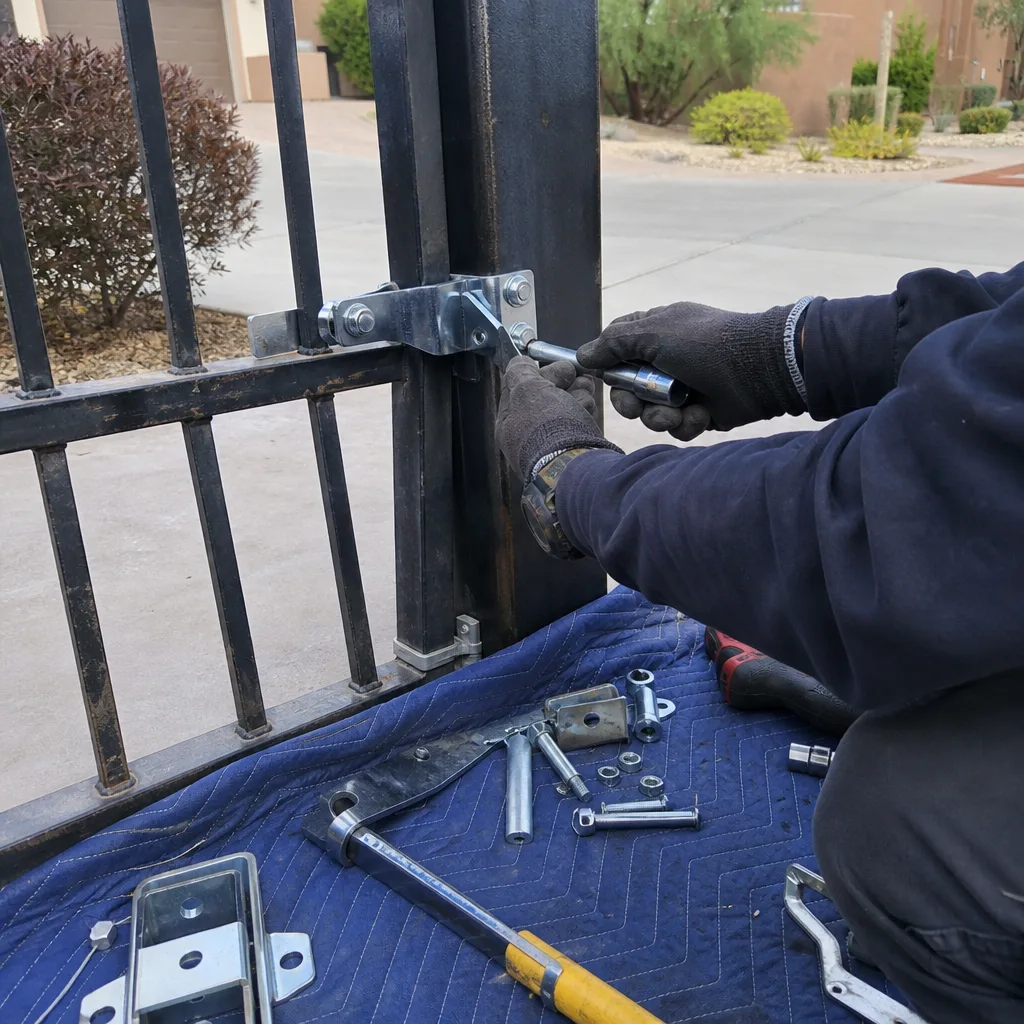
- The Two-Column Task List: Safe DIY vs. Pro-Only
- Nevada Low-Voltage Rules and the Licensed-Electrician Threshold
- Where DIY Troubleshooting Actually Helps: Gathering Diagnostics
- The Safety Case: 200 to 600 Pounds Under Tension
- What Documentation Proves the Work Was Done Right
- How DIY Work Voids a Warranty You Paid For
- Summerlin Conditions That Change the Answer
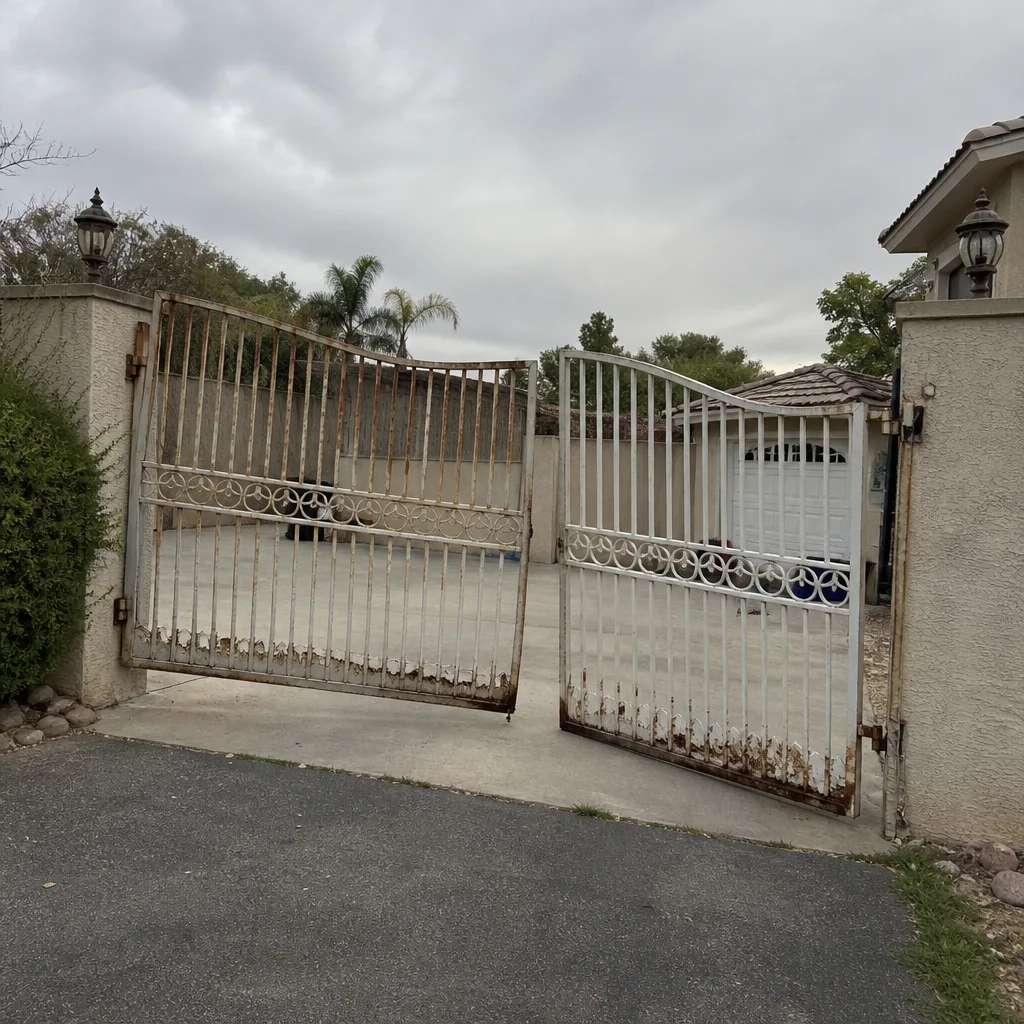 Before
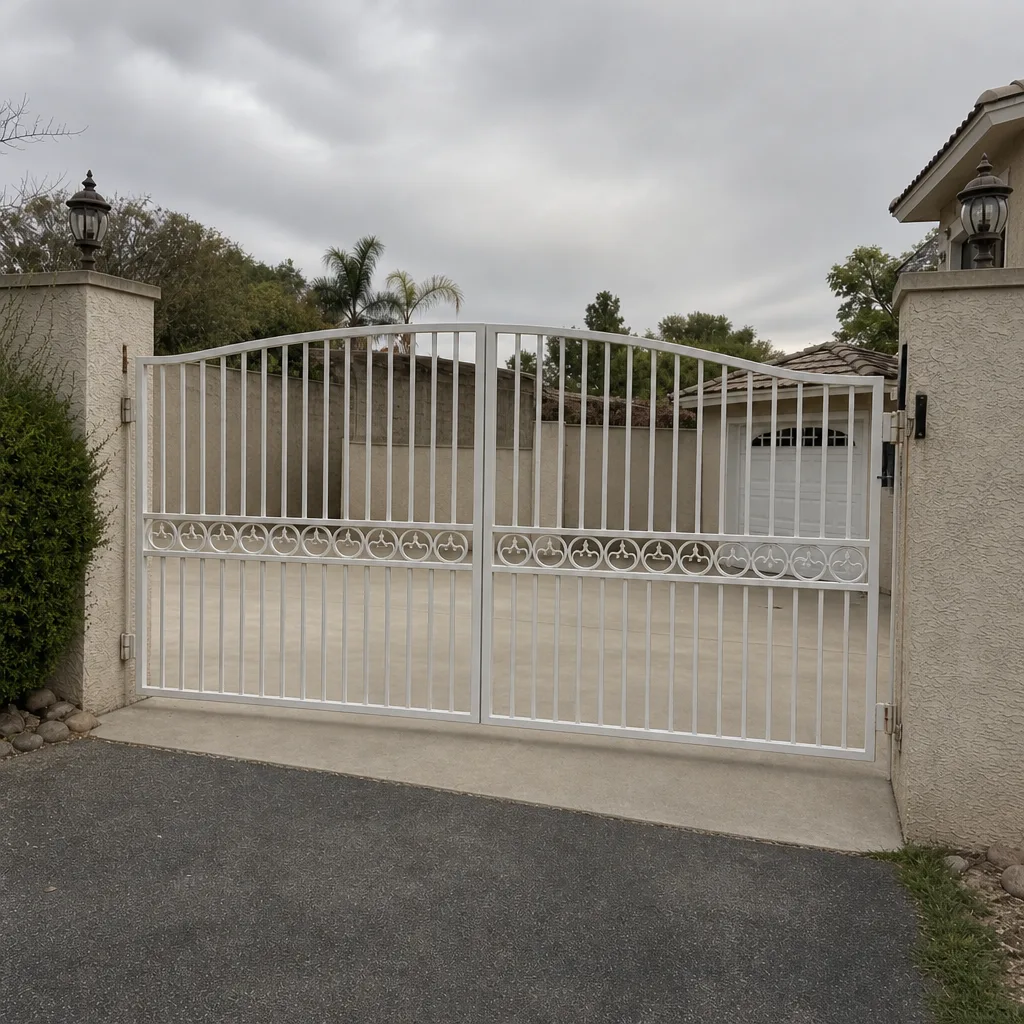 After
The Two-Column Task List: Safe DIY vs. Pro-Only
Here is the whole guide in one table. The left column is work a homeowner can do without risking a warranty, a code violation, or a hand. The right column is work that carries a consequence bigger than the task itself.
Safe to do yourself:
- Battery replacement in the operator housing. Twelve-volt sealed batteries are a straight swap, and on most LiftMaster and Linear units it’s a screwdriver and two spade connectors.
- Remote and keypad reprogramming. Pairing a new transmitter or changing a PIN is a documented button sequence, nothing more.
- Photo-eye cleaning and visual alignment check. Dust and spider webs on the infrared lenses cause more “gate won’t close” calls than any failed part. Wipe the lenses and confirm the beam isn’t blocked.
- Manual release operation. Knowing how to disengage the operator with the release key during a power outage is a safety skill every homeowner should have.
- Clearing debris from the gate’s travel path and the track or swing arc.
Pro-only:
- Any connection to 120V line power, including a new circuit or a relocated outlet.
- Control board replacement or rewiring.
- Limit-switch calibration on a tensioned gate.
- Operator arm, bracket, or hinge replacement.
- Spring, cable, or hydraulic work.
- Adding safety edges or replacing a failed photo-eye that’s wired into the board.
Notice the pattern. The left column is all low-voltage, no-tension, reversible work. The right column touches power, tension, or the logic that tells a 400-pound gate when to stop. When you’re ready to hand off the right column, our Gate Motor & Opener in Summerlin page lays out how that service visit runs.
Nevada Low-Voltage Rules and the Licensed-Electrician Threshold
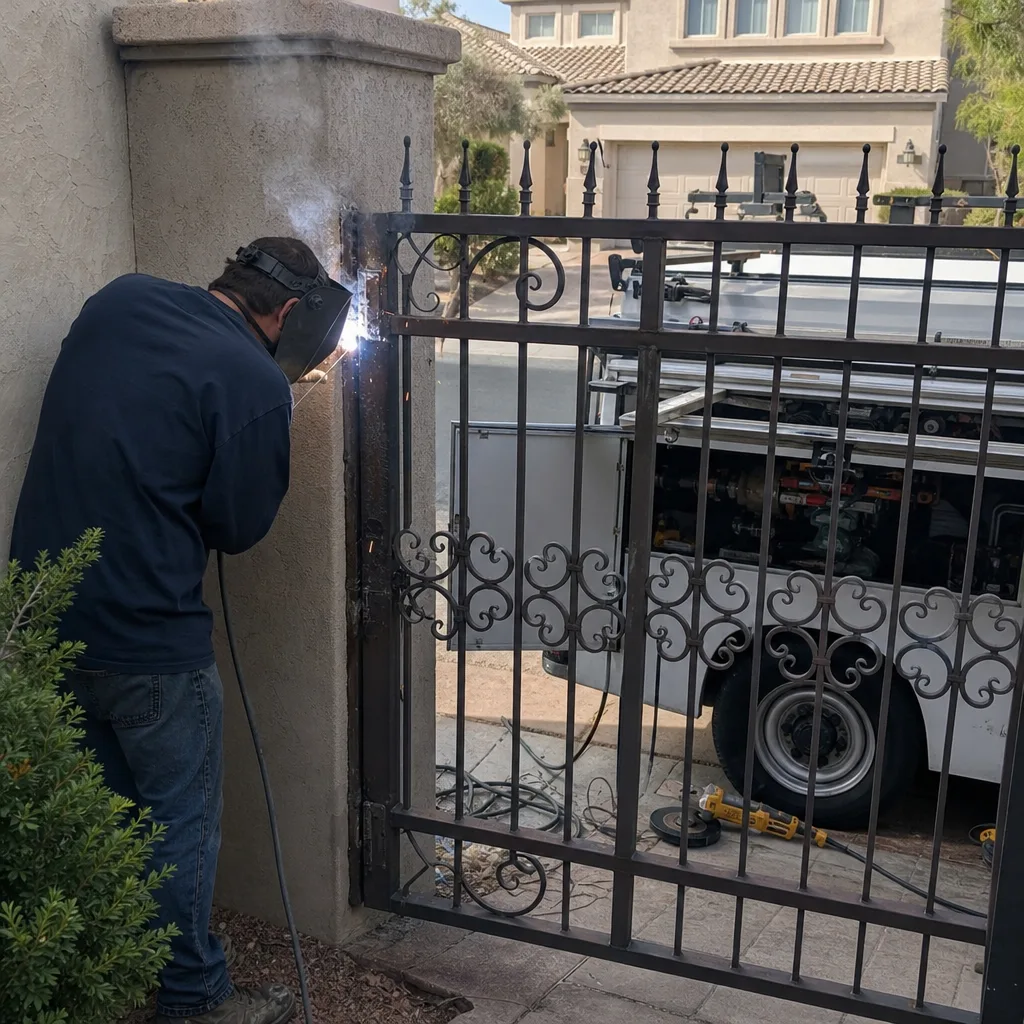
Most homeowners don’t know a threshold exists, and that’s exactly why it trips people up. Gate operators run on two different voltages, and the rules split cleanly between them.
The control side is low voltage, typically 12 to 24 volts DC. The battery, the remote receiver, the photo-eyes, the safety edges, the keypad wiring, all of that is low-voltage and, in Nevada, generally within the reach of a homeowner doing their own maintenance on their own property.
The supply side is 120 volts AC. The operator plugs into or is hardwired to a dedicated circuit, and that’s where the line sits. New wiring, a new dedicated circuit, a hardwired connection, or any work inside the panel is electrical contracting, and Nevada requires a licensed electrician for it. A gate technician who isn’t also a licensed electrician can’t legally make that connection either. What a gate company does is install and service the operator and coordinate the power, not manufacture the circuit.
Why it matters in practice: a homeowner who runs a new outdoor circuit to a gate operator to save the electrician’s fee is now unpermitted electrical work on an exterior structure. That surfaces at resale, at insurance review, and if there’s ever a fault. In Summerlin, where many gates sit on HOA-governed lots with documented improvement rules, unpermitted exterior electrical work is the kind of thing that gets flagged on a compliance walk.
The takeaway is narrow and useful. Low-voltage maintenance is yours. A new power run to the gate is a licensed electrician’s job, and it should be permitted.
Where DIY Troubleshooting Actually Helps: Gathering Diagnostics
This is the part most DIY-versus-pro articles skip. There is a slice of gate work where doing it yourself genuinely saves you money, and it isn’t turning a wrench. It’s gathering the information a technician needs before they arrive, which cuts billable diagnostic time.
When you call us about a gate that won’t close, the first thing a good technician does is narrow the fault. A homeowner who’s already done that narrowing turns a ninety-minute diagnostic into a twenty-minute repair. Here’s the information worth collecting:
- Write down the exact symptom. “Won’t close” is vague. “Opens fully, pauses three seconds, reverses and reopens without touching anything” points straight at a photo-eye or a limit-switch issue.
- Note when it started. After a storm, after a power flicker, after the landscaper came, or with no trigger at all. Each one points somewhere different.
- Photograph the control board with the cover off, including any blinking LED codes. Those blink patterns are the operator telling you what’s wrong, and the brand manual maps them.
- Test the manual release and report whether the gate moves freely by hand. If it’s stiff, the problem is mechanical, not electronic.
- Wipe the photo-eye lenses and retest before you call. This alone resolves a surprising share of “won’t close” calls.
- Have the model and any part numbers ready. A LiftMaster or FAAC label photo is worth more than a description.
Do that, and the technician arrives already knowing which system to check. That’s DIY troubleshooting at its most valuable: you’re not fixing the gate, you’re shrinking the bill.
The Safety Case: 200 to 600 Pounds Under Tension
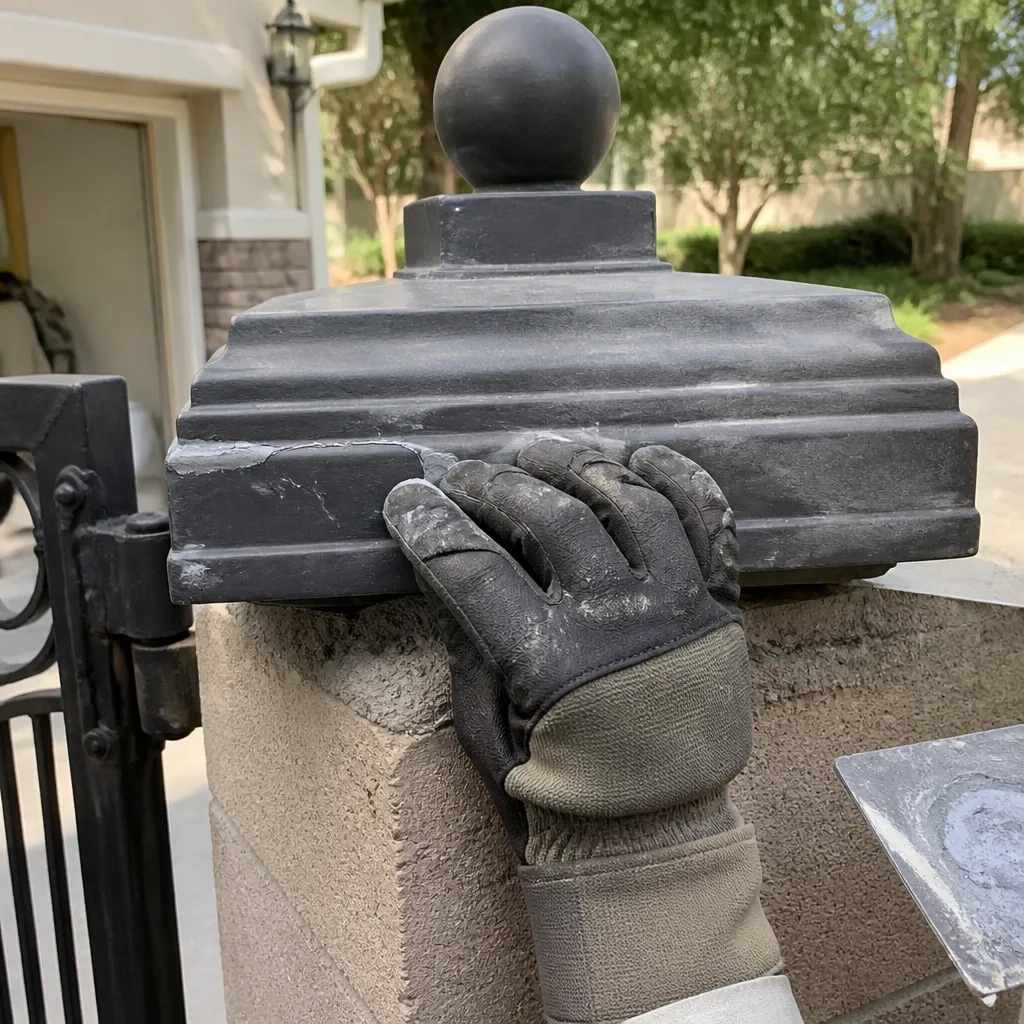
The safety case isn’t hypothetical, and it isn’t about being clumsy. A residential driveway gate panel weighs somewhere between 200 and 600 pounds depending on material and size, and it moves on stored energy. Spring-operated swing gates hold that energy in a coiled torsion or extension spring. Hydraulic operators hold it in pressurized fluid. Slide gates carry momentum along a track. The failure modes that have injured people are specific:
- Spring and cable failure. A tensioned spring or a frayed lift cable that lets go releases its energy in a fraction of a second, and it doesn’t care what’s in the path.
- Gate reverse under load. An operator with a mis-set limit switch can drive a gate past its stop and into a person, a car, or the operator housing itself.
- Pinch and crush points at the hinge side, where the gap narrows to nothing as the gate swings closed.
- Photo-eye failure that lets a gate close on whatever crosses the beam: a child, a pet, a delivery driver.
- Falling gate when a hinge or bracket gives way while someone is underneath adjusting it.
The DIY tasks that put you near these dangers are the ones to hand off: anything on the spring, the cable, the arm, the hinges, or the limit switch. A homeowner reaching into the hinge side of a tensioned gate to “just tighten the bracket” is one of the most common ways people get hurt doing gate work. We’ll say it plainly: don’t. The documentation habit behind our own work exists precisely so the next person never has to guess at a tension setting someone adjusted blind.
What Documentation Proves the Work Was Done Right
“They said it was fine” is not a record. It’s a memory. When a gate fails six months after a repair, the only thing that settles who’s responsible is paperwork, and most homeowners never ask for it until it’s too late.
Here’s what a professional visit should leave behind, and what to ask for if it doesn’t:
- A written scope before work starts. What’s being repaired, what part is being installed, and the flat price, in writing, handed over before anyone picks up a tool. No “call for a quote,” no surprise invoice at the end.
- Photographs of what was found before the repair, so the starting condition is on record.
- Photographs of what was set or replaced, including the new limit-switch position or the part number on the installed component.
- The part number and brand of anything replaced, so a future service call isn’t a scavenger hunt.
- A warranty statement covering the completed work, in writing and with a defined window.
Those five things turn a repair into evidence. Our version of this is The Haven Standard: a written price under Clause 1 before work begins, and a photographed record of every adjustment left with the homeowner under Clause 4, evidence on every job. When you call a company, ask what they leave behind. If the answer is “nothing,” you’ve learned what you needed to know.
How DIY Work Voids a Warranty You Paid For
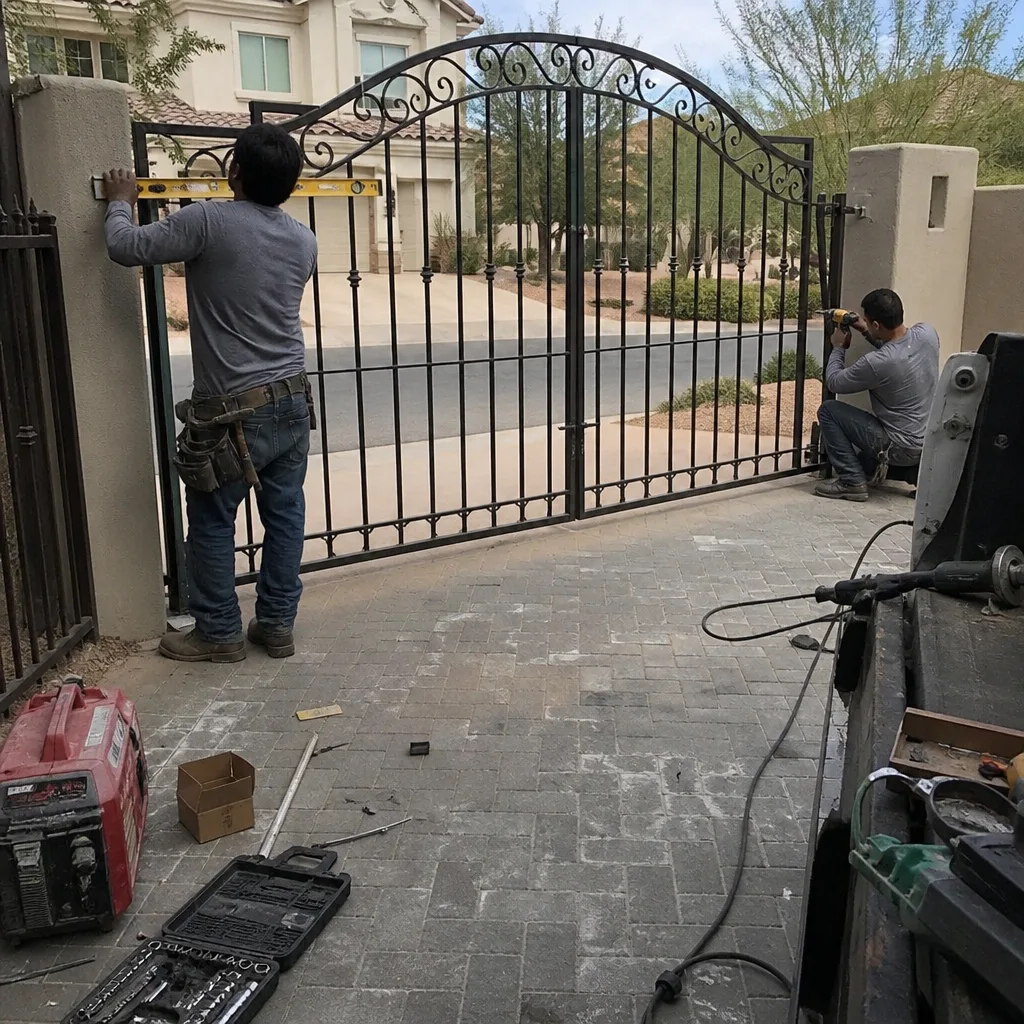
This is the point that catches capable homeowners, because they do the work correctly and lose the warranty anyway. Manufacturer warranties on gate operators, from LiftMaster to Linear to FAAC, commonly require installation and service by a licensed professional. It’s not a judgment on your skill. It’s the manufacturer protecting itself against untraceable work.
The consequence is concrete. A control board or operator motor replaced under warranty is often free or heavily discounted on parts. A unit installed or serviced outside the warranty terms means that same part is now a real cost. On a $600 operator, a DIY install that works perfectly can still cost you the full price of the next failed component, plus the labor, because you traded a warranty for a Saturday.
There’s a second layer. A homeowner who installs their own operator and then sells the home has an undocumented, unpermitted-possibly installation attached to the property, which a buyer’s inspector will flag. An installed operator with a written record, a part number, and a warranty is an asset. A DIY one is an open question.
If you already have a written estimate from another company, we’ll review it at no cost as a free second opinion. Bring the paperwork.
Summerlin Conditions That Change the Answer
Summerlin has conditions that push some of this work firmly into professional territory. The sun and heat alone age gate hardware faster than most homeowners expect. UV exposure cracks and stiffens photo-eye lenses and remote housings, and the temperature swings from a cold desert night to a hot afternoon work the operator’s battery and the gate’s hinges. A sealed lead-acid battery that powers a remote gate in Summerlin often gives noticeably fewer service years than the same battery in a milder climate, which is why battery health is worth checking in spring, not just when the gate won’t open.
Then there’s the gate itself. Many Summerlin properties sit behind HOA walls with gates on documented improvement approvals, and a lot with a driveway gate on a slope. A gate on an incline brings gravity into the equation, and a mis-set limit switch on a sloped drive can reverse the gate into a stopped car faster than one on flat ground. That’s not a place to learn limit-switch calibration.
Dust is the other local factor. Summerlin’s spring winds push fine dust into tracks and hinge points, and a gritty track adds load to the operator. Cleaning the track and the photo-eye lenses is legitimate, useful DIY maintenance here. Adjusting the arm because the gate started dragging? That’s where we come in. When a Summerlin repair needs a hand, our Gate Repair in Summerlin page covers the service visit, and a new install runs through Gate Installation in Summerlin.
Common Mistakes to Avoid
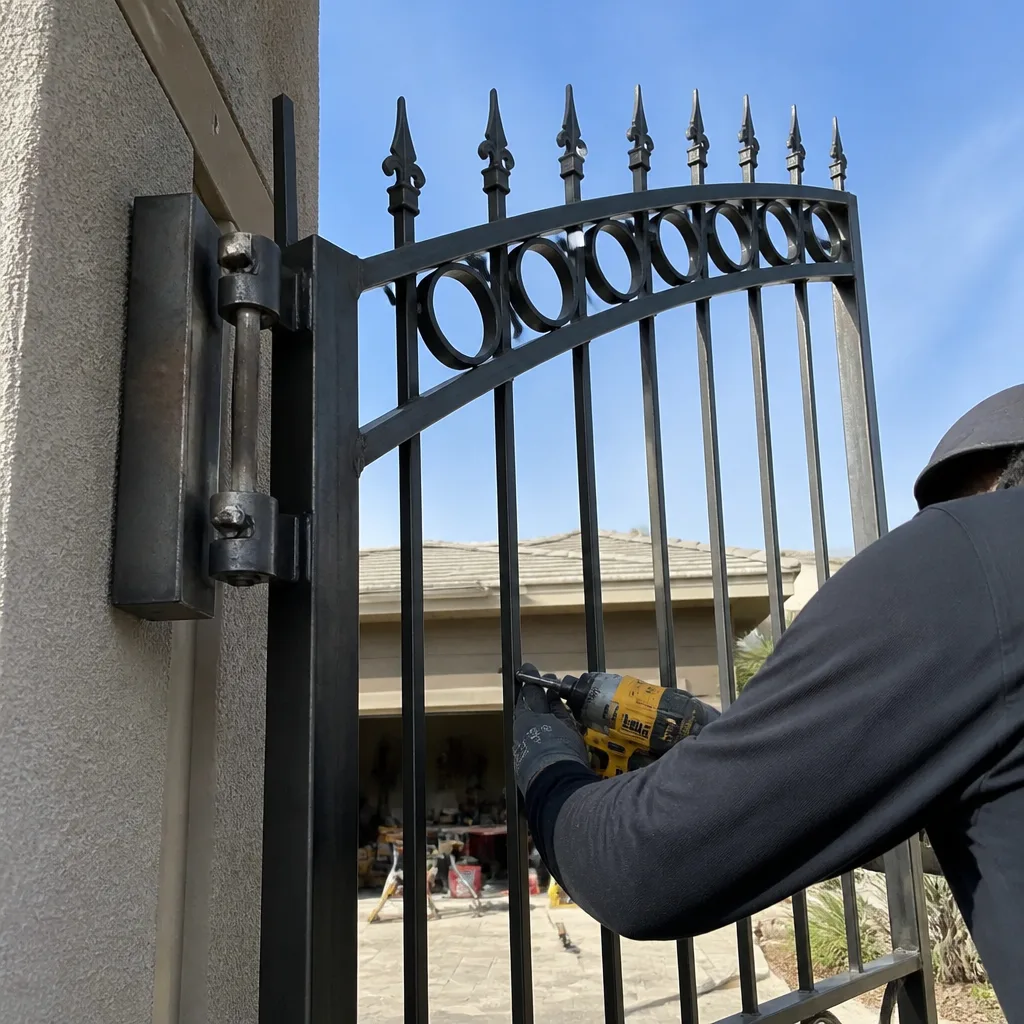
- Reaching into the hinge side of a tensioned gate to tighten a bracket. The pinch point and the stored energy are both right there. Shut the power and leave it to a technician.
- Running a new 120V circuit to the operator without a licensed electrician or a permit. It surfaces at resale and on insurance review, and in Summerlin it can trip an HOA compliance walk.
- “Fixing” a limit switch by feel instead of by reading. A gate stop set a few degrees past travel drives the panel into its housing or into whatever’s parked in the arc.
- Tossing the receipt and the part number. Without the part number on record, the next service call pays to rediscover the same problem.
- Cleaning the track with a hose and leaving it wet. Desert dust plus a wet track plus a metal gate equals rust at the hinge points. Sweep, don’t soak.
- Assuming the gate is fine because it closed today. Photo-eyes fail gradually, and a beam that’s drifted a couple of inches still lets the gate close on a car.
- Buying the cheapest replacement remote online that isn’t compatible with your operator. Confirm the brand and frequency first, or you’ve bought a paperweight.
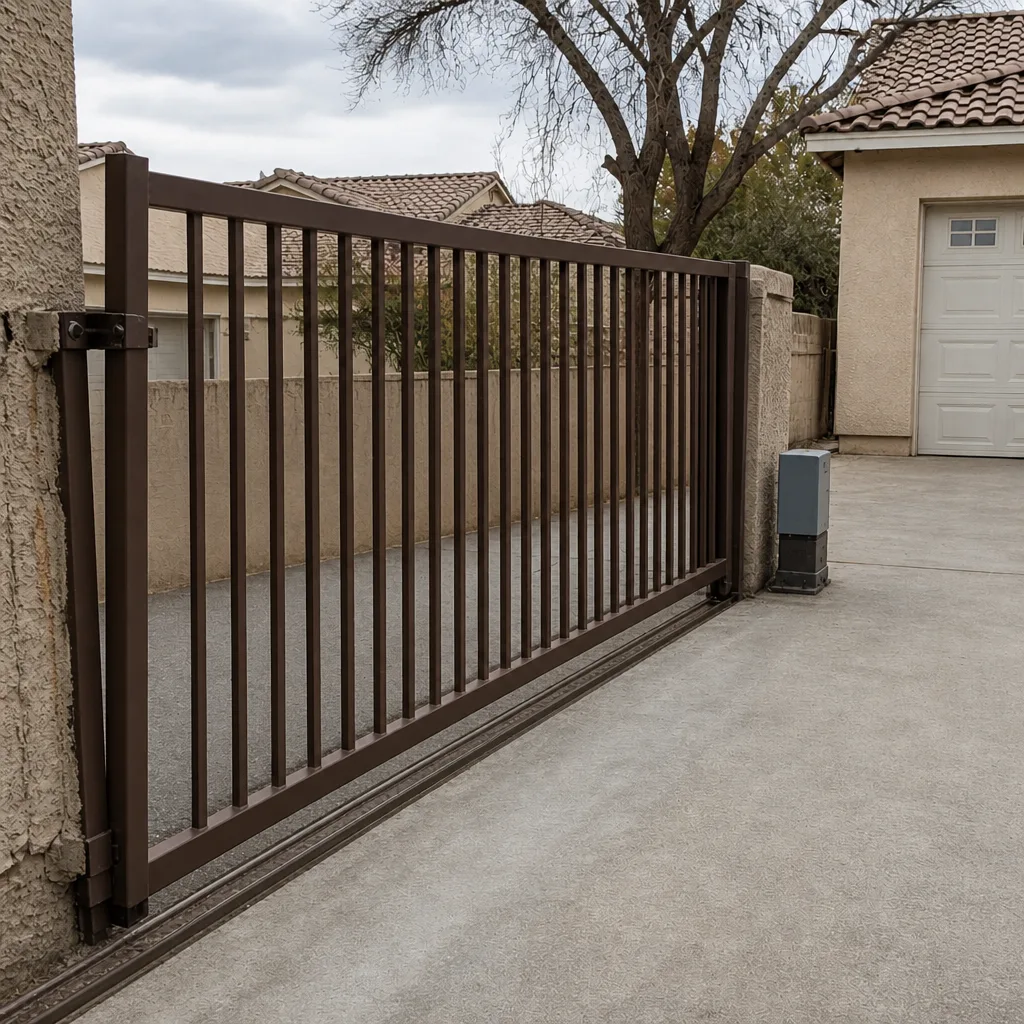
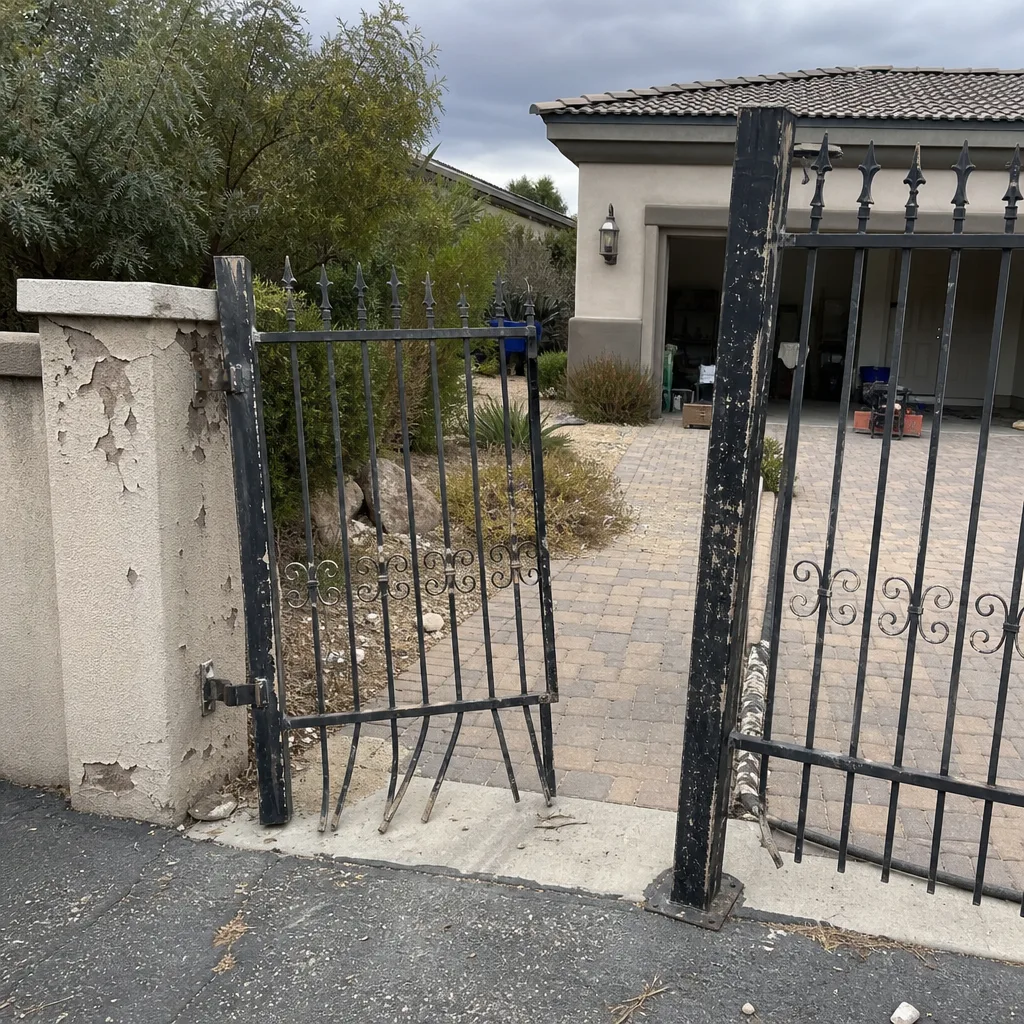
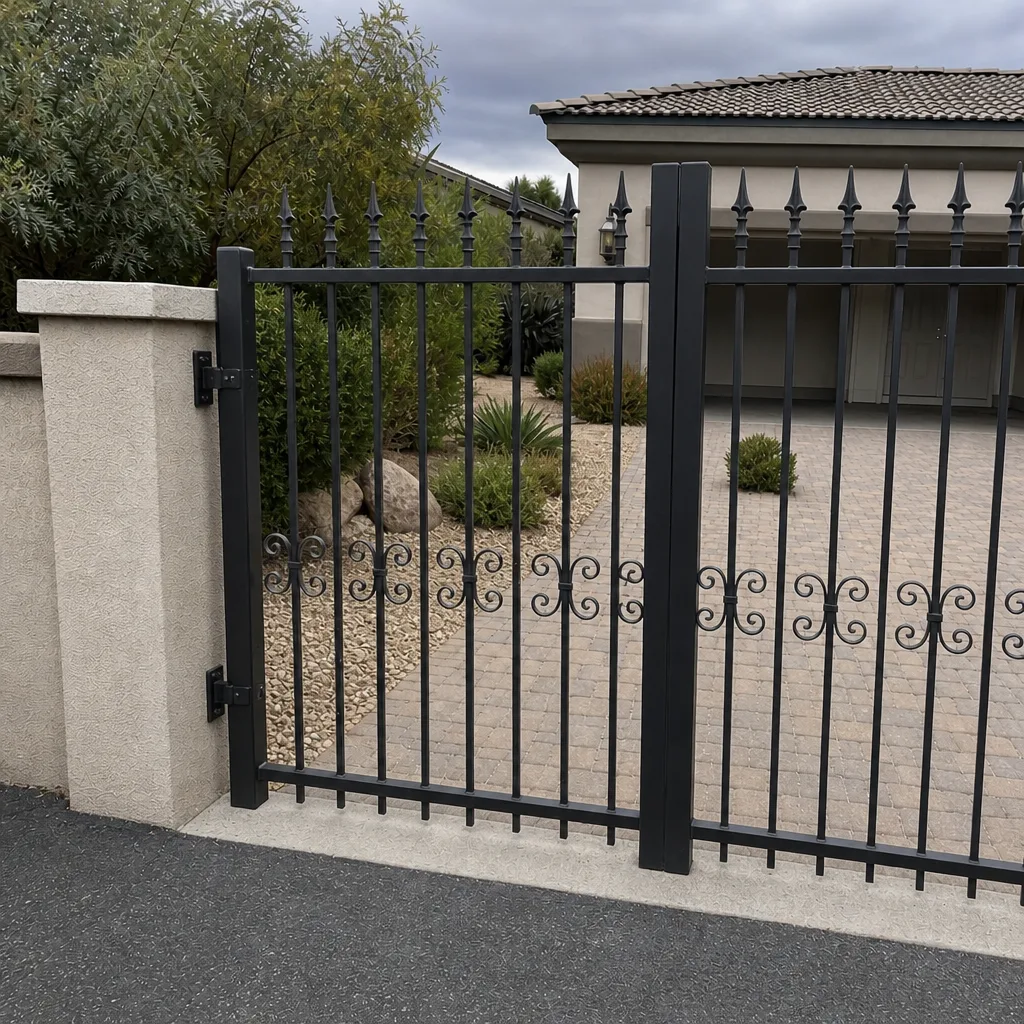
See the difference
BeforeAfter Before
 After
 Before
 After
When to Call a Professional
Call a professional for anything that touches 120V power, the control board, the limit switch on a tensioned gate, the operator arm, the hinges, or a spring. Call for a failed warranty part, for a gate that reverses on its own, for a photo-eye you can’t get to stay aligned, or for an install you want documented and warrantied. Call if a Summerlin gate sits on a slope and has started drifting or dragging, because gravity doesn’t forgive a bad limit setting. Call if you’ve had a written estimate from another company and want a free second opinion before you commit. Vance Gate Repair Summerlin offers free estimates in Summerlin. Call (844) 797-2809 and a live person answers, day or night.
Frequently Asked Questions
Yes. Battery replacement in a gate operator is a safe DIY task, typically a screwdriver and two connectors, and it voids nothing. On most LiftMaster and Linear units it’s a fifteen-minute job. If you’re not sure of the battery model, photograph the old one and call (844) 797-2809 for the right part number.
Often yes. Many manufacturer warranties require licensed professional installation, so a perfectly executed DIY install can still void the coverage on the operator. That means the next failed control board or motor is a full-cost replacement. When you’re ready for a documented, warrantied install, call (844) 797-2809.
For the 120V supply side, yes. A new circuit, a hardwired connection, or panel work requires a licensed electrician in Nevada. The low-voltage control side (battery, remotes, photo-eyes, keypad) is maintenance a homeowner can handle. Call (844) 797-2809 and we’ll walk you through which side your job is on.
Usually not safely. A gate that reverses without obstruction is typically a photo-eye or limit-switch fault, and the limit switch sits on a tensioned gate you shouldn’t reach into. Wipe the photo-eye lenses first, then call (844) 797-2809 so a technician can read the fault codes and set the stop correctly.
A documented record: photos of what was found and what was set or replaced, the part number installed, a written price, and a written warranty on the work. Vance Gate Repair Summerlin leaves a photographed record on every visit under The Haven Standard, backed by our 365-Day Done Right Promise. Call (844) 797-2809 to book a free estimate.
Yes, and it’s free. Bring the written estimate and we’ll review it at no cost as a second opinion before you commit to anything. Call (844) 797-2809 to arrange it. There’s no pressure to book the work with us.
The Bottom Line
The DIY-versus-pro line for gate motors isn’t drawn at skill. It’s drawn at voltage, tension, and paperwork. Battery swaps, remote reprogramming, photo-eye cleaning, and manual release are yours to keep. The 120V supply, the control board, the limit switch, the arm, the hinges, and the springs belong to a trained professional, and so does the warranty that comes with documented, licensed work. Gather your diagnostics before you call, ask for a written price before work starts, and keep the photo record. That combination is what protects your gate, your wallet, and the next person who works on it. Still unsure which side your job falls on in Summerlin? Browse our Vance Gate Repair Summerlin home for the full picture, or call us at (844) 797-2809 for a free estimate. A live person picks up around the clock.
Written by the team at Vance Gate Repair Summerlin.