
Last updated November 17, 2026
 Wrought iron
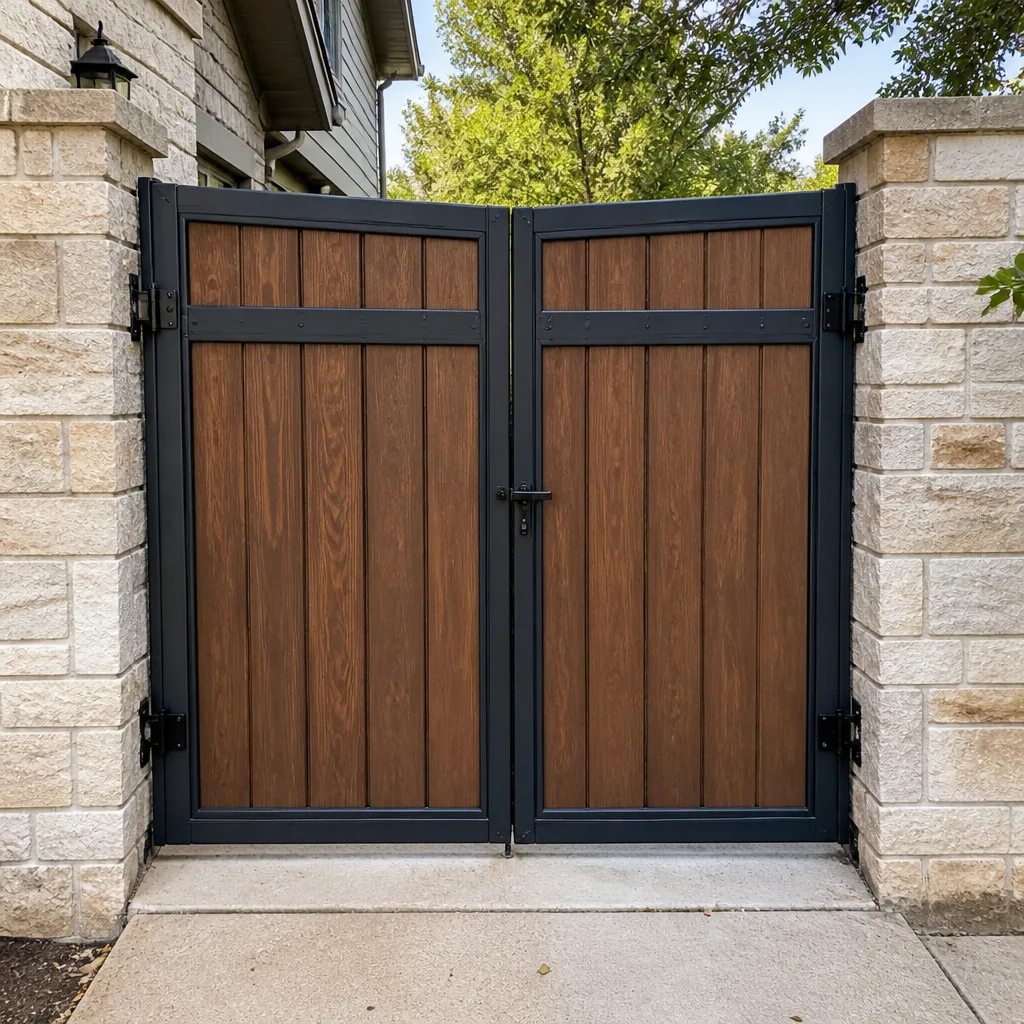 Wood & steel frame
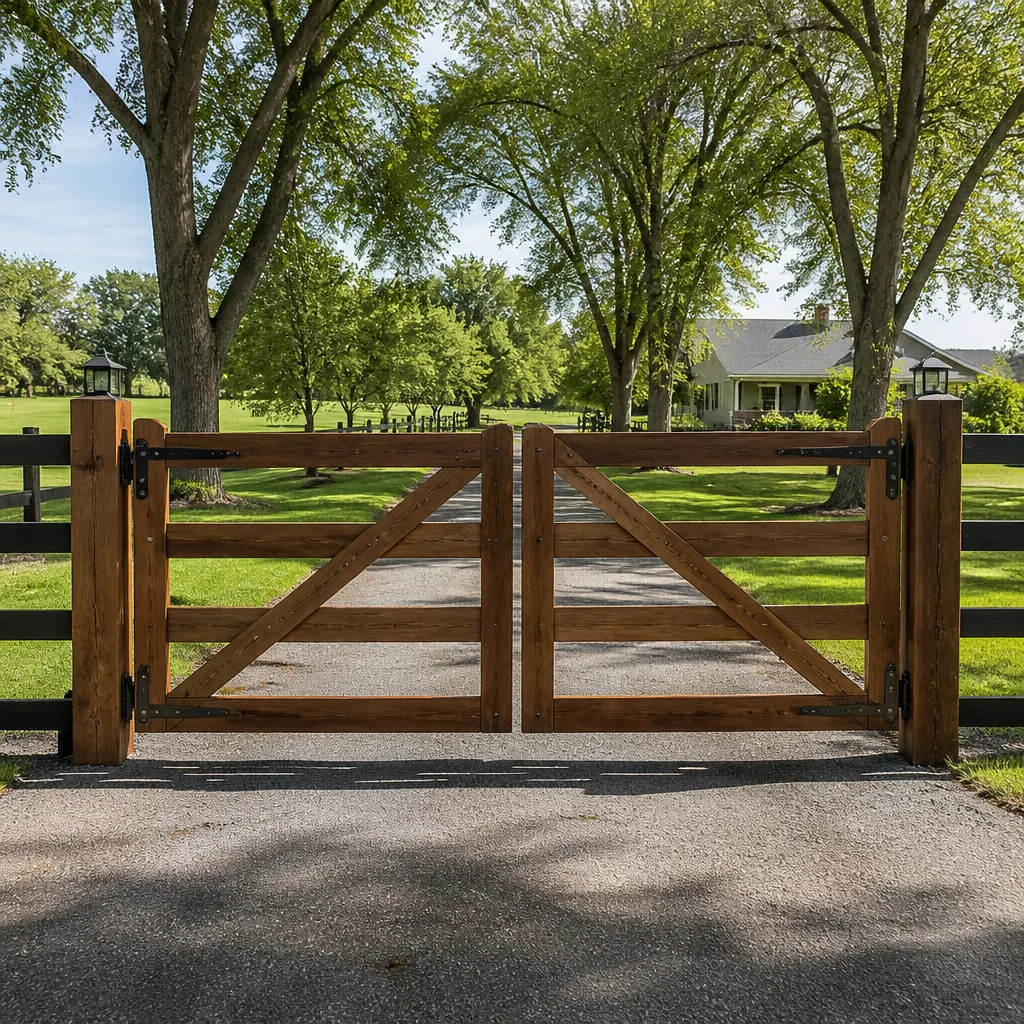 Farm & ranch
 Sliding driveway gates
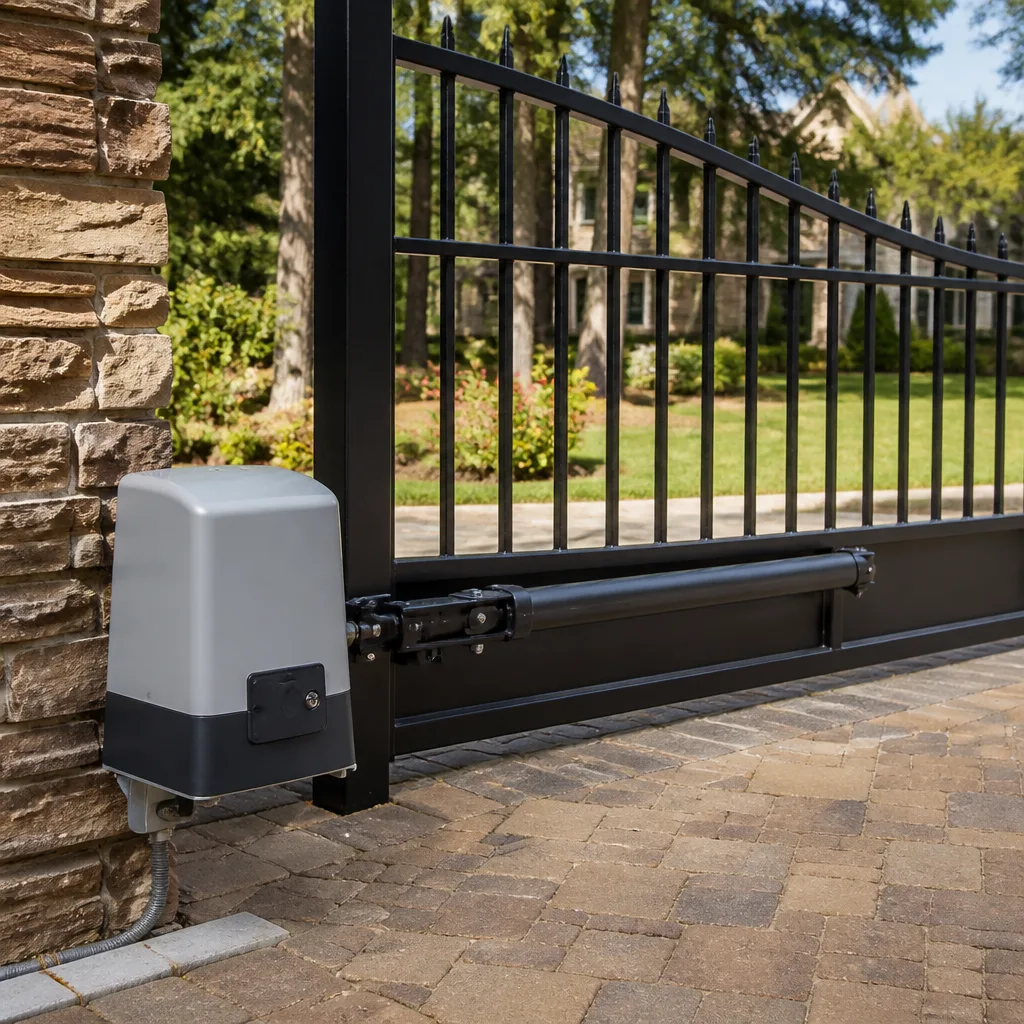 LiftMaster operators
Free on-site gate assessment - hinges, posts, and your LiftMaster or Nice gate operator checked before anything is quoted
The assessment is free and the quote is the invoice.
Get your free estimateGate Motor & Opener Maintenance Schedule: What to Do and When
If you service your gate motor every spring and fall, you’re running a schedule written for a temperate climate. Summerlin doesn’t have one of those. Here, the motor that needs attention in October is the one that just ran through 120 straight days of heat load, not the one that wintered over. Calendar-based maintenance misses that entirely. What actually drives wear on a Summerlin gate operator is heat cycles, dust events, and how many times the gate opens and closes per week. This guide lays out a maintenance schedule built on those three variables, with the measurements, the numbers that mean something, and the record you should keep.
Quick Answer
Service your gate motor after the summer heat peak (early-to-mid October), again after dust-storm season (late July), and once more at the midpoint of your gate’s heaviest usage stretch. At each visit, measure chain or belt deflection, test the battery under load rather than at rest, inspect and photograph the limit-switch settings, and log everything in a written record. In Summerlin, those two seasonal anchors matter far more than whether you happen to schedule in April or May.
Styles & brands we work with
- Wrought iron
- Wood & steel frame
- Farm & ranch
- Sliding driveway gates
- LiftMaster operators
Table of Contents
- Why a Calendar-Based Schedule Fails in Summerlin
- The Summerlin Maintenance Schedule: Three Anchors, Not Four Seasons
- What Each Maintenance Visit Should Actually Measure
- Chain and Belt Tension: The Deflection Spec That Matters
- Battery Backup Load Testing: Why Resting Voltage Lies
- Limit Switches, Photo-Eyes, and Safety Reversal Checks
- What a Maintenance Record Should Contain
- What You Can Check Yourself vs. What Needs a Technician
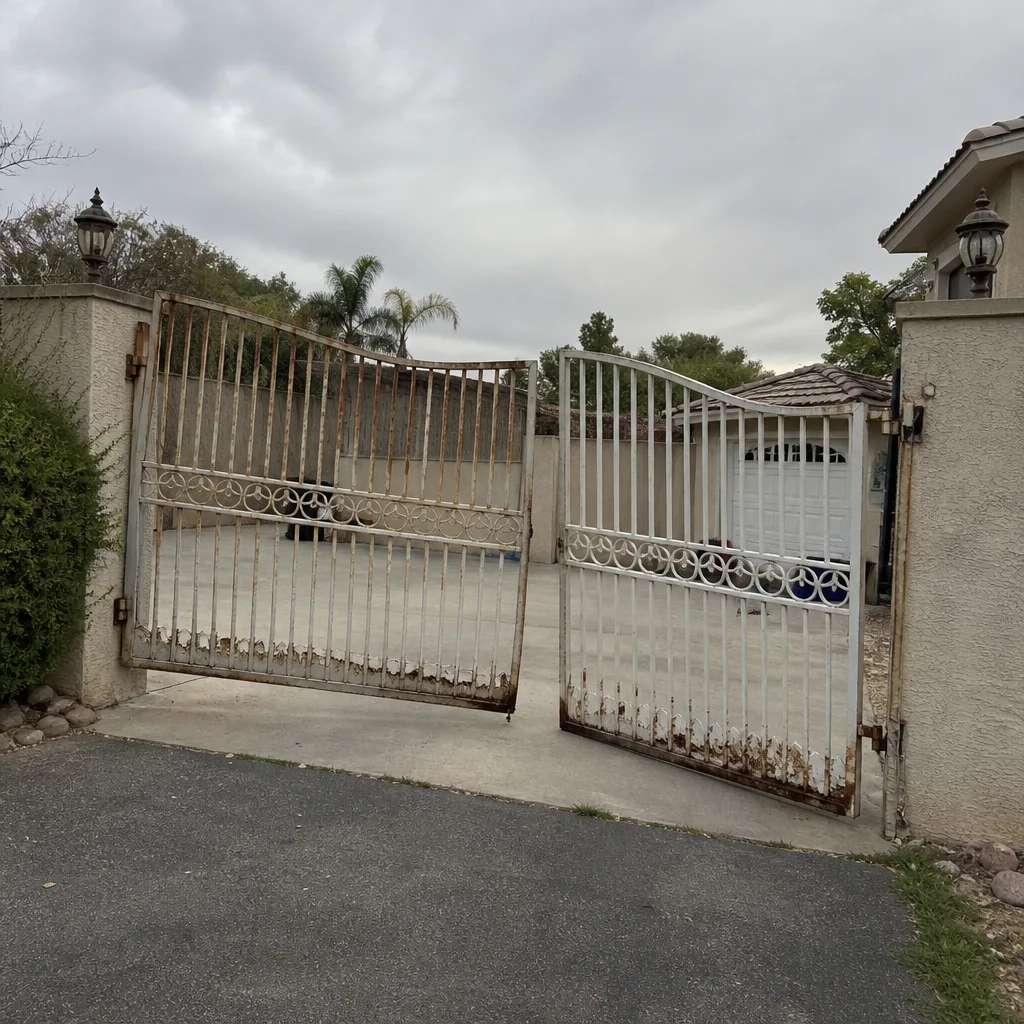 Before
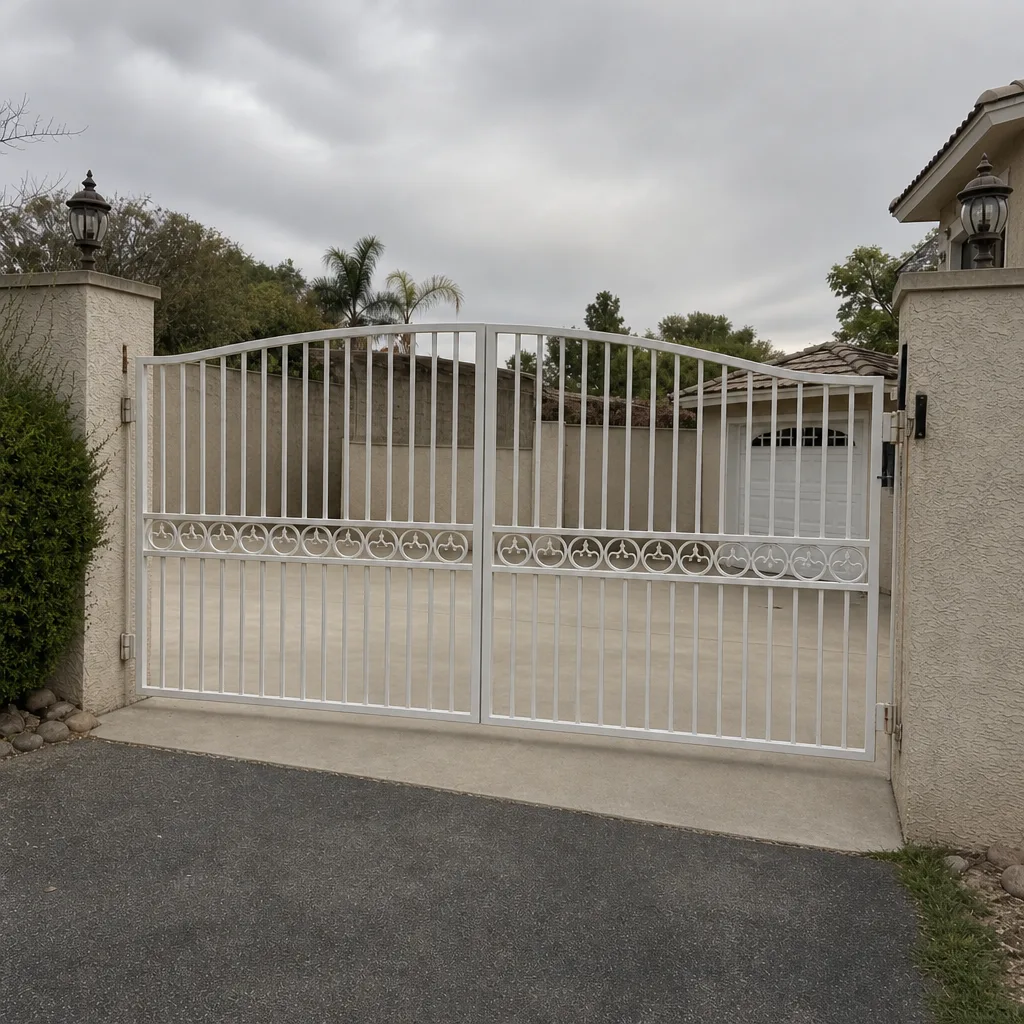 After
Why a Calendar-Based Schedule Fails in Summerlin
Most manufacturer maintenance intervals are written in months, and months are a proxy for something else: temperature swings, moisture, and duty cycle. In a mild climate, those three line up tidily with the calendar. In Summerlin they don’t. A gate operator sitting on a west-facing wall in The Ridges can see surface temperatures hot enough to soften grease and accelerate seal wear, while the same model under shade in Summerlin West runs noticeably cooler. Two gates, same month, two completely different wear states.
Usage volume compounds it. A household where two cars leave and return twice a day puts a gate through roughly eight cycles daily. Add a delivery-heavy week, landscapers, and a pool service, and you’re at fifteen or twenty. That’s a 150 percent swing in cycles per month with nothing on the calendar changing. The gate that runs 400 cycles a month wears differently than the one running 150, and no “service every six months” sticker accounts for it.
Dust is the third variable, and it’s the one homeowners underestimate most. Summerlin sits at the edge of open desert, and spring and summer wind events push fine particulate into every moving joint, hinge, roller, and gear housing. Dust doesn’t just look bad on a black BFT or FAAC operator; it grinds. Mixed with factory grease, it forms an abrasive paste that quietly eats sprockets and wears chain links long before the motor itself shows stress.
So the schedule we recommend isn’t anti-calendar. It’s calendar-adjacent: anchored to the two events that actually stress a Summerlin gate, then scaled by how hard the gate works the rest of the year.
The Summerlin Maintenance Schedule: Three Anchors, Not Four Seasons
Here’s the framework, stated plainly:
- Post-heat anchor (early-to-mid October). This is the most important visit of the year. The motor has just run through the summer load peak: thermal cycling on the control board, grease thinning, seal shrinkage, battery health stressed by heat. Everything measured here reflects the gate’s real summer performance.
- Post-dust anchor (late July through early August). Summerlin’s dust events leave grit in the mechanism. A cleaning, lubrication refresh, and lubrication-path inspection here prevents the wear that would otherwise show up by the following spring.
- Usage midpoint (roughly February or March, adjusted). If your gate runs heavy volume, add a lighter mid-cycle check between the two anchors. This isn’t a full service; it’s a look at tension, photo-eye alignment, and any new noise or hesitation.
A fourth visit is worth adding in one case only: if a dust event was severe enough to coat the operator housing visibly, schedule the cleaning check sooner rather than waiting for late July. You’ll know it when you see it. The gate tells you.
If you’re not sure where your operator sits in its service life, or you’ve bought a home with an unfamiliar motor on it, a gate motor & opener service in Summerlin visit is the right starting point. A technician identifies the make, reads the wear state, and gives you a written baseline schedule, which is more useful than a generic interval.
What Each Maintenance Visit Should Actually Measure
“Check the gate” isn’t a maintenance task; it’s a promise. A real visit produces measurements. Here’s what ours include, and what you can ask any technician to document:
- Chain or belt deflection measured in inches at the midpoint of the longest span (details below).
- Battery voltage at rest and under load, with the drop recorded as a number, not a judgment.
- Limit-switch positions in degrees or encoder counts, photographed before and after any adjustment.
- Photo-eye alignment and obstruction test, with the beam distance and any offset recorded.
- Motor current draw on a cycle, compared against the previous visit’s reading if one exists.
- Gearbox and hinge lubrication with the specific product used, not generically “lubricated.”
- A photograph of the control board terminals and any wiring changes, so the next technician reads the setup instead of reverse-engineering it.
The pattern here is simple: what was measured, what the number was, what changed. That’s the same documentation habit a commercial access-control job demands, and it works just as well on a driveway gate in Summerlin. Our technicians have up to 12 years of experience on the automation brands Summerlin homes actually have installed: FAAC, BFT, Linear, Viking, LiftMaster, Ghost Controls, DoorKing, Elite, and Mighty Mule. One company that can work on whatever motor is already on the property, rather than one that steers you toward replacing it.
When a repair comes out of one of these visits, the price is written and handed over before any work begins, under The Haven Standard. That’s Clause 1, and it applies to a hundred-dollar adjustment as much as a full component replacement.
Chain and Belt Tension: The Deflection Spec That Matters
“Check for slack” is meaningless without a reference number. Slack compared to what? The right way to measure chain or belt tension is deflection: how far the chain moves at the midpoint of the longest span under a light, consistent push.
Here’s the practical method:
- Park the gate at the midpoint of travel so the chain span is longest.
- Mark the midpoint of that span.
- Press the chain or belt down with moderate thumb pressure (roughly 3 to 5 pounds) at the mark.
- Measure the vertical movement. Use a ruler or tape; don’t eyeball it.
Most residential gate operators spec a deflection of around half an inch to three-quarters of an inch at that span, depending on the model. Manufacturers vary, so check the specific brand’s manual, and have the technician record the number and the reference spec side by side. A chain that deflects more than an inch is loose: it’ll slap, skip on the sprocket, and wear the sprocket teeth prematurely. A chain so tight it deflects less than a quarter inch is worse, because it loads the gearbox and motor bearing every cycle. In Summerlin heat, over-tensioned chains are the more common failure; the metal expands and the installer’s winter-tight setting becomes brutal by August.
Belt-drive operators like some Linear and Viking models don’t have chain stretch the same way, but belt tension still matters and the same midpoint method applies. Either way, a technician should photograph the tensioner position after adjusting so the next visit has a baseline. We’ve seen the same gate re-tensioned three times in two years because no one recorded where the tensioner started.
Battery Backup Load Testing: Why Resting Voltage Lies
A battery at 12.6 volts resting can look perfectly healthy and still fail the first time the gate loses power. Resting voltage tells you the battery is holding a charge; it doesn’t tell you how much current it can deliver under load. Heat is the great battery killer in Summerlin, and a battery that lived through a hot garage or a sun-exposed control box for two summers can hold its surface voltage while its capacity quietly collapses.
Load testing works like this:
- Disconnect the gate from the operator (or trigger a power-loss simulation by opening the disconnect).
- Measure and record resting voltage before the cycle. A healthy sealed lead-acid battery sits around 12.6 to 12.8 volts.
- Run the gate through a full open-and-close cycle on battery power alone, timing how it performs.
- Measure voltage during the cycle, at the moment the motor draws peak load. This is the number that matters. A drop of about 1.0 to 1.5 volts under load is normal; a drop of 2 volts or more says the battery is on its way out.
- If the gate stalls, trips its own low-voltage cutoff, or moves visibly slower than it does on mains power, the battery should be replaced regardless of its resting voltage.
Regardless of test results, most gate and access-control batteries should be replaced on a 3-to-5-year cycle in a hot climate. Summerlin heat pushes that toward the shorter end. If the battery in your operator is more than three years old and has never been replaced, it’s a candidate whether or not it tests marginal. The cost of a battery is a fraction of the cost of a gate that won’t open in a power outage.
Limit Switches, Photo-Eyes, and Safety Reversal Checks
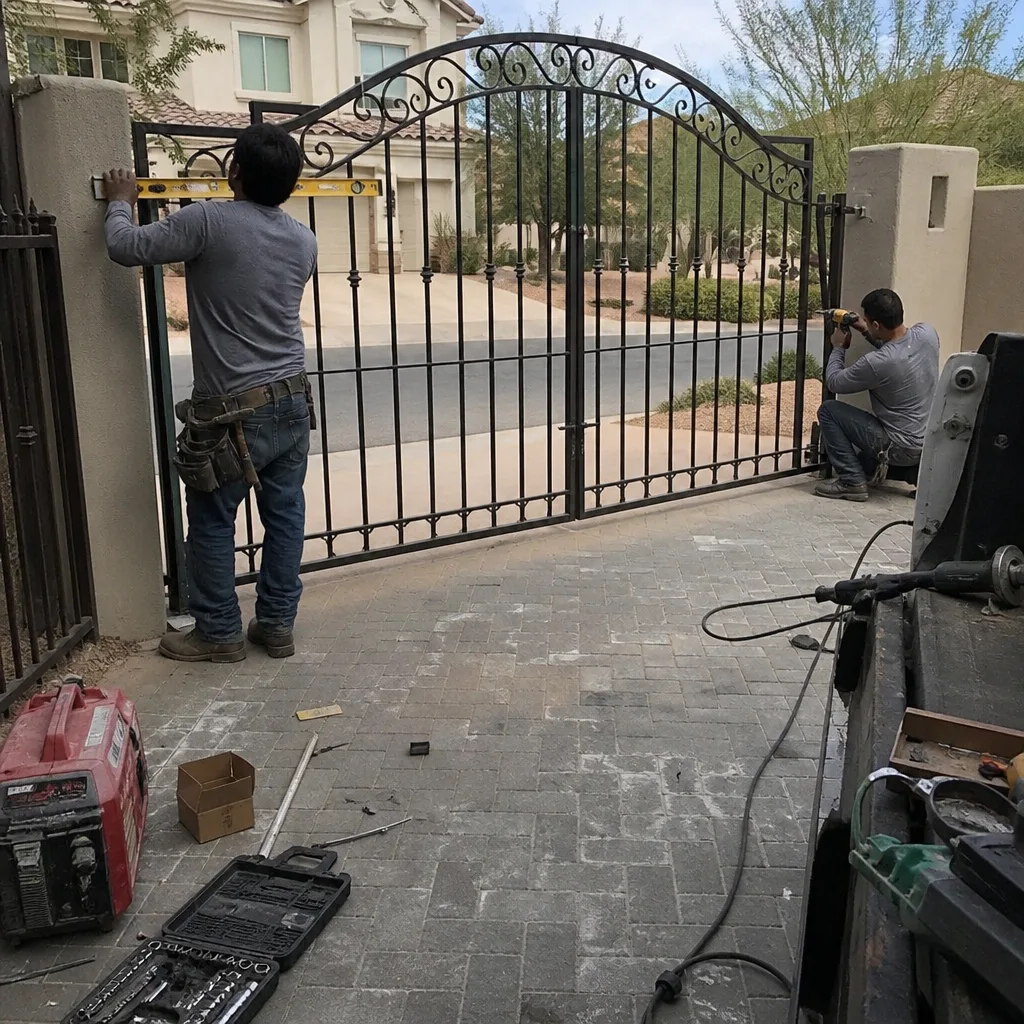
Limit switches tell the motor where to stop. When they drift, the gate over-travels, slams, or stops short of fully closed. In Summerlin, limit switches drift for two main reasons: heat expansion of the gate hardware and mechanical vibration from a loose chain or worn hinge. So the limit-switch check at the post-summer visit isn’t just about setting them; it’s about understanding why they moved.
The technician’s job here is to measure the switch position (in degrees of arm travel or encoder counts) and photograph it before adjusting, then reset and photograph again. Two numbers on file, before and after, tell the next visit exactly where the gate belonged. A digital photo of the limit cam position is worth more than a sticky note.
Photo-eye inspection is separate and equally important. The photo-eye is the infrared beam across the gate path that reverses the gate if anything crosses it, and getting it wet, dusted, or bumped out of line is a common failure. A real check:
- Confirm the beam is continuous and uninterrupted on both sides.
- Break the beam with a hand or a board and measure the gate’s reversal response time.
- Verify the beam clears low enough for a pet or a child crossing the threshold (typically within a few inches of the ground).
- Record the sender/receiver alignment and any offset, and photograph the mounting brackets.
Entrapment protection is a life-safety function on any powered gate. Safety edges and photo-eyes are not optional, and a gate that runs without them working is a liability, not a convenience. If your gate can move without reversing on a blocked beam or a triggered edge, that is a call-today problem, not a scheduled-maintenance one.
If the motor itself is failing or the automation is past a sensible repair point, the gate installation in Summerlin page covers new-operator options, including the brands we service most in the area.
What a Maintenance Record Should Contain
The maintenance visit’s real product is the record. Anyone can tighten a chain. What saves money is the document that lets every future technician – and any future homeowner who buys the property – read the gate’s history without rediscovering its quirks from scratch.
A proper record includes:
- Operator make and model, photographed with the serial plate legible.
- Photos of the control board with terminal assignments, so wiring is traceable.
- Limit-switch readings before and after any adjustment, with photographs of the cam positions.
- Chain or belt deflection at the recorded span, and the tensioner position after adjustment.
- Battery test results: resting voltage, load-drop voltage, and the cycle outcome.
- A written list of what was found, what was adjusted, and what was replaced, with part numbers.
- The date and the technician’s name, so the visit is traceable.
Under The Haven Standard Clause 4 (Evidence on every job), every Vance visit includes a documented photo record at no additional charge. You get a copy, and we keep one in the job record. That record is also the reason our free second opinion works: if you’ve had another company out and you have their written estimate and photos, our technician can read that paperwork and tell you whether the recommended work matches what’s actually on the gate.
If you’re already searching for a gate repair in Summerlin because something has stopped behaving, the record you keep now is what prevents the second repair. Two visits with documented baselines routinely save the cost of the third.
What You Can Check Yourself vs. What Needs a Technician
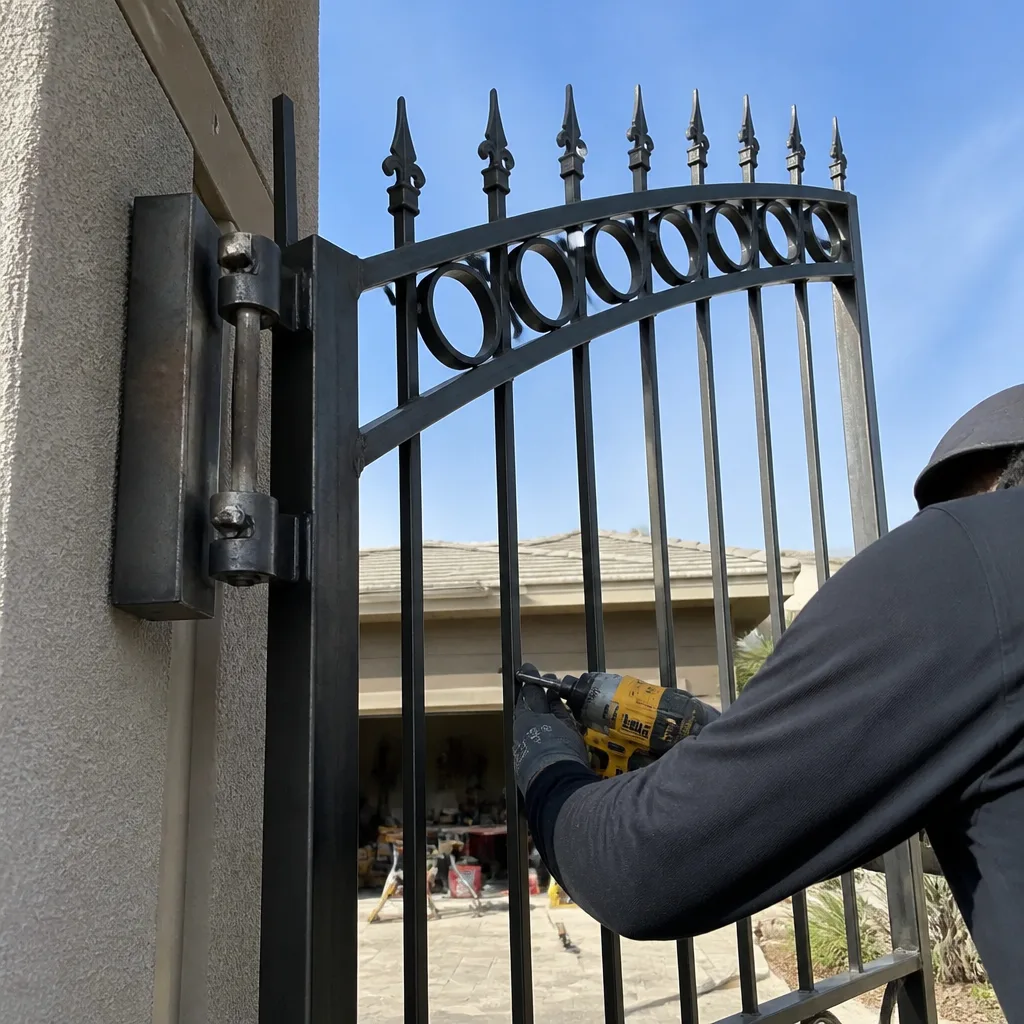
A maintenance schedule isn’t all-or-nothing. Some checks are safe and useful for a homeowner. Others aren’t.
Safe to do yourself:
- Visually inspect the photo-eye lenses for dust and cobwebs, and wipe them clean.
- Look at the chain or belt and note any visible rust, kinks, or missing links.
- Listen for new noise (grinding, slapping, squealing) on a normal cycle.
- Confirm the gate reverses when you break the beam with a hand.
- Note any change in gate speed, hesitation, or travel.
Needs a trained technician:
- Tensioning a chain or belt to spec, including the deflection measurement.
- Load-testing and replacing batteries, and any work inside the operator housing.
- Adjusting limit switches and safety edges.
- Any electrical work, from the power run to the control board terminals.
- Motor, gearbox, and operator replacement.
A gate operator combines stored mechanical force with line voltage. The chain and spring hardware can move suddenly and the control board carries live power. This is not a component to open up on a weekend; a technician who works safely on motors every week is the right person to touch it. Homeowners who spot a symptom should call it in, not try to diagnose past the visual check.
Common Mistakes to Avoid
- Running a spring/fall schedule in a desert climate. Your operator has already loaded up on heat by September, so scheduling service in April and October misses the post-summer failure window entirely. Shift the anchor to mid-October so the measurements reflect what the summer did to it.
- “Check the chain” without a number. Slack compared to what? Ask for the deflection measurement in inches and the manufacturer’s spec side by side. If the record doesn’t have a number, it doesn’t have a baseline.
- Trusting resting battery voltage. A battery can read 12.7 volts at rest and still fail the first power outage. The load-drop test is the only one that tells you whether it will carry the gate.
- Washing the operator housing with a hose. Summerlin dust makes the housing look bad, but high-pressure water drives grit into the gears and can short the control board. Wipe and blow out; don’t soak.
- Skipping the photo-eye check after a dust event. A single dusty lens, misaligned by two inches, is the difference between a gate that reverses safely and one that doesn’t. Test it, don’t assume it.
- Not keeping the written record. If last year’s visit didn’t leave photos and readings, the next technician re-discovers the same problems you already paid to solve. That’s how a gate gets fixed twice for the same fault.
- Waiting for a failure to schedule service. A tight chain adjustment on a routine visit costs a fraction of a gearbox or sprocket replacement. The gate tells you it’s arriving at a problem months before the part fails, if someone is measuring.
See the difference
BeforeAfter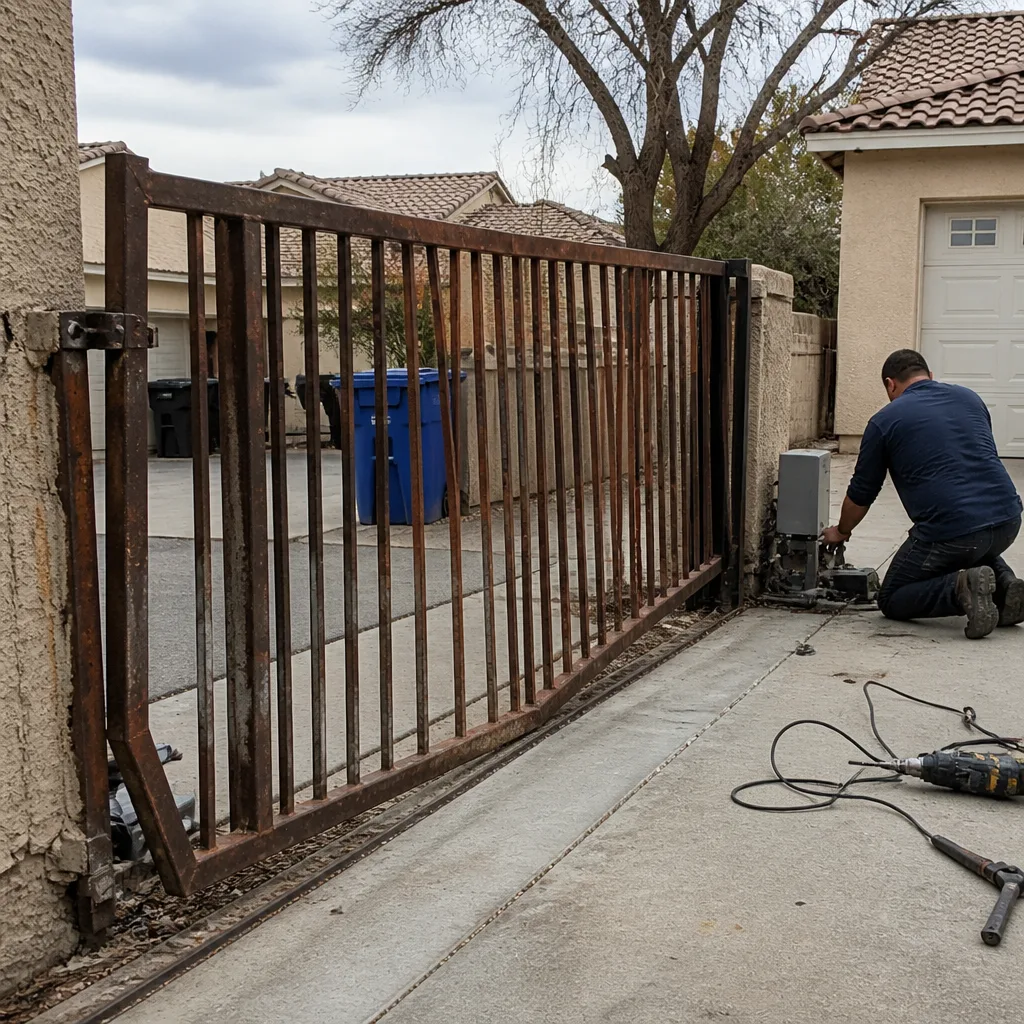 Before
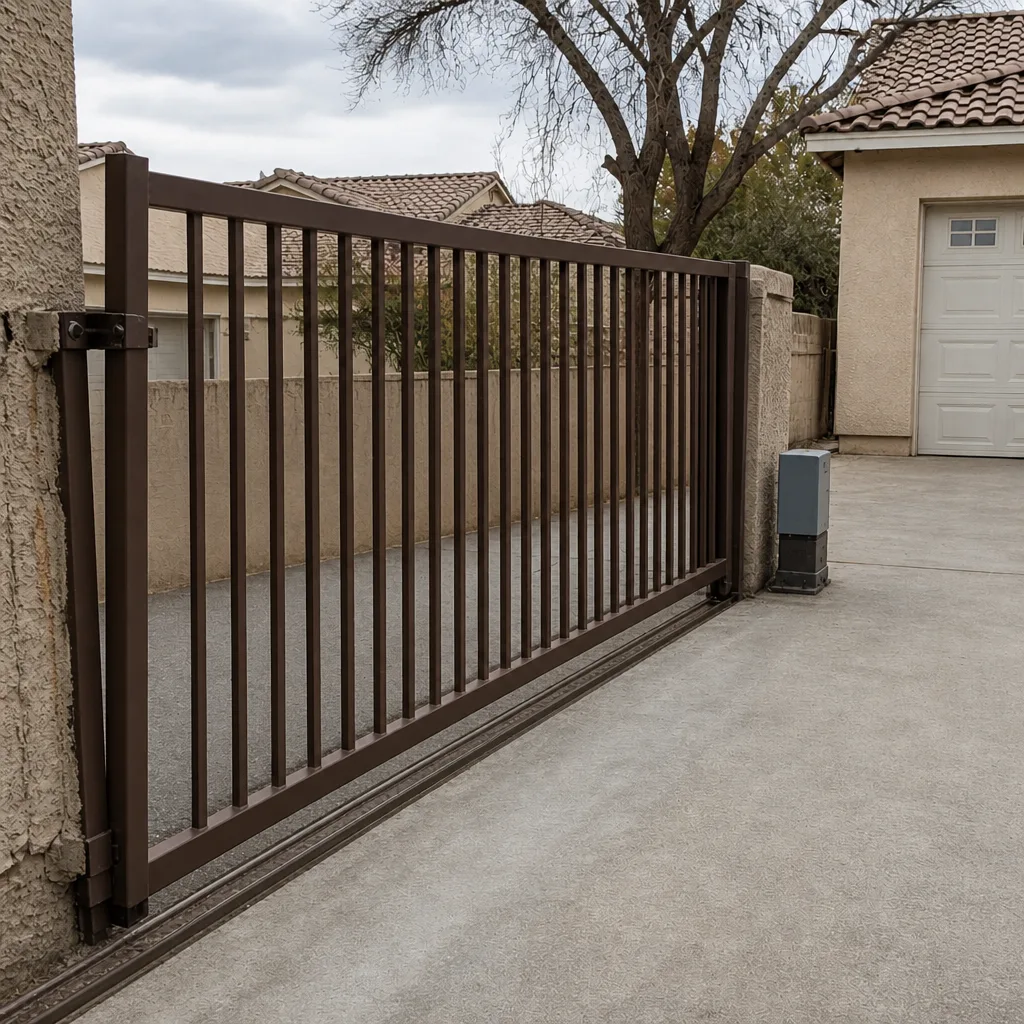 After
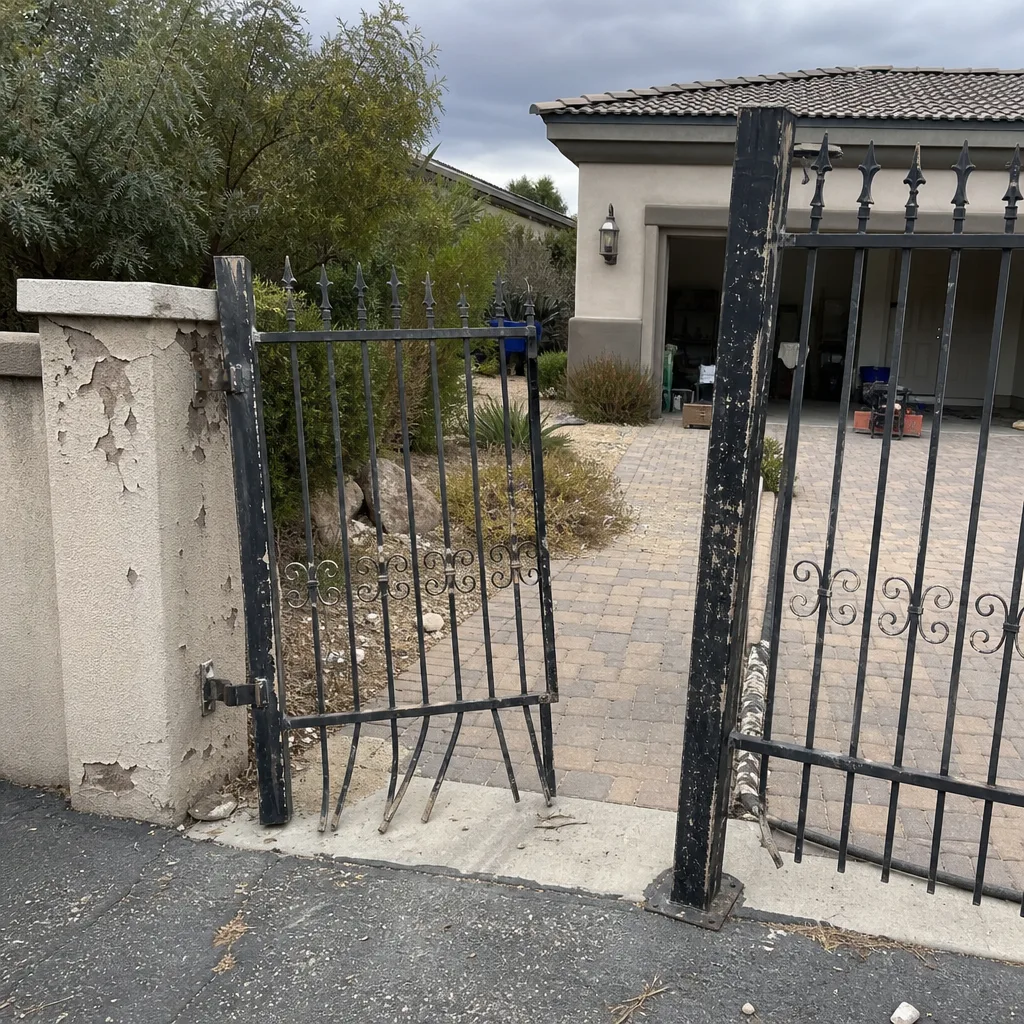 Before
 After
When to Call a Professional
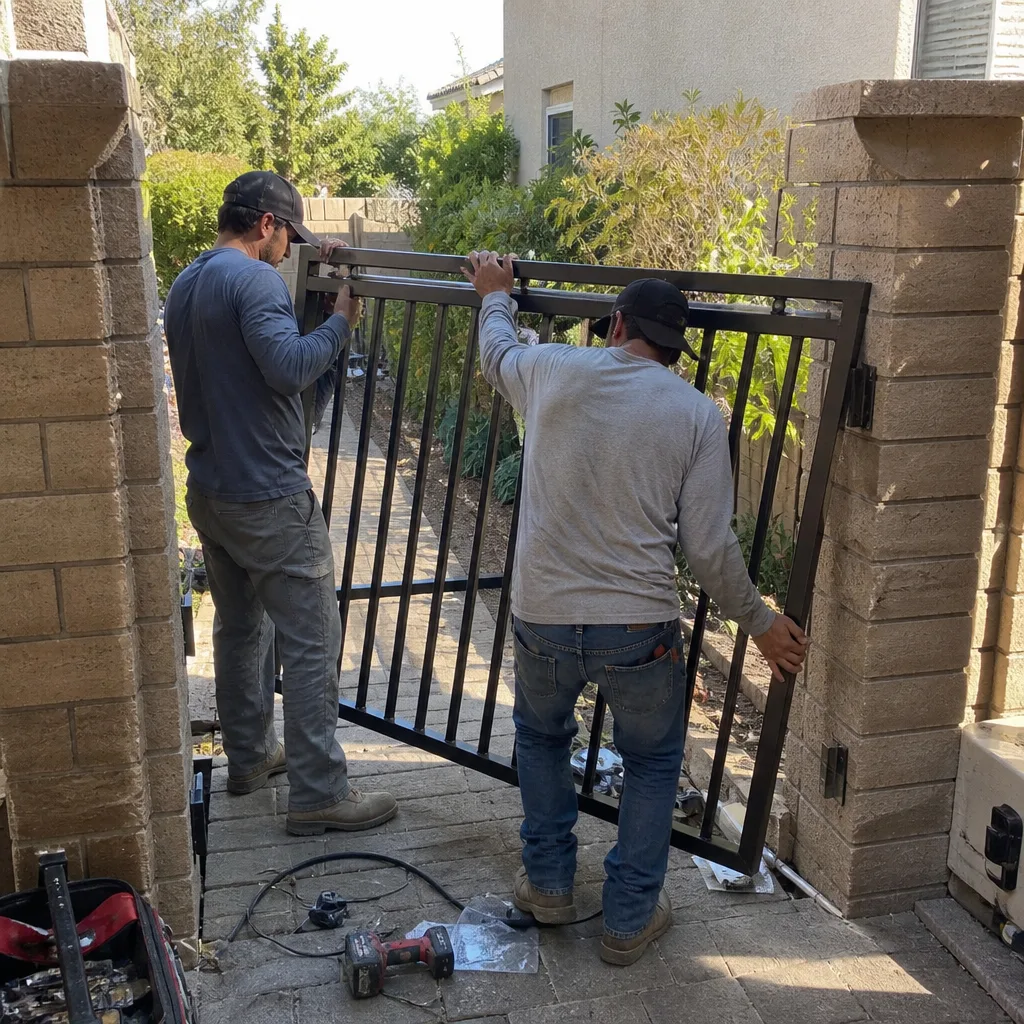
Call when the gate stops reversing on a blocked beam or a triggered safety edge. Call when the operator makes new grinding or slapping noise, or moves faster or slower than it should. Call when the battery hasn’t been replaced in more than three years, or the gate fails to complete a cycle on backup power. Call when you’ve had a other company out and you’re not sure the recommended work matches what’s wrong. And call if you’re not sure what motor is even on the gate, because the right maintenance baseline starts with identifying what’s there.
Vance Gate Repair Summerlin offers free estimates in Summerlin. Call (844) 797-2809 and a live person answers, any hour – no voicemail loop, no callback queue. When a technician comes out, the price is written and handed over before any work starts, and the visit ends with a documented photo record you keep. Under The Haven Standard’s 365-Day Done Right Promise, if the repair isn’t right, we make it right within a year at no additional charge.
Frequently Asked Questions
Twice a year at minimum, but anchored to heat and dust rather than to spring and fall: once in early-to-mid October after the summer heat peak, and once in late July after dust-storm season. If your gate runs unusually high traffic, add a lighter mid-cycle check in February or March.
A drop of about 1.0 to 1.5 volts from a resting 12.6 to 12.8 volts is normal during a cycle. A drop of 2 volts or more, or a gate that stalls or slows on battery power, means the battery should be replaced. Heat in Summerlin accelerates battery aging, so replace on a 3-to-5-year cycle even if resting voltage looks fine. Call (844) 797-2809 to schedule a load test.
No. Lubrication helps, but it doesn’t replace measurement. Tension, limit-switch position, photo-eye alignment, and battery health all need numbers on a record. Grease alone doesn’t tell you a sprocket is wearing out or a limit switch has drifted. Call us for a proper baseline before the next hot season hits.
Heat is the main cause. In Summerlin, ambient temperatures push operator grease to thin, battery capacity down, and metal hardware to expand, so gates that were fine in April start to hesitate or slam by August. That’s why the October visit is the critical one: it captures the damage the summer did before it turns into a repair.
A written list of what was found, adjusted, and replaced, with numbers for deflection, battery voltage, and limit-switch positions, plus photos of the control board and limit cams. You need it because the record lets the next technician pick up where the last one left off instead of re-diagnosing the same issue. Every Vance visit leaves a copy of that record with you.
Yes, brands differ. FAAC, BFT, Linear, and Viking operators each have their own deflection and battery specs, and the right schedule references the manual for the specific model. We service all nine of the major automation brands, so a technician can read the actual spec rather than guess. Call (844) 797-2809 for a brand-specific schedule.
The Bottom Line
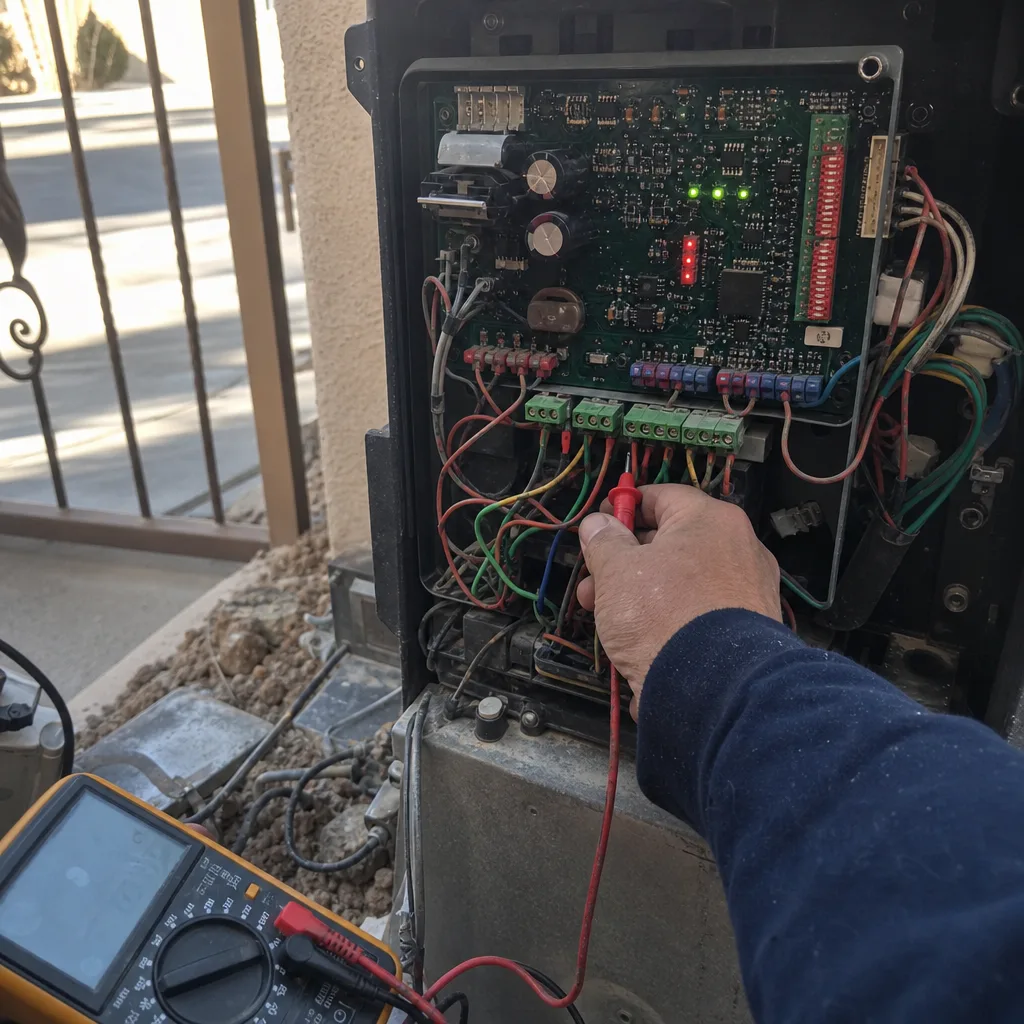
A gate motor maintenance schedule isn’t a list of months; it’s a list of stresses. In Summerlin, the stresses are heat cycles, dust events, and usage volume, and the schedule that serves you is built around the post-summer anchor in October and the post-dust event in late July. At each visit, get numbers, not adjectives: chain deflection in inches, battery voltage at rest and under load, limit-switch positions photographed before and after. Keep a written record, because the record is what stops the next technician from re-discovering the same fault. That documentation is the same Haven Standard habit that governs every visit we make: written price before the work, a photo record when we leave, and a 365-Day Done Right Promise on the repair. Call (844) 797-2809 for a free estimate in Summerlin, and start your gate on a schedule that matches its actual climate.
Written by the team at Vance Gate Repair Summerlin.