
Last updated November 17, 2026
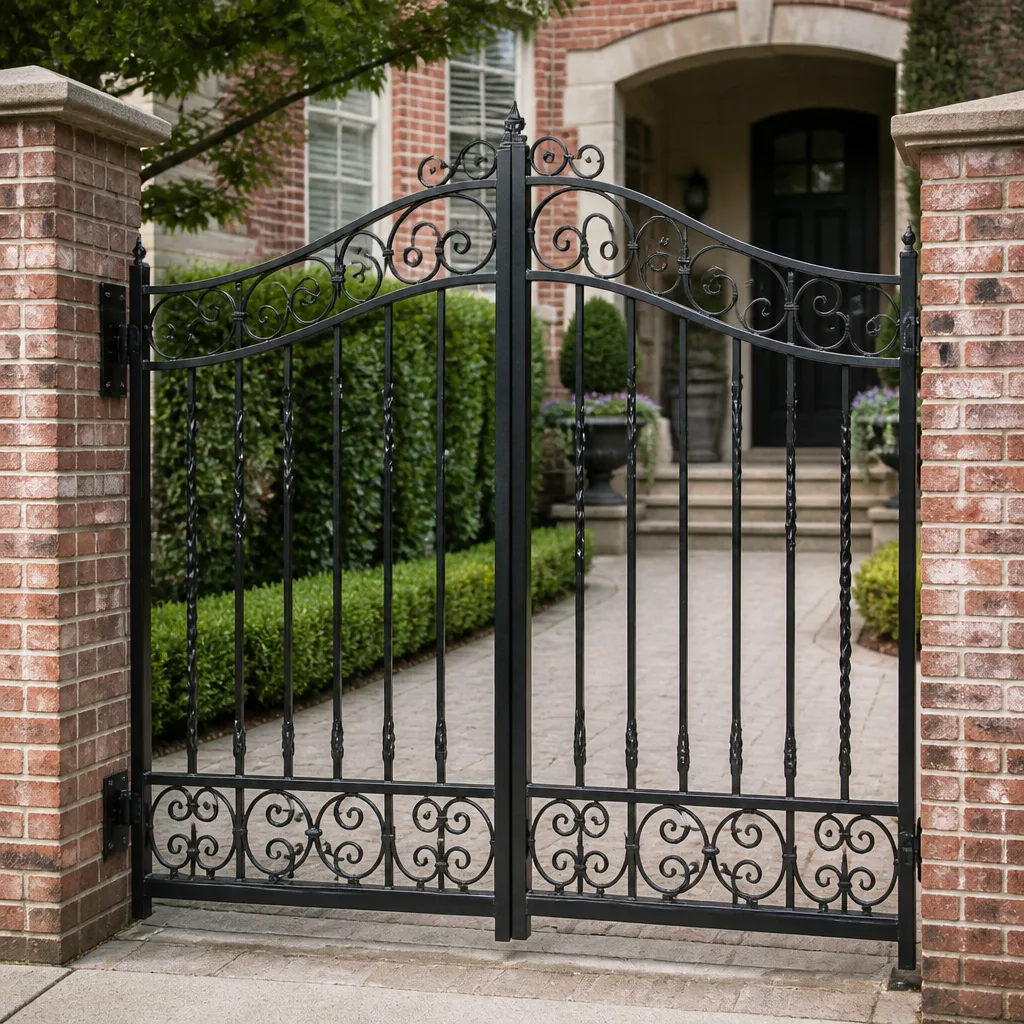 Wrought iron
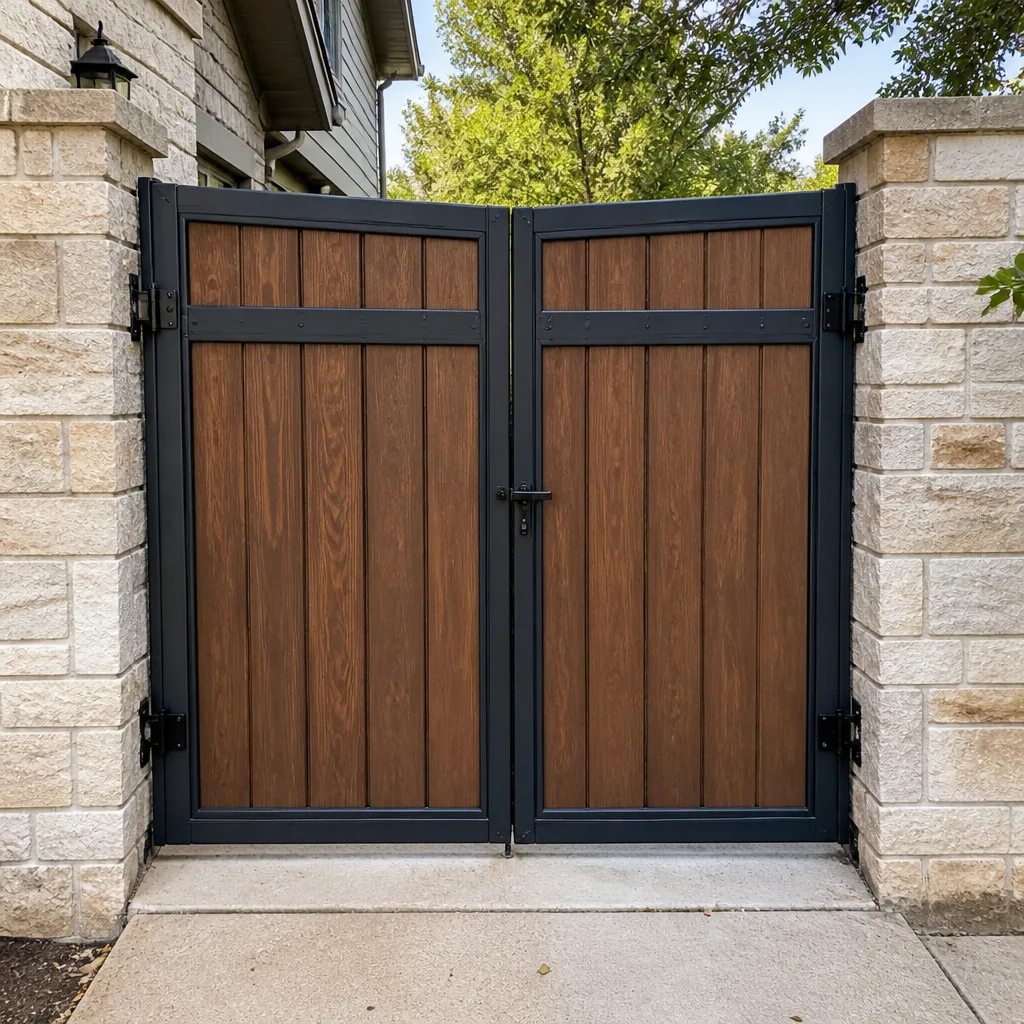 Wood & steel frame
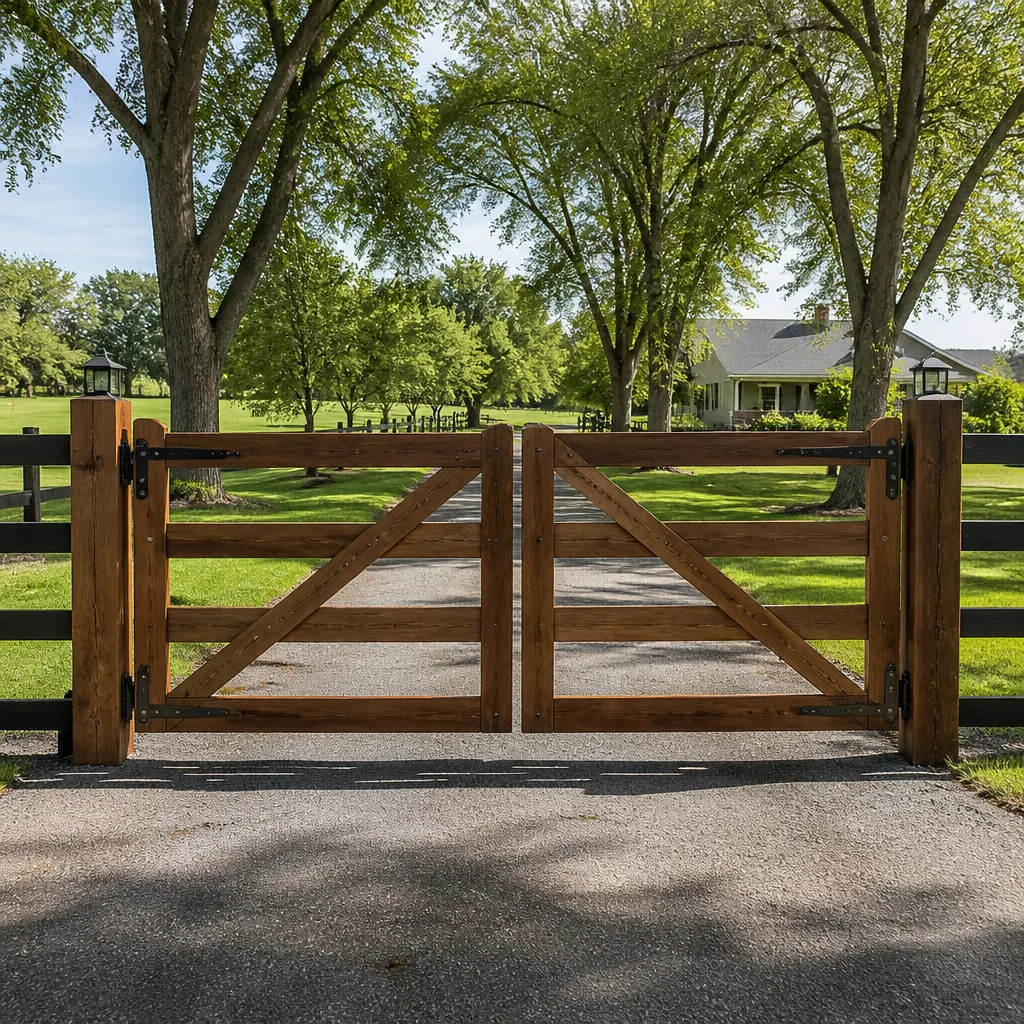 Farm & ranch
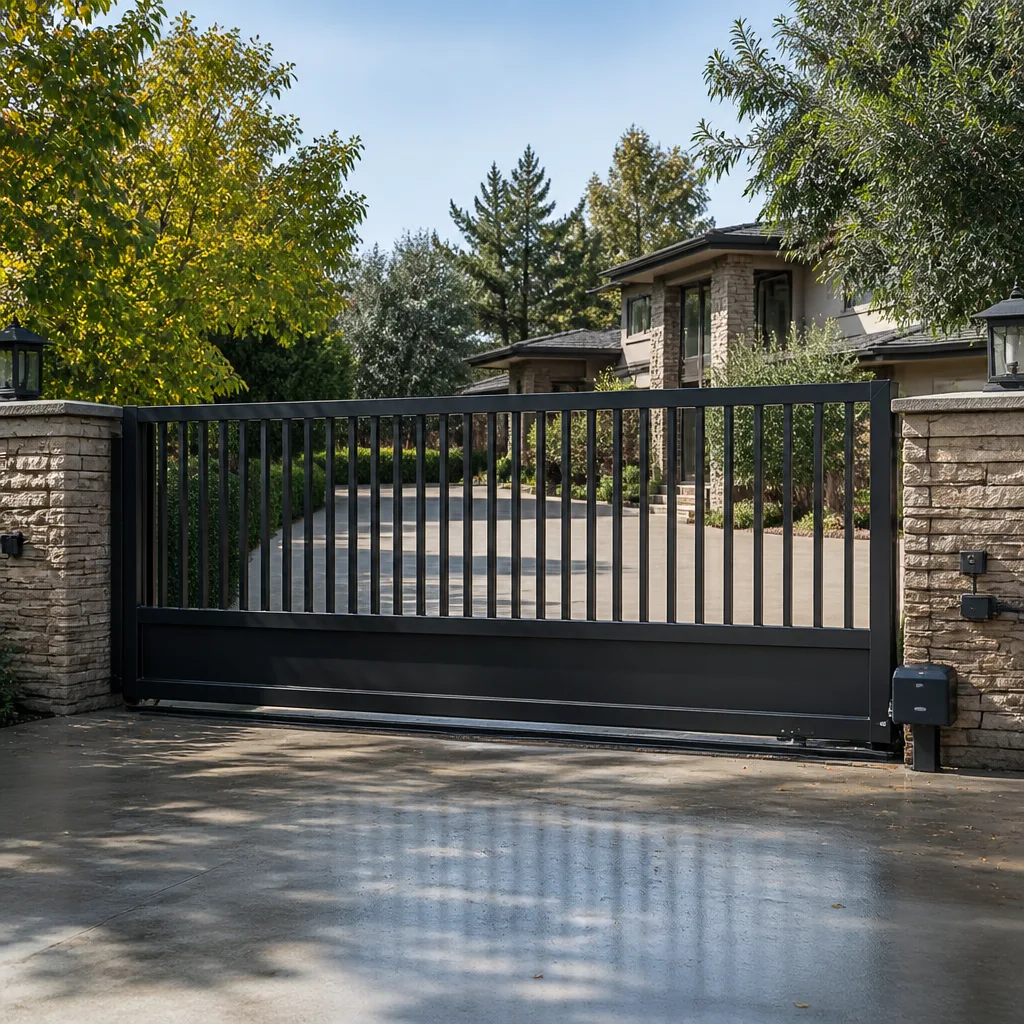 Sliding driveway gates
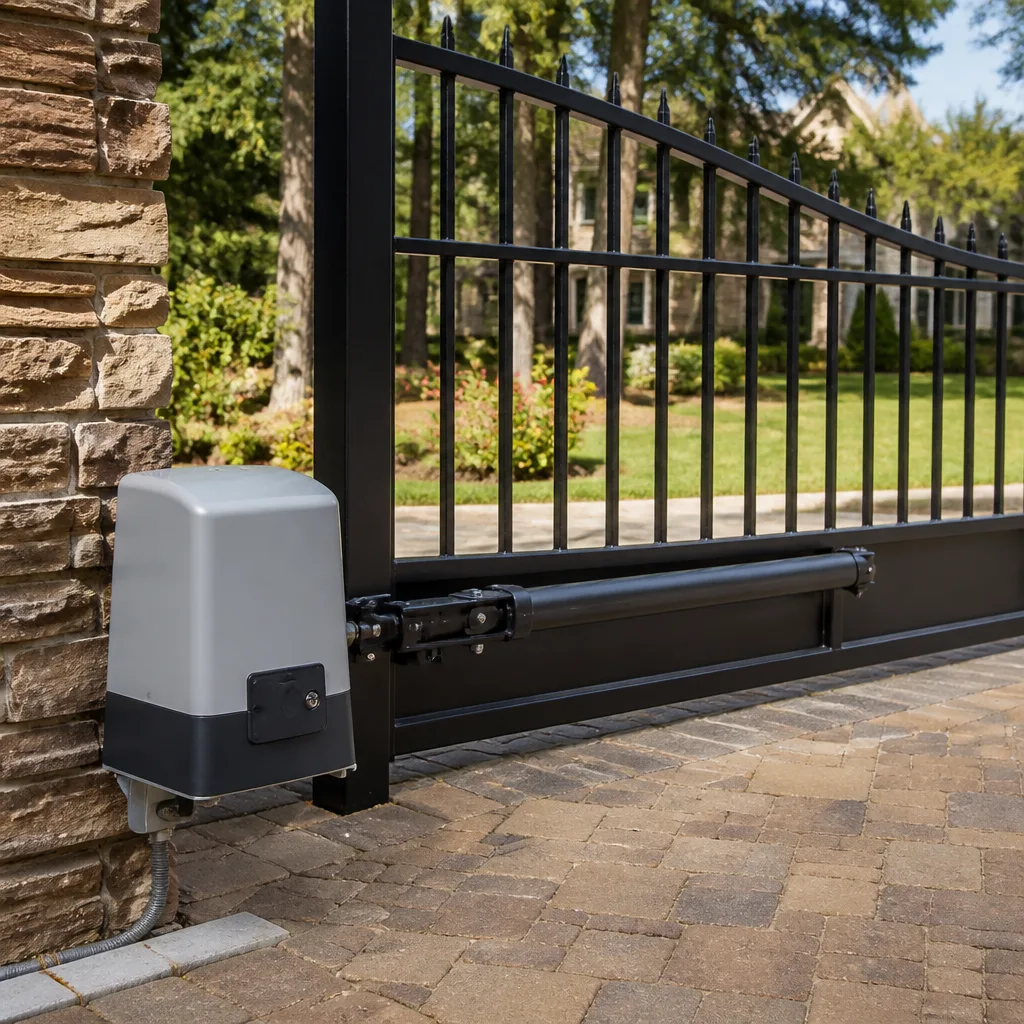 LiftMaster operators
Free on-site gate assessment - hinges, posts, and your LiftMaster or Nice gate operator checked before anything is quoted
The assessment is free and the quote is the invoice.
Get your free estimateHow Long Does Gate Installation Take? Timelines and What to Expect
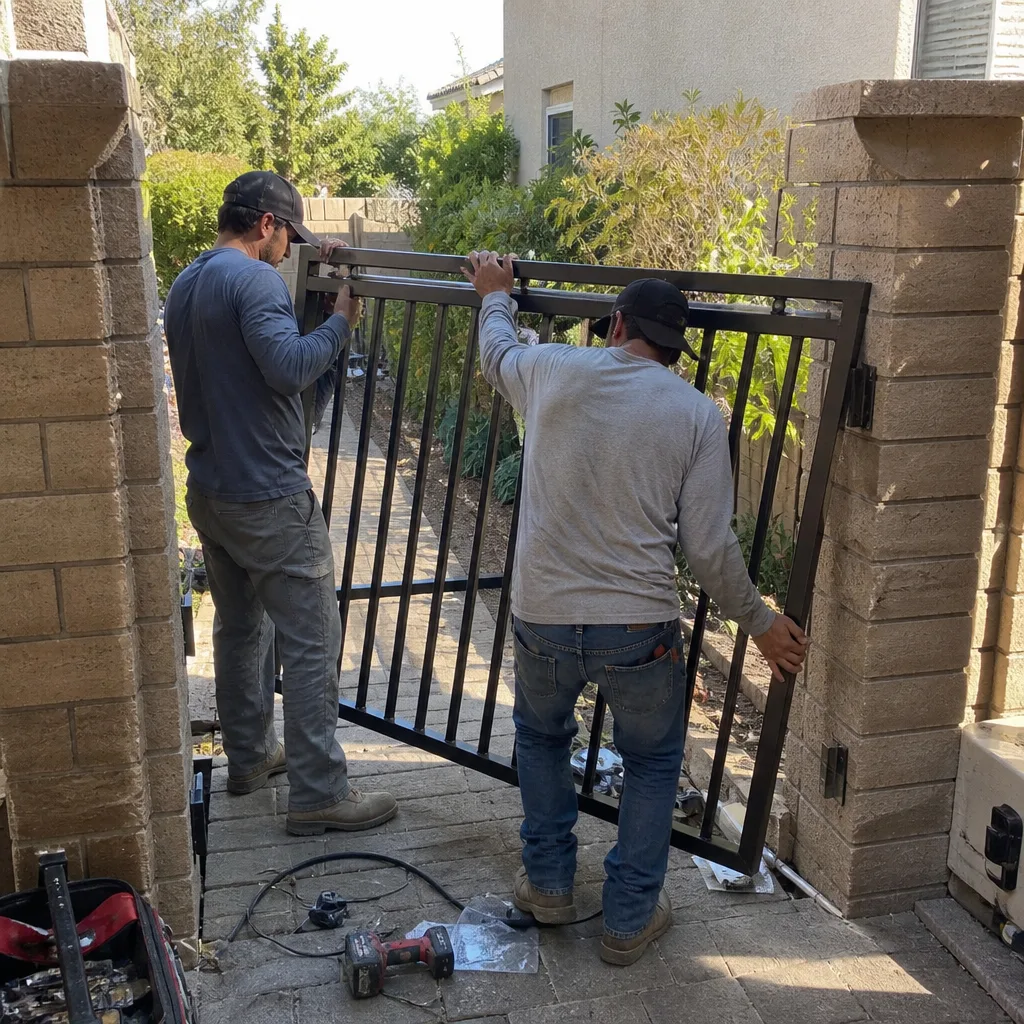
Most gate installations are quoted as a one-day job. Most take three to five calendar days. Not because the technician is slow, but because concrete needs 24 to 48 hours to cure before you hang weight on it, and that single dependency reshapes the whole schedule. The gate itself is rarely the slow part. The conduit run, the cure time, and the utility-locate wait are. In Summerlin, we see this play out constantly: homeowners plan around the ironwork and get blindsided by the caliche under the driveway. This guide breaks the job into its real phases so you know what each one costs you in time, and what paperwork you should be holding when each phase closes.
Quick Answer
A new automated driveway gate installation typically takes three to five calendar days from breaking ground to a working gate, with the actual labor running 12 to 20 hours. The gate hardware and motor install in one or two days; the concrete cure and utility-locate wait account for the rest. A swing gate replacement on intact existing posts is the only scenario where a genuine same-day finish is honest.
Styles & brands we work with
- Wrought iron
- Wood & steel frame
- Farm & ranch
- Sliding driveway gates
- LiftMaster operators
Table of Contents
- The five phases of a gate installation and the clock on each one
- Why a same-day quote is only honest for replacements
- What Summerlin’s caliche soil does to your timeline
- What documentation you should receive at each phase
- The conduit and wiring diagram: get it before the trench closes
- Four questions that reveal whether a timeline is real
- What gate installation costs and how time affects the price
- Common mistakes to avoid
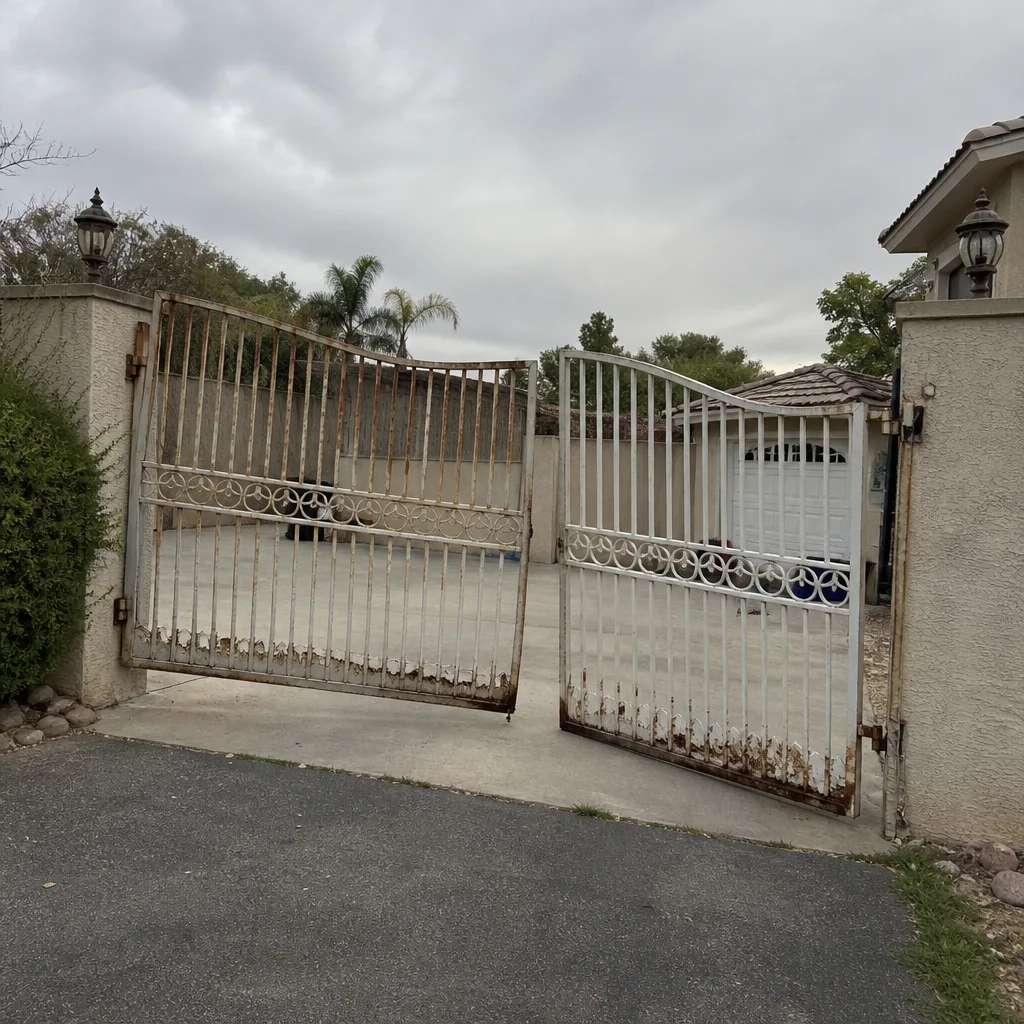 Before
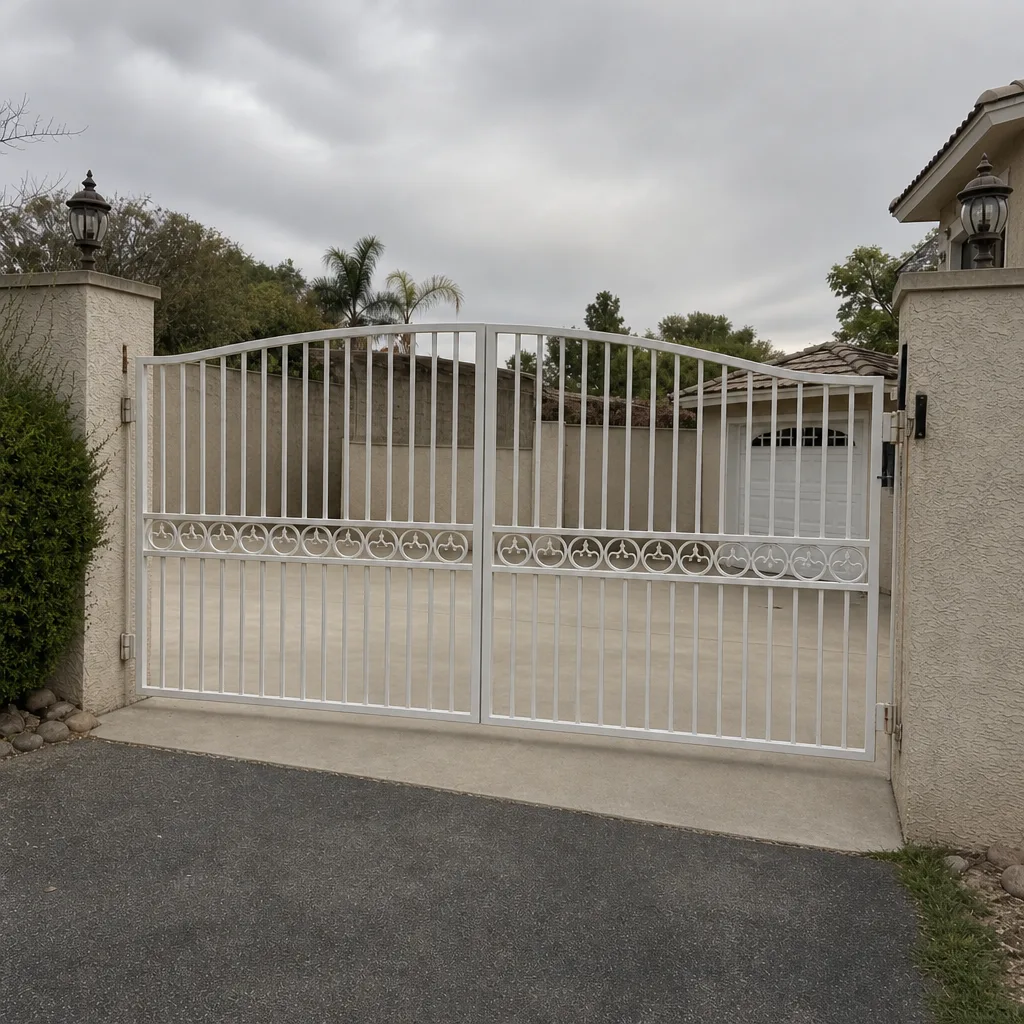 After
The Five Phases of a Gate Installation and the Clock on Each One
Every gate installation moves through the same five phases, and each one runs on its own clock. Conflating them is why so many timelines slip. Here’s how the schedule actually breaks down.
- Site prep and utility locate (1 to 3 business days of waiting). Before a shovel touches dirt, the utility locate has to clear. That call-and-wait is out of anyone’s hands and can run two to three days. On top of that, the technician measures the opening, confirms hinge-post placement, and checks grade.
- Post setting and concrete cure (2 to 3 days). Posts get set in concrete. Then the concrete cures. You cannot hang a 300-pound gate panel on posts that are still green. This is the phase nobody budgets for and the one that most often breaks a one-day promise.
- Panel hang and alignment (half a day to a full day). Once the concrete is at working strength, the panels go up and the gate is aligned, plumbed, and checked for swing clearance.
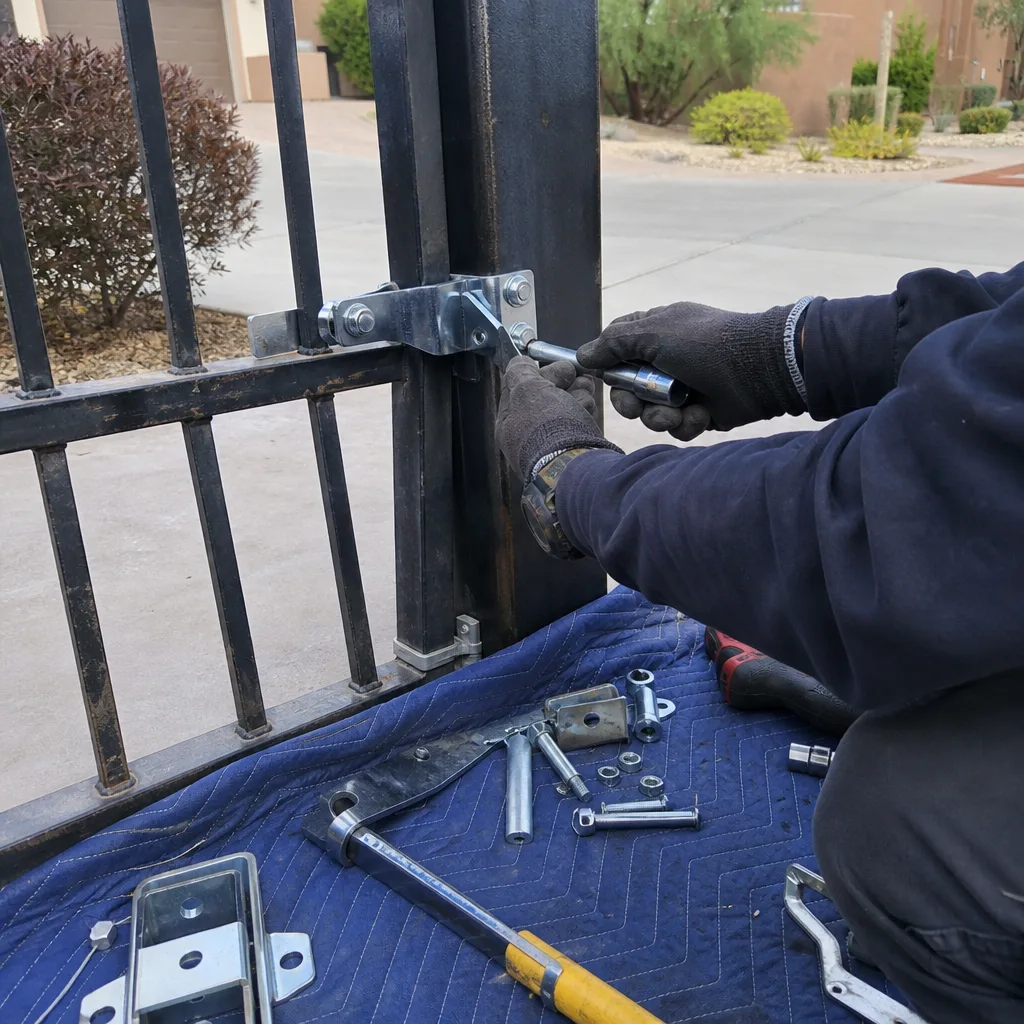
- Motor mount and wiring (half a day to a full day). The operator mounts, and the low-voltage control wiring and conduit run get connected. This is where a Linear or Viking operator gets its power and control connections run cleanly.
- Limit-switch programming and test (2 to 4 hours). The limit switches get set so the gate stops exactly where it should, the photo-eye safety beam gets aligned, and the whole cycle gets tested under load.
Add those up and the labor is 12 to 20 hours. The elapsed calendar time is three to five days because of curing and locate waits. In Summerlin, the utility-locate step matters more than in many places because so many properties sit on graded lots where irrigation and landscape wiring run close to the gate line.
Why a Same-Day Quote Is Only Honest for Replacements
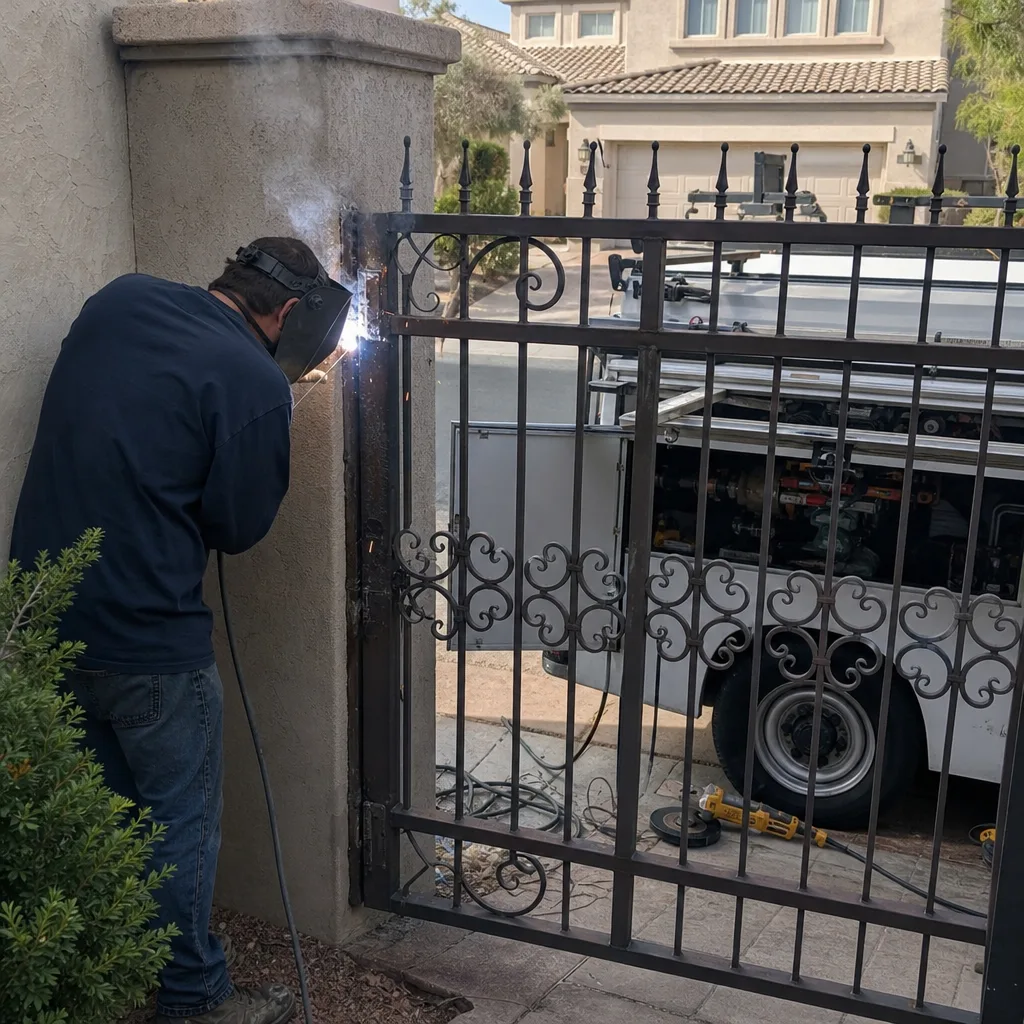
A same-day gate installation is real, but only in one narrow case: replacing a swing gate or swapping a motor on posts that are already set, plumb, and sound. When the concrete is already there and cured, the work genuinely compresses into a single visit, and we do these regularly as part of our gate repair in Summerlin work.
For a brand-new installation, a same-day promise is a sales number, not a schedule. Here’s the tell: if there are no posts in the ground yet, the install cannot finish in one day no matter who’s doing it, because the concrete cure alone eats 24 to 48 hours. A realistic quote for new construction gives you a multi-day window and explains the cure gap up front.
There’s a second wrinkle. A replacement on existing posts still needs the operator and safety devices tested and documented. A swing gate that hangs true but has a misaligned photo-eye is not finished. When we replace a motor, the job ends when the limit switches read correctly and the safety beam stops the gate on a test pass, not when the last bolt is snug.
What Summerlin’s Caliche Soil Does to Your Timeline
Summerlin sits over caliche, the calcium-carbonate hardpan that turns a post-hole auger into a fight. Caliche can be soft in one spot and rock-hard six inches over. When a boring bit hits a solid layer, the crew either works through it slowly or brings in different equipment.
That’s why a post-hole that should take 20 minutes can take an hour or more on a Summerlin property, and why we sometimes need a second mobilization for a stubborn hole. A realistic installer plans a buffer for this. A crew that quotes an exact, tight finish time on a Summerlin install without ever having broken ground has not accounted for the caliche they’re about to meet.
We’ve learned to build that buffer into the schedule from the start. We’d rather quote a four-day window and finish in three than promise one day and disappear for a week. In this part of Summerlin, the ground is the variable, and honest scheduling means naming it before we start, not after.
What Documentation You Should Receive at Each Phase
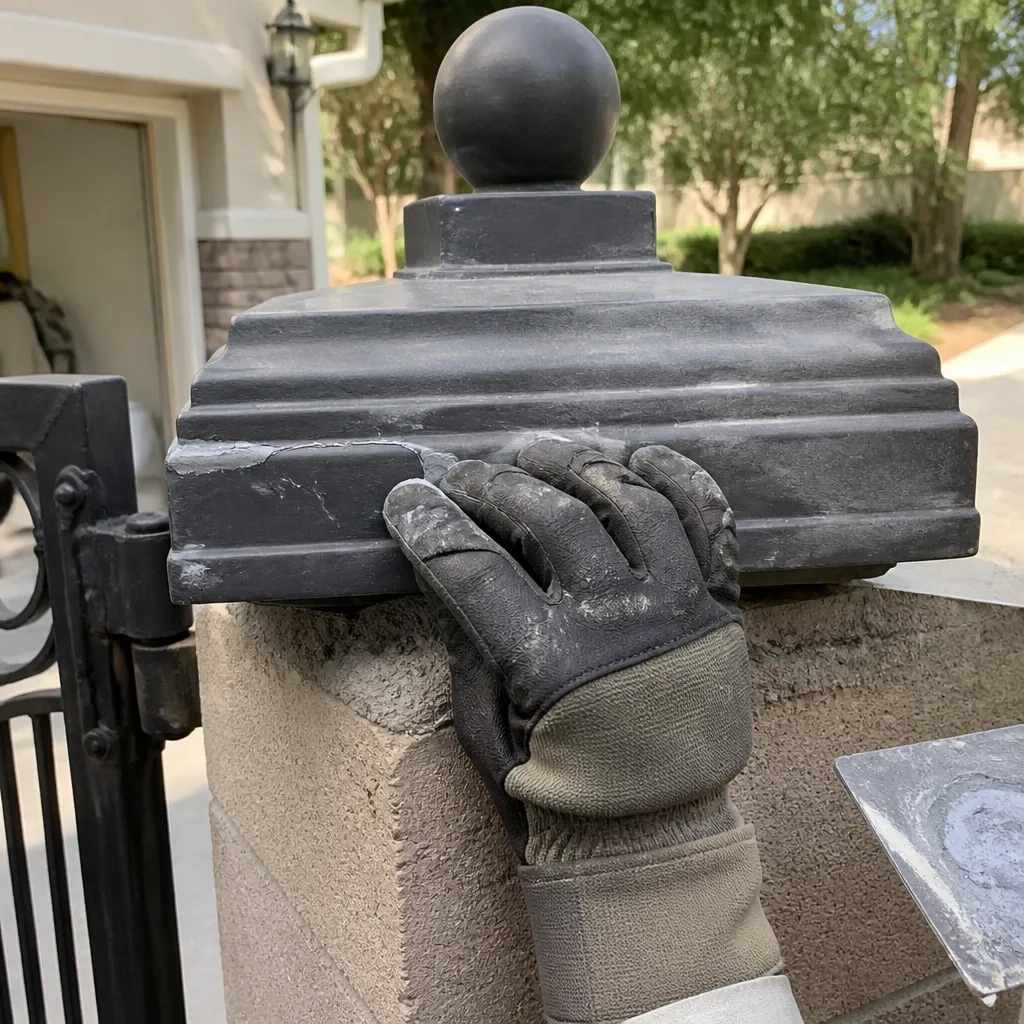
The paperwork you hold at each phase tells you whether the job is being run properly. A careful installer leaves a record, not just a finished gate. This is the backbone of Vance Gate Repair Summerlin home service.
- Before ground breaks: the written scope and the flat price, signed. You should know the total before anyone picks up a tool.
- After post setting: a record of post spacing, depth, and concrete type. Photographs of the set posts before they’re buried in panels.
- Before the conduit is buried: a wiring diagram. This one matters so much it gets its own section below.
- After the motor mount: the operator model number and serial, written down. Photographs of the wiring terminations.
- At handoff: a photo log of every adjustment, the limit-switch readings, and the safety-device test result.
We keep this record on every visit because it’s what a future technician needs to work on the gate without guessing. When you have the wiring diagram and the limit-switch readings, nobody has to rediscover how it was set. That saves you money on the next service call and prevents the “pay twice to solve the same problem” cycle.
The Conduit and Wiring Diagram: Get It Before the Trench Closes
Here’s the part most homeowners never hear about. Once the low-voltage conduit is buried, the wire inside it is invisible. If you don’t have a wiring diagram before the trench is backfilled, you’re relying on memory and hope the next time the operator needs service.
The conduit run is where new installations most often grow. A clean run needs the trench dug to code depth, the conduit routed to the operator location, and the control wiring pulled through. If a photo-eye safety beam sits across the driveway, that’s another run. Each leg adds time.
Before the conduit closes, you want the diagram that shows which conductor goes where, the terminal numbers at the operator, and where the safety devices tie in. On a DoorKing or Ghost Controls system, the terminal layout differs enough that a diagram is worth more than a picture of the finished gate. Ask for it in writing, and photograph it yourself as a backup. Under our Haven Standard, every visit includes a documented record of what was found and installed, and the wiring diagram is a core piece of that.
Four Questions That Reveal Whether a Timeline Is Real
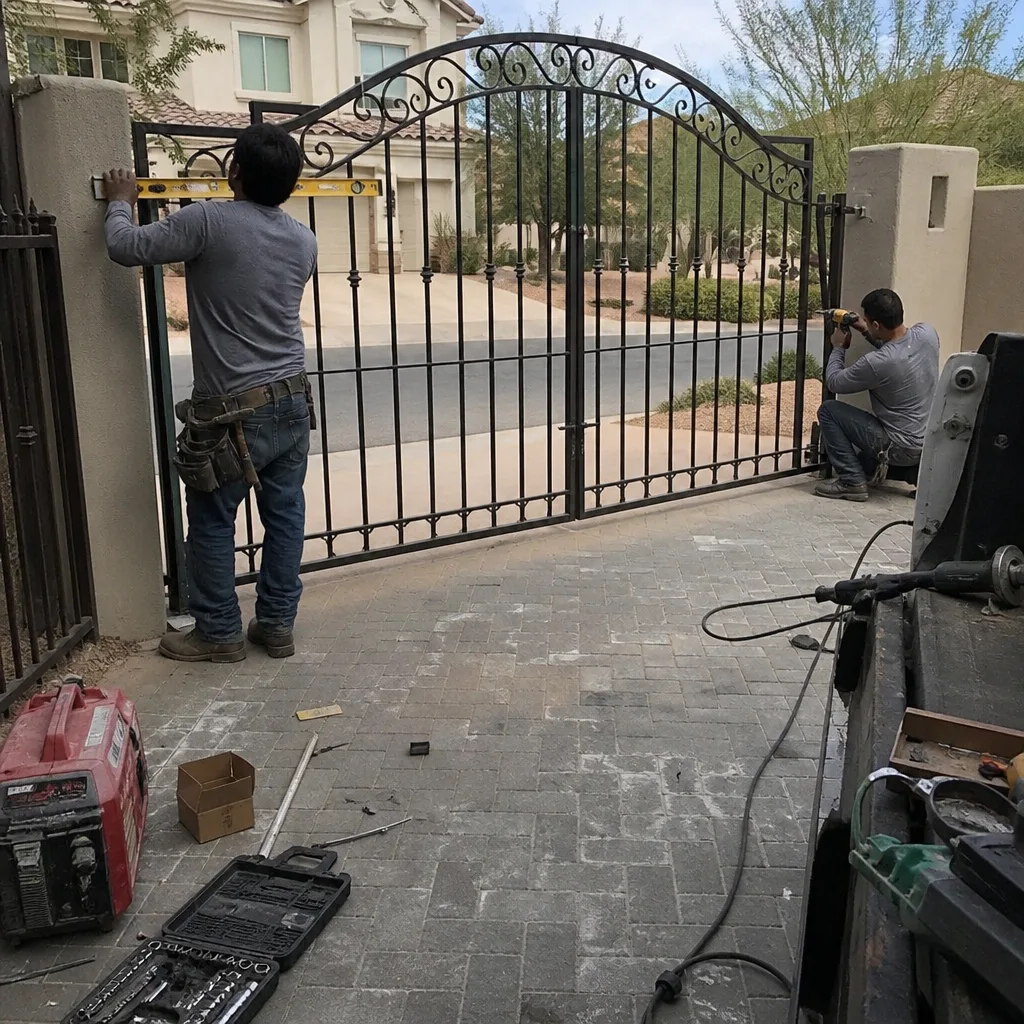
Before you sign an installation contract, four questions separate a realistic schedule from a sales number.
- “How many calendar days, and what happens during the concrete cure?” A real installer names the cure time. A sales number skips it.
- “Do you run the utility locate, or do I?” The locate wait is real time. Whoever owns that step controls the start date, and you should know that before day one.
- “Will you give me the wiring diagram before the conduit is buried?” A written diagram before burial means the installer plans to document. No answer, or “we’ll figure it out,” is a red flag.
- “Who tests the limit switches and the safety beam, and will I get the readings?” The job isn’t done until the gate stops where it’s set to and the photo-eye halts a closing gate. Ask who confirms that and how.
Ask these before signing, and you’ll know whether the timeline you’re quoted is a schedule a technician will actually hold to, or a number designed to win the job. A company that answers all four clearly is telling you it has a process. One that deflects is telling you the same thing.
What Gate Installation Costs and How Time Affects the Price
Time is tied to cost on a gate install, and we price in writing before work starts so you’re never guessing at the connection. Here are the ranges we see for a typical residential automated driveway gate in Summerlin and comparable areas. These reflect the labor and material involved, not a fixed quote for your specific property.
- Site prep, utility locate, and post setting with concrete: $600 to $1,400, higher if caliche forces extra boring.
- Swing gate panel or slide gate installation (hardware): $1,200 to $3,500, depending on gate width and material.
- Gate operator and motor mount: $1,400 to $3,200 for most residential operators, brand-dependent.
- Conduit run and control wiring: $400 to $1,200 depending on run length and safety devices.
- Limit-switch programming and safety-device testing: usually folded into the operator install, not billed separately.
The reason a slow phase costs more is straightforward: more boring time, a longer locate wait, or a second mobilization all mean more labor. A quote that promises a one-day new install and a rock-bottom price is telling you one of those phases is being ignored. Every price we hand over is the flat price, written and agreed before anyone starts, so a slow caliche hole or a surprise conduit run doesn’t turn into a bigger invoice at the end. If you have a written estimate from another company, we’ll review it free as a second opinion. For motor-specific pricing, see Gate Motor & Opener in Summerlin.
Common Mistakes to Avoid
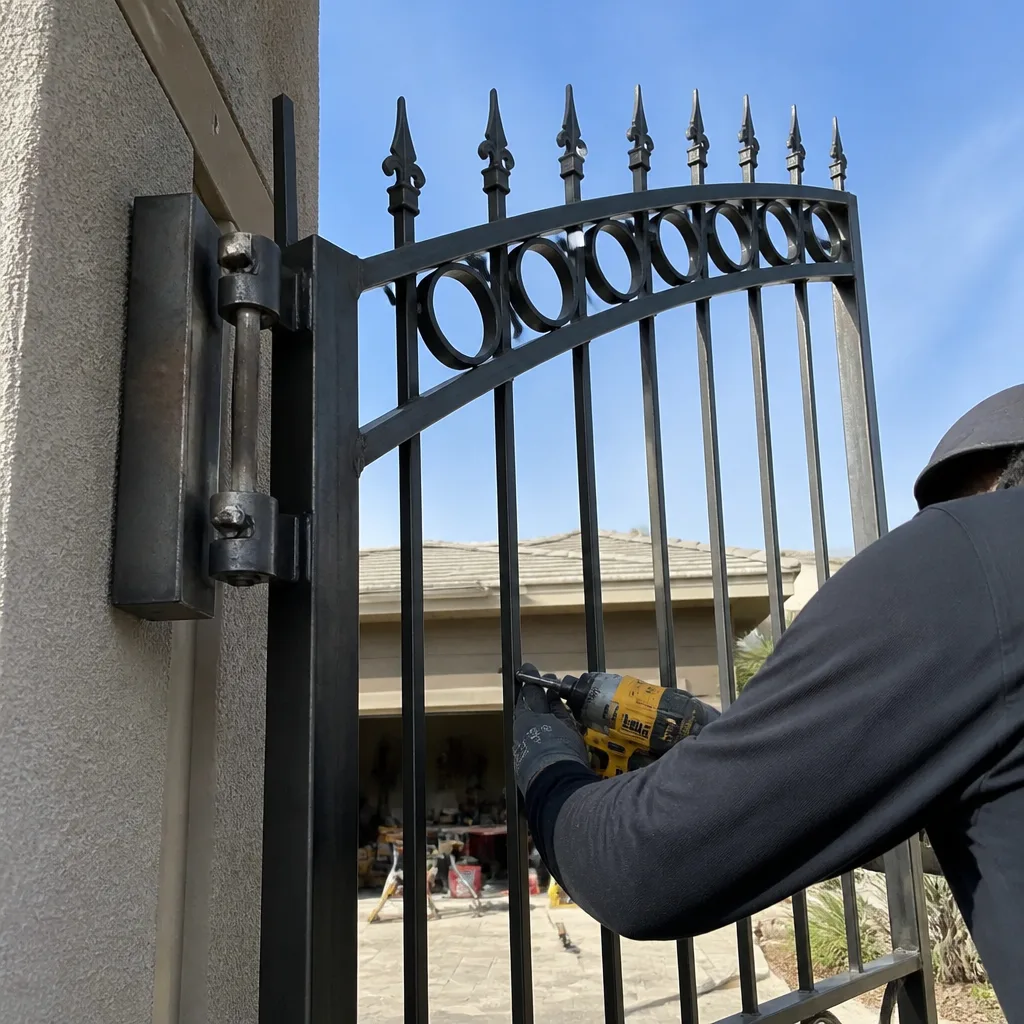
- Believing a same-day new-install quote. If there are no cured posts, the job can’t finish in one day. A one-day promise on fresh ground is a number, not a schedule.
- Skipping the utility locate. Digging before the locate clears risks hitting irrigation or landscape wiring, which is common on graded Summerlin lots and can stall the whole job.
- Letting the conduit get buried without a diagram. Once it’s backfilled, the wiring is invisible. Demand the diagram before the trench closes.
- Hanging panels on half-cured concrete. A 300-pound gate on green posts can shift and bind. The cure time exists for a reason.
- Not testing the photo-eye safety beam. A closing gate that doesn’t stop for a child or a pet is a hazard. Confirm the test result at handoff.
- Assuming caliche won’t be a factor. Summerlin’s soil is a real variable. A crew that never mentions it hasn’t planned for it.
- Accepting a verbal price with no written scope. Without it in writing, the final invoice is an argument. Get the flat price on paper first.
See the difference
BeforeAfter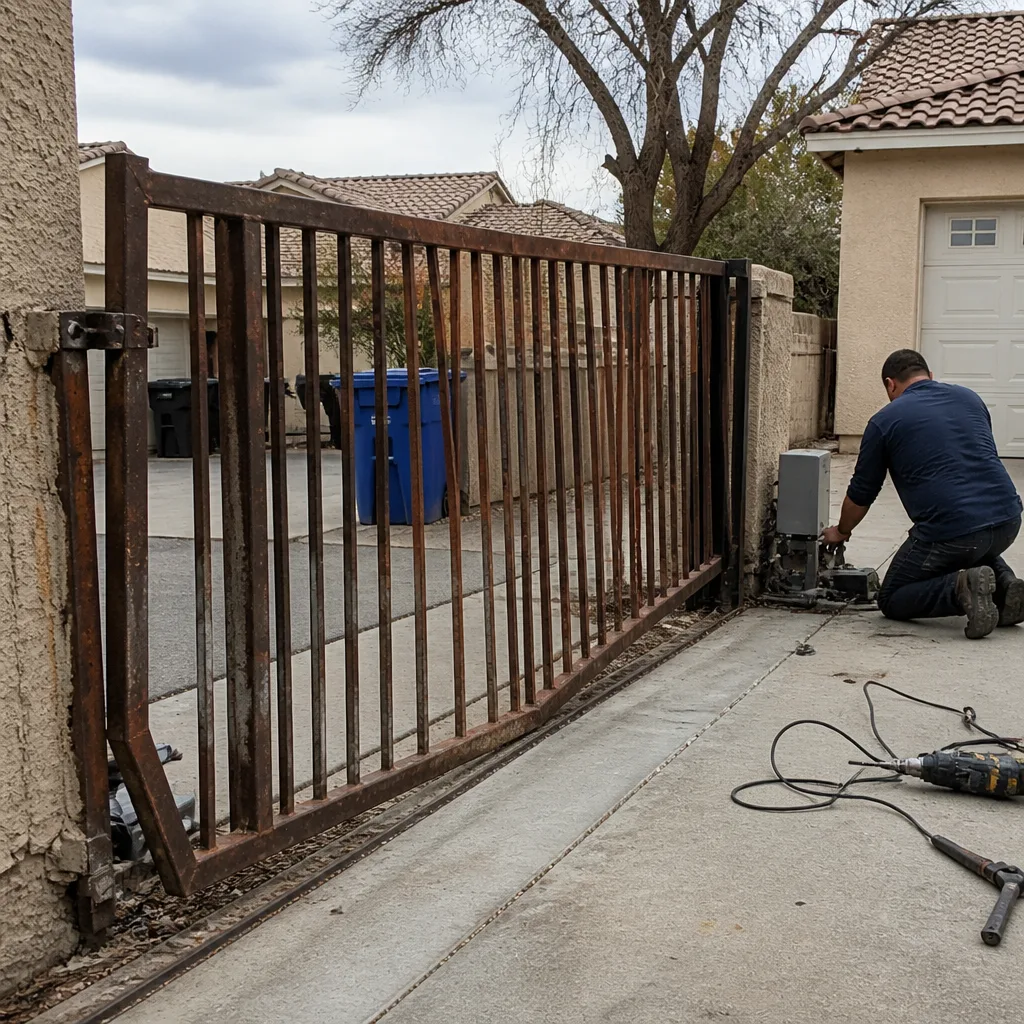 Before
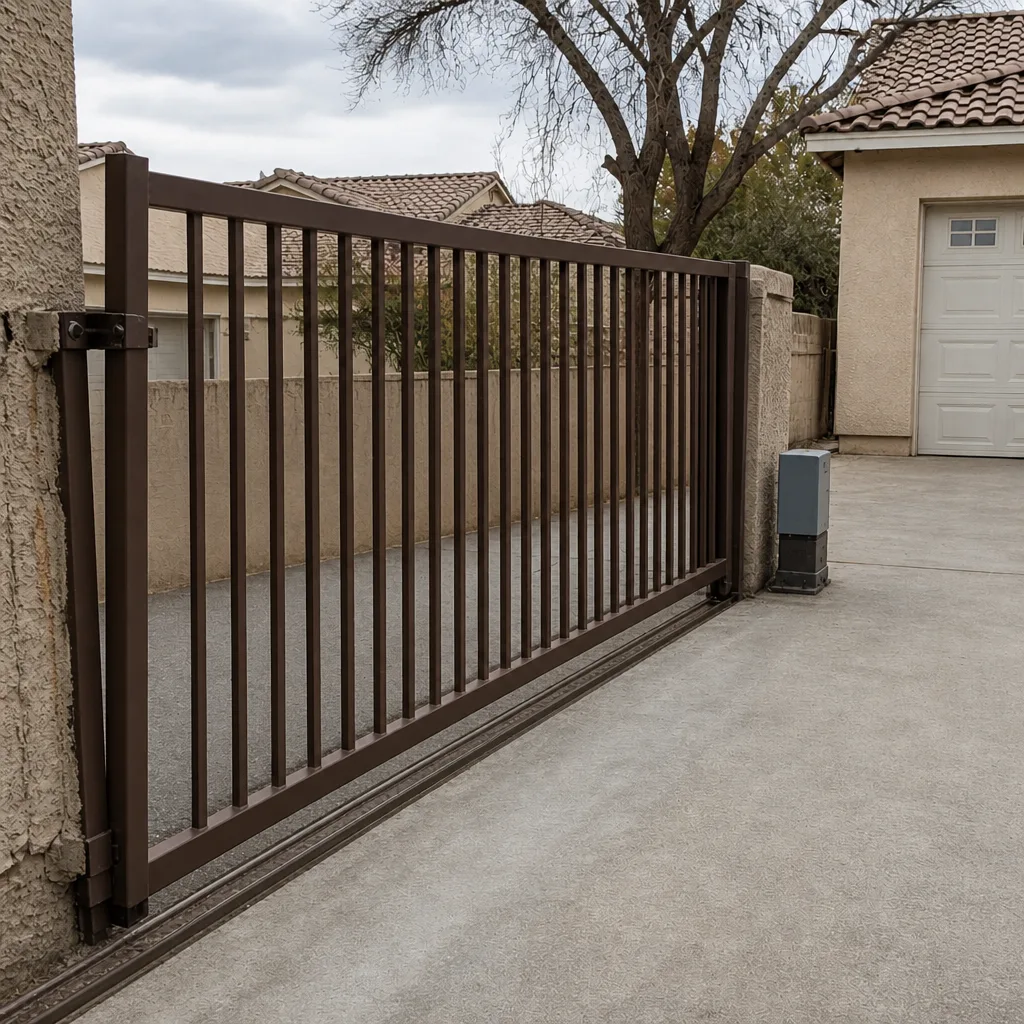 After
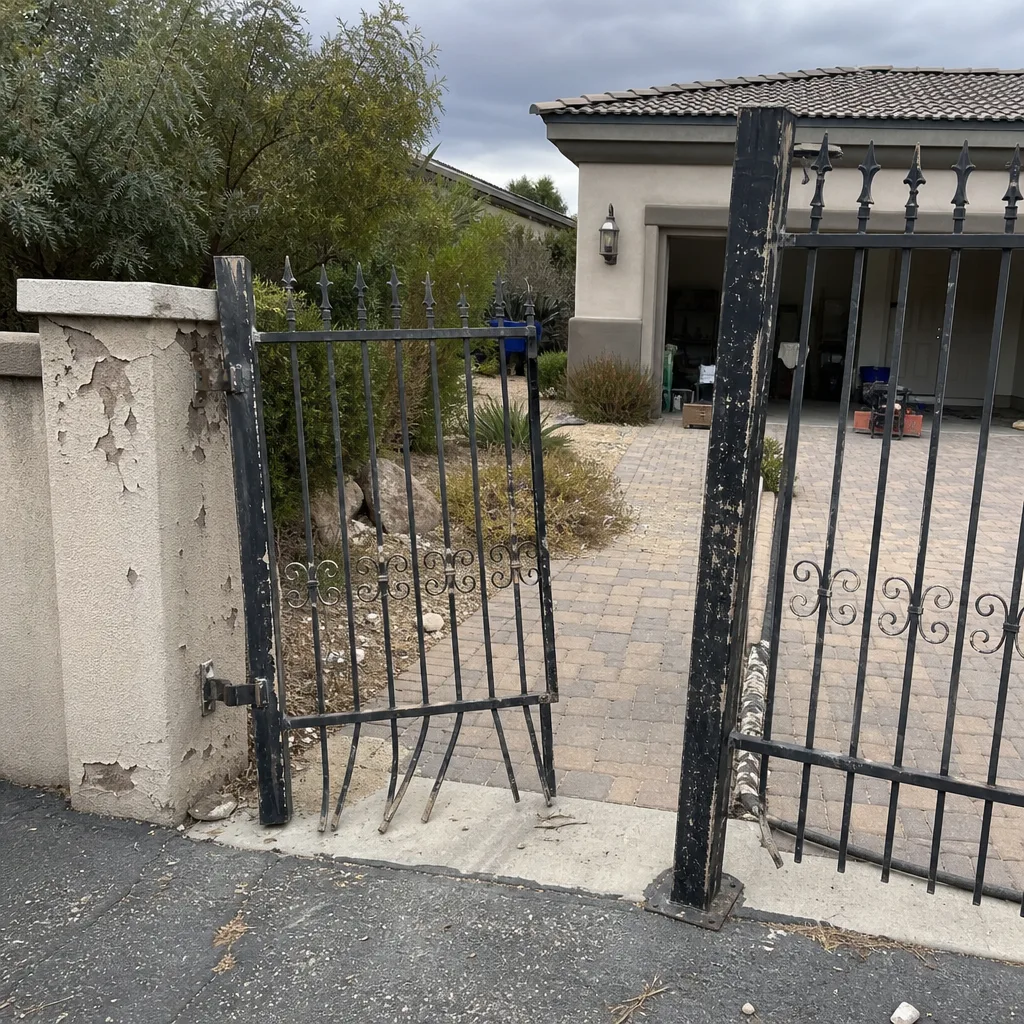 Before
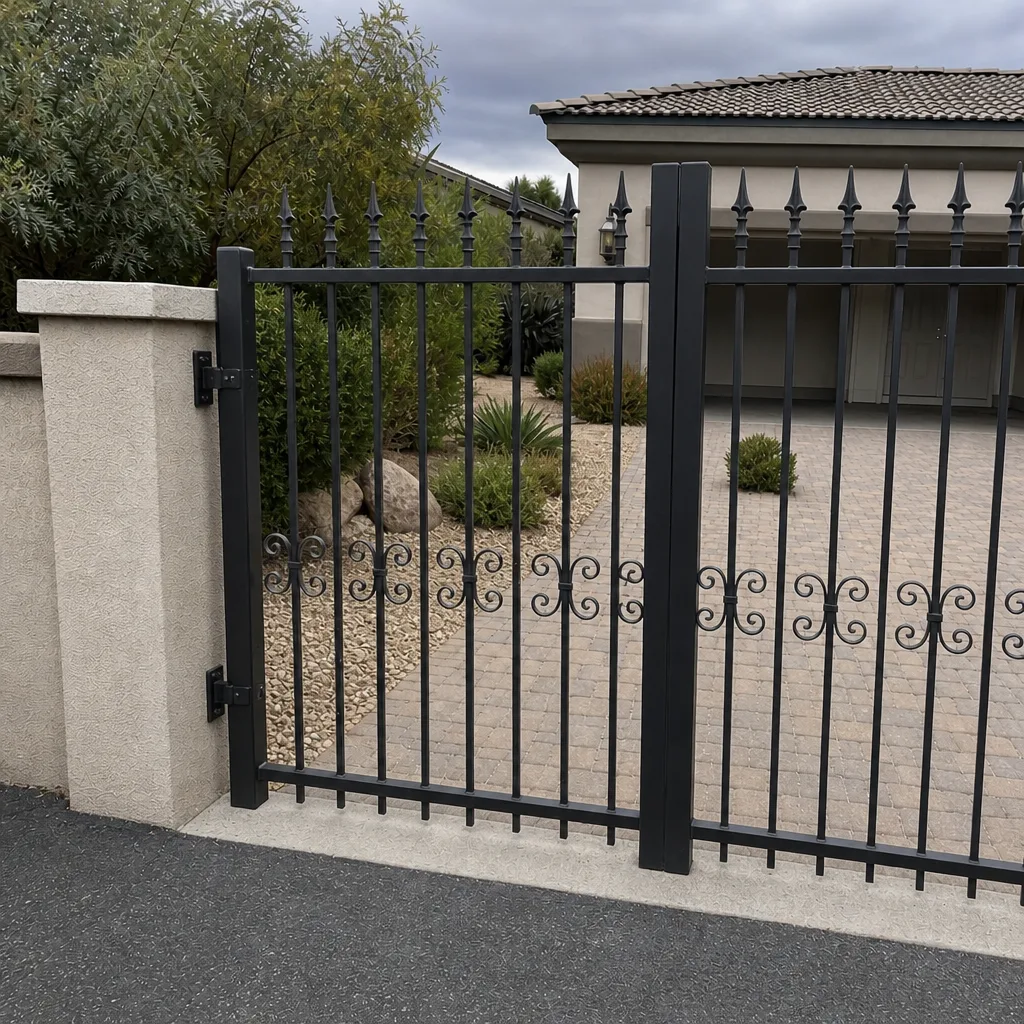 After
When to Call a Professional
Call a professional when the gate is going in new, when the posts aren’t set, when the operator needs power and safety beams wired in, or when caliche is fighting the auger. These are the phases where a mistake is expensive and slow to fix. A gate is a motorized barrier with a safety beam that protects people and pets; the wiring and limit-switch programming are not weekend projects. If you’re weighing repair against replacement on an existing gate, gate installation in Summerlin from our team starts with an assessment so you don’t replace what could be fixed. Vance Gate Repair Summerlin offers free estimates in Summerlin and a written price before any work starts. Call (844) 797-2809.
Frequently Asked Questions
A new automated driveway gate in Summerlin usually takes three to five calendar days, with 12 to 20 hours of actual labor. The extra calendar time comes from the concrete cure and the utility-locate wait, not the hardware install. Call (844) 797-2809 for a written estimate that spells out each phase.
Yes, but only when the posts are already set, cured, and sound, which is a swing-gate replacement or motor swap on existing posts. A brand-new installation cannot finish in one day because the concrete needs 24 to 48 hours to cure before panels go up. Ask any installer which scenario your job is.
Caliche is the hard calcium-carbonate layer under many Summerlin properties, and it can turn a 20-minute post-hole into an hour or more of boring. Some holes even need a second mobilization with different equipment. A realistic quote builds buffer time for exactly this.
A wiring diagram showing which conductor goes where, the terminal numbers at the operator, and where the safety devices connect. Once the conduit is backfilled, the wire is out of sight, so the diagram is what lets a future technician service the gate without guessing. Ask for it in writing.
Yes. We run the low-voltage conduit and control wiring and connect the photo-eye safety beam and any edge sensors as part of the operator install. The job ends when the limit switches read correctly and the safety device stops a closing gate on a test pass. Call (844) 797-2809 to schedule a free estimate.
Bring it to us. If it promises a one-day new install on fresh ground, it may be skipping the cure time. We offer a free second opinion on any written estimate, and we’ll tell you whether the timeline holds up.
The Bottom Line
The gate itself rarely controls the schedule. The conduit run, the concrete cure, and the utility-locate wait do. Plan on three to five calendar days for a new installation, understand that the hardware installs in one or two of those days, and treat any same-day promise on fresh ground as a sales number. Get the wiring diagram before the trench closes, expect a buffer for Summerlin’s caliche, and insist on the written price before work starts. A gate installed on a realistic timeline finishes right, and it stays right under the 365-Day Done Right Promise.
Ready to get a written price and a real timeline? Call Vance Gate Repair Summerlin at (844) 797-2809 for a free estimate. A live person answers around the clock.
Written by the team at Vance Gate Repair Summerlin.