
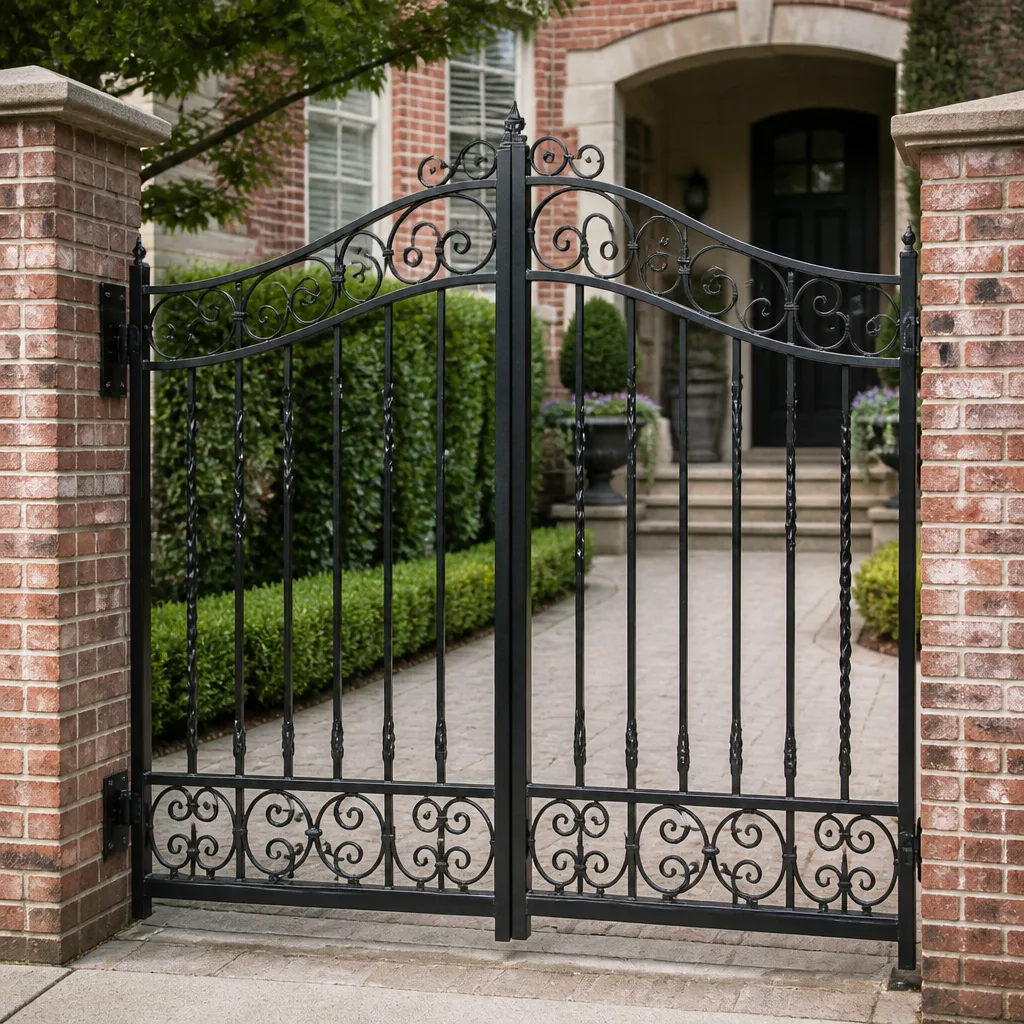
 Wrought iron
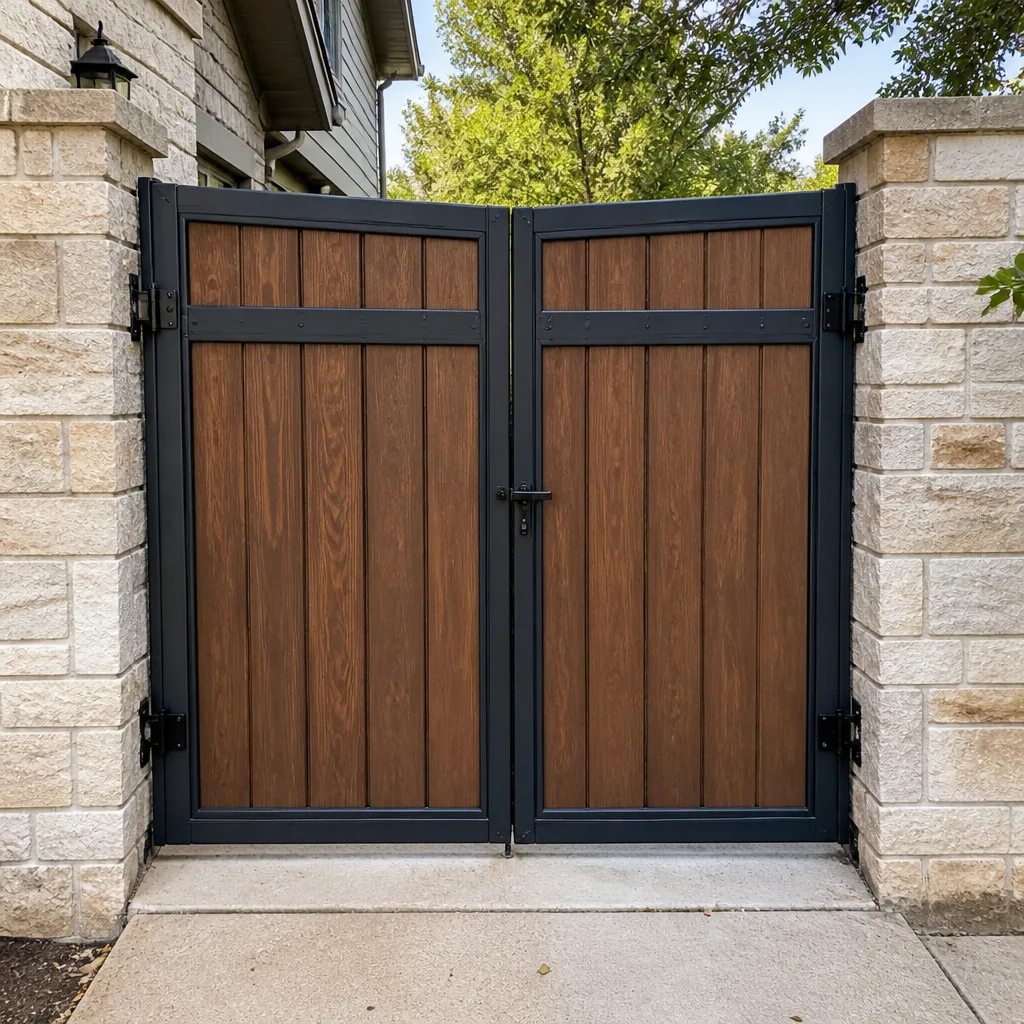 Wood & steel frame
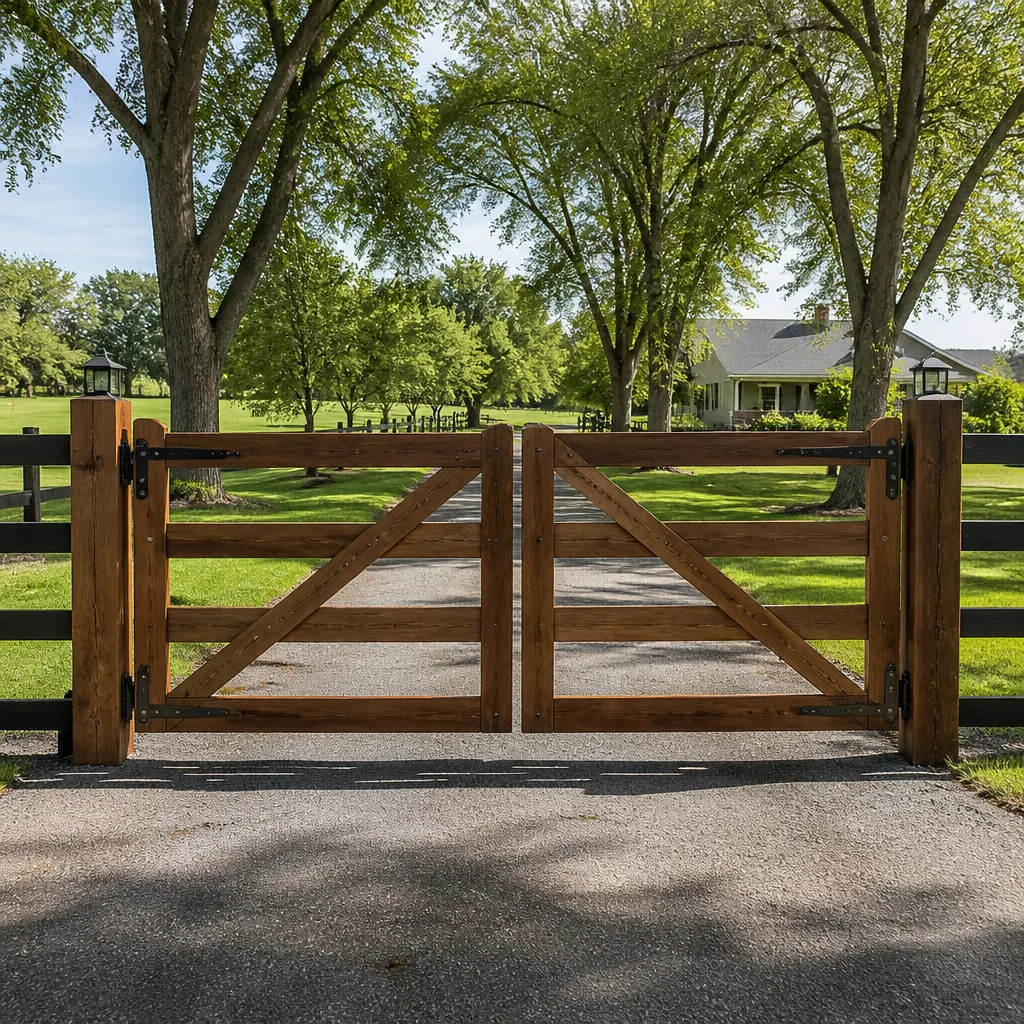 Farm & ranch
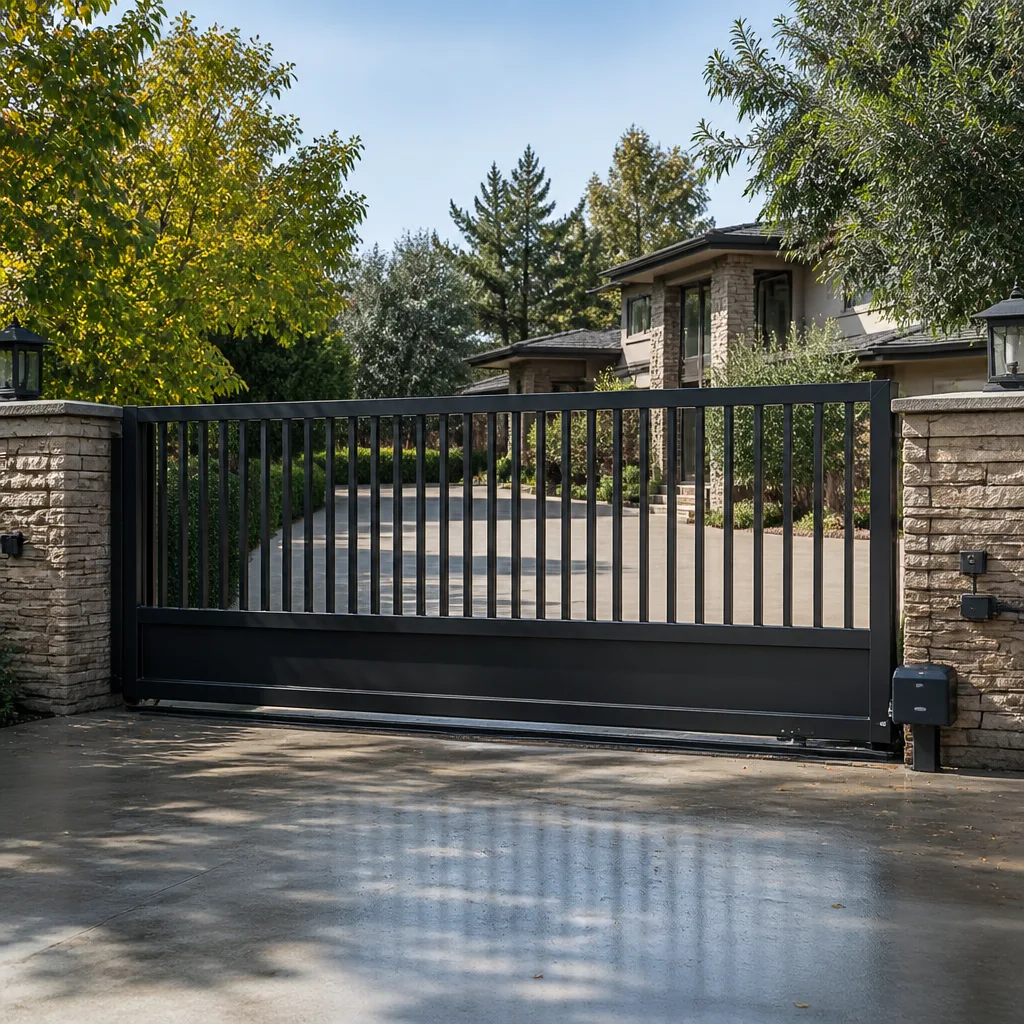 Sliding driveway gates
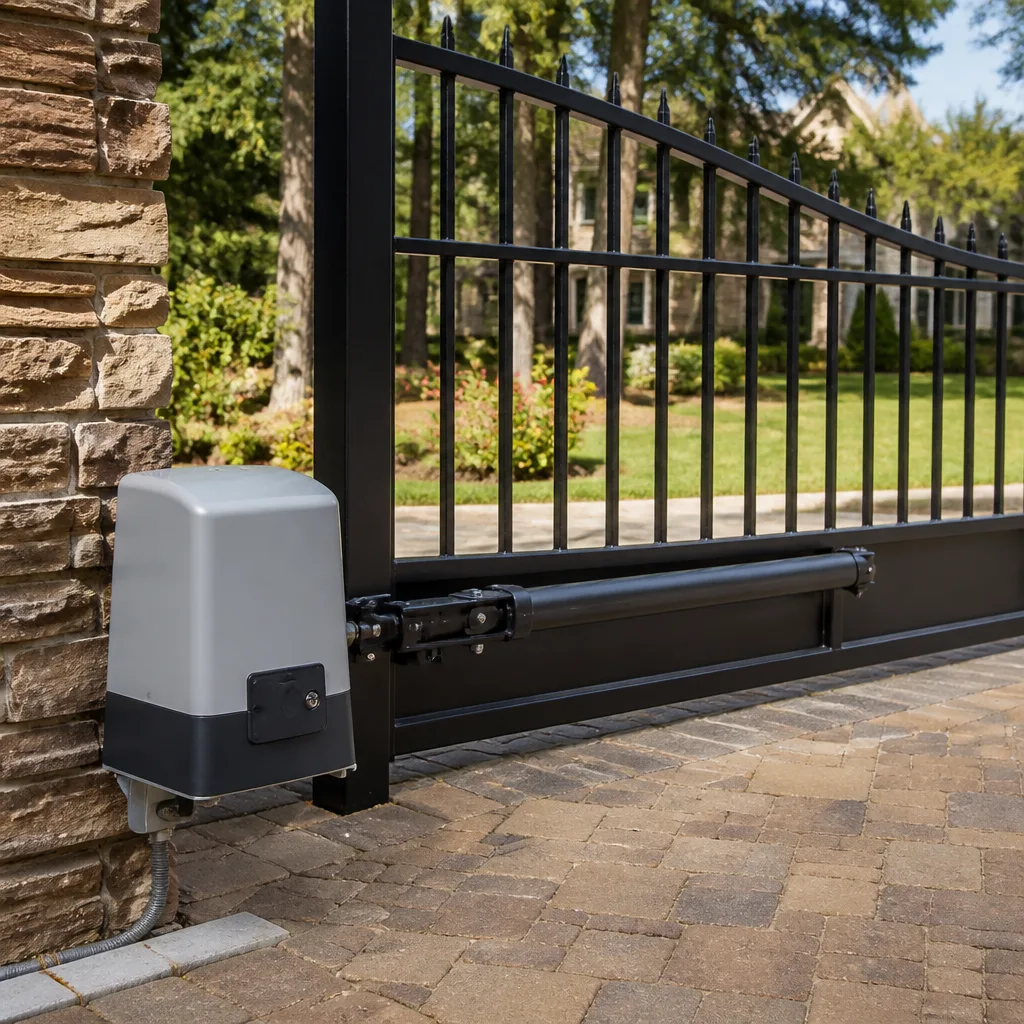 LiftMaster operators
Free on-site gate assessment - hinges, posts, and your LiftMaster or Nice gate operator checked before anything is quoted
The assessment is free and the quote is the invoice.
Get your free estimateStyles & brands we work with
- Wrought iron
- Wood & steel frame
- Farm & ranch
- Sliding driveway gates
- LiftMaster operators
See the difference
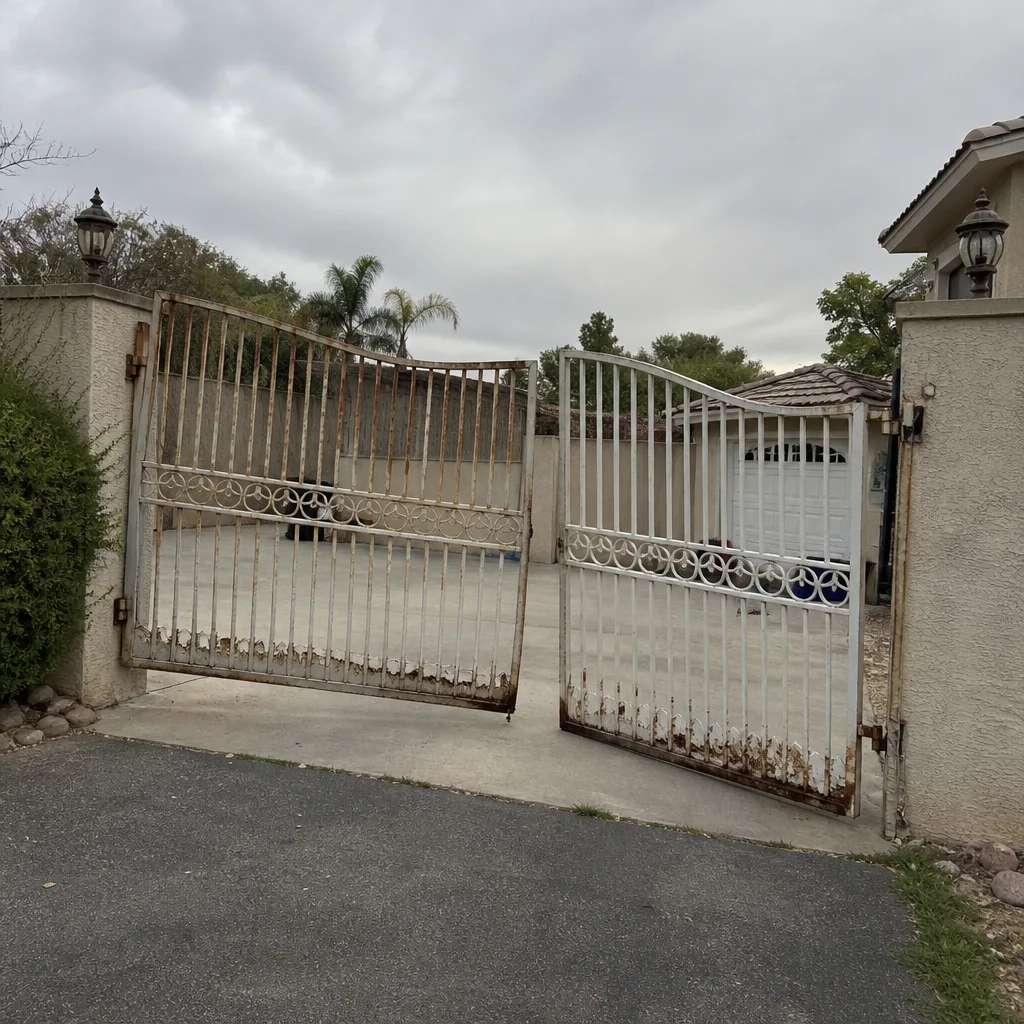 Before
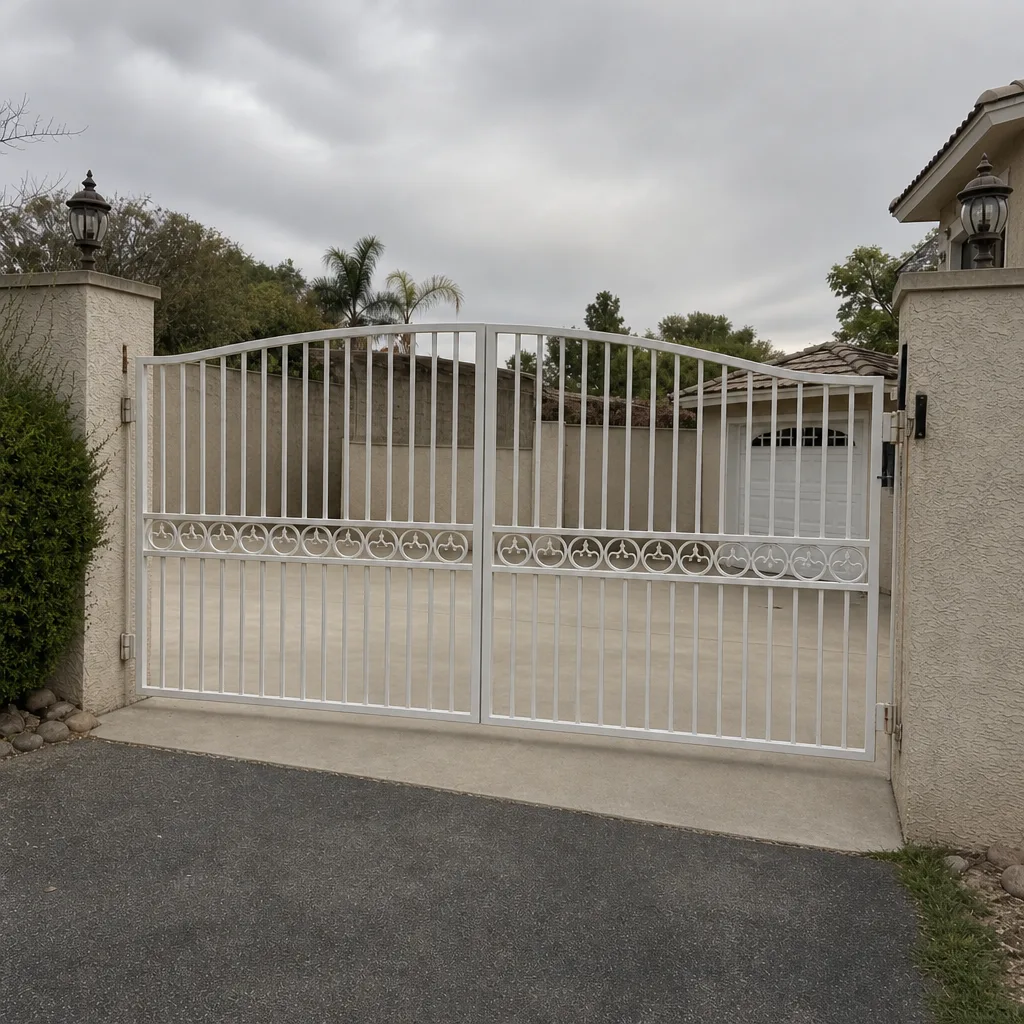 After
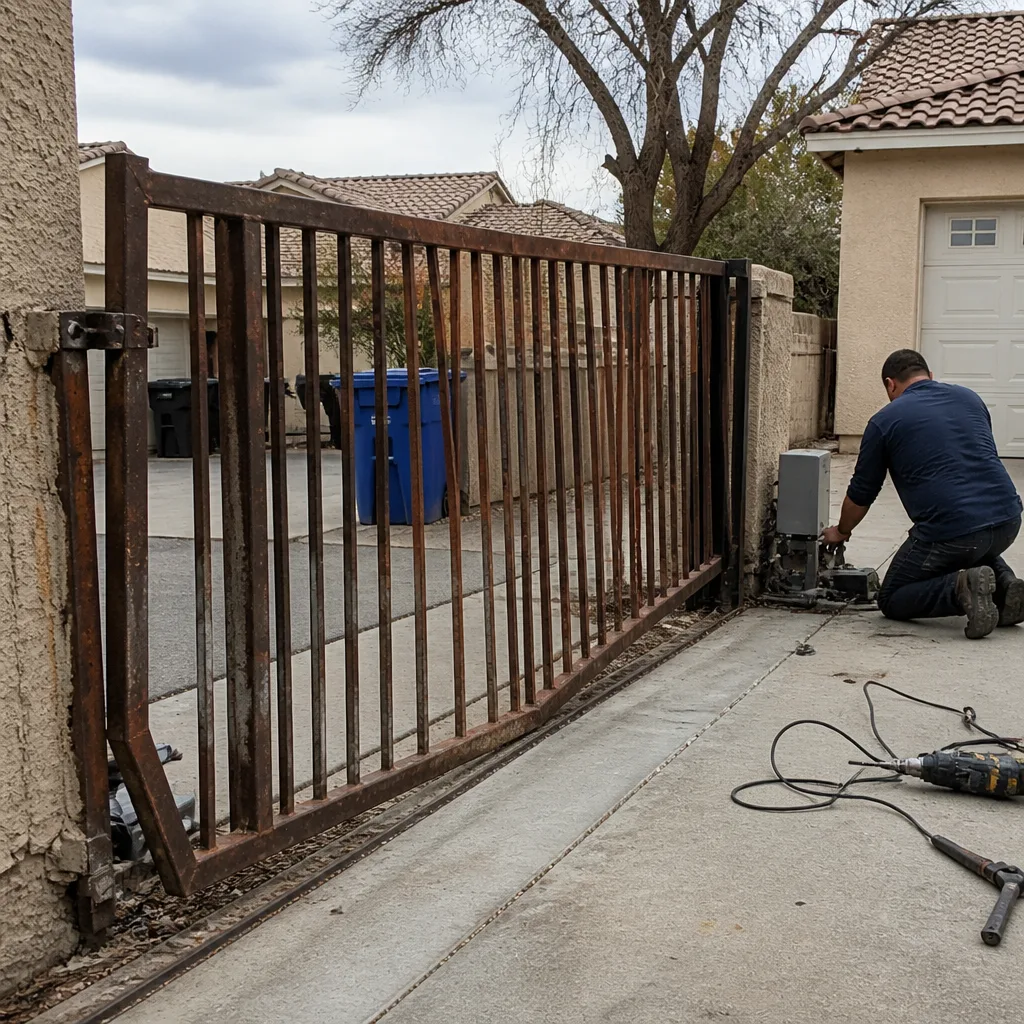 Before
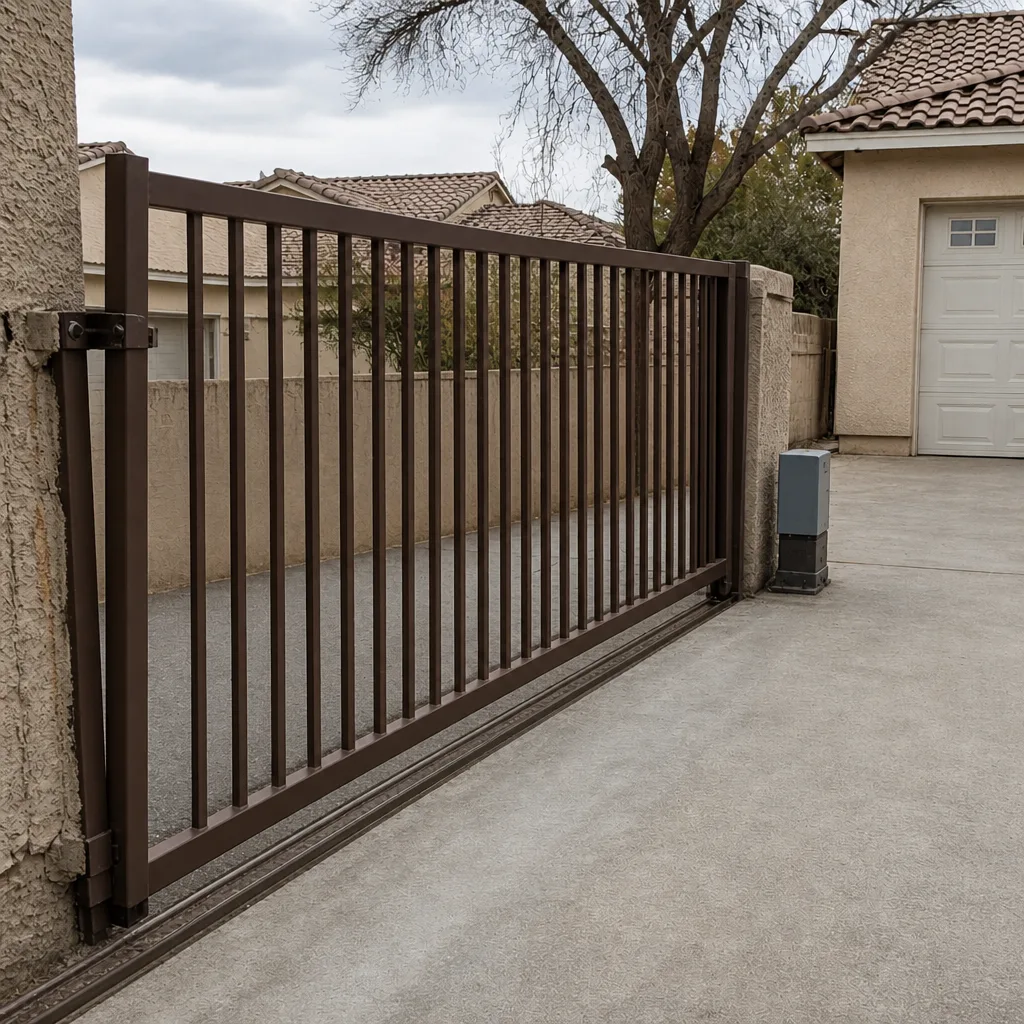 After
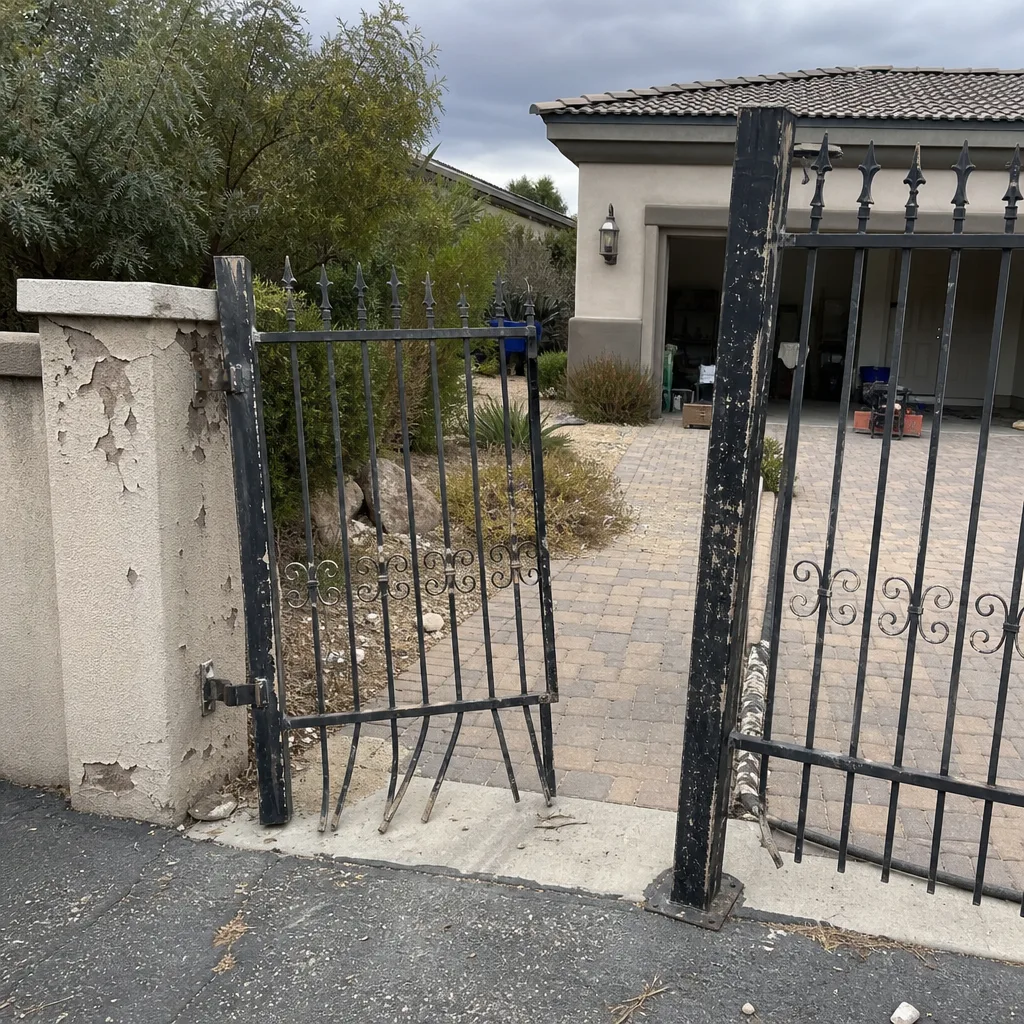 Before
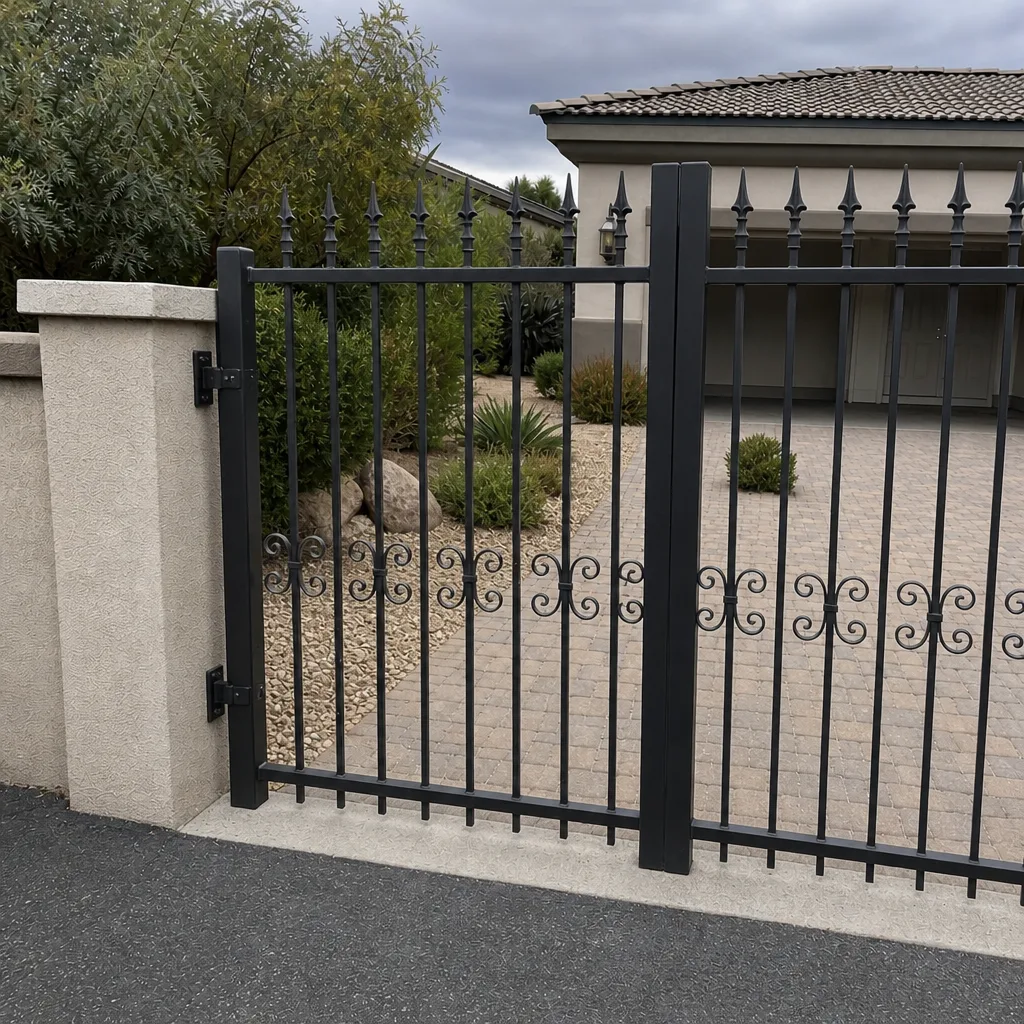 After
How an Automatic Gate Opener Works in Summerlin, NV
An automatic gate opener is four systems that must agree before the gate moves: power delivery, control logic, actuation, and position sensing. The board won’t issue a move command until power is clean, the safety circuit reads clear, the motor is ready, and the limit switches know where the gate is. In Summerlin, each of those four layers has its own predictable summer failure, so knowing which layer failed is the difference between a 10-minute owner fix and a service call. When you’d rather have it diagnosed, call (844) 797-2809.
The Four Layers, and What Each One Fails At Here
Most homeowner explanations treat the opener as a single box bolted to a post. It isn’t. It’s a chain of agreements, and the gate only moves when all four agree. Understanding the chain is what lets you describe the problem accurately on the phone, and it’s what keeps a technician from guessing.
1. Power delivery
A transformer steps your line voltage down to 12V or 24V DC for the control board. That transformer lives in a housing that gets direct west-side sun for hours in July. Heat cycling on the windings is why power-layer failures cluster in the hottest weeks. When the transformer or its supply is failing, the board may boot and accept a remote press but never command the motor, or it may drop out mid-travel.
2. Control logic
The board takes a signal from a remote, keypad, loop detector, or intercom, then checks whether the safety-sensor circuit is clear before it issues a move command. This is the layer most often misdiagnosed. If the photo-eye (the infrared beam that stops the gate if something crosses the path) reads an obstruction, the board will refuse to move no matter how many times you press the remote. A gate that “doesn’t respond” is frequently a sensor problem, not a remote or motor problem.
3. Actuation
The motor drives the gate through a swing arm, a ram actuator, or a chain-and-rack, depending on whether your gate swings or slides. Summerlin’s own gate stock leans heavily toward wrought-iron swing gates, and the actuator capacitor is the part that fails here under heat cycling. A capacitor that’s lost its capacitance gives you a gate that hums, stalls, or moves a foot and quits.
4. Position sensing
Limit switches or encoder counts tell the board when to stop. On Summerlin gates, sun exposure cracks the limit-switch housing, and once the housing lets in grit and moisture the cam wanders. You get a gate that overshoots, reverses at random, or stops short of closed. The fix is often a reset and a photographed new position, not a new opener.
- Power layer: transformer windings overheat in peak summer.
- Control layer: UV-degraded photo-eye lens reads a false obstruction.
- Actuation layer: capacitor fails under repeated heat cycling.
- Position layer: cracked limit-switch housing lets the cam wander.
Why the Gate Ignores the Remote but the Motor Is Fine
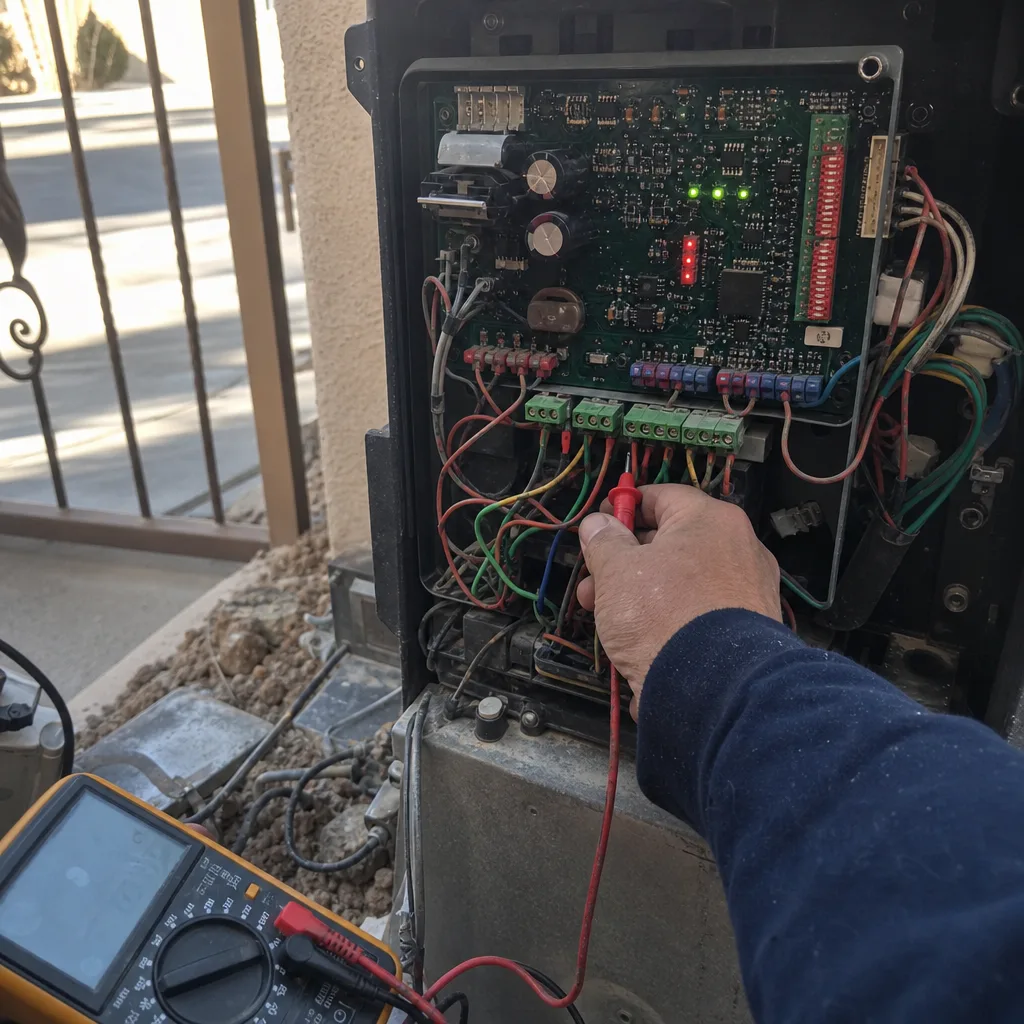
If you’ve pressed the remote eight times and nothing happens, the board is doing exactly what it was designed to do: hold the gate. Safety sensing outranks everything. A photo-eye misaligned by roughly two inches, a lens fogged by sun damage, or a loop wire that’s cracked in the driveway apron will all stop the command before the motor ever sees it.
Here’s the part most explanations skip. Many Summerlin driveway gates use a loop detector at the apron: an inductive wire loop embedded in the asphalt that senses vehicle metal mass and tells the board to open. Desert temperature swings expand and contract that asphalt hard, and the loop wire cracks. Depending on where it broke, the gate either stays open because the board thinks a car is still there, or refuses to open because the loop reads dead. It looks like a software fault. It’s a buried wire and a pavement problem.
Sorting this out is why our technicians, who bring up to 12 years of experience, start with the safety circuit and the loop before touching the motor. It’s also the reason we look at the hardware on the gate already mounted rather than steering you toward replacement. We service the nine major automation brands – LiftMaster, FAAC, BFT, Linear, Viking, Ghost Controls, DoorKing, Elite, and Mighty Mule – so whatever motor is on your property is work we can document and adjust. If you want the specifics of motor and arm service, our Gate Motor & Opener in Summerlin page covers the equipment side.
BeforeAfterCommon Summerlin Scenarios, and Which Layer Each One Points To
Summerlin’s housing stock is largely stucco-and-tile homes built from the 1990s onward, with decorative wrought-iron driveway and pedestrian gates, plus shared community-entry and pool gates in common-interest developments. That mix produces a recognizable set of failures.
- Community-entry gate that opens for one car and hangs open: loop detector layer. The apron loop reads a phantom vehicle. Expect a pavement-side repair, not a board swap.
- Driveway swing gate that hums and stalls: actuation layer. Suspect the capacitor and arm bracket.
- Gate that closes, then immediately reopens: safety-sensing layer. The photo-eye is seeing something that isn’t there, often a sun-faded lens.
- Gate that overshoots its stop: position layer. The limit-switch cam has wandered inside a cracked housing.
- Gate slightly out of plumb, scraping the ground: not an opener layer at all. Both the intense sun drying out hinges and the region’s caliche-laden, expansive clay cause posts and anchors to shift. A gate that “just needs adjusting” often has a heaving or settling footing that has to be re-set, not re-hung.
There’s a Summerlin layer on top of the machine, too. Because Summerlin is HOA-governed and master-planned, gate specs, finish colors, and swing or slide geometry are set by architectural guidelines, not by you alone. A repair often has to match an approved design or risk a violation, and that HOA layer is why gate work in the denser gated enclaves like The Ridges and Red Rock Country Club runs differently than the same job on a non-HOA street. The west-side wind and monsoon dust storms matter here as well. They routinely blow gates out of alignment and snap closer and operator arms, which is how a lot of actuation-layer calls start.
What “Fixed” Should Look Like When a Technician Leaves
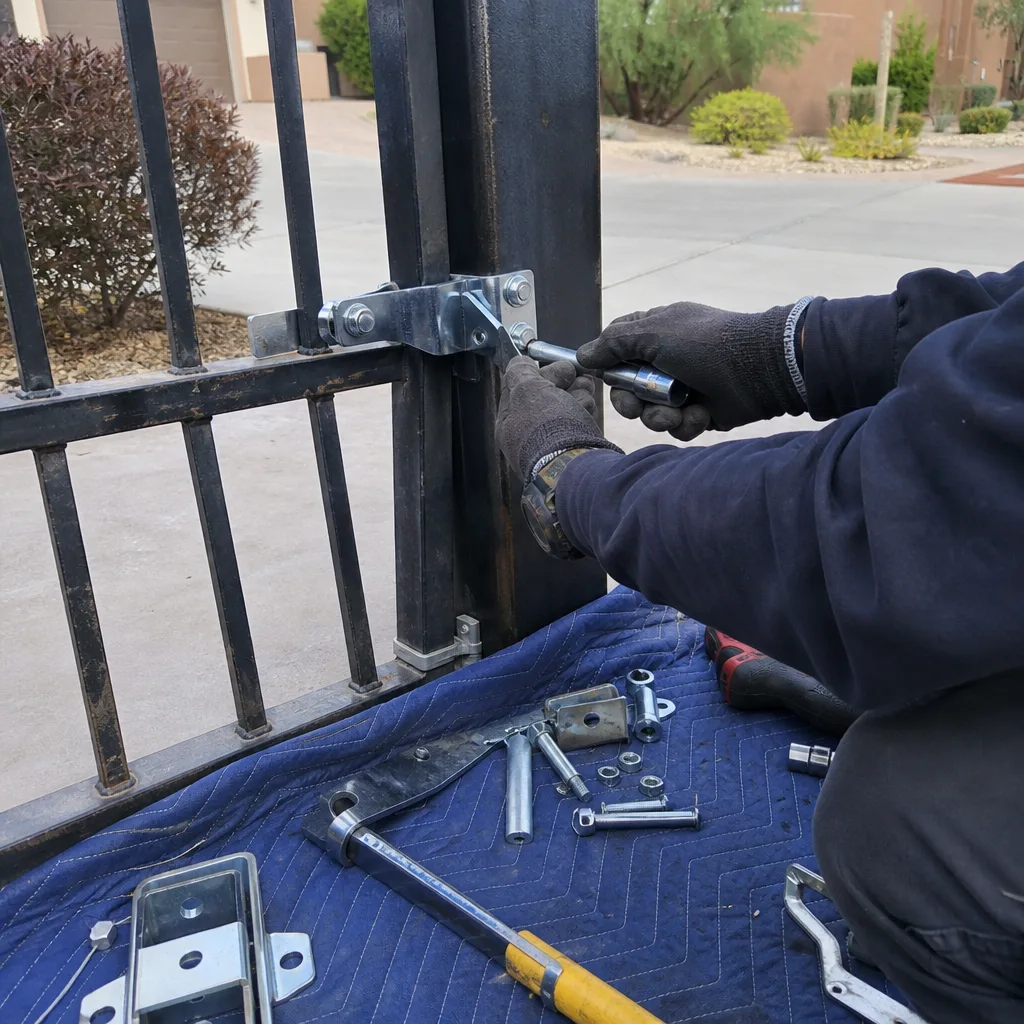
Here’s the operator detail that separates a first visit from a second one. When we work on a gate, we document all four layers as we found them and as we left them: a wiring diagram, the limit-switch readings, photos of every adjustment, and the part numbers we installed. You get the log, and it’s filed on the job.
That habit comes from commercial access-control work our company’s founding carried over in 2014. On a commercial site, undocumented wiring is what causes the second service call, because the next technician has to rediscover what the last one already knew. The same is true on a residential driveway in Summerlin. Under The Haven Standard, the flat price is written and handed to you before any tool comes out, so there’s no surprise invoice, and the 365-Day Done Right Promise covers the work for a full year. Every job in our 22,000-plus record since 2014 was priced in writing first and documented on the way out. If you’ve got a written estimate from another company, we’ll review it as a free second opinion.
One safety note, and it’s the one we won’t soften: the springs and cables that counterbalance a swing gate, and the high-voltage feed to a transformer, are genuinely dangerous. A tensioned spring can cause severe injury. Check that the gate is clear and the power is on; leave the spring, cable, and line-voltage work to a trained professional.
FAQs
If the gate won’t move at all but the board still powers on and accepts a signal, suspect the safety sensor or loop before the motor; a blocked safety circuit stops the move command entirely. A motor that’s actually failing usually still tries, humming, stalling, or moving partway. Call (844) 797-2809 for an assessment.
A gate that opens by itself or hangs open usually has a loop-detector or safety-sensing fault, not a logic board failure. In Summerlin, cracked loop wire in the asphalt apron from temperature expansion is a common cause. We diagnose the circuit before touching the motor.
Most gate opener repairs in Summerlin fall in a few predictable ranges depending on which layer failed. We write the flat price and hand it to you before work starts, so you’ll see the number in writing.
| Repair | Typical range |
|---|---|
| Safety sensor / photo-eye realignment | $150-$280 |
| Limit-switch reset / housing replacement | $180-$320 |
| Capacitor and actuation repair | $200-$380 |
| Loop-detector diagnosis and wire repair | $250-$600 |
| Control board or transformer replacement | $350-$750 |
Call (844) 797-2809 for an exact quote on your gate; estimates are free and priced in writing before any work.
Yes. We service nine major automation brands, including LiftMaster, DoorKing, Elite, and Mighty Mule, so we work with the opener on your property rather than pushing a replacement. That’s the whole point of the four-layer approach: fix the layer that failed.
Get It Looked At
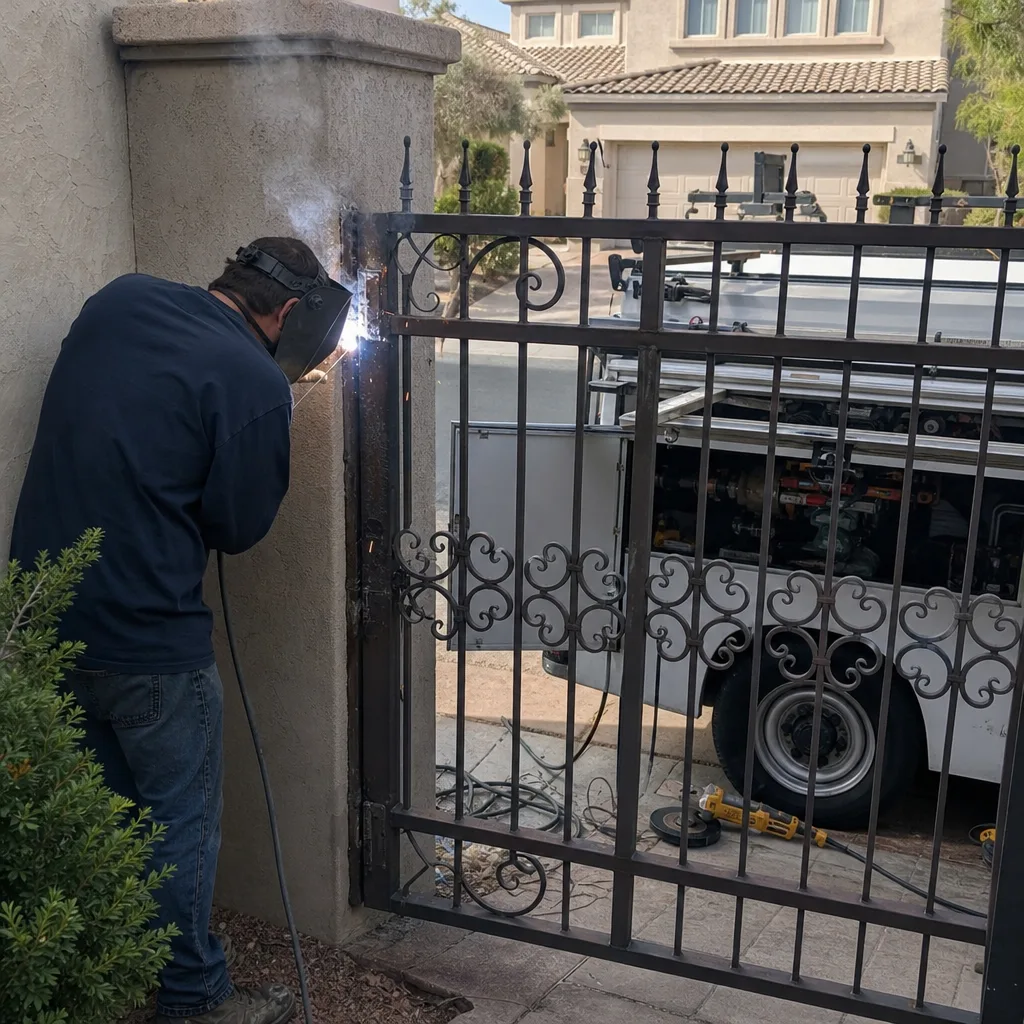
If you’d rather have it looked at than keep pressing the remote, Vance Gate Repair Summerlin offers a no-pressure assessment in Summerlin – call (844) 797-2809. You’ll get a written price before work starts, a documented photo record when we leave, and the 365-Day Done Right Promise behind every repair. For the equipment side, start with our Gate Motor & Opener page.
Written by the team at Vance Gate Repair Summerlin, serving Summerlin, NV.