
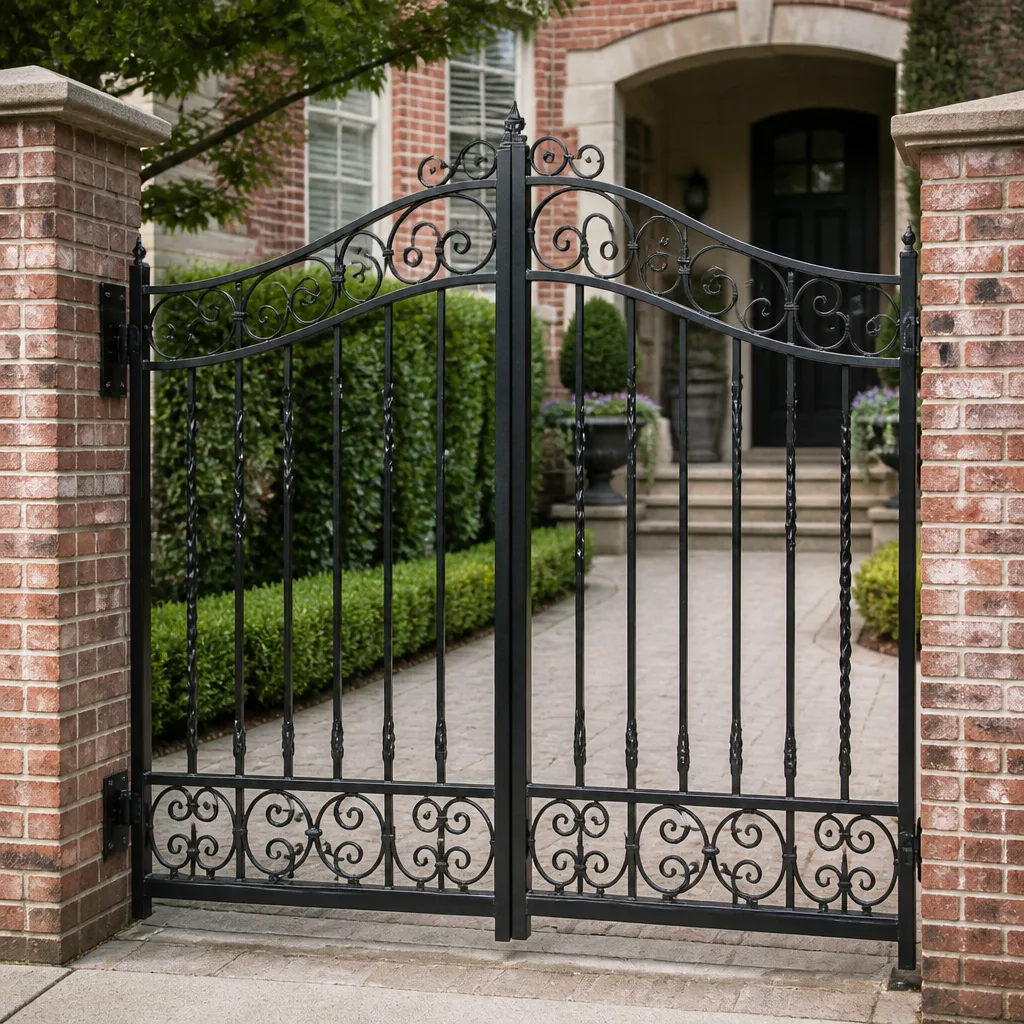
 Wrought iron
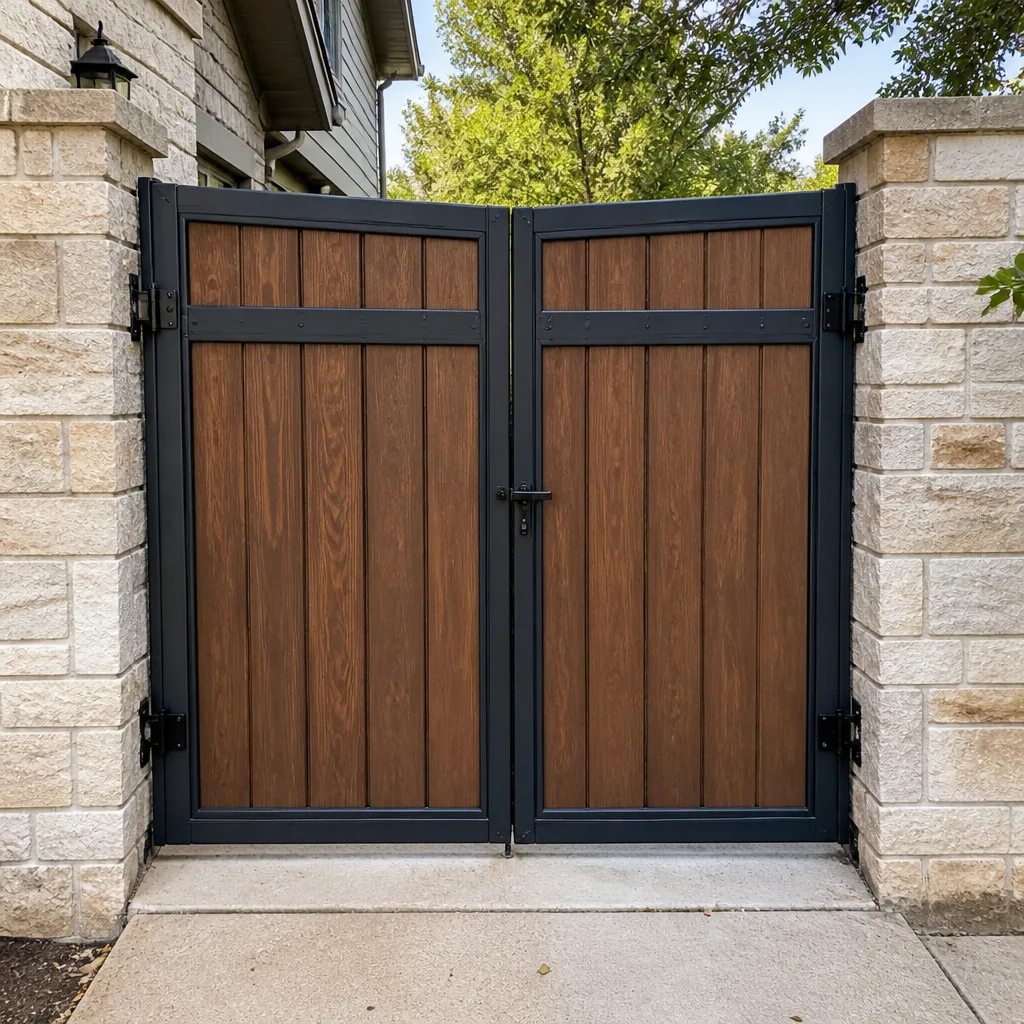 Wood & steel frame
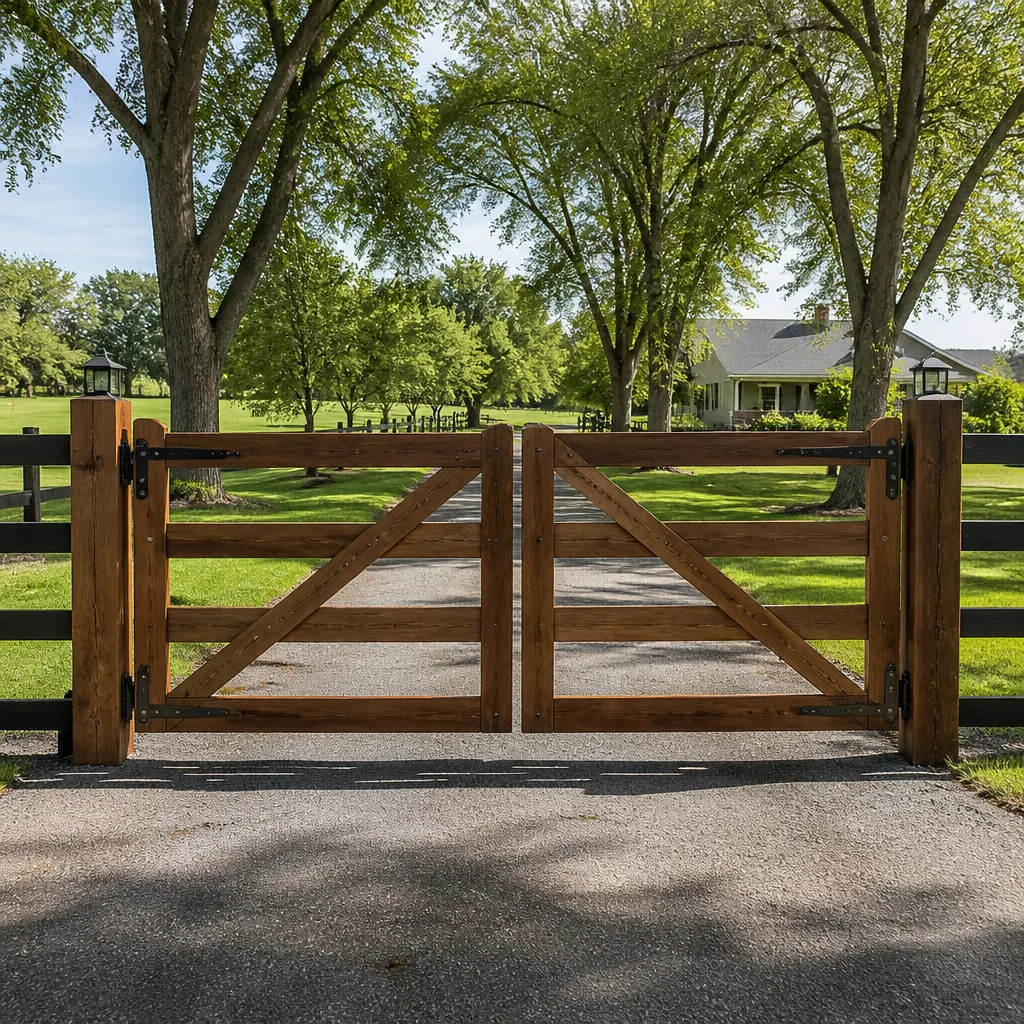 Farm & ranch
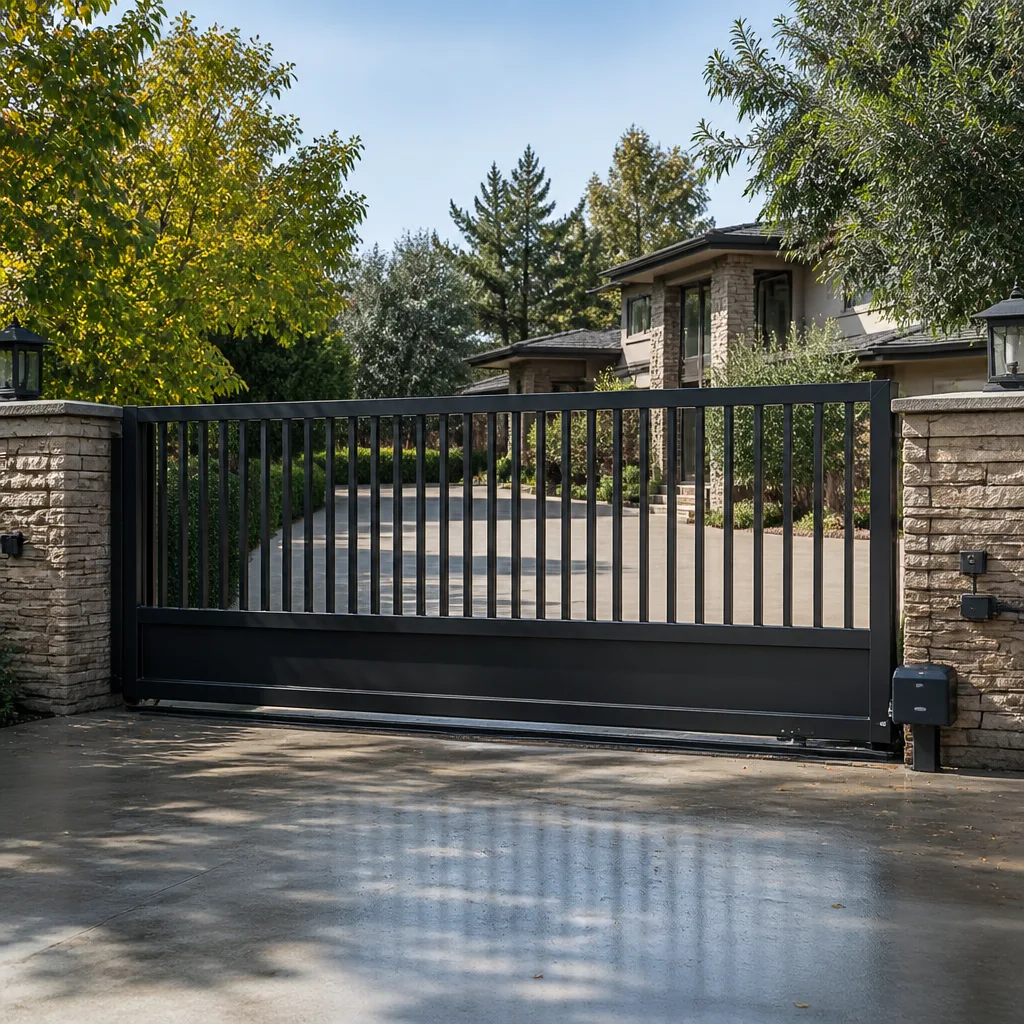 Sliding driveway gates
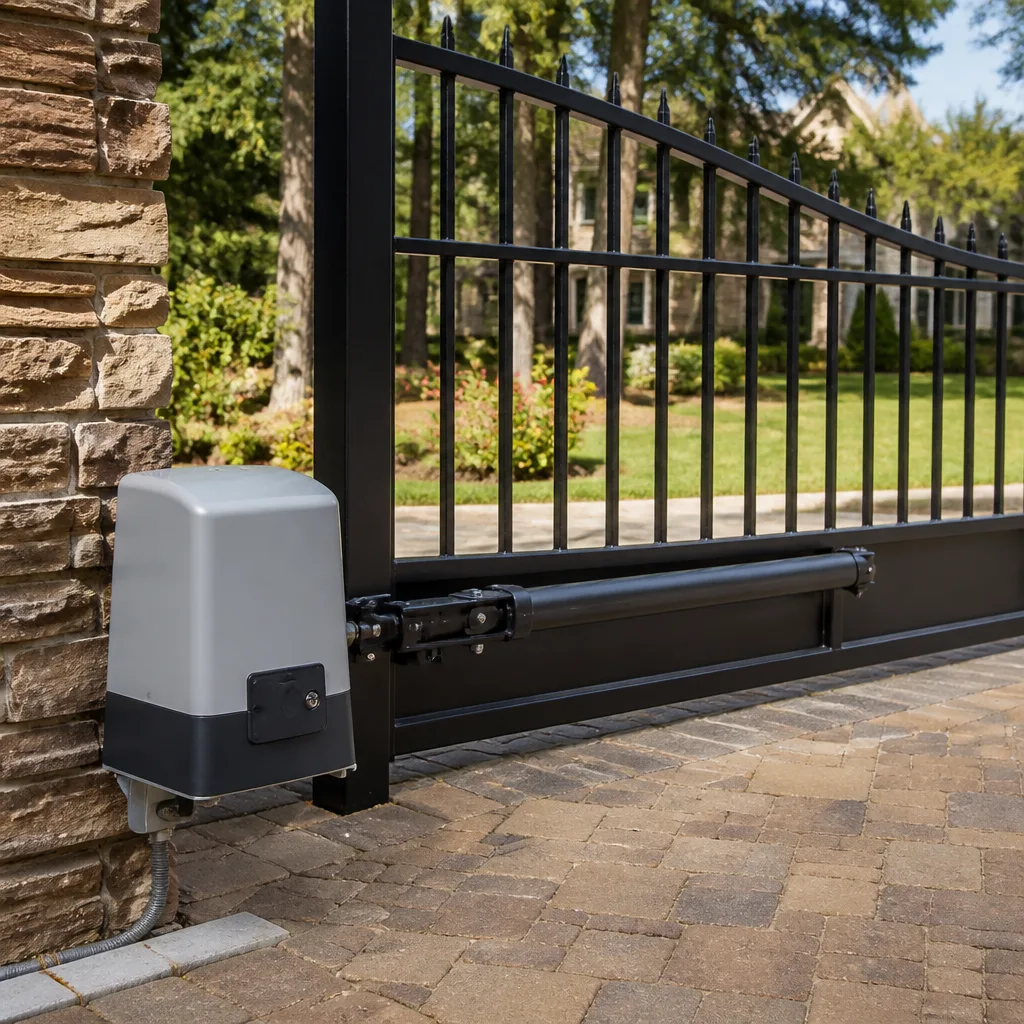 LiftMaster operators
Free on-site gate assessment - hinges, posts, and your LiftMaster or Nice gate operator checked before anything is quoted
The assessment is free and the quote is the invoice.
Get your free estimateStyles & brands we work with
- Wrought iron
- Wood & steel frame
- Farm & ranch
- Sliding driveway gates
- LiftMaster operators
See the difference
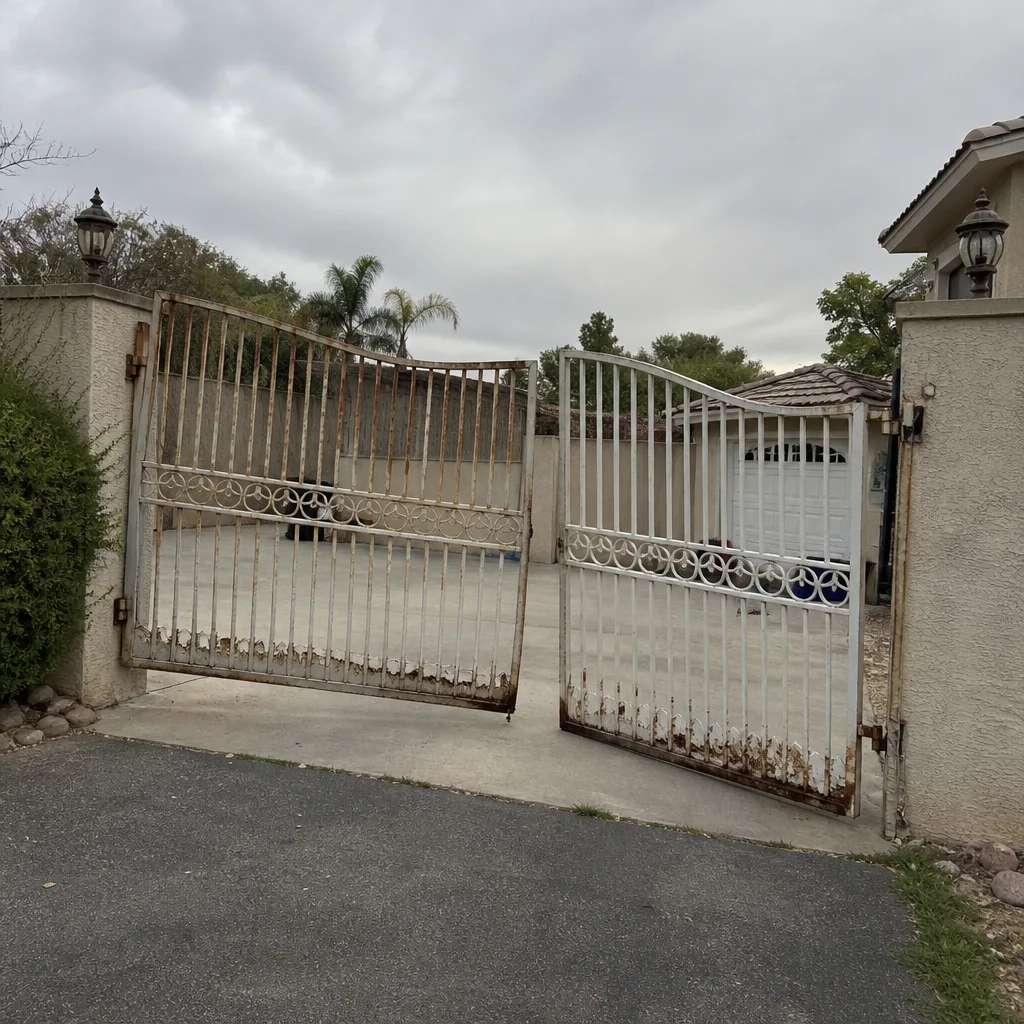 Before
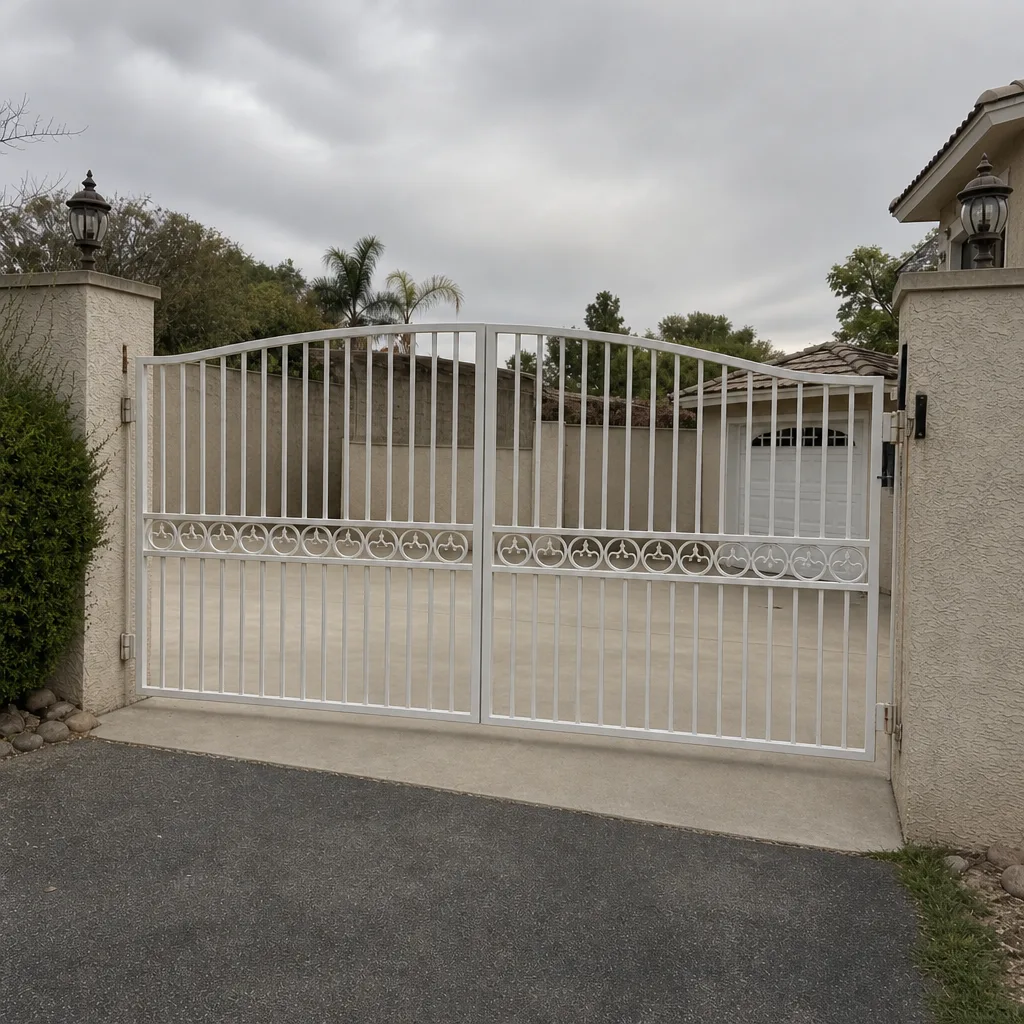 After
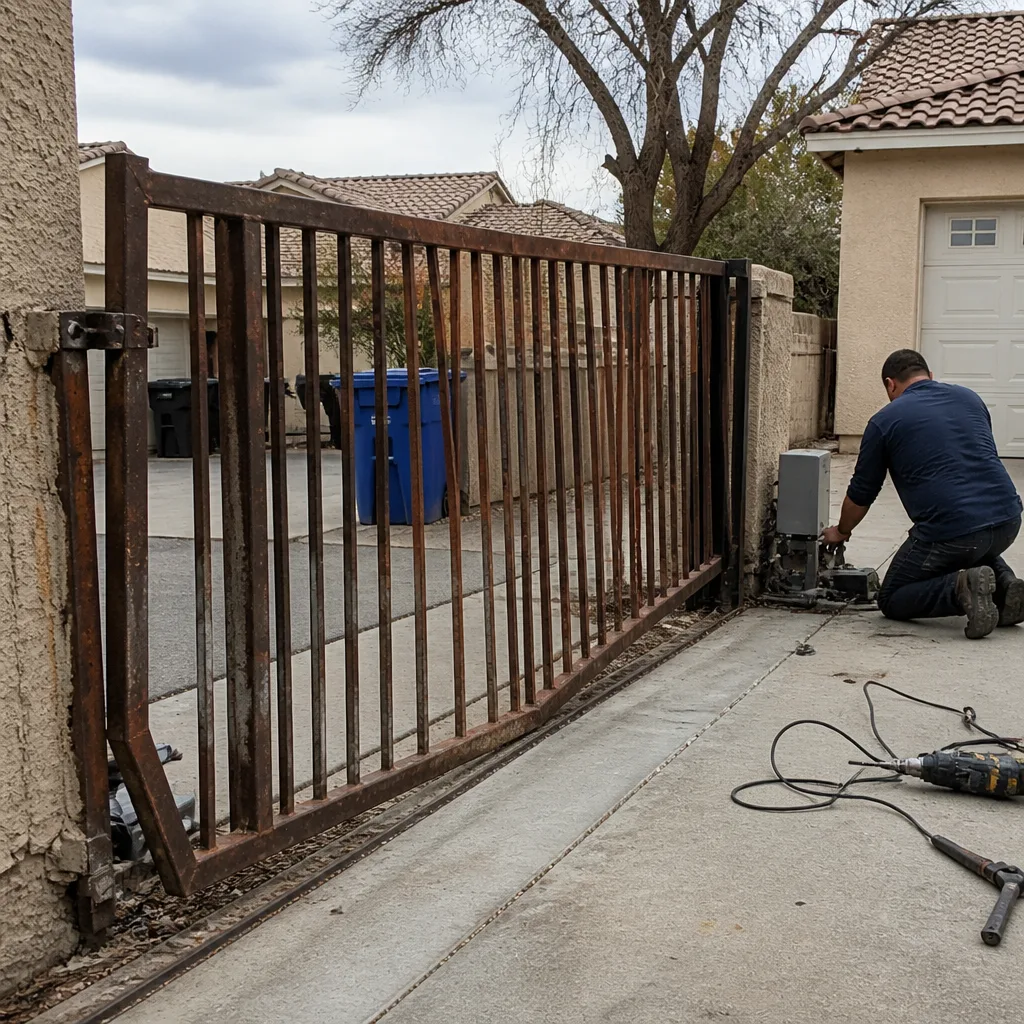 Before
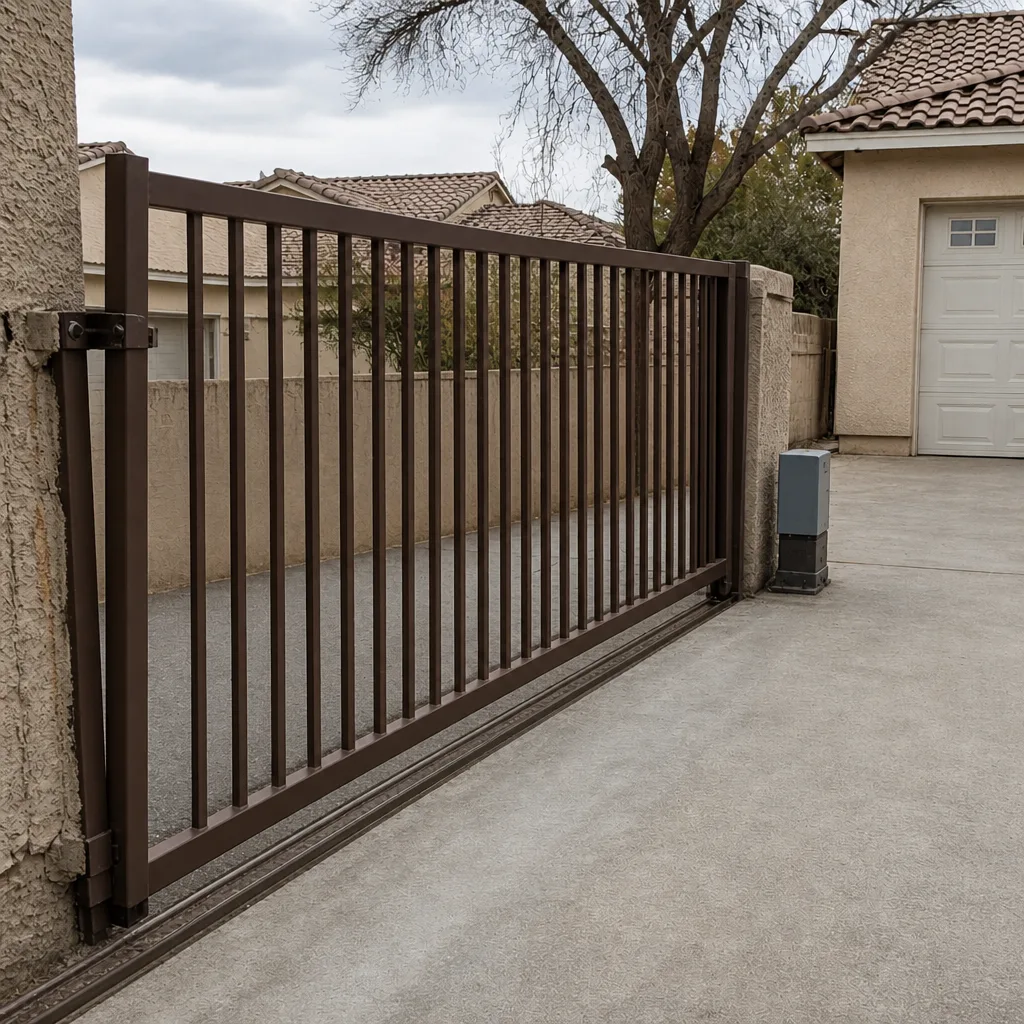 After
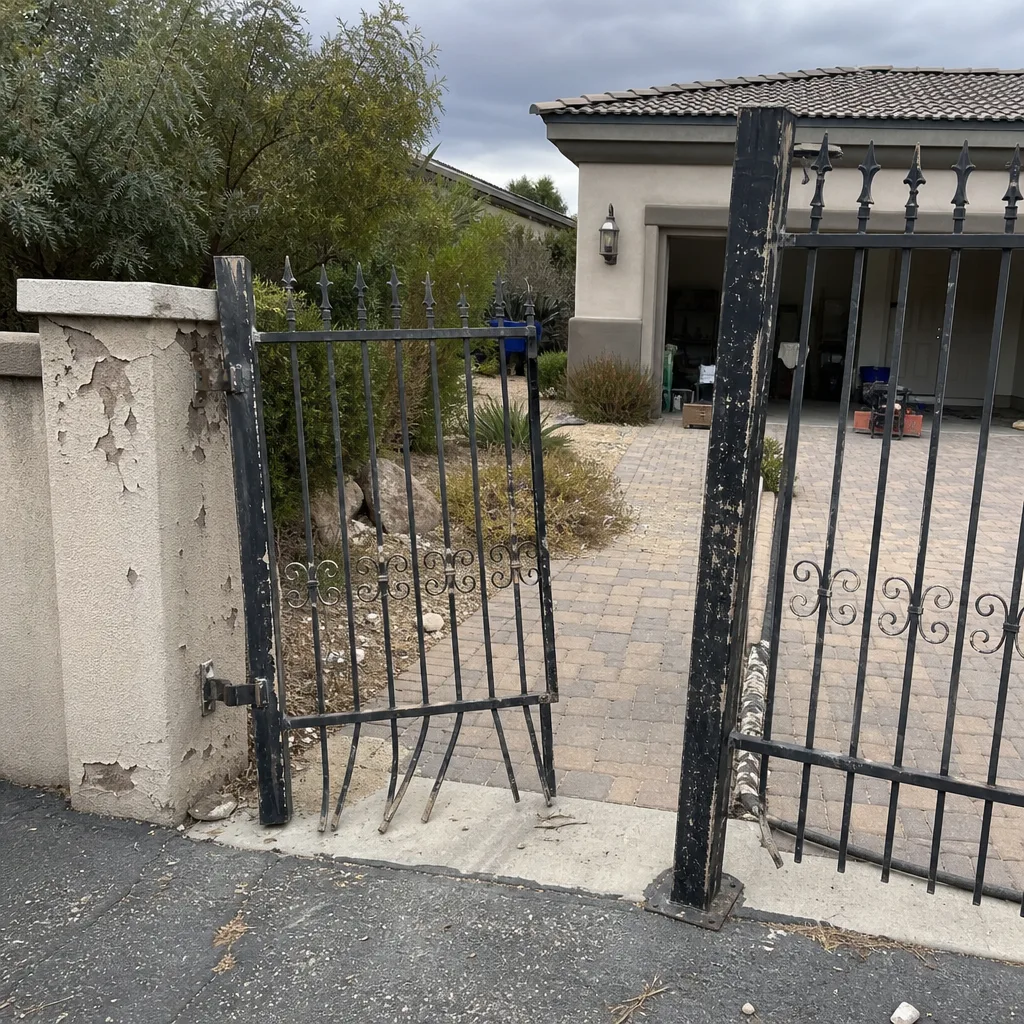 Before
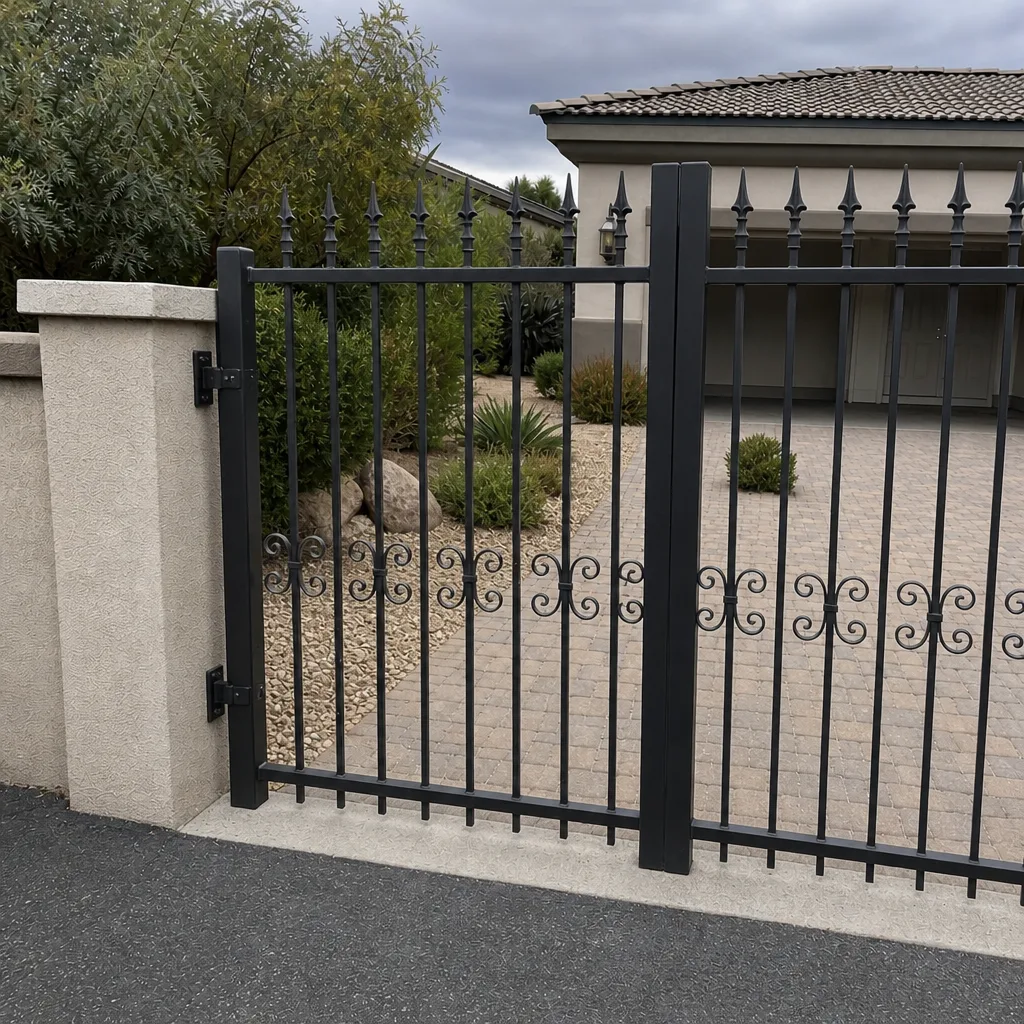 After
How Gate Access Control Systems Work in Summerlin, NV - and Where They Fail
A gate access control system works as a chain of five layers: a credential reader (keypad, card reader, or remote receiver) captures your code and passes it to a controller board, which checks it against stored credentials and tells the operator motor to move the gate, all running on a dedicated low-voltage power supply. In Summerlin’s HOA-gated communities, a fifth layer sits on top of that chain: the property-management software that pushes resident code lists down to the controller. When your gate ignores a working code, the break is almost always in layer two or layer five - the controller board or its data link - not the keypad you’re pressing. Call (844) 797-2809 if you want a technician to read which layer is failing before anything gets replaced.
That distinction matters more in Summerlin than in most of the valley. A Red Rock Country Club or The Ridges driveway gate isn’t a stand-alone device; it’s a node on a shared access network, and the failure modes look nothing like what a homeowner expects.
The Signal Path, Layer by Layer
Here’s the sequence in plain order, so you can narrow down where your gate stopped working before you call anyone.
- Credential reader. You type a code, wave a card, or press a remote. The reader converts that input to an electrical signal. If the keypad beeps but nothing happens, the reader is usually fine and the problem is downstream.
- Controller board. This is the small circuit board in the operator housing or a pedestal nearby. It compares the incoming credential to its stored list, logs the event, and issues an open command. A board that lost its memory after a power event will reject every code, including yours.
- Operator motor. The board sends an open command; the motor and its limit switches do the physical work. If the gate hums, moves partway, or reverses instantly, you’re likely in the operator layer, not access control at all.
- Power supply. A dedicated transformer feeds the whole chain, usually 12 or 24 volts. Low voltage causes erratic behavior that mimics every fault above it.
- Access-management software. In Summerlin’s common-interest developments, a management platform pushes the resident code list to each controller. When that sync stalls, your code exists on the property manager’s screen but not in the board’s memory.
You can confirm a dead reader against a live controller with a basic multimeter reading at the reader’s power terminals before anyone unscrews a housing. That single check is the difference between a small connector repair and an unnecessary replacement. If voltage is present at the reader but nothing reaches the board, you have your answer. If the reader shows nothing, the power supply is your first stop.
Why Summerlin Gates Behave Differently From the Rest of Las Vegas
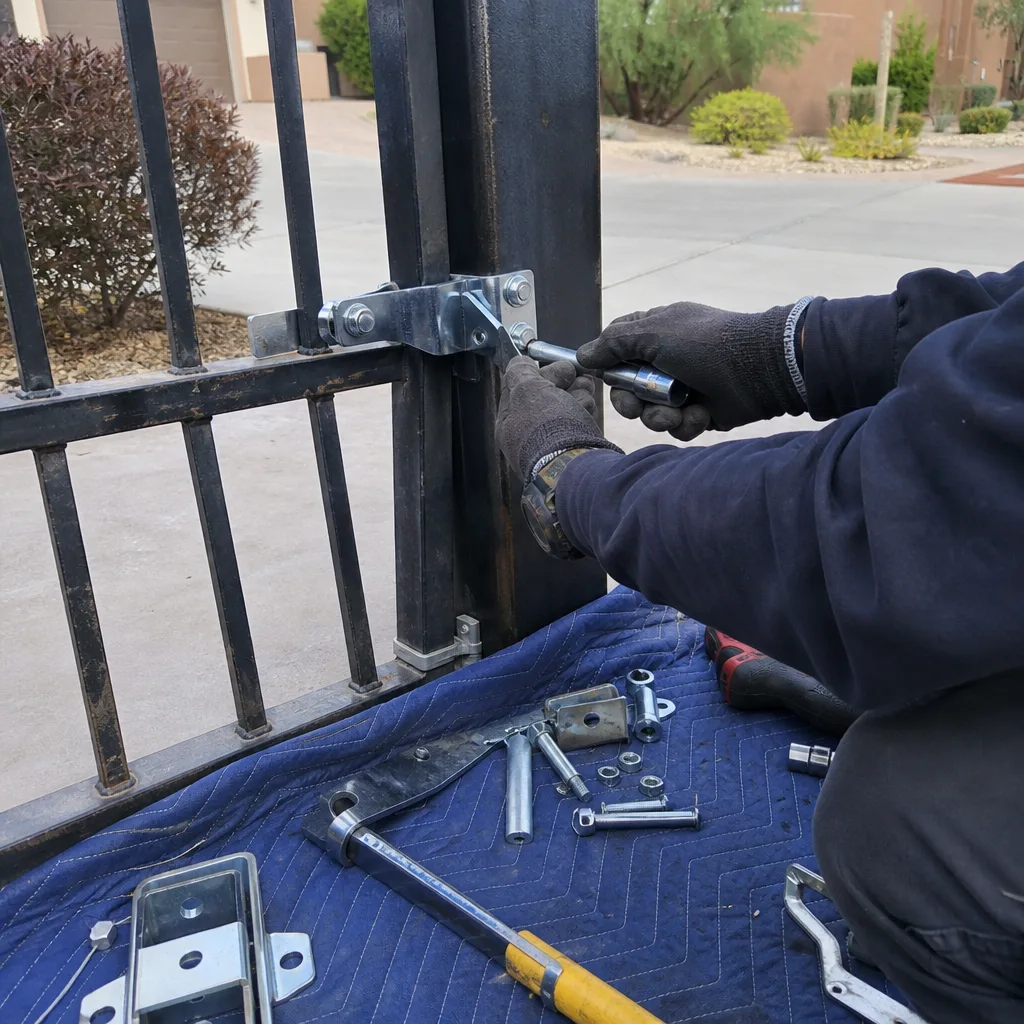
Summerlin was built as a master-planned, HOA-governed community largely from the 1990s onward, and that history is baked into the hardware. Driveway gates are typically decorative wrought-iron units whose swing geometry, finish color, and mounting height are set by HOA architectural guidelines, not by the homeowner’s preference. That matters for access control because the operator arm and reader pedestal have to fit an approved design. A repair that shifts the arm bracket or changes the pedestal position can trip a violation even when the gate works perfectly.
The climate adds its own layer of trouble. Summerlin’s 100°F-plus summers dry out hinges and bake powder-coat finishes, and the region’s caliche-heavy soil and expansive clay move gate posts out of plumb over time. A gate that closes a few inches off can trip the photo-eye (the infrared beam that stops the gate if something crosses the path) and read as an access-control failure when the real problem is a settled footing.
Then there are the monsoon-season voltage spikes. A strike or a grid surge in west Summerlin routinely corrupts controller memory, wiping the stored credentials without damaging a single physical part. The board looks healthy, the keypad lights up, and the gate refuses every code until the list is reloaded. A surge-protected transformer is the practical fix, and it’s a specification decision worth making before the next storm, not after.
BeforeAfterWhy One Brand of Controller Isn’t Enough
Different manufacturers speak different communication protocols. Wiegand, OSDP, and RS-485 are the three you’ll meet most often in residential and light commercial gate work, and a controller configured for one will not talk to a reader expecting another. A technician trained on a single brand will read a protocol mismatch as a dead board and quote a replacement that solves nothing.
Vance Gate Repair Summerlin services nine automation brands - LiftMaster, FAAC, BFT, Linear, Viking, Ghost Controls, DoorKing, Elite, and Mighty Mule - because the motor already on your property is the one we work on. You don’t get steered toward a new operator because it’s the only one the technician knows. For the shared entry gates in Summerlin’s gated enclaves, DoorKing and Linear controllers are common, and both are platforms we read directly. The same applies to residential driveways running FAAC or LiftMaster arms.
If you’re trying to understand where access control ends and gate repair begins, the Gate Access Control service page breaks down the repair side in more detail.
What a Diagnostic Visit Actually Produces
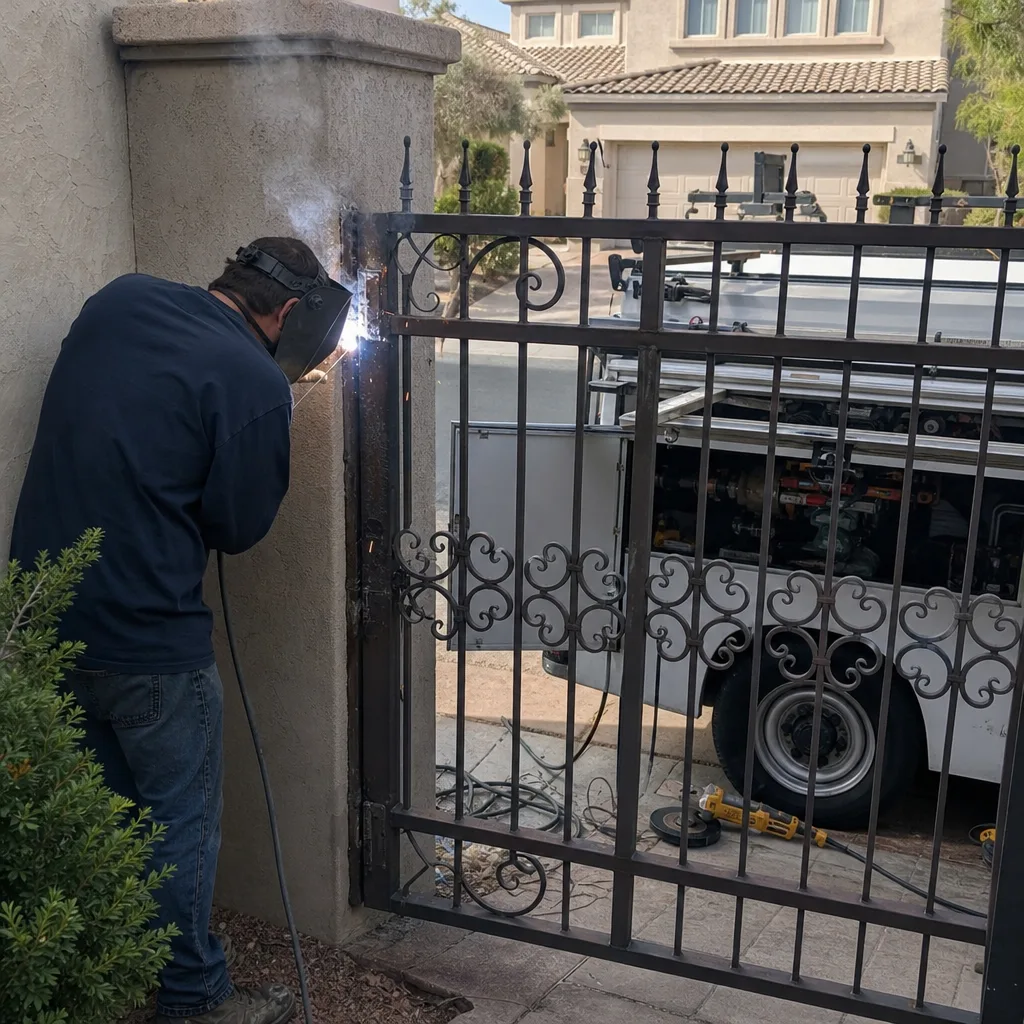
Under the Haven Standard, every visit leaves a written record before any tool comes out and a documented photo record before the technician leaves. That’s the habit that carried over from commercial access-control work, where a wiring diagram isn’t optional paperwork - it’s how the next person on site avoids starting blind.
Here’s what you should expect when the visit happens:
- A written flat price handed over before work begins, with no “call for a quote” and no surprise line items at the end.
- Controller read-out values logged alongside the correct values, so the fault is documented rather than guessed.
- A photo log of every adjustment - limit-switch positions, reader voltage, connector state - left with you and filed in the job record.
- The part number of anything replaced, recorded in writing, so the next HOA manager or technician can match it without disassembling the housing.
- Coverage under the 365-Day Done Right Promise: if the repair isn’t right within that year, it gets fixed at no additional charge.
We also provide a free second opinion on any written estimate you’ve received from another company. Bring the paperwork and we’ll review it at no cost. That’s useful when you’ve been quoted a full controller replacement for what reads like a code de-sync.
Typical Repair Ranges in Summerlin
Access-control repairs generally fall into a narrower band than full operator work, but the range depends on which layer failed. These are the ranges we work within:
| Repair | Typical Range |
|---|---|
| Keypad or reader replacement | $120-$280 |
| Controller board repair or reload | $180-$420 |
| Code list re-sync with HOA software | $90-$180 |
| Transformer upgrade with surge protection | $150-$300 |
| Operator motor or arm repair | $280-$650 |
Ranges shift with brand and access, and a post that has settled into caliche will add footing work that isn’t part of the access-control chain at all. You’ll see the exact number in writing before anything starts.
The Fifth Layer Most Residential Technicians Never Touch
In Summerlin’s HOA communities, the software layer is where the diagnosis most often lands. A property manager adds a resident to the system, the platform queues the update, and the push to the controller fails during a network hiccup. The resident’s code shows as active on the management screen and doesn’t exist in the board’s memory. The gate rejects it every time. A technician who only works on physical hardware will test the reader, test the board, find nothing wrong, and replace parts that were never the problem.
Vance technicians carry controller read-out tools and understand how DoorKing’s DK Access and Linear’s MegaCode platforms push codes to the field. When we find a de-sync, the fix is a re-push and a documented confirmation that the board now holds the correct list - not a hardware swap.
FAQs
If your keypad beeps but the gate doesn’t move, the reader is receiving your input and the failure is downstream - most often a controller board that lost its stored credentials or a data link that’s out of sync with the community’s access-management software. That pattern is common in Summerlin after a power event during monsoon season. Voltage test at the reader confirms where the break is before you replace anything. Call (844) 797-2809 for an exact quote - estimates are free.
Yes, a power outage or a voltage spike can corrupt controller memory and erase stored credentials, and it’s one of the most frequent causes of a working gate suddenly rejecting every code. The board itself is usually undamaged. A surge-protected transformer reduces the risk going forward, and a re-push of the code list restores access. Call (844) 797-2809 and we’ll check the power supply and re-sync the list.
No, gate controllers use different protocols - Wiegand, OSDP, and RS-485 are the three most common - and a reader configured for one won’t communicate with a controller expecting another. That’s why a technician who only services a single brand will misdiagnose a protocol mismatch as a dead board. We service nine brands, including LiftMaster, FAAC, Elite, and Mighty Mule, so we can read the protocol your system speaks. For an exact quote on a diagnostic, call (844) 797-2809.
Yes, we test each layer in sequence with meter readings and controller read-outs before quoting a replacement, and the written price covers only what the readings show. Under the Haven Standard, you get that price in writing before any tool comes out, along with a documented photo record of what was found and what was set. For more on shared entry systems, see our Gate Access Control in Summerlin page. Call (844) 797-2809 to schedule.
When to Bring in a Technician
If your gate only misbehaves during extreme heat, or acts up after a wind event, the operator or the alignment is usually the suspect. If it rejects codes that the property manager confirms are active, the access-control chain is the suspect. Either way, reading the layers in order is faster than replacing parts by guesswork, and the documentation we leave behind means the next visit starts from a known map instead of from zero.
Vance Gate Repair Summerlin handles residential and light commercial gate repair, installation, motor and opener service, access control, and parts and welding across Summerlin. Our technicians have up to 12 years of experience, arrive background-checked and uniformed with a name and photo sent before arrival, and a live person answers the phone 24 hours a day. For the broader picture of what we do on the repair side, start at our home page.
If you’d rather have it looked at, Vance Gate Repair Summerlin offers a no-pressure assessment in Summerlin - call (844) 797-2809. You’ll get a written price before any work starts and a photo record when we leave, whether the fault turns out to be a $12 meter reading or a footing that needs re-setting.
Written by the team at Vance Gate Repair Summerlin, serving Summerlin, NV.