
Last updated November 17, 2026
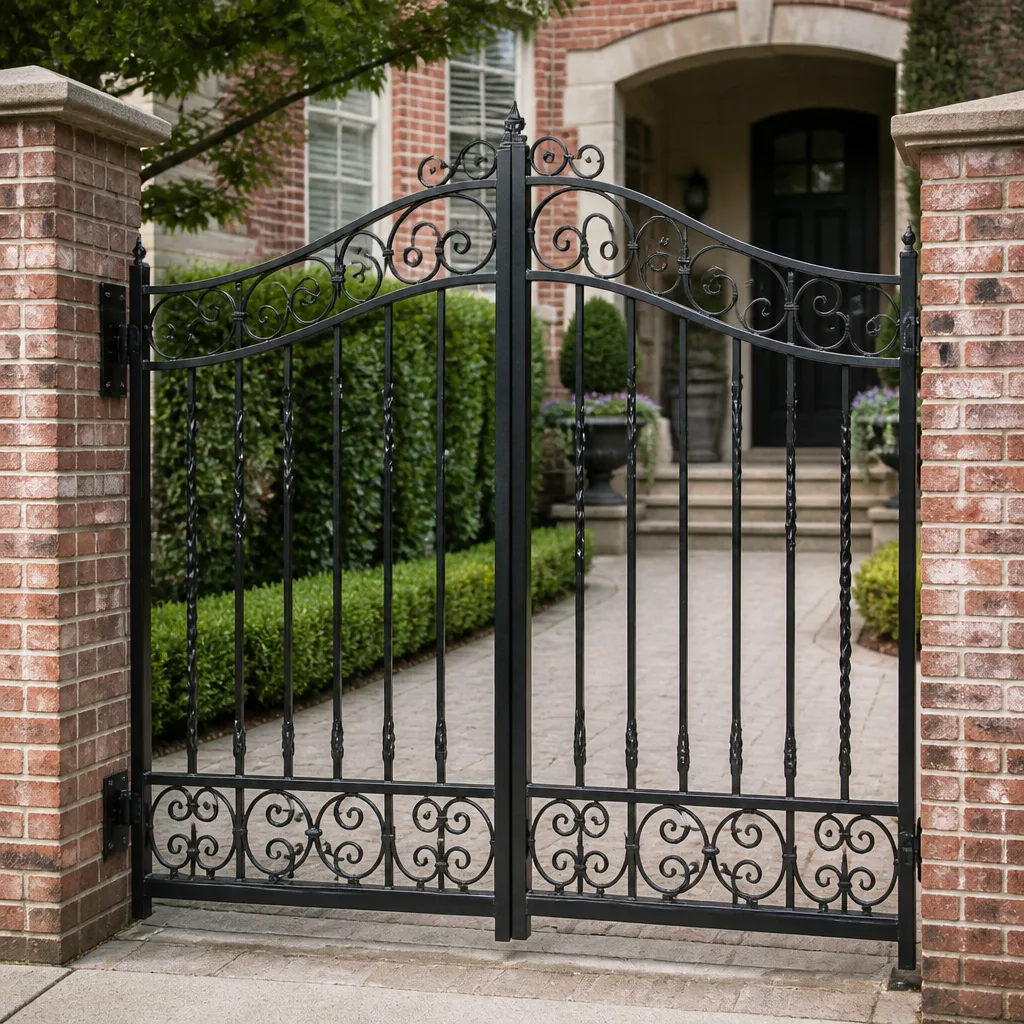 Wrought iron
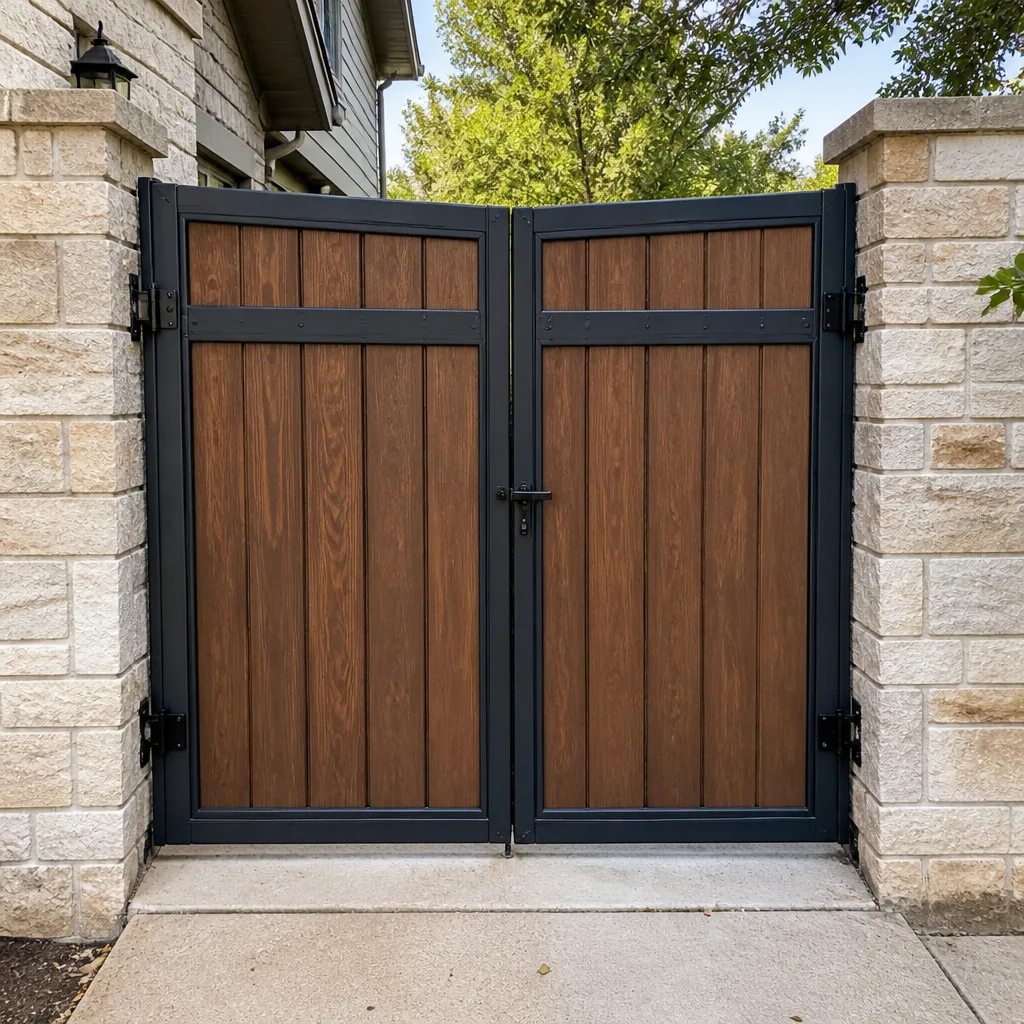 Wood & steel frame
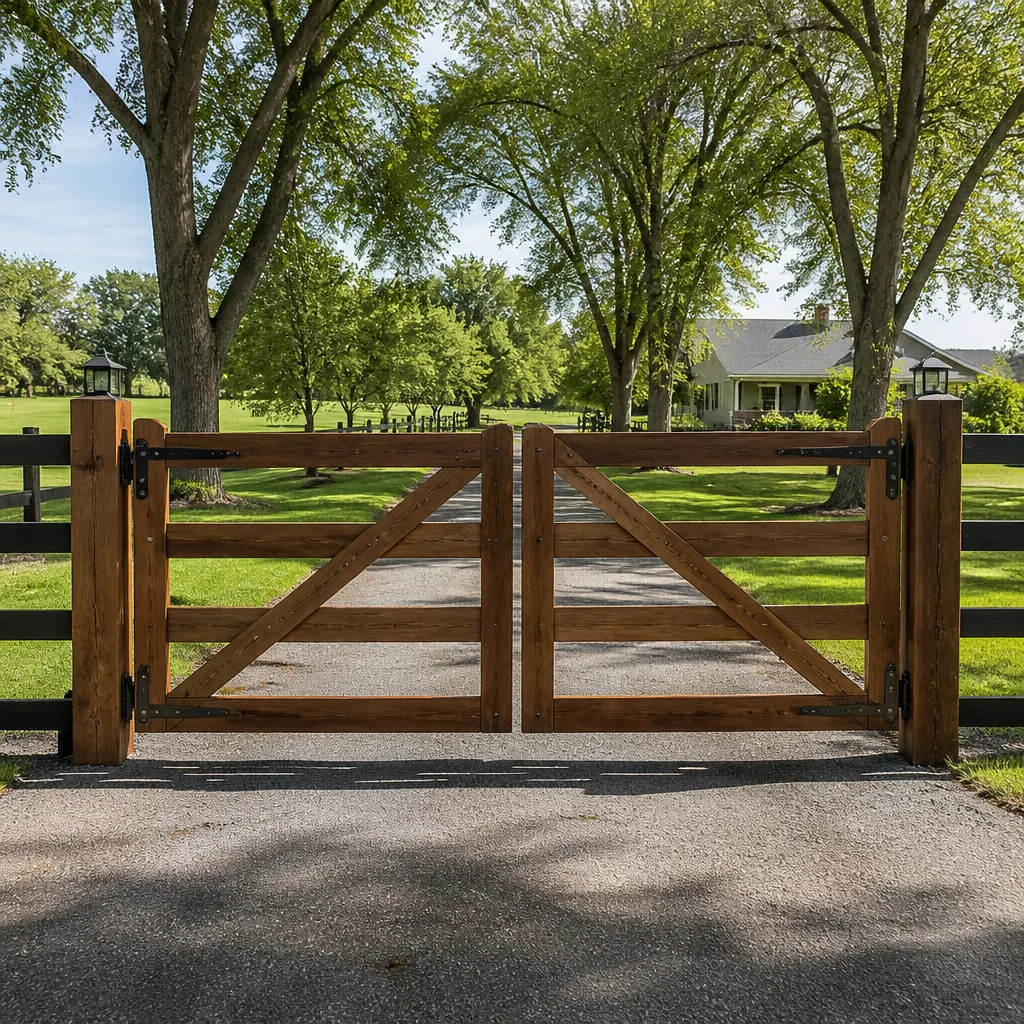 Farm & ranch
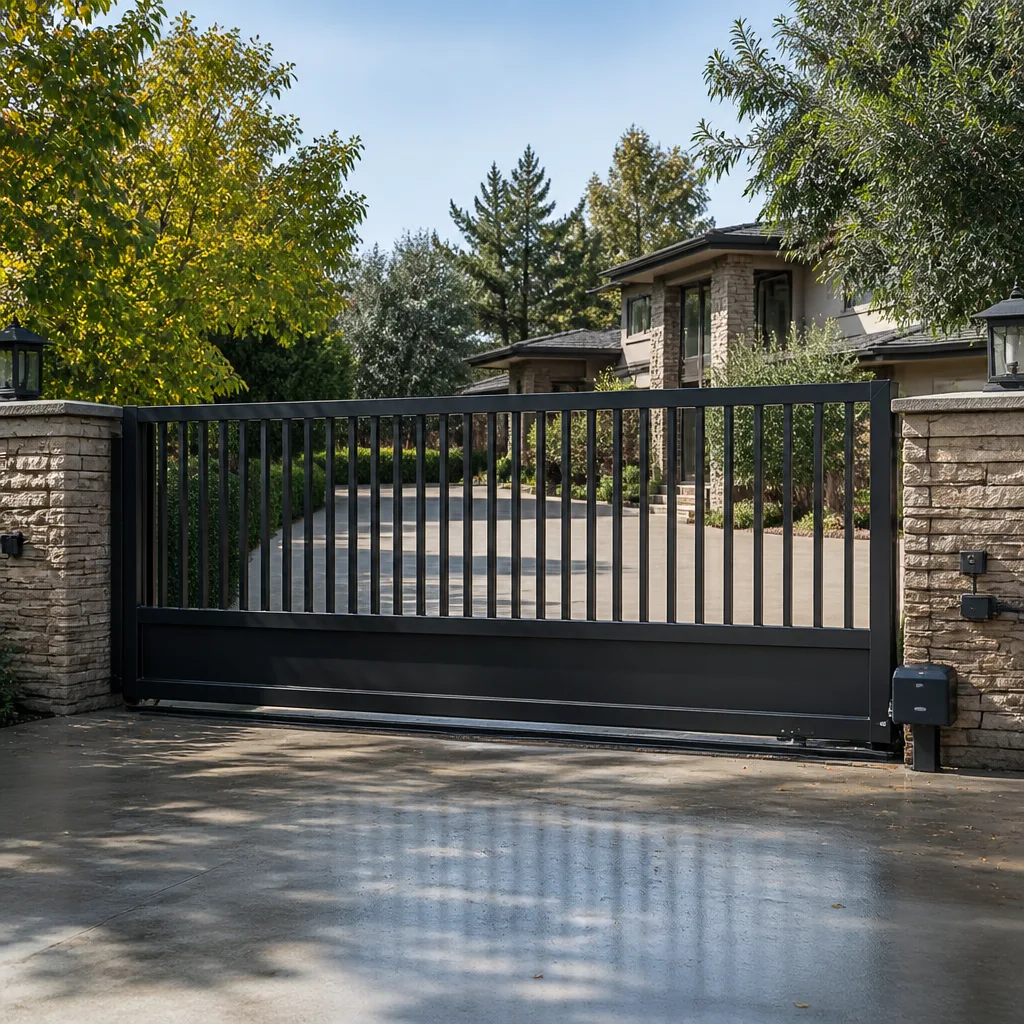 Sliding driveway gates
 LiftMaster operators
Free on-site gate assessment - hinges, posts, and your LiftMaster or Nice gate operator checked before anything is quoted
The assessment is free and the quote is the invoice.
Get your free estimateThe Complete Gate Installation Guide for Summerlin Homeowners
The most expensive gate installation mistake in Summerlin isn’t buying the wrong gate. It’s pouring a post footing before anyone has determined whether the drill is going into caliche hardpan, decomposed granite, or loose fill soil. Those three conditions require different footing depths and anchor methods, and a footing that’s wrong for the substrate will rack out of plumb within a season under a loaded operator. This guide works backward from the ground up: how to read your HOA’s gate specification, how to assess soil before a shovel moves, how to prep electrical during install, and what documentation to demand when the job closes out. If you’re planning a Summerlin gate project, this is the sequence that keeps it from costing twice.
Quick Answer
Gate installation in Summerlin starts with site assessment, not product shopping. Before you choose a gate, confirm your HOA’s written spec (height, setback, finish color, operator placement, intercom), identify your soil type so the footing is sized correctly for caliche or fill, and run conduit for power and future access control during the same trench. A written installation scope should name post depth, operator model, wire gauge, and footing mix. Get all of that in writing before work starts, then collect the as-built wiring diagram and limit-switch readings at completion.
Styles & brands we work with
- Wrought iron
- Wood & steel frame
- Farm & ranch
- Sliding driveway gates
- LiftMaster operators
Table of Contents
- Reading Your Summerlin HOA Gate Specification
- Soil Assessment Before the First Footing
- Footing Specs: Slide Gate vs. Swing Gate
- Electrical Preparation and Conduit Routing
- What a Written Installation Scope Includes
- Matching the Operator to the Gate
- Installation Documentation to Request at Completion
- Common Mistakes to Avoid
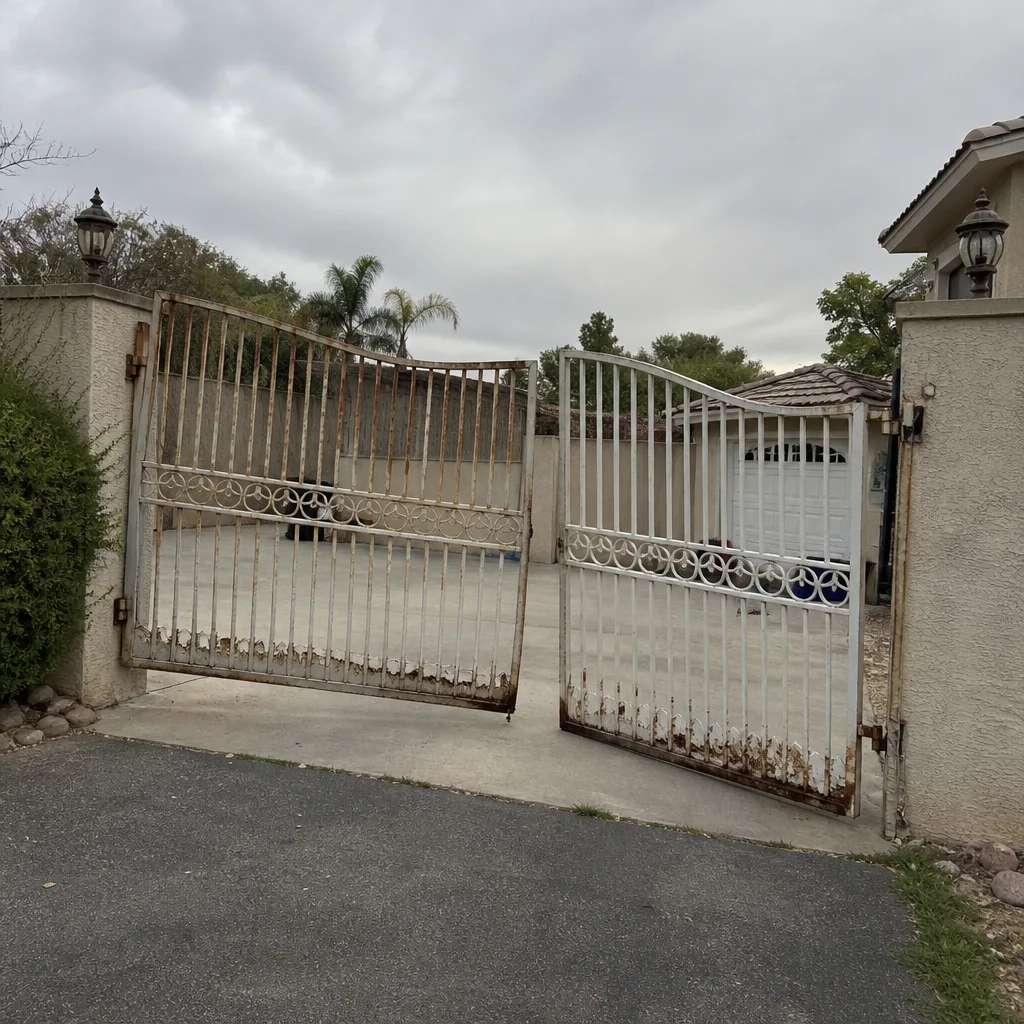 Before
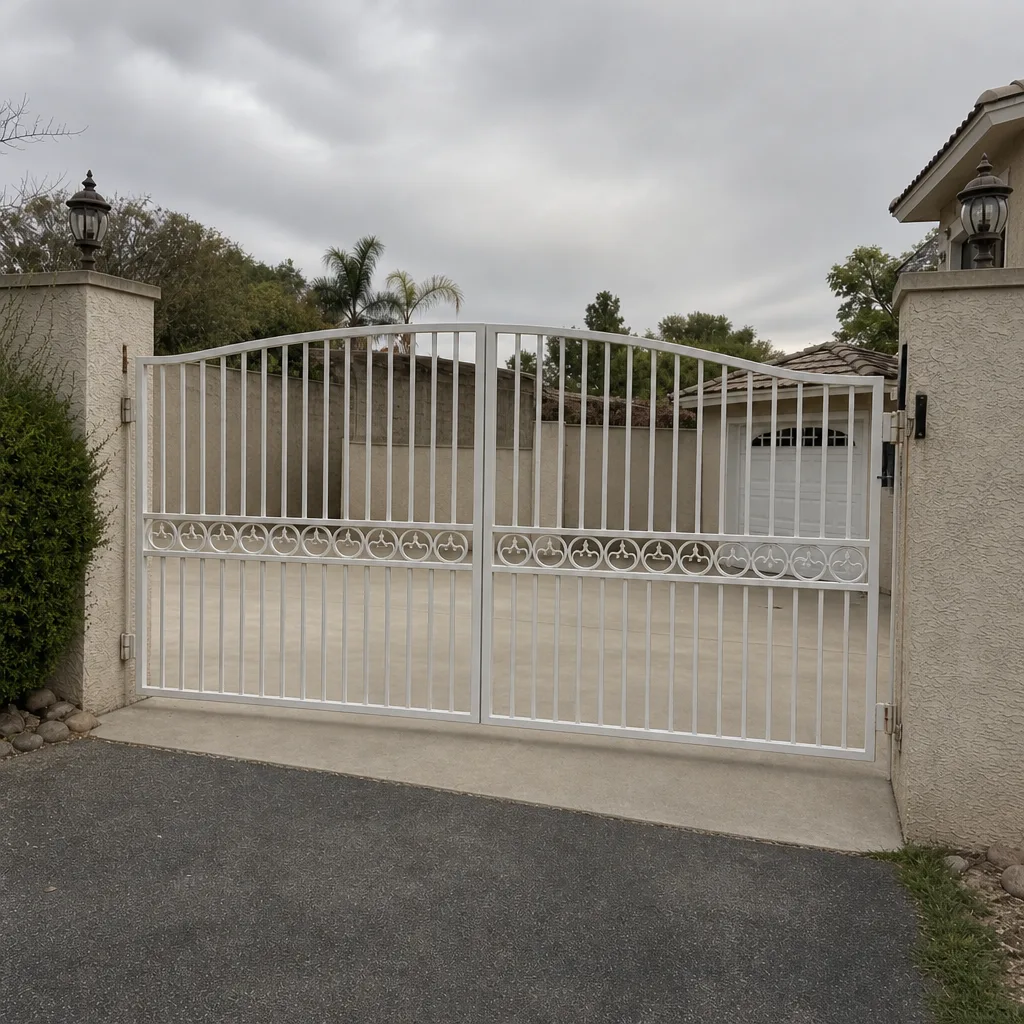 After
Reading Your Summerlin HOA Gate Specification
The gate itself is the last decision, not the first. In Summerlin, most residential communities operate under an architectural review process, and the gate specification document is where the real constraints live. Read it before you price anything, because a spec that rules out your preferred gate design changes the entire budget. We’ve reviewed enough of these documents to know the five line items homeowners most often miss.
- Maximum gate height. Often capped lower than the wall it sits between. A gate that matches the wall height can still be rejected if the spec measures to the top of the pickets, not the frame.
- Required setback from the property line. This governs where posts can legally sit and, on a slide gate, whether the gate can retract without crossing into a neighbor’s easement.
- Approved finish colors. Many Summerlin associations name a specific palette. A custom powder-coat means starting the approval process over.
- Operator placement restrictions. Some specs dictate which side the operator motor can sit on, or require it be screened from street view.
- Required intercom specifications. If the community mandates a specific access-control or visitor-management standard, that determines your wiring plan, not your gate design.
Request the spec in writing from your association and keep the copy. When you get a written estimate, the installer should reference the spec directly. A quote that ignores the setback or finish requirements isn’t a quote; it’s a placeholder. For background on how repair and installation differ in this market, our overview of gate installation in Summerlin covers the approval sequence from the service side.
Soil Assessment Before the First Footing
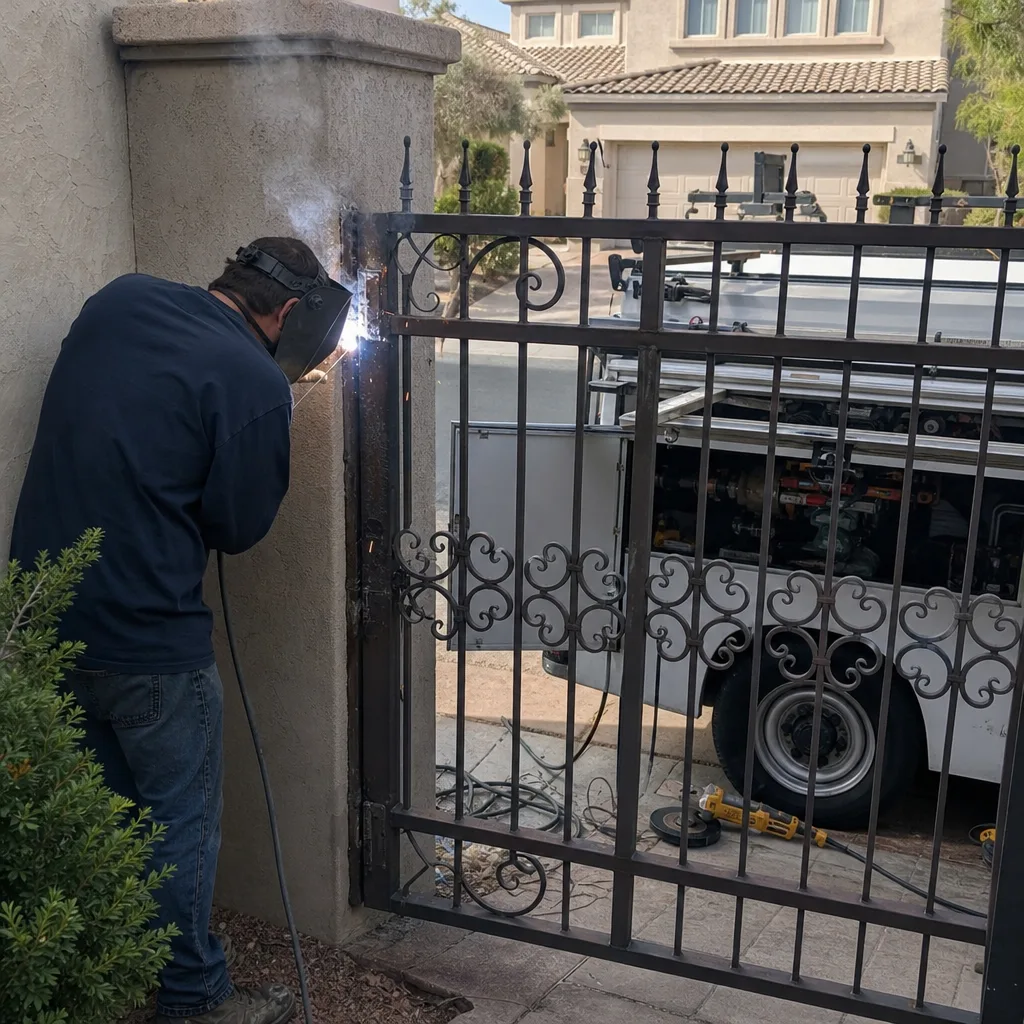
Here’s the detail that separates a gate that stays plumb for years from one that sags by the second summer: what’s under the footing. Summerlin sits on some genuinely difficult ground. Much of the area is underlain by caliche hardpan, a cemented calcium-carbonate layer that behaves almost like low-grade concrete. Digging it is slow work, and boring through it is the only reliable way to set a post that won’t wander.
We’ve seen the three conditions show up across the valley, and each requires a different approach:
- Caliche hardpan. Requires carbide-tipped augers or coring equipment. Footing depth is measured from the top of the caliche layer, not from grade, or the post collar sits above the load-bearing stratum and loosens.
- Decomposed granite. Common on slopes and graded lots. It drains well but shifts. Footings need extra diameter and thorough compaction in lifts, or the post settles unevenly.
- Fill soil. Found on graded pads and newer lots. The least reliable substrate. Fill must be removed to a competent layer or the footing over-built to compensate; pouring concrete into loose fill is how a gate operator ends up fighting a sagging post a year later.
Before any drilling, ask the installer how they’ll identify the substrate at your specific address. A reputable crew probes the hole, notes the depth at which they hit competent material, and photographs the open footing. If that step isn’t in the plan, it’s not in the price. Our team documents this as a matter of course, and our Vance Gate Repair Summerlin home page explains how that documentation habit started in commercial access-control work.
Footing Specs: Slide Gate vs. Swing Gate
A slide gate and a swing gate impose completely different loads on their posts, and a footing sized for one will fail the other. This is where the written scope earns its keep. Get the numbers in writing before the concrete truck arrives.
Slide gates carry the full weight of the gate panel on posts or a track that bear horizontal load as the gate cantilevers open. The posts resist significant lateral force, and the substrate has to hold them against it. Under caliche, that typically means deeper bores through the hardpan with the footing collar anchored into competent material. Under fill, the footing diameter grows to spread the load.
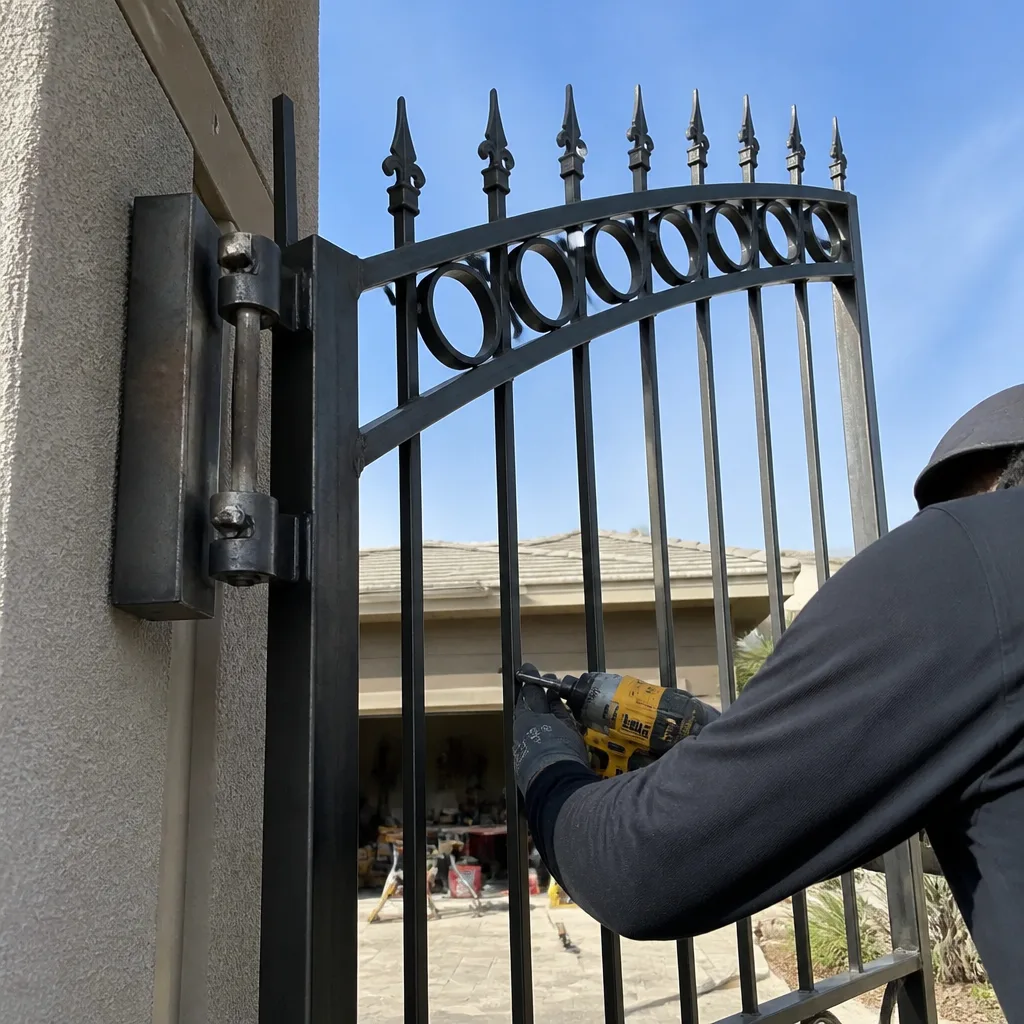
Swing gates place heavy torque on the hinge post, especially where the operator arm pushes from the gate’s own weight distribution. The hinge post is the single most-stressed element in the system, and it has to stay dead plumb because the operator’s geometry depends on it. A hinge post that’s a fraction off plumb translates to a limit switch that trips constantly.
Ask these questions before signing:
- What footing depth and diameter will the hinge or track posts receive, and measured from where?
- What substrate did you identify at the probe, and how does that change the spec?
- What concrete mix and cure time will you use?
- Will you photograph the footing before the pour?
If a crew can’t answer all four, the footing is being guessed. That’s a conversation worth having before work starts. The same discipline applies when we service an existing operator that’s been fighting a bad post; see gate motor & opener in Summerlin for how a misaligned post shows up as an electrical symptom.
Electrical Preparation and Conduit Routing
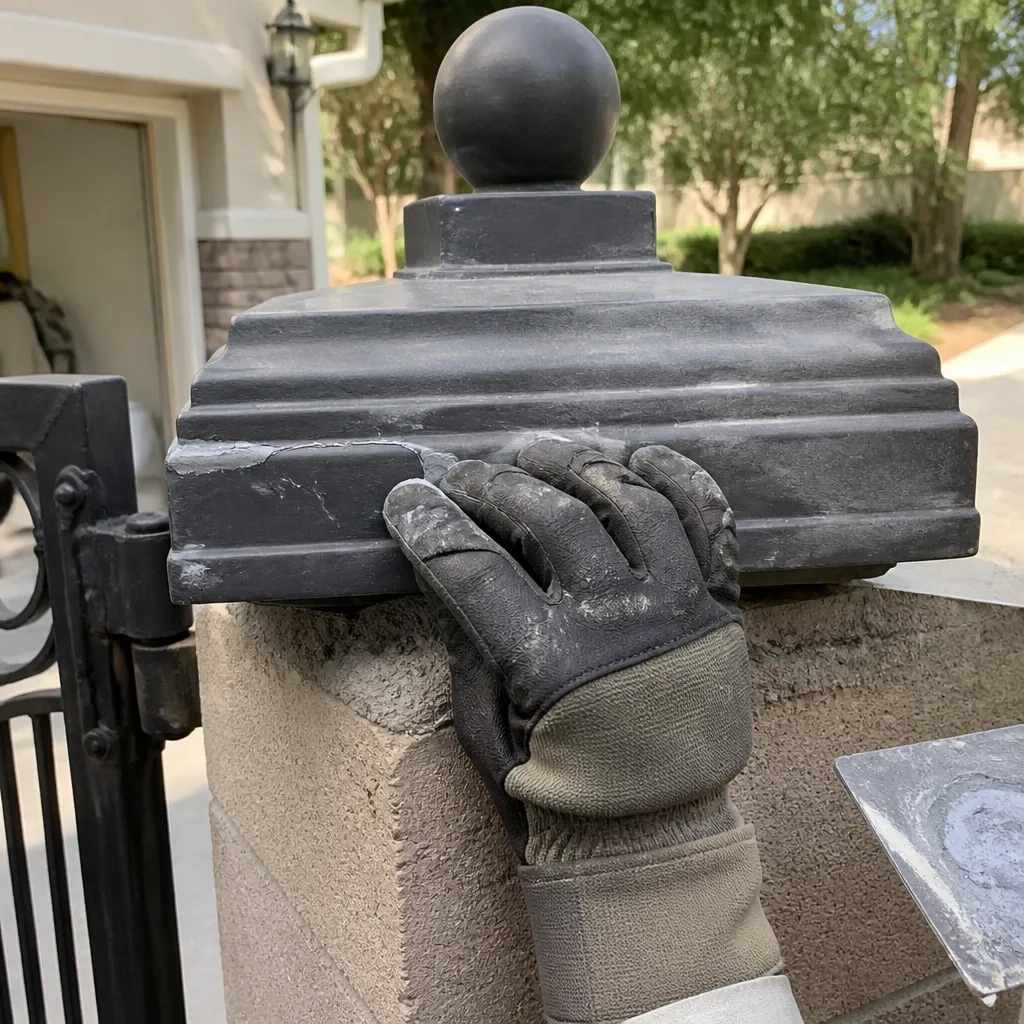
This is the single largest cost lever in a Summerlin gate installation, and most homeowners underestimate it. Running conduit during the initial build is roughly 60% cheaper than trenching it later. The trench is open, the equipment is already on site, and the labor overlaps. Once the gate is in and the driveway is finished, a new conduit run means paying to dig, repair the surface, and re-do the work twice.
So the conduit you bury now should carry everything you might add later, not just the operator power. Route for:
- Power to the operator at the correct wire gauge for the run length, not a lighter gauge that works at the shortest distance.
- Low-voltage control wiring for access control, keypads, and loop detectors, pulled to a junction location that isn’t buried under landscaping.
- A spare conduit for intercom or visitor-management wiring, so it isn’t cut into the finished work later.
- Camera or video feed, if the community spec or your own plan calls for a camera at the gate. Cat6 or coax, depending on the system.
Label every conduit at both ends before backfill. A future technician should be able to open a box and know exactly what each line does without tracing it. That’s the same wiring-diagram habit we apply on every job. Call (844) 797-2809 and a live person answers at any hour if you want to talk through conduit routing before you dig.
What a Written Installation Scope Includes
A written price before work starts is the whole point of doing this right, and it’s what The Haven Standard’s Clause 1 requires on every job. But a price on its own isn’t enough. A real installation scope is a specification document, and it should read like one. If your estimate says “install gate and operator,” you don’t have a scope. You have a wish.
Here’s what a proper written scope names line by line:
- Post depth and footing mix. Exact depth and diameter, measured from competent substrate, plus the concrete mix.
- Operator model number. Not “a slide gate opener” but the specific model, because model determines wiring and programming.
- Wire gauge and conduit routing, with run lengths and where controls terminate.
- Gate panel dimensions and finish. Matched to HOA spec, with the approved color named.
- Access-control components, if any, with model and wiring plan.
- Documentation deliverables. What you’ll receive at completion, spelled out.
The written price should be handed over before any tool is picked up, and the scope should be specific enough that a different technician could pick up the job mid-stream without guessing. That’s the standard, and it’s why our gate repair in Summerlin page treats documentation as a deliverable rather than a courtesy. When a quote is missing the model number and the footing spec, ask for them in writing.
Matching the Operator to the Gate
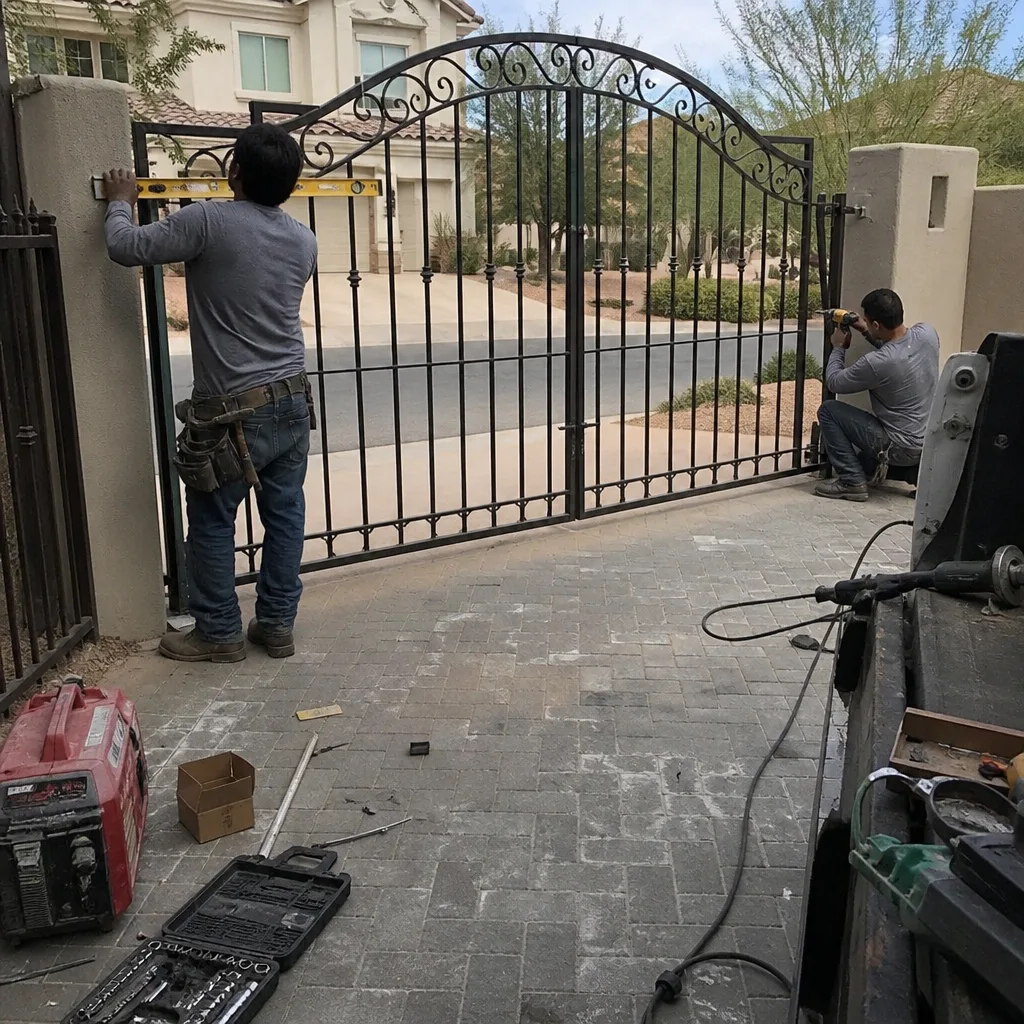
The operator is the mechanism that moves the gate, and the wrong match is the most common cause of premature failure we see on Summerlin installs. A slide gate needs a slide operator; a swing gate needs a swing operator; and within each category, gate weight, length, and frequency of use determine the required duty rating. An undersized operator on a heavy gate wears out fast and trips its limits constantly.
This is also where brand matters, but not in the way most people assume. The goal isn’t a specific brand. It’s an operator matched to your gate and to what’s already on the property if you’re replacing one. We service nine major automation brands, including Ghost Controls, DoorKing, Elite, and Mighty Mule, which means a replacement doesn’t force a full system change to accommodate a single manufacturer’s ecosystem.
A few questions the scope should answer about the operator:
- What is the operator’s model number and its rated capacity for gate weight and length?
- Does the duty cycle match how often the gate will actually open?
- What safety devices does the operator require, and are they included in the scope?
- How will the limit switches be set, and will the settings be recorded?
Safety matters here beyond convenience. Gate operators carry serious force, and photo-eyes (the infrared beams that stop or reverse the gate if something crosses its path) plus edge sensors are what keep a child or a pet from being caught by a moving panel. These are installed as safety equipment, not as optional add-ons, and a scope that omits them is incomplete.
Installation Documentation to Request at Completion
When the job closes out, what you receive in writing is what protects you down the road. This is where most installations simply stop: the gate works, the crew leaves, and no record exists. A year later, a technician arrives to a wiring puzzle with no map. That’s the scenario the right paperwork prevents.
Ask for four deliverables at completion:
- As-built wiring diagram. The installed wiring, end to end, including the extra conduit runs and what each one carries.
- Operator programming sheet. The settings the operator was left in, so a future adjustment starts from a known baseline instead of a guess.
- Photo of the footing before the pour. The record of what depth was actually achieved in the ground, which tells a future technician what they’re working with.
- Limit-switch settings recorded. The exact positions the switches were set to, so a misalignment can be diagnosed without resetting everything.
Under Clause 4 (Evidence on every job), every visit includes a documented photo record at no additional charge. When a gate installer hands over a written record of what was found, what was set, and what was installed, no future technician has to guess, and no homeowner pays twice to rediscover the same problem.
Common Mistakes to Avoid
- Choosing the gate before the spec. Selecting a design, then discovering the HOA caps height or requires a finish color you didn’t account for. Read the spec first, then shop.
- Pouring footings without a soil probe. Drilling into caliche or fill without identifying the substrate means the footing is sized to a guess, and loaded posts don’t forgive guesses.
- Trenching only for the operator. Buried conduit is cheap the first time. Add the spare run and the control wiring now, or pay to dig it up later.
- Accepting a verbal estimate. No written scope means no way to know if the post depth, operator model, and wire gauge were ever specified. Get it in writing before work starts.
- Skipping the intercom and access-control conduit. If the community spec calls for visitor management and the wiring isn’t there, retrofitting means cutting into finished work.
- Leaving the site without documentation. No wiring diagram, no programming sheet, no footing photo. The install works, but the next job pays for the missing record.
- Ignoring operator duty cycle. A motor rated for light use on a gate that opens dozens of times a day will fail early, and the failure will look like a gate problem, not an operator shortfall.
See the difference
BeforeAfter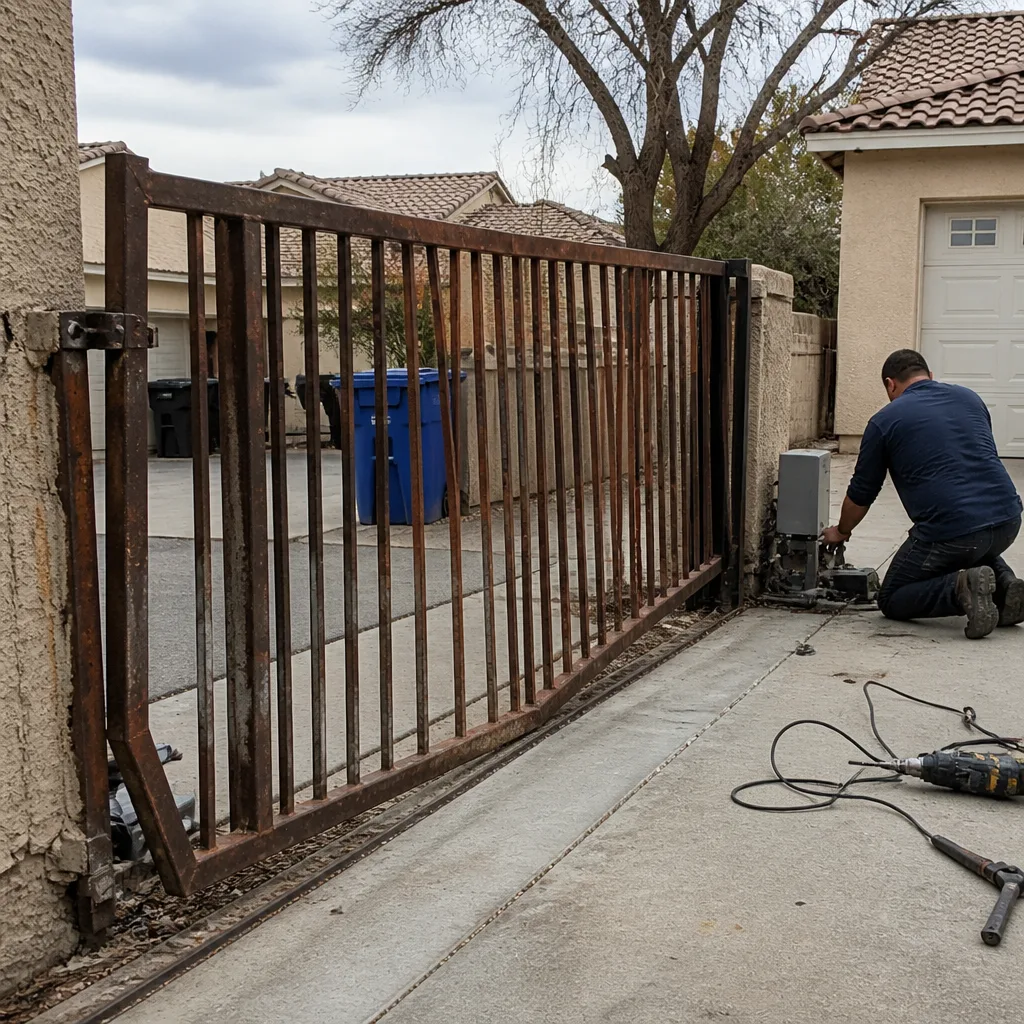 Before
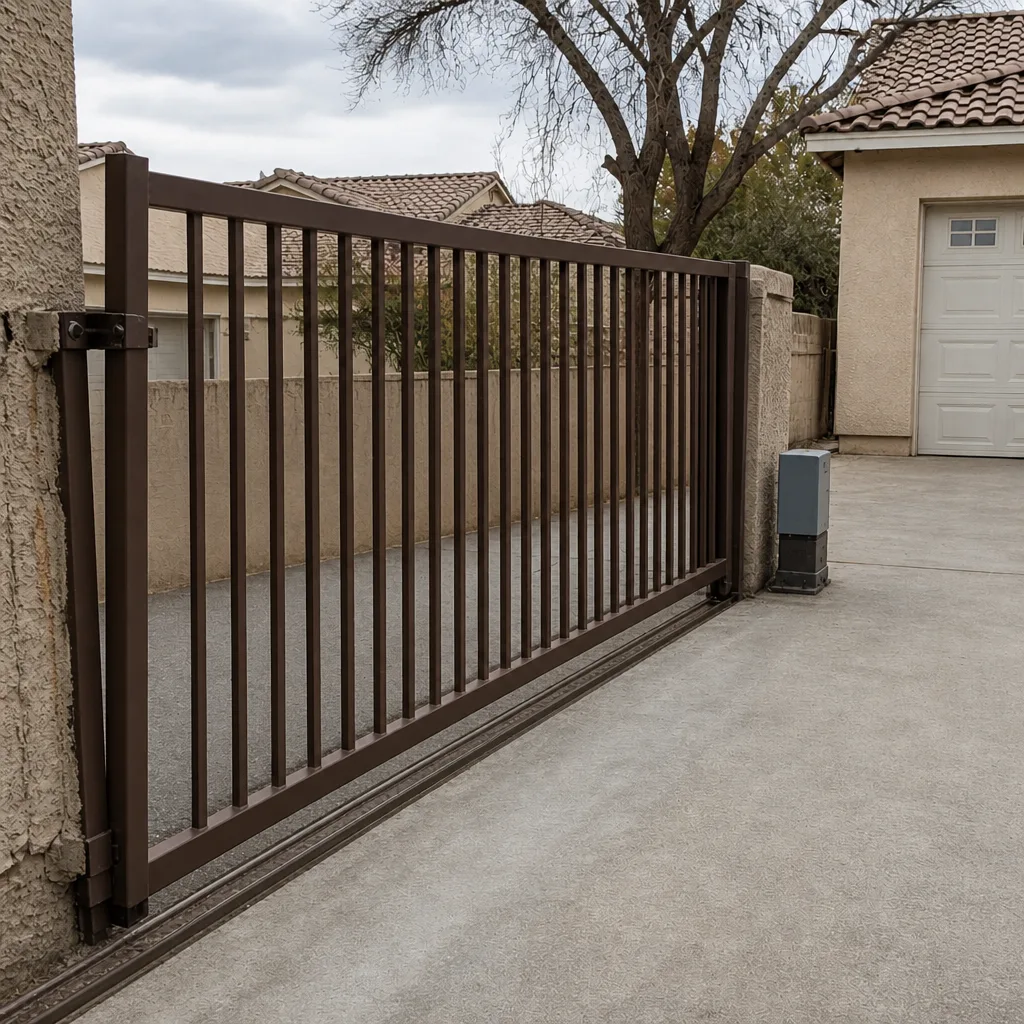 After
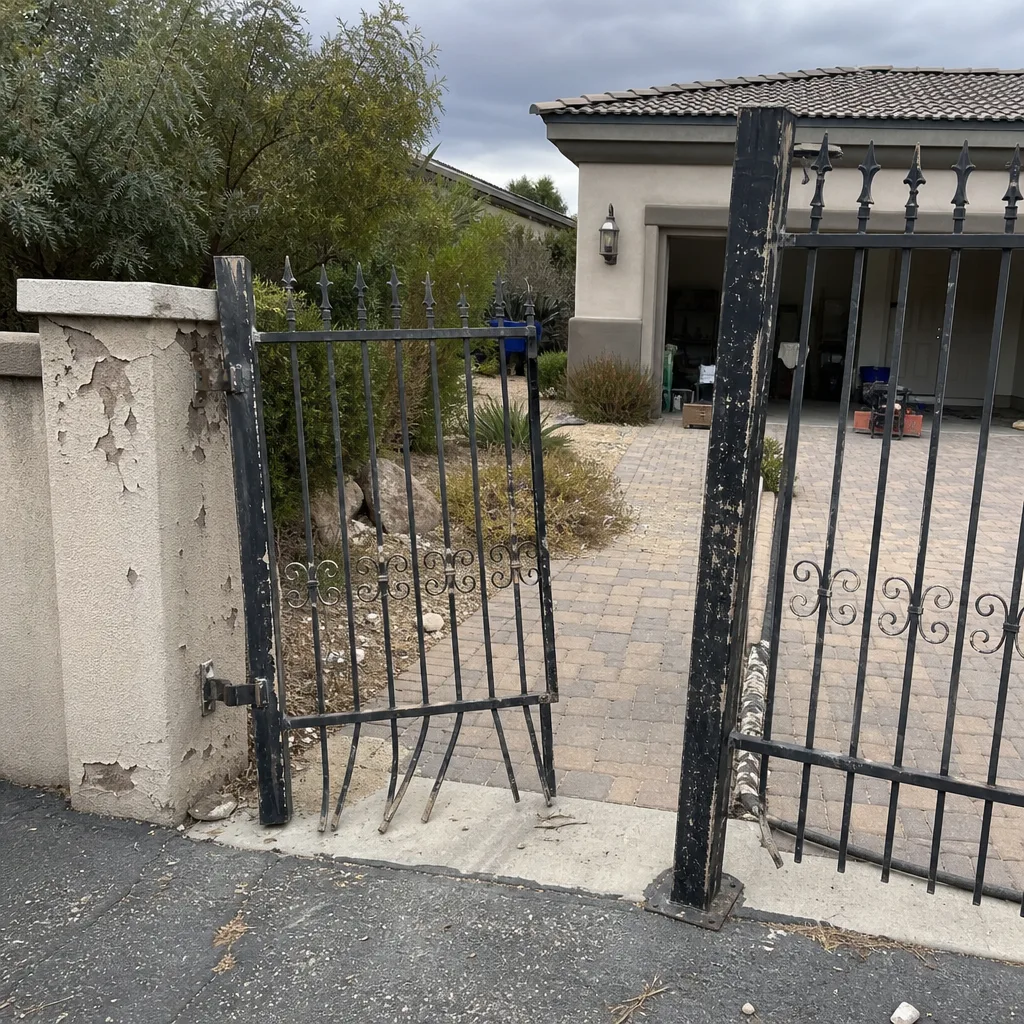 Before
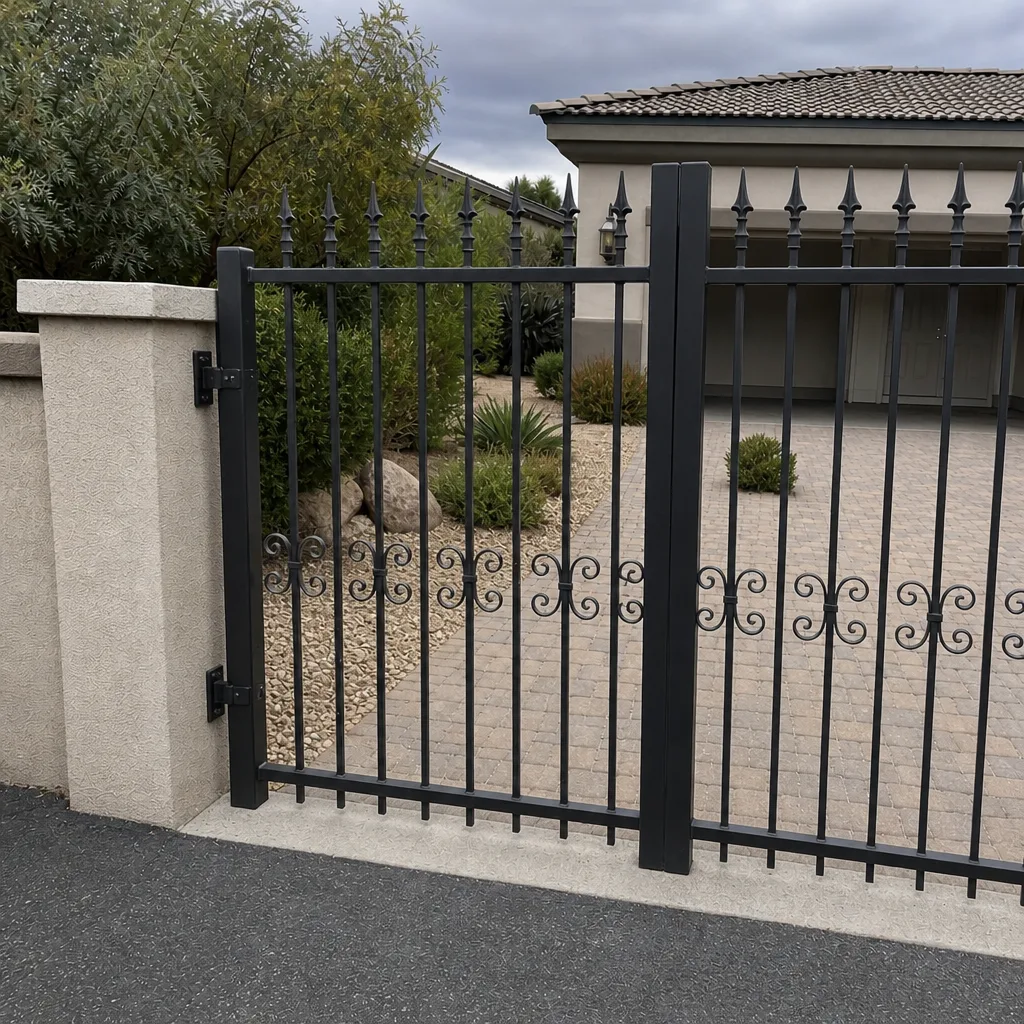 After
When to Call a Professional
Some of this guide is stuff you can check yourself: read the HOA spec, ask for a soil probe, confirm the conduit plan. But certain steps need a trained technician. Any drilling into caliche hardpan, any footing pour under a loaded post, any operator programming, and any wiring tied into the gate’s safety devices should be handled by someone who does this for a living. High-voltage runs and gate operators are both genuinely dangerous components, and a footing that’s under-specified won’t show its weakness until a season of operation has loaded it. If your scope is missing a post depth, a model number, or a wiring plan, that’s the point to get a professional’s eyes on it. Vance Gate Repair Summerlin offers free estimates in Summerlin and a free second opinion on any written estimate from another company, bring the paperwork and it gets reviewed at no cost. Call (844) 797-2809 and a live person answers at any hour.
Frequently Asked Questions
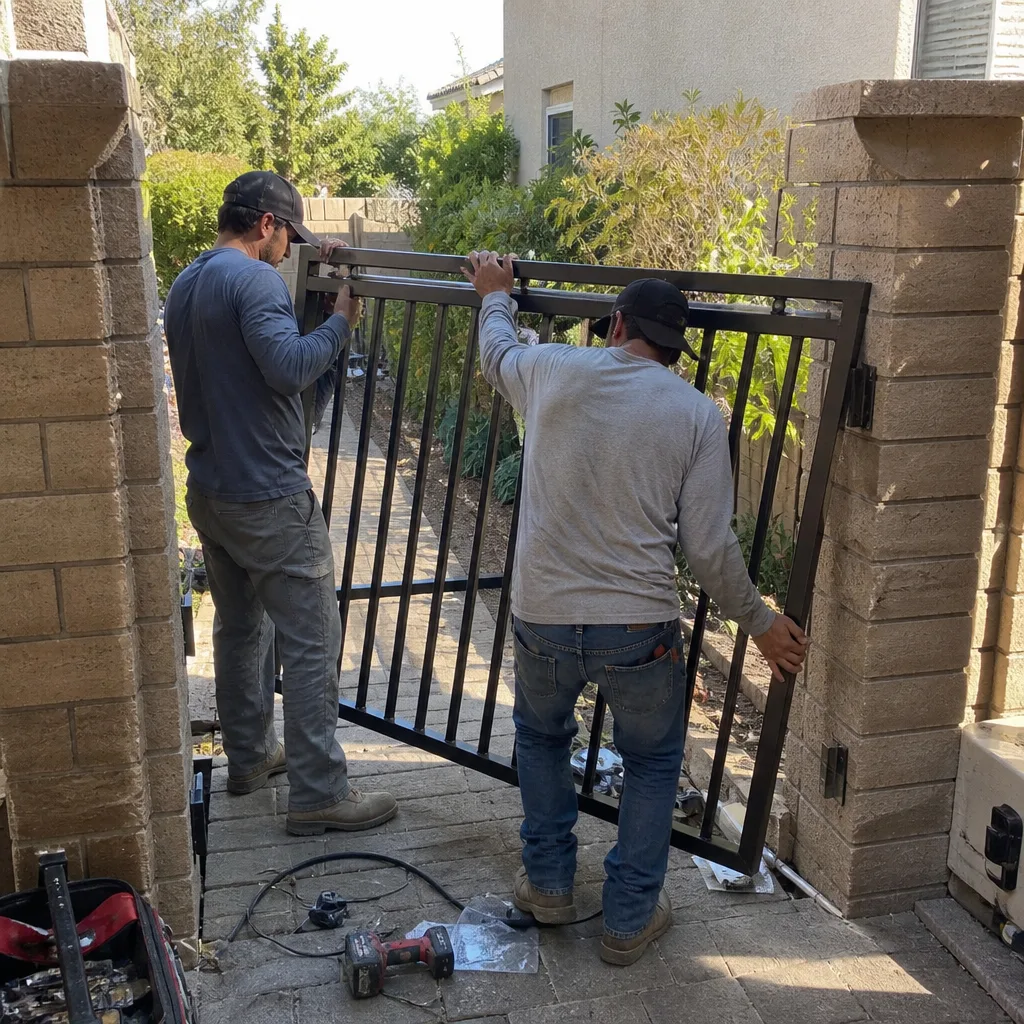
Gate installation in Summerlin depends most on the substrate under the posts and the operator selected, not on the gate panel alone. A project on caliche hardpan with a deep-bore footing and full conduit routing sits at the higher end, while a swing gate on competent ground with simpler electrical sits lower. Because the two biggest cost levers are footing spec and conduit scope, the written scope is what makes the price accurate before work begins. Call (844) 797-2809 for an exact written estimate, and it’s free.
Yes, but it requires the right equipment and the right depth. Caliche behaves almost like low-grade concrete, so boring through it calls for carbide-tipped augers or coring tools, and the footing has to be measured from the top of the caliche layer to anchor the post in load-bearing material. A crew that shows up with a standard post-hole digger and no soil plan won’t get a plumb footing under a loaded operator. Call (844) 797-2809 and we’ll talk through what your site needs before anything gets drilled.
A written installation scope should name post depth and diameter, footing mix, operator model number, wire gauge and conduit routing with run lengths, gate panel dimensions and finish, any access-control components with wiring plan, and the documentation you’ll receive at completion. If the estimate only says “install gate and operator,” it’s missing the numbers that determine whether the job holds up. Ask for the full scope in writing before work starts. Call (844) 797-2809 to request one.
Conduit run during installation is roughly 60% cheaper than trenching it later because the trench is already open and the equipment is already on site. Once the gate and driveway are finished, adding a conduit run means paying to dig, repair the surface, and complete the same labor a second time. Running the spare conduit and the control wiring in the initial trench costs far less than retrofitting it. Call (844) 797-2809 if you want to plan your conduit routing before you dig.
At completion you should receive four things in writing: an as-built wiring diagram showing every run end to end, an operator programming sheet recording the settings the system was left in, a photo of the footing before the pour showing the depth achieved, and the limit-switch positions recorded. Together these let any future technician start from a known baseline instead of guessing, and they prevent paying twice for the same diagnosis. Call (844) 797-2809 to ask what documentation comes with your install.
Yes. The scope should cover the power run to the operator, the low-voltage control wiring, and the safety devices the operator requires: photo-eyes and edge sensors that stop or reverse the gate if something crosses its path. These are installed as safety equipment, not optional add-ons, because a gate operator carries real force and the sensors are what make it safe around children and pets. Call (844) 797-2809 to talk through the electrical and safety plan for your gate.
The Bottom Line
Gate installation in Summerlin succeeds or fails at the site preparation stage. Read your HOA spec before you shop for a gate, probe the soil before you drill, size the footing to the substrate and to whether the gate slides or swings, run the conduit for everything you might add later, and get a written scope that names post depth, operator model, wire gauge, and footing mix. Then collect the documentation at completion so the next person who touches your gate starts from a record instead of a guess. The gate is the visible part. The ground, the electricity, and the paperwork are what keep it working.
Ready to get your project priced in writing before anything starts? Vance Gate Repair Summerlin provides free estimates and a free second opinion on any written estimate from another company. Call (844) 797-2809 and a live person answers at any hour.
Written by the team at Vance Gate Repair Summerlin.