
Last updated November 17, 2026
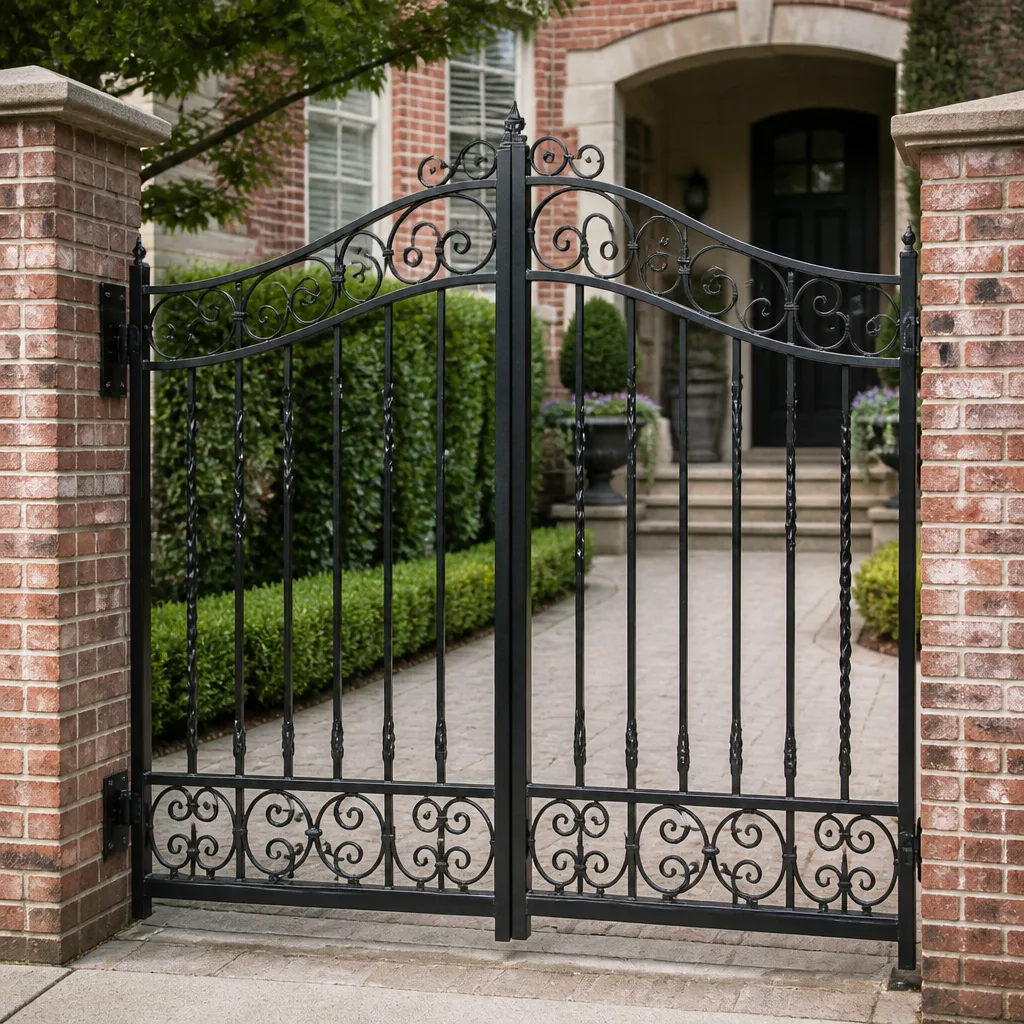 Wrought iron
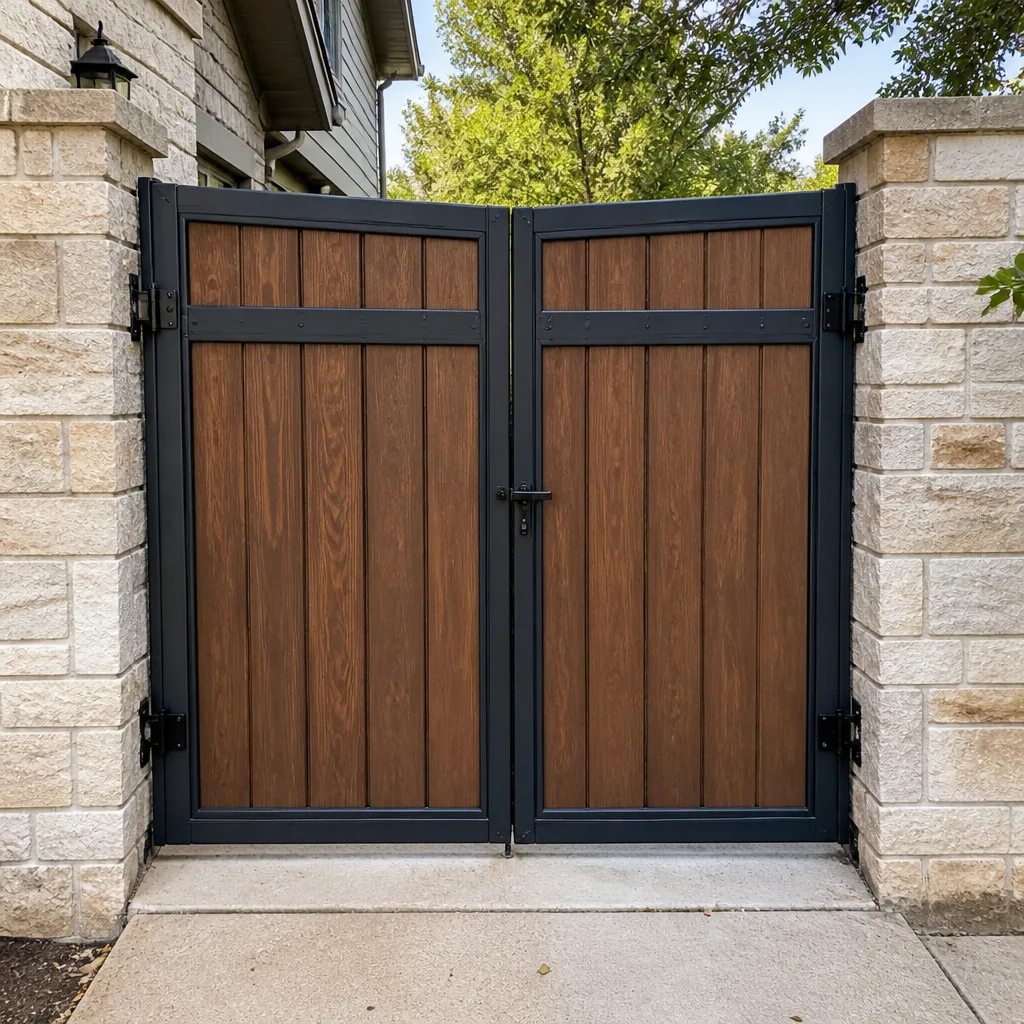 Wood & steel frame
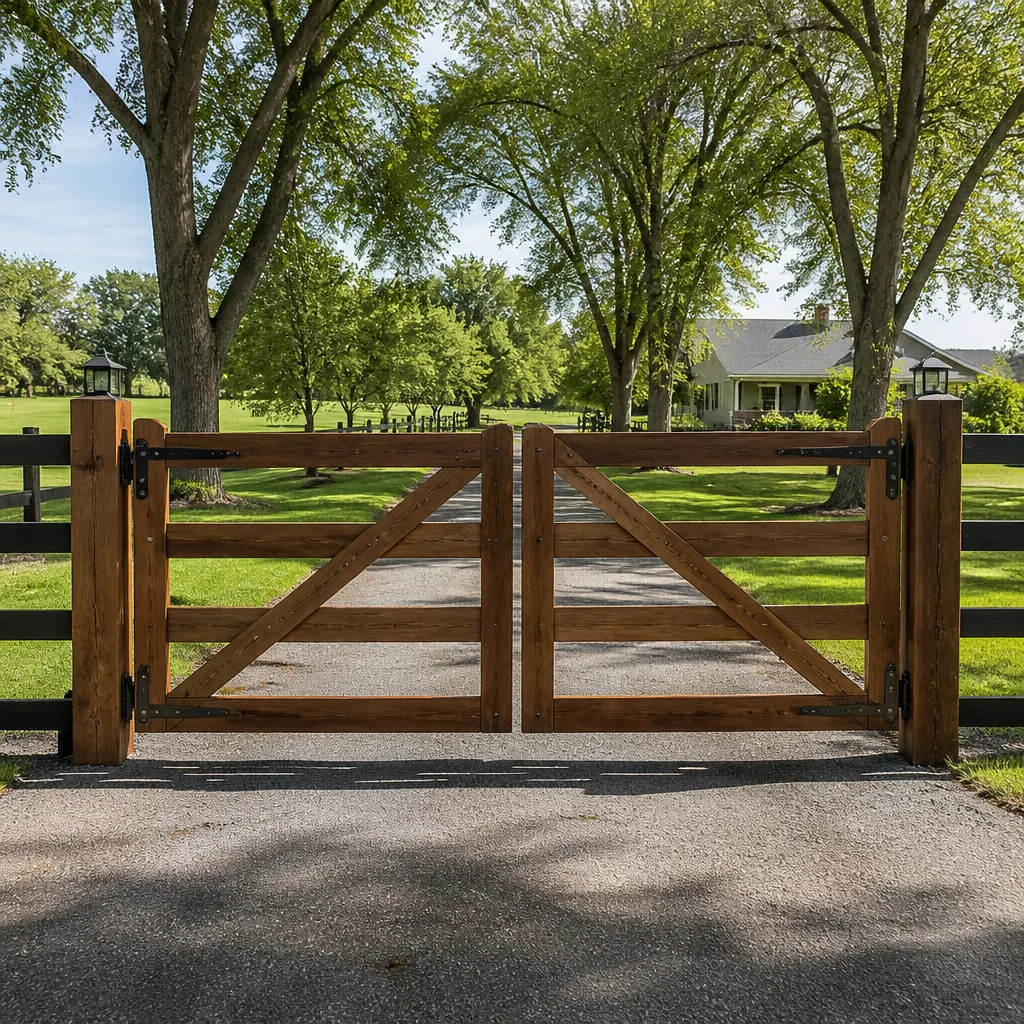 Farm & ranch
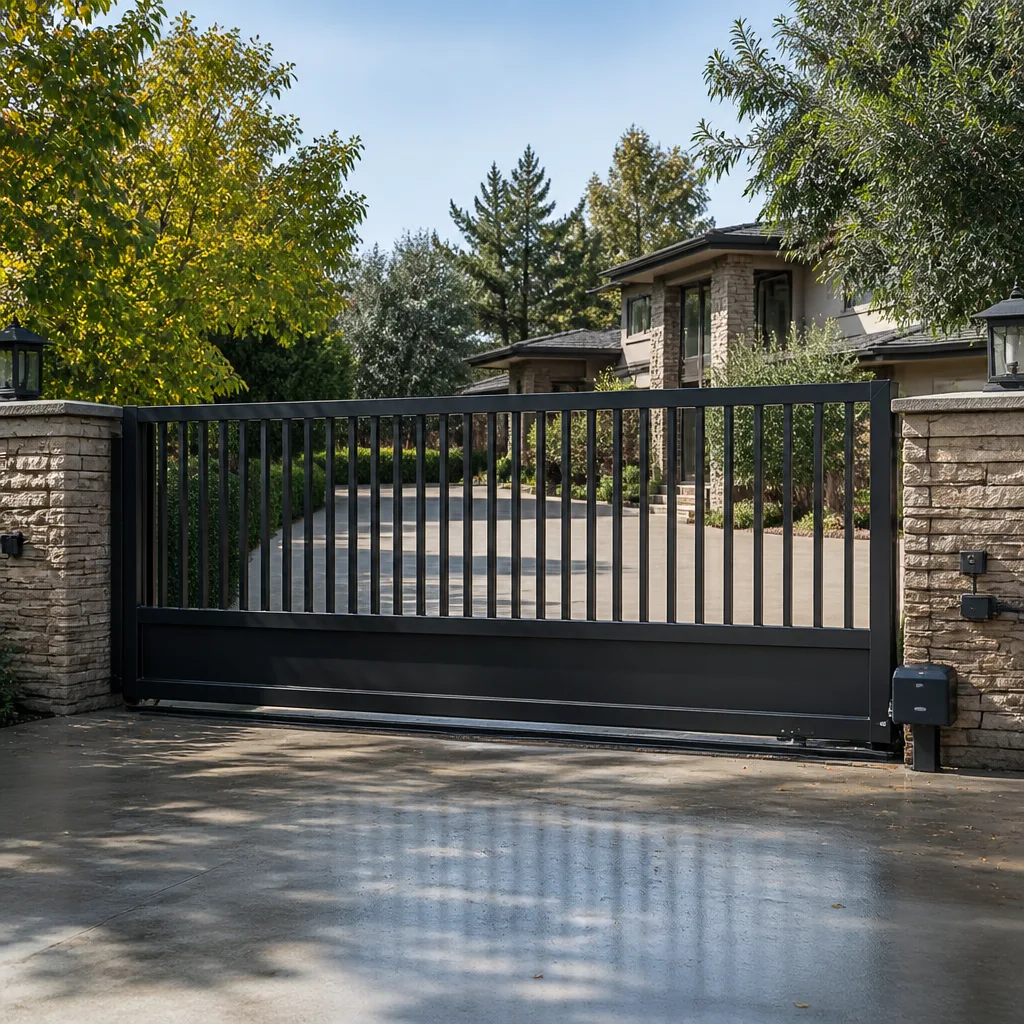 Sliding driveway gates
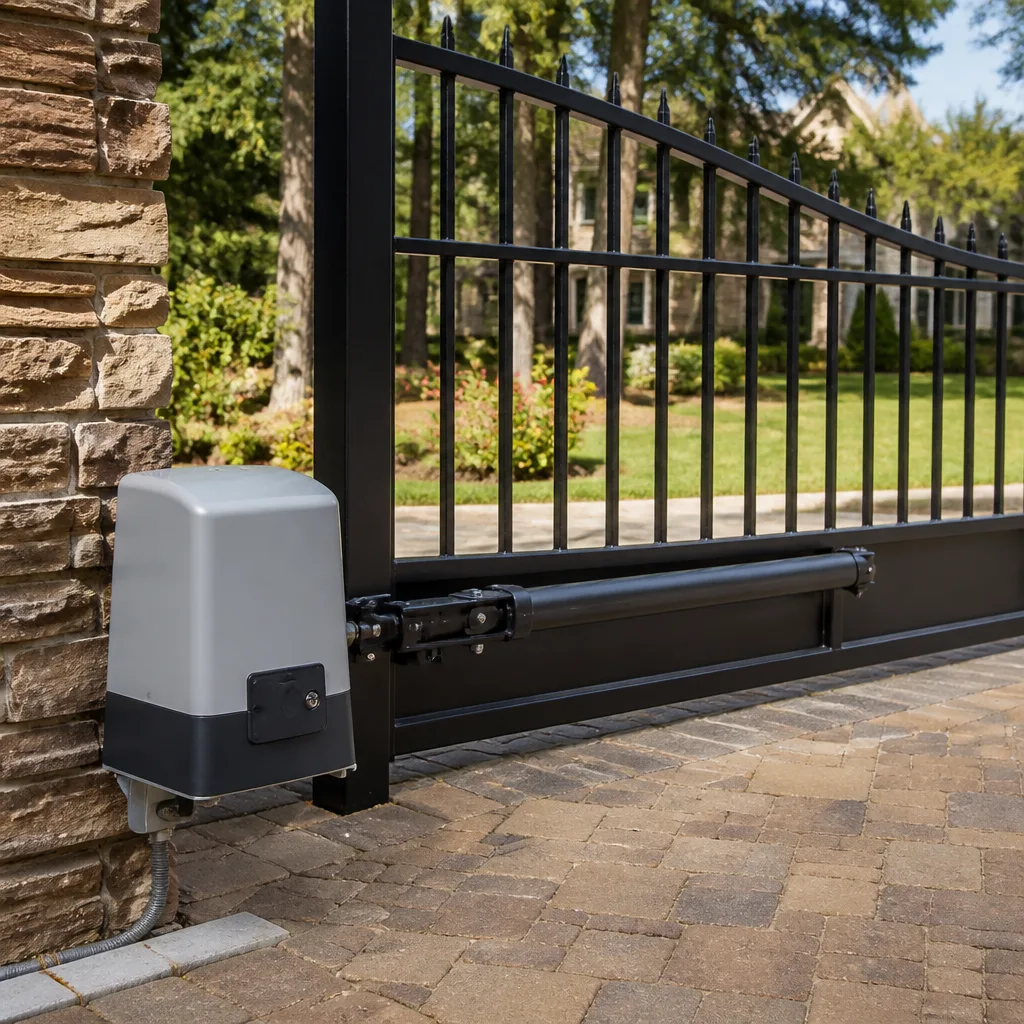 LiftMaster operators
Free on-site gate assessment - hinges, posts, and your LiftMaster or Nice gate operator checked before anything is quoted
The assessment is free and the quote is the invoice.
Get your free estimateGate Repair Warning Signs: A Summerlin Homeowner’s Reference Guide
A gate that hesitates for two seconds before it moves isn’t “warming up.” It’s telling you which component is failing, if you know how to read it. Most gates we look at in Summerlin didn’t die suddenly. They announced the failure for weeks, sometimes months, in a language of small stutters, grinds, and reversals that got written off as normal. This guide pairs each warning sign with the specific part it points to, so you can stop describing a symptom and start reporting evidence. By the end you’ll know what a hesitation means versus a stall, what a weld crack tells you, and how to keep a log that makes a repair faster and cheaper.
Quick Answer
Gate repair warning signs in Summerlin usually show up first as hesitation on open, a brief reversal before the gate travels, grinding at the hinge side, or a gate that opens only partway. Each symptom implicates a different part: hesitation points to the control board or limit switch, reversal points to a photo-eye or safety loop, grinding points to worn hinges or a drive gear, and a partial open points to a travel limit or a failing motor capacitor. Summerlin’s heat and monsoon dust accelerate most of these, and the earlier you catch them, the cheaper the fix.
Styles & brands we work with
- Wrought iron
- Wood & steel frame
- Farm & ranch
- Sliding driveway gates
- LiftMaster operators
Table of Contents
- The Symptom-to-Component Map
- Soft Faults vs. Hard Faults: Why Ignoring Intermittent Problems Costs More
- Visual Warning Signs on the Gate Structure
- Summerlin HOA Gate Systems and Deferred Warnings
- The Four-Field Homeowner Log
- How Summerlin Heat and Monsoon Dust Wear Specific Parts
- A Monthly Ten-Minute Walkaround
- When to Call a Professional
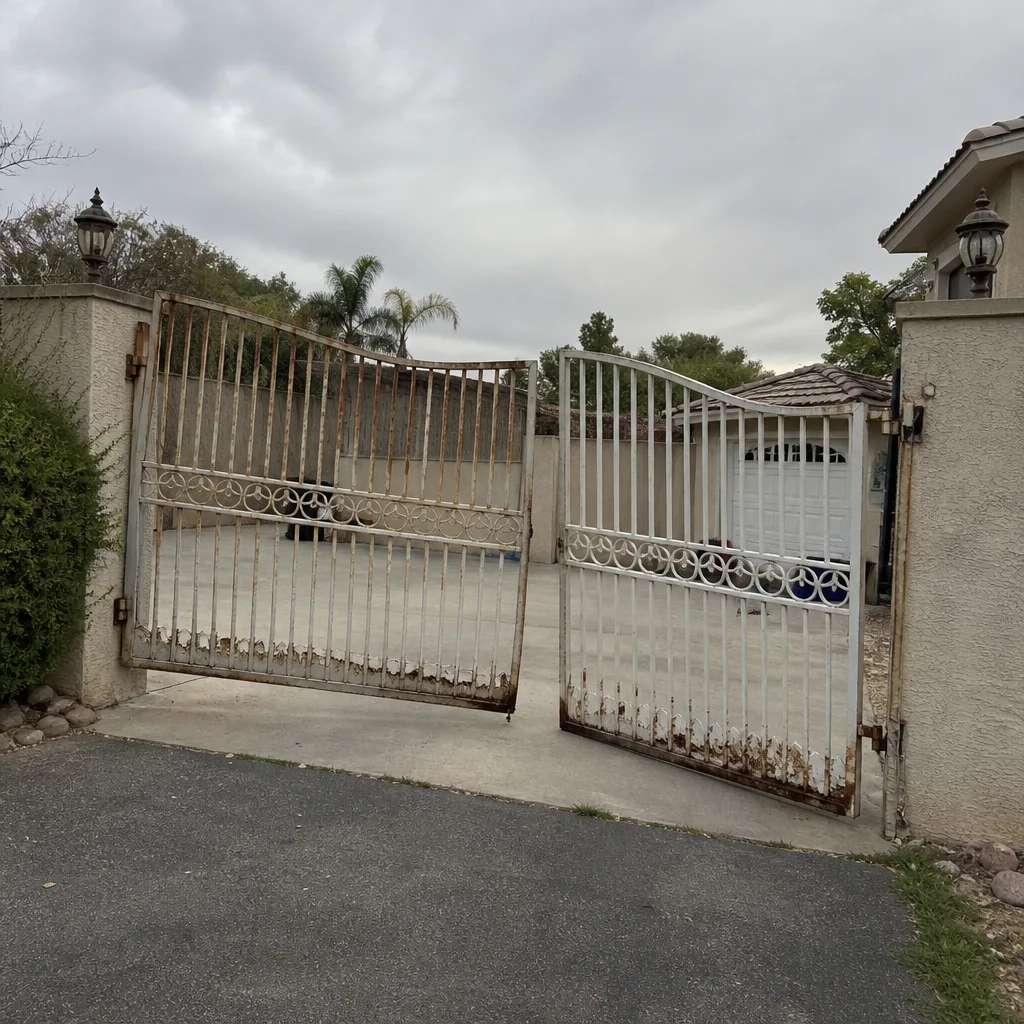 Before
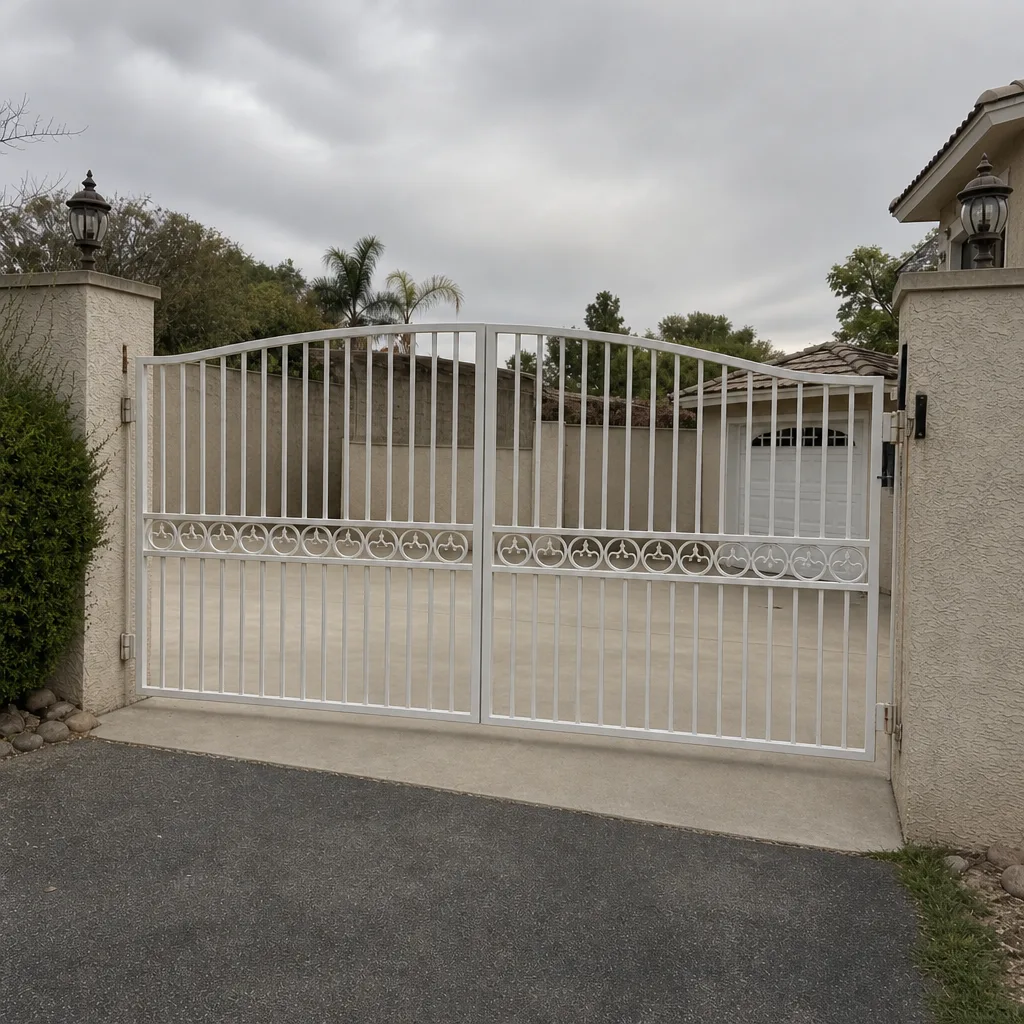 After
The Symptom-to-Component Map
Most homeowners describe what the gate does. A technician needs to know what part made it do that. This map connects the observable behavior to the component it implicates, so your first phone call already has a head start.
- Hesitation before movement (one to three seconds): usually the control board or a limit switch that’s drifting. The board is deciding whether conditions are safe to move; a limit reading that’s slightly off can delay the command.
- Reversal after starting: almost always a photo-eye (the infrared beam across the driveway) or a safety loop in the pavement. Dust, a misaligned lens, or a shifting slab can interrupt the beam.
- Grinding at the hinge side: worn hinge bearings, a dry pivot, or a drive gear losing teeth. On chain-drive operators, a slack or rusty chain adds its own grind.
- Slow travel throughout the cycle: a failing motor capacitor, low voltage at the operator, or a control board that’s limiting speed after detecting resistance.
- Partial open or partial close: a travel limit set wrong, or a motor that’s losing torque as it heats up. In Summerlin, this shows up most on west-facing gates that bake in afternoon sun.
- Clicking but no movement: the control board is receiving the command but the operator isn’t engaging. That’s a motor, capacitor, or clutch issue, not a sensor issue.
Knowing which of these you’re seeing narrows the diagnosis before anyone opens a panel. If you’ve already got a list of symptoms and want the repair itself handled, gate repair in Summerlin covers the on-site work.
Soft Faults vs. Hard Faults: Why Ignoring Intermittent Problems Costs More
A soft fault is intermittent. The gate misbehaves, then clears itself and runs fine for a week. A hard fault is consistent: the gate fails the same way every time. Homeowners tend to relax when a soft fault disappears, but in our experience soft faults are the more expensive ones to ignore.
Here’s why. A soft fault is usually an early-stage failure: a photo-eye that’s partially blocked by dust, a limit switch drifting a few degrees, a capacitor weakening as it heats. The part still works most of the time, so nothing gets fixed. Meanwhile the operator compensates. It pushes harder against a sticking hinge, cycles the motor longer, and stresses the control board. When the fault finally goes hard, you’re often replacing the board and the motor instead of the $40 part that started it.
Hard faults are easier to justify fixing because they’re visible and consistent. The gate stops dead, so you call. The cost is usually predictable and contained. The dangerous middle ground is the soft fault that’s been “fine lately” for three months, because by the time it turns hard, the collateral damage is already done.
Summerlin makes this worse in a specific way. Desert temperature swings between a 105-degree afternoon and a 70-degree night expand and contract metal parts on the gate and inside the operator. A limit switch set at 2 p.m. can read differently at 6 a.m. That’s why so many soft faults here show up only in the morning or only in late afternoon. Note the time of day in your log; it narrows the diagnosis fast.
Visual Warning Signs on the Gate Structure
Some warnings don’t make noise. They show up in the metal, the concrete, and the posts, and they’re visible from the driveway if you know where to look. These are the structural signs that a gate is heading for a failure a motor can’t fix.
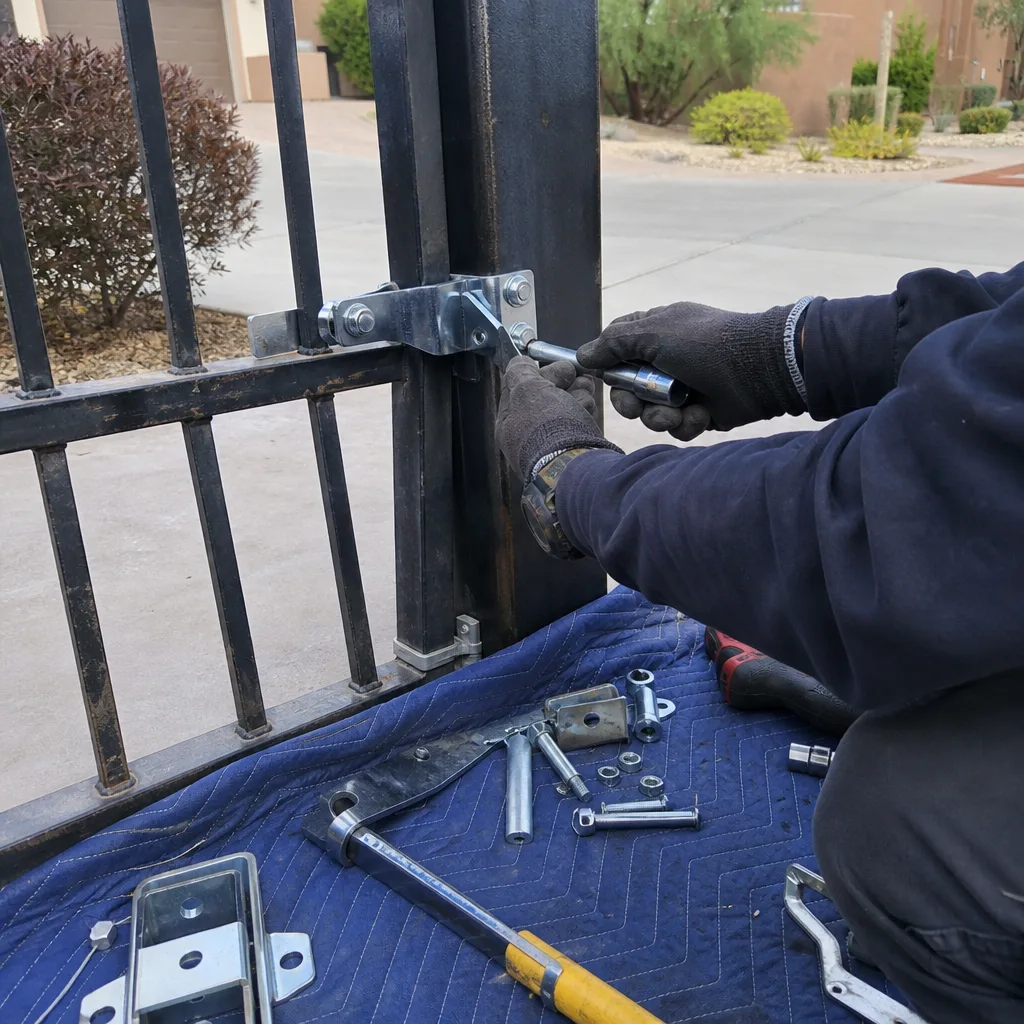
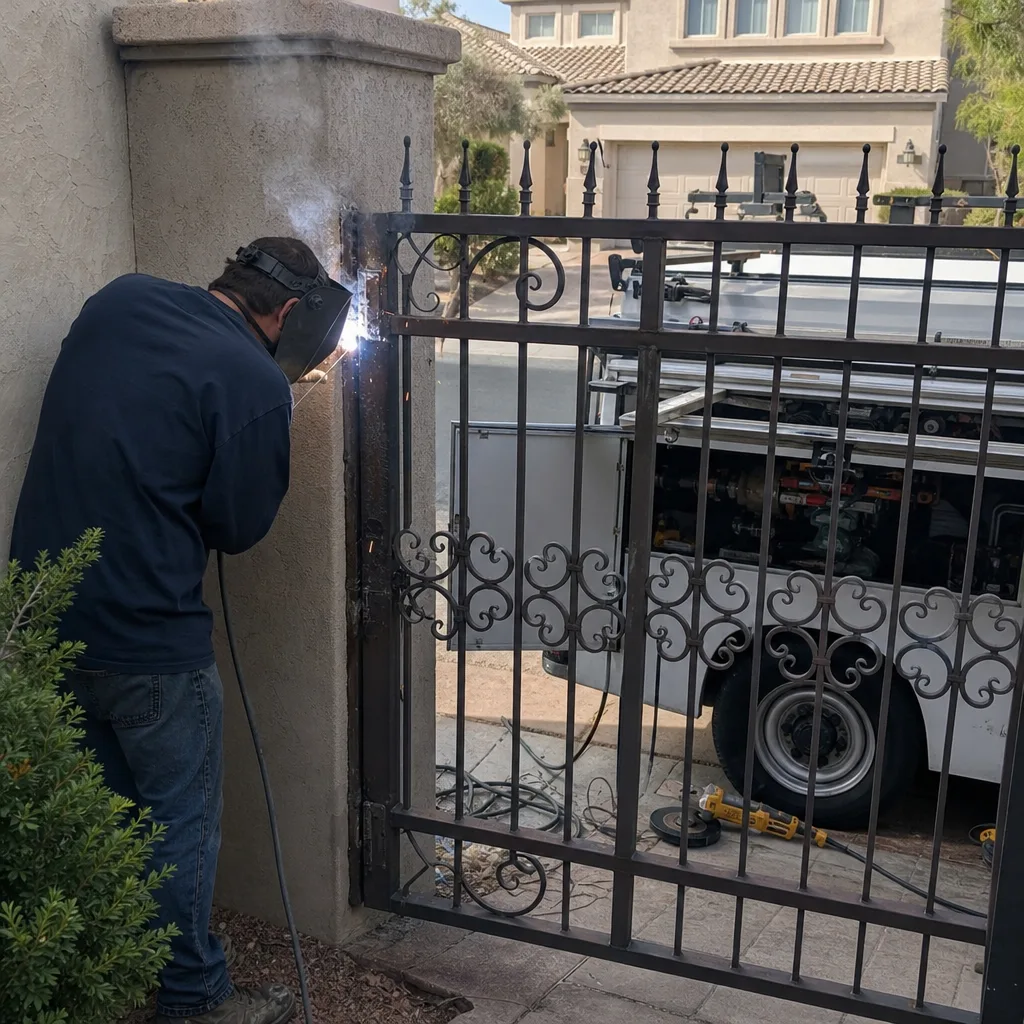
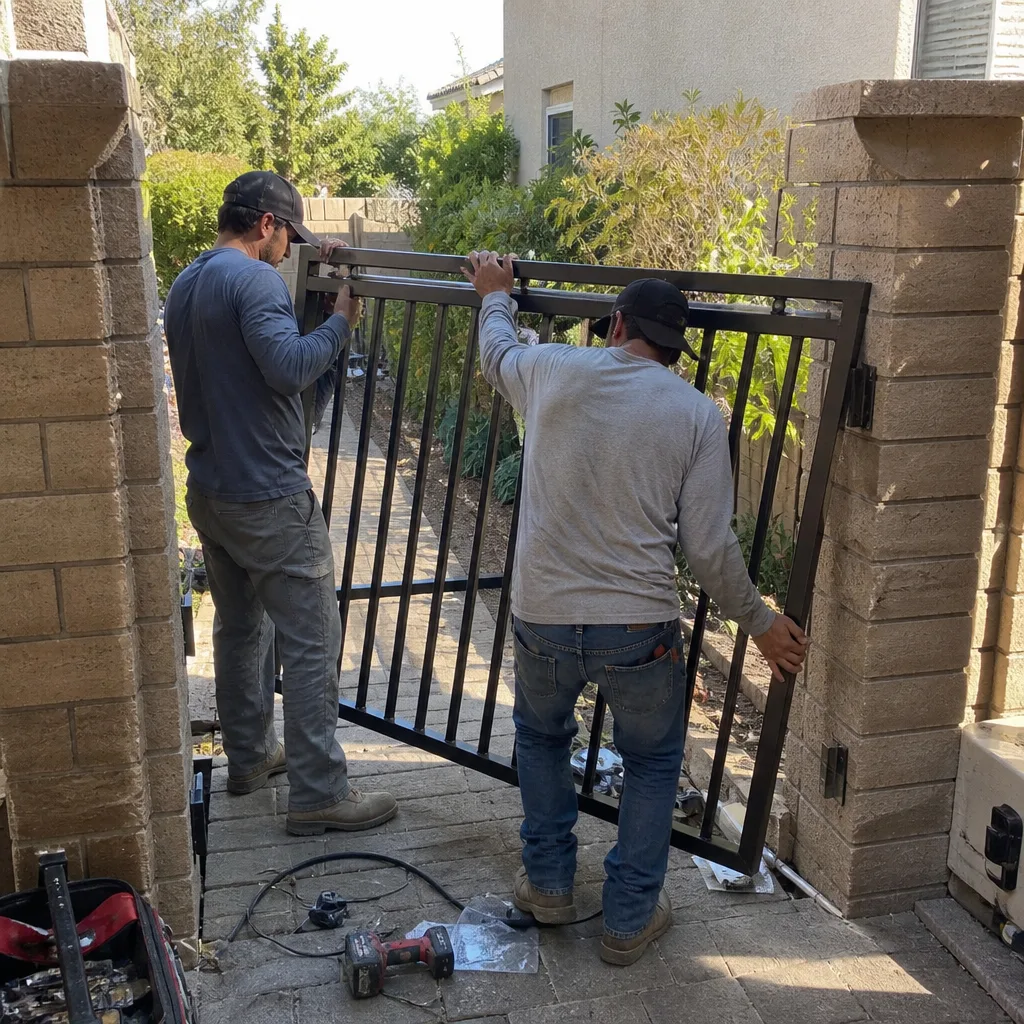
Weld cracks at the hinge plates
Look closely at where the hinge arms meet the gate frame. A hairline crack in the weld, often running diagonally from the corner of the plate, is the classic sign of fatigue from thousands of open-and-close cycles. Cracks like this don’t heal. They propagate until the hinge tears free, and a gate that’s hanging on one hinge is a gate that’s about to fall.
Post lean
Stand at the end of the driveway and sight down the gate line. If the hinge post leans even a degree or two out of plumb, the gate is fighting gravity on every cycle. Post lean is common in Summerlin where irrigation runoff softens the soil around a footing. A five-dollar magnetic level held against the post tells you in seconds whether the lean is real.
Concrete spalling at the base
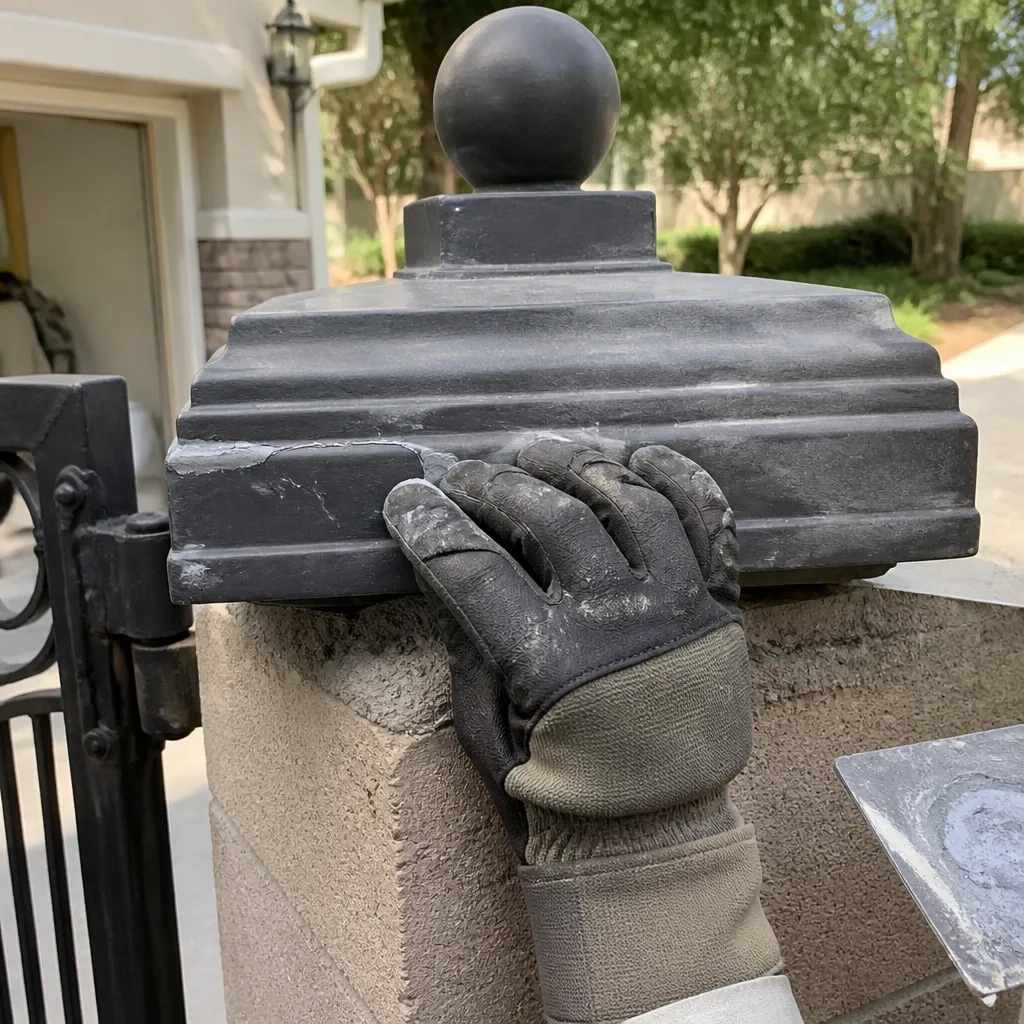
Chunks flaking off the footing, a visible gap where the post meets concrete, or rust stains bleeding from the base all point to water intrusion and footing movement. Spalling is the concrete telling you the post has been shifting. That shift eventually shows up as a gate that drags or binds.
Rust trails and paint bubbles
Rust bleeding from a weld or a bolt head means moisture is getting inside the joint. Paint bubbling over a hinge is the same story. These are early enough to fix cheaply, before the metal pits and the joint fails.
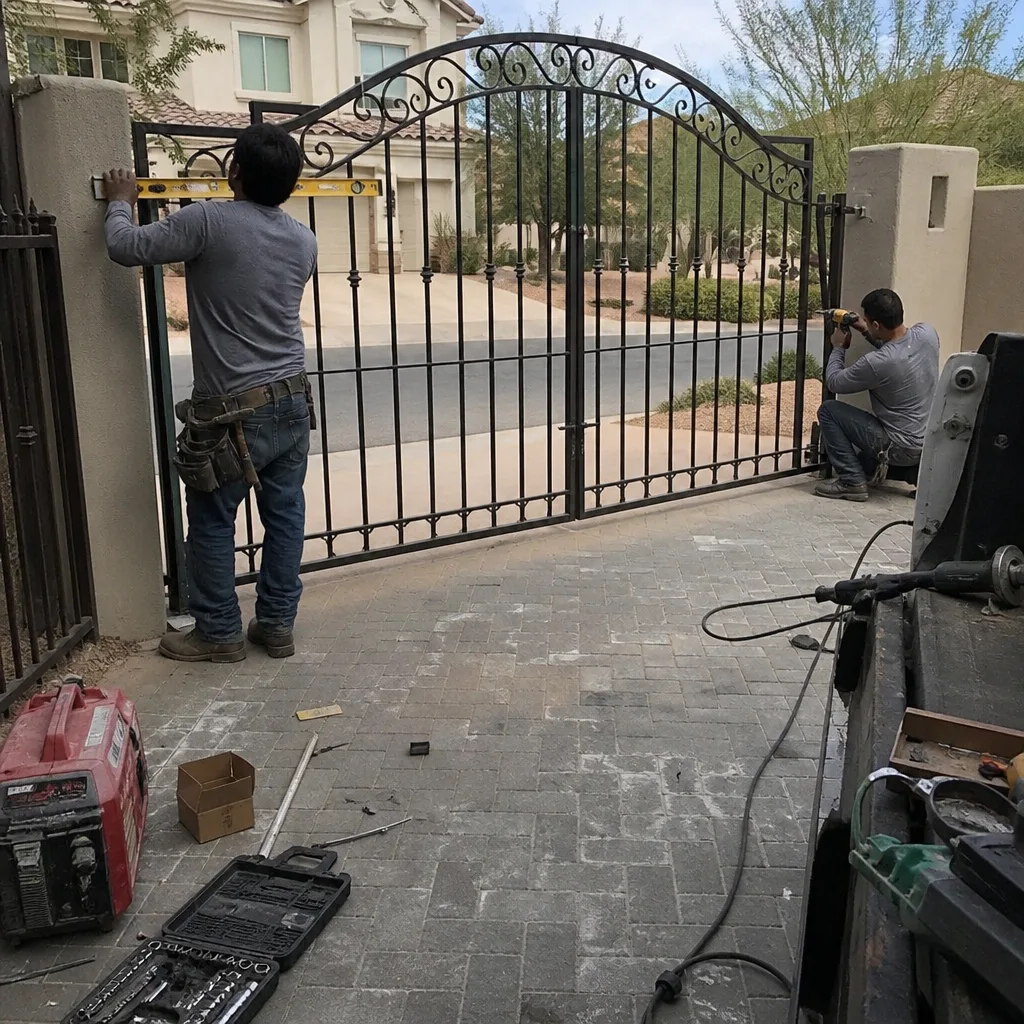
Structural repair, welding, and parts work is its own service, and it’s covered under gate installation in Summerlin for replacement work and under our repair service for welding and hinge rebuilds.
Summerlin HOA Gate Systems and Deferred Warnings
Many Summerlin neighborhoods have HOA-controlled community gates, and a lot of residents assume the association is watching them. That assumption is usually wrong. HOA gate systems often run on a maintenance schedule that’s driven by complaints, not by inspection. A gate can grind for six months before enough residents call in that it climbs the work order list.
The gap between “the HOA owns it” and “the HOA is monitoring it” is where small faults become expensive ones. We’ve looked at community gates where a limit switch had been drifting for a full season, because nobody reported the hesitation and the association’s vendor wasn’t scheduled to be on site. By the time the gate stopped, the operator had cycled thousands of times against a fault it couldn’t resolve.
If you live behind a shared gate, here’s what’s worth doing:
- Report visible symptoms to your HOA in writing, with the date and time you observed them. A written report creates a record the board has to act on.
- Note whether the behavior is constant or intermittent, and at what time of day. This helps the association’s vendor arrive prepared.
- If the gate is on your own property, the responsibility is yours regardless of what the community gate does. Don’t let a community-gate habit of waiting override your own maintenance.
- Ask your HOA board when the gate was last serviced and what was documented. A board that can’t answer that question is a board running on reactive maintenance.
The same principle applies to individual driveway gates in guard-gated Summerlin communities. The gate is your asset, and the warning signs are yours to catch.
The Four-Field Homeowner Log
The single most useful thing you can do before calling anyone is keep a log. A vague complaint like “the gate is acting up” turns a fifteen-minute diagnosis into an hour of guessing. Four fields fix that: date, observed behavior, duration, and weather conditions. Nothing more.
- Date: when you saw it. Time of day matters too, since heat-related faults cluster in the afternoon and sensor faults can cluster in the morning.
- Observed behavior: describe exactly what happened. “Gate hesitated two seconds before opening” beats “gate slow.” “Gate reversed halfway and re-opened” beats “gate weird.”
- Duration: how long it lasted, and whether it repeated. “Hesitated once, then ran fine for a week” tells a very different story than “hesitates every time now.”
- Weather conditions: temperature, wind, and whether it rained recently. Summerlin monsoon storms blow dust and debris into photo-eyes and safety loops, and a fault that appears after a storm usually points straight at the sensor path.
Four fields, a notebook or a note on your phone, thirty seconds per entry. When a technician arrives with that log, the diagnosis often starts at the likely component instead of at the beginning. That saves you time and usually money, because the technician isn’t charging to rediscover what you already observed.
This is also the habit behind the gate motor and opener work in Summerlin. When you can tell a technician the exact behavior and when it started, the motor, control board, and limit-switch checks go faster and the written price lands closer to the final invoice.
How Summerlin Heat and Monsoon Dust Wear Specific Parts
Summerlin’s climate puts a specific wear pattern on gate systems that cooler climates don’t see. Knowing which parts take the beating helps you watch the right ones.
- Motor capacitors: heat shortens capacitor life. A weakened capacitor shows up first as slow travel on hot afternoons, then as a gate that won’t start once the operator is heat-soaked.
- Photo-eyes and safety loops: dust and monsoon debris coat the lenses and can shift the loop in the pavement. Both cause phantom reversals, which owners often mistake for a motor problem.
- Hinges and pivot points: desert dust works into bearings and grinds them down. A hinge that squeals in July is a hinge that’s already losing metal.
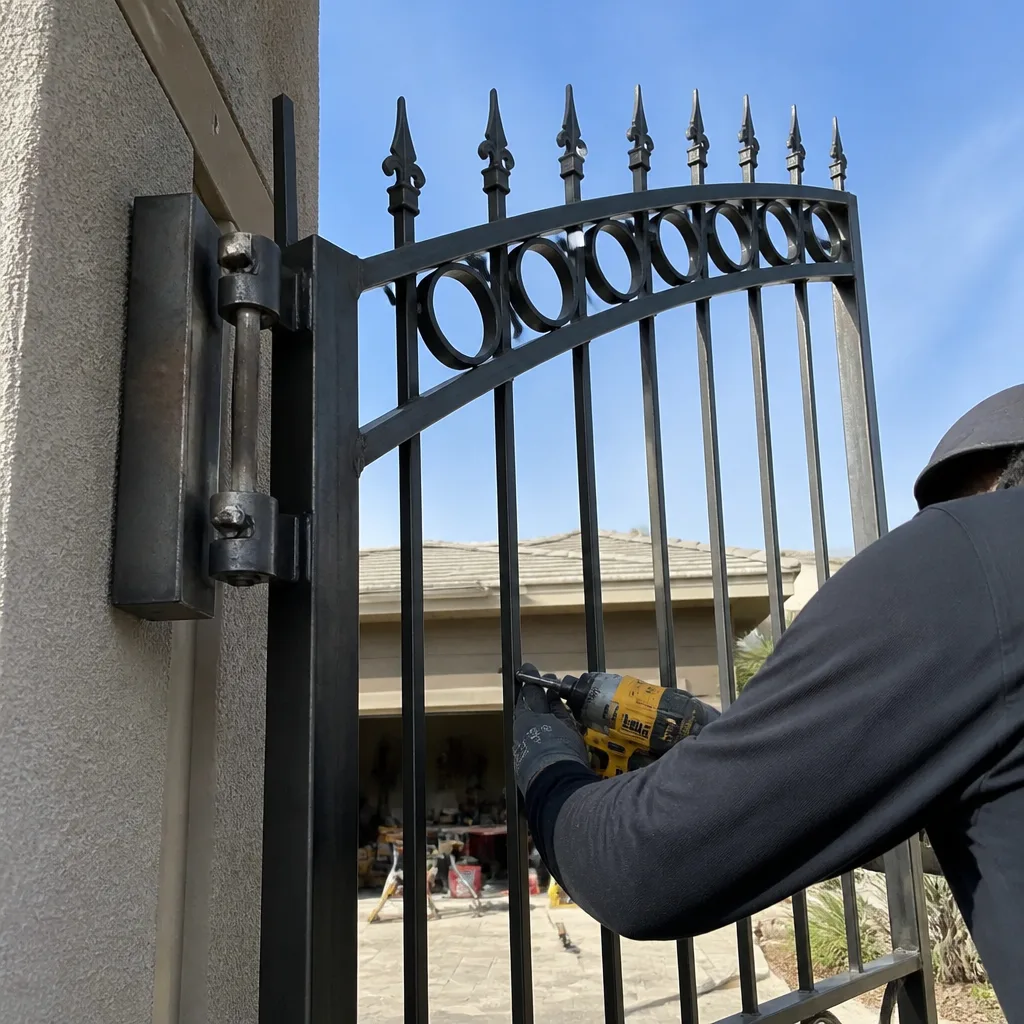
- Swing-gate operators: brands like BFT, Viking, and Ghost Controls all handle heat differently, and the arm bracket on a swing gate takes the most stress. A bracket that’s loosened by heat cycling causes hesitation and grinding at the same time.
- Control boards: electronics inside a sun-baked operator housing run hotter than their rating. Soft faults that appear only on 100-degree days often trace back to a board that’s thermally stressed.
None of this is a reason to replace anything prematurely. It’s a reason to watch the parts that fail first in Summerlin and catch them while they’re still cheap to fix.
A Monthly Ten-Minute Walkaround
You don’t need tools to catch most warning signs. A ten-minute walkaround once a month, done the same way each time, will surface the early faults before they turn into repairs.
- Cycle the gate once and listen. Note any hesitation, grind, or squeal. Compare it to last month in your log.
- Watch the travel. Does it open fully and close fully, or does it stop short? Partial travel is a limit-switch warning.
- Walk the hinge side. Look for cracks at the hinge plates, rust trails, and paint bubbles. Run a hand along the weld seams.
- Check post plumb. Hold a level against the hinge post and sight down the gate line. Any lean is worth noting.
- Look at the footing. Scan the concrete at the base for spalling, gaps, or rust stains.
- Wipe the photo-eyes. A dry cloth on both lenses clears dust before it causes a phantom reversal.
- Test the safety reversal. Cross the beam while the gate is closing. If it doesn’t stop and reverse, that’s a hard fault and worth a call.
Ten minutes a month. The log entry you make in month one is the baseline that makes month six detectable.
Common Mistakes to Avoid
- Calling a hesitation “warming up.” A gate that hesitates before moving is showing you a control-board or limit-switch fault. Waiting for it to fail completely usually costs more than fixing it early.
- Assuming the HOA is monitoring the community gate. In Summerlin, HOA gate maintenance is often complaint-driven. Report symptoms in writing and ask when the gate was last serviced.
- Ignoring a soft fault because it cleared itself. Intermittent faults are usually early-stage failures, and they cause collateral damage to the operator while they persist.
- Blaming the motor for a sensor problem. Phantom reversals are almost always photo-eye or safety-loop issues. Replacing the motor won’t fix a misaligned beam.
- Skipping the post-lean check. A leaning hinge post loads the whole drive train. If the post is out of plumb, fixing the operator alone won’t hold.
- Not logging the weather. Summerlin’s heat and monsoon dust produce specific, weather-linked faults. Without the weather field in your log, the pattern stays invisible.
- Accepting a verbal estimate. Any repair quote should be written before work starts, with the part numbers named. A verbal price is a guess that becomes an invoice surprise.
See the difference
BeforeAfter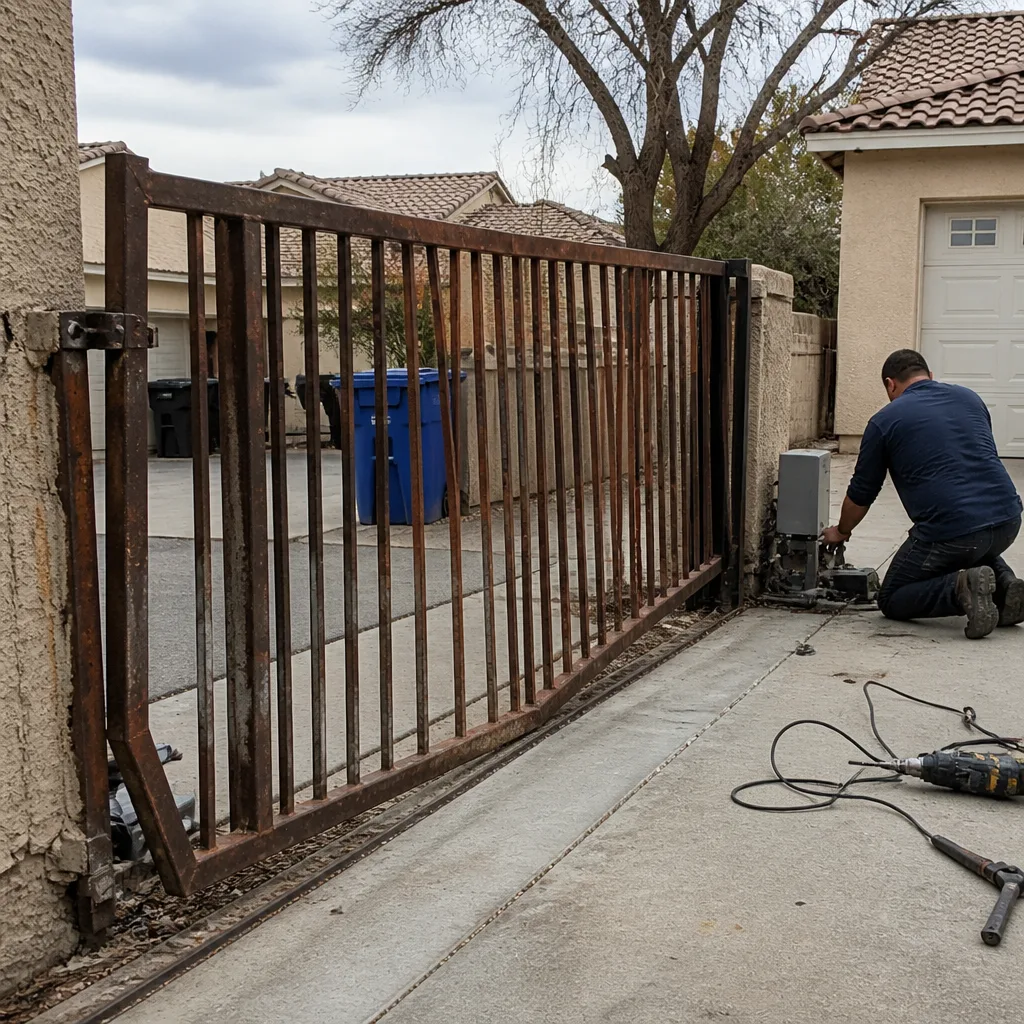 Before
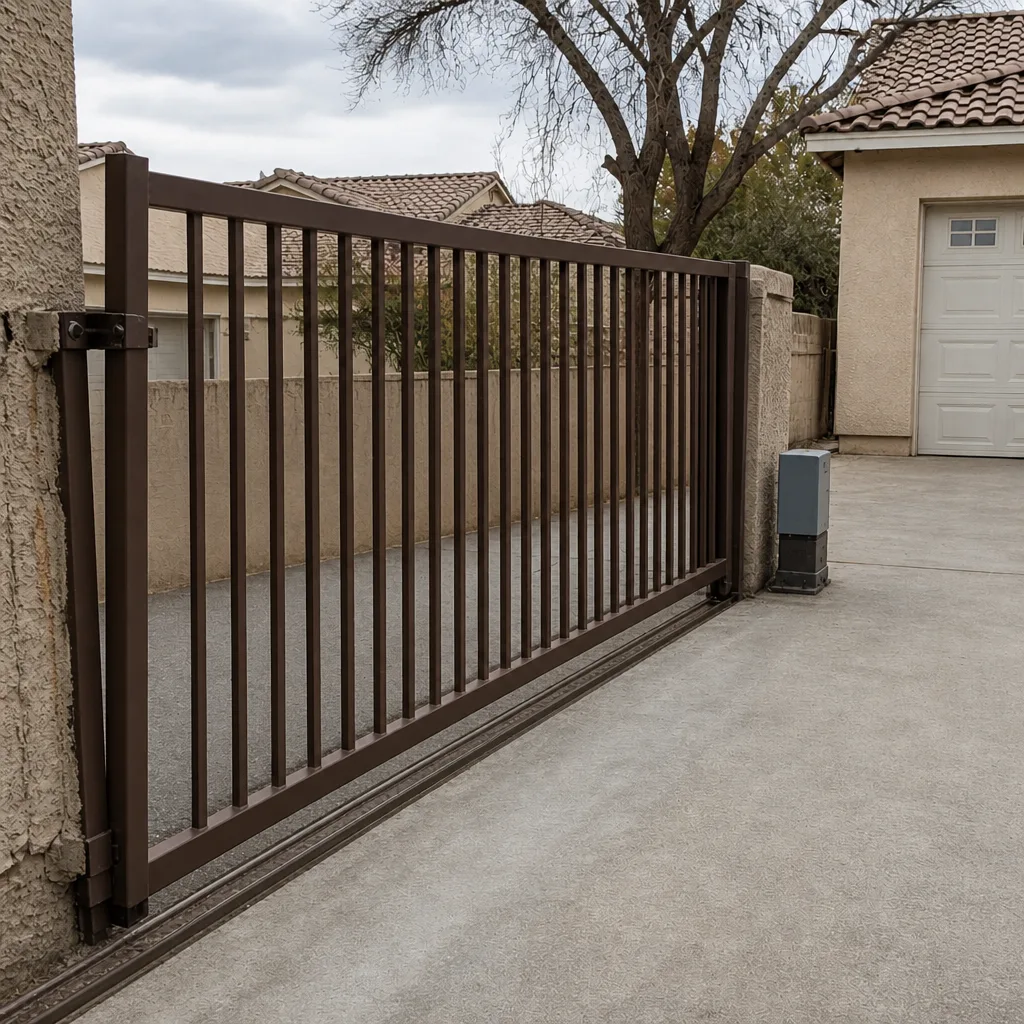 After
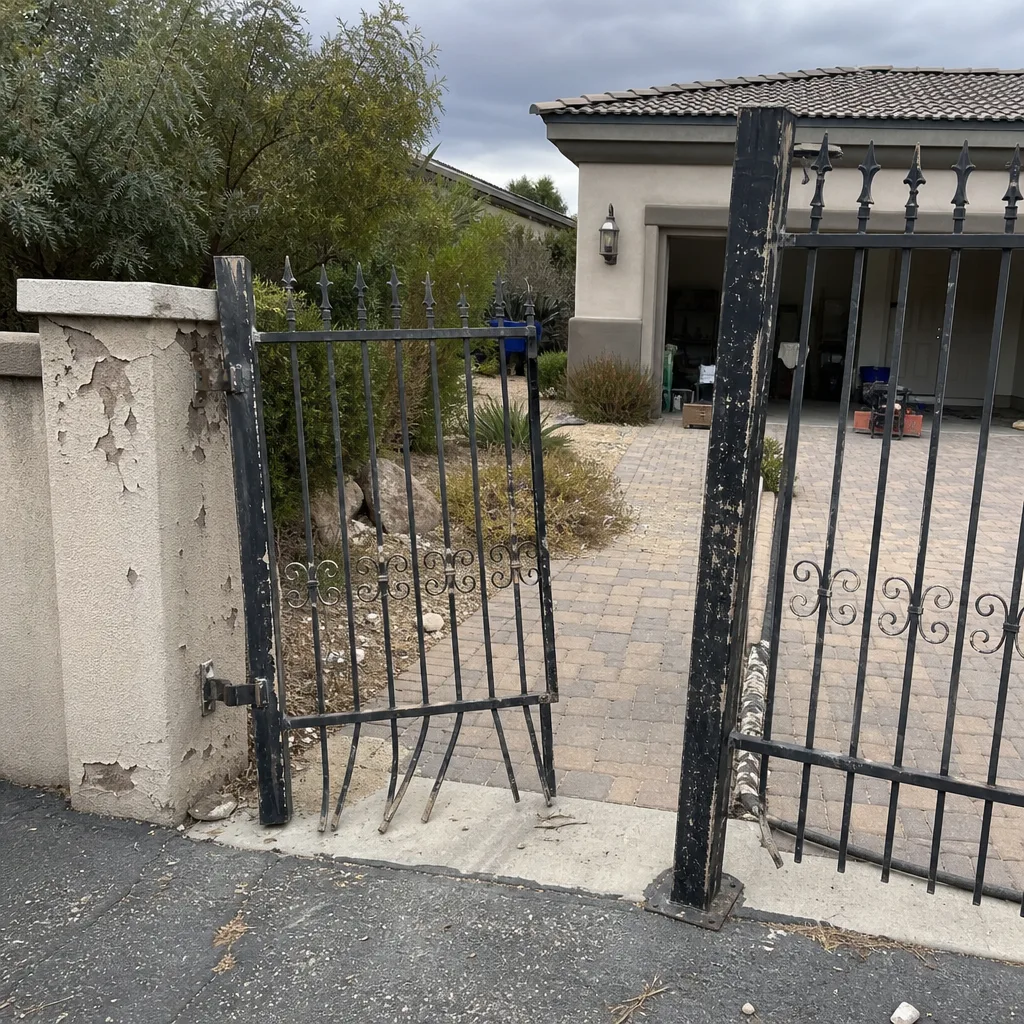 Before
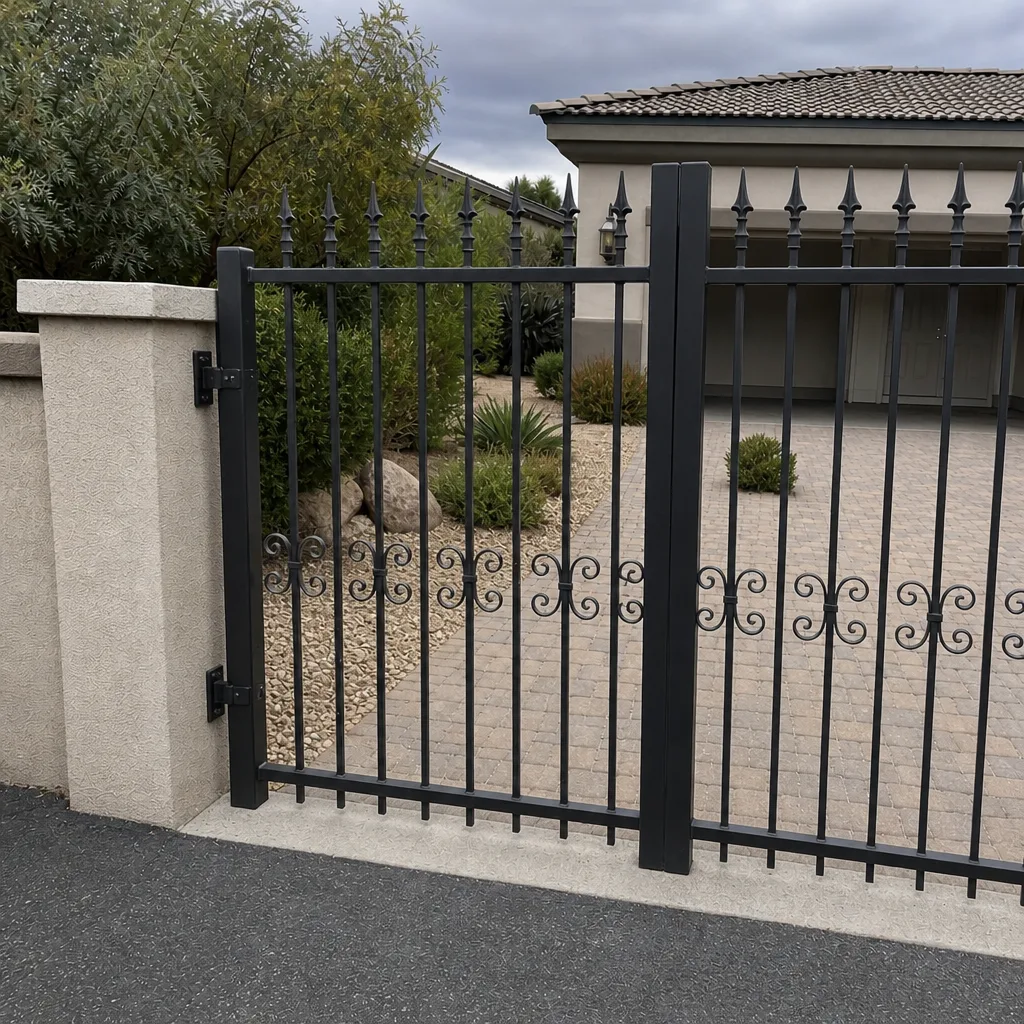 After
When to Call a Professional
Some warnings are safe to watch and log. Others need a technician. Call if the gate fails to reverse when something crosses its path, if a hinge weld has cracked or a post has visibly leaned, if the gate moves at all with a person or vehicle in the travel path, or if the operator clicks without engaging. Those are safety and structural issues, not maintenance items, and they get worse with use. Anything involving the high-voltage wiring, the control board, or a gate that’s hanging on a compromised hinge should be handled by a trained technician, not a homeowner with a wrench.
Vance Gate Repair Summerlin offers free estimates in Summerlin, and every price is written and handed over before any work starts. Call (844) 797-2809 and a live person answers, day or night.
Frequently Asked Questions
The first warning is usually a hesitation of one to three seconds before the gate moves, which points to a control board or limit switch starting to drift. Reversals before travel and grinding at the hinge side are the next most common, and both are easy to catch with a monthly walkaround.
Yes, a partial-open fault is often a limit switch or a motor capacitor issue that our technician can diagnose and repair on the first visit. Call (844) 797-2809 and describe what the gate does and when it started; the log details speed up the diagnosis.
Most residential gate repairs in Summerlin run from a small sensor or limit-switch fix up to a motor or control-board replacement, and the exact range depends on the part and the brand. We write the price and hand it to you before any work starts, so there’s no invoice surprise. Call (844) 797-2809 for a free written estimate.
A gate that reverses without a visible obstruction is almost always reacting to a photo-eye or safety loop that’s been interrupted. Dust on the lens or a shifted loop in the pavement both cause phantom reversals, and Summerlin monsoon storms are a common trigger. Wiping the lenses is the first check; if the reversal continues, that’s a call.
Yes, sustained heat shortens motor capacitor life and stresses control boards, which is why slow travel on hot afternoons is an early heat-related warning sign. West-facing operators take the most load, and catch-and-fix on those parts is far cheaper than waiting for a full motor replacement.
We service nine major gate-automation brands, including BFT, Linear, Viking, and Ghost Controls, so we work on whatever motor is already on your property. That means a repair recommendation is based on the fault, not on steering you toward a replacement. Call (844) 797-2809 for a free estimate.
The Bottom Line
Gate failure is rarely sudden. It’s a hesitation you called warming up, a reversal you called a fluke, a weld crack you didn’t look for. The four-field log turns those vague complaints into evidence, and the symptom-to-component map turns that evidence into a diagnosis. In Summerlin, heat and monsoon dust push specific parts toward failure on a predictable schedule, so a monthly walkaround catches most faults while they’re still small. And when a warning turns into a repair, the price gets written before the work starts, with a photo record left behind. If you’re seeing the signs, call (844) 797-2809 for a free estimate and a live person on the line.
Written by the team at Vance Gate Repair Summerlin.